Feeds:
Posts
Comments

Archive for April, 2026

by Mike Edwards

There is a difference between Islam and Islamism. Islam is a religion. Islamists are influenced by Islam but Islamism is a political ideology that seeks to organize and control government. It matters if one’s beliefs are based on Islamist principles. Islamism in my opinion is not compatible with Christianity or can coexist.  Individuals must be asked specifically their below beliefs. Please don’t accuse me of being Islamophobic

I have written about my concerns regarding Christian nationalism. See here. I have written American was founded on Christian principles, but leaders should be careful in their language. The Founders believed in freedom of religion and beliefs. There is a difference in saying we are founded on Christian principles and we are a Christian nation. This seems to exclude all non-Christians. It boils down to how beliefs are acted on.

What is the main difference?

Allah had no son. Christianity claims Jesus was the Son of God. Christianity declares Jesus is what God is like. Readers have to decide who to follow. Allah or God and Jesus.

How is blasphemy treated?

Blasphemy means speaking disrespectfully about God or insulting sacred things. Leviticus 24:16 says someone who blasphemes God should be put to death in ancient Israel. But the New Testament shifts the focus from civil punishment to spiritual consequences. In most modern Christian-majority countries, blasphemy is not punished by law.

Islamism generally treats blasphemy as both a religious sin and a crime against the state. Because Islamism advocates for governments ruled by Sharia law, blasphemy is often treated as a criminal offense, not just a moral one. Even death for severe cases, particularly if the offender is seen as abandoning or attacking the faith. I am not aware Christianity having any such laws.

How to treat infidels

In Christianity, people who do not believe in the Christian faith are usually called unbelievers rather than “infidels.” The way Christianity views them comes mainly from the teachings of Jesus Christ and the New Testament. They are seen as people that God loves. (Rom 5:8, John 3:16) I do not think any form of Christianity can be accused of deadly consequences based on beliefs or not granting freedom of belief on earth.

In Islamism non-Muslims may be allowed to live in society but with a different legal status in a state governed by Islamic law, though interpretations vary widely across movements. Shouts of “Death to Americans” don’t suggest coexistence is allowed according to Islamism.

Gays

Unfortunately, Christians are not united in claiming God does not condemn gays. Many refuse to admit the Bible can also be interpreted to not condemn monogamous same sex relationships. See here  But, at least Christianity cannot be accused of supporting death for those who are in same-sex relationships. Islamism consider that sodomy is considered a capital offense in Iran, where execution methods include public hangings. Many Muslims interpret Islamic teachings differently, but many Muslim governments support criminal penalties that can include fines, imprisonment, or death penalties. That is a severe difference rather than condemnation

And women

Unfortunately, Christians can be accused of women bias as much as Muslims. Sorry, any religion that requires women dress up to protect men’s eyes is anti-religion in my opinion. Men – control your own eyes. But then some Christians claim the Bible requires women submit to men’s authority in certain roles that men are not required ot submit to men. I doubt the Bible teaches that; I am not sure why any fair-minded person would think women can’t fulfill the same roles as men unless believing a Book about God teaches otherwise.

I doubt Paul, a main writer of the New Testament, was a bias against women. See here. Most agree not allowing equal roles because of skin color is immoral. Choosing who should lead the company based on gender is obviously bigotry. The most qualified or gifted should surely lead the company. Why not in church? Men in authority over women whether in public or private life is conducive for domestic abuse and the other atrocities women face at the hands of men. Give me an inch and I am tempted to take a mile! So, both religions suck and have extremists.

What about Violence

Many, but not all, Christians and Muslims, can be accused of advocating violence and possibly genocide. Most religions allow war in certain circumstances when fighting evil. The problem is extremist groups like ISIS can misuse Islamic language to justify violence. Christians aren’t necessarily off the hook. Some suggest the Old Testament advocates violence or genocide in certain circumstances. (I Samuel 15:1-5) It certainly seems that way. As discussed below the problem is whether one’s holy Book is inspired by God. If writers are portraying God accurately because God is controlling their thoughts, as opposed to sharing their own opinions of God, then most followers feel an obligation to follow in their God’s inspired footsteps. 

The problem with inspired Scriptures

There are extremists with any religion whether Christian, Jewish, or Muslim. The problem often is how supposed inspired texts by God are interpreted. It is rarely admitted that our interpretative views of God according to the Bible could be right or wrong. Some say God condemns gays according to the Bible, others interpret the same passages differently. Even if we could prove God inspired every word in the Bible (God controlling what writers thought and recorded), we should always question interpretations since biblical scholars interpret differently the same passages.

Supposed inspired interpretations by God or Allah can lead others away from God, because if a Supreme Being advocated a belief, most assume we are obligated to endorse and follow. I argued that if we did not assume literature is inspired, but rather the writers wrote what they believed was true of their God, we could avoid extremism. Use common moral sense to understand God, rather than assuming writers never misunderstood God. See Shouldn’t we assume the Bible isn’t inspired by God – all rants against the Bible

Final Thoughts

I believe those who claim Islam or Islamic as their beliefs would refer to themselves as Muslims. Those who claim Christianity as their religions would call themselves Christians. Not all Muslims or Christians hold the same above beliefs. Their beliefs should be questioned to discern what actions may follow. One may think I have been biased toward Christians reading the above. I do associate more with their beliefs than many Muslims. I believe Muslim beliefs are more extreme than Christian’s beliefs. Depends on their belief of their Holy Book and interpretation. Let’s have open discussion of personal beliefs.

Mike Edwards was added as a writer and has been a great addition to the site. Mike provides many interesting views and various ways of looking at things. He is not afraid to ask questions and he keeps an open mind as to teachings of the institutional church. Mike also has his own site where he writes at What God May Really Be Like
Read Full Post »

by Michael Donahoe

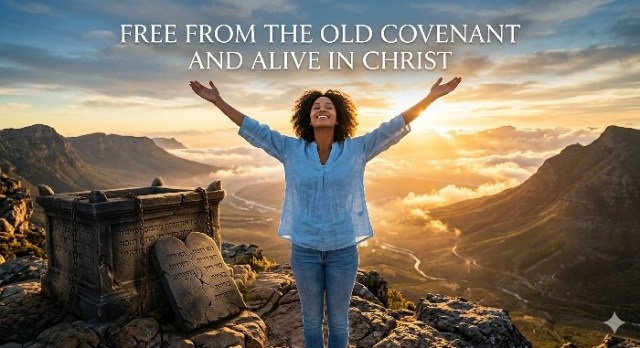
The Ten Commandments, tithing, church attendance, do this, do that, do not do this, stop doing that….we Christians like to make things so much more difficult on ourselves. We have the mentality that in order to be approved by God we need to obey the law and be busy doing things for Him. I guess that by doing these things we feel better about ourselves and more spiritual because we feel we are doing something for God. 

In Galatians we are told that we are not justified by the works of the law. We are justified by faith in Jesus. He lived a perfect life here on earth. He lived a life that fulfilled the Law, or the Old Covenant. He said, ‘it is finished’, meaning the old agreement was fulfilled, complete and done.

When He died and rose again, he began a new covenant, a covenant of grace. He restored us to fellowship with God. We are now raised up as new creatures in Christ and live as the righteousness of God because of the grace we received through Christ. 

We no longer live according to the Old Covenant. We no longer need to try to live by following the law. We are now free in Jesus, and we live each day by faith in Him. We live out of love for God because of the grace that was given to us by Jesus. When we continue to try to follow the ten commandments and Old Testament Law, we are saying that the death of Jesus was not enough. 

Enjoy the freedom Jesus provided to you. Do not bind yourself with all the rules and requirements of the law. Live a life being free in Christ and live it out of love. Love for God, love for the one who restored our fellowship with God and love for one another.

*******

Michael Donahoe was added as a writer for Done with Religion as his views fit perfectly with those that are shared on this site. He and his wife have been outside the walls of religion for over fifteen years. He enjoys writing about his experiences and thoughts, and he wants to encourage others who are going through the religious deconstruction process. He also writes on Substack at https://deconstructiontrail.substack.com/ and https://personalmeanderings.substack.com/

Read Full Post »

by Mike Edwards

I am not one to often recommend Bible stories. See Here my rants AGAINST the Bible. But, my wife found such a book that I felt comfortable recommending my kids read to my grandkids. She doesn’t have the same views of the Bible that I do. I really liked The Complete Illustrated Children’s Bible

I wrote in the front of the Book a suggestion to explain to my grandchildren in ways they can understand before reading. I grew up in the institutional church for decades and this perspective was never shared with me.

Keep in mind Bible stories aren’t always literal stories but the writer used a short simple story to teach a moral lesson or truths about God. Or to illustrate ideas about life, behavior, or values. For example, the New Testament include parables – such as the Good Samaritan which teaches about kindness and helping others. It doesn’t matter if the story really happened.

(There really weren’t talking snakes in the Garden)

(God doesn’t really keep unbelievers alive and torture by fire after death. See 12 Reasons To Believe Hell Is A Myth!)

We don’t have to know if the story is literal. Explain to your children the differences in stories. Instead of the writer stating the lesson directly, the story lets you figure it out. That is the fun part of reading Bible stories to children. Ask questions of your children “what do you think God or the Bible is trying to teach us?”

Mike Edwards was added as a writer and has been a great addition to the site. Mike provides many interesting views and various ways of looking at things. He is not afraid to ask questions and he keeps an open mind as to teachings of the institutional church. Mike also has his own site where he writes at What God May Really Be Like

Read Full Post »

by Mike Edwards

Certain religious groups (some Christians and some Islamic movements see the war in Iran and Middle East conflicts connected to end-time prophecies. Some rhetoric around the Iran conflict has referenced Armageddon and biblical prophecy. It is often that different religious groups interpret the Bible’s prophecies in different ways. The honest answer to the question asked in the title of this Post is that no one can definitively say we are living in the Biblical “end times.” It depends on your interpretation. How we answer this question matters. War decisions are made based on beliefs which lead to many lives lost.

Why is it likely prophecy doesn’t predict the future?

There are two basic views of prophecy in the Bible. That prophecy foretells future events that will happen or that prophecies are conditional. Whether they come true depends on the actions of nations. Prophecies may only be warning about future possibilities. Prophecies that aren’t conditional, on how people respond to God, imply God doesn’t respect the freedom to change. To be free, creatures must choose among possible options, having a say-so in choices. Even the Bible speaks often as if God doesn’t know the future. God hopes Israel would accept God’s guidance, but Israel often turned against God (i.e., Jer. 3:19-20). We don’t have to play mental gymnastics by assuming God is only pretending to not know future decisions.

Believing the world is coming to an end and somehow God is going to rescue you in the sky by a rapture can lead to passivity. We mustn’t wait on God to “fix” things by coming again. We must do all we can for the next generation!

A God who doesn’t knows the future is more relatable

It is natural to think an all-knowing, powerful God has special insights into future outcomes to avoid problems. But God can’t tell you if the person you want to marry won’t end up betraying you or the job you take won’t end up being phased out. A loving human or spiritual parent would warn their child if they knew ahead of time of heartbreaks. God isn’t hiding a “known” future for important decisions. God joins us in an open future.

When the Bible says God grieves with us in our suffering (Psalm 56:8), we can know God agonizes with us each step of the way and deters any suffering possible without violating freedoms or acting controlling. God joins us in our joys and sorrows in real time.

Biblical evidence of the end-times

Many make decisions believing they can usher in the end times. But there are two interpretations. There is some biblical evidence that the end times mentioned refer to what happened in the first century, thus having been fulfilled:

If the Bible teaches God is coming again to destroy the world in the future, why did Jesus tell his audience that supposed predictions about the world ending (maybe not a physical ending) would happen in their lifetime: “Truly I tell you, this generation will certainly not pass away until all these things have happened” (Mt. 24:34)?” Jesus said to his audience when asked about the last days: “watch out that no one deceives you….you will hear of wars and rumors of war (Mt. 24:4-6). Why would Jesus use such language if the world was going to end 2000 years and counting?

Jesus also gave an important warning: “No one knows the day or the hour.” (Matthew 24:36)

Our future 

Shouldn’t believers focus more and more on living faithfully than on trying to predict dates? We must not make war and the loss of lives based on an interpretation of ancient literature. No one can claim their interpretation is correct.

Mike Edwards was added as a writer and has been a great addition to the site. Mike provides many interesting views and various ways of looking at things. He is not afraid to ask questions and he keeps an open mind as to teachings of the institutional church. Mike also has his own site where he writes at What God May Really Be Like

Read Full Post »

by Michael Donahoe

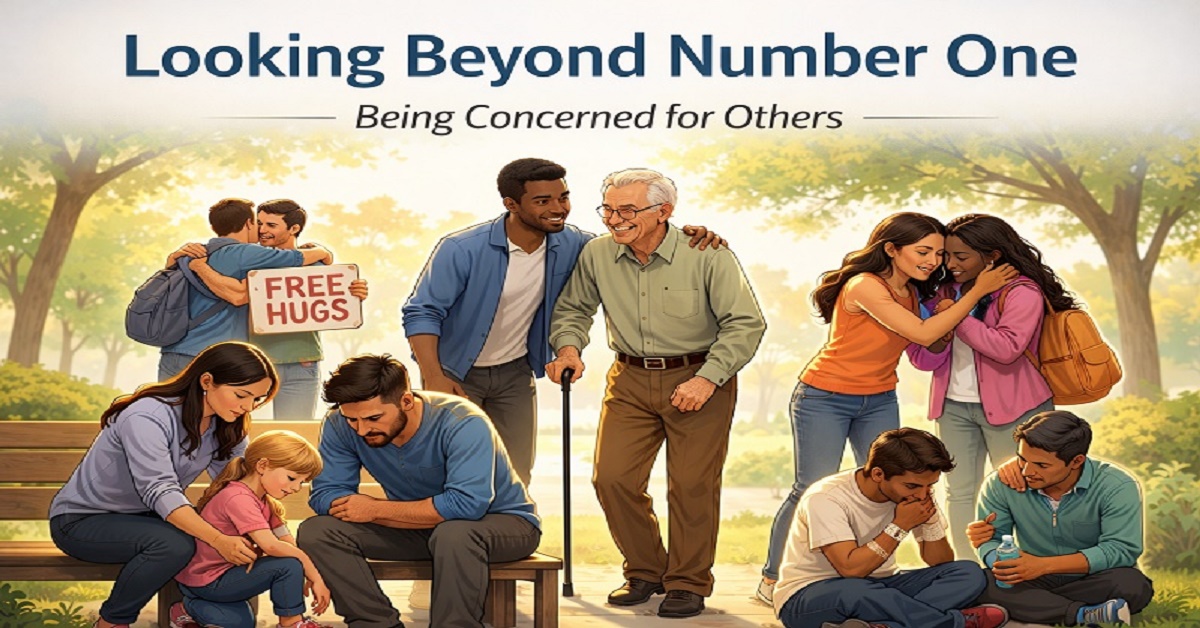
In today’s world, it seems everyone has the I am number one attitude. We are all interested in what is best for us, what makes us happy, how to be more comfortable and satisfied in our lives. Seems like we will do anything we can to get ahead in life, to get all the comforts and things to make it easier for us.

Yet, in the Bible it says do nothing from selfishness or empty conceit, but with humility of mind let each of you regard one another as more important than himself; do not merely look out for your own personal interests, but also for the interests of others. Have this attitude in yourselves which was also in Christ Jesus, who, although He existed in the form of God, did not regard equality with God a thing to be grasped, but emptied Himself, taking the form of a bond-servant, and being made in the likeness of men.

These verses state that as followers of Jesus we should be doing just the opposite of looking out for number one. Our thoughts and attitudes should be how we can show the love of God to others, what we can do to help those in need, how can we use the money God has blessed us with to help the less fortunate.

God says that the fulfillment of the Law is to love the Lord your God with all your heart, soul, strength and mind and to love others as yourself. While the good things we have been given and blessed with by God are not wrong, we need to keep in mind that they are not the important part of our lives. We are to be thinking of others and their need for love, acceptance, respect and help. Our way of thought should be how can we encourage and build up someone else, how can we help meet a need in their life.

There is nothing wrong with taking thought of our wants, needs and interests as the verse states do not merely look out for your own interests. Unfortunately, many times our own interests are all that concern us. May we daily ask for God to help us think of others and be ready to care for them in any way possible with God’s leading.

*******

Michael Donahoe was added as a writer for Done with Religion as his views fit perfectly with those that are shared on this site. He and his wife have been outside the walls of religion for fifteen years. He enjoys writing about his experiences and thoughts, and he wants to encourage others who are going through the religious deconstruction process. He also writes on Substack at https://deconstructiontrail.substack.com/ and https://personalmeanderings.substack.com/

Read Full Post »

by Mike Edwards

I have always struggled with the bible verse: Ephesians 5:20 explicitly commands believers to give thanks “always and for everything to God the Father in the name of our Lord Jesus Christ.” This verse emphasizes that gratitude should be a constant practice, acknowledging God’s goodness in all aspects of life. See other passages reinforcing this instruction:

  • 1 Thessalonians 5:18 states, “Give thanks in every circumstance, for this is God’s will for you in Christ Jesus.”
  • 1 Timothy 4:4-5 notes that everything God created is good and nothing is to be rejected if received with thanksgiving.
  • Colossians 3:17 instructs that whatever is done in word or deed should be done in the name of the Lord Jesus, giving thanks to God the Father through Him.

I have always rejected these verses because  I ain’t thanking God for tragedies such as my brain cancer. I don’t have to assume God is in control of good and EVIL in this life. See  Why did God Allow This Tumor In My Brain – Update Of My Brain Cancer Journey I don’t believe for a second God allowed my brain cancer and not telling me the lesson I am supposed to learn from it. Or others about rape, abuse, murder of a love one, etc.

So, I’ve never got in habit in thanking God for everything as if God controls all events in our life, including the bad, as if God is supposedly in total control despite free will. See God Is Not All-Powerful Or In Total Control!

I have changed 

I have started mentally saying “thank you God” for the good stuff, even though I know God isn’t in total control. Even silly stuff. As you get older, you don’t want to fall. So, now when I trip but don’t splash, I thank God for that. Working in the yard, I forget something from getting up from the ground the porch deck is above my head, but I miss putting a huge knot on my head. I miss a near car crash, though I know God didn’t stop it. I have a lot of good fortunes in my life, but I will spare you. 

End results 

It’s not like God and I have drawn closer than already, but I do enjoy the communication and realizing I can be thankful to God for the good stuff, though God isn’t necessarily in control for either good or bad fortunate. So, I will keep thanking God all the good fortunate, and not thinking God causes or allows my misfortunes. My parents didn’t necessarily cause or intend all the blessings I gained from them, but I can still be thankful to my God and earthly parents.

Mike Edwards was added as a writer and has been a great addition to the site. Mike provides many interesting views and various ways of looking at things. He is not afraid to ask questions and he keeps an open mind as to teachings of the institutional church. Mike also has his own site where he writes at What God May Really Be Like

Read Full Post »