Feeds:
Posts
Comments

Archive for January, 2026

by Michael Donahoe

Have you noticed how many people seem to only include their preferred group? They only include people who think like them, have similar interests and likes. If you think differently or have different views and opinions, people feel you should stay in your own group with like-minded people, but leave the other group alone.

We seem to find this attitude in every walk of life, but within organized religion or institutional church it seems even worse. We all should be accepting of people in general in our daily lives. Yet, we see this so often within Christianity with the wide variety of denominations and interpretations of the Bible.

When it comes to including people who we see as completely different from us, African-American, Native-American, White, LGBTQ, Atheist, Muslim, Jew and so on, we tend to want to keep each group separate. We think as believers in God we need to separate ourselves and not associate with those who see things differently. Why is it the word inclusion seems to make so many Christian people cringe?

Really, behind all the labels we put on people we are all basically the same, so why not associate and get to know people who we feel are different from us? We can learn from one another, get to know one another and find that we really are not all that different.

We see Jesus do this all the time when reading the gospels in the Bible. He did not differentiate people based on their religion, belief, lifestyle, sexuality or nationality. He did not separate himself from those who thought, believed and lived differently. He loved and accepted all people and showed them the love of God.

Obviously loving and accepting people does not mean total agreement, nor are we going to always get along in life and live happily ever after. Yet I believe it does mean treating others the same, with respect, kindness, acceptance and with the love of God through the power of the Spirit within.

Inclusion is not a bad word. It is not a bad or unholy way to live. Inclusion is about ALL of us. Inclusion is about living full lives – about learning to live together. It makes the world our classroom for a full life. Inclusion treasures diversity and builds community. It is about our abilities – our gifts and how to share them. Inclusion is the way of God and the way of showing the love of God to all we meet.

*******

Michael Donahoe was added as a writer for Done with Religion as his views fit perfectly with those that are shared on this site. He and his wife have been outside the walls of religion for fifteen years. He enjoys writing about his experiences and thoughts, and he wants to encourage others who are going through the religious deconstruction process. He also writes on Substack at https://deconstructiontrail.substack.com/ and https://personalmeanderings.substack.com/

Read Full Post »

by Mike Edwards

Try claiming God doesn’t condemn gays. You are called a heretic in religious places, despite disagreement among scholars what the Bible claims. Dare to argue Covid vaccines have risks and you are called a mis-informer or conspiracist. It isn’t science without debate. The problem is condemnation of expression of opinions. The solution is encouraging civil discussions. Certainty is a myth except in the eye of the beholder!

See: What Is Misinformation? Should We Censor Misinformation?

Read Full Post »

by Mike Edwards

Many rightly wonder if what Christian leaders claim about God is true. Who can blame them when God supposedly created a place such as Hell, to torture forever those who don’t believe in God a short time here on earth. In Posts I  often propose a question, which can paint one’s view of God. I try to keep a page length with bold subtitles. It concerns a question about God that I wish people would be willing to discuss about God, so they could draw their own conclusions than what many Christians claim to be true about God.

 Why Did God Allow This Cancerous Tumor In My Brain?

Getting Saved Isn’t About Going To Heaven Or Hell!

Hell No! Hell Is A Myth!

A Loving God Can’t Be All-Powerful!

Which Religion Leads To Heaven?

God Loves Gays!

Should Christians Always Forgive Those Who Deny Guilt?

What Can Good Marriages Do Even Better?

What May Be The Greatest Unknown Sin?

What About Miracles Prophesies – Book Review Impossible Love

If God is Real, Why Then Is God So Hidden?

What Is God’s Love Really Like?

Should We Assume The Bible Isn’t Inspired by God And Does It Matter – Rants Against The Bible

Mike Edwards was added as a writer and has been a great addition to the site. Mike provides many interesting views and various ways of looking at things. He is not afraid to ask questions and he keeps an open mind as to teachings of the institutional church. Mike also has his own site where he writes at What God May Really Be Like

Read Full Post »

the Spirit is Our Teacher and Guide

by Michael Donahoe

Growing up in the organized church, we were told that the Holy Spirit came to reside within us once we accepted Christ. We were also told that we are the temple of the Holy Spirit and we have no need that any man should teach us. Yet when it came to really emphasizing what that meant and how to hear the Spirit, the church seemed to have dropped the ball in that area.

We do not seem to hear a lot of teaching on what it means for the Spirit to live within us. We are not told how to listen for the Spirit and what are we actually supposed to be listening for. Jesus said that his sheep hear his voice, yet most of us were taught that his voice is really the words written in the Bible or spoken by the pastor.

We have heard it said that if it is not in the Bible it is not of God. We are told God only speaks to us through the written word, yet there are so many interpretations, various doctrines and so many verses that were written to a specific person or group of persons many years ago. These writings were often for a specific time period that no longer relates directly to us except as an example to learn about the nature of God.

I feel so much has been lost over the years from when the original writings were done. So many of the translations have changed the original meanings because of changes in times, customs, word meanings, traditions and such. Without the Spirit bringing to life the words we read, and through confirmation through the voice of the Spirit within, we are really left to our personal views and opinions and what others have told us the written word means.

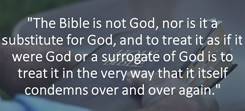
The Bible is not God and it is not a god. The Bible was inspired by an infallible God yet written by very fallible men, men who were inspired yet wrote with their personal views and ways of writing. The Bible is about people trying to find, follow and fellowship with God and it teaches us ways to do that. The written word leads us to the Living Word, who is Jesus. ( read the article, In the Beginning Was the Word by Michael Clark ).

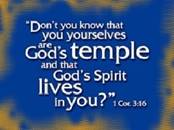
The Bible tells us that the Spirit now lives within us. Yet so often, even though we say it we do not act like we really believe it. Time and time again the Bible mentions we are the temple of the Holy Spirit, we have the mind of Christ, the Spirit and the Kingdom are within you. And time and time again we seem to go right on thinking God is far away from us and all we can do is read from the Bible or have some pastor tell us what God is saying.

There are many people who say they speak for God, but they are nowhere close to being a godly example. It is easy to say God told me this or that, or say God told me to tell you something yet the person saying such things is only going on their personal feelings and interpretations. Anyone can say God told them this or that and they expect us to do what they say, but we need to listen to the Spirit for ourselves and listen for the confirmation from within as to what is of God and what is not.

I believe if God says the Spirit lives within us and we can hear his voice, then it is something not to be taken lightly. As followers of Christ, we can rely on the Spirit within us to teach us and guide us into the truth. We have to be listening and open to God to know the voice of the Spirit, but we can hear it and know it is from God. To say that we can only hear from God through the written word is to miss a more intimate fellowship with God.

Is the Bible to be ignored? Are we to stop reading the written word and only follow what we feel is the voice of the Spirit? No, both the written word and the Living Word that lives within us are important. The written word is inspired by God and profitable for teaching, for reproof, for correction, for training in righteousness. Yet without the Living Word bringing those words to life, it is just a book about humans trying to find God. We need to be listening for the quiet voice of the Spirit of Christ who actually lives within us for truth and guidance. Sometimes he will speak directly in our spirits, sometimes he will speak through his written word and sometimes through others.

Also remember that God is alive and the Spirit is within us. Do not think that God can only speak through one particular means. Yet do not jump at every voice you hear, make sure it is the voice of the Spirit. Although the Bible says we have the mind of Christ we also have the mind of Jim, or Mike or Betty. We are still human and need to be sure we are hearing from the Spirit of Christ and not our natural spirit. Still, Jesus said His sheep hear his voice, which to me says we can hear and know it is from God.

We also know that the Spirit can speak to one person one way and another person in a different way. Just because the Spirit is speaking to me does not mean he is telling you the same thing. Just because I hear the Spirit say something to me does not mean it is something that has to be announced to everyone. It may be that he is speaking to me for something I need to do or learn and it is not meant for others to hear.

My friend Michael Clark wrote about this topic and said in his article: Jesus is the Word of God! He speaks to those who are His sheep. They know His voice and will not follow the voices of strangers (read John Ch. 10). Yet, so many Christians have said to me, how can I know when Jesus is speaking to me? To many of them the answer is, unplug! You are listening to and reading too many teachers. Break this habit of heaping to yourself teachers who tickle your ears. Get alone with God until you start hearing His whispered voice. Talk with Him and let Him be your friend above all friends.

Just as we think of the church as a building with an organized program, it is so much more than that. The Church is a community of people daily following the Spirit and living in the kingdom of God during our life now. We think of the word of God as a book, yet the true and living Word of God is so much more than that. Jesus is the Living Word of God and we can hear the voice of the Spirit which is within us. We can hear his voice through the written word, but keep in mind that God speaks in more ways than one.

*******

Michael Donahoe was added as a writer for Done with Religion as his views fit perfectly with those that are shared on this site. He and his wife have been outside the walls of religion for fifteen years. He enjoys writing about his experiences and thoughts, and he wants to encourage others who are going through the religious deconstruction process. He also writes on Substack at https://deconstructiontrail.substack.com/ and https://personalmeanderings.substack.com/

Read Full Post »

by Mike Edwards

I have written a great deal how I think certainty is the hidden sin among Christians. See: Sin-of-certainty Being so certain about God and what God is really like actually turns many off from God, not towards God. Convincing is the work of God, not humans. The truth is we can’t be certain God exists or there is an afterlife. But I still have faith and hope that God exists and there is an afterlife. Some say they have had a real experience with God to give them total confidence God exists. I don’t doubt them. Just that I and many others haven’t had such an experience.

Uncertainty promotes humility

Certainty about God can easily slide into “I fully understand the divine” which is a very big claim of an invisible God.  Uncertainty keeps us humble and reduces dogmatism and harm in relationships. Uncertainty allows people to say: “I believe, but I acknowledge the unanswered questions.”

Certainty has led to condemning gays, women, and unbelievers

Certainty of one’s interpretation of the Bible can lead to false claims about God’s nature. Hell is surely a message Christians get wrong. I am convinced a literal Hell is a biblical myth.  See here.  We can get wrong that God thinks women can’t serve in the same religious or marriage roles that men can. Another myth in my opinion. See here. Also, we get wrong that God condemns gays according to the Bible. Another myth in my opinion. See here. People reject God based on claims about hell, women, or gays.  Even if you believe the entire Bible is inspired by God, we must admit our interpretations are not necessarily inspired by God.

Absolute certainty about God’s will has sometimes justified:

  • Violence
  • Religious coercion
  • Dehumanizing others

Uncertainty makes room for:

  • Listening instead of forcing
  • Compassion over control
  • Moral self-examination

Uncertainty allows faith to be chosen, not forced

Many thinkers say faith is meaningful because it isn’t certain.

  • If God were as obvious as gravity, belief would be automatic
  • Uncertainty allows belief to be a free response, not compulsion

This idea is sometimes called “faith as trust rather than proof.”

Uncertainly can allow one to become more loving

Some say the question becomes less “Am I correct?” and more “How can I become more loving?”

Uncertainty about God doesn’t mean:

  • No belief
  • No commitment
  • No spirituality

It can mean:

  • Belief held with humility
  • Faith practiced with compassion
  • Openness instead of rigidity

Mike Edwards was added as a writer and has been a great addition to the site. Mike provides many interesting views and various ways of looking at things. He is not afraid to ask questions and he keeps an open mind as to teachings of the institutional church. Mike also has his own site where he writes at What God May Really Be Like

Read Full Post »

by Mike Edwards

Universalism is a theological belief that God eventually saves all to go to heaven after death. Some may even experience open-mindedness in the afterlife after meeting their Creator. God never gives up. God’s love is relentless. This doesn’t mean some won’t reject God though it is hard to conceive some rejecting a perfect place such as heaven as opposed to death (Hell is a Myth, See here. ) It is hard to believe but possible that some people, even if they were given infinite chances in eternity, would still reject God forever. But universalism as least means all have final chances after meeting their Creator in the afterlife, to believe and accept God’s ways.

Why universalism makes godly sense 

Does God’s loving nature allow stopping to forgive? There are consequences in this life and there may be painful reckonings in the life to come, but a loving God can’t stop showing grace. Why would God undergo a complete character lobotomy after we take our last breath here on earth? Is a thief going to enter Paradise but not others with lesser sins because they weren’t next to Jesus hanging on a Cross right before their last breath? God’s grace doesn’t depend on whether one has more opportunities to respond to God than others. Even imperfect human parents wouldn’t cut off a child who eventually accepts responsibilities for their actions. Universalism is possible or even probably true because there can’t be a deadline or time limit on God’s love. There isn’t on my love for my children. Am I a better lover than God?  We are told to forgive our enemies as many times as necessary but God doesn’t? 

Universalism seems true even according to the Bible 

Many may reject universalism because they believe the Bible teaches against it. Many who reject universalism often resort to name calling rather than defending their views – referring to those who reject their claims as heretics. What many may not know is there are many biblical scholars who believe the Bible can be interpreted to teach God saves all eventually. See: All Will End Up Heaven According To The Bible!

Universalism seems true because Hell is a myth: 

Many who believe God exists agree God has given us moral intuitions to discern evil from good. We don’t need a Book to know sexual abuse or murder is wrong. God creating a literal Hell where people are tortured for billions of years for beliefs held a short time here on earth isn’t possible morally or biblically. See here. See here. Humans wouldn’t even create such a place for our enemies. God or humans can’t possibly be happy in heaven if loved ones are tormented after death forever. If God supposedly has such control over happiness, why not use the same power over rebelliousness?

Without Hell is there is a reason to consider faith in God here on earth? 

It is implied Hell/fear is necessary to want to follow God. The Bible seems to suggest God seeks to empower us to be the unselfish people we deep down desire to be, not to be fearful of a destiny to be tortured forever in the afterlife. Jesus sought to inspire others to seek God’s help in loving others for the good of the world. Jesus simply commended Zacchaeus for recognizing a journey necessary to avoid personal destruction because of sin. Salvation is not a future destination but a currently reality (Lk 19).  Jesus told the woman who had committed adultery not how to avoid hell but: “go now, and leave your life of sin” (John 8).  Why pursue God without fear? Surely a loving God seeks to encourage us to pursue heavenly than worldly ways here on earth for our own happiness.

What about Justice? 

The Bible talks about everyone, whether having faith here on earth or not, will be judged (2 Cor 5:10; Rom 14:12). Punishment doesn’t bring back a victim’s robbed memories of the future due to the murder of a loved one. Justice can be understanding your victim’s pain and accepting the harmfulness of your actions. After death God may seek for all to face every action of betrayal and how it felt to their victims. The cleansing and educative effect may take longer for some than others. Humans like God may forgive their enemies if they truly regret their actions and seek forgiveness. Justice from a fair, merciful God is possible despite people being given a second chance after death.

Mike Edwards was added as a writer and has been a great addition to the site. Mike provides many interesting views and various ways of looking at things. He is not afraid to ask questions and he keeps an open mind as to teachings of the institutional church. Mike also has his own site where he writes at What God May Really Be Like

Read Full Post »