Feeds:
Posts
Comments

Archive for the ‘Acceptance of Others’ Category

by Michael Donahoe

In John 21:22 Jesus said to Peter, “If I want him to remain until I come, what is that to you? You follow Me.” When Jesus said this, he was talking about a specific person, yet I think this verse can also be talking about people today.

Many of us Christian people get caught up on what other people are doing, how other people live, what others think of us and how they interpret the Bible. We will try our best to change the views of others to match our own opinions, yet never dreaming that we could be wrong or that there may be more than one way of seeing things.

We get mad, argue and name-call with the best of them when someone disagrees with our views or how we think we are to live. It does not take long on social media to read posts and replies and see all the different views and opinions. It also does not take long to see the anger building up as people argue their point and condemn those who see things differently.

My thought is why do we spend so much time arguing, condemning, excluding and not accepting others?

Jesus came to earth to show us what the God was truly like, a God of love and acceptance. A God who can speak to people in different ways, a God who created us as unique individuals who act, think and live differently from others.

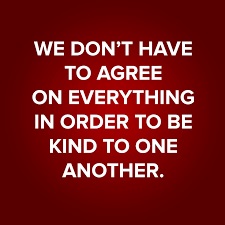
When we say we should love and accept people as they are, many get upset thinking we are saying we should go along with anything and say everything is acceptable. I am not saying that, but I am saying rather than judge, condemn and point out where we think others are wrong, we should love them with the love the Spirit gives us from within. Being kind, respectful and loving to others does not mean we agree on everything or condone everything someone does.

For some reason, many Christians feel it is their duty to point out where they feel others are wrong as a way to get people to change. People are not going to change because of condemnation and judgment. Love is what draws people and showing love to everyone is how we should be known as followers of Jesus. None of us should force our views and opinions on others.

Rather than be so caught up on what everyone else is doing and how others live, we should hear Jesus say ‘what is that to you? You follow me’.

We are to follow Jesus and do what we know is right for us. Let the other person have that same freedom to follow Jesus as they feel is right. The Spirit will convict where change is needed. It is the Spirit who draws people to God, it is not our job to judge, condemn or convict others.

When we keep our eyes on Jesus and follow in the path he has for us, we do not have to worry about what the other person is doing. That is between God and the other person. We are to follow Jesus by loving God and loving the other person even with the differences.

*******

Michael Donahoe was added as a writer for Done with Religion as his views fit perfectly with those that are shared on this site. He and his wife have been outside the walls of religion for fifteen years. He enjoys writing about his experiences and thoughts, and he wants to encourage others who are going through the religious deconstruction process. He also writes on Substack at https://deconstructiontrail.substack.com/ and https://personalmeanderings.substack.com/

Read Full Post »

by Michael Donahoe

As Christians, fellowship is an obviously important part of living as a follower of Jesus. Fellowship with other believers should be encouraging and a time to build one another up. As Christians, we need one another for support.

When we hear about fellowship today, we usually think of church. Several churches even have the word fellowship in their name. According to the dictionary fellowship means friendly relationship; companionship; an association of persons having similar tastes, interests; friendliness.

I grew up in the organized church and thought for years I was having good fellowship every time I attended a Sunday morning service. As time went on, I began to question if we were actually enjoying good fellowship or not. If fellowship was a relationship or companionship with others, how was that being obtained by sitting in a pew every Sunday looking at the back of someone’s head? We never really showed much friendliness or companionship just sitting there and we never knew if the person in front or back of us had the same tastes or interests. How were we having fellowship when we just sat and listened to a select few run the program?

After my wife and I decided to leave the organization and live outside the walls of religion we wondered how we would find fellowship with others of similar tastes. Truthfully it did not take long. God started bringing people across our paths in places and at times we never expected.

We were sitting in a local cafe one morning relaxing and drinking our morning coffee when we noticed two men at the next table. One was a young long-haired rock group looking person talking with an older gentleman. We could not help but hear their conversation at times and we kept hearing them talking about God and life in Christ.

After some time of listening, we decided to politely ask about their conversation and found that the younger guy was in a Christian heavy metal band, had left the traditional church a few years ago and was living outside the walls of religion like us. This was an encouragement to us because it showed us that God will bring about people for fellowship any time and in any place.

We have met many people over the past several years as we walk on our path outside the walls who have similar tastes and interests. We have joined with people many times at restaurants, in our home, at parks and online for meaningful fellowship. Many times it has only been 3 to 5 people, but we have had so much more meaningful fellowship with others outside of traditional church than we did sitting in a typical service.

As written in 1 Corinthians 14:26, what then shall we say, brothers and sisters? When you come together, each of you has a hymn, or a word of instruction, a revelation, a tongue or an interpretation. Everything must be done so that the church may be built up. To my wife and me the church mentioned here is not a building of four walls with a select few people running the program on a set day and time. The Church is a community of Christ followers who have a friendly relationship and associate any day, any time, any place when Christ brings them together. It is a time to lift up Christ and his love, to encourage one another and to get to know the tastes and interests of each other.

Obviously, fellowship can also happen with people of different views and interests, different faiths or different lifestyles. We can be loving and accepting of all as we get to know and understand each other and treat each other with kindness, respect and friendliness.

Yet fellowship among believers is needed for us to be encouraged and built up. As mentioned in Hebrews 10:25, not forsaking our own assembling together as is the habit of some, but encouraging one another and all the more as you see the day drawing near. This verse in no way says we must assemble in a building with a set program on a set day or led by a select group of people. This verse just means as followers of Christ we need each other. We need time together getting to know one another, build one another up in Christ and live a life that shows the world the good news of the gospel, which is that God loves each and every one of us.

*******

Michael Donahoe was added as a writer for Done with Religion as his views fit perfectly with those that are shared on this site. He and his wife have been outside the walls of religion for fifteen years. He enjoys writing about his experiences and thoughts, and he wants to encourage others who are going through the religious deconstruction process. He also writes on Substack at https://deconstructiontrail.substack.com/ and https://personalmeanderings.substack.com/

Read Full Post »

by Mike Edwards

I am learning what pisses me off the most is labeling people. Whites are often generalized as racists in politics. Well, I am white and I am not racist. I grew up when people of color were denied to drink in the same water fountains or use the same bathrooms as whites. Clearly, those who supports this believe the color of one’s skin determines inferiority or superiority. I have biracial grandchildren. It sickens me to be classified as a racist as if I love some grandchildren more than others. I have the same feelings when it comes to religion. I am labeled a heretic because of my views of God’s love toward women, gays, unbelievers. Many theories labeled conspiracies turn out to be right.

The problem with labels

What are labeled conspiracies are really just theories/speculations. Often, truth is a journey to be discovered. Anyone who accuses one being a conspiracist or heretic should have to defend their views that are supposedly are truer. How can a conversation remain civil when name-calling begins. When one says they doubt a loving God would create a literal Hell, each should have to defend their position which may mean looking at different biblical passages. Many who believe in a literal Hell believe so because of their interpretation of Scriptures. Name-calling allows one to not have to defend their point of view and veers the conversation off the topic/disagreement at hand. The path to change is considering opposing beliefs. I find it hard to trust one when avoiding discussion/debate. It often turns out labelers/accusers are the source of misinformation. 

Religious Heretics

Matters labeled heresies today are much different than earlier in history perhaps, but past and present accusers share something in common – accusers are claiming their interpretation of the Bible is the correct one. Many will proclaim “the Bible says” without acknowledging many don’t agree with their interpretation. Scholars do not agree on many moral issues. I was told often when younger that the Bible teaches there is a literal hell where unbelievers in the afterlife are tortured with fire forever after a few short years living here on planet earth. 12 Reasons To Believe Hell Is A Myth! Moral of story – don’t believe everything you hear claimed about God! See here. Other viewpoints are also claimed to be heresy without discussion:

  • God didn’t inspire the Bible, thus approved, all written in the Bible See here.
  • Salvation in the Bible isn’t about avoiding Hell and getting into Heaven See here.
  • One can’t be a Christian if not attending the institutional church. In the Bible “Church” was not a building or a place attended once a week. Jesus referred to His followers as being the Church.  Jesus did not specify where followers must gather or what they must do. Find environments to be encouraged and inspire others to love as radically as Jesus did. Some of us grew weary of religion but not God. See here.

Political/Science Conspiracists

The truth is settled science isn’t science. Turns out the so-called conspiracists weren’t the misinformers. For only a few examples:

  • Covid virus leaked from a lab – Many were kicked off/censored from mainstream platforms because they suggested the Covid virus came from a Chinese lab. Turns out they were right. The Government now agrees years later. We weren’t allowed to ask questions
  • Masks – Those who claimed masks didn’t prevent the spread of a virus were called mis-informers. Turns out a review that dug into findings of 78 randomized controlled trials discovered wearing masks made little or no difference in stopping the virus. See here. Lots of my friends who wore masks got Covid. Their level of symptoms no different than mine.
  • It has been declared in the past that the Covid vaccines prevented infection and transmission of the disease. That was the purpose of mandates and protecting grandma. Scientists and doctors who declared otherwise were censored, but it turns out that weren’t the mis-informers.

It isn’t a conspiracy if it could be true! Those who claim a conspiracy should counter with their evidence for their position not attempts to censor! 

How do we move forward

We should question authorities in all areas of our life in case they are wrong. Because of my early religious experiences and contrarian personality – I knew to question health experts who said to trust them without debate. I would suggest you are better off doubting what you have been told and verify it for yourself. It can save you from regretful decisions in the arenas of religion, science, and politics. Assume uncertainty if you have one rational friend who believes differently from you whether it’s about religion, science, or politics.

It should be intuitive those who reject diverse opinions is unloving and controlling. Most don’t except such behaviors in their personal relationships. Having good intentions by believing you are right for the whole doesn’t matter if you could be wrong.  We should all be discussing “What leads to the greater good.” Religious leaders seem hell-bent in telling people what they must believe about God according to their understanding and interpretation of the Bible. Scientists or Politicians who refuse debate of their policies are no different. Leaders play God (Superior) in the lives of others by claiming to know the truth and we can’t decide for ourselves.

*******

Mike Edwards was added as a writer and has been a great addition to the site. Mike provides many interesting views and various ways of looking at things. He is not afraid to ask questions and he keeps an open mind as to teachings of the institutional church. Mike also has his own site where he writes at What God May Really Be Like 

Read Full Post »

by Michael Donahoe

It has always amazed me how we Christians can be so argumentative. We just do not know how to accept one another’s differences in doctrine or interpretation.

Following Jesus is obviously based on loving God and loving others. Yet we have nearly 40,000 different denominations, mainly because we cannot agree and accept one another.

We argue and defend our doctrines and interpretations, and we get mad when others disagree or have a different viewpoint. Even when we partly agree, we feel the need to point out where we differ because we think that our way is right, and everyone else is a little off.

I understand that we are not going to agree on everything, and each of us have a little different way of seeing things and understanding things, but we go too far when we let these differences separate us. We want to keep in our own particular group, which we usually feel is the more correct way to believe, and we do not want to associate with some of the others. This should not be, we can have our differences yet without separating ourselves from others.

We are all people of faith, especially in regard to spiritual things. We have faith in God, or faith (belief) there is no God. We have faith (trust) in science, in doctors, in common every day life things. We flip a light switch and have faith the light will come on. Whether we are Christian, Atheist, Muslim, Buddhist or whatever label we place ourselves under, we all live by some type of faith. That does not mean we are all followers of Christ, but we are all people of faith. We do not have to be afraid to associate with people who do not have a faith in God. We just may be the only view of God they get to see, and love and acceptance should be what they feel through the power of the Spirit within us.

None of us can prove beyond a doubt that our way is right. People have faith there is a God, or there is not a God, faith in the after-life and heaven, or faith in reincarnation, faith there is no hell, or faith that there is just an end to our existence. We cannot prove any of it either way you look at it, yet we all seem to fight and argue amongst ourselves trying to defend our viewpoint.

No matter what we believe, how much we love God, or how much we are convinced there is or is not a spiritual side to life, we cannot prove our point, it is all by faith.

As mentioned in the Bible, we walk by faith, not by sight. I am glad I have a faith in a God who I believe created me and loves me, a God who has provided freedom from my sinful nature, and a God who has come to live within me.

I also respect the rights of others to feel differently. I do not think it is my responsibility to expect anyone to believe the same as me, or to put their faith in the same things that I do. It is the Holy Spirit’s place to draw others to God. I believe it is the Spirit who teaches us and leads us into truth. My responsibility is to love and accept everyone as they are, and be ready for God to show love through me.

*******

Michael Donahoe was added as a writer for Done with Religion as his views fit perfectly with those that are shared on this site. He and his wife have been outside the walls of religion for fifteen years. He enjoys writing about his experiences and thoughts, and he wants to encourage others who are going through the religious deconstruction process. He also writes on Substack at https://personalmeanderings.substack.com/ and https://deconstructiontrail.substack.com/

Read Full Post »

by Michael Donahoe

Do you notice the fact that no matter what you believe, or what your interpretation is someone always has a completely opposite view. You get excited about hearing some truth that really connects, and the next thing you read an article by another Christian that completely disagrees with what you just heard.

Even more than that, most of us Christians get mad when someone disagrees with us and is different. We get on Facebook and make ourselves look crazy because we talk about brotherly love, then we fight and argue with someone because they interpret things differently, and mostly about things we cannot prove one way or the other.

Overall, this is really not that unusual because we are all different. We have different backgrounds, different viewpoints and opinions, and different ideas on how to live. We really have to stop and think that whatever it is we believe, whatever our interpretation, everyone is not going to agree with us. There is no reason for us to get mad at someone else for being different.

This life is all a matter of faith. No matter what it is spiritually speaking, no one can really prove what is right and what is not. Just because someone has a different interpretation does not mean they are right or wrong.

We need to keep our ears open to the leading of the Spirit, and follow on our own path looking to Jesus. That does not mean any and every path is the right one, but we cannot be the judge of who is right and who is wrong. Jeremy Myers, in his book ‘Dying to Religion and Empire’ states, “The beautiful thing about following Jesus is that while He leads us all in the same direction, there are millions of different paths He can take to get us there. His goal, of course, is to advance the Kingdom of God on earth through the people of God who are being conformed into the image of God”. Our goal is to follow Christ as he leads us individually, and then be ready to love all people, no matter if they are on the same path or not.

Let’s stop arguing, fighting, and demanding that everyone agree with us, and love and accept those we meet along the journey. I think God is big enough to lead us all to the truth in proper timing.

*******

Michael Donahoe was added as a writer for Done with Religion as his views fit perfectly with those that are shared on this site. He and his wife have been outside the walls of religion for fifteen years. He enjoys writing about his experiences and thoughts, and he wants to encourage others who are going through the religious deconstruction process. He also writes on Substack at https://personalmeanderings.substack.com/

Read Full Post »

by Michael Donahoe

When we read in the Bible that we are to put on love which is the perfect bond of unity, we wonder how we go about doing that.

With all the different doctrines, interpretations, denominations and versions of the Bible, how is it possible for us to get along and have unity among the brethren?

It is by love. To put on love is to put on God. God is love and love lives within us. Even in all the differences we can be united in the love of God. Our common focus is Jesus. We can be one in God and still have different views and opinions. Because of the love of God, we can respect one another even with our differing views and opinions, and we can accept each other as brothers and sisters in Christ.

Love will bind us together and allow us to live in peace with one another. Many times, love is pushed out of the way for our own selfish desires. That is when disrespect, arguing, judging and condemning takes over, and it is not a pretty sight for those who profess to follow God.

Unity comes only through the love of God. It is not through religion, doctrines, denominations or Bible versions, but through God alone. The love and power of God through the Holy Spirit looks beyond religion, doctrines, denominations, race, sexual orientation and nationality.

God is love and God lives within us. By allowing the love of God to flow out of us we can look beyond our differences and accept one another even when we disagree.

Only by loving God and loving one another through the power of the Spirit will others see a difference in those of us who are followers of Jesus.

*******

Michael Donahoe was added as a writer for Done with Religion as his views fit perfectly with those that are shared on this site. He and his wife, after spending about fifty-five years in the institutional church, have been outside the walls of religion for fifteen years. He enjoys writing about his experiences and thoughts, and he wants to encourage others who are going through the religious deconstruction process. He also writes on Substack at https://personalmeanderings.substack.com/

Read Full Post »

by Michael Donahoe

One evening as my wife and I sat listening to one of our grandsons’ play in the school concert band, a thought came to me about church. The band was an example of what the Church should look like. When I say Church I do not mean a building under the direction of a pastor, but a community of believers, each with a part to play under the guidance of the Holy Spirit.

There were many people from many different backgrounds playing various instruments. As they played different songs some of them moved to another instrument playing two or three different instruments.

Each participated using the talents they were given. They blended together as a unit when they were under the leadership of the director.

If only one person played and all the others just sat there, we would be missing out on a beautiful sound. Or if each person played what they wanted, separately doing it their own way we would get many people playing different tunes and styles without direction. It would sound terrible.

Even though each individual had their own gifts and part to play, they all kept their eyes on the director who brought it all together in perfect harmony.

As the Church, each of us come from many different backgrounds. We all have a gift, talent or various talents given to us by the Spirit. We have different parts to play, but each of us participates.

Imagine if we all came together and only one person participated. We would be missing out on a beautiful, diverse experience of the complete body participating and using their God-given talents for the good of the group.

Church is not a place to go where everyone sits down and just listens to one person, but it is people who are equally functioning parts of the body under the direction of Jesus, who is head of the body.

Each of us make up the body of Christ, and as we keep our eyes on the director, Jesus, he will bring everything together in perfect harmony for the good of the body.

*******

Michael Donahoe was added as a writer for Done with Religion as his views fit perfectly with those that are shared on this site. He and his wife, after spending about fifty-five years in the institutional church, have been outside the walls of religion for fifteen years. He enjoys writing about his experiences and thoughts, and he wants to encourage others who are going through the religious deconstruction process. He also writes on Substack at https://personalmeanderings.substack.com/
Read Full Post »

by Michael Donahoe

When I think about the institutional church world today, I am disturbed that it is divided into so many different groups and denominations. We will all have a little different interpretation of the Bible, a little different understanding of doctrine and we will not agree on everything. Yet, we certainly should be able to love one another and accept each other even when we differ on these things. Afterall, we are all following the example of Jesus and we all love God.

It is hard to understand why this happens when God tells us we are to be one as Jesus and God are one. We have to understand that we are human and it is easy to lose sight of our first love. If we could only stay focused on Christ, listening for the guidance of the Spirit, loving God and loving others we could look past our differences and love one another with a godly love.

The problem seems to be that we are unwilling to see any other viewpoint other than our own. There are those such as my wife and I that do not attend an organized church. There are those who attend a church every time the doors are open. Some attend a house church, some meet with fellow believers at cafe’s, parks or restaurants and others meet in their homes over dinner. We should accept these differences and love one another rather than argue over who is right and who is wrong.

There really is not a right or wrong way to assemble together and we need to stop expecting everyone to do things exactly the same way. We should respect others viewpoints and focus on loving them rather than expecting them to see things our way.

Things will not change until we start focusing on what is common in our lives rather than the differences. The common focus should be on Christ, the head of the body. After that, we should focus on loving others rather than arguing about the differences in interpretation.

We also should keep in mind that we are all constantly changing as God brings new truth to us. We are all learning and changing as we are ready to accept new truths. The opinions I had ten years ago are completely different from some of the views I have now. I am sure in another five or ten years they will change again as the Spirit leads me into more truth.

Sometimes we are afraid to accept others interpretations because we feel if we do not hold to our way of thinking, we are compromising and not standing up for what we believe. We do not have to give up how we interpret the Bible or whether we attend church or not, but neither should we think everyone else is wrong. Besides, we really are not responsible for convicting people of sin, leading them into truth or even saving them. That is the job of the Holy Spirit. We are told to love God and love others.

When we realize we are each equally important functioning parts of the body, and Christ is the head, we can start to change how we feel about those who do not see things the way we do. We can begin to accept our brothers and sisters in Christ just as they are, realizing we are walking as one with God even in our differences.

*******

Michael Donahoe was added as a writer as his views fit perfectly with those of Done with Religion. He also writes on Substack at https://personalmeanderings.substack.com/

Read Full Post »

by Michael Donahoe

In recent times, we seem to hear more about the religious dones. Different surveys talk about the nones, the dones and the religious unaffiliated. This means different things to different people.

I think many church people and Christian people think the same thing on this topic. If you are a religious none, you have left God. If you are a religious done and do not go to church, you have decided not to follow God and are in a backslidden state.

I do not believe that at all. Being done with religion to me means done with organized religion and institutional church, but not done with God. We are done with religion, but only because we want a more meaningful walk following the example of Jesus. So basically, we leave the organization to enhance our walk with God.

For about twenty years, I increasingly became more and more disillusioned with church. I sat there week after week thinking there has to be more, God certainly did not intend that following him meant nothing more than looking at the back of the head of the person in front of me. We sit for an hour listening to a few other people do all the singing and preaching, then get up and go home for the week.

I felt that the church emphasized more that we listen to the pastor and follow the Bible rather than learn how to listen to and follow the Spirit that was within us. I realized that we no longer needed a middle man because we are the temple of the Holy Spirit and we find the Kingdom of God within us.

I remember how afraid I was to ask questions because people would think I was losing my faith. I was tired of hearing exclusive teaching and discrimination by telling us how bad certain people were and that we needed to stay away from them. The only exception was if we used every opportunity to witness to them. The church would say everyone was welcome, but then exclude them from participation until they changed and became like the church expected.

I could not understand why there were so many different types of churches and denominations, all supposedly following the same God yet being mad and arguing with people from different churches.

I think I could go on and on, but I just got so tired and dissatisfied with church that my wife and I decided to stop going and see how things went. Well, for us, they went better. That dissatisfaction seemed to disappear. I started having relationships with others that I was told I should have no association. I started asking questions and finding that it was OK. I started finding new friends in various places and they did not ruin my fellowship or belief in God.

I know many people who enjoy going to church to be with others and that is OK. Yet I know others who got fed up with church and had issues that made them mad. For us, that was not the case. We just felt so unhappy and unfulfilled while in the institutional church we had to move on.

I think most people think that if you are a done, you have completely given up on God. They think you became an atheist and want nothing to do with God, when actually it is just religion itself we are done with, and we no longer want to spend time in a building that just does not mean what it used to mean.

After fifteen years outside the institutional church, we can honestly say we are happier and more fulfilled. We rely more on learning to hear from the Spirit within, we are free from specific doctrines and beliefs found in religion and we depend more on God to lead us to meaningful fellowship with all people as we walk in the freedom we have found outside the walls of religion.

*******

Michael Donahoe was added as a writer as his views fit perfectly with those of Done with Religion. He also writes on Substack at https://personalmeanderings.substack.com/

Read Full Post »

By Mike Edwards

Gad Saad writes that one willingness to change their mind may be the biggest challenge that people face. Why is changing our mind so hard, and how do we pursue being more openminded? I can still remember decades ago my son coming home from school and declaring evolution was a viable belief. I passionately denied based on my understanding of the Bible and Genesis. I have since admitted to him I could be wrong. It took a while for me to be more open-minded.

The Bible can be the problem for many Christians 

The Bible can’t be the definitive word about God since subject to interpretation (different scholarly views of the same passages). Besides, we can’t prove God controlled if the writers always accurately portrayed God, even if our interpretations were perfect. Biblical scholars who have a deep respect for the Bible don’t agree what God thinks about gays, women, hell, and other moral issues. Gays are condemned and women’s leadership roles are limited, despite their gifts, in God’s name. Supposedly, a fiery torturous afterlife awaits infidels! A Creator surely loves the way creatures intuitively think they ought to love. We pursue such love through common moral sense. 

Questioning one’s beliefs can be painful 

For one to question a main belief they have been taught in church all their life, such as if Hell is real, can create doubts about other beliefs they have been taught.  Perceived certainty rather than uncertainty is more comforting psychologically. Unknowing can create confusion or anxiety. Anxiety is avoided by not discussing one’s beliefs with others who believe differently. 

We tend to think with our emotions rather than exploring evidence 

We often don’t change our mind because we make decisions based on our feelings than cognitions. Should we make buying decisions based on if we want it as opposed to whether we can afford it? Should we date or marry someone based only on feelings or based on their actions? In our recent election, many voted based on there feelings about a particular candidate. Without specific evidence one is Hitler incarnated or truly a Communist, I am convinced a wiser choice is to vote based on policies/cognitions I believe best for the future of my children, grandchildren, and country.

We often don’t change our mind because we avoid contrarian discussion

We often avoid discussions with those with different opinions for various reasons. The problem is the path to change often is considering opposing beliefs. It isn’t science without debate. Theologians who claim their views are God’s Word and don’t invite debate – are they afraid to defend their views in public so individuals can decide for themselves and possibly disagree. Theologians who hide behind “God said,” are claiming to be holier than those than disagree with them. Politicians who don’t invite debate – don’t trust them further than you can throw them.

Changing one’s mind requires admitting you were wrong 

Changing one’s mind in public requires humility. I am not claiming to be innocent, just stating the obvious. I trust more those who openly acknowledge when they were wrong. Trust religious leaders, politicians, or scientists who openly admit they were wrong and explain why they believed as they did initially. Many remain silent and hope you don’t notice their change in opinion.

Changing one’s mind can have consequences

Disagreeing with church leadership about God’s character can lead to isolation or being blacklisted. Thriving societies must support individuals being allowed to form their own opinions without threats when universal agreement isn’t obvious. Groupthink is just human nature. Most humans desire to integrate with a group, get along with its members, and benefit from them. Discussing opposing beliefs can be uncomfortable. The loner must fend for himself. If you leave your group, your options are limited to joining the opposing group or being alone. For most of us, neither option is appealing. Being your own person is a tough business. 

Changing one mind means embracing uncertainty 

Certainty is an illusion unless talking about universal moral sins such as rape or incest. Adultery isn’t only wrong in the eyes of the betrayer. Assume uncertainty if you have one rational friend who believes differently from you whether it’s about religion or politics. Those who claim certainty often are naïve and may have other internal motives. Most decisions are not black and white and require open debate. Couples who claim certainty are headed toward divorce or a sucky relationship. God-followers and religious leaders seem hell-bent in telling people what they must believe about God according to their understanding and interpretation of the Bible. Politicians who refuse debate of their policies are no different. Leaders play God (Superior) in the lives of others by claiming to know the truth and we can’t decide for ourselves. 

Civil discussions are critical in the pursuit of truth 

Obviously, we may also avoid disagreements because such discussions can get heated. We must control our emotions when discussing our beliefs. We must talk to others like we want to be talked to. We must stop labelling others. We often are quick to consider or call others heretics or conspiracists when differing in religion or politics. How about thinking one has a different opinion than resorting to name calling!

  • We must stop thinking our views are morally superior to those we disagree with unless speaking of universal accepted moral truths
  • We must handle differences with physical and emotional civility, accepting that misinformation isn’t opinions that don’t agree with our own
  • We can begin conversations by looking for areas we agree
  • We can defend our reasoning, respect the opinions of others, and commit to pursuit of truth

What Humanly Is The Hardest Thing To Do?

Mike Edwards has been writing for Done with Religion for some time and has been a great addition to the site. He couldn’t find enough people to discuss God openly so he started blogging years ago. Mike also has his own site where he writes that can be found at What God May Really Be Like  He can be contacted by email at: medwar2@gmail.com

Photo For Facebook

Read Full Post »

« Newer Posts - Older Posts »