I began to reimagine God in my early twenties. What I was being taught in church about God didn’t align with my understanding of a perfectly loving, morally good God. The only kind of God I thought was worth believing in. What did I know about love? I had parents and other relationships. I couldn’t imagine that God’s love wasn’t the same of what I understood about perfect human love. It doesn’t make sense why a Creator wouldn’t love the same way we humans believe were seemingly created by a Creator to love (aka goodness vs. evil). I decided in my journey to reject harmful portrayals of God that conflict with universal human understandings of love and goodness. I came to believe that God is not defined by rigid doctrines or literalist readings of Scripture. See some of my core beliefs below as you imagine what you think God is really like.
God must be perfectly loving
The only God worth believing in is perfectly loving and moral. We can understand God’s love by comparing it to the best of human love—especially parental love.
God’s love is patient, hopeful, and other‑directed
A loving Creator would not act in ways universally recognized as immoral (e.g., cruelty, favoritism, violence)
Scripture requires interpretation and is not always definitive
There are contradictions, moral challenge, and different interpretations in the Bible, No one can claim perfect interpretation. Christians interpret differently passages about hell, women, and LGBTQ+ . Therefore, dogmatic certainty about God’s nature based solely on Scripture is unwarranted.
God is not defined by rigid doctrines or literalist readings of Scripture but by perfect love, moral goodness, and the universal human intuition of what it means to love well. My work encourages humility, moral reasoning, and rejects harmful portrayals of God in favor of a love-centered understanding.
Mike Edwards was added as a writer and has been a great addition to the Done with Religion site. Mike provides many interesting views and various ways of looking at things. He is not afraid to ask questions and he keeps an open mind as to teachings of the institutional church. Mike also has his own site where he writes at What God May Really Be Like
I share below some reasons gathered by researchers on the subject. Then, I share why I left the church building but not God. Maybe it will help you to express your experience to others if you have decided to leave..
I wrote here why people possibly deconvert though at one time having faith in God. Many Christian leaders imply those leaving the institutional church are leaving God. DONES are often deconverting from religion not God! One does not have to be involved in a regular Christian community to be a God-follower. I wrote here why I left the religious institution not God. There are many advantages to being a part of a group of people who seek to encourage one another about God. But many of us had to leave the building!
What are some emotional reasons people leave the building?
Packard has done much of the research. Many leave the building due to observed lack of responsible stewardship. 60% of the budget went toward the 90-minute show without serving better those outside the building. Many leave because being preached at doesn’t allow meaningful dialogue. Being so damn certain all the time is hardly relational, especially when even scholars disagree what the Bible says about issues impacting the lives of so many people. Many felt the lack of grace. People weren’t looking to excuse their moral failures, but why can’t we focus less on sexual behaviors and more on the poor, homeless, etc. Who is perfect! People leave for many reasons including abuse by leadership.
People leave for the same intellectual reason others leave the faith all-together
A major factor in leaving the building or God all together is because of views claimed about God. God according to the Bible supposedly condemns gays, burns unbelievers in the afterlife, and thinks women cannot fulfill the same roles as men though just as gifted. The truth is biblical scholars who have a deep respect for Scriptures don’t agree what the Bible says about gays, women, hell, and other moral issues. See here. See here.See here. It is only intuitive that a Creator loves the ways their creations ought to love one another. Biblical interpretations that don’t match how you and most know you ought to love your neighbor may be amiss.
Another major intellectual reason is due to certain explanations given for the presence of evil and suffering in our world despite there being a God. It is understandable why many can’t believe in a supposedly, all-powerful God who standbys while one is being raped, tortured, murdered, abused, etc. What kind of parent or God stands by and not intervene when they could prevent such suffering? Maybe a perfect, loving God can’t be controlling just as they can’t be manipulative. Maybe God can’t intervene single-handedly without human help. See Thomas Oord. The alternative is that God can always stop your suffering and doesn’t, or that God arbitrarily stops other’s sufferings sometimes but not yours. I doubt it!
Going forward
In the Bible “Church” was not a building or a place attended once a week. Jesus referred to His followers as being the Church and to encourage and care for one another. The Bible doesn’t tell the Church to go to church. Jesus said “Where two or more are gathered in His name” God would be present. Jesus did not specify where they must gather, what they must do or how they must do it. Simply find environments to encourage and be encouraged to radically love as Jesus did. Personally, in the church if I opened my mouth about disagreements about leadership’s views of what a loving God is like, I felt I was being divisive and pulling others down. I am comfortable disagreeing, but I am not looking to force my views on others. Our relationship with God isn’t about an institution or day of the week. It’s a daily, hourly relationship.
In the Bible often the church (followers/believers) met at one another’s homes. I was expected to go a building, often with a steeple, on Sundays when growing up. Some years my parents took me to a meeting both Sunday morning and night and Wednesday evening. I went to a Sunday meeting on my own in college. I never developed deep relationships with those at these meetings. We took our children to a meeting on Sundays when they were young. We encouraged them to attend smaller meetings within the building with people their own age, but they mostly chose to continue to go to the room where adult sang and listen to preaching. We let our children when older decide whether to go to the meetings on Sunday. At the time I felt going to a meeting on Sundays helped us grow in our relationship with God.
I ended up going to Seminary out of college for one year so of course I continue going to meetings on Sundays. As I got older, I begin to question some things I was taught at these meetings about what the Bible said. For instance, I was always taught a husband was to be a loving leader rather than a loving servant toward his wife. I came to realize best friends don’t need a leader whether married or not. I had seen that “give us men an inch and we will take a mile.” There were other views over the years suggesting what God was really like, such as God being a hellish torturer, which I begin to believe differently than what I was taught.
I begin to experience in meetings, when sharing what I believed, being more divisive than encouraging to fellow followers. I didn’t feel a freedom or openness to believe as God led but to believe what those in authority taught. I wasn’t forced to believe but why attend if not being encouraged to develop your own beliefs. I was better off if I didn’t do “church” and try something different in my relationship with God. I am not sure if I went to church out of guilt all those years, but not going to church didn’t feel like a choice. The institution of church worked for me for years and continues to work for many, but people need to feel free than obligated to pursue God on their own terms. Obligatory relationships are seldom life transforming.
I gained a sense of freedom from obligation when I realized “church” in the Bible was not a building but referred to all individual believers. The Bible suggested followers meet to encourage one another. This can be done anywhere anytime. When followers meet together, they may sing, teach one another, eat, play tennis or whatever is going on in being with one another. Some may want to continue receiving teaching about their faith and attend traditional church for those and other reasons. No one though needs a mediator between God and them such as a pastor or priest.
Church never was a place that I built genuine relationships. I could sit for an hour and not say one word to anyone other than my family. I certainly didn’t share my burdens openly in that meeting. Even attending smaller groups during the week, organized by church leaders for the purpose of building relationships, felt forced. I am not putting down such meetings. I just feel free and wish for other to know they can build a closer relationship with their Creator in ways best for them. Dream! I may again someday attend a building on a certain day of the week with like-minded followers. But I do not feel obligated or believe God thinks any less of me for not doing so. I am better off seeking encouraging, genuine relationships, so I look for such relationships everywhere. They don’t have to be organized and there doesn’t have to be structured leadership. You may feel like I do that I have graduated
Mike Edwards was added as a writer and has been a great addition to the Done with Religion site. Mike provides many interesting views and various ways of looking at things. He is not afraid to ask questions and he keeps an open mind as to teachings of the institutional church. Mike also has his own site where he writes at What God May Really Be Like
To those of us who have grown up in church, have you ever felt that you needed to know all the answers? Were you afraid to ask questions? When a non-believer questions your faith, or asks something about the Bible, do you feel you have to know the answer and be able to explain it to them?
I know I have always felt that way. Although the more I think about it and the more I run into people who have all sorts of questions, I have come to realize that I do not have all the answers…and that is okay.
Even my wife and I talk we come up with questions we cannot answer. We have come to realize that God is too big for us to figure out. If we do not have all the answers for ourselves, how could we have all the answers for everyone else?
Basically, questioning is not wrong. I think we have been taught that we should not question the pastor, the Bible, our faith, even God, but God is not afraid of our questions. What is wrong with us saying ‘I don’t know’?
Admitting that you do not know does not mean you are not a good Christian. Admitting that you do not know does not mean your faith is shallow or we do not believe God.
If we knew everything, what kind of a God would we be serving anyway? The Spirit will be teaching us throughout our entire life here on earth, and we still will not begin to know it all.
While Jesus was on earth, he basically told stories and parables. A lot of the time, he did not give an answer but usually asked another question. I suppose if he gave a direct answer, we would have made it a basic doctrine by now anyway.
Do not be afraid to ask questions. Do not be afraid to say I don’t know. That is the best way to learn. God is perfectly capable of guiding us to the truth in His timing.
Michael Donahoe created Done with Religion after he and his wife left the institutional church after over fifty years within the system. He wanted a way to express his thoughts and concerns about the religious system, and tell why he and his wife decided to leave the institution but not their faith in God. They have now been outside the walls of religion for over fifteen years. He enjoys writing about his experiences and thoughts, and he wants to encourage others who are going through the religious deconstruction process. He also writes on Substack at https://deconstructiontrail.substack.com/ and https://personalmeanderings.substack.com/ Michael can be contacted by email at: jimgordon731@gmail.com
We all know what a horrible sin sexual or physical abuse is. I wish to highlight unknowledged or unrecognized sins. I readily admit I was quilty of this sin in my 20’s at least. I have written previously that I thought “being so certain” may be the greatest unrecognize sin that drives people away from God. See Sin Of Certainty I am now ready to anoint another major sin. They are related. Being so certain about your biblical interpretation of what God is like is doing great harm to God’s reputation in my opinion. Even if you believe your Holy Book is inspired by your God, your interpretations are not inspired.
It is rarely admitted that it cannot be proved one’s sacred book is inspired by their God. We cannot prove God inspired every word in the Bible (God controlling what writers/editors thought and recorded). If we did not assume literature is inspired, but rather the writers wrote what they believed was true of their God, we could avoid extremism. If we didn’t assume biblical writers always understood God correctly, this leads to more open discussions what God is really like. See link: Shouldn’t we assume the Bible isn’t inspired by God – all rants against the Bible
What are the moral differences that matter?
There is very little dispute among believers and unbelievers about most of the 10 commandments. I will provide below links on the issues claimed about God that many don’t agree on that impact millions of lives. Christians often don’t realize biblical scholars don’t agree on matters such as women roles, if God really condemns gays, if hell if literally true, and if only Christians go to heaven. See links below. I will suggest below how I decide which interpretation is most likely true. I am open to discussion/debate on my views, so I am stating what I strongly believe is true about God. Unfortunately, many leaders and Christians proclaim certainty or thrown around the word heresy toward those that don’t agree.
I am convinced a literal Hell is a biblical myth. See here.
I think another myth is that God thinks women can’t serve in the same religious or marriage roles that men can. See here.
We get wrong that God condemns gays according to the Bible. Another myth. See here.
But the biggest myth may be that God’s main message according to the Bible is that salvation is about going to Heaven or Hell rather than how to live life here on earth. Heaven is available to all religions. See What Religion Goes To Heaven? People reject God based on claims about hell, women, or gays. But it is so important to know that God cares about you here and now and not about just the afterlife.
Leaders should know better
I grew up going to church as a young man. It wasn’t until I attended a year of seminary in my early twenties that I realized Christian leaders had different opinions on many moral issues. I remember being shocked in one of my classes. We reviewed a book that three professors at my seminary wrote together with three different views concerning God and the end times. And God forbid – one professor actually believed and wrote that women could be pastors of churches and be in authority over men. Not all professors agreed. One of my pastors growing up told me leadership is being certain. I disagree. Pastors rarely admit in the pulpit about their experience in seminary or what they know to be true. Not all agree on interpretation regarding biblical passages that address moral issues. Great leaders don’t have to always be certain. Parents know this. One of my biggest regrets as a parent was being so damn certain of my interpretation of Genesis regarding the beginning of creation when my son came home believing in evolution.
So how do we discern what God is like?
God must be perfect. I imagine anyone who believes in a God/Creator thinks that such a Spirit must be perfectly moral. No other God is worth believing in. If you believe in a Creator, surely you assume such a perfect Creator would create us in their image? I think the best analogy to a perfect God is what a perfect Mother or Father is like. We all have a clue being a child of parents.
Now, knowing perfection isn’t always black and white. Does justice for victims include capital punishment of the guilty? Should I allow my child to hit bottom in their addiction or intervene. It may depend on their age. But should I allow my son to be abusive to his dates? Hell hath no fury! Unless you are a terrorist guided by your interpretation only of a supposed inspired Book by your Creator, trust your moral intuitions. There are universal agreements on my moral issues such as murder, abuse, even coveting. You have to choose which interpretation that you feel best represents God. I go with my moral intuitions since I am convinced God created us to love like God loves. Those who read my blogs will recognize views of God that I believe do the most harm to God for those who want to believe in God but claims made about God by Christians drive them away.
Mike Edwards was added as a writer and has been a great addition to the site. Mike provides many interesting views and various ways of looking at things. He is not afraid to ask questions and he keeps an open mind as to teachings of the institutional church. Mike also has his own site where he writes at What God May Really Be Like
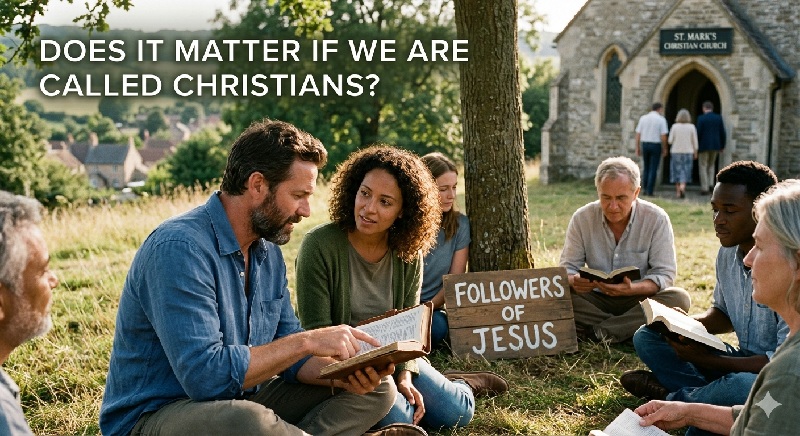
My wife and I question these days whether we should call ourselves Christians or not. We think it all boils down to what we mean by Christian.
If being a Christian is being part of a religion that meets in a building on a particular day and follows set doctrines based on what denomination we belong to, then no, we are not Christians.
If being a Christian is considered being part of a group that is basically just a different interpretation and belief from Jews, or Muslim, or Baptist, Methodist, Charismatic etc., then no, we are not Christians.
If being a Christian is being part of a group that is opposed to all other religions and only accept those who believe like we do, then no, we are not Christians.
If being a Christian has anything to do with religion, then no, we are not Christians.
In Acts 11:26 the disciples were first called Christians by people in Antioch. I always heard that they were called Christians because they were acting like Christ. The people there were calling them little Christ’s because of the way they showed the love and power of Christ. Now, if that is what is meant by being a Christian, then we are all in.
There are many ways we can describe ourselves, believers, Christ followers, disciples of Christ, Christians. Yet, the name itself does not really matter. What matters is how we live our lives. Is Christ preeminent? Are we living as one with him? Are we allowing the love of Christ to live through us, accepting others, loving others and being little Christ’s to all we meet? If not, the name really does not mean anything.
When people see us, they should see Christ. He lives within us and we should be known for the love we have for him and for the love we have for our fellow man. Do not worry so much about the label we use. Let Christ live through us each day with everyone we meet.
Michael Donahoe created Done with Religion after he and his wife left the institutional church after over fifty years within the system. He wanted a way to express his thoughts and concerns about the religious system, and tell why he and his wife decided to leave the institution but not their faith in God. They have now been outside the walls of religion for over fifteen years. He enjoys writing about his experiences and thoughts, and he wants to encourage others who are going through the religious deconstruction process. He also writes on Substack at https://deconstructiontrail.substack.com/ and https://personalmeanderings.substack.com/ Michael can be contacted by email at: jimgordon731@gmail.com
There is so much violence throughout the world. Evil is alive and well even in churches, synagogues, and mosques. Shouldn’t we fight against evil? Must God-followers always lay down their arms according to Jesus’ words and example? Does non-violent reactions really end evil. Pacifism in my opinion is unrealistic. Evil only end when all individuals and nations decide to stop victimizing others.
More and more God-followers are rightly advocating for a loving than wrathful God. Many suggest since Jesus is God Himself, we should follow His words if we think they contradict an Old Testament prophet’s understanding of God. It’s too simplistic to think the Bible was written so we can simply turn to a page to get an answer for our problem. I might give my kids different advice when dealing with similar or different circumstances. Jesus too! Should you confront, should you divorce, etc.? It depends! Seek God and the wisdom of others who are slow to be certain. See: Does God Ever Advocate Violence To Stop Evil?
Mike Edwards was added as a writer and has been a great addition to the site. Mike provides many interesting views and various ways of looking at things. He is not afraid to ask questions and he keeps an open mind as to teachings of the institutional church. Mike also has his own site where he writes at What God May Really Be Like
When it comes to Christianity with all its different denominations, interpretations, different versions of the Bible and such, it seems there are always times when we run into conflict with others.
Each of us as brothers or sisters in Christ seem to want it our way. Our church, our interpretation, our version of the Bible. We each feel that we are right and feel the need to distance ourselves from those who feel differently.
Have you noticed how religion wants to set the rules so each of us know what it takes to be a good Christian? Do this, don’t do that, stay away from this and make sure you participate in that. Be in every service and be active with this group or that group. If you are not reading a particular version of the Bible, you are just wasting your time, if you are not part of a church, you must be backslidden, at least that is the way some fellow Christians make you feel. Rules, rules, rules.
Maybe it is time to stop arguing over denominations, interpretations, versions, and church attendance and start focusing on Christ, who is to be our first love. If we can focus on God’s love and sharing that love with others, we should be able to agree to disagree on other topics.
When we find common ground in our faith in Christ, when we love God with all our heart, soul, strength and mind, we should be able to look past the minor differences we have in our various denominations, interpretations and Bible versions.
Let’s stop fighting against each other and begin to love one another as Christ loves us. Do not let the minor differences come between the love we can have for one another and the things we can share and learn through fellowship with our brothers and sisters in Christ.
*******
Michael Donahoe was added as a writer for Done with Religion as his views fit perfectly with those that are shared on this site. He and his wife have been outside the walls of religion for fifteen years. He enjoys writing about his experiences and thoughts, and he wants to encourage others who are going through the religious deconstruction process. He also writes on Substack at https://deconstructiontrail.substack.com/ and https://personalmeanderings.substack.com/
But let’s be honest, some folks read that like it came with a stack of footnotes and a link to the dress code.
They’ll cross-stitch that verse for the guest bathroom wall, but try applying it to someone who’s queer, questioning, brown, broke, or heaven forbid, a Democrat… and suddenly that love runs drier than year-old communion crackers.
We’ve got church folks playing Bible buffet, loading up on the parts that make them feel blessed and highly favored, and leaving behind the radical love stuff like it’s the weird casserole no one claimed.
Turns out “neighbor” is a pretty flexible term when your theology is shaped more by your comfort zone than the teachings of Jesus.
Culture War Christianity
Let’s stop calling it religion and start calling it what it is: A power play in polyester church clothes.
We’ve got pulpits echoing political platforms instead of prophets. We’ve got churches passing out talking points like communion wafers. And don’t get me started on “Christian influencers” who use the Sermon on the Mount like it’s a motivational poster for pyramid schemes.
This isn’t about Jesus. It’s about keeping the “wrong kind” of people out while pretending it’s holiness. It’s about using scripture like a velvet rope. It’s “love your neighbor” as long as they look like you, vote like you, and keep their weirdness tucked in.
When “Neighbor” Comes with Conditions
Here’s how it plays out: You’re welcome… Unless you make folks uncomfortable. Unless you love someone unexpected. Unless your theology still has questions. Unless you show up not knowing the secret handshake of church culture.
And let’s be real – nothing clears a pew faster than someone daring to be honest about their doubts… or about their pronouns. Folks will hand you a casserole with one hand and yank back their hospitality with the other the second you color outside the lines.
If grace has a checklist, it’s not grace. It’s church bureaucracy with a hymnbook.
Even Progressive Churches Get Messy
Let’s not let the rainbow flag crowd off the hook.
Progressive churches talk inclusion, but sometimes they just mean, “You’re welcome as long as your weirdness matches our aesthetic.”
Question the order of worship? Critique capitalism a little too clearly? Ask why the missions committee only funds projects that come with matching T-shirts and hashtags?
Suddenly you’re a “disruption” instead of a disciple.
We’ve all got our blind spots. The trick is not pretending they’re stained glass windows.
Jesus Was Not HOA-Compliant
Look, Jesus didn’t say, “Love thy neighbor, unless they make the potluck awkward.”
He sought out the people religious folks had written off. He didn’t wait for them to repent in triplicate and pass the doctrinal exam. He broke bread with the outcasts and called it community.
If your “neighbor” stops at the edges of your comfort zone, you’re not following Jesus. You’re following a caricature of him that makes you feel safe and smug.
The Kingdom he preached didn’t have membership tiers. It had open tables, messy grace, and a scandalous welcome. The kind that’ll mess up your preferred seating at the potluck, not to mention your theology.
Get Yourself a Bigger Map
So if you’re still asking, “Who is my neighbor?” Start here: The person you’ve been taught to fear. The one you were told to pity or ignore or convert. The one who makes you squirm a little.
That’s your neighbor.
And the assignment is the same now as it was in tesusy parts: Love them. Not debate them. Not tolerate them. Not pray for them from a distance and gossip in the group chat.
Love. Them.
No disclaimers. No dress code. No doctrinal fine print.
If your church can’t handle that? You might need to stop printing bulletins and start printing membership guidebooks.
A good friend of mine wrote the following paragraph. There is an old hymn that says “On Christ the solid rock I stand, all other ground is sinking sand” As important as the church is in our lives, we have to be careful not to put our hope in it. I have received a lot of help thru the church and a lot of good basic teachings. I was also saved in church but my hope is not in the church. My hope is in “Christ the solid rock”. There are times when we are alone with no Christian fellowship and maybe we can’t make it to church for some reason. We have to be able to stand as mature Christians and rely on our relationship with Christ. The church is no substitute for Christ. It is only where we learn about Him. I guess what I am saying is that we have a relationship with Christ and not the church, and He is our source of strength if we call upon Him in truth. I personally am going thru the desert in life and I have to depend on Him. He has proved His love and care for me and in reality, He is the “Son of the Living God”. Bottom line, let’s be careful to put our dependence on Him. All other ground is sinking sand….
This goes along with some of my posts about modern-day church. The organized church today is a place for believers to get together, but it is not the goal. Going to church does not make us Christians, it does not make us better people or more dedicated believers. It is a place hear about the love of God, a place to enjoy the company of other believers, and a place to reach out and encourage others. Basically, it is a Christian social organization.
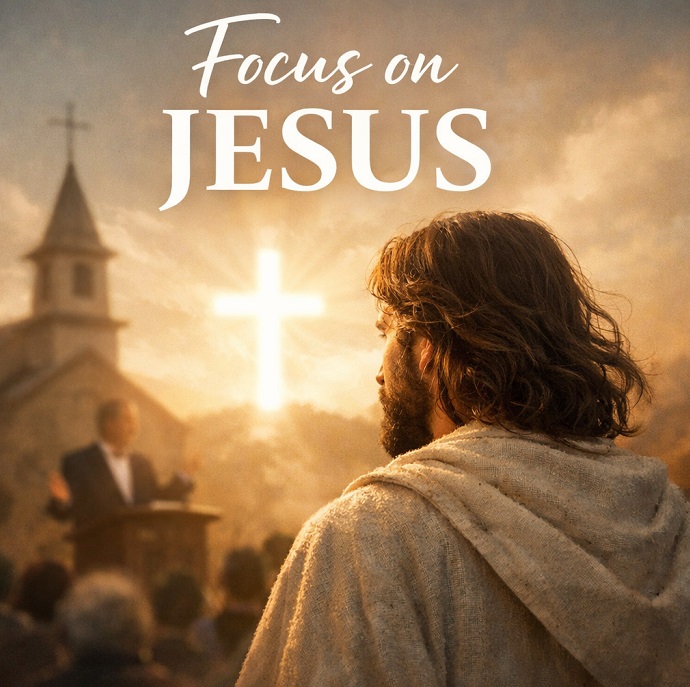
We need to stop putting the focus and emphasis on church, stop putting our eyes on pastors and realize that they are not the answer. We need to put all focus and attention on Jesus. It is Jesus we follow and worship. He is the Shepherd, the rest of us are the sheep. There are no co-shepherds, no intermediates between Christ and us. We are to follow Jesus and Him alone. We are to learn from Him, love God and love others.
There is nothing wrong with going to church, but do not put your eyes on an organization or any leaders therein. Keep your focus on Jesus. Whether you go to church or do not go to church, Jesus is the one we look to and serve. Do not worry so much about going to church, but rather be the Church. It is not a building we go to, but the people who love and follow Jesus.
*******
Michael Donahoe was added as a writer for Done with Religion as his views fit perfectly with those that are shared on this site. He and his wife have been outside the walls of religion for fifteen years. He enjoys writing about his experiences and thoughts, and he wants to encourage others who are going through the religious deconstruction process. He also writes on Substack at https://deconstructiontrail.substack.com/ and https://personalmeanderings.substack.com/
We hear the word fundamentalism often in the Christian world. I actually grew up as a fundamentalist, but never realized that was what I was because I never put much thought into all the different terms and labels. I just loved God and went to church because that was the way I thought we lived the Christian life.
When I looked up the word fundamentalism in the dictionary I found the following definitions: 1. a conservative movement in theology among nineteenth and twentieth-century Christians. Fundamentalists believe that the statements in the Bible are literally true. 2. in Christianity the belief that every word of the Bible is divinely inspired and therefore true. 3. a religious movement characterized by a strict belief in the literal interpretation of religious texts, especially within American Protestantism and Islam; the beliefs held by those in this movement; strict adherence to any set of basic ideas or principles.
Now that I know what fundamentalist means, I no longer believe I would be considered one. My views, beliefs and interpretations have changed so much over the years, especially since leaving the organized church. For some reason I never felt comfortable asking questions while in the organization. I just took what the pastor said as gospel truth and never questioned anything. Being outside the walls of religion I am letting all those questions come out and seeking truth from the Spirit of God rather than from a pastor.
Due to strick belief that the Bible is inerrant, divinely inspired and should not be questioned, I believe fundamentalism leads more to separation, condemnation and being judgmental. It seems to me being so set on specific doctrines, beliefs and interpretations can prevent us from asking questions, learning, accepting and loving others.
Are my thoughts a popular way of looking at the Christian life? Of course not! I grew up in the organized church from a very young age and spent over fifty years in it. I also used to think everything depended on my works such as attending church, tithing, doing good works and reading the Bible and believing it was perfect, completely literal and the only way God spoke to us today. There are many people still doing all this and they sincerely love God and think this is the way we are to serve God. Yet being outside of this setting, I have seen what is for me a better way. A way of depending on the Spirit within to teach and guide us. A way that loves and accepts others even when they do not see things the same.
Today the term fundamentalist Christian seems to have more of a meaning of being judgmental and unaccepting of others’ views due to the strick adherence to biblical law. I believe this is completely different from what Jesus taught and what God is like.
Jesus was not a fundamentalist; he was not even a Christian. Jesus was the personification of God who is love. Even those writings from the Old Testament where men wrote from their beliefs, ideas, interpretations and what they thought about God were shown to be wrong when Jesus arrived. He showed us that God is not a god of vengeance and hatred, but a God who loves all of us.
We are to love God and love one another. Loving our neighbor does not mean just loving those who live next door, or loving those who believe like we believe. Our neighbor is everyone else in the world. Based on my experience, it seems many fundamentalists reject those who see things differently and prefer to stay away from those who do not believe the same.
I would rather be known as a follower of Jesus rather than a fundamentalist Christian. The time of following the law and following rules and set doctrines of men have come to an end. We are now living by grace and by loving one another. The Bible should not be used as a weapon against those who Christian people think are wrong. It is a book that tells us about God who is loving and kind toward every human being.
I have actually become quite tired of using labels at all. We are all human beings who are loved by God. We should all be treated with love, respect, acceptance and have the same rights as everyone else. God did not create some people better than others; we are all created in the image of God and are loved by God equally.
There are many views and interpretations I grew up learning in the fundamentalist church that I no longer accept. I certainly have not lost my belief in or love for God, yet many interpretations that were taught by men and women in the institution I now find wrong and and some even unChrist-like.
Rather than adhere to a set of rules and institutional-taught beliefs, we are to submit to the guidance of the Holy Spirit that lives within us. Learn to hear his voice and let your life be a daily communication of his love to others.
*******
Michael Donahoe was added as a writer for Done with Religion as his views fit perfectly with those that are shared on this site. He and his wife have been outside the walls of religion for fifteen years. He enjoys writing about his experiences and thoughts, and he wants to encourage others who are going through the religious deconstruction process. He also writes on Substack at https://deconstructiontrail.substack.com/ and https://personalmeanderings.substack.com/
Helping Survivors is on a mission to help heal, educate, and empower people who have been impacted by sexual abuse, assault, or harassment. We are a passionate group of experts and advocates who believe individuals who have experienced sexual assault, abuse, or harassment deserve to know their rights and options.
Undue Medical Debt empowers donors to forgive billions in oppressive medical debt. We are dedicated to removing the burden of medical debt for individuals, families and veterans across America. Click HERE to donate now.
Doctors Without Borders help people worldwide where the need is greatest, delivering emergency medical aid to people affected by conflict, epidemics, disasters or exclusion from health care. Help support us by making a donation here:
Wishes are more than just a nice thing, they can be a game-changer for a child with a life-threatening medical condition. We grant the wishes of children with life-threatening medical conditions to enrich the human experience with hope, strength and joy. To make a donation click here:











 Done with Religion