Feeds:
Posts
Comments

Archive for the ‘Jesus follower’ Category

by Mike Edwards

John Noe in Beyond The End Times: The Rest Of The Great Story Ever Told argues there is biblical evidence that the end times spoken in the Scriptures have been fulfilled. We may be looking forward to Jesus’ second coming (the words “second coming” never appear together in the Bible), when there is evidence that Jesus has already come again and fulfilled the prophecy regarding the “end times” in Scripture. Is God coming again (i.e. rapture/tribulation/Armageddon) to destroy this world as we know it and set up His reign? This viewpoint, if incorrect, can cause passivity, while we just wait on God to “fix” things by coming again. We must do all we can for the next generation. Suffering does end eventually for those who chose life with God after death.

History suggests Jesus’ predictions of coming in the “last days” have taken place. In the first century the great tribulation was fulfilled. The temple was destroyed and biblical Judaism ceased to exist. By AD 70 the city and the Temple were burned and destroyed. The covenant nation of Israel and biblical Judaism were forever destroyed. The destructive of Jerusalem was the end of the crucial redemptive-historical epoch. Early church historians affirm Jesus came in the fall of Jerusalem fulfilling Zechariah’s end-time prophecy. [Noe, 214] A literal day in August/September AD 70 was the third most important date in human history along with Christmas and Easter. The new heaven and earth were fulfilled in AD 70 when Jesus came.

The first biblical evidence that Jesus has already come is because the biblical writers and readers expected the “end times” spoken of to happen within their generation.

Peter writes to his readers in the first century that “the end of all things is at hand.” (1 Pe 4:7) Matthew records Jesus saying “Truly I tell you, this generation will certainly not pass away until all these things have happened.” (Mt 24:34) It has been suggested a generation could mean a thousand years, but the word in the Greek was never used in this way. We should take the word to mean what it typically means unless contextual evidence suggests otherwise. Jesus in Matthew 24 was advising the end times were soon. Jesus recommends his readers flee because predictions made are to take place in their generation. (v 16) When asked about the sign of His coming and the end of the age, Jesus said: “watch out that no one deceives you….you will hear of wars and rumors of war. (Mt 24:4-6)

Many other passages suggest the readers knew Jesus’ words would be fulfilled in their lifetime. I Corinthians 7 advises how to conduct relationships in times of danger as the “time is short.” (v 29) All references in the New Testament of the “last days” refer to the times of the writer, which was in the first century. (i.e. Heb 1:1-2; Acts 2:15-17; I Tim 4:1; 2 Tim 3:1; James 5:3; 2 Peter 3:3; I Peter 1:5,20; Jude 17-19; I Jn 2:18-20) The last days are referred to in the present tense. New Testament writer confirmed the coming of the Lord is at hand. (James 5:8; I Cor 7:29-31; I Peter 4:7, 17; I John 2:18) Finally, Hebrews 10:25, 36 says: “…and all the more as you see the Day approaching…For, in just a little while, he who is coming will come and will not delay.”

Secondly, several biblical passages suggest the earth is not going to ever pass away or be destroyed like the flood.

(Gen 8:21-22 9:11) Scriptures imply the earth and the world were established to endure forever. (Ps 78:69; see also Ps. 93:1; 96:10; 119:90) Ephesians 3:9 says: the world is “without end.”  Not one passage says clearly the world is passing away. In fact, the Bible states our citizenship is in heaven, not a new heaven and earth. (Philip 3:20) We must be careful how we interpret language in the Bible. If everything were taken literally in the Bible, the Earth would have been destroyed many times over. Often, annihilation language is used to advise of upcoming judgments. Nahum 1:5 says: “the hills melt away.” The context is God’s judgment with Nineveh (1:1). Joel 2:30-31 says: “I will show wonders in the heavens and on the earth, blood and fire and billows of smoke. The sun will be turned to darkness and the moon to blood before the coming of the great and dreadful day of the LORD.”  The fulfillment of this prophecy in Peter’s day (Acts 2:16-21). Numerous passages are not predicting the ending of the world or some mass destruction but rather either God’s judgment or some major event in history by God.

Jesus said to his audience in their time that the “heaven and earth will pass way.” (Mt 24:34-35) Obviously, the earth did not pass away physically as it still exists 2000 years later. Jesus was referring to a spiritual and not physical reality. Paul says: “this world in its present form is passing away” (I Cor 7:31) and that its “time is short.” (7:29) Paul was not referring to the end of the physical world. Paul was referring to the Old Testament Law system that was to be replaced in a new order and reality in Christ before their very eyes. Revelation 21:1 says: “Then I saw a new heaven and a new earth, for the first heaven and the first earth had passed away, and there was no longer any sea.” 

Daniel when prophesying was told to close up and seal his words as the fulfillment was in the future. (Daniel 12:4, 9) John in Revelation was told to leave his book unsealed (Rev. 22:10), because his words were to be fulfilled soon. (Rev. 1:1, 3, 22:6-10) If John words were to be fulfilled centuries later as were Daniel’s, wouldn’t have John been told to “seal” his words? It is possible the new heaven and new earth that John spoke of was not physical but a spiritual reality. This spiritual reality happened when Jesus came again through the destruction of the temple and Jerusalem in A.D. 70 and thus the law went with it. Jesus is the fulfillment of the law. Isaiah’s new heaven and earth (65:17-18; 66:22) are Messianic and totally covenantal. The “new heaven and earth” spoken of speaks of a present reality in the time of the writer of Revelation 21: 3-7 Jesus was coming again in their time.

But, don’t the Scriptures assume the coming of Jesus described during Jesus’ generation and during Paul’s audience time is visible? 

In 2 Thessalonians 2:1-12 Paul assured his audience they have not missed the “day of the Lord.” Why was Paul’s audience fearful they could miss the coming of Jesus if such a coming is supposedly a rapture-removing, visible, world-ending coming? The audience obviously thought Jesus’ coming was to be in their lifetime. Only a non-visible, spiritual coming of Jesus could possibly be missed. Clearly, the disciples did not think of Jesus’ coming being visible as they ask “what will be the sign of your coming and of the end of the age.” (Mt 24:3) What about Acts 1:9-11? One might insist since Jesus left the earth physically, that He must “come back in the same way you have seen him go into heaven.” (v.11) An equal argument can be made though about Jesus’ coming being invisible. “He was taken up before their very eyes, and a cloud hid him from their sight.” (v.9)

Christ’s “coming on the clouds” is a common metaphor borrowed from Old Testament portrayals of God descending from heaven and coming in power and glory to execute judgment on a people or nation. In all the historic comings of God in judgment, He acted through human armies, or through nature, to bring destruction. “See, the Lord rides on a swift cloud and is coming to Egypt…” (Isa 19:1) For the earthly fulfillment, see Isaiah 20:1-6. Also, “Look! He advances like the clouds, his chariots come like a whirlwind.” (Jer 4:13) “Sing to God, sing praise to his name, extol him who rides on the clouds…” (Ps 68:4) Because of this background, Jesus’ disciples would have understood what He was talking about in his Olivet Discourse about coming back on the “clouds of heaven.” (Mt. 24:30) In all these real biblical comings of God in the Old Testament, God was never physically visible; He was unseen by human eyes! Cloud-coming is the language of divine imagery. Jesus employed the same figure of speech for his end-time prophecies. For Jesus and a 1st century Jew, coming “on the clouds” was not a claim to come visible to the human eye.  Jesus did not come in body, yet He was present in judgment in the events of the Roman-Jewish War and the final destruction of Jerusalem in A.D. 70 (Noe, 183-185) Before Jesus’ messianic work no one had ever gone into heaven except Jesus. Upon Jesus’ completed work the resurrection of the saints took place and some actually visited Jerusalem in bodily form. (Mt 27:51-53)

Doesn’t Scriptures say the gospel has to be preached to all nations before Jesus comes again? 

In the Olivet Discourse it says “and this gospel of the kingdom will be preached in the whole world as a testimony to all nations, and then the end will come.” (Mt 24:14) It is likely the writer meant the civilized world at that time which was the Roman world. It seems if the writer meant the entire global world and every individual they would have used the Greek word “kosmos” as used in Mathew 24:21. In Acts 2:5 Paul at Pentecost says: “now there were staying in Jerusalem God-fearing Jews from every nation under heaven.”  Surely, Paul was making a global statement and not intending to mean every individual in every nation. Paul states in his time that the gospel has been proclaimed “to every creature under heaven.” (Col 1:23) The gospel has already been preached to all nations and was not something in the distance future that has to be done before Christ can come again.

Jesus has come! When Christians die, they go to heaven and are not in limbo. We often say “Jesus is with us.” But, how can we say this if He hasn’t returned? Hebrews 9:28 says Jesus will appear a second time not to bear our sin but to bring salvation. Our salvation is not still in limbo. Isn’t our salvation complete as predicted in I Peter 1:5 when Jesus came with the destruction of the temple in A.D. 70? “Who through faith are shielded by God’s power until the coming of the salvation that is ready to be revealed in the last time.” The new earth and heavens have arrived. In A.D. 70 all the old things were fulfilled and transformed anew in Christ. God no longer dwells in temples made with hands. His people are its temples. This heavenly city is the glorious dwelling place of those believers who overcome and keep God’s commandments on His earth. The Holy city’s symbolic description in Revelation 21 and 22 is given to encourage all saints of every generation. We can win this inheritance and enter and live daily in this joy of this community with God. Who wants to miss what we have now in favor of futuristic postponement theologies? Who would want a revival of the old Judaic system, when they have the hope and promise of something better that has replaced it? Our inheritance is more glorious, more powerful, and far more joyful. It’s an incomparable inheritance, and it is here on earth and available in Christ. It’s the ultimate reality, the ultimate community, and the ultimate joy for God’s people here on earth. Read about it anew in Revelation 21 and 22. Are you inside or outside the city? The new Jerusalem awaits! (Noe, 264-265). 

  • Noe suggests a visible coming of Jesus in not mentioned in any historical Christian doctrines until 1560 AD (First Scottish Confessions of Faith). Malachi 4:5-6 says the prophet Elijah will be sent, but clearly this fulfillment was not visible but through the ministry of John the Baptist. (Mt 11:14)

Mike Edwards was added as a writer and has been a great addition to the Done with Religion site. Mike provides many interesting views and various ways of looking at things. He is not afraid to ask questions and he keeps an open mind as to teachings of the institutional church. Mike also has his own site where he writes at What God May Really Be Like


Read Full Post »

by Michael Donahoe

I recently saw a news article about one group of Christians were picketing another church group. Supposedly they were picketing because they felt the church group, who allowed gays and women who had abortions into their assembly, was being soft on sin. 

I can only assume that the picketers thought the gays and the abortion people were too big of sinners to be in with the religious folk. 

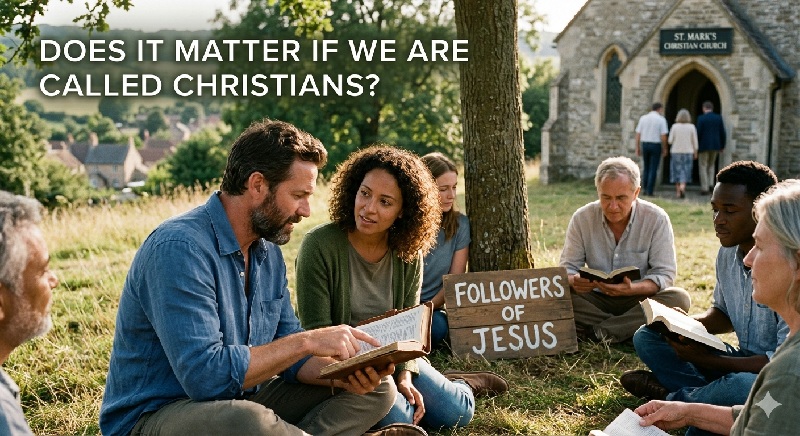
Seems the church assembly was being more Christ-like to me, but the whole situation made me feel a little ashamed to be called a Christian. In fact, I think it is a good idea to give up being called a Christian. It is just another man-made religion, and I have come to a point in life that I am done with religion. Rather than being called a Christian, I think it makes more sense to say I am a follower of Jesus. He did not start Christianity and he did not come to start any kind of religion. 

Being a Christ follower is a daily 24/7 lifestyle, not something to be done once a week in a building. It is not following a doctrine or a set of rules and regulations.

As a Christ follower, we accept all people and we love all people, like Jesus did when he walked this earth. 

This does not mean we agree with everyone. It does not mean people can live anyway they want and have fellowship with God. Yet once they come to God, the Spirit comes to live within them, and he will guide them in their daily lives and actions. It is not our job to condemn others. Jesus command under the New Covenant is for us to love God and love others. 

Like the picketers and church group mentioned above, a lot of Christians today spend more time fighting and arguing amongst themselves while the world watches and laughs. 

As followers of Christ, we need to keep in mind that we, the Church, are the body of Christ in our world. We may be the only “Jesus” many people see. We should focus on Christ as our ultimate source and lay down our personal feelings. Our goal should be more of Him and less of us. 

Michael Donahoe created Done with Religion after he and his wife left the institutional church after over fifty years within the system. He wanted a way to express his thoughts and concerns about the religious system, and tell why he and his wife decided to leave the institution but not their faith in God. They have now been outside the walls of religion for over fifteen years. He enjoys writing about his experiences and thoughts, and he wants to encourage others who are going through the religious deconstruction process. He also writes on Substack at https://deconstructiontrail.substack.com/ and https://personalmeanderings.substack.com/ Michael can be contacted by email at: jimgordon731@gmail.com

Read Full Post »

by Michael Donahoe

To those of us who have grown up in church, have you ever felt that you needed to know all the answers? Were you afraid to ask questions? When a non-believer questions your faith, or asks something about the Bible, do you feel you have to know the answer and be able to explain it to them? 

I know I have always felt that way. Although the more I think about it and the more I run into people who have all sorts of questions, I have come to realize that I do not have all the answers…and that is okay. 

Even my wife and I talk we come up with questions we cannot answer. We have come to realize that God is too big for us to figure out. If we do not have all the answers for ourselves, how could we have all the answers for everyone else? 

Basically, questioning is not wrong. I think we have been taught that we should not question the pastor, the Bible, our faith, even God, but God is not afraid of our questions. What is wrong with us saying ‘I don’t know’? 

Admitting that you do not know does not mean you are not a good Christian. Admitting that you do not know does not mean your faith is shallow or we do not believe God. 

If we knew everything, what kind of a God would we be serving anyway? The Spirit will be teaching us throughout our entire life here on earth, and we still will not begin to know it all. 

While Jesus was on earth, he basically told stories and parables. A lot of the time, he did not give an answer but usually asked another question. I suppose if he gave a direct answer, we would have made it a basic doctrine by now anyway. 

Do not be afraid to ask questions. Do not be afraid to say I don’t know. That is the best way to learn. God is perfectly capable of guiding us to the truth in His timing.

Michael Donahoe created Done with Religion after he and his wife left the institutional church after over fifty years within the system. He wanted a way to express his thoughts and concerns about the religious system, and tell why he and his wife decided to leave the institution but not their faith in God. They have now been outside the walls of religion for over fifteen years. He enjoys writing about his experiences and thoughts, and he wants to encourage others who are going through the religious deconstruction process. He also writes on Substack at https://deconstructiontrail.substack.com/ and https://personalmeanderings.substack.com/ Michael can be contacted by email at: jimgordon731@gmail.com

Read Full Post »

by Michael Donahoe

My wife and I question these days whether we should call ourselves Christians or not. We think it all boils down to what we mean by Christian. 

If being a Christian is being part of a religion that meets in a building on a particular day and follows set doctrines based on what denomination we belong to, then no, we are not Christians. 

 If being a Christian is considered being part of a group that is basically just a different interpretation and belief from Jews, or Muslim, or Baptist, Methodist, Charismatic etc., then no, we are not Christians.

If being a Christian is being part of a group that is opposed to all other religions and only accept those who believe like we do, then no, we are not Christians.

If being a Christian has anything to do with religion, then no, we are not Christians.

In Acts 11:26 the disciples were first called Christians by people in Antioch. I always heard that they were called Christians because they were acting like Christ. The people there were calling them little Christ’s because of the way they showed the love and power of Christ. Now, if that is what is meant by being a Christian, then we are all in. 

There are many ways we can describe ourselves, believers, Christ followers, disciples of Christ, Christians. Yet, the name itself does not really matter. What matters is how we live our lives. Is Christ preeminent? Are we living as one with him? Are we allowing the love of Christ to live through us, accepting others, loving others and being little Christ’s to all we meet? If not, the name really does not mean anything. 

When people see us, they should see Christ. He lives within us and we should be known for the love we have for him and for the love we have for our fellow man. Do not worry so much about the label we use. Let Christ live through us each day with everyone we meet. 

Michael Donahoe created Done with Religion after he and his wife left the institutional church after over fifty years within the system. He wanted a way to express his thoughts and concerns about the religious system, and tell why he and his wife decided to leave the institution but not their faith in God. They have now been outside the walls of religion for over fifteen years. He enjoys writing about his experiences and thoughts, and he wants to encourage others who are going through the religious deconstruction process. He also writes on Substack at https://deconstructiontrail.substack.com/ and https://personalmeanderings.substack.com/ Michael can be contacted by email at: jimgordon731@gmail.com

Read Full Post »

by Mike Edwards

Let’s define believer. I am not referring to Christianity or any particular religion. A believer can be one who believes in God or a Supreme Being.  Jesus disciples likely believed in a God or what Jesus taught, but Jesus only encouraged them to follow Him. He didn’t require certain beliefs and the disciples initially did not know Jesus as the Son of God. Do you follow a loving God’s teachings?

What may be two main reasons people today reject Christianity.

First, people are told they must believe in certain doctrines. Religions sometimes call them Creeds. Christianity may be one of the main religions that pushes beliefs in creeds as central. Such as Jesus is fully man and fully God. Then you get into God is omnipresent, etc. I won’t bore you. My main point is you don’t need to know or believe in Creeds to be a believer. Jesus didn’t require it of his disciples. Their beliefs progressed as they got to know Jesus by simply following Him.

Secondly, I believe the main reason many reject Christianity is the beliefs claimed to be true of God. The problem could be what you are hearing about God! Hell is certainly a message Christians get wrong. I am convinced a literal Hell is a biblical myth.  See here.  We get wrong that God thinks women can’t serve in the same religious or marriage roles that men can. Another myth. See here. Also, we get wrong that God condemns gays according to the Bible. Another myth. See here. But the biggest myth may be that God’s main message according to the Bible is that salvation is about going to Heaven or Hell rather than how to live life here on earth. See here:  What Really Is The Gospel According To The Bible?

People reject God based on claims about hell, women, or gays. But it is so important to know that God cares about you here and now and not about just the afterlife. If Christianity would drop their insistence or supposed beliefs about God, I believe many more may be willing to follow God since they are inclined to believe in a Supreme Being.

It doesn’t matter what religion you claim even according to the Bible

Jesus said: “I am the way, the truth, and the life, no one comes to the Father except through me” (Jn 14:6). Did Jesus really mean God only saves those who accept Jesus? Keep in mind the majority of people born into this world have never heard of Jesus or had a Bible. This verse could easily be interpreted to mean Jesus’ way of life is the best path toward God. The path to God is through love. (See God After Deconstruction, Oord/Fuller Chapter 9). We Christians need to be less condemning and more open to God’s love and message to people of all religions. See What religion goes to heaven

What one belief only matters according to all religions?

Many religions claim one main belief. Christianity, Judaism, Hinduism, and Buddhism—the strongest common ground is treating others well. Jesus said when asked what the greatest commandment was:  “Love God and love your neighbor.” [Matthew 22:36-40] Loving God is following God’s ways, surely meaning loving your neighbor as you wish to be loved.

But what about the resurrection and Jesus is the Son of God

Many didn’t believe Jesus claims of resurrection until seeing the spike marks three days later after the Cross. Maybe if you saw someone die on a Cross and saw them alive days later, you would believe too. And that Jesus was more than human. Are you leaning toward than away from God. The Good News throughout the Gospels refers to a Kingdom here on earth now. The kingdom of God “has come upon you” (Mt 12:28) and “is in your midst” (Lk 17:21).  God’s presence back then and now is available to influence godly living here on earth

 So, do you believe in God and the golden rule?

If you believe loving others like you want to be love is central in living, you are on the path to a relationship with God. None of us act on this belief perfectly. If you don’t believe this, good luck on your death bed regarding relationships. Want to die with few regrets. Follow godly living. Want your relationships to suck, don’t follow the golden rule. Few will show up at your funeral. So, if you are inclined to believe in a loving God, whatever you imagine a loving God is like and aren’t a terrorist, you may be a believer.

Mike Edwards was added as a writer and has been a great addition to the site. Mike provides many interesting views and various ways of looking at things. He is not afraid to ask questions and he keeps an open mind as to teachings of the institutional church. Mike also has his own site where he writes at What God May Really Be Like 

Read Full Post »

by Michael Donahoe

I find it interesting that no matter what a person believes, someone always has a completely opposite view. We get excited about hearing some truth that really connects, and the next thing we read is an article by another person with a completely different view that completely disagrees with what we just heard. 

Even more than that, most of us Christians get mad when someone disagrees with us and our personal ideas. We get on Facebook and make ourselves look crazy because we talk about brotherly love, then we fight and argue with someone because they interpret things differently, and mostly about things we cannot prove one way or the other.

Sadly, this is really not that unusual because we are all different. We have different backgrounds, different viewpoints and opinions, and different ideas on how to live. We really have to stop and think that whatever it is we believe, whatever our interpretation, we have to realize that not everyone will agree with us. There is no reason for us to get mad at someone else for being different. There is no reason why we cannot accept each other even in our differences. 

This life is all a matter of faith. No matter what it is spiritually speaking, no one can really prove what is right and what is not. Just because someone has a different interpretation does not mean they are right or wrong. 

We need to keep our ears open to the leading of the Spirit and follow our own path looking to Jesus. That does not mean any and every path is the right one, but we cannot be the judge of who is right and who is wrong. Jeremy Myers, in his book ‘Dying to Religion and Empire’ states, “The beautiful thing about following Jesus is that while He leads us all in the same direction, there are millions of different paths He can take to get us there. His goal, of course, is to advance the Kingdom of God on earth through the people of God who are being conformed into the image of God”. Our goal is to follow Christ as he leads us individually, and then be ready to love all people, no matter if they are on the same path or not. 

Let’s stop arguing, fighting and demanding that everyone agree with us, and love and accept those we meet along the journey. I think God is big enough to lead us along our path while being loving, kind and accepting to those walking their path. After all, we are all just walking each other home. 

Michael Donahoe created Done with Religion after he and his wife left the institutional church after over fifty years within the system. He wanted a way to express his thoughts and concerns about the religious system, and tell why he and his wife decided to leave the institution but not their faith in God. They have now been outside the walls of religion for over fifteen years. He enjoys writing about his experiences and thoughts, and he wants to encourage others who are going through the religious deconstruction process. He also writes on Substack at https://deconstructiontrail.substack.com/ and https://personalmeanderings.substack.com/ Michael can be contacted by email at: jimgordon731@gmail.com

Read Full Post »

by Mike Edwards

If a child brings up the topic Hell, I would first ask a child what they have heard Hell is. It is hard to believe a loving God would create a place to torture those who didn’t believe while a short time here on earth. I personally don’t think God lights you on fire and doesn’t let the fire go out. The only reason one may believe in a literal Hell is because it is believed to be claimed to be real in a Book (Bible) that supposedly God inspired (controlled the writers having correct views of God written down). But it turns out the Bible can be interpreted to believe Hell is not a literal place. See here.

What do I tell adults about the afterlife?

First one must decide what they believe happens after one dies. One of the main topics in churches is about aiming for eternal life. There is an alternative view what Jesus said about eternal life that is not often taught. Jesus defined eternal life as beginning in the here and now (Jn 17:3), not what awaited in the afterlife. Jesus was asked by a religious leader how to have eternal life. (Lk.10:25-37). Jesus simply said to love God and your neighbor. Jesus answered as if “Eternal” appears to be on the quality not quantity in life. Jesus often spoke of a life worth living being a loving life empowered by God. Jesus’ salvation was about living a meaningful life here on earth with God’s help. The Bible/Jesus/God’s message isn’t dropping to your knees to avoid Hell to go to Heaven after death, but start loving now – a path toward great relationships. 

Few acknowledge the Bible might even declare all go to heaven

It is suggested by many religious leaders that according to the Bible some go to hell and some go to heaven, though doubtful a literal Hell exist. The problem is the Bible, being literature, requires interpretation. It is possible to interpret the Bible as claiming all eventually go to be with God after death.  See here.

We can’t know definitely about the afterlife. So, let your imagination wonder about a loving God/Creator. I am convinced Heaven is a place everyone goes after death here on earth to be with God if so desired. It’s what God wants. In case you don’t believe that, you tell your kid Santa Claus is real and surely you don’t believe that is true – overweight guy visits every house in the world in one night on a sled pulled by reindeers and goes down every chimney. You tell them they will always be safe flying, but you don’t know for sure their plane won’t crash. Tell kids what you think a loving Creator would plan for their creations. Or what would you do as a loving parent? See What Religion Goes To Heaven

So, why not live like Hell!

We are free to speculate what a loving God might do. Go ahead and live like Hell while here on earth! Careful the regrets you, your family, and friends will feel at the end of your life. God only seeks to influence you to avoid a life full of regrets. We are told the message of the Bible is Jesus coming to give you salvation to save you from Hell so you could enter Heaven. I believe Jesus spoke of loving God not to get into heaven but to receive help in loving others as you love yourself now. I seek influence from God in pursuing a life not full of regrets. Try it! It’s on God to come through for you if you choose to follow. Jesus when leaving this earth spoke of having God’s spirit within us.  If you refuse to love, you may end up a lonely, regretful soul. There is a heavenly or hellish way to live life!

Mike Edwards was added as a writer and has been a great addition to the site. Mike provides many interesting views and various ways of looking at things. He is not afraid to ask questions and he keeps an open mind as to teachings of the institutional church. Mike also has his own site where he writes at What God May Really Be Like
Read Full Post »

by Michael Donahoe

My wife and I have some friends who are very much involved and active in certain areas of ministry. We were recently talking about the passion these friends have for their particular ministry.

That got me thinking about passion. The dictionary says passion is a strong or extravagant fondness, enthusiasm, or desire for anything. This certainly describes our friends, and we are happy that they are involved so much.

We both stated that we felt we did not have a passion like this for any particular thing. It actually made us feel a little disappointed and wondered why we did not seem to have passion like our friends.

I think passion is great, yet in some ways, passion for the wrong things or done in extreme ways can be very tiring and frustrating. A passion for money and business success can cause people to work many hours, consuming their energy and taking time away from family. Passion like that can gradually drain your strength and purpose. Yet, people who have passion for showing God’s love by helping others, and using it in moderation, can see their lives enriched and strengthened and often seem to have endless energy.

The only trouble I see with passion is that it can sometimes become an obsession with the ones involved, and they can begin to expect everyone to have the same passion they have for the same thing. This is where we must realize that God designed each of us with different gifts, abilities and passions, and they are displayed differently in each of us.

I think each of us has a passion for what God designed us to be. We may not be as outspoken or even act the same way as others with passion, but each of us reacts in a way that is effective according to the personality and gifts with which we are designed. We may not even realize the passion that shows through to others, but rest assured, God will work through us to touch others with love and fulfill the purpose we were designed to achieve.

We are all designed differently, and we all act and display our uniqueness in various ways. It is wrong to think we are not useful to God because we do not act like someone else. God works through us based on the way we were created. We are each unique temples of the Holy Spirit, and we each make an impact on those we have contact with through the power and love of God within us.

Michael Donahoe created Done with Religion after he and his wife left the institutional church after over fifty years within the system. He wanted a way to express his thoughts and concerns about the religious system, and tell why he and his wife decided to leave the institution but not their faith in God. They have now been outside the walls of religion for over fifteen years. He enjoys writing about his experiences and thoughts, and he wants to encourage others who are going through the religious deconstruction process. He also writes on Substack at https://deconstructiontrail.substack.com/ and https://personalmeanderings.substack.com/ Michael can be contacted by email at: jimgordon731@gmail.com

Read Full Post »

by Michael Donahoe

The Ten Commandments, tithing, church attendance, do this, do that, do not do this, stop doing that….we Christians like to make things so much more difficult on ourselves. We have the mentality that in order to be approved by God we need to obey the law and be busy doing things for Him. I guess that by doing these things we feel better about ourselves and more spiritual because we feel we are doing something for God. 

In Galatians we are told that we are not justified by the works of the law. We are justified by faith in Jesus. He lived a perfect life here on earth. He lived a life that fulfilled the Law, or the Old Covenant. He said, ‘it is finished’, meaning the old agreement was fulfilled, complete and done.

When He died and rose again, he began a new covenant, a covenant of grace. He restored us to fellowship with God. We are now raised up as new creatures in Christ and live as the righteousness of God because of the grace we received through Christ. 

We no longer live according to the Old Covenant. We no longer need to try to live by following the law. We are now free in Jesus, and we live each day by faith in Him. We live out of love for God because of the grace that was given to us by Jesus. When we continue to try to follow the ten commandments and Old Testament Law, we are saying that the death of Jesus was not enough. 

Enjoy the freedom Jesus provided to you. Do not bind yourself with all the rules and requirements of the law. Live a life being free in Christ and live it out of love. Love for God, love for the one who restored our fellowship with God and love for one another.

*******

Michael Donahoe was added as a writer for Done with Religion as his views fit perfectly with those that are shared on this site. He and his wife have been outside the walls of religion for over fifteen years. He enjoys writing about his experiences and thoughts, and he wants to encourage others who are going through the religious deconstruction process. He also writes on Substack at https://deconstructiontrail.substack.com/ and https://personalmeanderings.substack.com/

Read Full Post »

by Mike Edwards

I write a lot about this topic as I named my blog over 15 years ago  What God May Really Be Like  So I often revisit what God may really be like. I used the word “May” because I was countering dogmatism growing up in church. Who knows what God is really like unless God talks to you directly? I am claiming that if you are told something about God that goes against universal moral intuitions, question it – such as is a literal Hell real? There are many interpretations of the English word “Hell” in the Bible. Would a loving God really create a torturous afterlife place for unbelievers? Intuitively, the only God worth believing in must be perfectly loving and moral. We can only assume what love is by comparing to perfect human love.

God must be good intuitively! 

Many of us left organized religion, not God, because claims about God’s character was contrary to our deepest moral intuitions. It doesn’t make sense why a Creator wouldn’t love the same way we humans believe we were seemingly created by a Creator to love (aka goodness vs. evil). Even those who try to defend God’s violent ways in the Old Testament agree, or they wouldn’t attempt to rationalize why a supposed inspired/infallible Book by God reports bad actions contributed to God. We can’t always understand what perfect love is – to help a drug addict or let them hit bottom – but even the Bible assume we can understand God’s perfect love/goodness through human lens – “be perfect, as your heavenly God is perfect.” (Mt 5:48).

God can only be understood through “goodness” lens anyway

If God is bad or evil at times, we can only understand such actions by comparing/exploring what is good. If God was supposedly unloving, we can only pursue such knowledge by discussing what true love it. It seems we can only rely on human reasoning to decide what interpretation of the Bible is more likely, what are loving human actions toward others, or understanding what God’s love is like. 

How do we know what “good” is? 

Parents create/have children to be loved and teach how to love others. An existing Creator surely creates desiring to love and be loved. God surely love how we know parents should love their children. We all seem to know the question we ought to ask ourselves – am I loving others perfectly? That is how God loves. We know how we should love and how God loves – are you loving others like you want to be loved? We may not always be certain the most loving action, unless my son or son-in laws mistreat women!  There is a reason anyone who justifies selfishness is often friendless.

Our inborn sense of good and evil, not an ancient Book, tells us sexual abuse or murder is immoral. Self-evident morals aren’t hidden in any Holy Book If one thinks their Creator loves contrary to universal moral intuitions (should infidels be destroyed in this life?), it is because of their interpretation of a supposed inspired Book by their God. When there is debate about laws we must have discussions.

Surely, perfect human love is the same as Godly love

The only God worth believing in must be perfectly loving as opposed to in any way hateful. God’s love surely is the same as supreme parents – other-directed not self-consumed. Love gets excited when we do well and make a difference in the lives of others. Love anticipates, hopes for my success, believes in me, pulls for me even when failing, because I do the same for my children. We doubt God but God still loves. Parents bring children into the world hoping their children freely reciprocate their love for authentic relationships. Why would God be any different.

Why wouldn’t God be most like what our moral intuitions suggest? 

God’s goodness isn’t just according to the Bible!

Ancient literature is subject to interpretation. Even if the writers understood their God perfectly, which we can’t prove, we can’t claim our interpretations are perfect. The truth is biblical scholars who have a deep respect for the Bible don’t agree what God thinks about gays, women, hell, and other moral issues. See hereSee here. See here.  Gays are supposedly condemned, women’s leadership roles are limited, despite their gifts and a fiery torturous afterlife awaits infidels – all in God’s name

A Book cannot be the sole determinate of what God is like since the same passages are subject to different interpretations. Also, the majority of people born in this world did not have a copy of the Bible. We are left to wonder how a Perfect God, the only God worth believing in, truly loves. It is only intuitive that a Creator loves the ways their creations ought to love one another. We all seem to know the question we ought to ask ourselves – am I loving others like I want to be loved. It isn’t presumptuous to imagine what a loving God is like through our moral consciences. See here.

 What was Jesus’ thoughts on God’s goodness or love? 

Many, including me, are convinced to understand Jesus is to understand God. It seems Jesus came to suggest salvation is a current life of love, not a future destination to avoid Hell. Jesus told the woman who had committed adultery: “go now, and leave your life of sin” (John 8). Where was Jesus’ evangelical spiel? Jesus was asked by a religious expert how to have eternal life. He simply said to love God and your neighbor (Lk.10:25-37), since loving God leads to loving others. Jesus confronted the religious who kept laws but didn’t follow Jesus with their heart. Godly love surely seeks to empower us to be the unselfish people we deep down desire to be for a better world. See here.

Goodness or Godly love is exactly the same!

The Bible doesn’t always describe God in perfect human moral terms, so may God-believers resort to suggesting God’s actions are sometimes a mystery. Believers assume God must be perfectly good so rationalizations are made, since they assume the entire Bible is approved/inspired by God, They must explain why the Bible reports God acting violently or destructively. See 9 Reasons To Not Trust The Bible’s Claims About God! But a Book can’t be the definitive word about God since subject to different interpretations, and we can’t prove God always controlled what the writers understood and wrote about God.  

How you imagine God’s love can determine how you relate to God

  • The truth is we can’t know definitely what an invisible God’s love is like. But the only God worth believing in loves perfectly. What is perfect love?
  • I propose we can know what God’s perfect love is like but imagining what a perfect parent’s is like. We can’t always know what perfect love is – whether to let an addict hit bottom or force them into rehabilitation – but only the guilty don’t know sexual abuse or domestic violence is evil.
  • If we think God is hard to please and pissed off about sin rather than what sin is doing to us, we may judge others just as harshly rather than showing patience and mercy
  • If God is really a warlike God according to the OT, we will use such behaviors to possibly justify going to war when we should
  • If God condemns gays, we will condemn gays out of devotion to God
  • If God thinks men have authority over women in some positions, that will filter down to your wives, daughters, and friends and stifle their gifts.

I’m convinced belief in a benevolent God, according to common moral intuitions, makes you kinder. We often treat others the way we think God treats us.  How has God’s threats of punishment helped you break away from bad habits or behaviors you long to change? I guess fear God if helps to avoid consequences of destructive actions. But if struggling and need encouragement and mercy, a loving God awaits with open arms. Grace or authoritativeness doesn’t guarantee change, but I believe we best change because of a friend’s or God’s love and acceptance. See It Matters If Your God Is Nurturing Or Authoritative!

Mike Edwards has been writing for Done with Religion for some time and has been a great addition to the site. Mike also writes on his own site that can be found at What God May Really Be Like  He can be contacted by email at: medwar2@gmail.com

Read Full Post »

Older Posts »