Feeds:
Posts
Comments

Archive for the ‘Acceptance of Others’ Category

By Mike Edwards

I wrote HERE my personal story with my best friend in our inability to discuss our different spiritual beliefs. We used to be in total agreement until my views begin changing of what God may really be like. We have agreed to disagree, and thankfully still have a great relationship. Part of the challenge may be our long history together. But I am convinced there are ways for friends to discuss their vastly different beliefs, whether they be religious or political in nature, though it does take two to tango.

What quality is essential for open conservations?

Talk to others like you want to be talked to. You must control your emotions. Discuss or fight fairly or forget it! Disagreements are normal in relationships. At least one party must initiate the possibility of an open conversation. Time will tell if others will follow your lead. When discussing if sexual abuse is wrong, most rational people will agree. If you are discussing what God is really like, you may be wrong. Unless you have met God in person! If you are discussing what policies are best for the greater good (immigration, climate, covid mandates), you may be wrong.

What societal conditions make open conversations difficult?

One may not feel confident defending their belief, but there are other reasons why we avoid discussions. If only one opinion is presented in main news sources, those with differing beliefs than the common narrative are often shut down and thought of as conspiracists – not exactly a conversation starter. Also, certainty rather than uncertainty comforts individuals psychologically. One may believe what seems to be the popular narrative because unknowing can create confusion or anxiety. Disagreeing with the popular science narrative can lead to being ostracized. Disagreeing with church folks about God’s character can lead to isolation. When universal agreement doesn’t exist, one must be allowed to form their own opinions since uncertainty exists.

How do we determine truth from uncertainty?

Openminded people accept they may be wrong. We can know we are right when there seems to be almost universal agreement on the topic of concern. Most don’t defend rape, sexual abuse, or stealing from others. But rational people do not agree on matters such as immigration policies, climate policies, marijuana legalization, if God condemns gays, etc. We must be willing to defend our views among one another rather than shut down those we disagree with. Those fortunate enough to live in a democratic society must accept the vote of the majority when comes to law setting. You can still defend your position in hopes of a future vote.

What to do when one refuses to allow your opinions 

We can strive to be the better person in conversation. But we have every right to oppose those who refuse to accept uncertainty and fight fairly, regardless of their motives. This can be done civilly but lack of freedom of speech is important for future generations. Leaders must be held accountable to be open-minded than certain. We can try to engage with those who insist on certainty when it doesn’t exist, but in time one may need to move on. We can stop labeling those who disagree with our biblical interpretations as heretics. We can stop calling those who disagree with our views of science or politics as conspiracists. Imagine how different as a people we would be if religious and political folks were open to discussions for the common goal of pursing the greater good!

How Can We Have Discussions With Those Having Different Beliefs?

MikeEdwardsprofilepic125

Mike Edwards has been writing for Done with Religion for some time and has been a great addition to the site. Mike also has his own site where he writes that can be found at What God May Really Be Like  He can be contacted by email at: medwar2@gmail.com
Read Full Post »

By Mike Edwards

I hope some readers can relate to my experience and journey with a best friend for decades. Many of us are done with religion but not God. We have stopped going to the institutional church for many reasons such as we just can’t agree with the God being preached. But we still love discussing God with others. Those not into God may assume believers have a hidden agenda to change their beliefs. But shouldn’t we be able to at least talk to God-interested friends?

History of friendship can be a problem

I wrote here My Story – Spiritual Journey. My parents were into God and for whatever reason I never rejected such a belief. I continued to attend church until I was about fifty. I became somewhat of a prophetiser in my twenties and thirties. I suppose being taught that unbelievers were going to burn in Hell forever after death didn’t help. Turned out a literal Hell is doubtful according to the Bible. See here.  My passionate and dogmatic ways carried over with my children. When one kid mentioned evolution as a way humans came into existence, I wasn’t exactly the most open-minded Dad. I have apologized, but I am not sure my friend or children believe I have changed when it comes to discussing God.

One challenge is discussions about God can undermine one’s faith

I should share my best friend and I use to have the same beliefs about God. I believe my best friend avoids discussion about God because it may create doubts in their own faith. To question what one has heard in church all their life can lead to uncertainties about God. When challenged if Hell is real though taught all your life Hell is real, it can create anxiety what else taught may be in question. Speaking to a questioner like me isn’t always comforting. One reason I left the church was because I felt my skepticism was divisive for newcomers who came because of what leadership taught. It didn’t help that leadership didn’t exactly invite differing opinions of what God may really be like. 

Another potential reason conversations are difficult

We must examine if we control our emotions when discussing our beliefs. I think I do now. Do you? I mentioned some friends may not enjoy a discussion about God as much as we do, as challenges to one’s belief can cause anxiety. Another challenge is if the culture supports discussing diverse opinions.  Are those with differing beliefs than the common narrative shut down and labelled conspiracists? The Church often labels those with different opinions of God as heretics. When only one political or religious opinion is presented, many are quick to consider their friends conspiracists or heretics – not exactly a conversation help with your best friend or any friend.

Can a friendship continue with important conversation challenges?

I have shared what I think are the main reasons for a stalemate with my best friend. The reader may want to explore their own personal reasons. I consider myself NOW an open-minded person, but legitimate reasons may exist for discussing differing opinions between two friends. Discussing God for some may be the same as discussing politics. The differences are just too far apart. My friend and I have found it is best to agree to disagree, but somehow we still have an a great relationship. It could even be better though. We share other interests. Personally, I still hope someday we can discuss the most important thing in our lives – a relationship with God.

Why Can’t Two God-Believing Friends Discuss God?

MikeEdwardsprofilepic125

 Mike Edwards has been writing for Done with Religion for some time and has been a great addition to the site. Mike also has his own site where he writes that can be found at What God May Really Be Like  He can be contacted by email at: medwar2@gmail.com

Read Full Post »

by Michael Donahoe

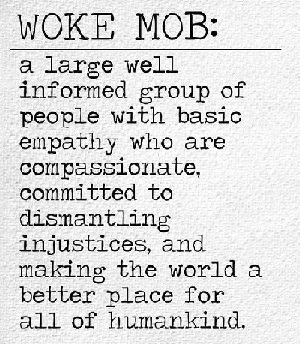
I hear this term often these days, so I finally decided to look up the definition and see exactly what it meant.

It seems we hear it mainly as a negative thing, yet when I looked up the term in the dictionary, it does not seem so negative.

While looking online at dictionary.com, I found that woke means: having an active awareness of systemic injustices and prejudices, especially those involving the treatment of ethnic, racial, or sexual minorities; promoting inclusive policies or ideologies that welcome or embrace ethnic, racial, or sexual minorities.

I then went to merriam-webster.com and found a similar definition: aware of and actively attentive to important societal facts and issues, especially issues of racial and social justice.

From there I went to urbandictionary.com and found the following: When this term became popularized, initially the meaning of this term was when an individual becomes more aware of the social injustice. Or basically, any current affairs related like biased, discrimination, or double-standards.

In an article by journalist Dan Rather, he describes woke as originating in African American English to mean an “awareness of racial and social justice. And in another of his articles he describes woke as a way of thinking, an approach to gaining a better understanding, a grappling with “important facts.” To be “woke” is to be aware.

A March For Our Lives founder David Hogg, describes being woke as choosing reality over conspiracy, hope over fear, courage over cowardice and empathy over cruelty for a better future. Woke is about addressing past injustices of our country- not because it’s easy but because it is hard and necessary to create a more perfect union.

So, what I determined was if woke means anything like any of these definitions, then yes, I am woke and proud to be so. I do not see a problem with being aware and concerned for others and the prejudices and injustices they have suffered, or still suffer.

I guess you will have to read back over the definitions and decide for yourself. For me, I will stick with being woke as being aware of systemic injustices and prejudices; actively attentive to important societal facts and issues, especially issues of racial and social justice. Not only being aware, but doing what I can to promote acceptance and equality for all people, no matter what they look like, where they are from, what they believe or who they love.

***

Michael Donahoe was added as a writer as his views fit perfectly with those of Done with Religion. He also writes on Substack at https://myopinionblog.substack.com/

Read Full Post »

by Jim Gordon

Let’s just say this right off, Jesus was not a Christian. Also, Jesus was not white, nor American, nor a Republican. 

Here in the United States, when we think of Jesus we usually think of Christianity. Actually, Christianity is just another religion that men started based on Jesus. Jesus did not come to start a religion, yet in our modern era, Christianity is thought of as a religion more than it is a lifestyle of following Jesus. 

Jesus does not belong to any particular religion, nationality or political party. He loves and accepts people no matter what they believe, where they live, who they love, who they vote for or what they look like. He came to show the love of God to the human race which includes all people in every part of the world.

If we describe being Christian as a follower of the example of Jesus, then there is nothing wrong with using this word to describe our fellowship with Him. If we use the word Christian to describe belonging to a particular church, following a particular doctrine or set of rules or belonging to a particular political party, then we have totally missed what being a Christ-follower is all about. I would rather not have anything to do with the word Christian used in this sense. 

Jesus is the Son of God, and He loves all people. Jesus came to show us what God may really be like, a God of love and acceptance. A God that loves the entire world. God does not see Muslims, Jews, Christians or any religion. God loves people, all people, every nationality, every political party, every race, every man, woman and everyone who is LGBTQ. God sees people who need and want love and acceptance. The only way people are going to come to true fellowship with God is through Jesus…not Christianity. 

It is time we stop looking to organized religion as our way of becoming acceptable and pleasing to God. We need to look to the example of Jesus and allow the Spirit to live through us to love all those we meet each day. Stop demanding that people come to follow your doctrine, your rules, your beliefs and accept people as they are. Show the love of Christ to them and let the Spirit do the work of God in them as God sees fit. 

We are never going to completely agree with each other on doctrine and religion. Only through Christ and the love He gives will we be able to love and accept others. Let us be known by the true meaning of the word Christian, being someone who is doing the works of Jesus and following the example of Jesus by loving God and loving one another. 

Jim Gordon and his wife left the institutional church after spending over fifty years within the system. Jim wanted a way to express his thoughts and concerns about the religious system and why he and his wife decided to leave the institution but not their faith in God. Jim can be contacted by email at: jimgordon731@gmail.com

Read Full Post »

by Jim Gordon

In today’s world, it seems everyone has the ‘I’m number one’ attitude. We are all interested in what is best for us, what makes us happy, how to be more comfortable and satisfied in our lives. Seems like we will do anything to get ahead in life, and to get all the comforts and things to make it easier for us.

Yet, as followers of Christ, we should be doing just the opposite. Our thoughts and attitudes should be about how we can show the love of God to others. What can we do to help those in need, and how can we use the money God has blessed us with to help the less fortunate.

Jesus told us to love the Lord your God with all your heart, soul, strength and mind and to love others as yourself. While the things we have been given and blessed with by God are not wrong, we need to keep in mind that they are not the important part of our lives. We are to be thinking of others and their need for love, acceptance and encouragement. We are to be concerned about how we can build someone up and meet a need in their life.

The Bible states ‘do not merely look out for your own interests’ — there is nothing wrong with taking thought of our wants, needs and interests, (unfortunately, very often our own interests are all that concern us) — ‘but also for the interests of others.’ May we daily ask God to help us be concerned for others and be ready to care for them as the Spirit leads.

Jim Gordon and his wife left the institutional church after spending over fifty years within the system. Jim wanted a way to express his thoughts and concerns about the religious system and why he and his wife decided to leave the institution but not their faith in God. Jim can be contacted by email at: jimgordon731@gmail.com

Read Full Post »

by Jim Gordon

Here we are at the end of another year. It can be a time of sadness in some cases, but usually it is a time of excitement and anticipation for a new beginning.

The past happenings of the year are either remembered as sad occurrences or as happy memories. Either way I think they help shape us into the person we are becoming.

Each new year seems to give us a sense of renewed purpose and goals of doing better, whatever that may mean to each of us. For some it is going to the gym, others want to read more or volunteer more. Many want to get closer to God while others want to distance themselves further from religious ways.

We are all different. We all have different ideas on life yet we are so similar in many ways. We all want to be loved and accepted. We all want to be happy and successful in life. We want to have a purpose and fulfill a meaning that is suited for us. My belief is we accept one another the way we are. We are not all going to agree or condone some of the actions of others, but we can still respect and treat each other kindly. We can be friends and still be as different as night and day.

No matter how hard we try, none of us have it all figured out. None of us have it all together and none of us have the right to force others to live, act or believe a certain way just because we think we are right. We are responsible for ourselves, and those of us who are Christians are to let the love of God flow out to all people no matter if they agree with us or not. We are only asked to love God and love one another.

As this is the last post of the year, I wanted to take a minute and thank each of you who take the time to read our articles. There are many different views and thoughts on life among our readers and I know not all agree with what we say…and that is OK. We do not try to force our views on others. We write about how we feel and how we see things at this period of time. Each of us has our own views and opinions and we should be able to share those views and still be accepting of others.

We also want to make sure that no matter who you are, what you believe, no matter what religion, race, sex, gender or nationality, we consider you friends and are glad you take the time to read our articles.

So, until next year, we here at Done with Religion hope each of you have a good holiday season. We are hopeful you will continue to visit our site and find encouragement, acceptance and friendship throughout the new year.

Jim Gordon and his wife left the institutional church after spending over fifty years within the system. Jim wanted a way to express his thoughts and concerns about the religious system and why he and his wife decided to leave the institution but not their faith in God. Jim can be contacted by email at: jimgordon731@gmail.com

Read Full Post »

by Michael Donahoe

Have you noticed how many people seem to only include their preferred group? They only include people who think like them, have similar interests and likes. If you think differently or have different views and opinions, people feel you should stay in your own group with like-minded people, but leave the other group alone.

We seem to find this attitude in every walk of life, but within organized religion or institutional church it seems even worse. We all should be accepting of people in general in our daily lives. Yet, we see this so often within Christianity with the wide variety of denominations and interpretations of the Bible.

When it comes to including people who we see as completely different from us, African-American, Native-American, White, LGBTQ, Atheist, Muslim, Jew and so on, we tend to want to keep each group separate. We think as believers in God we need to separate ourselves and not associate with those who see things differently. Why is it the word inclusion seems to make so many Christian people cringe?

Really, behind all the labels we put on people we are all basically the same, so why not associate and get to know people who we feel are different from us? We can learn from one another, get to know one another and find that we really are not all that different.

We see Jesus do this all the time when reading the gospels in the Bible. He did not differentiate people based on their religion, belief, lifestyle, sexuality or nationality. He did not separate himself from those who thought, believed and lived differently. He loved and accepted all people and showed them the love of God.

Obviously loving and accepting people does not mean total agreement, nor are we going to always get along in life and live happily ever after. Yet I believe it does mean treating others the same, with respect, kindness, acceptance and with the love of God through the power of the Spirit within.

Inclusion is not a bad word. It is not a bad or unholy way to live. Inclusion is about ALL of us. Inclusion is about living full lives – about learning to live together. It makes the world our classroom for a full life. Inclusion treasures diversity and builds community. It is about our abilities – our gifts and how to share them. Inclusion is the way of God and the way of showing the love of God to all we meet.

***

Michael Donahoe was added as a writer as his views fit perfectly with those of Done with Religion. He also writes on Substack at https://myopinionblog.substack.com/

Read Full Post »

by Michael Donahoe

Why is it many of us who call ourselves Christians spend more time defending our beliefs rather than enjoying time spent with others? Often, we do it not only to non-believers, but even to our brothers and sisters in Christ.

We know how Jesus lived; he loved others, accepted those who the religious crowd did not like, he was kind, loving, forgiving and caring to all he came in contact. It seems the only people who he had a problem with were religious self-righteous leaders. Yet, we see many of those who claim to follow Jesus go out and argue with those who interpret the Bible differently, or who do not believe the same or live the same.

It seems to me rather than fight and argue over doctrine, interpretation and belief we would do better to love, accept and show compassion. After all, Jesus said to love God and love one another. He never said judge and condemn others or avoid those who think differently.

This certainly does not mean we have to agree with everyone, but we do not have to fight and defend our way of thinking. Many of us think we have it all figured out and our way of faith is the only way. We think we have to persuade others to come to our way of thinking or they are doomed to hell.

I am not sure any of us have it all figured out, in fact I know none of us do. We all have room to question, learn and change. I know my wife and I are doing more questioning than we ever did, and we are finding new truths as we walk in the Spirit daily.

When it comes down to it, I feel we should be open to accept others no matter what their way of thinking. People want to be loved and accepted, they want to be happy and get along with others. When we get all religious and defend our point of view, it does more harm and drives people apart more than anything.

As followers of Jesus, we should be seeking strength to accept and love everyone. No matter what they believe, what their faith or doctrine is, no matter their religion, nationality, sexual preference or color, we want to see them as Jesus sees them. This type of love comes from the Spirit of God who is within us.

Naturally, people will not always agree, but we want to look past those areas of disagreement and find the commonalities we have and share the love of God together. This does not happen by condemning and bashing people nor by trying to prove we are right and they are wrong.

Love does not mean seeing eye-to-eye, it does not mean we agree or even like some of the things people do, but it does mean we look past the differences and love them as Christ loves them. Let’s look past the labels and see people who have feelings, who want love and friendship, people we can get to know, learn from, share thoughts and ideas with, and accept as fellow human beings who are created in the image of God.

***

Michael Donahoe was added as a writer as his views fit perfectly with those of Done with Religion. He also writes on Substack at https://myopinionblog.substack.com/

Read Full Post »

by Michael Donahoe

As I was thinking about the terrible tragedy recently at Club Q, and the similar tragedy a few years ago at the Pulse Nigh Club, I wondered why such horrible treatment is directed toward those who are LGBTQ.

They are people who just want to be themselves, to be accepted, live a good life, find love and be successful. To me, that sure sounds like every other person in the world. Yet, because they find love or express their sexuality in different ways than others, they are targeted for hateful treatment. That is so sad, so wrong and so unChrist-like.

Unfortunately, such horrible treatment will only continue if hate speech continues from some of our political leaders, from some of our Christian leaders and if Christian Nationalism gets more power. What gets me the most is the hateful speech and treatment that comes from many who claim to follow Jesus. Christians are supposed to be known for their love of God and love of people. We do not always agree, but Jesus said to love one another. He never said to judge, condemn and treat others as less-than or as second-class citizens.

I do not understand why people will go to the extremes of hatred and exclusion against those who are LGBTQ. Even if you disagree or do not understand, why is it that you cannot be loving and kind toward fellow human beings?

If you choose to believe that being LGBTQ is a sin, that is your choice. But, even with that particular belief it gives no one the right to judge, condemn and hate them.

I personally believe that the few verses in the Bible that refer to this subject are often misunderstood. They may have been misinterpreted over the years by the men who were doing the translating due to the differences in the times and customs when the Bible was written, along with the many changes in words and meanings over the years. Of course, this does not necessarily mean the translations of the Bible are wrong, but there are certainly other views and interpretations that should be looked at before making up your mind on what is correct. I have read several books that shed light on some other interpretations of these questionable verses and I think it is a good idea to think about these views to help understand what the writers may have meant. The books referred to are listed for further study:

Clobber the Passages: Seven Deadly Verses by Mel White

UnClobber: Rethinking Our Misuse of the Bible on Homosexuality by Colby Martin

Torn: Rescuing the Gospel from the Gays-vs.-Christians Debate by Justin Lee

God and the Gay Christian: The Biblical Case in Support of Same-Sex Relationships by Matthew Vines

Is God A Gay Basher?: Memoirs of a Christian, gay affirming Lesbian by Jan Liebegott

The Children Are Free: Reexamining the Biblical Evidence on Same-sex Relationships by Jeff Miner

I also look at the example of Jesus and how he loved and accepted people, especially those the religious leaders condemned. Jesus did not tell us to judge and condemn people, but he said to love one another.

I believe those who are LGBTQ are normal human beings who were created by and loved by God and just want to live their lives like everyone else. Just like any other human being, whether you agree or not, we all deserve equal rights and to be treated with love and respect.

I will end with a link to an article I came across by Mark Sandlin which gives a few things to think about when it comes to treating those who are LGBTQ in a kind and loving way:


Michael Donahoe was added as a writer as his views fit perfectly with those of Done with Religion. He also writes on Substack at https://myopinionblog.substack.com/

Read Full Post »

by Jim Gordon

We are nearing another election season here in the USA. Each time election time comes around, I get aggravated seeing churches endorse candidates and allow politicians to come to their service and talk or be recognized. This is just another sign to me that the modern-day Christian church is off base and involved in things they should not be. There is separation of church and state for a reason.

I am not saying we as individuals should not be informed and that we should not vote. Each person should take the time to know what the candidates stand for, and then get out and vote for the ones they feel will do the best job. Yet, that does not mean churches need to be the ones to endorse candidates and issues.

The Church (“Church” meaning each individual believer) is here to love one another and show the love of God to all we come in contact with. The church (“church” meaning organized religion/building) is just another big business today. It is time the church stops allowing politicians to come in and be recognized as another way to get their name in front of voters. The “church” needs to stop being just another big corporation in America, and be there to encourage the “Church” to start being what God intended, a people sharing the love of God with everyone.

Another reason the church should not be involved with politics is, unfortunately, politics in general is a major divider between people. Most people who are Republican think the other party is a danger to our country, while those who are Democrat feel the same about the other party.

Rather than work together for the good of the country, there is more time spent on overcoming the power of the opposite party. I see more fights and arguments over political views. I see friends and even families separated because of their differing political ideas. Sadly, politics is certainly something that divides and brings out the worst in people.

Obviously, no specific politician or political party will be the answer to all our problems. It will take politicians and political parties working together for the common good of the people of this country. Finding such politicians will be up to the people who will get out and vote for politicians who are willing to do what is necessary for the good of us all, and not just a specific political party.

In all of this, I feel the job of the church is to focus on spreading the love of God to all people and not get bogged down in the game of politics which can cause further division among the people.

Jim Gordon and his wife left the institutional church after spending over fifty years within the system. Jim wanted a way to express his thoughts and concerns about the religious system and why he and his wife decided to leave the institution but not their faith in God. Jim can be contacted by email at: jimgordon731@gmail.com

Read Full Post »

« Newer Posts - Older Posts »