Feeds:
Posts
Comments

Archive for the ‘deconstruction’ Category

by Michael Donahoe

The word deconstruction has become popular in recent years, and for me, it has become personal. What exactly do we mean by deconstruction?

First, I can honestly say that twenty years ago I would not have any idea what deconstruction was, other than tearing down a house or building. I can also say, if I had found out back then what it was spiritually, I would have wanted nothing to do with it.

Fifteen years later, everything changed. Deconstruction became very important to me once I realized that I was already starting to go through it. I had been having many questions about the church and the things I was taught growing up. Many things were not making sense and it seemed there had to be more than just sitting in church once a week.

The definition of deconstruction is the analytic examination of something (such as a theory) often in order to reveal its inadequacy; spiritually speaking it is questioning, re-evaluating, and even dismantling aspects of faith or religious practices. It does not actually mean demolition, instead it means breaking down or analyzing something to discover its true significance, which is supposedly almost never exactly what the author intended. 

Over the fifty-five years I spent going to church, I had many questions. Unfortunately, I felt I could not ask those questions because people would think I did not have enough faith. Yet, in time I got to a point that I started asking questions anyway and searching for answers, which led to me to start my deconstruction process.
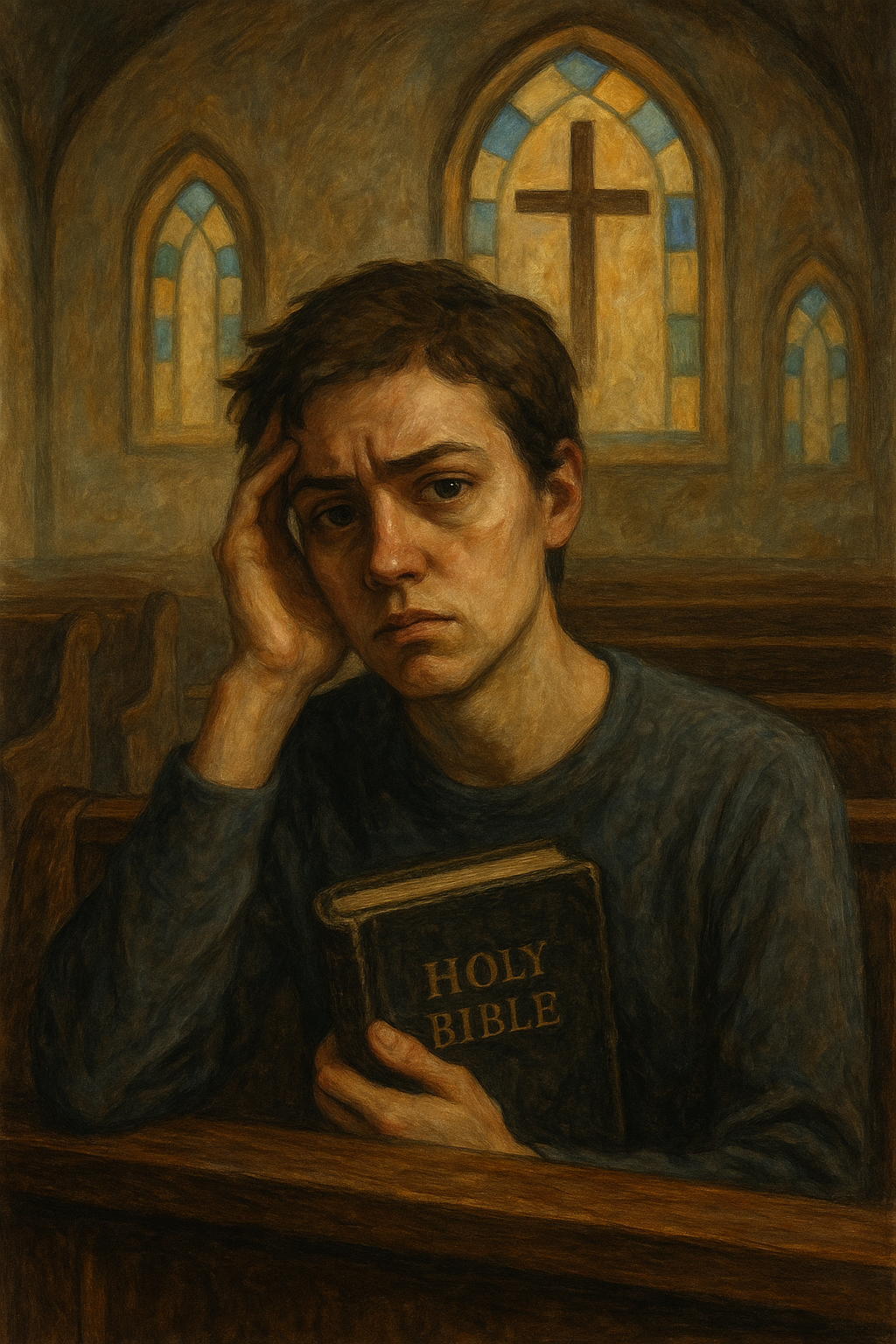
Of course, in time, I came to a point where I started to rebuild my faith with new ideas and new ways of looking at things. I had a kind of faith that was freer and made more sense. Not that I had all the answers, but now I was not afraid to ask questions and admit my doubts. I found out there was a term for this, which is reconstruction. A rebuilding of my faith without the church doctrine and the certainty I felt I had to have while in the religious organization.

Reconstructing our faith is rebuilding some of the interpretations and spiritual ideas without destroying our faith foundation. It is seeing things differently, being open to asking questions and admitting we do not know everything. It is a faith of uncertainty more than being closed-minded and set in our ways.

I was now free to walk with God outside of set doctrines and some of the ways I was taught in church. I could now follow the Spirit without the religious requirements, all the while learning to love and accept all people.

Deconstruction and Reconstruction all lead to Transformation, which is a profound and lasting shift in self-concept, mindset, and overall way of being. I now felt comfortable not knowing all the answers and not feeling guilty because of it. I could accept people from different walks of life and different faiths without the guilt that religion sometimes puts on me. I was free from the doctrines and religious interpretations that kept me in submission. Now I depend on guidance from the Spirit that lives within me rather the views and opinions of other human beings.

Although deconstruction can be an important part of our life, I do not think we should stay there. Yet, I do believe we should be continually going through deconstruction and reconstruction, and continually being transformed. We should not become stagnant, but constantly changing as the Spirit leads us day by day.

God is so much bigger than we can realize. Part of deconstruction for me was realizing after all the years within the church and the years following God outside the walls of religion, there is always more to learn. God cannot be contained in a building nor a book. I realize that we need to focus more on the leading of the Spirit that lives within us and less on the doctrines and views of religious systems.

*******

Michael Donahoe was added as a writer for Done with Religion as his views fit perfectly with those that are shared on this site. He and his wife have been outside the walls of religion for fifteen years. He enjoys writing about his experiences and thoughts, and he wants to encourage others who are going through the religious deconstruction process. He also writes on Substack at https://personalmeanderings.substack.com/ and https://deconstructiontrail.substack.com/

Read Full Post »

by Glenn Hager

As my relationship with the church and my religion came into question, my world unraveled, because church was my world. I was pastor for over twenty years and loved all things church. I constantly read books about how to do church better. My friends were all church members and pastors, and my life was consumed by church services and church meetings and my pastoral calling was my north star in life.

What happened? Through the years, one-by-one cracks began to form in the relationship between me and the church until finally we went our separate ways. Those cracks were quiet questions that I did not allow myself to pursue.

As I pastored a fledgling church in a small town already saturated with churches of the same denomination, I wondered, “why so many churches?” A crack began to form.

I could have had a great career at another church, if I just pandered to folks with some old-fashioned preaching and music, and back-slapping. I couldn’t do it. It seemed they wanted all the ministry directed toward themselves with little concern for those outside the fold. The crack was getting more defined.

I felt I needed a more serious congregation with more involved leadership. That desire took us to a church in a large suburb of Chicago which had become an Anglo Island in a Hispanic community. It was a congregation populated by seminary students, old fundamentalists, and younger evangelicals. With its inner division and transitioned neighborhood, it was a nightmare to lead.

Finally, after several painful years and several existing members leaving, it became an authentic ministry with great community and an updated worship style. Yet, as a Hispanic congregation shared our building and thrived, it was obvious we were in the wrong location.

During our move to temporary quarters in a more suburban and English-speaking setting, a key couple took it on themselves to share their discontent with others. It resulted in our small group becoming even smaller. After some time of meeting in our home, we disbanded. The betrayal pried open the crack even further. For the first time in my adult life, I was not a pastor, and I was undone.

In the years after, we hosted a house church of young adults in our living room, attended another house church, helped-out a couple churches with their welcoming ministry and community-wide outreach. Eventually, it seemed unlikely that I would ever find a church that aligned with my vision. That vision included a heart for the outsider and a willingness to try new avenues of acceptance and community.

The crack had become a gaping canyon.

These cracks or questions were more like a feeling that I wouldn’t allow myself to feel… until I had to. When I did, I was shocked at how wide the crack had become and I was lost, homeless, and frustrated that I had been so unsuccessful as a church leader.

I got to the point where I wanted nothing to do with the church games, but deeply longed for something that is real. When I thought about Jesus, the more I saw there was also a gaping crack between him and what the church had become.

That irony is overwhelming.

Glenn Hager is a former pastor, newspaper columnist, magazine contributor, blogger (glennhager.com), and author of two books. He also designs lighting (http://doo-dads.com/). Glenn and his wife, Patty live in northeastern Illinois.

Read Full Post »

by Glenn Hager

This is one of the easiest and most cathartic posts I have ever written. It’s easy because I can clearly catalog the characteristics of evangelical religion that are distasteful to me.

Since I write this at the peak fervor of our presidential campaign, Evangelical entanglement with politics immediately comes to mind.

There seems to be a confusion about kingdoms. Christ’s kingdom and all the kingdoms of this world are vastly different. One is a kingdom of love and the others are kingdoms of power.

Earthly kingdoms are about control, Christ’s kingdom is about influence, the way we live our lives and love people. Earthly kingdoms are about enforcing laws, Christ’s is about love and changing hearts. Earthly kingdoms are about war, Christ’s is about peace with God and one another. Earthly kingdoms are about mandating rules, Christ’s is about choosing his ways from the heart.

Christian Nationalism is an attempt to use earthly kingdoms to force on people what some determine to be Christian values. It’s like trying to mix oil and water. They are in opposition to one another. You cannot legislate or mandate a changed heart. It opens the door for politicians to adopt a few socially conservative policies, do lip service to religion, and use a couple of evangelical buzz words to get elected.

During the January 6th riots, I was as shocked as any American to witness the violent assault of the very heart of our government after being ginned-up by a man whose ego and was so huge but so fragile that he would assault our very democracy to try to be “a winner” (really a looser).

In the violent chaos flags were waving, the American Flag, the Don’t Tread on Me Flag (Gadsden Flag), the Confederate Flag, the Trump Flag, and the Christian Flag. These flags represent the elements of Christian Nationalism. They are a toxic cocktail that confuses patriotism, individualism, racism, cultism, and religion. It looks nothing like Jesus and everything like an authoritarian political movement that is destroying the witness of the church.

Folks who are not in the club, don’t get it. They wonder, “Why are Christians so hateful, so unloving, so bent on forcing their views on others.” Even they know that is not at all like Christ. This movement exposes a hypocrisy of a superficial faith defined by a few slogans, that hates its enemies, and ignores the obvious faults of its champion (not Christ).

Christianity has become an exclusive club for the already convinced. So, churches hire a charismatic pastor and staff, build an impressive building, and offer a wide array of programs to keep the sheep happy and proud of what they have. They think the bigger all of this gets, the more successful the church must be. They rely on these assets, the buildings and staff.  With all the salaries and the mortgage, it takes a lot of money to keep the sheep happy.

Every church has a little different idea about how to do church, hence the countless varieties, sometimes at the same intersection, like fast food outlets.

Pastors and leaders have unrealistic expectations placed on them. A few are egomaniacs. Most are simply trying to fulfill their calling and keep the flock happy. Almost none can be honest about their feelings and struggles with anyone in the congregation because they are expected to be above mortal temptations (unlike the congregants). They are not, as proven by the numerous scandals involving members of the clergy.

Too many churches and associations of churches have become self-centered, politically affiliated rest homes for the long-since convinced with little concern for those who need to see the Gospel in action.

I join the millions who are done with that.

But it doesn’t mean we are done with Jesus.

Glenn Hager is a former pastor, newspaper columnist, magazine contributor, blogger (glennhager.com), and author of two books. He also designs lighting (http://doo-dads.com/). Glenn and his wife, Patty live in northeastern Illinois.

Read Full Post »

by Jim Gordon

As I wrote in my last article ( Part 1 ), over time I have become a religious heretic. I have questioned and thought about many of the things I was taught in church as I grew up. A few other topics I have changed my mind on are listed below.

Again, let me say, the following are my thoughts and opinions. I am not saying I am right or wrong, but is where I am at now. I have changed my views over the past several years, and I will most likely change my views over the next several years. We are all entitled to our opinions and we should accept each other with the opinions we have. We certainly will not all agree.

Creationism: I have changed my mind on this topic, not that I do not believe that God created all things, but I no longer believe God created all things in six literal days. God created, but when, how and how long it took I do not know. I do not think it is wrong or against the biblical teaching to say creation could have taken thousands, even billions of years. A thousand years to God are as one day to us, so obviously God’s timing is not like our timing.

I no longer say that Israel, or the United States as far as the goes, is God’s chosen people. I do not believe God has a chosen people, religion, country or race. God loves the world, and that includes everyone no matter where they live, what religion they follow, if any, what race, what gender, who they love or who they vote for.

I tend to find I chose social justice over religion these days. Many churches do help others in various areas, but I still found while in the church system, more people were focused on trying to get people to church or to accept their way of religious thinking and less about helping the poor, the unaccepted, the immigrants and others who often time were looked down upon and called lazy.

Knowing that Jesus fulfilled the Old Covenant and we now live in an age of grace, I always find it hard to understand why so many religious institutions focus on the ten commandments and following the Old Covenant law. Why are they pushing what the Bible calls a way of death? For the law of the Spirit of life in Christ Jesus has set you free from the law of sin and death. And, now that faith has come, we are no longer under the supervision of the law.

Another change after leaving organized religion is my acceptance of people who the church normally looked down upon and were not accepted within the religious organization. The LGBTQ family, BIPOC, immigrants and other nationalities and religions. I now have friends and acquaintances from all these groups and totally accept that they were created in the image of God, are totally loved by God just as they are, and we can all learn from one another and treat one another with love and respect. There are no second-class citizens.

So, as you can see, I have changed my views on many things over the past few years. I think that is a good thing. I think we need to stay fresh and open to the leading of the Spirit to lead us in new ways as more truth is revealed to us. I am sure there will be more changes over the years as my wife and I walk with God outside the walls of religion. Obviously, these are all only my opinions and views. I may be right or I may be wrong. I do not force these views on anyone else. Each of us are free to choose for ourselves what we believe. What we are to do is love one another even in our differences, accept each other as we are and live life trying to help and encourage our fellow human beings along the way.

Jim Gordon and his wife left the institutional church after spending over fifty years within the system. Jim wanted a way to express his thoughts and concerns about the religious system and why he and his wife decided to leave the institution but not their faith in God. Jim can be contacted by email at: jimgordon731@gmail.com

Read Full Post »

By Mike Edwards

Christians are more familiar with the term “deconstructing” from the Christian faith. I am not writing about those who aren’t done with God just religion. I have in mind those who stop believing in God, or God becomes much less a part of one’s life despite belief in God. Such people may have attended church or a religious institute regularly at some time, while others may have rarely or never entered a church door but are inclined to believe in God. Why are many moving away from God though desiring a relationship?

Why are some inclined to pursue God or not? 

Christians especially are guilty of implying those who don’t believe in or stop pursuing God are suppressing what they know to be true. I disagree. I suppose some deny there is a God to justify their evil ways, but those I know not into God as much as me are just as moral if not more than I am.  Let’s not accuse those who believe in a God as needing a crutch or accuse those who question the reality of an invisible God as being wicked and ignorant of their feelings.

Many people do or don’t pursue God, or rebel against God, because of the family they are born in. I am not sure I would be pursuing God if my parents hadn’t encouraged it. Some by personality are more skeptical or accepting. I am sure many don’t pursue God for obvious emotional reasons. A child abused by their father may struggle to accept a God betrayed as our Father in Heaven. Many are turned away from God because of the hypocrisy of God-following friends or leaders.

What may be the main intellectual reasons leaving a belief in God?   

One’s view of God is critical in their journey. See here. I am convinced a major factor in deconverting or moving away from God is because of views claimed about God. It is claimed the Bible supposedly says that God condemns gays, God burns unbelievers in the afterlife, and God doesn’t think women can fulfill the same roles as men though just as gifted. The truth is biblical scholars who have a deep respect for Scriptures don’t agree what the Bible says about gays, women, hell, and other moral issues. See here.  See here.  See here.

Another major intellectual reason is due to certain explanations given for the presence of evil and suffering in our world despite there being a God. It is understandable why many can’t believe in a supposedly, all-powerful God who standbys while one is being raped, tortured, murdered, abused, etc. What kind of parent or God doesn’t intervene when they could prevent such suffering? Maybe a perfect, loving God can’t be controlling just as they can’t be manipulative. Maybe God can’t intervene single-handedly without human help. See Thomas Oord. The alternative is that God can always stop your suffering and doesn’t, or that God arbitrarily stops other’s sufferings sometimes but not yours. I am convinced there are better explanations.

Why we must stop claiming the Bible is inspired!

Inspiration suggests God’s approval. Keep in mind we can’t prove God controlled every thought or word written by the biblical author. God didn’t dictate the Bible to others. Stating as proof that the writers claimed such inspiration is circular reasoning. The truth is that even if our interpretations were infallible, we can’t be sure the biblical writers always knew or portrayed God accurately. It is only intuitive that a Creator loves the ways their creations ought to love one another. Biblical interpretations, or a biblical writer’s understanding about God, that doesn’t match how you and most know you ought to love your neighbor may be amiss. A supposed inspired Book must not replace our relationship with God and common moral sense. See here.

Pursing God is about following God, not adhering to certain beliefs 

We are often told the main message of the Bible is Jesus coming to give you salvation to save you from Hell so you could enter Heaven. Common understandings of Hell aren’t necessarily biblical, thus how could this be Jesus’ central message? See here. When Jesus was asked by a religious expert how to have eternal life, which surely implies salvation, Jesus spoke of how to start living here on earth not what awaited in the afterlife. He simply said to love God and your neighbor (Lk.10:25-37). Jesus spoke of loving God not to get into heaven but to receive help in loving others as you love yourself. You don’t have to drop to your knees and say a prayer to get “in” with God. You only have to want God’s help. Jesus’ salvation was about living a meaningful life here on earth with God’s help. Personally, I am convinced there is a God and my relationship with God has inspired and encouraged me to be the person I desire to be.

Why Do Many Deconstruct Or Deconvert From God?

MikeEdwardsprofilepic125

Mike Edwards has been writing for Done with Religion for some time and has been a great addition to the site. He couldn’t find enough people to discuss God openly so he started blogging years ago. Mike also has his own site where he writes that can be found at What God May Really Be Like  He can be contacted by email at: medwar2@gmail.com

Read Full Post »

(What Exactly Does that Mean?)

by Jim Gordon

Over the past short period of time, we have heard of several “high profile christian leaders” say that they have left Christianity.

We have heard such comments from Joshua Harris, Paul Maxwell, Marty Sampson and I am sure several others.

When we hear this, many of us think that they have walked away from their faith and belief in God. Yet to rush into this way of thinking, we need to determine what exactly does the person mean by leaving Christianity.

I know first hand for my wife and I what it means, and it has nothing to do with leaving my faith or love for God.

The way I see it, Christianity is known more as a religion, just as Judaism, Islam, Hinduism, Buddhism, Confucianism or any of the many other religions out there. Christianity is a religion based on Christ but certainly not started by nor endorsed by Jesus.

When reading the gospels we read how the disciples came to know and follow Jesus. At that time they did so apart from any religion, especially Christianity since the word was not even known at that time. In Acts 11:26 people were first called Christians, which was after Jesus had returned to the Father.

Christianity, in my opinion, is generally stereotyped into people who go to church each week, they follow a particular doctrine, regularly read their bible, tithe their money to the church and often think their way is the only way. In the United States they tend to be republican, are against abortion and believe those who are LGBTQ are the worst of sinners.

When I say I have left Christianity, I mean I am walking away from this stereotyped religion. In no way have I left my faith in God or turned from following Jesus, who said to love God and love one another. This can certainly be done apart from Christianity.

So, no longer being Christian, I can honestly say I love God, follow Jesus and love people. I do not attend a church organization, I do not put trust into any particular religious doctrine, I read the bible but I do not believe it is a rule book or an inerrant document. The Spirit lives within us and the Spirit leads and guides us. Apart from the Spirit bringing to life passages written in the bible, the book itself is a document written by men about their belief and experiences with God. I do not tithe but I give to help others. I am an independent voter and fully affirm and support those who are LGBTQ. On the matter of abortion, I certainly understand a woman wanting the freedom to make choices about her body. I also understand for those who believe life begins at conception, they would have a hard time believing abortion is the right choice. I believe rather than fighting about whether abortion is right or wrong, it would be much better to come up with alternatives on how to support women no matter which decision they make ( read more here ).

There are so many views and opinions within Christianity. We will all never completely agree. Yet our commonality is in our love for God, love for Jesus and love for our fellow human beings. As John 13:34-35 reads, ‘a new command I give you: Love one another. As I have loved you, so you must love one another. By this everyone will know that you are my disciples, if you love one another’. Nothing here mentions Christianity or any religion. One does not need to follow a religion to love one another.

So, for my wife and I, we have left the religion of Christianity and are enjoying walking outside the box of religion and doctrinally controlled ideas. We are free to love, live and give as the Spirit leads us and for us, it is a much more meaningful way of walking with God.

Jim Gordon and his wife left the institutional church after spending over fifty years within the system. Jim wanted a way to express his thoughts and concerns about the religious system and why he and his wife decided to leave the institution but not their faith in God. Jim can be contacted by email at: jimgordon731@gmail.com

Read Full Post »

by Jordan Hathcock

Ritual is simply a set of practices in a period of chaos so we can experience the chaos safely.  –Jason Coker

In a time of unrest and chaos, the tool that seems to work most effectively is the practice of rites and rituals. Now, this can be (and most likely is) triggering for most of us who have experienced unhealthy spiritual practices. Religious Trauma Syndrome (RTS) is something more and more people are dealing with and I know its something that is not to be taken lightly. When it comes to the Christian tradition, the “church” has not always been a place that produces healthy rites and rituals to assist us in getting through the ambiguous times in our lives. Instead, church practices often get the process ass backwards: We develop rites and rituals to control and manipulate people to believe and act a certain way instead of creating spaces available for us to grow in these times of pandemonium. Cognitive dissonance is viewed as an issue of faith instead of a step needed to be taken within the spiritual journey.

Deconstruction has been the “new” practice within the religious sphere in the last twenty years or so due to many factors. With the new internet age and the huge amount of access to resources, its been more and more difficult for the “powers that be” to keep a more discrete way of posturing when it comes to past, present and future church practices. Postmodernism has brought a lot of problems to be answered when it comes to religious institutions. When people have these crises of faith, the church is not equipped with the space (rites and rituals) to help heal and liberate those who need it. Deconstruction is a step that should be perceived as a healthy process that helps us mature in our faith. It shouldn’t be perceived as a problem to be solved but as a ritual to be practiced. We must learn to let go of corrosive practices of rules due to fear and embrace a more playful experimental practice of understanding.

How does that look like? Well, there are many ways we can experience spiritual practices that help us through the journey of life. It doesn’t have to be practices in a “brick and mortar” church setting. It can be a nature walk, surfing (my favorite), exercising, playing music, painting a picture, or crafting some good beer (my other favorite). There are various of ways to experience divine guidance. The Christian traditions rites and rituals that have been with us for 2,000 plus years can be practiced in a new light as well. We can always find new ways to interpret and repurpose a practice within a church setting to help us better connect and move to more liberating heights. Traditions are good if used in a healthy and freeing way. We can let go of the damaging aspects of a rite and ritual and still actually practice the act itself. I understand some are unable to ever practice certain rites and rituals within Christianity due to RTS and that is OK! Along as you find some time of ritual to practice to better center you as a human being, I think the world can benefit from it. With that being said, there are still some beautiful practices with this Christian religion that I still find beneficial. An example that I have come to experience when it comes to repurposing a certain spiritual practice is Communion/Eucharist/Lords Table (whatever name floats your boat).

The tradition that I grew up in (L.D.S.) named this practice The Sacrament. It has elements of truth (like all spiritual practices do in a sense) but also some pretty damaging aspects as well. In my opinion and experience (along with many others) the concept of purity codes comes to mind. In order to partake of the sacrament, you had to be “worthy” and “believe” in the church’s teachings. The point of this ritual is to renew the covenant you made at baptism. Unfortunately, this interpretation of the purpose of the Lords Table misses some really important factors to help oneself to become part of the gospel message. Instead of bringing us together with Christ and participating in the way of love, it becomes a rule one must follow in order to remain a “member of a church”. We are not part of some corporation that keeps track of its members “loyalty”. This also brings out zealot faith and judgment on others who do not partake of Communion. This should not be the point of why we partake of the bread and wine of Christ.

Fortunately, I found a Church (Oceanside Sanctuary ) that has taken the practice of Communion to a level of healing and liberation one needs when it comes to healthy rites and rituals (yes, a bold claim I know). We think it is important to take Communion weekly, so we can come to the table of love and mercy despite our differences. Let’s face it, we all have our own views on anything from sex, politics, sports, education and of course on our theological views regarding the Christian tradition itself. But, guess what? Unity is possible within diversity. That is what Jesus came to bring. The commonwealth of God is the reality where love can guide us to true freedom even through our messy differences. If we cannot practice healthy rite & rituals in a church setting, how the hell will we ever expect to see needed results outside the sanctuary walls?…

For Christians, to share in the Eucharist, the Holy Communion, means to live as people who know that they are always *guests*—that they have been welcomed and that they are wanted. It is perhaps the most simple thing that we can say about Holy Communion, yet it is still supremely worth saying. In Holy Communion, Jesus Christ tells us that he wants our company. -Rowan Williams

Read Full Post »

by Jim Gordon

Do you find yourself questioning things more than you used too? I know I do.

As Christians, we have always been taught that we need to have the answers. Study to show thyself approved meant you must have an answer for every question people asked so you can prove your beliefs are right.

I remember having questions in the past, but I basically blew them off and buried them thinking I was wrong to even think such things. As time went on, the questions kept popping up and I began to realize that questioning was not wrong.

I believe God accepts us, questions and all. I am hoping that one day I will have more answers, mostly for my own sake and not necessarily to defend my beliefs.

I think the modern-day church and religion in general do not like questions, at least not hard questions. Especially questions that make us wonder about the basic beliefs they teach. They like to have all the answers, and answers that fit into their particular belief and doctrine.

In his book ‘Dying to Religion and Empire: Giving up Our Religious Rites and Legal Rights’,  Jeremy Myers makes a statement that is so true: “And as is the nature with questions, asking hard questions rarely leads to answers, but only to more questions”

I think God is much bigger than what the church makes him out to be. They try to fit everything into a box and do not like people asking questions that require out-of-the-box thinking.

It seems to me the spirit within, the spirit of truth brings up questions about what the religious system taught us and what we always just accepted. Now, rather than suppressing these questions I have allowed them to surface and truly seek the guidance of the Spirit.

Mick Mooney once posted an article on Facebook, part of which says: “But who has the faith to ask questions with the intention of seeking the answers to them? Who can let their foundation be not a doctrine or dogma that must be defended, but Christ himself who needs no defense? For it is those who have their foundation solely upon Christ, who can walk in their faith without fear of questions, but rather they walk in their faith knowing that God is lighting their path with questions, and it is these very questions that are paving the path that the Spirit of God is guiding them upon”.

If you are feeling guilty for having questions, I have found it best to stop feeling that way and keep asking the questions. That is the best way to continue growing and learning in our walk with God. Even when we do not get the answers, we should continue to be asking and seeking the truth from the Spirit who is within us. God is big enough and loving enough to accept us even with our questioning.

Read Full Post »

by Jim Gordon

Does it not seem strange that in the christian church world we are told we are to love others, yet when we come to a difference of opinion or a change in views in our beliefs, christians can be the first to throw a stone?

We hear about fairly well-known individuals within the church system say they have changed their views and no longer accept some of the teachings they grew up with in the church. They are not necessarily saying they are walking away from God but they are walking away from many things they have been told about God they no longer accept.

When this happens, usually other christians are the first to judge and condemn these individuals rather than try to accept them and find out exactly what is going on. Their first thought is they are leaving their complete belief and faith in God.

Many times, this is not what the person is saying anyway. Leaving religious teachings of the church is not leaving God. In fact, many times leaving some of these teachings behind is just the beginning of a deeper walk with God.

I grew up in the traditional church setting and I had many good times there. I met a lot of nice people and learned many things about God. The thing is the church as we know it was never what God intended. Church is not a place or an organization, it is the people who love God and love, support and encourage one another.

The church today seems more like a corporation with the CEO and board of directors. I know there are a lot of good people within the church system. They love God and want to live their life for him. Yet for my wife and I, we became disenchanted with the religious system and felt there was a better way for us to live for God, which was outside the walls of religion and the human-led system of church each week.

We felt that since the Spirit lives within us there is no need for a middle-man (pastor) to lead and teach us. If the Spirit of God actually lives within us, why do we so often depend on a human being to lead and teach us?

I certainly do not want to make anyone feel bad if they are still a part of the institutional church. They are like I used to be and feel that was the best way to show love for God and learn about God. I would not tell anyone they should leave the system, although for my wife and I we certainly do believe it was the best thing for us.

Whether you are in the church system, questioning the church system or have left it, the main focus should be to love God and love one another. Doing so fulfills all the law and the prophets (as Matthew 22:35-40 explains). Of course, we know that the law no longer needs to be fulfilled but at the time Jesus taught this he was living under the law. Now that grace has been applied, we no longer live by the law but by love.

Leaving the institutional church or changing and deconstructing your religious views and interpretations do not mean you are leaving God. Rather than jump on board with those who judge and condemn, take a little bit and find out more about what is going on. Then remember we are all at a different place on the path as we follow Jesus. Pray for one another, encourage and support one another but do not beat one another up as we each try to follow Jesus as we feel led.

Read Full Post »

by Rocky Glenn

As I shared in You Are Not Alone, since my recovery from being a churchboy began, I have encountered countless others that are walking a similar path.  I’ve since learned this path has been given the term “deconstructing.”  I heard it said just a couple of days ago that deconstructing your faith has now become the fashionable or “in” thing to do.  Although I can look back over the past four to six years and say I have definitely been deconstructing my faith, in my four decades of life I have never been one to do something just because it’s considered fashionable, popular, cool, or the latest trend.  (That’s not because I refuse to follow the crowd, part of being a churchboy is being so opposite and opposed to popular culture that you aren’t accepted as part of that crowd!!)

On several occasions in the gospels, Jesus tells us that if one seeks to save or keep his life he will lose it but if he loses his life he shall save it.  Although I did not realize it at the time this journey began, losing my life is exactly what has been going on with me.  It’s been a journey of questioning what I’ve known since a child and seeking answers for why as Christians we act certain ways and do (or more specifically don’t do) certain things, at least in public where others will see!  The ironic and upside down part of all this is I thought that by living the churchboy life, I had chosen to lose my life.  After all, I played by all the rules, said all the right things, and played the part as well as any human could.  In fact, in losing my life being a churchboy, I had lost so much life if it weren’t for the fact that I was conscious and breathing, I don’t even know if you could say I was living!  Life was a constant pressure cooker of looking the right way, saying the right thing, not giving the appearance of evil, not judging that person, not saying what you think, and definitely not letting anyone know you were human!  After all, we must be perfect because our Father in heaven is perfect (Perfect Imperfection). The sad part about this is I thought that was the best life anyone could ever live.

It all changed when I learned God loved me.  Oh yeah, the churchboy knew that Jesus had died for me and I was going to heaven when I died because I had my “fire insurance” and had asked Him to forgive my sins, and He lived in my heart, but there was no way he actually loved me.  I mean, sure, He would love me if I became what He wanted me to be, but there was no way He loved me as I was.  I had more scriptures to memorize.  I had a ministry to build.  I had souls to save.  There was work for the kingdom that must be done and I was the one who must do it!  What a load of garbage!  I have lost that life, if that’s what you can really call it.

Losing that life means life now looks a lot different for me than before.  Life is now about losing those rules and lists of do’s and don’ts that religion forces upon you and tells you must stay within in order to be accepted.  Losing my life means I’ve lost the need to try to become acceptable because I know I’m already accepted.  Losing my life means I’ve lost the need to try and change to be loved because I’m already loved.  (For more on this, see He Still Loves Me.)

Matthew 16:25 says, “If you try to hang on to your life, you will lose it. But if you give up your life for my sake, you will save it.”  By living the churchboy life and trying to do it on my own, I was trying to hang on to my life and didn’t even realize it.  So, when I realized how much He truly loved me, there was nothing I could do to ever change that, and He loved me as I am and not for who He wanted me to be, I gave up my life.

How has this saved my life?  Life is now about living in His love and sharing that love with others.  At home, at work, in traffic, waiting in line at the grocery store, dealing with the server at the restaurant who has clearly had a rough day, every situation is an opportunity to share that love.  It doesn’t require a sermon.  No scripture verses or references have to be mentioned.  In fact, you don’t even have to mention God or Jesus at all.  It can be as simple as a smile, as kind as looking someone in the eye and asking how they are doing, as pleasant as a gentle answer.  Love looks a lot like generosity and kindness.  Love gives without seeking anything in return.  Love is for the benefit of others.  Saving your life in this manner produces peace, joy, and freedom that can only be described when you experience it yourself.

To tell you that I have truly mastered this and express love in every interaction and live constantly in that peace, joy, and freedom would be just another futile attempt of the churchboy in saving my life and making myself appear as something I am not, but I will strive daily to continue losing my life and finding it in His love.

Rocky

(This post originally written January 28, 2018.)


Read Full Post »