Feeds:
Posts
Comments

Posts Tagged ‘Christianity’

by Mike Edwards

Many claim dogmatically that the Bible predicts future events such as what is happening in Israel currently and the end-times when Jesus returns down to earth, allowing such interpretations to guide their foreign policy views. But many fail to recognize that biblical experts don’t agree on the meaning of many passages that may or may not relate to future events. There is no consensus of beliefs about prophecies in the Bible regarding Israel.

Prophecy beliefs impact national foreign policy which can lead to violence/wars. It is assumed in God’s name that America has a godly/theological/biblical duty to support the Jewish state. We can avoid bringing in disputed theological beliefs by supporting all people who live by moral/humane values regardless of nationality.  A nation has a duty to look out for the people of their own nation regardless of religious beliefs. Any nation can gain God’s favor by living by moral/humane values. Foreign policy should not be guided by disputed theological interpretations/religiosity. 

Prophecy can’t determine the future and value freedom 

It is natural to think an all-powerful God knows everything including the future, that prophecy is peering into the future. The Bible suggests in many passages that God doesn’t know the future. A known or set future suggests one isn’t truly free to choose otherwise. Even the Bible speaks often as if God doesn’t know the future. God hopes Israel would accept God’s guidance, but Israel often turned against God (i.e., Jer. 3:19-20). We don’t have to play mental gymnastics by assuming God is only pretending to not know future decisions. Other biblical passages refer to God changing their mind depending on what choices humans freely make. Freedom is necessary for the highest good in relationships – authenticity. It isn’t that God keeps themselves from knowing the future. It’s that an undetermined future is unknowable.

God joins us in an open future, including the future downfall or rise of nations. Futures are not predetermined. God wants us to truly feel free to pursue our own dreams without strings attached, unlike some earthly parents. God only desires to influence us to do all the good we can, in all the places we can, at all the times we can, to all the people we can, as long as we can. The future is open to God as well. God may know all possibilities, but the future must be open if we are truly free and God is truly loving.

What are biblical prophecies?

Its unlikely prophecy is peering into the future. I have written here why God can’t know the future, thus prophecies aren’t likely claiming what definitely will happen in the future. One can assume most prophecies are conditional because God changes if people will repent of their evil ways. God’s nature requires most prophecies predicated on human actions being conditional. For example, in the Old Testament Jonah advised Ninevah they would be destroyed in 40 days, but then God relented because the Ninevites turn from their evil ways. The most talked about prophecies in the Old Testament is the forthcoming of the Messiah Jesus and subsequent death. But Jesus prayed to God that He might be spared of dying on the Cross (Mt. 26:39). Such a prayer seems meaningless unless Jesus’ life could have been spared.

What about the End times?

One can’t write about prophecy without a comment about the end-time supposed predictions in the Bible. There is much talk of biblical prophecies coming to pass because of what is going on between Israel and Hamas. Is God coming again [rapture/tribulation/Armageddon] to destroy this world as we know it and set up God’s reign? There is some biblical evidence that the end times mentioned refer to what happened in the first century, thus having been fulfilled:

  • The Apostle Paul assured his audience they have not missed the “day of the Lord” (2 Thess. 2:1-12). Why was Paul’s audience fearful they could miss the coming of Jesus if such a coming is supposedly a rapture-removing, visible, world-ending coming? The disciples did not think of Jesus’ coming as being visible as they ask: “what will be the sign of your coming and of the end of the age” (Mt. 24:3). Besides, Peter writes to his readers in the first century that “the end of all things is at hand” (1 Pe. 4:7).

Why it Matters

Assumptions about biblical prophecy and Israel can lead to foreign policy decisions in God’s name that don’t fulfill God’s desires at all. Foreign policies should not be based on theological ideology based on a complex interpretation of biblical prophecy. This doesn’t represent citizens who don’t share such theological beliefs, whether believers in God or not. A nation’s policies should be based on the protection of all its citizen within a moral framework.

A chosen nation can give a wrong view of God – God choosing to love one nation more than other nations, and not based on actions. Our understanding of God significantly influences our relationship with God and how we treat others. Finally, believing the world is coming to an end and somehow God is going to rescue you in the sky can lead to passivity. We mustn’t wait on God to “fix” things by coming again. We must do all we can for the next generation! When the Bible says God grieves with us in our suffering, we can know God agonizes with us each step of the way and deters any suffering possible without violating freedoms or acting controlling. God joins us in our joys and sorrows.

Mike Edwards was added as a writer and has been a great addition to the site. Mike provides many interesting views and various ways of looking at things. He is not afraid to ask questions and he keeps an open mind as to teachings of the institutional church. Mike also has his own site where he writes at What God May Really Be Like
Read Full Post »

by Michael Donahoe

A good friend of mine wrote the following paragraph. There is an old hymn that says “On Christ the solid rock I stand, all other ground is sinking sand” As important as the church is in our lives, we have to be careful not to put our hope in it. I have received a lot of help thru the church and a lot of good basic teachings. I was also saved in church but my hope is not in the church. My hope is in “Christ the solid rock”. There are times when we are alone with no Christian fellowship and maybe we can’t make it to church for some reason. We have to be able to stand as mature Christians and rely on our relationship with Christ. The church is no substitute for Christ. It is only where we learn about Him. I guess what I am saying is that we have a relationship with Christ and not the church, and He is our source of strength if we call upon Him in truth. I personally am going thru the desert in life and I have to depend on Him. He has proved His love and care for me and in reality, He is the “Son of the Living God”. Bottom line, let’s be careful to put our dependence on Him. All other ground is sinking sand….

This goes along with some of my posts about modern-day church. The organized church today is a place for believers to get together, but it is not the goal. Going to church does not make us Christians, it does not make us better people or more dedicated believers. It is a place hear about the love of God, a place to enjoy the company of other believers, and a place to reach out and encourage others. Basically, it is a Christian social organization.

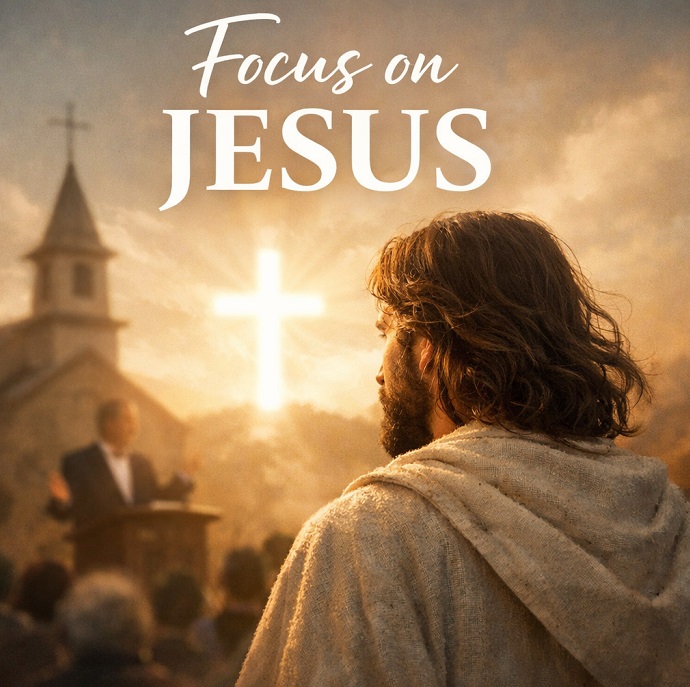
We need to stop putting the focus and emphasis on church, stop putting our eyes on pastors and realize that they are not the answer. We need to put all focus and attention on Jesus. It is Jesus we follow and worship. He is the Shepherd, the rest of us are the sheep. There are no co-shepherds, no intermediates between Christ and us. We are to follow Jesus and Him alone. We are to learn from Him, love God and love others.

There is nothing wrong with going to church, but do not put your eyes on an organization or any leaders therein. Keep your focus on Jesus. Whether you go to church or do not go to church, Jesus is the one we look to and serve. Do not worry so much about going to church, but rather be the Church. It is not a building we go to, but the people who love and follow Jesus.

*******

Michael Donahoe was added as a writer for Done with Religion as his views fit perfectly with those that are shared on this site. He and his wife have been outside the walls of religion for fifteen years. He enjoys writing about his experiences and thoughts, and he wants to encourage others who are going through the religious deconstruction process. He also writes on Substack at https://deconstructiontrail.substack.com/ and https://personalmeanderings.substack.com/

Read Full Post »

by Mike Edwards

Early in my relationship/journey with God, I struggled knowing what God’s plan was for me in marriage, career, etc. Athletes often stated events, even tragic injuries, happened in their life according to God’s will. This implies God has a specific plan in the future for those devoted to God. I so desperately wanted to please God but was clueless. I was set free when I read a book that argued that the Bible doesn’t defend that God has a specific plan for individuals. How can we know what God desires in our life?

One Has Every Right To Ask Why God Is So Hidden?

There are understandable reasons often cited as to why people doubt there is a God/Divine Being. Atheists and believers agree – the only God worth believing in must be perfectly loving. If such a God exists, why doesn’t God intervene more when so much evil exists in the world? Another reason many may doubt God exists is that a loving God surely is personable, why then doesn’t God reveal themselves more rather than be hidden? What loving parent doesn’t reveal themselves if desiring to be known?

Just because earthly parents sometimes know and advise what is best for their older child, such advice doesn’t always work out. In fact, overzealousness can lead to one feeling controlled, thus rejecting what is best for one’s own good. God’s awing or overwhelming presence may only lead to fearful obligations to obey than having to trust. The road traveled of learning, reflecting, and not being pressured may best lead to lasting convictions and more meaningful relationships. God supposedly came in person but Jesus’ miracles didn’t obtain the results some may suggest if God would stop hiding. God may not speak to us demonstratively out of love.

God Can’t Have A Specific Plan because Of Freedom 

Freedom is necessary for authentic relationships. God’s constant interference and presence could prevent a superior world from emerging. A set future suggests one isn’t truly free to choose careers or in relationships. God may know all possibilities, but the future must be open if we are truly free. God can’t tell us if our marriage will end in divorce or our job eliminated. See here.  We surely have God’s blessing choosing the wisest path known at the time based on past experiences, current circumstances, and future aspirations. When the Bible says God grieves with us in our suffering, we can know God agonizes with us each step of the way while celebrating our joys. God’s plan is not a detailed blueprint but a general one to set us free to love.

God can’t be controlling of the future 

I have suggested an all-loving God and all-controlling God is an oxymoron. See here.  Besides, controlling love is an oxymoron. Ask adult children with such parents. Even the Bible claims love does not insist on its own way (I Cor 13:5). God can’t be unloving, thus controlling sometimes. The Bible can be used to defend or oppose believing God is all-powerful or controlling. For instance, the Bible says God changes their mind based on human decisions made. That hardly appears to be a controlling attribute. So much evil in the world surely proves a perfect, loving God can’t be in total control. God can’t advise how the future will turn out. God can’t know the future.

If we claim that God simply limits their Power, this suggests God can do something but doesn’t. We must come up with a better explanation that God simply allows – thus controls – evils but doesn’t cause evils. A God who can prevent evil but doesn’t is counter-intuitive to love. No loving parent or God sits idly by when they could prevent tragedies such as rape or murder. No, all evil doesn’t eventually lead to good as if some grand plan by God! Ask sexual abuse victims or family members of murdered victims. Are we to believe God doesn’t care, God is punishing us, or God has abandoned us and left us clueless what the grand plan? God doesn’t sit by and allow your suffering! 

God doesn’t have to tell you what to do morally?  

A Creator surely doesn’t create their creations to be clueless about love. Rational beings know they should love others like they want to be loved. God joins us in considering risks to change the world for better. Moral knowledge isn’t hidden. Universal moral outrage over murder, lying, stealing, etc. and an inborn desire to treat others like we want to be treated hints of a Creator’s influence through our moral intuitions. Non-moral decisions are open.

No, God doesn’t know or plan tragedies in your life!

In God’s defense, it is not possible for God to create freedom unless there is the possibility of love or hate. Without freedom we could accuse God of not creating the very best world where only true, authentic relationships can develop. Freedom also allows humans to develop qualities of moral character that cannot be created initially. Freedom though cannot guarantee a pain free universe.

No, God doesn’t plan for you to be unable to have children if you desire to be a mom or dad

No, God doesn’t plan for your body to be wrecked by cancer

No, God didn’t want you sexually or physically abused as a child

No, God didn’t want your partner to leave you by wanting a divorce

No, God didn’t want your loved one murdered or severely injured in a car accident

God is dying to help you love others as you want to be love!

Freedom requires an unspecific plan for your life by God. A known or set future suggests one isn’t truly free to choose otherwise. God may know all possibilities, but the future must be open if we are truly free. God can’t tell you if the person you want to marry won’t end up betraying you or the job you take won’t end up being phased out. We surely have God’s blessing choosing the wisest path known at the time based on past experiences, current circumstances, and future aspirations. When the Bible says God grieves with us in our suffering, we can know God agonizes with us each step of the way while celebrating our joys. God’s plan is not a detailed blueprint but a general one to set us free to love.

God’s will isn’t some hidden plan to discover. Rational beings know they should love others like they want to be loved. Many decisions aren’t black and white, even for God. Do we speak up about one’s behavior or risk driving them further away? God joins us in considering risks to change the world for better. God’s moral ways are not mysterious or hidden. God seeks only to influence us to do all the good, rather than evil, that we can in all the places we can, at all the times we can, to all the people we can, as long as we can. Jesus prayed God’s will be done on earth as in heaven (Mt. 6:10).

Mike Edwards was added as a writer and has been a great addition to the site. Mike provides many interesting views and various ways of looking at things. He is not afraid to ask questions and he keeps an open mind as to teachings of the institutional church. Mike also has his own site where he writes at What God May Really Be Like

Read Full Post »

by Mike Edwards

Don’t take personally whether your child adopts your spiritual views or not. It’s their journey. Don’t assume they are being rebellious. There are personal or intellectual reasonable objections to not believe in God. Be careful how you portray God. Our mental views of God shape our attitudes toward God. Have a plan how you want to turn your child toward and not away from God. See link below for more elaboration. 

How Do You Not Turn A Child Away From God?

Mike Edwards was added as a writer and has been a great addition to the site. Mike provides many interesting views and various ways of looking at things. He is not afraid to ask questions and he keeps an open mind as to teachings of the institutional church. Mike also has his own site where he writes at What God May Really Be Like

Read Full Post »

by Michael Donahoe

What do you think of when you hear the word Atheist, gay, transgender, Muslim, Jew, Christian, black, white or a host of other labels we put on people? Usually, we think of something specific and usually something we have been taught or heard over the years. It depends on where you heard it or who taught you, but a lot of times what we think is something negative in one way or another.

With all the prejudices, fear, hate and misunderstanding among people it is sad that we forget behind each one of these labels there is a human being.

I know that not all people believe there is a God or they believe in different gods. Although none of us can actually prove one way or another as to what we believe about God, we are free to choose for ourselves what to believe. It is basically a matter of belief or faith or scientific understanding. Yet, I personally believe there is a God and we are all created in the image of God. A God who loves each and every one of us no matter what label humanity has put upon us. Each of us deserves love, respect, acceptance and the basic human rights everyone should enjoy.

Just because we accept one another and respect each other does not mean we always agree or always condone the actions of another, but we should be able to treat each other with kindness and respect even in our disagreements.

Rather than profile people into a particular group based on the label they are given, we should remember the individual person behind the label.

As human beings we all want to live a happy, satisfying life. Each of us have worries, bills and every day obligations, just as each of us wants to find love, be loved, be accepted and happy.

We will not all see things the same way. Each of us have our own personality, belief system, lifestyle, desires and things we enjoy that makes us happy. We cannot expect everyone to be the same, believe the same or interpret things the same. We are each uniquely made and we each have our own path to walk throughout this life.

I know many in the Christian world will not agree with this outlook on life. Many feel it is our job to point out the mistakes and sins of others as a way to witness to them. I do not see it that way. In the Bible we are told the Spirit will convict the world of sin, so I do not believe it is our job to convict others of sin. Besides, what is sin to one person may not be to another. It is not our job to be judging others. We are called to love one another even in our differences.

Jesus came to show us what God is really like and Jesus was not a condemning person. He loved and associated with many people who the religious crowd would not even think about associating. Jesus was perfect and never sinned so he had the right to condemn people and judge them about their mistakes, yet he never did.

The Bible says Jesus came to proclaim the good news, yet when we only condemn and point out the mistakes of others, that does not seem like very good news.

I believe God loves each of us and wants us to follow the Spirit. Even when we do not always make the best choices God still loves us and wants to have fellowship with us. As followers of God, I feel we are to do the same, love God and love others each day. Look past the labels society has placed on people and love the human being that God created and loves.

*******

Michael Donahoe was added as a writer for Done with Religion as his views fit perfectly with those that are shared on this site. He and his wife have been outside the walls of religion for fifteen years. He enjoys writing about his experiences and thoughts, and he wants to encourage others who are going through the religious deconstruction process. He also writes on Substack at https://deconstructiontrail.substack.com/ and https://personalmeanderings.substack.com/

Read Full Post »

by Mike Edwards

Claims made by Christian leaders about God, according to their interpretation of the Bible, keeps believers and unbelievers distant from God. Our relationship with God cannot exceed our views of God. Even if a Book is inspired, interpretations are not. Few admit that their interpretation may be wrong. The only God worth believing in must be a perfect Lover. God surely is like the perfect human being—defined by love, empathy, and moral perfection. We cannot know God perfectly, but we can use our moral intuitions to guide our understanding.

God is not a hellish or sadistic 

Biblical scholars don’t agree a literal Hell is a reality in the Bible. See here.  A terrorist’s God seeks to kill infidels in this life, not waiting for the afterlife. God is nothing like such a god by burning/torturing forever infidels, only waiting until the afterlife. A loving God can’t be a terroristic God. My God gave me a brain to imagine what a loving God does to those who don’t believe while living a short time here on earth. Who does God allow in heaven?

No, God doesn’t just let Christians into heaven

The majority of people born into the world didn’t have a Bible or know of Jesus. Most people accept or rebel against a certain religion based on the family born into whether it is Christian, Muslim, Buddhist, etc. A child sexually abuse by their father may struggle to accept a God who is most often betrayed as our Father in Heaven. No human or spiritual parent brings children into the world requiring their eternal destination be based on circumstances out of one’s control. A loving God can’t be a God of chance! Jesus said: “I am the way, the truth, and the life, no one comes to the Father except through me” (Jn 14:6). Did Jesus really mean God only saves those who accept Jesus? This verse could mean Jesus’ way of love is the best path toward God.

We don’t know what happens after life here on earth. No one can claim the Bible, subject to fallible interpretation, has the definitive answer. We are free to speculate what a loving God might do.  It is reasonable to believe a loving God that is able to create will take forever, if necessary, to save everyone from themselves. God only wants to help you become the person you deep down desire to come. Careful the regrets you, your family, and friends will feel at the end of your life if not pursuing a godly life now. Careful that our character developed here on earth may make the change process longer and more painful in the life to come. See what-god-may-really-be-like.com/what-religion-goes-to-heaven/

No, God doesn’t hate or condemn, gay people 

Please stop saying “God loves the sinner hates the sin.” Being gay isn’t a sin.  Why would God condemn gays when they can no more chose who they love than straights can. Why would anyone choose to be gay when faced with condemnation, bigotry. We all know the psychological harm when one must hide their sexuality. Biblical scholars who respect the Bible don’t believe Scriptures condemn gay monogamous relationships. See hereSince we can’t claim our interpretations are inspired by God, shouldn’t we choose the least harmful view? See here for more rants on God loves gays.

No, God doesn’t ordain men to be in authority over women 

Does God really call women to not serve equally with men in marriage and in the church? I am not sure why any fair-minded person would think women can’t fulfill the same roles as men unless believing a Book about God teaches otherwise. The most qualified or gifted should surely lead a company. Why not in church? It is a big deal! Views on gender roles effects directly half of the human population. Men in authority over women whether in public, private, or church life is conducive for abuse at the hands of men.

We can’t know if biblical writers always wrote what they think and influence by their patriarchal culture, thus what God thinks. But, even if believing writers were inspired/told by God, Paul a main writer of the New Testament can be interpreted to suggest or not suggest hierarchical roles.  See here.   Let’s choose the least harmful biblical interpretation. Galatians 3:28 may be God’s ideal: “There is neither Jew or Gentile, neither slave or free, neither male nor female, for you all are one in Christ Jesus (Gal. 3:28).”

God can’t be all-powerful and in complete control 

God cannot be all-powerful or controlling and be true to God’s nature. See here. A God who is truly loving would not be a God of control but rather one who allows for free will and authentic relationships. Logically, how can God be all-powerful and humans have some freedom/power? The belief of God being in complete control makes God responsible for evil.

Suffering (prayer unanswered) may be because God cannot intervene in evil or suffering without human help. Even the Bible claims love does not insist on its own way (I Cor 13:5). Claiming God allows evil is not a better solution. A God who supposedly allows evil but doesn’t do anything to intervene is no different than a parent who stands by and watches their child suffer. Evil and suffering in the world may be because God can only intervene when there is human cooperation, both by evildoers and non-evildoers.

The good news for many is that God can’t be responsible for evil or their suffering. I have brain cancer. I don’t have to believe God doesn’t care or that God could do something and doesn’t. God knows and empathizes with us in our suffering. God grieves with us. God can empower, inspire, and accompany us. God can influence us to follow Jesus’ example which can make for a much grander world. God doesn’t derive pleasure by seeing us in pain but the unfortunate truth in a free world is suffering happens. Lean on God and others for emotional support and encouragement in difficult times. See what-god-may-really-be-like.com/evil-and-suffering/

Where is God?

Billions in the past have believed in the possibility of a Creator. They couldn’t all be lunatics. Nations can only have spiritual revivals when their view of God possibly changes. Do you want to be more “in” with God? I am not sure there is anything to lose in beginning a journey of faith if the desire is to live life with fewer regrets. Personally, the biggest reason for being a God-follower is the inspiration and encouragement I sense in striving to be a better human being. Give God’s influence in your life a chance if so inclined. Moral values aren’t just found in a supposed inspired Book. It is only intuitive that a Creator loves the ways their creations ought to love one another. We all seem to know the question we ought to ask ourselves – am I loving others perfectly? Or am I loving others like I want to be loved.

Mike Edwards was added as a writer and has been a great addition to the site. Mike provides many interesting views and various ways of looking at things. He is not afraid to ask questions and he keeps an open mind as to teachings of the institutional church. Mike also has his own site where he writes at What God May Really Be Like

Read Full Post »

by Mike Edwards

Clicking on the link below will take you to an internet summary of my blog. Doing so will lead you to article links that support the stances I take. Or you can search “what god may really be like Mike Edwards.” I agree with its summaries. Maybe you can do a similar search to find summaries for your blogs.  what+igod+may+really+be+like+MIke+Edwards&summary=1&conversation

Mike Edwards, writing under the title “What God May Really Be Like,” suggests that our understanding of God significantly influences our relationship with God and how we treat others.

He argues that a perfect, loving God is worth believing in, and that such a God is likely similar to a perfect parent—other-directed, patient, kind, and hopeful, rather than authoritarian or judgmental.

Edwards contends that our image of God can dictate our actions, and if we perceive God as harsh or punitive, we may emulate that in our own behavior. He emphasizes that God may not be the warlike or wrathful figure some interpretations suggest, pointing to biblical examples like Abraham and Moses, where God listens and adapts rather than asserting absolute authority.

Edwards also challenges the idea that God is a sadistic torturer or homophobic, asserting that such views contradict the universal moral intuition to treat others as we wish to be treated. He believes that God’s love is akin to the love of a parent who desires a genuine relationship, celebrates our victories, and remains hopeful even in failure.

Furthermore, Edwards posits that God may be more like the perfect human being—defined by love, empathy, and moral perfection—since we cannot know God perfectly but can use our moral intuitions to guide our understanding.

He also questions the compatibility of an all-powerful and all-loving God, suggesting that genuine freedom in creation may limit God’s power, making the problem of evil a legitimate concern.

Ultimately, Edwards encourages open discussion about God’s nature, believing that a God who is loving, relational, and not controlling is more consistent with human experience and moral intuition.

Another search says:

Edwards, in his writings, explores the nature of God and how human understanding of God influences both personal relationships and societal actions. He suggests that our image of God can dictate our actions, and if we believe God is punitive, we may emulate that in our treatment of others.

Edwards also emphasizes that a perfect God’s love cannot be controlling, and thus, the concept of God being all-powerful may be flawed.

He argues that a God who is truly loving would not be a God of control but rather one who allows for free will and authentic relationships.

Edwards also discusses the idea that our understanding of God shapes our attitudes toward God and our relationship with Him, suggesting that the more we respect our earthly parents, the closer we are to them, and similarly, our relationship with God cannot exceed our views of God.

Furthermore, Edwards suggests that the Bible is not the definitive way of knowing what God is like, as it requires interpretation and scholars do not always agree on the meaning of the same passages.

He also suggests that the only God worth believing in or having a relationship with must be a perfect Lover, and that God cannot be all-powerful or controlling and be true to God’s nature. 

Mike Edwards was added as a writer and has been a great addition to the site. Mike provides many interesting views and various ways of looking at things. He is not afraid to ask questions and he keeps an open mind as to teachings of the institutional church. Mike also has his own site where he writes at What God May Really Be Like

Read Full Post »

by Mike Edwards

Many rightly wonder if what Christian leaders claim about God is true. Who can blame them when God supposedly created a place such as Hell, to torture forever those who don’t believe in God a short time here on earth. In these Posts I will propose a question, which can paint one’s view of God, and then will provide a link what I have written before about the topic. I try to keep a page length with bold subtitles. It concerns a question about God that I wish people would be willing to discuss about God, so they could draw their own conclusions than what many Christians claim to be true about God.

Many would argue the main action required in Christianity is to forgive others because God has forgiven us. I have written that isn’t necessarily biblical or best emotionally. See link below. Advising a child of parental sexual abuse, in which the parent denies guilt and not seek forgiveness, isn’t always the best advice or the best path toward less bitterness. When an abuser doesn’t openly acknowledge such actions can enable the abuse to continue toward others. Amends aren’t always possible. When a loved one is murdered, positive memories of a loved one robbed by the guilty can’t be restored. We must stop guilting victims, according to the Bible. Those hurt must seek the mind of God what actions in relationship difficulties lead to your best interest in the long run in a world full of disappointments. You may discover God is empathetic!

To those who demand forgiving others despite no admission of guilt or regret, to be consistent you would have to assume when all meet their Creator after death and deny God and reject God’s  universal accepted morals – that God will simple open the gate and welcome them despite denial.

Should We Forgive Others Without Expectations?

Confession:

I had a sibling betray me over a decade ago. I am not the only family member that felt this way, so it ain’t me! I never felt obligated or inclined to forgive because he denied any wrong doing; he never felt necessary to ask for forgiveness. For whatever reason a few days ago, maybe after listening to a sermon online, I silently forgave him I think for the first time. To my knowledge, I have never been shallowed up in bitterness or angry, as if forgiveness best for my health. I also didn’t think my forgiveness is best for his health, so he might not victimized others by thinking his actions were acceptable. And his kids will follow in his footsteps if he doesn’t break the cycle. One can forgive silently in other words. To each his own with God. God loves you!

Mike Edwards was added as a writer and has been a great addition to the site. Mike provides many interesting views and various ways of looking at things. He is not afraid to ask questions and he keeps an open mind as to teachings of the institutional church. Mike also has his own site where he writes at What God May Really Be Like 

Read Full Post »

Yet Has Not Changed My Faith In God

by Michael Donahoe

We hear the word fundamentalism often in the Christian world. I actually grew up as a fundamentalist, but never realized that was what I was because I never put much thought into all the different terms and labels. I just loved God and went to church because that was the way I thought we lived the Christian life.

When I looked up the word fundamentalism in the dictionary I found the following definitions: 1. a conservative movement in theology among nineteenth and twentieth-century Christians. Fundamentalists believe that the statements in the Bible are literally true. 2. in Christianity the belief that every word of the Bible is divinely inspired and therefore true. 3. a religious movement characterized by a strict belief in the literal interpretation of religious texts, especially within American Protestantism and Islam; the beliefs held by those in this movement; strict adherence to any set of basic ideas or principles.

Now that I know what fundamentalist means, I no longer believe I would be considered one. My views, beliefs and interpretations have changed so much over the years, especially since leaving the organized church. For some reason I never felt comfortable asking questions while in the organization. I just took what the pastor said as gospel truth and never questioned anything. Being outside the walls of religion I am letting all those questions come out and seeking truth from the Spirit of God rather than from a pastor.

Due to strick belief that the Bible is inerrant, divinely inspired and should not be questioned, I believe fundamentalism leads more to separation, condemnation and being judgmental. It seems to me being so set on specific doctrines, beliefs and interpretations can prevent us from asking questions, learning, accepting and loving others.

Are my thoughts a popular way of looking at the Christian life? Of course not! I grew up in the organized church from a very young age and spent over fifty years in it. I also used to think everything depended on my works such as attending church, tithing, doing good works and reading the Bible and believing it was perfect, completely literal and the only way God spoke to us today. There are many people still doing all this and they sincerely love God and think this is the way we are to serve God. Yet being outside of this setting, I have seen what is for me a better way. A way of depending on the Spirit within to teach and guide us. A way that loves and accepts others even when they do not see things the same.

Today the term fundamentalist Christian seems to have more of a meaning of being judgmental and unaccepting of others’ views due to the strick adherence to biblical law. I believe this is completely different from what Jesus taught and what God is like.

Jesus was not a fundamentalist; he was not even a Christian. Jesus was the personification of God who is love. Even those writings from the Old Testament where men wrote from their beliefs, ideas, interpretations and what they thought about God were shown to be wrong when Jesus arrived. He showed us that God is not a god of vengeance and hatred, but a God who loves all of us.

We are to love God and love one another. Loving our neighbor does not mean just loving those who live next door, or loving those who believe like we believe. Our neighbor is everyone else in the world. Based on my experience, it seems many fundamentalists reject those who see things differently and prefer to stay away from those who do not believe the same.

I would rather be known as a follower of Jesus rather than a fundamentalist Christian. The time of following the law and following rules and set doctrines of men have come to an end. We are now living by grace and by loving one another. The Bible should not be used as a weapon against those who Christian people think are wrong. It is a book that tells us about God who is loving and kind toward every human being.

I have actually become quite tired of using labels at all. We are all human beings who are loved by God. We should all be treated with love, respect, acceptance and have the same rights as everyone else. God did not create some people better than others; we are all created in the image of God and are loved by God equally.

There are many views and interpretations I grew up learning in the fundamentalist church that I no longer accept. I certainly have not lost my belief in or love for God, yet many interpretations that were taught by men and women in the institution I now find wrong and and some even unChrist-like.

Rather than adhere to a set of rules and institutional-taught beliefs, we are to submit to the guidance of the Holy Spirit that lives within us. Learn to hear his voice and let your life be a daily communication of his love to others.

*******

Michael Donahoe was added as a writer for Done with Religion as his views fit perfectly with those that are shared on this site. He and his wife have been outside the walls of religion for fifteen years. He enjoys writing about his experiences and thoughts, and he wants to encourage others who are going through the religious deconstruction process. He also writes on Substack at https://deconstructiontrail.substack.com/ and https://personalmeanderings.substack.com/

Read Full Post »

by Mike Edwards

Many rightly wonder if what Christian leaders claim about God is true. Who can blame them when God supposedly created a place such as Hell, to torture forever those who don’t believe in God a short time here on earth. I have written  here main beliefs that are drawing people away from God, though inclined to have a relationship.

Those who read my blogs often are probably sick of me ranting against those who condemn gays in God’s name according to the Bible. See God Loves Gays Many are open to more of a relationship with God, but not if Christian leaders keep implying being gay is a sin. That makes no sense to many of us who believe God can be known through one’s moral intuitions. Please stop with “God loves the sinner, but hates the sin.” God doesn’t hate the sin (gay) if being gay isn’t a sin!

Many believe God condemns gays because of a supposed inspired Book 

Many believe that God inspired biblical writers/editors to always be right about God, but inspiration can’t be proven. See here. So, if writers wrote God condemns gays according to the Bible, then Christians feel obligated to do the same. But, even if you believe God inspired biblical writers/editors to always be right about God, many may not know that biblical scholars who respect the Bible don’t interpret Scriptures to condemn gay monogamous relationships. See hereOne’s interpretation may be wrong. Stay open-minded!

Why would anyone choose a lifestyle subject to rejection and abuse? I didn’t decide one day to be attracted to the opposite sex. Neither do gays decide to be attracted to the same sex. We can at least say science isn’t conclusive why we have desires for the same or opposite sex (Karen Keen, Scripture, Ethics And The Possibility Of Same-Sex Relationships, Chapter 7). It is a myth that sexual choices are always the result of some trauma or rebellion in our lives. If we don’t know why one has feelings for the same sex, why speculate or judge rather than love instead.

How can we know God then? 

What would you believe about God and gays if you didn’t have a Bible? It is a fair question. The majority of people born into this world didn’t possess a copy of the Bible or even heard of Jesus. I doubt a Creator would only communicate through such means. There are universal morals that most agree on such as don’t murder, don’t abuse, follow the golden rule, etc. Why wouldn’t a Creator create us to think like They do.

My moral intuitions tell me that God is not bias against females, people of color, or gays. Shouldn’t we choose the least harmful view? If you think there is a .0001% possibility that science proves sexual orientation isn’t a choice, why would we judge? Anyway, I am convinced the Bible is silent on monogamous same sex relationships, while supporting relationships that show love and concern for one another.

Why Christian leaders don’t change their views but must for the sake of God’s reputation 

There are several reasons many won’t change their views publicly. One reason as stated is because of one’s view of the Bible and their interpretation. Leaders and others who believe in an inspired Bible fail to recognize or admit their interpretation may be wrong. If they have to admit uncertainty, they may fear others will question their abilities to lead. Certainty is more comforting to many. If leaders and Christians admit they may be wrong about one belief for decades, they may think others will doubt their many other supposed inspired beliefs. I am not judging. I thought for a while my interpretations were always the correct one. See the sin of certainty

What now! 

Who chooses to be gay when one has to hide their sexuality because of bigotry and hostility? Science isn’t conclusive why we have desires for the same or opposite sex. I am begging you to not condemn gays because the Bible supposedly does. Christian leaders and laypeople – show some courage and change your stance. You may not agree with my interpretations, but let’s both admit our interpretations could be wrong.  Listen to each gay’s story and love them like you would want to be loved if you had the same journey. If we stopped condemning gays in God’s name, we would reveal more the loving God we believe in. I believe changing one’s false belief that God condemns one for being gay would move hundreds of thousands toward God.

*******

Mike Edwards was added as a writer and has been a great addition to the site. Mike provides many interesting views and various ways of looking at things. He is not afraid to ask questions and he keeps an open mind as to teachings of the institutional church. Mike also has his own site where he writes at What God May Really Be Like

Read Full Post »

« Newer Posts - Older Posts »