Feeds:
Posts
Comments

Posts Tagged ‘christians’

by Mike Edwards

Claims made by Christian leaders about God, according to their interpretation of the Bible, keeps believers and unbelievers distant from God. Our relationship with God cannot exceed our views of God. Even if a Book is inspired, interpretations are not. Few admit that their interpretation may be wrong. The only God worth believing in must be a perfect Lover. God surely is like the perfect human being—defined by love, empathy, and moral perfection. We cannot know God perfectly, but we can use our moral intuitions to guide our understanding.

God is not a hellish or sadistic 

Biblical scholars don’t agree a literal Hell is a reality in the Bible. See here.  A terrorist’s God seeks to kill infidels in this life, not waiting for the afterlife. God is nothing like such a god by burning/torturing forever infidels, only waiting until the afterlife. A loving God can’t be a terroristic God. My God gave me a brain to imagine what a loving God does to those who don’t believe while living a short time here on earth. Who does God allow in heaven?

No, God doesn’t just let Christians into heaven

The majority of people born into the world didn’t have a Bible or know of Jesus. Most people accept or rebel against a certain religion based on the family born into whether it is Christian, Muslim, Buddhist, etc. A child sexually abuse by their father may struggle to accept a God who is most often betrayed as our Father in Heaven. No human or spiritual parent brings children into the world requiring their eternal destination be based on circumstances out of one’s control. A loving God can’t be a God of chance! Jesus said: “I am the way, the truth, and the life, no one comes to the Father except through me” (Jn 14:6). Did Jesus really mean God only saves those who accept Jesus? This verse could mean Jesus’ way of love is the best path toward God.

We don’t know what happens after life here on earth. No one can claim the Bible, subject to fallible interpretation, has the definitive answer. We are free to speculate what a loving God might do.  It is reasonable to believe a loving God that is able to create will take forever, if necessary, to save everyone from themselves. God only wants to help you become the person you deep down desire to come. Careful the regrets you, your family, and friends will feel at the end of your life if not pursuing a godly life now. Careful that our character developed here on earth may make the change process longer and more painful in the life to come. See what-god-may-really-be-like.com/what-religion-goes-to-heaven/

No, God doesn’t hate or condemn, gay people 

Please stop saying “God loves the sinner hates the sin.” Being gay isn’t a sin.  Why would God condemn gays when they can no more chose who they love than straights can. Why would anyone choose to be gay when faced with condemnation, bigotry. We all know the psychological harm when one must hide their sexuality. Biblical scholars who respect the Bible don’t believe Scriptures condemn gay monogamous relationships. See hereSince we can’t claim our interpretations are inspired by God, shouldn’t we choose the least harmful view? See here for more rants on God loves gays.

No, God doesn’t ordain men to be in authority over women 

Does God really call women to not serve equally with men in marriage and in the church? I am not sure why any fair-minded person would think women can’t fulfill the same roles as men unless believing a Book about God teaches otherwise. The most qualified or gifted should surely lead a company. Why not in church? It is a big deal! Views on gender roles effects directly half of the human population. Men in authority over women whether in public, private, or church life is conducive for abuse at the hands of men.

We can’t know if biblical writers always wrote what they think and influence by their patriarchal culture, thus what God thinks. But, even if believing writers were inspired/told by God, Paul a main writer of the New Testament can be interpreted to suggest or not suggest hierarchical roles.  See here.   Let’s choose the least harmful biblical interpretation. Galatians 3:28 may be God’s ideal: “There is neither Jew or Gentile, neither slave or free, neither male nor female, for you all are one in Christ Jesus (Gal. 3:28).”

God can’t be all-powerful and in complete control 

God cannot be all-powerful or controlling and be true to God’s nature. See here. A God who is truly loving would not be a God of control but rather one who allows for free will and authentic relationships. Logically, how can God be all-powerful and humans have some freedom/power? The belief of God being in complete control makes God responsible for evil.

Suffering (prayer unanswered) may be because God cannot intervene in evil or suffering without human help. Even the Bible claims love does not insist on its own way (I Cor 13:5). Claiming God allows evil is not a better solution. A God who supposedly allows evil but doesn’t do anything to intervene is no different than a parent who stands by and watches their child suffer. Evil and suffering in the world may be because God can only intervene when there is human cooperation, both by evildoers and non-evildoers.

The good news for many is that God can’t be responsible for evil or their suffering. I have brain cancer. I don’t have to believe God doesn’t care or that God could do something and doesn’t. God knows and empathizes with us in our suffering. God grieves with us. God can empower, inspire, and accompany us. God can influence us to follow Jesus’ example which can make for a much grander world. God doesn’t derive pleasure by seeing us in pain but the unfortunate truth in a free world is suffering happens. Lean on God and others for emotional support and encouragement in difficult times. See what-god-may-really-be-like.com/evil-and-suffering/

Where is God?

Billions in the past have believed in the possibility of a Creator. They couldn’t all be lunatics. Nations can only have spiritual revivals when their view of God possibly changes. Do you want to be more “in” with God? I am not sure there is anything to lose in beginning a journey of faith if the desire is to live life with fewer regrets. Personally, the biggest reason for being a God-follower is the inspiration and encouragement I sense in striving to be a better human being. Give God’s influence in your life a chance if so inclined. Moral values aren’t just found in a supposed inspired Book. It is only intuitive that a Creator loves the ways their creations ought to love one another. We all seem to know the question we ought to ask ourselves – am I loving others perfectly? Or am I loving others like I want to be loved.

Mike Edwards was added as a writer and has been a great addition to the site. Mike provides many interesting views and various ways of looking at things. He is not afraid to ask questions and he keeps an open mind as to teachings of the institutional church. Mike also has his own site where he writes at What God May Really Be Like

Read Full Post »

by Michael Donahoe

It has always amazed me how we Christians can be so argumentative. We just do not know how to accept one another’s differences in doctrine or interpretation.

Following Jesus is obviously based on loving God and loving others. Yet we have nearly 40,000 different denominations, mainly because we cannot agree and accept one another.

We argue and defend our doctrines and interpretations, and we get mad when others disagree or have a different viewpoint. Even when we partly agree, we feel the need to point out where we differ because we think that our way is right, and everyone else is a little off.

I understand that we are not going to agree on everything, and each of us have a little different way of seeing things and understanding things, but we go too far when we let these differences separate us. We want to keep in our own particular group, which we usually feel is the more correct way to believe, and we do not want to associate with some of the others. This should not be, we can have our differences yet without separating ourselves from others.

We are all people of faith, especially in regard to spiritual things. We have faith in God, or faith (belief) there is no God. We have faith (trust) in science, in doctors, in common every day life things. We flip a light switch and have faith the light will come on. Whether we are Christian, Atheist, Muslim, Buddhist or whatever label we place ourselves under, we all live by some type of faith. That does not mean we are all followers of Christ, but we are all people of faith. We do not have to be afraid to associate with people who do not have a faith in God. We just may be the only view of God they get to see, and love and acceptance should be what they feel through the power of the Spirit within us.

None of us can prove beyond a doubt that our way is right. People have faith there is a God, or there is not a God, faith in the after-life and heaven, or faith in reincarnation, faith there is no hell, or faith that there is just an end to our existence. We cannot prove any of it either way you look at it, yet we all seem to fight and argue amongst ourselves trying to defend our viewpoint.

No matter what we believe, how much we love God, or how much we are convinced there is or is not a spiritual side to life, we cannot prove our point, it is all by faith.

As mentioned in the Bible, we walk by faith, not by sight. I am glad I have a faith in a God who I believe created me and loves me, a God who has provided freedom from my sinful nature, and a God who has come to live within me.

I also respect the rights of others to feel differently. I do not think it is my responsibility to expect anyone to believe the same as me, or to put their faith in the same things that I do. It is the Holy Spirit’s place to draw others to God. I believe it is the Spirit who teaches us and leads us into truth. My responsibility is to love and accept everyone as they are, and be ready for God to show love through me.

*******

Michael Donahoe was added as a writer for Done with Religion as his views fit perfectly with those that are shared on this site. He and his wife have been outside the walls of religion for fifteen years. He enjoys writing about his experiences and thoughts, and he wants to encourage others who are going through the religious deconstruction process. He also writes on Substack at https://personalmeanderings.substack.com/ and https://deconstructiontrail.substack.com/

Read Full Post »

by Michael Donahoe

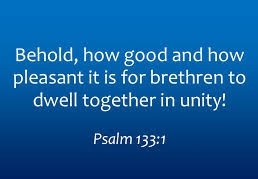
When we read in the Bible that we are to put on love which is the perfect bond of unity, we wonder how we go about doing that.

With all the different doctrines, interpretations, denominations and versions of the Bible, how is it possible for us to get along and have unity among the brethren?

It is by love. To put on love is to put on God. God is love and love lives within us. Even in all the differences we can be united in the love of God. Our common focus is Jesus. We can be one in God and still have different views and opinions. Because of the love of God, we can respect one another even with our differing views and opinions, and we can accept each other as brothers and sisters in Christ.

Love will bind us together and allow us to live in peace with one another. Many times, love is pushed out of the way for our own selfish desires. That is when disrespect, arguing, judging and condemning takes over, and it is not a pretty sight for those who profess to follow God.

Unity comes only through the love of God. It is not through religion, doctrines, denominations or Bible versions, but through God alone. The love and power of God through the Holy Spirit looks beyond religion, doctrines, denominations, race, sexual orientation and nationality.

God is love and God lives within us. By allowing the love of God to flow out of us we can look beyond our differences and accept one another even when we disagree.

Only by loving God and loving one another through the power of the Spirit will others see a difference in those of us who are followers of Jesus.

*******

Michael Donahoe was added as a writer for Done with Religion as his views fit perfectly with those that are shared on this site. He and his wife, after spending about fifty-five years in the institutional church, have been outside the walls of religion for fifteen years. He enjoys writing about his experiences and thoughts, and he wants to encourage others who are going through the religious deconstruction process. He also writes on Substack at https://personalmeanderings.substack.com/

Read Full Post »

by Jim Gordon

When we think about our fellow Christians, we should think about the love, acceptance and fellowship we can have with other believers. Unfortunately, with all the different religious doctrines, denominations, interpretations and various versions of the Bible, it seems there are always times when we run into conflict and are not so loving to one another.

Each of us as brothers or sisters in Christ seem to want it our way. Our church, our interpretation, our version of the Bible. We each feel that we are right and feel the need to distance ourselves from those who feel differently.

Have you noticed how religion wants to set the rules so each of us know what it takes to be a good Christian, all according to a particular doctrine or church organization? Do this, don’t do that, stay away from this and make sure you participate in that. We think we have to be in every service and be active with this group or that group. If you are not reading a particular version of the Bible, you are just wasting your time, or if you are not part of a church you are backslidden, at least that is the way some fellow Christians make you feel. Rules, rules, rules.

Maybe it is time to stop arguing over versions, interpretations, church attendance and such and start focusing on Jesus, who is to be our first love. If we can focus on what Jesus told us to do, love God and love others, we should be able to love and accept others even in our differences.

Focusing on Jesus and following the guidance of the Spirit can often lead us into ways we did not expect to go. Many of us begin to ask questions, have doubts and deconstruct our faith. This does not mean we lose our faith or walk away from God. No, we actually draw closer to God because we depend on the leading of the Spirit that lives within us.

The thing is, when we find common ground in our faith in Jesus, when we love God with all our heart, soul, strength and mind, we become able to look past the minor differences, the different religious doctrines, denominations, interpretations and various versions of the Bible. We look at each other as fellow believers following the Spirit on many different paths, yet continually moving forward in a close fellowship with God. Keep in mind we are all children of God trying our best to follow the Spirit and be pleasing to our God. It is time to stop fighting against each other and begin to love one another as Jesus loves us. Do not let the minor differences come between the love we can have for one another and the things we can learn through fellowship with our brothers and sisters in Christ.

Jim Gordon and his wife left the institutional church after spending over fifty years within the system. Jim wanted a way to express his thoughts and concerns about the religious system and why he and his wife decided to leave the institution but not their faith in God. Jim can be contacted by email at: jimgordon731@gmail.com

Read Full Post »

By Mike Edwards

Hell is certainly a message Christians get wrong. I am convinced a literal Hell is a biblical myth.  See here.  We get wrong that God thinks women can’t serve in the same religious or marriage roles that men can. Another myth. See here. Also, we get wrong that God condemns gays according to the Bible. Another myth. See here. But the biggest myth may be that God’s main message according to the Bible is that salvation is about going to Heaven or Hell rather than how to live life here on earth. People reject God based on claims about hell, women, or gays. But it is so important to know that God cares about you here and now and not about just the afterlife.

The main message isn’t about a literal Hell somewhere other than on earth

Gehenna, the Greek word translated as Hell in the New Testament, was the name of a real valley near Jerusalem with a history of terrible, ending slaughter.  Gehenna is best translated Gehenna just as Mount Everest is best translated Mount Everest. There is no word in Hebrew or Greek for “hell.” Jesus used Gehenna to illustrate that spiritual death is as tragic as physical death. God creating a literal Hell where people are tortured for billions of years for beliefs held a short time here on earth isn’t possible biblically or morally.   See here.  See here. 

The main message isn’t about God saving us to enter Heaven away from Earth 

Jesus taught as if God’s Kingdom was near, not coming in distant future. “Truly I tell you, some who are standing here will not taste death before they see that the kingdom of God has come with power.” (Mk 9:1) The Good News throughout the Gospels refers to a Kingdom here on earth now. The kingdom of God “has come upon you” (Mt 12:28) and “is in your midst.” (Lk 17:21) The word “heaven” appears the most in the Gospel of Matthew. The Kingdom of Heaven isn’t a place to go after life on earth. Jesus sought to bring heavenly love to earth – “on earth as in heaven.”

What about eternal life?

Jesus was asked by a religious leader how to have eternal life. (Lk.10:25-37). Jesus elsewhere defined eternal life as beginning in the here and now (Jn 17:3), not what awaited in the afterlife. I doubt the leader had in mind how to get into Heaven away from this Earth. Jesus simply said to love God and your neighbor. “Eternal” appears to be on the quality not quantity in life. Jesus spoke of a life worth living being a loving life empowered by God. Jesus’ salvation was about living a meaningful life here on earth with God’s help. The Bible/Jesus/God’s message isn’t dropping to your knees to avoid Hell to go to Heaven after death, but start loving now – a path toward great relationships.

What did the earliest Gospel says how Jesus spoke to others? 

I read through the Gospel of Mark to see what Jesus’ main message was to others. Mark’s Gospel is considered the earliest written from which Matthew and Luke cited. In all the Gospels Jesus never advises to preach to the masses to save them from Hell in the afterlife. Jesus sought to help others avoid hell here on earth. Sin is destructive. It has natural consequences.

  • When Jesus met his disciples, he only said “follow me.” (Mark 1: 16:17, 2:14) A set of beliefs wasn’t required. The main message to the disciples was living a life worth living.
  • People were bringing children to Jesus and he said “anyone who will not receive the kingdom of God like a little child will never enter it.” (Mark 10:15) The kingdom of God was not a future home but a current reality. Jesus has just said “some who are standing here will not taste death before they see that the kingdom of God has come with power.” (Mark 9:1)
  • A rich person asked how to have eternal life. Jesus said sell everything and follow me. (Mark 10: 17-31) Surely Jesus’ point was to love people more than possessions. What does following Jesus mean? When asked what was the greatest commandments, Jesus only said to love God and your neighbors (Mark 12:30-31). What! Not drop to your knees and say a prayer!
  • The above interactions are like when Jesus dealt with the women caught in adultery. (Jn. 7:53-8:11) Jesus only encouraged the woman to go and sin no more. Where was his evangelical spiel. He might never see her again! Apparently, Jesus came to encourage living a loving life toward others and yourself.

Didn’t Paul though preach repent to avoid punishment? 

The Apostle Paul did say “believe in your heart that God raised him from the dead, you will be saved.” (Rm 10:9) Paul recognized Jesus’ death and resurrection, but Jesus’ sacrifice was to draw attention to the Good News already proclaimed by Paul – God’s desire to empower unselfish living. Paul preached about the Kingdom of God being here (Acts). Paul did say “the wages of sin is death.” (Rm. 6:23) But Paul is speaking of spiritual death because Paul is still alive though sin has put him to death (Rm. 7:11). Paul mentions Heaven twice in Romans, yet says nothing about Jesus dying so we can go to Heaven (Rm. 1:18, 10:6). The Apostle Paul who wrote most of the NT never refers to Hell. No prophet in the OT warned of Hell as a consequence for behaviors here on earth.

What about life after death?

We don’t know exactly what happens after life here on earth. We are free to speculate what a loving God might do. Go ahead and live like Hell while here on earth! Careful the regrets you, your family, and friends will feel at the end of your life. Careful that our character developed here on earth may make the change process longer and more painful in the life to come. It is reasonable to believe a loving God can choose to take forever in this life and the life to come to save everyone from themselves. It is possible to interpret the Bible as claiming all eventually go to be with God after death.  See here.

God only seeks to inspire you to avoid a life full of regrets

We are told the message of the Bible is Jesus coming to give you salvation to save you from Hell so you could enter Heaven. I believe Jesus spoke of loving God not to get into heaven but to receive help in loving others as you love yourself now. You may be different than me, but I get help from God in pursuing a life not full of regrets. Try it! It’s on God to come through for you if you choose to follow. Jesus when leaving this earth spoke of having God’s spirit within us.  If you refuse to love, you may end up a lonely, regretful soul.

What Is Main Message About Bible/Jesus That Christians Get Wrong?

Mike Edwards has been writing for Done with Religion for some time and has been a great addition to the site. He couldn’t find enough people to discuss God openly so he started blogging years ago. Mike also has his own site where he writes that can be found at What God May Really Be Like  He can be contacted by email at: medwar2@gmail.com

Photo For Facebook

Read Full Post »

by Jim Gordon

Christianity is the same no matter what country we live in, but for this article, we are talking mainly about here in the United States. In this country, we have a lot of people who claim to be Christians. What does that mean and how should we be able to recognize them?

As Christians, people should be known for their love. Their goal should be to follow the example of Jesus. Those of us who claim to be Christians go about showing our faith in different ways. Many feel that if we can preach in public, be a pastor, evangelist, or missionary, they will be known as good Christian people.

Others think if they give regularly to their church, or to programs to help the poor and other social justice issues, they will be known as good Christians. Many will base their identity on their works and all the good things they do to show they are good Christians.

Unfortunately, many will put their faith in political power, trying to force their beliefs on everyone. By doing so, they think they will make the country better by making laws based on biblical law and their interpretation of Christianity.

Basically, all these things are a waste of time. First, we are saved by grace, it is a gift from God and there is nothing we can do to earn it or pay for it. Second, the only way that Jesus says we are to be known as His disciples is by the love we have for one another.

Jesus told us to believe on the one who God sent and to love others as you love yourself. When we try mixing New Testament grace with the Old Covenant law, we are getting away from the truly good news and we are not loving one another as Jesus meant.

Some Christians think that by posting the ten commandments in schools, or requiring prayer in schools, or placing religious items in public buildings, it will show their Christian beliefs and force people to think about God. Now, I am not an advocate for putting religious postings in public buildings, but if there is going to be anything, the Sermon on the Mount would be much better. Rather than forcing biblical law on an entire country, promote the fruit of the Spirit, being love, joy, peace, patience, kindness, goodness, faithfulness, gentleness and self-control. Against such things there is no law.

Christianity should not be anything other than loving God and loving one another. We should be following the example of Jesus and never force our religious beliefs on anyone. God gave us freedom to choose, as Christians, we should do the same.

Jim Gordon and his wife left the institutional church after spending over fifty years within the system. Jim wanted a way to express his thoughts and concerns about the religious system and why he and his wife decided to leave the institution but not their faith in God. Jim can be contacted by email at: jimgordon731@gmail.com

Read Full Post »

By Mike Edwards

Acceptance of certain creeds or doctrines is often expected to join a church. They may concern whether the Bible is inspired by God, how one obtains salvation, afterlife beliefs, etc. This is why thousands of denominations exist in the Christian faith. Certain beliefs are declared important according to their interpretation of the Bible. I am convinced God would encourage only one doctrine. 

Jesus’ message was simply to love one another

Many agree to understand Jesus is to understand God. Jesus in his interactions didn’t seem to demand a certain prayer to repeat for salvation. Jesus in choosing disciples simply asked to follow him. They didn’t believe many of Jesus’ claims until after his resurrection. I am convinced Jesus came to advise how to start living here on earth, not what awaited in the afterlife, when asked how to have eternal life. He simply said to love God and your neighbor (Lk10:25-37). Jesus understood loving God leads to loving your neighbor. One, if so inclined, can ask for God’s help in living a meaningful life here on earth. See here for more of Jesus’ interactions with others.  

What about women, gays, and Hell? 

It is assumed biblical scholars agree what the Bible says about gays, women, hell, and other moral issues. They don’t! See here. See here. See here.  Ancient literature subject to interpretation cannot be the definitive word on truth. Gays are often condemned and women’s leadership roles are limited, despite their gifts, in God’s name. How would God love gays, women, or those of other religions? A Creator surely loves the way creatures intuitively think they ought to love. How to love others is the discussion, not one’s interpretation which may be wrong. 

Self-evident rights may be found in a Book or natural law, as we all have an inborn sense of good and evil. All rational being believe sexual abuse is evil. We can though have healthy debates what climate policies are for the greater good. We can share our personal beliefs in God and other matters in the public arena without implying we all agree what the most loving values are. Love is complicated sometimes. Freedom of beliefs is critical for such discussions.

Does one have to believe Jesus resurrected or was the Son of God?

I imagine most seek to convene together in a church building because of their belief in God and Jesus’ main message. Many may not be sure if Jesus was God in human form or God’s representative here on earth. I am convinced Jesus’ resurrection isn’t legend and has historical verification, but others may not. Jesus’ disciples didn’t believe Jesus when told he was coming back from the dead, despite witnessing Jesus’ miracles beforehand, until witnessing with their own eyes. I would like to think many of us witnessing a man or woman coming back from the grave, after killed on a cross, would be convinced.  I have a hunch God cares the most that you believe in the possibility of a loving God to begin a faith journey.

How Christians can unite

Christians often hope others entertain the difference a personal relationship with God can make in one’s life. The way Christians act in loving others can be a distraction to this hope. Christians must forget any requirements of beliefs other than a desire to love others as they wish to be love. God can hold Their own in influencing others to consider God’s help in this journey. Let the discussions how to love begin without assuming you are right and others are wrong!

What One Belief Only Matters To God?

MikeEdwardsprofilepic125

Mike Edwards has been writing for Done with Religion for some time and has been a great addition to the site. He couldn’t find enough people to discuss God openly so he started blogging years ago. Mike also has his own site where he writes that can be found at What God May Really Be Like  He can be contacted by email at: medwar2@gmail.com

Read Full Post »

By Mike Edwards

Christians can make faith too complicated. They insist on a set of beliefs or saying a magic prayer. It is said you can’t just believe there is a God. After all the Devil believes there is a God! But the Devil was committed to opposing God. Even the Bible doesn’t declare faith to be a set of beliefs but hope in what you can’t see. (Heb 11:1) Do you hope/believe in a good God and want help to be more the person you deep down desire to be? Then, I am convinced God welcomes you.

You don’t have to accept the Bible when contradicts your moral inclinations 

I have written a great deal about RETHINKING THE BIBLE  Certain views of the Bible has kept many from following God. The Bible can’t be the authoritative guide about God because we disagree what it says about many moral issues including Hell, gays, women’s roles, etc. And even if our interpretations were infallible, we can’t be sure the biblical writers always knew or portrayed God accurately. Honestly, I trust my moral intuitions more than I do any biblical interpretation. 

You don’t have to be a church-goer 

In the Bible “Church” was not a building one attended once a week. Jesus referred to His followers as being the Church. Jesus didn’t specify where followers must gather or what they must do. Find environments to be encouraged and inspired to love as radically as Jesus did. A mediator between God and you such as a pastor or priest isn’t necessary. Pursue God on your own terms. Do not feel God thinks any less of you if decide to not attend the traditional church.

What did Jesus mean when said “follow me?” 

Jesus didn’t ask the disciples for certain commitments before following Him. He certainly didn’t ask for unshakable belief. Some of the disciple didn’t believe Jesus’ resurrection talk until had physical proof. If you saw someone die on a Cross and alive days later, you may believe too. Yes, Jesus also said: “Whoever does not take up their cross and follow me is not worthy of me. Whoever finds their life will lose it, and whoever loses their life for my sake will find it.” (Mt 10:38) Was Jesus supposed to say “remain self-centered because that will lead to happiness?” Jesus didn’t reject those who didn’t instantly go all-in. If wanting to live for the Devil, then don’t follow Jesus.

What specific changes might Jesus be looking for?

If reading this and wanting to have more of a relationship with God, I bet you are in the club. When one asked Jesus how to have eternal life, He simply said to love God and your neighbor (Lk.10:25-37). Loving God is loving your neighbor. If you desire a legacy for being known for loving others like you want to be loved, you are a candidate to take the leap of faith and follow God. My hunch about what Jesus was thinking when challenging others to take up their cross – not what we can do for God but watch what I can do for you if you are seeking changes for good.

What do you have to lose taking the leap of faith?

I dare you to challenge God. If God claims to love us and guide us, God should be able to convince you over time they are worth following. You may be able to do it on your own, but I need all the help I can get. God through their influence has made me a better man, husband, father, and friend or at least better than if on my own. I have experienced God’s encouragement to continually strive to be better. I got nothing to lose except selfishness and a lousy legacy. A godly life lived is never in vain!

What Do I Have To Change To Be A True Follower Of God?

MikeEdwardsprofilepic125

Mike Edwards has been writing for Done with Religion for some time and has been a great addition to the site. Mike also has his own site where he writes that can be found at What God May Really Be Like  He can be contacted by email at: medwar2@gmail.com

Read Full Post »

by Mike Edwards

Believing God exists or doesn’t exist requires faith, but it seems intuitive a loving Creator would love the way we were created to love. We can examine what a loving God is like through our moral intuitions, our consciences. Christians may argue we should trust “biblical truths” about God, but differing interpretations exist for many moral issues. See here.  Also, we can’t prove if biblical writers always understood God perfectly. We aren’t always certain how to best love, but we know that we or a Creator ought to love others as we want to be loved.

It may be presumptuous to be writing about women since I am of the opposite gender. I am more sensitive because I married a strong woman, have two daughters, and saw as a counselor how men in marriage powered over their wives often because of biblical understandings. Views on gender roles effects directly half of the human population. It’s a big deal!

What would you think about women if the Bible or Koran didn’t exist?

Most would agree it is immoral to favor one based on the color of their skin. Intuitively, to favor men over women for particular roles seems sexist or bigotry. I am not sure why any fair-minded person would think women can’t fulfill the same roles as men unless believing a Book about God teaches otherwise. Many more Christians and Muslims wouldn’t deny women equality unless mandated in the name of God according to some Book. Women can obviously feel disrespected and confused why a supposedly loving God would choose according to gender than gifts. Men, walk in their shoes!   

What did the main writer of the New Testament really believe? 

Jesus gives no hint that he thought roles were determined according to gender than gifts. Jesus was quite inclusion. I doubt the Apostle Paul, the main writer of the New Testament other than the gospels, was bias against women. See here.  The most qualified or gifted should surely lead a company. Why not in church? Men in authority over women whether in public, private, or church life is conducive for abuse at the hands of men. Let’s choose the least harmful biblical interpretation. Galatians 3:28 may be God’s ideal: “There is neither Jew or Gentile, neither slave or free, neither male nor female, for you all are one in Christ Jesus (Gal. 3:28).” 

What are the consequences of women unequally submissive in marriage?

Best friends, in marriage or other dyad relationships, don’t require a leader. Men often assume loving leadership means making final decisions in impasses. I have never had a marriage issue in 39 years that cannot be solved creatively without one partner making all such decisions. Same between friends. Decisions can be shared or made according to one’s gifts. Men in authority over women can encourage dominance on the man’s part and dependence on the woman’s part, which can be conducive for domestic abuse. Men, including myself, given an inch often take a mile!

God, women, and men! 

In many countries a Book is used to suggest God condones women not having the same rights as men to vote, drive, or dress how they want. WHAT! God surely believes in roles determined according to gifts not gender whether it be at home, the office, or in worship. Let’s stand on the side that is potentially less abusive to half of God’s creations. It could be argued many men don’t abuse their leadership. The temptation to abuse or stifle one’s gifts is best removed. I removed spanking as an option as a father because of the impulse to react harmfully and not consider creative alternatives. No, my kids didn’t all end up in jail! Common moral sense isn’t the enemy!

MikeEdwardsprofilepic125

Mike Edwards has been writing for Done with Religion for some time and has been a great addition to the site. Mike also has his own site where he writes that can be found at What God May Really Be Like  He can be contacted by email at: medwar2@gmail.com


Read Full Post »

by Mike Edwards

The political divide in our nation is obvious, but shouldn’t people who claim to follow Jesus’ teachings get along? Yes, plenty of people are leaving the institutional church but they aren’t leaving God. It is hard to make a big impact in the world alone. A movement though can! Why isn’t a Following who claims the importance of loving others as themselves having more of an impact on our culture?

It is human nature to not always get along.

The wife and I got along pretty well when dating, but that didn’t exactly prepare me for the first years of marriage. Love doesn’t make go away having to share bathrooms, finances, closets, in-laws, etc. I didn’t learn soon enough that love requires learning to disagree well so to live happily incompatible. You got to learn some skills as differences arise. But Christian divisions run deeper than nature.

One’s belief if the Bible is inspired by God may be the greatest divider among Christians.

Some believe God inspired all of the Bible thus is God’s final word on guidance; others believe the Spirit may guide us toward even a higher view of God than the writers always had. One can still be a God-follower though their view of the Bible is different than yours. Besides, literature requires interpretation whether you believe God inspired all of the Bible or not. More churches are forming than uniting because of differences in interpretations and no one is admitting they may be wrong. Christian opinions can stand side by side as we continually evaluate the most loving way.

Can we get along despite a helluva lot of differences?

It has been suggested despite the challenges of translation and interpretation the central message of the Bible is clear to all. I respectfully disagree. One’s belief about Hell supposedly impacts everyone born into this world. Views on women’s roles impacts half the population. Gay differences impact millions and millions of people. Can I get along with one who is convinced God condemns gays for attractions they can’t control? I may never know because we are quick to demonize one another when we don’t share the same convictions.

What first steps can we take to show true love?

We each have to decide what is the first big step we can take in our relationships. As my beliefs were forming and changing over the decades, I wasn’t always respectful in sharing my passions. If I had it all to do over, I would have sought to understand first before being understood. This is the best way for relationships to not end up demonizing one another. Standing side by side may in time allow one to be persuaded for the right reasons. Christians acting loving toward one another could change the world!

Read Full Post »

Older Posts »