Feeds:
Posts
Comments

Posts Tagged ‘deconstruction’

by Michael Donahoe

The word deconstruction has become popular in recent years, and for me, it has become personal. What exactly do we mean by deconstruction?

First, I can honestly say that twenty years ago I would not have any idea what deconstruction was, other than tearing down a house or building. I can also say, if I had found out back then what it was spiritually, I would have wanted nothing to do with it.

Fifteen years later, everything changed. Deconstruction became very important to me once I realized that I was already starting to go through it. I had been having many questions about the church and the things I was taught growing up. Many things were not making sense and it seemed there had to be more than just sitting in church once a week.

The definition of deconstruction is the analytic examination of something (such as a theory) often in order to reveal its inadequacy; spiritually speaking it is questioning, re-evaluating, and even dismantling aspects of faith or religious practices. It does not actually mean demolition, instead it means breaking down or analyzing something to discover its true significance, which is supposedly almost never exactly what the author intended. 

Over the fifty-five years I spent going to church, I had many questions. Unfortunately, I felt I could not ask those questions because people would think I did not have enough faith. Yet, in time I got to a point that I started asking questions anyway and searching for answers, which led to me to start my deconstruction process.
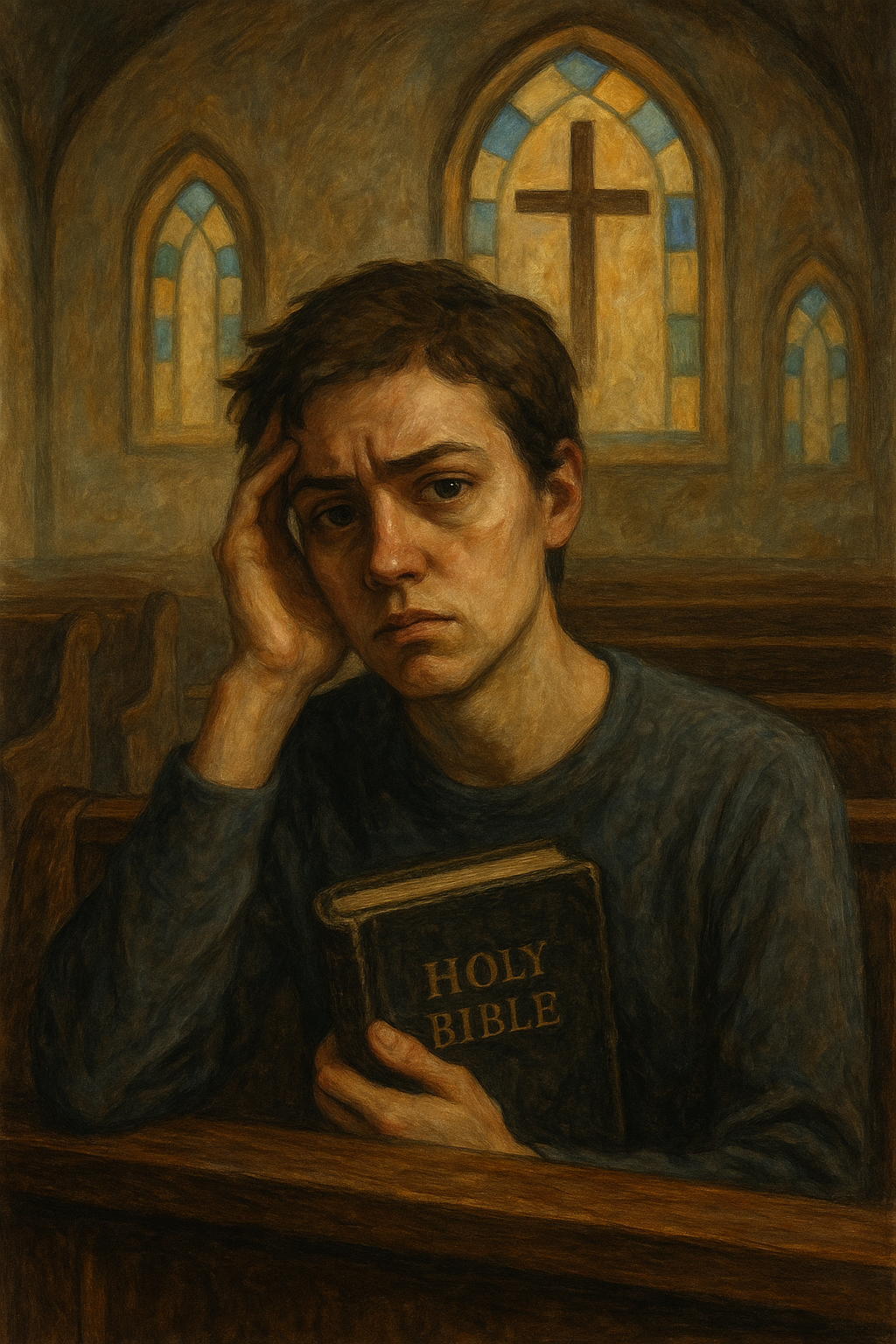
Of course, in time, I came to a point where I started to rebuild my faith with new ideas and new ways of looking at things. I had a kind of faith that was freer and made more sense. Not that I had all the answers, but now I was not afraid to ask questions and admit my doubts. I found out there was a term for this, which is reconstruction. A rebuilding of my faith without the church doctrine and the certainty I felt I had to have while in the religious organization.

Reconstructing our faith is rebuilding some of the interpretations and spiritual ideas without destroying our faith foundation. It is seeing things differently, being open to asking questions and admitting we do not know everything. It is a faith of uncertainty more than being closed-minded and set in our ways.

I was now free to walk with God outside of set doctrines and some of the ways I was taught in church. I could now follow the Spirit without the religious requirements, all the while learning to love and accept all people.

Deconstruction and Reconstruction all lead to Transformation, which is a profound and lasting shift in self-concept, mindset, and overall way of being. I now felt comfortable not knowing all the answers and not feeling guilty because of it. I could accept people from different walks of life and different faiths without the guilt that religion sometimes puts on me. I was free from the doctrines and religious interpretations that kept me in submission. Now I depend on guidance from the Spirit that lives within me rather the views and opinions of other human beings.

Although deconstruction can be an important part of our life, I do not think we should stay there. Yet, I do believe we should be continually going through deconstruction and reconstruction, and continually being transformed. We should not become stagnant, but constantly changing as the Spirit leads us day by day.

God is so much bigger than we can realize. Part of deconstruction for me was realizing after all the years within the church and the years following God outside the walls of religion, there is always more to learn. God cannot be contained in a building nor a book. I realize that we need to focus more on the leading of the Spirit that lives within us and less on the doctrines and views of religious systems.

*******

Michael Donahoe was added as a writer for Done with Religion as his views fit perfectly with those that are shared on this site. He and his wife have been outside the walls of religion for fifteen years. He enjoys writing about his experiences and thoughts, and he wants to encourage others who are going through the religious deconstruction process. He also writes on Substack at https://personalmeanderings.substack.com/ and https://deconstructiontrail.substack.com/


Read Full Post »

By Mike Edwards

Christians are more familiar with the term “deconstructing” from the Christian faith. I am not writing about those who aren’t done with God just religion. I have in mind those who stop believing in God, or God becomes much less a part of one’s life despite belief in God. Such people may have attended church or a religious institute regularly at some time, while others may have rarely or never entered a church door but are inclined to believe in God. Why are many moving away from God though desiring a relationship?

Why are some inclined to pursue God or not? 

Christians especially are guilty of implying those who don’t believe in or stop pursuing God are suppressing what they know to be true. I disagree. I suppose some deny there is a God to justify their evil ways, but those I know not into God as much as me are just as moral if not more than I am.  Let’s not accuse those who believe in a God as needing a crutch or accuse those who question the reality of an invisible God as being wicked and ignorant of their feelings.

Many people do or don’t pursue God, or rebel against God, because of the family they are born in. I am not sure I would be pursuing God if my parents hadn’t encouraged it. Some by personality are more skeptical or accepting. I am sure many don’t pursue God for obvious emotional reasons. A child abused by their father may struggle to accept a God betrayed as our Father in Heaven. Many are turned away from God because of the hypocrisy of God-following friends or leaders.

What may be the main intellectual reasons leaving a belief in God?   

One’s view of God is critical in their journey. See here. I am convinced a major factor in deconverting or moving away from God is because of views claimed about God. It is claimed the Bible supposedly says that God condemns gays, God burns unbelievers in the afterlife, and God doesn’t think women can fulfill the same roles as men though just as gifted. The truth is biblical scholars who have a deep respect for Scriptures don’t agree what the Bible says about gays, women, hell, and other moral issues. See here.  See here.  See here.

Another major intellectual reason is due to certain explanations given for the presence of evil and suffering in our world despite there being a God. It is understandable why many can’t believe in a supposedly, all-powerful God who standbys while one is being raped, tortured, murdered, abused, etc. What kind of parent or God doesn’t intervene when they could prevent such suffering? Maybe a perfect, loving God can’t be controlling just as they can’t be manipulative. Maybe God can’t intervene single-handedly without human help. See Thomas Oord. The alternative is that God can always stop your suffering and doesn’t, or that God arbitrarily stops other’s sufferings sometimes but not yours. I am convinced there are better explanations.

Why we must stop claiming the Bible is inspired!

Inspiration suggests God’s approval. Keep in mind we can’t prove God controlled every thought or word written by the biblical author. God didn’t dictate the Bible to others. Stating as proof that the writers claimed such inspiration is circular reasoning. The truth is that even if our interpretations were infallible, we can’t be sure the biblical writers always knew or portrayed God accurately. It is only intuitive that a Creator loves the ways their creations ought to love one another. Biblical interpretations, or a biblical writer’s understanding about God, that doesn’t match how you and most know you ought to love your neighbor may be amiss. A supposed inspired Book must not replace our relationship with God and common moral sense. See here.

Pursing God is about following God, not adhering to certain beliefs 

We are often told the main message of the Bible is Jesus coming to give you salvation to save you from Hell so you could enter Heaven. Common understandings of Hell aren’t necessarily biblical, thus how could this be Jesus’ central message? See here. When Jesus was asked by a religious expert how to have eternal life, which surely implies salvation, Jesus spoke of how to start living here on earth not what awaited in the afterlife. He simply said to love God and your neighbor (Lk.10:25-37). Jesus spoke of loving God not to get into heaven but to receive help in loving others as you love yourself. You don’t have to drop to your knees and say a prayer to get “in” with God. You only have to want God’s help. Jesus’ salvation was about living a meaningful life here on earth with God’s help. Personally, I am convinced there is a God and my relationship with God has inspired and encouraged me to be the person I desire to be.

Why Do Many Deconstruct Or Deconvert From God?

MikeEdwardsprofilepic125

Mike Edwards has been writing for Done with Religion for some time and has been a great addition to the site. He couldn’t find enough people to discuss God openly so he started blogging years ago. Mike also has his own site where he writes that can be found at What God May Really Be Like  He can be contacted by email at: medwar2@gmail.com

Read Full Post »

by Jim Gordon

After all the years I spent in church and being taught the various Bible stories, I always thought I had everything about God figured out. I thought I knew everything there was to know to have fellowship with God and do what was “right” for a Christian to do.

I have found this to be a common feeling among many Christian people. We think by listening to the pastor and doing some Bible reading, we have all the answers and do not need to seek out any other ways of looking at things.

Yet, as time went by, I began having some questions on things that did not make sense to me. I would notice now and then that I would even have some doubts. Of course, I did not pursue any of these questions or doubts because a ‘good’ Christian does not do that. To question or doubt was the fastest way to show you had very little faith.

As the years went by, I became a little more open to seriously wondering about some of the things I was taught in church. I started reading some books by others who felt the same way. I came to the conclusion that God was big enough to handle my questions and doubts, so I no longer felt guilty about having them. More and more people are coming to this same conclusion and are beginning to question and challenge some of the things they were taught.

I notice that some people begin to ask questions, but quickly feel guilty for doing so and go back to their old way of keeping quiet and not asking questions. Others begin to doubt and question and end up completely leaving their faith. It is sad when that happens, but everyone is certainly entitled to follow what they feel is right for them. Still others, such as me, started learning new things, found new interpretations, changed their way of thinking, changed some of their basic doctrinal beliefs and left the institutional church but did not leave their faith in God.

I soon realized I was participating in something I came to know as deconstruction. I did not know there was an actual term for what I was going through. This is common now and there is certainly nothing wrong with it. Basically, it is questioning your faith and what you were taught over the years, throwing out some things, changing your mind on some things and then starting to see some things in a new way.

The more I think about it, I think that doubts, questions, deconstruction and reconstruction will be something that never ends. I think this will be the norm for the rest of my earthly life. I personally think if we stop wondering and stop questioning, we will become stagnant in our faith. God is so much bigger than we realize, and there are so many more things to learn than what we have been taught throughout our time in church. If you are having some questions and doubts about your faith, do not feel guilty about it. Follow them and trust the Holy Spirit within you to guide you into more truth. Never stop seeking to grow in the grace and knowledge of the love of God.

Jim Gordon and his wife left the institutional church after spending over fifty years within the system. Jim wanted a way to express his thoughts and concerns about the religious system and why he and his wife decided to leave the institution but not their faith in God. Jim can be contacted by email at: jimgordon731@gmail.com

Read Full Post »

(What Exactly Does that Mean?)

by Jim Gordon

Over the past short period of time, we have heard of several “high profile christian leaders” say that they have left Christianity.

We have heard such comments from Joshua Harris, Paul Maxwell, Marty Sampson and I am sure several others.

When we hear this, many of us think that they have walked away from their faith and belief in God. Yet to rush into this way of thinking, we need to determine what exactly does the person mean by leaving Christianity.

I know first hand for my wife and I what it means, and it has nothing to do with leaving my faith or love for God.

The way I see it, Christianity is known more as a religion, just as Judaism, Islam, Hinduism, Buddhism, Confucianism or any of the many other religions out there. Christianity is a religion based on Christ but certainly not started by nor endorsed by Jesus.

When reading the gospels we read how the disciples came to know and follow Jesus. At that time they did so apart from any religion, especially Christianity since the word was not even known at that time. In Acts 11:26 people were first called Christians, which was after Jesus had returned to the Father.

Christianity, in my opinion, is generally stereotyped into people who go to church each week, they follow a particular doctrine, regularly read their bible, tithe their money to the church and often think their way is the only way. In the United States they tend to be republican, are against abortion and believe those who are LGBTQ are the worst of sinners.

When I say I have left Christianity, I mean I am walking away from this stereotyped religion. In no way have I left my faith in God or turned from following Jesus, who said to love God and love one another. This can certainly be done apart from Christianity.

So, no longer being Christian, I can honestly say I love God, follow Jesus and love people. I do not attend a church organization, I do not put trust into any particular religious doctrine, I read the bible but I do not believe it is a rule book or an inerrant document. The Spirit lives within us and the Spirit leads and guides us. Apart from the Spirit bringing to life passages written in the bible, the book itself is a document written by men about their belief and experiences with God. I do not tithe but I give to help others. I am an independent voter and fully affirm and support those who are LGBTQ. On the matter of abortion, I certainly understand a woman wanting the freedom to make choices about her body. I also understand for those who believe life begins at conception, they would have a hard time believing abortion is the right choice. I believe rather than fighting about whether abortion is right or wrong, it would be much better to come up with alternatives on how to support women no matter which decision they make ( read more here ).

There are so many views and opinions within Christianity. We will all never completely agree. Yet our commonality is in our love for God, love for Jesus and love for our fellow human beings. As John 13:34-35 reads, ‘a new command I give you: Love one another. As I have loved you, so you must love one another. By this everyone will know that you are my disciples, if you love one another’. Nothing here mentions Christianity or any religion. One does not need to follow a religion to love one another.

So, for my wife and I, we have left the religion of Christianity and are enjoying walking outside the box of religion and doctrinally controlled ideas. We are free to love, live and give as the Spirit leads us and for us, it is a much more meaningful way of walking with God.

Jim Gordon and his wife left the institutional church after spending over fifty years within the system. Jim wanted a way to express his thoughts and concerns about the religious system and why he and his wife decided to leave the institution but not their faith in God. Jim can be contacted by email at: jimgordon731@gmail.com

Read Full Post »

by Jim Gordon

There is an old hymn that says “On Christ the solid rock I stand, all other ground is sinking sand”. This leads me to think about the organized church. As important as the church is in our lives, we have to be careful not to put our hope in it. I have received a lot of help through the church and a lot of good basic teachings. I also learned of salvation but my hope is not in the church. My hope is in “Christ the solid rock”.

There are times when we are alone in our walk with God and without regular fellowship with our brothers and sisters in Christ. Many of us have left the organization and are deconstructing our faith and may have to stand alone for a while. Fortunately, we can rely on our relationship with Christ because his Spirit lives within us. The church is no substitute for Christ. It is where we can learn about Him but it is not the goal. The point is that we have a relationship with Christ and not the church, and He is our source of strength.

The modern-day organized church is a place for believers to get together, but it is not the main source. Going to church does not make us Christians, it does not make us better people or more dedicated believers. It is a place to get ideas, different interpretations and encouragement from others, a place to meet other believers and enjoy fellowship, and a place to reach out and help others.

We need to stop putting the focus and emphasis on church, stop putting our eyes on pastors and realize that they are not the answer. We need to put all focus and attention on Christ. It is Jesus who we follow and worship. He is the Shepherd and the rest of us are his sheep. There are no co-shepherds and no intermediates between Christ and us. We are to follow Christ and Him alone. We are to learn from Him and love others equally.

There is nothing wrong with going to church, but do not put your eyes on it and the leaders therein. Keep your focus on Christ. Whether you go to church or do not go to church, Christ is the one we look to and serve. Do not worry so much about going to church, but rather be the Church. It is not a building we go to, but it is the people who love and follow Christ.

If you have been going through the deconstruction process from organized religion like I have, you will learn that you can depend on Jesus to lead you into his truth. He will prove His love and care for you over and over just as he has done for me. Bottom line, let’s be careful that we do not put our dependence on an organization but on Jesus. All other ground is sinking sand.

Read Full Post »

by Jordan Hathcock

Ritual is simply a set of practices in a period of chaos so we can experience the chaos safely.  –Jason Coker

In a time of unrest and chaos, the tool that seems to work most effectively is the practice of rites and rituals. Now, this can be (and most likely is) triggering for most of us who have experienced unhealthy spiritual practices. Religious Trauma Syndrome (RTS) is something more and more people are dealing with and I know its something that is not to be taken lightly. When it comes to the Christian tradition, the “church” has not always been a place that produces healthy rites and rituals to assist us in getting through the ambiguous times in our lives. Instead, church practices often get the process ass backwards: We develop rites and rituals to control and manipulate people to believe and act a certain way instead of creating spaces available for us to grow in these times of pandemonium. Cognitive dissonance is viewed as an issue of faith instead of a step needed to be taken within the spiritual journey.

Deconstruction has been the “new” practice within the religious sphere in the last twenty years or so due to many factors. With the new internet age and the huge amount of access to resources, its been more and more difficult for the “powers that be” to keep a more discrete way of posturing when it comes to past, present and future church practices. Postmodernism has brought a lot of problems to be answered when it comes to religious institutions. When people have these crises of faith, the church is not equipped with the space (rites and rituals) to help heal and liberate those who need it. Deconstruction is a step that should be perceived as a healthy process that helps us mature in our faith. It shouldn’t be perceived as a problem to be solved but as a ritual to be practiced. We must learn to let go of corrosive practices of rules due to fear and embrace a more playful experimental practice of understanding.

How does that look like? Well, there are many ways we can experience spiritual practices that help us through the journey of life. It doesn’t have to be practices in a “brick and mortar” church setting. It can be a nature walk, surfing (my favorite), exercising, playing music, painting a picture, or crafting some good beer (my other favorite). There are various of ways to experience divine guidance. The Christian traditions rites and rituals that have been with us for 2,000 plus years can be practiced in a new light as well. We can always find new ways to interpret and repurpose a practice within a church setting to help us better connect and move to more liberating heights. Traditions are good if used in a healthy and freeing way. We can let go of the damaging aspects of a rite and ritual and still actually practice the act itself. I understand some are unable to ever practice certain rites and rituals within Christianity due to RTS and that is OK! Along as you find some time of ritual to practice to better center you as a human being, I think the world can benefit from it. With that being said, there are still some beautiful practices with this Christian religion that I still find beneficial. An example that I have come to experience when it comes to repurposing a certain spiritual practice is Communion/Eucharist/Lords Table (whatever name floats your boat).

The tradition that I grew up in (L.D.S.) named this practice The Sacrament. It has elements of truth (like all spiritual practices do in a sense) but also some pretty damaging aspects as well. In my opinion and experience (along with many others) the concept of purity codes comes to mind. In order to partake of the sacrament, you had to be “worthy” and “believe” in the church’s teachings. The point of this ritual is to renew the covenant you made at baptism. Unfortunately, this interpretation of the purpose of the Lords Table misses some really important factors to help oneself to become part of the gospel message. Instead of bringing us together with Christ and participating in the way of love, it becomes a rule one must follow in order to remain a “member of a church”. We are not part of some corporation that keeps track of its members “loyalty”. This also brings out zealot faith and judgment on others who do not partake of Communion. This should not be the point of why we partake of the bread and wine of Christ.

Fortunately, I found a Church (Oceanside Sanctuary ) that has taken the practice of Communion to a level of healing and liberation one needs when it comes to healthy rites and rituals (yes, a bold claim I know). We think it is important to take Communion weekly, so we can come to the table of love and mercy despite our differences. Let’s face it, we all have our own views on anything from sex, politics, sports, education and of course on our theological views regarding the Christian tradition itself. But, guess what? Unity is possible within diversity. That is what Jesus came to bring. The commonwealth of God is the reality where love can guide us to true freedom even through our messy differences. If we cannot practice healthy rite & rituals in a church setting, how the hell will we ever expect to see needed results outside the sanctuary walls?…

For Christians, to share in the Eucharist, the Holy Communion, means to live as people who know that they are always *guests*—that they have been welcomed and that they are wanted. It is perhaps the most simple thing that we can say about Holy Communion, yet it is still supremely worth saying. In Holy Communion, Jesus Christ tells us that he wants our company. -Rowan Williams

Read Full Post »