Feeds:
Posts
Comments

Posts Tagged ‘Jesus’

by Michael Donahoe

A good friend of mine wrote the following paragraph. There is an old hymn that says “On Christ the solid rock I stand, all other ground is sinking sand” As important as the church is in our lives, we have to be careful not to put our hope in it. I have received a lot of help thru the church and a lot of good basic teachings. I was also saved in church but my hope is not in the church. My hope is in “Christ the solid rock”. There are times when we are alone with no Christian fellowship and maybe we can’t make it to church for some reason. We have to be able to stand as mature Christians and rely on our relationship with Christ. The church is no substitute for Christ. It is only where we learn about Him. I guess what I am saying is that we have a relationship with Christ and not the church, and He is our source of strength if we call upon Him in truth. I personally am going thru the desert in life and I have to depend on Him. He has proved His love and care for me and in reality, He is the “Son of the Living God”. Bottom line, let’s be careful to put our dependence on Him. All other ground is sinking sand….
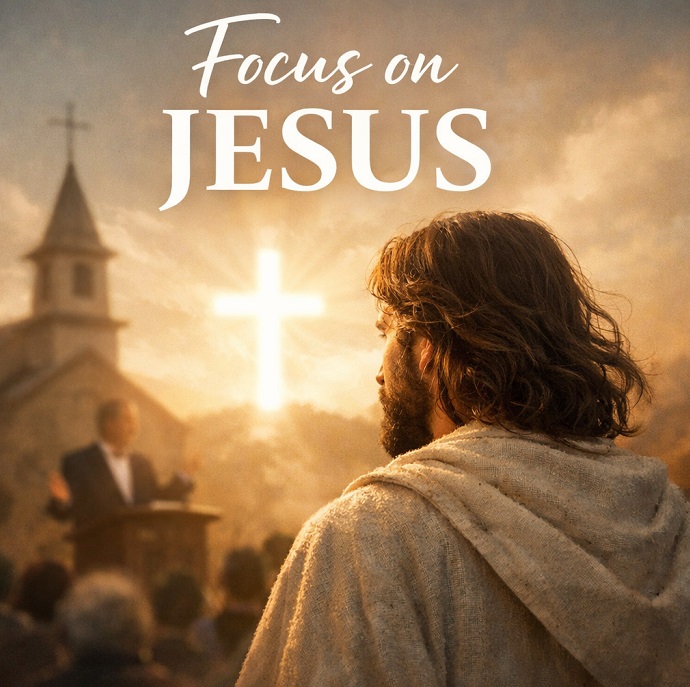
This goes along with some of my posts about modern-day church. The organized church today is a place for believers to get together, but it is not the goal. Going to church does not make us Christians, it does not make us better people or more dedicated believers. It is a place hear about the love of God, a place to enjoy the company of other believers, and a place to reach out and encourage others. Basically, it is a Christian social organization.

We need to stop putting the focus and emphasis on church, stop putting our eyes on pastors and realize that they are not the answer. We need to put all focus and attention on Jesus. It is Jesus we follow and worship. He is the Shepherd, the rest of us are the sheep. There are no co-shepherds, no intermediates between Christ and us. We are to follow Jesus and Him alone. We are to learn from Him, love God and love others.

There is nothing wrong with going to church, but do not put your eyes on an organization or any leaders therein. Keep your focus on Jesus. Whether you go to church or do not go to church, Jesus is the one we look to and serve. Do not worry so much about going to church, but rather be the Church. It is not a building we go to, but the people who love and follow Jesus.

*******

Michael Donahoe was added as a writer for Done with Religion as his views fit perfectly with those that are shared on this site. He and his wife have been outside the walls of religion for fifteen years. He enjoys writing about his experiences and thoughts, and he wants to encourage others who are going through the religious deconstruction process. He also writes on Substack at https://deconstructiontrail.substack.com/ and https://personalmeanderings.substack.com/

Read Full Post »

by Michael Donahoe

When we talk about good works, many of us can get confused and think that we need to do good works to earn our salvation. This way of thinking is totally wrong. Good works do not help us earn salvation or pay for anything with God. Good works will be the result of our salvation that was given to us by the grace of God. Yet, good works have nothing to do with earning anything.

We read in the Bible that faith without works is dead. Many people think of works as going to church, reading the Bible, witnessing, being honest, treating others respectfully, along with many other actions we consider good works. These things are all well and good, but I think this verse actually means something a little different.

In this verse Jesus is saying that if we believe in Him, we will do the works that He did, even greater ones. Obviously, we cannot do anything on our own, but by faith and the power of the Spirit within us. Only by the power of the Spirit can we do the works of Jesus.

When we think of the works that Jesus did, we think of love, joy, peace, patience, kindness, goodness, faithfulness, gentleness, and self-control. We think of empathy, compassion, mercy, caring for others and selflessness. Jesus did these things on a daily basis with people as a normal part of His day, and usually in ways that were not exceptional or highly dramatic.

I believe we all have different callings and different interests. Each of us as followers of Jesus can use those callings and interests (good works) to share the love of God and do the works that Jesus did, through faith, all to be a help and encouragement to others.

Whether we are doing a specific ministry or just going about our daily routine, we can let God work in us through the power of the Spirit. We can live in such a way that the good works that are produced will touch others and show them the love of God.

*******

Michael Donahoe was added as a writer for Done with Religion as his views fit perfectly with those that are shared on this site. He and his wife have been outside the walls of religion for fifteen years. He enjoys writing about his experiences and thoughts, and he wants to encourage others who are going through the religious deconstruction process. He also writes on Substack at https://deconstructiontrail.substack.com/ and https://personalmeanderings.substack.com/

Read Full Post »

Posted by permission
by Kari Browning
thebeautifulrevolution.org

What if the version of Christianity many of us inherited isn’t what Jesus intended at all?

What if the liberating message of Jesus—centered on justice, compassion, and harmony with creation—was gradually replaced by a religion shaped more by empire, patriarchy, and control?

Somewhere along the way, Christianity became less about following a revolutionary rabbi who stood with the vulnerable and the oppressed… and more about preserving power structures, obeying hierarchies, and escaping the world instead of healing it.

Instead of the teachings of Jesus—a way of living in harmony with each other and the earth—we got the religion of empire.

And honestly? It explains a lot.

It explains why so much of the church today aligns more with nationalism than with Jesus.

It helps explain how the earth came to be violated and Indigenous peoples oppressed—justified by distorted doctrines like “dominion” and “manifest destiny.”

It explains why so many of us are walking away—not from Jesus, but from what’s been done in His name.

Maybe the answer isn’t to give up on faith, but to reclaim the beautiful Gospel that empire has tried to erase.

The one that says:

You are the beloved.

This earth is sacred.

And liberation and wholeness are possible.

Read Full Post »

by Mike Edwards

This Post was inspired by a light reading of  The Widening Of God’s Mercy – Sexuality Within The Bible Story  God in the Bible condemns gays, but the father/son scholars don’t tackle the verses claimed to teach that God condemns gays. See here.   The Hays imply even if God supposedly does condemn gays and that is the correct interpretation – God can change his mind to feel differently after what is recorded in the Bible. So, even if you believe the Bible teaches God condemns gays, that may not be God’s attitude today toward gays. Many believe the Bible suggests the husband is the leader of the wife which I  doubt  but anyway, God may change his mind in many circumstances. Since the Bible is used as a rule book in many situations, let’s use the Bible to suggest God can change his mind.

God changes their mind in biblical times, so how about now? 

  • “And the Lord regretted that he had made Saul king over Israel.” [I Sam 15:35)
  • “And the Lord was sorry that he had made humankind on the earth, and it grieved him to his heart.” (Gen 6:6-7)
  • Many know the story of Moses getting God to compromise concerning sparing the disobedient. (Ex 32). When might God compromise with us today what we think the Bible claims in our situation? 

Even God’s laws given are updated and changed 

  • “I gave them statutes that were not good and ordinances by which they could not live.” (Ezek 20:25)
  • Ex 21:23-25 says “eye for eye” but Jesus updated (Matt 5:39)
  • Jesus changed the law regarding the Sabbath (Mk 2:27)
  • Exodus 20:24 allows sacrifice on any altar but that then changed to only one location (Deut 12:13-14). (p.55) 

I don’t wish to suggest the Bible should be used as a rule/guide book what to do in your situation since interpretations are infallible, but even in the same culture and times biblical laws were updated depending upon circumstances. What you think the Bible commands you to do, might God sit down and discuss? I know this Post can be used to justify anyone’s evil behavior, but if you think God changes his mind on sexual abuse, think again! 

How does the Bible guide us today?

I think Karl Barth is right: the theologian shouldn’t ask “What the apostles and prophets said, but what we must say on the basis of the apostles and prophets.” (p 4). This supports the idea that even in biblical times God changed his mind and updated laws. Even if you believe the Bible’s writers were never wrong what God thought and that God condemns gays, please consider what God may say today in your relationships with gays, your partner, etc. You may believe the Bible commands capital punishment, but is that what God thinks today in your situation and what you claim about God to others? Using the Bible as a rule book is complicated.

Mike Edwards was added as a writer and has been a great addition to the site. Mike provides many interesting views and various ways of looking at things. He is not afraid to ask questions and he keeps an open mind as to teachings of the institutional church. Mike also has his own site where he writes at What God May Really Be Like

Read Full Post »

by Jim Gordon

When we hear someone talk about the Word of God, we immediately think of the Bible. I believed this for many years while growing up in church and being part of the institutional church.

As I started my religious deconstruction, I paid more attention to the words written in the book of John, ‘In the beginning was the Word, and the Word was with God, and the Word was God’. Following that, there was this, ‘And the Word became flesh, and dwelt among us; and we saw His glory, glory as of the only Son from the Father, full of grace and truth’.

Obviously, this made me question the idea that the Bible was the word of God when the Bible itself was saying that Jesus is the Word of God.

So many of us focus on the Bible, almost making it part of the trinity. But, it is not the Father, Son and Holy Bible. We also focus on what version of the Bible is the true word of God. These verses state that Jesus is the true Word and is alive and living within us by the Spirit.

If we were never again able to read from the Bible or hear it read to us, we still have the Living Word of God within us to teach us and guide us. We are also told that ‘the anointing which you received from Him remains in you, and you have no need for anyone to teach you; but as His anointing teaches you about all things, and is true and is not a lie, and just as it has taught you, you remain in Him’.

When we read our Bibles, no matter what translation we prefer, we can be sure that the Spirit who lives within us brings those words to life, teaches us what God has for us and gives power to those words. Apart from that, the Bible is just a book that teaches us about what others thought about God. But the important part is that it leads us to Jesus who is the living Word of God.

Jim Gordon and his wife left the institutional church after spending over fifty years within the system. Jim wanted a way to express his thoughts and concerns about the religious system and why he and his wife decided to leave the institution but not their faith in God. Jim can be contacted by email at: jimgordon731@gmail.com

Read Full Post »

By Mike Edwards

If you read my weekly Post you are probably tired of my harping on the Bible. The word Bible has occurred over a 100 times in the title of my Post in the past decade or so.  See here.  This Post is an attempt to say all I feel needed about the topic of inspiration and the Bible. Honestly, I sometimes share some of the same content, just change the Post title to look at the topic asking a different question.

Many hearing claims that God inspired the Bible assume all characterizations in the Bible about God are true. They assume inspiration means God approved all recorded by the writers. They don’t think of inspiration as meaning that God encouraged or motivated writers/editors to record their understanding of God, thus possible being right or wrong.  I felt inspired to write this Post about God. That doesn’t mean all I claim about God is necessarily true.

It is important to realize that we can’t prove the Bible is or isn’t inspired by God. Besides, the Bible is literature that requires interpretation and we don’t all agree on the correct interpretation even concerning moral issues such as if God condemns gays or not. There are moral reasons to assume the Bible is not inspired. One then may ask how can we know God if not through the Bible, and others concerns such as how to read the Bible, whether to tell children bible stories, etc.

Can we prove the Bible is inspired by God or not? 

Can We Prove The Bible Is Inspired By God?

Even if we could prove God inspired every word in the Bible (God controlling the writers always accurately portrayed God), the Bible requires interpretation and such interpretations could be right or wrong

What Is Main Reason We Should Question if God Inspired The Bible?

Is The Bible Really The Word Of God

There are many important moral reasons to assume the Bible isn’t inspired by God 

Why Is It Important To Consider Bible Not Inspired?

 9 Reasons To Not Trust The Bible’s Claims About God!

How The Bible And The Quran Can Be Dangerous!

 How can we understand God if not through an inspired Holy Book?

 Do We Understand God Through The Bible or Common Moral Sense?

 Questions that may arise if questioning the inspiration of the Bible?

Are Biblical Stories Helpful Or Harmful To Children?

 Why Is One Defensive If Suggested The Bible May Have Errors?

 How Cn We Make Reading The Bible Less Difficult And More Enjoyable?

 Can We Stop Saying Our Nation Needs To Get Back To Biblical Truths?

 Can I Follow God If I Can’t Stand Reading The Bible?

Mike Edwards has been writing for Done with Religion for some time and has been a great addition to the site. He couldn’t find enough people to discuss God openly so he started blogging years ago. Mike also has his own site where he writes that can be found at What God May Really Be Like  He can be contacted by email at: medwar2@gmail.com


Read Full Post »

by Glenn Hager

It is so easy to enumerate what I am done with when it comes to religion. It is profoundly more difficult to figure out what to hang onto. I feel like I should occasionally ask myself this question to see if I am total heretic or just a free spirit.

Less and less, is an accurate description of what I am hanging onto, but I am hanging onto those things tighter and tighter.

I could make a massive list of stuff I let go of and another massive list of stuff I don’t know. But this list will be short.

I am hanging onto Jesus.

He is my model for how to live and it’s a model I very often fail to live up to.

He loved outcasts, the diseased, the foreigner, the poor, and the hated.

He rebuked the corrupt and powerful, especially, the religious power brokers.

He was humble, but shockingly truthful.

He told stories that people related to. He was not a theologian and did not preach an expository sermon.

He occasionally confounded and challenged people to go deeper in their understanding.

He was a healer. Though I do not possess divine ability, I can still be a healer of hearts.

He gave people hope for now and for eternity.

I am hanging onto love.

It’s hard to do when people are unlovely.

It’s hard to remember when we get consumed with ourselves and forget about others.

It’s hard to figure out what loves means for an individual.

It’s hard to be nice, or even decent, at time, let alone loving.

But love really works to touch people deeply, like nothing else.

It’s our primary responsibility here on earth.

I am hanging onto truth.

I do believe in objective truth, but what I am referring to is belief and behavior that is so true, it works its way out in regular life. It is real, raw, and not academic, esoteric, or theoretical. It doesn’t require its own subculture. It works in life with all its celebrations and challenges, achievements and disappointments, and triumphs and tragedies. It’s integrated not separated.

I am hanging onto hope.

I believe we can live in peace in this life. I believe we can become more loving. I believe we can live gracefully, gratefully, and joyfully. I believe we can reset to living life this way, even when we get thrown a few curve balls.

I believe there is hope for this life and the next and the next, though we have only a scant few clues and promises about that.

I don’t have any ideas about how to “fix church” or make it more relevant. I often wish I did because after all those years of church, that slot is still not completely filled.

It seems like it gets messed up when we begin to organize it and institutionalize it.

This is a pretty strange statement of beliefs, but it is mine.

Glenn Hager is a former pastor, newspaper columnist, magazine contributor, blogger (glennhager.com), and author of two books. He also designs lighting (http://doo-dads.com/). Glenn and his wife, Patty live in northeastern Illinois.

Read Full Post »

By Mike Edwards

Hell is certainly a message Christians get wrong. I am convinced a literal Hell is a biblical myth.  See here.  We get wrong that God thinks women can’t serve in the same religious or marriage roles that men can. Another myth. See here. Also, we get wrong that God condemns gays according to the Bible. Another myth. See here. But the biggest myth may be that God’s main message according to the Bible is that salvation is about going to Heaven or Hell rather than how to live life here on earth. People reject God based on claims about hell, women, or gays. But it is so important to know that God cares about you here and now and not about just the afterlife.

The main message isn’t about a literal Hell somewhere other than on earth

Gehenna, the Greek word translated as Hell in the New Testament, was the name of a real valley near Jerusalem with a history of terrible, ending slaughter.  Gehenna is best translated Gehenna just as Mount Everest is best translated Mount Everest. There is no word in Hebrew or Greek for “hell.” Jesus used Gehenna to illustrate that spiritual death is as tragic as physical death. God creating a literal Hell where people are tortured for billions of years for beliefs held a short time here on earth isn’t possible biblically or morally.   See here.  See here. 

The main message isn’t about God saving us to enter Heaven away from Earth 

Jesus taught as if God’s Kingdom was near, not coming in distant future. “Truly I tell you, some who are standing here will not taste death before they see that the kingdom of God has come with power.” (Mk 9:1) The Good News throughout the Gospels refers to a Kingdom here on earth now. The kingdom of God “has come upon you” (Mt 12:28) and “is in your midst.” (Lk 17:21) The word “heaven” appears the most in the Gospel of Matthew. The Kingdom of Heaven isn’t a place to go after life on earth. Jesus sought to bring heavenly love to earth – “on earth as in heaven.”

What about eternal life?

Jesus was asked by a religious leader how to have eternal life. (Lk.10:25-37). Jesus elsewhere defined eternal life as beginning in the here and now (Jn 17:3), not what awaited in the afterlife. I doubt the leader had in mind how to get into Heaven away from this Earth. Jesus simply said to love God and your neighbor. “Eternal” appears to be on the quality not quantity in life. Jesus spoke of a life worth living being a loving life empowered by God. Jesus’ salvation was about living a meaningful life here on earth with God’s help. The Bible/Jesus/God’s message isn’t dropping to your knees to avoid Hell to go to Heaven after death, but start loving now – a path toward great relationships.

What did the earliest Gospel says how Jesus spoke to others? 

I read through the Gospel of Mark to see what Jesus’ main message was to others. Mark’s Gospel is considered the earliest written from which Matthew and Luke cited. In all the Gospels Jesus never advises to preach to the masses to save them from Hell in the afterlife. Jesus sought to help others avoid hell here on earth. Sin is destructive. It has natural consequences.

  • When Jesus met his disciples, he only said “follow me.” (Mark 1: 16:17, 2:14) A set of beliefs wasn’t required. The main message to the disciples was living a life worth living.
  • People were bringing children to Jesus and he said “anyone who will not receive the kingdom of God like a little child will never enter it.” (Mark 10:15) The kingdom of God was not a future home but a current reality. Jesus has just said “some who are standing here will not taste death before they see that the kingdom of God has come with power.” (Mark 9:1)
  • A rich person asked how to have eternal life. Jesus said sell everything and follow me. (Mark 10: 17-31) Surely Jesus’ point was to love people more than possessions. What does following Jesus mean? When asked what was the greatest commandments, Jesus only said to love God and your neighbors (Mark 12:30-31). What! Not drop to your knees and say a prayer!
  • The above interactions are like when Jesus dealt with the women caught in adultery. (Jn. 7:53-8:11) Jesus only encouraged the woman to go and sin no more. Where was his evangelical spiel. He might never see her again! Apparently, Jesus came to encourage living a loving life toward others and yourself.

Didn’t Paul though preach repent to avoid punishment? 

The Apostle Paul did say “believe in your heart that God raised him from the dead, you will be saved.” (Rm 10:9) Paul recognized Jesus’ death and resurrection, but Jesus’ sacrifice was to draw attention to the Good News already proclaimed by Paul – God’s desire to empower unselfish living. Paul preached about the Kingdom of God being here (Acts). Paul did say “the wages of sin is death.” (Rm. 6:23) But Paul is speaking of spiritual death because Paul is still alive though sin has put him to death (Rm. 7:11). Paul mentions Heaven twice in Romans, yet says nothing about Jesus dying so we can go to Heaven (Rm. 1:18, 10:6). The Apostle Paul who wrote most of the NT never refers to Hell. No prophet in the OT warned of Hell as a consequence for behaviors here on earth.

What about life after death?

We don’t know exactly what happens after life here on earth. We are free to speculate what a loving God might do. Go ahead and live like Hell while here on earth! Careful the regrets you, your family, and friends will feel at the end of your life. Careful that our character developed here on earth may make the change process longer and more painful in the life to come. It is reasonable to believe a loving God can choose to take forever in this life and the life to come to save everyone from themselves. It is possible to interpret the Bible as claiming all eventually go to be with God after death.  See here.

God only seeks to inspire you to avoid a life full of regrets

We are told the message of the Bible is Jesus coming to give you salvation to save you from Hell so you could enter Heaven. I believe Jesus spoke of loving God not to get into heaven but to receive help in loving others as you love yourself now. You may be different than me, but I get help from God in pursuing a life not full of regrets. Try it! It’s on God to come through for you if you choose to follow. Jesus when leaving this earth spoke of having God’s spirit within us.  If you refuse to love, you may end up a lonely, regretful soul.

What Is Main Message About Bible/Jesus That Christians Get Wrong?

Mike Edwards has been writing for Done with Religion for some time and has been a great addition to the site. He couldn’t find enough people to discuss God openly so he started blogging years ago. Mike also has his own site where he writes that can be found at What God May Really Be Like  He can be contacted by email at: medwar2@gmail.com

Photo For Facebook

Read Full Post »

By Mike Edwards

We often hear claims that the Bible is “THE WORD OF GOD.” A perfect, loving God can’t lie, so one may assume that all the Bible claims about God is true. But the Bible can’t be the definitive word about God since subject to interpretation (different scholarly views of the same passages). Besides, we can’t prove God controlled if the writers always accurately portrayed God.

The truth is we can’t prove God inspired the Bible 

The biggest proof often given to suggest God inspired perfect thoughts written down is because the Bible claims that to be so (i.e. 2 Tim 2:16). But this passage has several different interpretations. Anyway, a Book isn’t proven to be inspired because it claims to be inspired. Those who claim God’s inspired the Bible would not accept the Koran to be divinely inspired because it makes such claims. It seems fair to ask if divine inspiration is so important and God is that controlling, why didn’t God preserve original manuscripts to remove doubts of editorial errors?

Even if God controlled everything written in the Bible . . . 

Even if we could prove the writers of the Bible always understood God perfectly, we can’t claim our interpretations are perfect. The truth is biblical scholars who have a deep respect for Scriptures don’t agree what God believes about many moral values. See here.  See here.  See here. Gays are often condemned, women’s leadership roles are limited despite their gifts, and it is suggested a fiery torturous afterlife awaits infidels – all in God’s name. Extremists often will advocate killing infidels in this life because they believe their Holy Book is inspired by God and of course their interpretation is the right one.

So, how do we know what God is like? 

Over half the people born into this world didn’t have a Bible. Were they all clueless what a loving God would be like? If we can question if writers always understood God perfectly, we can naturally wonder if God’s actions would ever violate our moral intuitions of a loving God. See here.  If a loving Creator exists, which is the only God worth believing it, it is only intuitive that a Creator loves the ways their creations ought to love one another. We all seem to know the question we ought to ask ourselves – am I loving others perfectly? Self-evident morals aren’t hidden in any Holy Book. We all have an inborn sense of good and evil. Our moral intuitions, unless you are a terrorist, aren’t the enemy! 

Why bother to read the Bible if can’t prove God approved all written? 

It doesn’t matter if you believe the Bible is inspired. You still must interpret the Bible and you may be right or possibly wrong. Uncertainty is a fact of life unless my son or son-in laws mistreat women! The Bible is God’s story beginning with Israel and culminating with the life of Jesus that we don’t possess in other documents. God may have inspired/encouraged the writers to write but didn’t necessarily approve of everything written about God. Enjoy what God is trying to reveal to you about your Creator and how to treat others. Insights contrary to how you know you ought to love your neighbor may be amiss. A Book must not replace our relationship with God and common moral sense. Questioning the Bible may lead to knowing God better!

Is The Bible Really The Word Of God?

Mike Edwards has been writing for Done with Religion for some time and has been a great addition to the site. He couldn’t find enough people to discuss God openly so he started blogging years ago. Mike also has his own site where he writes that can be found at What God May Really Be Like  He can be contacted by email at: medwar2@gmail.com

Photo For Facebook

Read Full Post »

by Jim Gordon

After being in the organized church for well over fifty years and seeing all the different denominations, beliefs and interpretations, one thing makes me sad. That one thing is to see so many followers of Jesus fight and argue over the different paths we take in our walk with God.

Now that is not saying that all roads lead to God, but while trusting in God and following the example of Jesus, we are going to take many different paths during our life here on earth. We are going to be different from other followers of Jesus, but we are following the same example.

Those of us outside the institutional church should not divide and separate ourselves into us versus them groups. In the same manner, those who are part of the modern-day church should not look down on and separate from those outside the institution. We need to accept that we both love God and are following the example of Jesus along the path that is for us.

I think this is what working out our salvation means. Not that we have to work to earn our salvation, but we continually learn as we follow the example of Jesus in our salvation. We, as Christ followers, will take different paths in our walk with God. We should not expect everyone to walk the same path.

I think this also relates to religion. Jesus was not a Christian and Christianity is not the only religion that leads to God. Many people follow different religions and quite often that is based on where they were born. As an example, most people born in the middle east follow Judaism or Islam. People born in the far east follow Confucianism or Taoism. People of the Indian (India) descent follow Hinduism or Buddhism. Can God draw people from each of these religions? Of course! Religion is not the answer. We were all created in the image of God and God loves the world.

We are to be accepting, loving and kind to all we have contact with each day. It seems we are more concerned about acting and believing the exact same things and following what we think is right. If we do not live that way, we want to fight, argue and separate ourselves rather than accept that God works in each of us in different ways. God made each of us differently, and God leads us along different paths as we walk toward a common goal.

Rather than expect everyone to be just like us, let us start loving one another the way Jesus loved people while he walked the earth. We should not let different religions, interpretations and ways of walking with God be a stumbling block to a loving fellowship with one another.

Besides, we are not going to show anyone how to follow the example of Jesus when all they see is arguing, disagreements and separation among those following Jesus. We will not be good examples of the love of God by insisting people conform to our way of thinking and following our rules and interpretations. The only way people will know we have something worth checking out is when they see those following the example of Jesus loving one another, caring for one another, building one another other up and being loving and kind to those who walk a different path.

Jim Gordon and his wife left the institutional church after spending over fifty years within the system. Jim wanted a way to express his thoughts and concerns about the religious system and why he and his wife decided to leave the institution but not their faith in God. Jim can be contacted by email at: jimgordon731@gmail.com

Read Full Post »

Older Posts »