Feeds:
Posts
Comments

Posts Tagged ‘Love of God’

By Mike Edwards

I am going to focus briefly on the main issue as to why I think Christians must change how they view the Bible. There are many reasons. Women suffer violence because some claim the Bible says God wants women submissive to men in ways men are not similarly submissive to women. It doesn’t matter all men don’t take a mile when given an inch. Enough do! But perhaps even worse, Christian leaders condemn gays for being gay because the Bible supposedly does. I wish I had known 40 years ago what I know now!

It doesn’t matter even if you think God inspired the Bible!

It is natural to assume inspiration means God agreed with what the biblical writers claimed about God. If writers wrote God condemns gays according to the Bible, then Christians must do the same. I doubt God inspired everything written in the Bible about God, so the writers might be wrong about God. But even if you believe God inspired every word in the Bible and agrees with all written about God, not all biblical scholars interpret that Bible condemning monogamous gay relationships. See here. I understand condemning unfaithfulness according to the Bible, but we don’t need a book for such condemnation. But claiming God through the Bible condemns gays is subject to biblical interpretation. Your interpretation may be wrong, so stay openminded.

Being gay isn’t a choice!

Many Christians, worse leaders, are quick to judge in God’s name when one admits they are gay. Listen to the Podcast of one man’s journey: Blue Babies Pink by B.T. Harman. Hopefully, it will give you compassion as to the struggles growing up gay. We condemn stealing, murder, and gayness in the same breath. Stealing is a choice. Being gay is not a choice. Listen to their stories before judging. Stop with “love the sinner, hate the sin” speeches. It is impossible to feel loved and accepted when such words are used. Even if you believe the Bible condemns gays, do you tell someone overweight that “I love you but I hate your behaviors.” Look in the mirror for most of us. I’m not overweight but my belly fat is an issue. Anyway, most gays will tell you this is not a choice they have. This is who they are. Why would anyone choose a life of hostility and bigotry?

Please!

I am begging you to not condemn gays because the Bible supposedly does. Christian leaders – show some courage and change your stance. You may not agree with my interpretations, but I will admit my interpretation could be wrong if you will. Listen to each gay’s story and love them like you would want to be loved if you had the same journey. I believe if we at least stopped claiming certainty in God’s name regarding gays or women’ roles in marriage or in church, we would have more open conversations and reveal more the loving God we believe in.

Dear Reader: If you still think being gay is a choice and you must condemn gays in God’s name, I beg you to listen to Blue Babies Pink podcast episodes or if prefer more reading than audio see blog Blue Babies Pink

We Must Rethink The Bible When It Comes To Gays!

MikeEdwardsprofilepic125

Mike Edwards has been writing for Done with Religion for some time and has been a great addition to the site. Mike also has his own site where he writes that can be found at What God May Really Be Like  He can be contacted by email at: medwar2@gmail.com

Read Full Post »

By Mike Edwards

Some may be on the fence with an inclination to believe in a God. Faith is common in life. We do our due diligence getting a babysitter, but we can’t know for sure they won’t bring harm to our child. We think getting on a plane is safe but we don’t know we will land safely. Believing isn’t always seeing as obviously we cannot prove there is a God or there isn’t a God. I am convinced belief in God and taking action on such a belief is worth the journey.

Belief in God can provide a meaning and purpose in life is the greatest advantage!

Goals are important in embarking upon an achievement. If you want a certain job, you have to purposefully get the right education and experience. If you want to make a sports team, you have to have a plan for training and getting better. What do we all hope for at the end of our life? I recently had a friend pass away. This man was an inspiration in the life he lived – not the possessions he obtained but the relationships he maintained. Pursing a long-lasting reputation in relationships leads to few regrets. This is the goal in life God’s influence can help you achieved.   

Jesus’ message for living

When Jesus was asked what were the greatest commandments or how to have eternal life, He didn’t say drop to your knees and say a certain prayer. He simply said to love God and your neighbor as yourself (Lk.10:25-37; Mt. 22:37-40). God isn’t full of themselves. A perfect, loving God – the only God worth believing in – knows loving God leads to loving others to the fullest. Strive to love others like you want to be loved. God is dying to help you have fewer relational regrets by living a purposeful life.

Don’t major on the minors

Love should be the only doctrine or creed of a church; instead, they divide over what they think the Bible teaches about women, gays, hell, heaven, the Bible, etc. They fail to realize that the Bible requires interpretation which doesn’t guarantee certainty of their stance. We should focus on loving the gays or followers of different religions as we want to be loved. That is more the discussion than what the Bible may or may not say. Have open conversations than claiming to know what God thinks according to your interpretation of a Book. I rather try that approach than cause all the divisions we have among those who supposedly believe in God.

What is a relationship with God like?

Many may not pursue a closer relationship with a God they are inclined to believe in because of what they have heard from others what God is like. Don’t believe everything you hear! God only seeks to love you like you wish you were always able to love others. We all have great parents or at least wish our parents had better loved us in certain ways. This is the God you can believe in and setting out to live a purposeful, meaningful live.

What Is The Greatest Advantage Believing In God If So Inclined?

MikeEdwardsprofilepic125

Mike Edwards has been writing for Done with Religion for some time and has been a great addition to the site. Mike also has his own site where he writes that can be found at What God May Really Be Like  He can be contacted by email at: medwar2@gmail.com
Read Full Post »

By Mike Edwards

Jesus was asked what was the most important law by a religious-type (Mark 12:28-34). Religion-keepers try to stay in power by declaring their rules are God’s rules. Jesus simply said to love God and love others as yourself. Jesus wasn’t demanding belief in God as much as simply illustrating loving God is loving others like you want to be loved. Jesus wasn’t saying what hoops to jump through to be loved with God. Why then would Jesus suggest a law most of us fail often – loving others like we want to be loved? Jesus was encouraging a lifestyle to pursue with God’s help.

Sin is that which harms you or someone else

What does God desire the most from us? God only seeks what we deep down desires for ourselves – to love others as we wish to be loved. The question isn’t what rules does God demand to be in good-standing with God. In our circumstances we should ask “am I harming myself or am I harming others with my actions.” If it’s not good for you or others, then it is sin. God only wishes to steer us in the right direction.

It isn’t always easy knowing what the most loving action is

Disciples wanted Jesus to tell them when divorce was right and when divorce was wrong. Jesus didn’t give them a set of rules to go by. In relational difficulties we need to ask ourselves what is the most loving action in our circumstances. Sometimes, divorce may be best due to irreconcilable differences. It does take two to tango. The question isn’t if God opposes gays. If you had attractions to those of the same sex that you could no more control than those who have desires for the opposite sex, how would you want to be loved?

The same question applies whether to forgive someone. Many who have done great harm to others often don’t admit their guilt. Does forgiving such a person do the victim or the guilty any good. Again, the question is “what is the more loving action to take under the circumstances that will do the least harm to ourselves and others.” Easy forgiveness without admitting guilt can lead to others being victimized. See here.

What is a relationship with God like? 

God isn’t always looking to condemn you or catch you breaking some rule. God simply seeks to influence you to consider what is the most loving action to take for yourself and others. We can’t just open the Bible or any book and find which rule to keep. Biblical scholars who have a deep respect for Scriptures don’t agree what the Bible says about gays, women, and other issues. See here.  See here.  God didn’t create to simply be told how great they are. God created for the same reason parents want children. God is seeking someone to love, to be a friend, and God seeks to help us make a positive contribution in the world by being kind to others.  Just like any loving parent would!

What Does God Consider Sin?

MikeEdwardsprofilepic125

Mike Edwards has been writing for Done with Religion for some time and has been a great addition to the site. Mike also has his own site where he writes that can be found at What God May Really Be Like  He can be contacted by email at: medwar2@gmail.com

Read Full Post »

By Mike Edwards

Spoiler alert! No beliefs are required to engage with God unless you are the Devil! It seems to me if God is real, God can work with individuals in their own journey. Hang in there with me since many readers have heard otherwise according to the Bible. How long a leash does God give? As long as it takes or God isn’t very patient, and a worse parent than I am with my kids.

What you don’t have to believe! 

It is claimed God condemns gays though who would intentionally choose a lifestyle that invites condemnation and discrimination. We are told God doesn’t want women fulfilling supposed “manly” roles though that only leads to favoritism and abuse. We are told God is a hellish, sadistic torturer according to beliefs while here on earth, but even humans wouldn’t create Hell for their worse enemies. Many claim to be so certain about God according to the Bible, but biblical scholars who have a deep respect for Scriptures don’t agree what the Bible says about gays, women, and hell, and other moral issues. See here.  See here.  See here.  We don’t need a Book to know murder, sexual abuse, stealing, lying, etc. are wrong.

Don’t I have to forgive my abuser? 

Forgiveness of others is often the central theme of the Christian faith. Many are turned away from God because claimed God requires we forgive our abuser, despite their refusal to admit any wrongdoing. For some forgiving despite lack of remorse can control bitterness. For others to forgive despite lack of remorse can cause feelings of further victimization and bitterness. Those hurt must seek the mind of God what actions in relationships are in your best interest in a world full of tragedies. You may discover God is empathetic! The Bible is not a rules book for every situation. The Bible says don’t lie, but should we lie if protecting Jews from Nazi extinction? Restitution may not be possible despite forgiveness. Be weary when the guilty start making the rules and demand to just move on.  See here.

Surely God requires eventually the sinner’s prayer?

The sinner’s prayer to avoid Hell isn’t in the Bible. When Jesus interacted with a woman caught in adultery, He first stopped the crowd’s stoning attempts. Then, Jesus simply told the woman “go now, and leave your life of sin” (John 8). Pretty good advice. Didn’t Jesus have a better evangelical spiel in case He never saw the woman again? Jesus seemed on a difference mission according to the Bible than simply avoiding Hell.  See here.

Don’t I have to believe Jesus was God in person and resurrected? 

I am not sure if Jesus was God in human form or God’s representative here on earth. Jesus did seem to have a lot in common what seems true about a loving God. Many may have stopped reading. It gets worse.  I am convinced Jesus’ resurrection isn’t legend and has solid historical verification, but others may not. Jesus told followers He was coming back from the dead and they didn’t believe Him despite witnessing Jesus’ miracles beforehand. They only believed after seeing Jesus resurrected with their own eyes. I would like to think more of us if we witness a man or woman coming back from the grave, after killed on a cross, would be convinced. You may have to believe in the possibility of a God to begin a faith journey, but don’t let doubts you have prevent taking steps toward God.  

How can we really know what God is like and expects? 

Some would argue the Bible tells us what God is like. But the challenge is we don’t all agree on interpretation when it comes to knowing what God is like. I don’t know one person, whether a church-goer or not, that doesn’t think any God worth believing in must be a perfect, loving God. The parent-child relationship comes to my mind when imaging how a Creator might love their creations. A parent’s perfect love is the same as God’s love. God’s love surely is other-directed not self-consumed. I only wish for my child to consider the possibility that my love only wants to help them in their journey of becoming the person deep down they want to become. We just want a chance to influence for good. Are we better lovers than God?

Can the institutional church be saved? 

Many of us stopped going to “church” for good reason. The reason so many denominations exist in the Christian religion is they can’t all unite and agree on the essentials. I am skeptical of the church changing because of the lack of discussion of differences. The church is no better than our politics. Attempts are made to silence differing opinions rather than encouraging a discussion of differences that may lead to a greater good for all involved. Try it in marriage!

How can we proceed without required beliefs? 

Billions in the past have believed in the possibility of a Creator. They couldn’t all be lunatics. Do you want to be more “in” with God? I am not sure there is anything to lose in beginning a journey of faith if the desire is to live life with fewer regrets. Personally, the biggest reason for being a God-follower is the inspiration and encouragement I sense in striving to be a better human being. Give God’s influence in your life a chance if so inclined. The good news is regardless of your belief – we are all still accountable to the same moral actions. Such actions are determined by discussion and striving to love others like you want to be loved.

What Beliefs Are Required To Gain God’s Favor?

MikeEdwardsprofilepic125

Mike Edwards has been writing for Done with Religion for some time and has been a great addition to the site. Mike also has his own site where he writes that can be found at What God May Really Be Like  He can be contacted by email at: medwar2@gmail.com

Read Full Post »

By Mike Edwards

The Founders of the United States certainly believe in a Creator (see here ), but they also respected one’s freedom to determine their own religious beliefs. They wouldn’t argue atheists should be discriminated against. The Bible is the foundation behind the Judeo-Christian heritage. Good and bad has arisen as a result because of how the Bible is viewed. The Bible has been used to cause harm to women by declaring husbands as their leader rather than God. But a Nation that lives by the 10 Commandments doesn’t need law enforcement. Actions are immoral regardless of whether you claim belief in God or the Bible. Universal truths exist regardless of your belief.

A Judeo-Christian label doesn’t respect God’s freedom of belief 

Christians who believe in a Bible must admit that Jesus didn’t come to overthrow the Roman Empire to establish a Christian nation. Jesus biggest opponent seems to be the religious who claim to represent God. God obviously respects one’s personal choice to believe in God or not; otherwise, why wouldn’t a supposed all-powerful God destroy unbelievers at the first sight of evil in the world? Without freedom we could accuse God of not creating the very best world where only true, authentic relationships can develop. We are dependent on our children for intimate relationships. God would only give us uncontrolled freedom if seeking a friendship with us. 

A Judeo-Christian label assumes truth comes from a Book 

Insisting on Judeo-Christians values as a nation’s foundation can suggest such values come from the Bible. The majority of people born into this world didn’t have a Bible but surely understand moral values. Different Religions can agree on most moral values though they don’t share the same Book of values. Values don’t just come from a Book. Even if God inspired a Book word for word somehow, God can’t control interpretations being infallible. Biblical scholars who respect Scriptures don’t agree what the Bible teaches about many moral values – women rights, gay condemnation, Hell, and the afterlife , etc. See here.  See here.  See here.

Where do values come from? 

Moral values are not determined by a Book, popular opinion, or by a few in power. No, one can’t just always follow their own heart! There are universal values that most rational people agree on such as murder, stealing, equal rights for all, etc. We simply may disagree what would the punishment should be for breaking such a law. That must be debated openly. Most religions agree the overriding moral guide is to love others like you want to be treated. Belief or lack of belief in God doesn’t give you an excuse to not treat others like you want to be treated. 

What kind of nation are we then? 

Believing in “biblical values” doesn’t lead to consensus of belief. What kinds of immigration or climate policies we should pursue aren’t universal truths. A Nation can never reach its potential until there is open, free debate what is the most caring decision for all involved. Until we all ask ourselves “am I acting toward others like I want to be treated,” we seem destined to fail. Are we a loving Nation? The U.S. Constitution may be the greatest guarantor of freedom in history. Certain alienable rights must exist such as the freedom for life and liberty if such decisions are not physically harmful to others. We can express individually and respect one’s belief or not in a moral, loving God. This is who we are as a Nation!

Should We Call Ourselves A Judeo-Christian Nation?

MikeEdwardsprofilepic125

Mike Edwards has been writing for Done with Religion for some time and has been a great addition to the site. Mike also has his own site where he writes that can be found at What God May Really Be Like  He can be contacted by email at: medwar2@gmail.com


Read Full Post »

by Jim Gordon

I see a common problem among those of us who follow Christ these days. We talk about Jesus as a person from the past and seem to learn about him only from books, pastors and the so-called spiritually educated. We actually know it in our head, but usually do not act on the fact that Jesus is alive and his Spirit lives within each of us as his followers. We have a living relationship and daily fellowship with him through his Spirit.

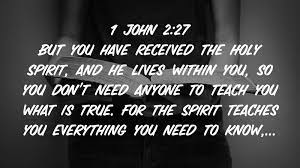
The bible says that he gives us his Spirit and we do not need anyone to teach us. The Spirit will guide us into all truth. We need to let that get deep down within us and quit looking to only books and people to tell us what they think about Jesus and ask the Holy Spirit to teach us and lead us into his truth.

We Christians get so caught up on which pastor, evangelist or Christian leader to follow. We listen to this one or that one, read books from this guy or listen to tapes by that woman. We attend a fellowship because we like the pastor, or we will drive miles to listen to a popular TV or radio evangelist.

We also need to remember that the Spirit has already been given to us and we do not have to run to this meeting or that church for the Holy Spirit to fall upon us. The Spirit already lives within us.

God says we are all brothers and sisters in Christ, and we are all fellow-servants. We are not to be called leaders in an authoritative way, no one is higher up than anyone else. Leadership is done in love, servanthood and from experience in our walk with God. Those who have been walking with God longer can encourage those who are newer in their walk.

We can learn and be encouraged by reading the bible with the guidance of the Spirit. We can learn and be encouraged through fellowship with our brothers and sisters in Christ. Yet we seem to forget the most important truth which is the Spirit is within us. We are the temple of the Holy Spirit (1 Corinthians 6:19). We have the mind of Christ (1 Corinthians 2:16).

In Christ we are all his children, no one should be looked up to or revered more than anyone else. We should stop putting all our hope in other people and learn to listen to the Holy Spirit who is within us to teach us truth and guide us in the way we are to go.

Jim Gordon and his wife left the institutional church after spending over fifty years within the system. Jim wanted a way to express his thoughts and concerns about the religious system and why he and his wife decided to leave the institution but not their faith in God. Jim can be contacted by email at: jimgordon731@gmail.com

Read Full Post »

By Mike Edwards

Many are taught only those who recite the sinner’s prayer and accept Jesus as their Savior go to heaven. I recently spoke at my friend’s funeral and assured the family one day they would be reunited. I didn’t know about their relationship with God. My friend lived an amazing unselfish life, but that isn’t my point. I suppose if speaking at Hitler’s funeral, you might just remain silent about any reunion. We should never think it is wrong to provide hope to those grieving.

Belief in a Creator or afterlife is a reasonable faith 

You may or may not believe Jesus resurrected from the dead. I happen to be convinced historical reports about Jesus were more real than legend. See here.  Maybe if you saw Jesus alive after being crucified, you would believe too. Billions, regardless of this belief, have an inclination that God and an afterlife exist. Such faith isn’t much different than faith in general. We still get on an airplane, not because we know but have reason to believe it is safe. Faith doesn’t require certainty! 

Who goes to heaven?

If you grew up in the institutional church, you likely heard those who put their trust in Jesus while on earth go to heaven. The topic that over half the people born into this world had never heard of Jesus is often avoided. Too, the Bible isn’t clear either where people go after death.  See here.   No biblical writer claimed God spoke to them audibly what was on the other side of death. Even when Jesus was asked by a religious expert how to have eternal life, He simply said to love God and your neighbor (Lk.10:25-37). This wasn’t much of an evangelical spiel.

Is God a forgiving God or what?

Forgiveness is considered a central characteristic of God. Does God suddenly stop forgiving after we take our last breath here on earth? God can’t pretend every reason a person refuses God in this life is equal. Even imperfect human parents would never cut off a child if finally accepting responsibilities for their actions. What about justice? After death God may bring to memory every action of betrayal and how it felt to their victims. The cleansing and educative effect may take longer for some than others if accepting God’s invitation to live forever with God.

What then is the purpose of living a loving life here on earth? 

Why bother living a good life here on earth if all is eventually forgiven for those that eventually ask for forgiveness. Jesus’ message wasn’t on quantity of life after death but a life worth living here on earth. If one desires to look back on their relationships with fewer regrets, consider Jesus’ advice to avoid the destructive consequences of sin. There is hope for our loved ones who had their reasons for not accepting God in this life. Just be careful of justifying a self-centered life. We could become set in such attitudes after our last breath. But I am convinced a loving God and not circumstances or chances determine our final destination.

What I assure people of when one they love has died 

I said at my friend’s funeral that those in the room would be reunited with their husband, father, grandfather, brother. I said I am convinced there is a God and an afterlife. My God is loving and would accept anyone that desired to live in eternity with God. The way I knew my friend – God would welcome him with a big hug and say well done my friend. It is a reasonable hope that we all can look forward to be reunited with our loved ones.

At A Funeral Can You Assure All Will Be Reunited With Their Loved One?

MikeEdwardsprofilepic125

Mike Edwards has been writing for Done with Religion for some time and has been a great addition to the site. Mike also has his own site where he writes that can be found at What God May Really Be Like  He can be contacted by email at: medwar2@gmail.com

Read Full Post »

by Jim Gordon

After all the years I spent in church and being taught the various Bible stories, I always thought I had everything about God figured out. I thought I knew everything there was to know to have fellowship with God and do what was “right” for a Christian to do.

I have found this to be a common feeling among many Christian people. We think by listening to the pastor and doing some Bible reading, we have all the answers and do not need to seek out any other ways of looking at things.

Yet, as time went by, I began having some questions on things that did not make sense to me. I would notice now and then that I would even have some doubts. Of course, I did not pursue any of these questions or doubts because a ‘good’ Christian does not do that. To question or doubt was the fastest way to show you had very little faith.

As the years went by, I became a little more open to seriously wondering about some of the things I was taught in church. I started reading some books by others who felt the same way. I came to the conclusion that God was big enough to handle my questions and doubts, so I no longer felt guilty about having them. More and more people are coming to this same conclusion and are beginning to question and challenge some of the things they were taught.

I notice that some people begin to ask questions, but quickly feel guilty for doing so and go back to their old way of keeping quiet and not asking questions. Others begin to doubt and question and end up completely leaving their faith. It is sad when that happens, but everyone is certainly entitled to follow what they feel is right for them. Still others, such as me, started learning new things, found new interpretations, changed their way of thinking, changed some of their basic doctrinal beliefs and left the institutional church but did not leave their faith in God.

I soon realized I was participating in something I came to know as deconstruction. I did not know there was an actual term for what I was going through. This is common now and there is certainly nothing wrong with it. Basically, it is questioning your faith and what you were taught over the years, throwing out some things, changing your mind on some things and then starting to see some things in a new way.

The more I think about it, I think that doubts, questions, deconstruction and reconstruction will be something that never ends. I think this will be the norm for the rest of my earthly life. I personally think if we stop wondering and stop questioning, we will become stagnant in our faith. God is so much bigger than we realize, and there are so many more things to learn than what we have been taught throughout our time in church. If you are having some questions and doubts about your faith, do not feel guilty about it. Follow them and trust the Holy Spirit within you to guide you into more truth. Never stop seeking to grow in the grace and knowledge of the love of God.

Jim Gordon and his wife left the institutional church after spending over fifty years within the system. Jim wanted a way to express his thoughts and concerns about the religious system and why he and his wife decided to leave the institution but not their faith in God. Jim can be contacted by email at: jimgordon731@gmail.com

Read Full Post »

by Norman Mitchell
https://thewildfrontier.wordpress.com/

I’ve struggled a lot with the apparent withdrawal of God from the world. The old testament is full of stories about God interacting with people, having conversations with them, walking with them, befriending them. Then we get to the new testament, and God appears in the flesh. After that there are a few years where the disciples perform miracles, then… nothing.

The last two thousand years have been years of silence. At least that’s how it seems to me. To be sure, there have been followers of The Way during that time who have had some incredible insights and done some amazing things. But there is no more, “thus saith the Lord”-type of communication. Mostly what I see is people regurgitating the biblical writings and arguing about what they mean.

The easy answer is to conclude that God does not exist—that He is simply a figment of the collective human imagination. It would be easy to chalk all the old stories up to superstition and imagination. It would be easy to conclude that people who were relatively naive about the physical sciences such as molecular biology, orbital mechanics, and advanced chemistry simply attributed natural phenomenon that they didn’t understand to divine intervention. Maybe they were just telling a bunch of morality tales.

But I think there’s a better explanation. To understand, it might be helpful to first look at the politics of the Roman Empire.

As I understand it, the terms evangelist and gospel were Roman terms. Whenever a new Caesar ascended to the throne, the political overlords decided that the masses needed a unifying narrative that would promote stability and maintain everyone’s places in the established hierarchy. The old Caesar was ostensibly descended from the gods and generally had the loyalty of the populace. Because the new Caesar was not a descendent of the old one, the people might be inclined to doubt that he had a divine right to rule and question his legitimacy; and that would be disastrous. Why, the people might revolt, and where would that leave the ruling class?

So the political establishment crafted a narrative that would explain how the new Caesar had descended from the gods, why he had the right to rule, and why the people owed him their allegiance. Then the emperor would send out evangelists who would proclaim the gospel—the good news that there was a new king.

And that is precisely what the new testament writers did when they wrote the books of the new testament, only they were writing about Jesus.

Jesus did not come to start a religion. He never promoted himself as the head of a movement. He came as a servant, but he also came as a king. A humble king to be sure, but a king nonetheless. He came as a king of a completely new kingdom. A transcendent kingdom that looks nothing like the artificial kingdoms of this world. An authentic kingdom that is higher than all other kingdoms.

The gospel is not that Jesus died on the cross to appease an angry God so He would forgive us for being sinners and let us live in heaven when we die. The gospel is not that you need to admit that you are a sinner and pledge mental assent to a set of religious tenets, and then thou shalt have thy sins forgiven and live forever in heaven, the end. The gospel is that the builder from Nazareth was the son of God who arrived on earth and is now the king of the highest kingdom and is the one to whom we owe our highest allegiance.

The gospel of Christ is a call to a discipline. Following the King is a practice. It is a journey, and we face the choice every day to either continue or abandon the journey. Following the King is both an individual pursuit and a corporate expression of Divinity in the world. And that is what God intended from the beginning. His intention was for his presence to be expressed in the physical world, yet Adam failed, Noah failed, and the Israelite nation failed in this endeavor.

God now intends for his image, his presence to be expressed corporately through his followers who are joined together with Christ as the head. And I believe that the reason it seams that God has withdrawn from human society is because the Body of Christ has ensconced itself in an institution that stifles it, inhibits its growth, and creates artificial barriers between the various parts of the body. The institution has obscured the gospel message. Those who benefit from the institution, either by seeking safety within it or by attaining social status from it, have twisted the gospel and turned it into a warped counterfeit of the gospel of the Kingdom. They have used the institution to hide the good news behind a wall of religious dogma.

I believe that we do not see God in the world today because His body is fragmented, disjointed, functionally useless.

Sometimes, I look at the world around me and see things that are so horrible that they are almost unbearable, and I feel as if all I can do is raise my voice to the heavens and demand, “God, do you see?!?”

What I hear in response is Him gently returning the question to me: “do you see?”

It seems that throughout human history, God has been guiding humanity toward a point where we would be willing to allow His life to live through us. But, you might ask, what if the ekklesia fails, just like the others? One reason to hope is that we have the spirit of Christ indwelling us. When Jesus left the earth in physical form, his spirit transferred to his followers.

This is not a rehashing of the new agey teaching that “god is within all of us.” Notice that I said the spirit of Christ indwells us. That’s “us” as a unified whole, not as a loose aggregation of individuals. None of Christ’s followers possesses the full spirit of Christ, but we each have part of it. When we are joined together as a body with Christ as the head, that is when the kingdom of heaven is revealed on the earth—just as God has intended from the beginning.

Several of the new testament authors foresaw a time when God would, once again, interact directly with humanity. Until then, I think He expects us to carry out our assigned mission: to follow the true King and join together as a body under the King’s leadership to reveal his presence in the world. Perhaps if we did that, then people would be able to see God again.

Read Full Post »


By Mike Edwards

Belief in a loving God can provide meaning and purpose in life. A belief in a God who loves us can be a valuable source for support and comfort. What is the harm in telling our children there is a God or there is a heaven after death even if we can’t know for sure? We promise our kids all the time we will keep them safe. When asked if their house will burn down, you say it won’t happen to us. You don’t know that. Such a belief isn’t a false belief. As children are older parents can share more why they believe in a God.   

We must be careful what you claim God is like 

Many make claims about God according to the Bible, but biblical scholars who have a deep respect for Scriptures don’t agree what the Bible says about gays, women, hell, and other moral issues. See here.  See here.  See here.  To claim the “Bible says” is frankly a little naive. Besides, even if we agreed on interpretation, we can’t prove God controlled the thoughts and writing of the writers of the Bible in conveying a perfect view of what God was like. If I had it to do over, I would stick to claiming about God certain universal absolutes such as the evil of physical or sexual abuse. Focus on God’s loving nature and desire for the golden rule in relationships. 

What can we be certain is true of God? 

Atheists and believers agree. The only God worth believing in is a perfect God. It is only intuitive that a Creator loves the ways their creations ought to love one another. Many of us are into God but many of us left the institutional church because claims about God’s character was contrary to our deepest moral intuitions. Why believe in a God you can’t respect. We may not always know what perfect love entails but we seem to know the question we ought to ask ourselves – am I loving others like I want to be loved? Perfect Godly love surely is the same as perfect human love.

How do we answer about suffering and evil? 

Perhaps the hardest question to answer as a parent, as children get older, is why there is so much evil and suffering in the world if God truly exist. Lack of certainty doesn’t mean there aren’t plausible reasons how a loving God can exist in such a world. Well-meaning people passionate about God often say things like “it’s all part of God’s plan” or “everything happens for a reason.” It implies evil is some grand scheme by God. How is a God, who supposedly can prevent evil, any different than a parent who stands by and watches their child being physically or sexually abused? Evil and suffering in the world may be because God cannot intervene single-handedly while respecting freedom. God can’t interfere in evil without human help. See here.

Faith is between your child and God 

I wrote here  suggesting parents can relax that their child’s eternal life depends on certain beliefs. Parents can go about having a normal relationship with their child when it comes to “God” matters. Just be an open book when children want to talk about God. As children age and less natural conversation happen, you don’t need to schedule outings or trips in hopes the God-conversation comes up. I get with my children and friends to enjoy one another. When they hurt, I want to be there for them. When they want to talk about God, I am there. Personally, I love talking about God as much as others like talking about their favorite hobby. But, don’t push your agenda. Enjoy your children. Relax. Encourage them. When they are treating others like dirt, show and tell them what true love is like. Trust God will speak to your child as they age when they want to listen.

How Do We Parent A Child In Faith?

MikeEdwardsprofilepic125

Mike Edwards has been writing for Done with Religion for some time and has been a great addition to the site. Mike also has his own site where he writes that can be found at What God May Really Be Like  He can be contacted by email at: medwar2@gmail.com

Read Full Post »

« Newer Posts - Older Posts »