Feeds:
Posts
Comments

Posts Tagged ‘Love of God’

By Mike Edwards

I hope some readers can relate to my experience and journey with a best friend for decades. Many of us are done with religion but not God. We have stopped going to the institutional church for many reasons such as we just can’t agree with the God being preached. But we still love discussing God with others. Those not into God may assume believers have a hidden agenda to change their beliefs. But shouldn’t we be able to at least talk to God-interested friends?

History of friendship can be a problem

I wrote here My Story – Spiritual Journey. My parents were into God and for whatever reason I never rejected such a belief. I continued to attend church until I was about fifty. I became somewhat of a prophetiser in my twenties and thirties. I suppose being taught that unbelievers were going to burn in Hell forever after death didn’t help. Turned out a literal Hell is doubtful according to the Bible. See here.  My passionate and dogmatic ways carried over with my children. When one kid mentioned evolution as a way humans came into existence, I wasn’t exactly the most open-minded Dad. I have apologized, but I am not sure my friend or children believe I have changed when it comes to discussing God.

One challenge is discussions about God can undermine one’s faith

I should share my best friend and I use to have the same beliefs about God. I believe my best friend avoids discussion about God because it may create doubts in their own faith. To question what one has heard in church all their life can lead to uncertainties about God. When challenged if Hell is real though taught all your life Hell is real, it can create anxiety what else taught may be in question. Speaking to a questioner like me isn’t always comforting. One reason I left the church was because I felt my skepticism was divisive for newcomers who came because of what leadership taught. It didn’t help that leadership didn’t exactly invite differing opinions of what God may really be like. 

Another potential reason conversations are difficult

We must examine if we control our emotions when discussing our beliefs. I think I do now. Do you? I mentioned some friends may not enjoy a discussion about God as much as we do, as challenges to one’s belief can cause anxiety. Another challenge is if the culture supports discussing diverse opinions.  Are those with differing beliefs than the common narrative shut down and labelled conspiracists? The Church often labels those with different opinions of God as heretics. When only one political or religious opinion is presented, many are quick to consider their friends conspiracists or heretics – not exactly a conversation help with your best friend or any friend.

Can a friendship continue with important conversation challenges?

I have shared what I think are the main reasons for a stalemate with my best friend. The reader may want to explore their own personal reasons. I consider myself NOW an open-minded person, but legitimate reasons may exist for discussing differing opinions between two friends. Discussing God for some may be the same as discussing politics. The differences are just too far apart. My friend and I have found it is best to agree to disagree, but somehow we still have an a great relationship. It could even be better though. We share other interests. Personally, I still hope someday we can discuss the most important thing in our lives – a relationship with God.

Why Can’t Two God-Believing Friends Discuss God?

MikeEdwardsprofilepic125

 Mike Edwards has been writing for Done with Religion for some time and has been a great addition to the site. Mike also has his own site where he writes that can be found at What God May Really Be Like  He can be contacted by email at: medwar2@gmail.com
Read Full Post »

by Michael Donahoe

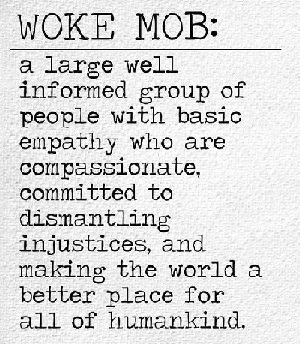
I hear this term often these days, so I finally decided to look up the definition and see exactly what it meant.

It seems we hear it mainly as a negative thing, yet when I looked up the term in the dictionary, it does not seem so negative.

While looking online at dictionary.com, I found that woke means: having an active awareness of systemic injustices and prejudices, especially those involving the treatment of ethnic, racial, or sexual minorities; promoting inclusive policies or ideologies that welcome or embrace ethnic, racial, or sexual minorities.

I then went to merriam-webster.com and found a similar definition: aware of and actively attentive to important societal facts and issues, especially issues of racial and social justice.

From there I went to urbandictionary.com and found the following: When this term became popularized, initially the meaning of this term was when an individual becomes more aware of the social injustice. Or basically, any current affairs related like biased, discrimination, or double-standards.

In an article by journalist Dan Rather, he describes woke as originating in African American English to mean an “awareness of racial and social justice. And in another of his articles he describes woke as a way of thinking, an approach to gaining a better understanding, a grappling with “important facts.” To be “woke” is to be aware.

A March For Our Lives founder David Hogg, describes being woke as choosing reality over conspiracy, hope over fear, courage over cowardice and empathy over cruelty for a better future. Woke is about addressing past injustices of our country- not because it’s easy but because it is hard and necessary to create a more perfect union.

So, what I determined was if woke means anything like any of these definitions, then yes, I am woke and proud to be so. I do not see a problem with being aware and concerned for others and the prejudices and injustices they have suffered, or still suffer.

I guess you will have to read back over the definitions and decide for yourself. For me, I will stick with being woke as being aware of systemic injustices and prejudices; actively attentive to important societal facts and issues, especially issues of racial and social justice. Not only being aware, but doing what I can to promote acceptance and equality for all people, no matter what they look like, where they are from, what they believe or who they love.

***

Michael Donahoe was added as a writer as his views fit perfectly with those of Done with Religion. He also writes on Substack at https://myopinionblog.substack.com/

Read Full Post »

By Mike Edwards

Christian leaders and companies use the term “biblical truths,” but these same leaders criticize those who dogmatically claim “the science says.” The truth is that it isn’t science if there isn’t debate. What we may think is science today may be updated in a year. Biblical truth, according to one’s interpretation, is also debatable. Both Christian leaders and government health officials must engage in healthy debate. Religion and science play God (Superior) in the lives of others by claiming they know the truth and we are too stupid to decide for ourselves! 

Christian leaders claim certainty concerning “biblical truths”

The Bible as literature has to be interpreted. Many claim to be certain about God according to the Bible, but biblical scholars who have a deep respect for Scriptures don’t agree what the Bible says about gays, women, and hell, and other moral issues. See here.  See here.  See here.  Besides, even if we agreed on interpretation, we can’t prove God controlled the thoughts of the writers of the Bible in conveying a perfect view of what God was like. The Bible is still valuable as recorded history of God with the Israelites, challenging us to think about what God is really like.

Christian leaders though accuse Government officials of claiming certainty

Many Christians leaders accuse the current government Administration and health officials of misleading by maintaining their interpretation is scientific truth. They argue it isn’t science without debate. Well, it isn’t biblical truth because you say it is according to your interpretation. It is true science is fluent. Drugs are often approved initially, only to be pulled from the shelves later after causing death. It is also true we can’t prove God exist much less that our view of what God is like is correct. ‘Uncertainty” falls both ways – religion and science.

How to live in a land of uncertainty 

Certain absolutes are universal and obvious to all rational beings, whether it is found in the Bible or science.  Does anyone reading this not believe physical or sexual abuse is wrong? All agree we shouldn’t be lied to. Adultery only isn’t wrong in the eyes of the betrayer. Christian leaders must admit uncertainty in the arena of non-universal, biblical beliefs. Christian leaders then can rightly demand debate when it involves responding to a pandemic, taxes, climate change, or immigration. 

How Leaders Can Proceed

It is not right to claim certainty when you may be wrong. When universal agreement doesn’t exist, it should be obvious that one must be allowed to form their own opinions since uncertainty exists. We must stop being so damn certain of our understanding of God according to the Bible, especially when our interpretations are contrary to our moral intuitions. The central message about God in the Bible seems to be to strive to love others like you want to be love. I will debate anyone who thinks a loving God, by Jesus’ example, encourages treating others like shit. We can stop labeling those who disagree with our biblical interpretations as heretics. We can stop calling those who disagree with our views of science as conspiracists. We must fight for freedom to debate opinions!

How Christian Leaders Are Hypocrites In The “Truth” War!

MikeEdwardsprofilepic125

Mike Edwards has been writing for Done with Religion for some time and has been a great addition to the site. Mike also has his own site where he writes that can be found at What God May Really Be Like  He can be contacted by email at: medwar2@gmail.com

Read Full Post »

by Jim Gordon

What do people think of when they hear the word Christian? With some of the discriminatory and hateful happenings recently with extreme groups who claim to be Christian and with the rise of Christian Nationalism, I feel it is getting a little confusing what the real meaning is.

My wife and I have seriously questioned whether we should continue to use the word Christian to identify us or not. Basically, it all boils down to what we mean by Christian.

If being a Christian is being part of a religion that meets in a building on a particular day and follows set doctrines based on what denomination we belong to, then no, we are not Christians. If being a Christian is considered being part of a group that follows various spiritual beliefs such as Jews, Muslims, Hindu, Baptists, Methodists, Charismatics and others, then no, we are not Christians. If being a Christian is being part of a group that is opposed to all other religions and only accepts those who believe like they do, then no, we are not Christians. If being a Christian has anything to do with religion, political power, hatred, exclusion, discrimination and such, then no, we are not Christians.

In Acts 11:26, the disciples were first called Christians by people in Antioch. They were called Christians because they were acting like Christ. The people there were calling them little Christ’s because of the way they showed the love and power of Jesus. Now, if that is what is meant by being a Christian, then we are all in.

There are many ways we can described ourselves…believers, Christ followers, disciples of Jesus, people of faith, people of the way or even Christians. Yet, the name itself does not really matter. What matters is how we live our lives. Is Christ preeminent? Are we living as one with him? Are we allowing the love of Christ to live through us, accepting others, loving others, including others and being little Christ’s to all we meet? If not, the name itself really makes no difference because we are not being like Christ.

We should not worry so much about the name we use, but by the way we live. When people see us, they should see Jesus. He lives within us and we should be known for the love we have for him and for our fellow man. We are to let Christ live through us each and every day to everyone we meet.

Jim Gordon and his wife left the institutional church after spending over fifty years within the system. Jim wanted a way to express his thoughts and concerns about the religious system and why he and his wife decided to leave the institution but not their faith in God. Jim can be contacted by email at: jimgordon731@gmail.com

Read Full Post »

By Mike Edwards

Your experience may not be mine. I am writing out of frustration. I tend to be more skeptical than most, whether it be about religion, my profession of psychology, or now science. Over time I realized “truth” may be less certain than proclaimed. I needed to be more open-minded. When one is willing to have a calm discussion, why might we hesitate to discuss our views with others who believe differently?

Certainty, not uncertainty, is more comforting

One may not feel confident defending their beliefs. But there may be a stronger reason why we hesitate to discuss different views with others. One may believe what seems to be the popular narrative, without exploration, to avoid anxiety not knowing. Disagreeing with the popular science narrative or church leadership about God’s character can lead to isolation. When universal agreement doesn’t exist, it should be obvious that one must be allowed to form their own opinions since uncertainty exists.

What are the consequences of avoiding uncertainty?

When only one side is presented, control and power grow intentionally or unintentionally. It should be intuitive denying diverse opinions is unloving and controlling. Most don’t except such behaviors in their personal relationships. Having good intentions by believing you are right for the whole doesn’t matter if you could be wrong. Often, we determine one’s rationality based on if their beliefs are different than ours. 

Is there any Truth? 

Certain absolutes are universal and obvious to all rational beings.  Does anyone reading this not believe physical or sexual abuse is wrong? No reasonable God or non-God person doesn’t respect the golden rule in relationships. Criminals don’t defend their murders or thefts; instead, they deny committing such crimes. Adultery only isn’t wrong in the eyes of the betrayer. We don’t debate many laws, only the decisions what is a just punishment.

How can we begin to discuss different views more openly? 

I left the institutional church, but not God, because others wouldn’t engage in non-dogmatic conversations. It can provoke anxiety to imagine our beliefs may not be as certain as we once thought. We must have open discussions and avoid thinking and demanding “supposed truths.” We can stop labeling those who disagree with our biblical interpretations as heretics. We can stop calling those who disagree with our views of science or Covid vaccines as conspiracists. Imagine how different as a people we would be if religious, political, or science folks admitted “truth” is something we strive for together, not always thinking our opinions are the truth!

Why Do We Avoid Discussions With Those Who Have Different Beliefs?

MikeEdwardsprofilepic125

Mike Edwards has been writing for Done with Religion for some time and has been a great addition to the site. Mike also has his own site where he writes that can be found at What God May Really Be Like  He can be contacted by email at: medwar2@gmail.com

Read Full Post »

By Mike Edwards

Some are inclined to believe in a Creator and others are not. I don’t wish to judge the latter. Those who lean toward thinking there is a God, there seem to be two types of “DONES” and they are often confused. One group is not done with God, just religion or the institutional church as a place to be with God. Another DONE group may be those who once called themselves believers in God, but are now agnostic or atheist.  It is this group that I am thinking of below. Why might some stop believing in God at all if inclined initially? 

Drop the myth that all who stop believing in God are denying reality! 

The first chapter of Romans in the Bible is used to accuse those who deny God to justify their evil ways. I suppose some deny there is a God to avoid feeling guilty for treating others like shit, but I don’t know any such people. Hopefully, you don’t think you are more enlighten or moral than others as to why you have enough faith to keep believing that an invisible, inaudible God exist. I just never discovered a reason to not believe in God, and I hope I never do. Let’s not accuse those who believe in a God as needing a crutch or accuse those who question the reality of an invisible God as being wicked and ignorant of their feelings. 

One reason to stop believing when told the Bible is contrary to our moral intuitions 

It is claimed God condemns gays though who would intentionally choose a lifestyle that invites condemnation and discrimination. We are told God doesn’t want women fulfilling supposed “manly” roles though that only leads to favoritism and abuse. Men don’t need reasons for behaviors that often come naturally. We are told God is a hellish, sadistic torturer according to beliefs while here on earth, but even humans wouldn’t create such a place for their worse enemies. Many claim to be so certain about God according to the Bible, but biblical scholars who have a deep respect for Scriptures don’t agree what the Bible says about gays, women, and hell, and other moral issues. See here.  See here.  See here

Another reason to stop believing when told God allows evil and suffering for a greater good

It is understandable why many can’t believe in a supposedly, all-powerful God who standbys while one is being raped, tortured, murder, abuse, etc. That often leads to unbelief, not deeper belief in God. What kind of parent or God stands by and not intervene when they could prevent such suffering? Maybe a perfect, loving God can’t be controlling just as they can’t be manipulative. Evil and suffering in the world may be because God cannot intervene single-handedly without human help. See here.

How do we love one another in our spiritual journeys?

Many are inclined to believe in a God, but then they are given legitimate reasons to stop believing in God. We must stop being so damn certain of our understanding of God according to the Bible, especially when our interpretations are contrary to our moral intuitions. We must stop claiming what one must believe to follow God. The central message about God in the Bible seems to be to strive to love others like you want to be love. I will debate anyone who thinks a loving God, by Jesus’ example, encourages treating others like shit. Why can’t we have open conversations while trusting God is capable of influencing each in their own spiritual journey?

What Reasons Do We Give Others To Be Done With God?

MikeEdwardsprofilepic125

Mike Edwards has been writing for Done with Religion for some time and has been a great addition to the site. Mike also has his own site where he writes that can be found at What God May Really Be Like  He can be contacted by email at: medwar2@gmail.com

 

Read Full Post »

by Jim Gordon

Did Jesus teach from the Old Covenant? Was the birth of Christ the beginning of the New Covenant? When does the Old Covenant end and the New Covenant begin? To be clear, the Old Covenant does not end with Malachi and the New Covenant does not start with Matthew. 

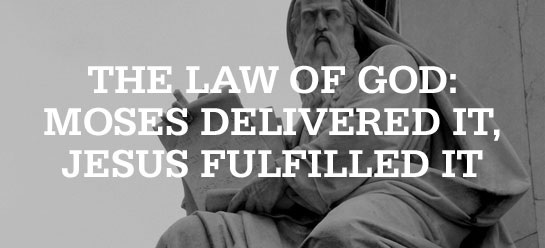
Even though Jesus came to fulfill the Old Covenant through grace, the first thirty-three years that Jesus walked the earth He lived under the Old Covenant. He was required to follow all its rules and regulations. He even taught from those rules, yet those rules are no longer intended for us. ‘But when the fullness of the time came, God sent forth His Son, born of a woman, born under the Law, so that He might redeem those who were under the Law, that we might receive the adoption as sons’. Galatians 4:4,5 

The Old Covenant ended when Jesus was crucified. When He said ‘It is finished’ He was saying the Law, the Old Covenant was fulfilled. When Jesus was resurrected the New Covenant began. We are no longer required to try and live under the Law and the way of the Old Covenant. It is finished!

Actually, the Law was never intended to be put upon those who were not Jewish. Yet, it seems many pastors taught that we were all under the Law until Christ came. Many pastors still teach that we live by grace but still need to try and follow the Law, especially the ten commandments. Funny they seem to forget about the other 603 laws that were given. 

The Old Covenant was basically a tutor. A way God used to show the Jewish people that they were unable to live a perfect life on their own. It was a way to show them that they needed someone to redeem them and restore their fellowship with God. Jesus came and fulfilled the Old Covenant and upon his resurrection made a New Covenant of grace. ‘Do not think that I came to abolish the Law or the Prophets; I did not come to abolish but to fulfill’. Matthew 5:17 

Now that the Law has been fulfilled in Christ, none of us are required to try to live by the ten commandments and the rules and regulations of the Old Covenant. We seem to forget that because of grace we now live by faith in Christ. We are no longer slaves to sin, we are no longer just a poor sinner saved by grace although we were sinners and we are saved by grace. We are now the righteousness of God through Christ. God no longer calls us slaves but calls us sons. We are seated in heavenly places in Christ. This is not to say that we should go out and do whatever we want. We do have freedom in Christ to do what we choose, but there are consequences if we choose things that God has warned us to stay away from. There are consequences, but there is no condemnation to those who are in Jesus. 

Today we choose to live a life pleasing to God because of love. Godly love is the fulfillment of the Law. We love God and we love others, we have been made righteous through Christ and we are the temple of the Holy Spirit. It is the Spirit who guides us, teaches us and gives us strength. We do not love or please God out of obligation. We do not love God because we are trying to fulfill a set of rules and Old Testament laws that we could not live up to anyway. We do what is pleasing to God because we choose to do so because of love.

Jim Gordon and his wife left the institutional church after spending over fifty years within the system. Jim wanted a way to express his thoughts and concerns about the religious system and why he and his wife decided to leave the institution but not their faith in God. Jim can be contacted by email at: jimgordon731@gmail.com

Read Full Post »

By Mike Edwards

Religion and science share a common sin these days – claiming they certainly know the “truth.” We have an inborn sense of good and evil. Who doesn’t know rape, sexual abuse of children, murder is immoral? Most criminals don’t defend their actions; instead, they deny committing such crimes. The truth though is we don’t know the best response for the greater good on issues such as responding to a pandemic, taxes, climate change, immigration, etc. Benefits and risks exist for most issues. Religion and science are playing God (Superior) in the lives of others by claiming they know the truth and we are too stupid to decide for ourselves!

Christians must stop hiding behind supposed biblical truth 

Religious folks hide behind their interpretation of a Book as government health officials hide behind their interpretation of science. Opposing views are said to be heretical or anti-science. But even if you believe the Bible is inspired by God, the Bible requires interpretation. We don’t all agree if the Bible opposes women priests or preachers or condemns gays. See here. Scholars don’t agree that a literal Hell is a reality in the Bible. The truth is leaders must stop being so damn certain despite what anxiety or challenges that may cause themselves or others!

Certainty may help to avoid fear but is an illusion 

Certainty rather than uncertainty comforts individuals psychologically. One may believe the narrative being proclaimed because unknowing can create confusion or anxiety. Disagreeing with the popular science narrative can lead to being ostracized. Disagreeing with church leadership about God’s character can lead to isolation. It doesn’t matter if those who proclaim certainty have good intentions or believe their ideas are best for society. They may be wrong! When universal agreement doesn’t exist, it should be obvious that one must be allowed to form their own opinions since uncertainty exists.

What are the consequences of avoiding uncertainty?

When only one side is presented, control and power grow intentionally or unintentionally; control and power are intoxicating and a part of human nature.  These internal forces flourish when others are not allowed to discuss or debate alternative opinions in the public arena. It should be intuitive denying diverse opinions is unloving and controlling. Most don’t except such behaviors in their personal relationships. A refusal to openly discuss or defend one’s views suggests an unhealthy dependency on “certainty.”  It isn’t science if there isn’t debate. The same goes for religious truths.  The beauty of a free democracy is that no one person or those in control get to play God.

Our Path forward

Leaders must be empowered and held accountable to be open-minded than certain. I left the institutional church due to the sin of certainty. We can try to engage with those who insist on certainty when it doesn’t exist, but in time one may need to move on. We can stop labeling those who disagree with our biblical interpretations as heretics. We can stop calling those who disagree with our views of science as conspiracists.

Imagine how different as a people we would be if religious and political folks were open to discussions for the common goal of pursing the greater good! You want to be supported to make your own decisions freely when there is uncertainty? Respect the rights of others to do the same. A voting democratic society surely is more humane and less dangerous than an authoritarian government style.

What Do Religion And Science Have In Common Unfortunately?

Mike Edwards has been writing for Done with Religion for some time and has been a great addition to the site. Mike also has his own site where he writes that can be found at What God May Really Be Like  He can be contacted by email at: medwar2@gmail.com
Read Full Post »

By Mike Edwards

Why Doesn’t God Stop More Suffering?

What Really Is “Truth” About Science Or God?

Lies About God!

Does God Promise Heaven Or Hell Or What?

How The Heck Do You Have A Good Marriage?

Can I Follow God If I Can’t Stand Reading The Bible?

What Kind Of God Do You Believe In?

God Is Not All-Powerful Or In Total Control!

Was God As Violent As Old Testament Claims?

Should We Forgive Others Without Expectations?

How Can We Know It Is God Guiding Us?

Are There Good Reasons To Follow God If A Skeptic Or On The Fence?

Why Doesn’t God Answer More Prayers?

My Spiritual Journey These Past Six Decades

Mike Edwards has been writing for Done with Religion for some time and has been a great addition to the site. Mike also has his own site where he writes that can be found at What God May Really Be Like  He can be contacted by email at: medwar2@gmail.com

Read Full Post »

by Jim Gordon

Let’s just say this right off, Jesus was not a Christian. Also, Jesus was not white, nor American, nor a Republican. 

Here in the United States, when we think of Jesus we usually think of Christianity. Actually, Christianity is just another religion that men started based on Jesus. Jesus did not come to start a religion, yet in our modern era, Christianity is thought of as a religion more than it is a lifestyle of following Jesus. 

Jesus does not belong to any particular religion, nationality or political party. He loves and accepts people no matter what they believe, where they live, who they love, who they vote for or what they look like. He came to show the love of God to the human race which includes all people in every part of the world.

If we describe being Christian as a follower of the example of Jesus, then there is nothing wrong with using this word to describe our fellowship with Him. If we use the word Christian to describe belonging to a particular church, following a particular doctrine or set of rules or belonging to a particular political party, then we have totally missed what being a Christ-follower is all about. I would rather not have anything to do with the word Christian used in this sense. 

Jesus is the Son of God, and He loves all people. Jesus came to show us what God may really be like, a God of love and acceptance. A God that loves the entire world. God does not see Muslims, Jews, Christians or any religion. God loves people, all people, every nationality, every political party, every race, every man, woman and everyone who is LGBTQ. God sees people who need and want love and acceptance. The only way people are going to come to true fellowship with God is through Jesus…not Christianity. 

It is time we stop looking to organized religion as our way of becoming acceptable and pleasing to God. We need to look to the example of Jesus and allow the Spirit to live through us to love all those we meet each day. Stop demanding that people come to follow your doctrine, your rules, your beliefs and accept people as they are. Show the love of Christ to them and let the Spirit do the work of God in them as God sees fit. 

We are never going to completely agree with each other on doctrine and religion. Only through Christ and the love He gives will we be able to love and accept others. Let us be known by the true meaning of the word Christian, being someone who is doing the works of Jesus and following the example of Jesus by loving God and loving one another. 

Jim Gordon and his wife left the institutional church after spending over fifty years within the system. Jim wanted a way to express his thoughts and concerns about the religious system and why he and his wife decided to leave the institution but not their faith in God. Jim can be contacted by email at: jimgordon731@gmail.com

Read Full Post »

« Newer Posts - Older Posts »