Feeds:
Posts
Comments

Archive for the ‘Acceptance’ Category

By Mike Edwards

This is a previous Post. I thought I would repost with some minor changes, to follow up my Post last week – How The Heck Do You Parent Well?

I’m no expert but one who is anxious for others to avoid my failures. I can assure you my marriage hasn’t lasted 41 years so far because I am some saint. Divorce can happen and doesn’t doom one as a failure for life. Relationships aren’t that complicated, just hard. Many marriages can succeed when both partners adhere to a few essential attitudes and actions to better relate. I am going to keep this less than a five-minute read to hopefully provoke more readings about marriage here or elsewhere if struggling. Success isn’t an exact path. We all have a chance if strive to treat our partner like a best friend!

The Right Attitude – Accepting Differences 

Good luck finding a partner that always agree. Marriage is about living happily incompatible. There are no perfect matches. Relationships often start off well because reality hasn’t set in – sharing closets, bathrooms, in-laws, children, etc. You still have in common why you began the relationship, but now you have to work out your differences. Other friendships don’t have the 24/7 challenges. Naively, I assumed in the beginning I would be happily married 100% of the time. Now, I realize being pleased 75% of the time is a pretty good marriage. Strive to treat your partner like you want to be treated when not agreeing. Marriage isn’t agreeing but learning to disagree. 

The Right Actions – Fighting Fair 

After accepting we don’t have a right to expect everything we desire, we still must solve differences to live peacefully together. When handling differences in other relationships it usually is out in public with others around eyeballing your actions. In a 24/7 relationship differences can happen more in private. There is less accountability to behave. Kids, we know the rules in solving differences – keep your hands to yourself, don’t raise your voice, stop interrupting, etc. When such rules are violated, give each other permission to stop and restart when acting more civilly. Couples who say they are no longer in love have stopped treating each other in loving ways. Happy couples expect problems and solve differences in a positive manner so solutions can be discovered. 

Identify A Specific Plan And Persist 

As you strive for the right attitude and actions – develop specific steps each can take, evaluate success in a time limited fashion, and do it all over again. Keep trying until finding what works. Judge the relationship not on feelings that depend on circumstance but judge the relationship on specific actions that can bring about desired feelings.  Couples often give up too soon because they attempt a “hit and miss” approach to their problems. Couples often argue, “they have tried everything.” Develop your own list of habits such as below:

  • During conflict both ideally ask “what can I do differently” not “why can’t you”
  • Assume good will of you partner unless you married the devil
  • Focus on solutions than problems
  • Persist unless one partner is being abusive
  • Run from temptations such as drugs or affairs that can set you up for failure
  • Get third party help after remaining stuck
  • Try doing what you would tell your friend if they asked for advise
  • Identify 2 or 1 thing you wish each would do differently once a day that is observable and you can acknowledge genuine appreciation when it happens
  • Focus on you being the right person rather than your partner
  • Happy couples’ ratio of encouraging than criticizing is at least 6:1

Spiritual help can be invaluable in marriage

Maybe you are just a good person without any help. Personally, I need help being the best version of myself for the sake of my partner. I need to be willing to say sorry. I need to recognize I am being selfish. I need to be willing to forgive when my partner takes responsibility for their actions. Great marriages aren’t about being good enough or not as bad as other partners. The best goal of marriage or any relationship is aiming for perfection. My view of God inspires me to pursue perfection in my relationships without being paralyzed by guilt when failing. I have the “want to” to be perfect. I believe that motivation comes from God!

John and Julie Gottman, who have researched marriage relationships for years to identify important factors that lead to success, state something so true: “Every marriage has perpetual issues – conflicts based on personality differences or lifestyle differences that never go away. Common examples include how much intimacy there should be in a marriage, as well as disagreements over money and household chores. But as longtime marriage therapists, we’ve found that partners can live peacefully with perpetual issues as long as they talk about them in a open, productive way.”

How The Heck Do You Have A Good Marriage?

MikeEdwardsprofilepic125

Mike Edwards has been writing for Done with Religion for some time and has been a great addition to the site. Mike also has his own site where he writes that can be found at What God May Really Be Like  He can be contacted by email at: medwar2@gmail.com
Read Full Post »

By Mike Edwards

Warning parents – Words of advice to your kids don’t nearly matter as much as your behaviors/actions. It determines if kids want to be like you and even if your kids like you. Good luck if you are the kind of parent that says “do as I say, not what I do.” Parenting is thousands of actions to do and avoid. It can help though to have a general plan to guide you. I will list several actions at the end to think about, but mainly I am going to suggest firm but gentle parenting is the key. I parented three kids who are now in their thirties. Looking back, I didn’t always succeed but I tried. Perfect parenting doesn’t even guarantee perfect kids, but I got lucky. You would be proud to call my kids your own.

What is firm parenting? 

Firm parenting basically is not constantly moving the bar regarding expectations. Your “no” must mean “no.” Don’t make the kids guess how to please or respect you. Good parenting looks for ways to say yes rather than no all the time, just because you are tired of the challenges of parenting. My biggest “no” was you will treat your sibling the same way I am expected to treat your Mom. That means no yelling at or putting your hands on each other when upset. If you are a parent with more than one child, you know this is an almost daily challenge when they are young. If you are saying no all the time, consider what actions you want to major on and go from there.

What is gentle parenting? 

One can be firm but gentle. If a kid is running out in the street without looking, all rules off. Yell at the top of your lungs and take action. But most misbehaviors don’t require such a reaction. Have you noticed kids are exhausting and exasperating! For some reason they don’t come into the world wanting to behave most of the time. Use a firm but not loud voice to state the expectation. If they don’t listen remove them from the scene of the crime. Spanking was not an option for me as a parent. It stifled creative discipline that is more effective. No, my kids didn’t end up in prison. 

Lots of other actions 

The challenges of parenting is unbelievable. You have to monitor screen time, you have to monitor that snacks aren’t the main meal, you have to be concerned how kids these days are treating one another when no one is looking, etc. Here are a few personal parenting actions I think can help:

  • Put the marriage first over the kids. Do stuff with your partner alone and communicate in words your partner is your first commitment. Kids will benefit in the long-run. I sucked at this!
  • Be present in the moment and not distracted. Kids are boring when younger. Quite thinking what you aren’t getting done and be with them.
  • False praise isn’t good but unexpressed gratitude toward the kids is the same as ingratitude
  • Spanking is not necessary as stifles creative discipline that is more effective
  • Pick your battles when appropriate to say “no” and mean it. Now that you are an adult, “what do you wish your parents had said ‘no’ to and minor on the rest? Stop changing the goalposts
  • Discipline doesn’t always have to be immediate. You might come up with a better idea later. Let the kid wonder
  • Knows the stages of parenting. See here.
  • Insist the siblings treat one another like they want to be treated. NO bullying in this house either between mom and dad or siblings
  • Controlling love is an oxymoron. As they get older (age debatable), kids need to be allowed to make their own decisions and suffer the consequences if necessary. Give choices and let them follow their own dreams not the parent’s dreams
  • One last personal thing men – when we dated we tended to hold doors including the car, and other actions that conveyed love. I wish I had never stop holding the car door despite children. I am back in the habit for years unless hot as hell in the car and the wife wish I get the AC going first before they get in. The wife doesn’t always love this new habit, but I ain’t changing
  • Want more suggestions? See here.

Oh yea, this is a spiritual blog! 

One can be a great parent despite not believing in God or have a relationship with God. No excuses! I am bias. God’s influence in my life has made me a better husband, parent, and friend. I am convinced God loves me the same way I desire deep down to be known for loving others and my children. I have written before how and what a relationship with God is like – What Is The Greatest Advantage Believing In God If So Inclined? Consider all the human and spiritual help you need to be the very best parent you can be.

How The Heck Do You Parent Well?

MikeEdwardsprofilepic125

Mike Edwards has been writing for Done with Religion for some time and has been a great addition to the site. Mike also has his own site where he writes that can be found at What God May Really Be Like  He can be contacted by email at: medwar2@gmail.com

Read Full Post »

By Mike Edwards

I assume most are aware of efforts to censor or quash contrary opinions. In the Religion arena, the word Heretic is thrown around against those who don’t agree that God condemns gays, that men are leaders of women in the marriage relationship, that Hell is a fiery, tortuous destiny, etc. Do their accusers not understand the Bible is ancient literature subject to interpretation, and biblical scholars don’t agree. The same actions have become more obvious in the political/science arena. People with contrary opinions to certain policies are called racists, conspirators, or misinformers. We must challenge those who censor as oppose to winning the debate in the public arena.

Acknowledging freedom and uncertainty are critical to leading us forward 

Freedom of ideas are what separate democratic societies from dictatorships. Freedom is often quashed because individuals claim certainty in their beliefs. Christians leaders condemn gays in God’s name because the Bible says so, and demands others believe as they do. They don’t consider they may be wrong. See here.  Climate experts don’t agree with the narrative concerning climate change. Claiming certainty rather than defending one’s position is not how a democracy works. One must have the freedom to make their own decisions when there is uncertainty. Religion and science are playing God (Superior) in the lives of others by claiming they know the truth and we are too stupid to decide for ourselves!

The benign reason for censorship is one believes they are right for the good of all 

It doesn’t matter if you think you are right and doing what is best for the good of the land. Certainty is an illusion unless taking about universal moral sins such as rape or incest. Try claiming certainty in your personal relationships. If married you are probably headed toward divorce. Most decisions are not black and white and require open debate by those in authority. One must have the freedom to decide what is the best decision for themselves, or the powerful rule the powerless.

The nefarious reason why others censor others 

One may not oppose censoring activities for fear losing security (their livelihood) because they disagree with the popular, uncertain narrative. In politics differing with the popular opinion might not lead to reelection. Pastors risk being kicked out of the pulpit. It is morally wrong to shut down disagreement. I am convinced racism is evil (that blacks are an inferior race), but I must be open to debating those who disagree. I like my chances of winning the argument with others.

One though may actively censor the opinions of others for control and power over others. Control and power can have financial benefits. Losing the argument in the public arena may lead to loss of power or position. Control and power flourish when others are not allowed to discuss alternative opinions in the public arena. One way to judge one’s motive is by demanding answers as to why refusing debate. If one is sure they are right for the good of all, why fear convincing others? It was questioned if the Covid shots stopped infection and transmission, so to not enforce mandates. Turns out they were right. Supposed truth-tellers insisted on protecting grandma. They were wrong. Truth must win in the arena of debate so one has freedom of choice in the land of uncertainty.

Actions

  • If many disagree with your opinion, be openminded. Consider why you are afraid to defend your belief if you supposedly know the “truth”
  • It is more important to protect one’s freedom to choose when the possibility exist you could be wrong
  • If church leadership calls those who disagree with their view of God heretics, challenge them or leave. They can’t even prove God exist. This is a personal, freedom decision
  • If politicians support censorship or label those who disagree with them as misinformers, vote them out. Why believe their view if they can’t defend their views for the supposed good of the world?
  • When we stop censoring or labeling others as heretics or conspiracists, we may come to a decision best for the good of most

Why Do We Censor Different Opinions Than Ours?

MikeEdwardsprofilepic125

Mike Edwards has been writing for Done with Religion for some time and has been a great addition to the site. Mike also has his own site where he writes that can be found at What God May Really Be Like  He can be contacted by email at: medwar2@gmail.com

Read Full Post »

by Jim Gordon

Unfortunately, we know many people have been treated wrong within the church system. Some more severe that others, but none of it is good.

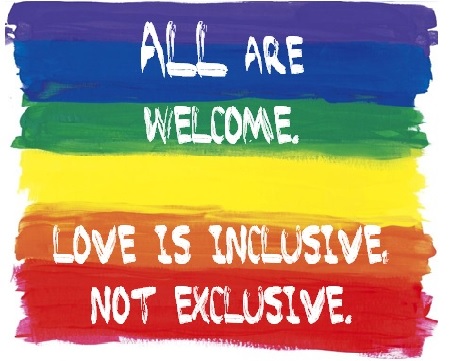
I think one of the groups that seem to be affected most by this are those who are LGBTQ. I have seen this group of people treated rudely and like second class citizens in many churches where they should find love and acceptance more than anywhere else. God said to love our neighbors, he did not say to love only those with whom we agree.

Even in the churches that are actually welcoming, LGBTQ people are often not accepted and allowed to participate fully within the organization or hold certain positions. They are welcome to come in and sit and listen so hopefully the church can change them, but they are not welcome to come in and participate in any way within the church program.

Christian people will deny rights and services to LGBTQ people based on their Christian beliefs, unfortunately even including fellow Christians who are LGBTQ. Even government office holders can refuse certain services and basically get away with it because they say it goes against their Christian morals. As a Christian, I say these things should not be. This is nothing like the example of Jesus.

Labels are placed on many people, gay/straight, black/white, male/female, christian/atheist, American/foreign/immigrant. Yet behind those labels are human beings who were created in the image of God. They are loved and accepted by God and we are told as followers of Christ to be known for our love for one another.

I feel for those who are LGBTQ. It hurts to see people who were created and loved by God be rejected and abused by those who claim Christianity. I think it is time to look past the labels, look past personal feelings and accept people just the way they are, because they are created and loved by God.

Jim Gordon and his wife left the institutional church after spending over fifty years within the system. Jim wanted a way to express his thoughts and concerns about the religious system and why he and his wife decided to leave the institution but not their faith in God. Jim can be contacted by email at: jimgordon731@gmail.com

Read Full Post »

By Mike Edwards

Many are taught only those who recite the sinner’s prayer and accept Jesus as their Savior go to heaven. I recently spoke at my friend’s funeral and assured the family one day they would be reunited. I didn’t know about their relationship with God. My friend lived an amazing unselfish life, but that isn’t my point. I suppose if speaking at Hitler’s funeral, you might just remain silent about any reunion. We should never think it is wrong to provide hope to those grieving.

Belief in a Creator or afterlife is a reasonable faith 

You may or may not believe Jesus resurrected from the dead. I happen to be convinced historical reports about Jesus were more real than legend. See here.  Maybe if you saw Jesus alive after being crucified, you would believe too. Billions, regardless of this belief, have an inclination that God and an afterlife exist. Such faith isn’t much different than faith in general. We still get on an airplane, not because we know but have reason to believe it is safe. Faith doesn’t require certainty! 

Who goes to heaven?

If you grew up in the institutional church, you likely heard those who put their trust in Jesus while on earth go to heaven. The topic that over half the people born into this world had never heard of Jesus is often avoided. Too, the Bible isn’t clear either where people go after death.  See here.   No biblical writer claimed God spoke to them audibly what was on the other side of death. Even when Jesus was asked by a religious expert how to have eternal life, He simply said to love God and your neighbor (Lk.10:25-37). This wasn’t much of an evangelical spiel.

Is God a forgiving God or what?

Forgiveness is considered a central characteristic of God. Does God suddenly stop forgiving after we take our last breath here on earth? God can’t pretend every reason a person refuses God in this life is equal. Even imperfect human parents would never cut off a child if finally accepting responsibilities for their actions. What about justice? After death God may bring to memory every action of betrayal and how it felt to their victims. The cleansing and educative effect may take longer for some than others if accepting God’s invitation to live forever with God.

What then is the purpose of living a loving life here on earth? 

Why bother living a good life here on earth if all is eventually forgiven for those that eventually ask for forgiveness. Jesus’ message wasn’t on quantity of life after death but a life worth living here on earth. If one desires to look back on their relationships with fewer regrets, consider Jesus’ advice to avoid the destructive consequences of sin. There is hope for our loved ones who had their reasons for not accepting God in this life. Just be careful of justifying a self-centered life. We could become set in such attitudes after our last breath. But I am convinced a loving God and not circumstances or chances determine our final destination.

What I assure people of when one they love has died 

I said at my friend’s funeral that those in the room would be reunited with their husband, father, grandfather, brother. I said I am convinced there is a God and an afterlife. My God is loving and would accept anyone that desired to live in eternity with God. The way I knew my friend – God would welcome him with a big hug and say well done my friend. It is a reasonable hope that we all can look forward to be reunited with our loved ones.

At A Funeral Can You Assure All Will Be Reunited With Their Loved One?

MikeEdwardsprofilepic125

Mike Edwards has been writing for Done with Religion for some time and has been a great addition to the site. Mike also has his own site where he writes that can be found at What God May Really Be Like  He can be contacted by email at: medwar2@gmail.com

Read Full Post »

by Jim Gordon

It seems most of us Christian people are quick to say we are accepting of others. Yet, we often find that we are only accepting of those who believe the same way we do.

If we meet someone from a different faith, different nationality, different political party, we would rather argue with them and defend our way of thought just to prove they are wrong or unworthy of our acceptance.

When looking at the way Jesus lived, we see a life of loving others and accepting those who the religious crowd did not like. He was kind, loving, forgiving and caring to all he came in contact. It seemed his main conflicts came from the religious self-righteous leaders.

Jesus walked with the prostitutes, the demon possessed, the heathen, tax collectors and people who the religious crowd felt they should stay away from. Today we seem to think we have to stay away from those who are different or doing things we disapprove of to prove how righteous we are. We never see Jesus doing such things. He enjoyed spending time with people from all walks of life. He got in trouble with the religious people of his day for living this way, and we find this still happens today when we accept people just the way they are.

Rather than being judgmental and unaccepting, we should be kind, accepting and sharing the love of God to everyone we meet. After all, we are not called to point out the sins of others and say what is and what is not sin. We are called to love God and love one another.

Jesus never said to separate from people. He said to go into all the world and preach the gospel. The gospel is the good news that we are loved and accepted by God. We can do this by living a life of love, acceptance and allowing the love of God to touch people right where they are.

It seems to me rather than fight and argue over doctrine, interpretation and belief we would do better to love, accept and show compassion. This certainly does not mean we have to agree with everyone, but we do not have to be unaccepting nor always defend our way of thinking.

Many of us think we have it all figured out and our way of faith is the only way. We think we have to persuade others to come to our way of thinking or they are doomed to hell. As we grow in the Spirit, we come to see that some of our interpretations and beliefs were wrong, so why should we tell others what is right and wrong and tell them how they should believe? This should be something between the individual and the Spirit within.

I am not sure any of us have it all figured out, in fact I know none of us do. We all have room to question, learn and change. I know my wife and I are doing more questioning than we ever did and we are finding new truths as we walk daily in the Spirit.

When it comes down to it, we should be open to accept others no matter what their way of thinking. People want to be loved and accepted, they want to be happy and get along with others. When we get all religious and defend our point of view it does more harm and drives people apart more than anything.

My wife and I have been asking God for strength to accept and love everyone. No matter what they believe, no matter what their faith or doctrine, no matter their religion, nationality, sexual preference or color, we want to see them as Jesus sees them. This is a type of love we cannot do on our own. It is only possible by the love of God within us. We want to love, accept and care for people. Naturally we will not always agree, but we want to look past those areas and love them in Christ. We feel this is the way that others will come to see the love of God, not through unacceptance, not through condemnation, not by trying to prove we are right and they are wrong, but by accepting them and loving them with a godly love.

Love does not mean seeing eye-to-eye, it does not mean we agree or always like some of the things people do, but it does mean we look past the differences and love them as Christ loves them. We see them as human beings equally deserving of love, respect and acceptance.

Let’s try to look past the labels and see people who have feelings, who want love and friendship, people we can get to know, learn from, share thoughts and ideas and accept as human beings who were created in the image of God.

Jim Gordon and his wife left the institutional church after spending over fifty years within the system. Jim wanted a way to express his thoughts and concerns about the religious system and why he and his wife decided to leave the institution but not their faith in God. Jim can be contacted by email at: jimgordon731@gmail.com

Read Full Post »

By Mike Edwards

I am convinced that God likes you. God isn’t pissed at you all the time for not abiding by God’s standards. God desperately seeks a personal relationship with us all. “Religious people sometimes speak of God as if he were just another human magistrate who seeks his own glory and requires obedience for its own sake…God wills for us the very thing we really want for ourselves, whether we know it or not…” [Thomas Talbott, The Inescapable Love Of God, p. 185]

What does the institutional church say? 

I attended a lot of different churches growing up. It seems all God thinks about is our choices to sin. If you have any of my characteristics, God isn’t exactly in love with you all the time. But why would God be like that if earthly parents don’t stop loving their kid – they hate what sin is doing to the child; they don’t hate the kid. A relationship with God, rather than an emphasis on rules and obedience, is our necessary nourishment to conquer our battle against self-centeredness. The fear of God doesn’t lead to changed hearts. When we feel a meaningful bond with our parents, we are more motivated to follow their guidance which often is in our best interest. An intimate friendship with God can transform us into the kind of person we want to be.

How do we know God is like an earthly parent? 

Surely a loving Creator would love the way we were created to love. God’s love surely is the same as supreme parents – other-directed not self-consumed. Love gets excited when we do well and make a difference in the lives of others. Love anticipates, hopes for our success, believes in us. God is pulling for us, even when failing, because I do the same for my children. We doubt God but God still loves. We are dependent on our children for intimate relationships. An all-powerful God would only give us uncontrolled freedom if seeking a partnership and friendship with us. 

But what does the Bible say? 

I am convinced God only wishes for all to consider the possibility of a loving God who desires to help you in your journey of becoming the person deep down you want to become. Loving, human parents don’t require certain beliefs from their children before hoping they will consider if they love them. Are we better lovers than God? We can’t all agree what the Bible says, even on many moral issues, but the central message about God in the Bible seems to be to strive to love others like you want to be loved. Why would God be any different toward us? 

Your view of God matters!

We know God is speaking when we hear: I love you, I forgive you; I won’t abandon you; let’s see what happens, I want what you want deep down; I am not really like who some people say I am. Do you want to believe more in God? I am not sure there is anything to lose in beginning a journey of faith if the desire is to live life with fewer regrets. Personally, the biggest reason for being a God-follower is the inspiration and encouragement I sense in striving to be a better human being. If God is real, they should be able to make their case with each individual.

What May Be The Greatest Insight /Game Changer About God?

MikeEdwardsprofilepic125

Mike Edwards has been writing for Done with Religion for some time and has been a great addition to the site. Mike also has his own site where he writes that can be found at What God May Really Be Like  He can be contacted by email at: medwar2@gmail.com

Read Full Post »

By Mike Edwards

Your experience may not be mine. I am writing out of frustration. I tend to be more skeptical than most, whether it be about religion, my profession of psychology, or now science. Over time I realized “truth” may be less certain than proclaimed. I needed to be more open-minded. When one is willing to have a calm discussion, why might we hesitate to discuss our views with others who believe differently?

Certainty, not uncertainty, is more comforting

One may not feel confident defending their beliefs. But there may be a stronger reason why we hesitate to discuss different views with others. One may believe what seems to be the popular narrative, without exploration, to avoid anxiety not knowing. Disagreeing with the popular science narrative or church leadership about God’s character can lead to isolation. When universal agreement doesn’t exist, it should be obvious that one must be allowed to form their own opinions since uncertainty exists.

What are the consequences of avoiding uncertainty?

When only one side is presented, control and power grow intentionally or unintentionally. It should be intuitive denying diverse opinions is unloving and controlling. Most don’t except such behaviors in their personal relationships. Having good intentions by believing you are right for the whole doesn’t matter if you could be wrong. Often, we determine one’s rationality based on if their beliefs are different than ours. 

Is there any Truth? 

Certain absolutes are universal and obvious to all rational beings.  Does anyone reading this not believe physical or sexual abuse is wrong? No reasonable God or non-God person doesn’t respect the golden rule in relationships. Criminals don’t defend their murders or thefts; instead, they deny committing such crimes. Adultery only isn’t wrong in the eyes of the betrayer. We don’t debate many laws, only the decisions what is a just punishment.

How can we begin to discuss different views more openly? 

I left the institutional church, but not God, because others wouldn’t engage in non-dogmatic conversations. It can provoke anxiety to imagine our beliefs may not be as certain as we once thought. We must have open discussions and avoid thinking and demanding “supposed truths.” We can stop labeling those who disagree with our biblical interpretations as heretics. We can stop calling those who disagree with our views of science or Covid vaccines as conspiracists. Imagine how different as a people we would be if religious, political, or science folks admitted “truth” is something we strive for together, not always thinking our opinions are the truth!

Why Do We Avoid Discussions With Those Who Have Different Beliefs?

MikeEdwardsprofilepic125

Mike Edwards has been writing for Done with Religion for some time and has been a great addition to the site. Mike also has his own site where he writes that can be found at What God May Really Be Like  He can be contacted by email at: medwar2@gmail.com

Read Full Post »

By Mike Edwards

Some are inclined to believe in a Creator and others are not. I don’t wish to judge the latter. Those who lean toward thinking there is a God, there seem to be two types of “DONES” and they are often confused. One group is not done with God, just religion or the institutional church as a place to be with God. Another DONE group may be those who once called themselves believers in God, but are now agnostic or atheist.  It is this group that I am thinking of below. Why might some stop believing in God at all if inclined initially? 

Drop the myth that all who stop believing in God are denying reality! 

The first chapter of Romans in the Bible is used to accuse those who deny God to justify their evil ways. I suppose some deny there is a God to avoid feeling guilty for treating others like shit, but I don’t know any such people. Hopefully, you don’t think you are more enlighten or moral than others as to why you have enough faith to keep believing that an invisible, inaudible God exist. I just never discovered a reason to not believe in God, and I hope I never do. Let’s not accuse those who believe in a God as needing a crutch or accuse those who question the reality of an invisible God as being wicked and ignorant of their feelings. 

One reason to stop believing when told the Bible is contrary to our moral intuitions 

It is claimed God condemns gays though who would intentionally choose a lifestyle that invites condemnation and discrimination. We are told God doesn’t want women fulfilling supposed “manly” roles though that only leads to favoritism and abuse. Men don’t need reasons for behaviors that often come naturally. We are told God is a hellish, sadistic torturer according to beliefs while here on earth, but even humans wouldn’t create such a place for their worse enemies. Many claim to be so certain about God according to the Bible, but biblical scholars who have a deep respect for Scriptures don’t agree what the Bible says about gays, women, and hell, and other moral issues. See here.  See here.  See here

Another reason to stop believing when told God allows evil and suffering for a greater good

It is understandable why many can’t believe in a supposedly, all-powerful God who standbys while one is being raped, tortured, murder, abuse, etc. That often leads to unbelief, not deeper belief in God. What kind of parent or God stands by and not intervene when they could prevent such suffering? Maybe a perfect, loving God can’t be controlling just as they can’t be manipulative. Evil and suffering in the world may be because God cannot intervene single-handedly without human help. See here.

How do we love one another in our spiritual journeys?

Many are inclined to believe in a God, but then they are given legitimate reasons to stop believing in God. We must stop being so damn certain of our understanding of God according to the Bible, especially when our interpretations are contrary to our moral intuitions. We must stop claiming what one must believe to follow God. The central message about God in the Bible seems to be to strive to love others like you want to be love. I will debate anyone who thinks a loving God, by Jesus’ example, encourages treating others like shit. Why can’t we have open conversations while trusting God is capable of influencing each in their own spiritual journey?

What Reasons Do We Give Others To Be Done With God?

MikeEdwardsprofilepic125

Mike Edwards has been writing for Done with Religion for some time and has been a great addition to the site. Mike also has his own site where he writes that can be found at What God May Really Be Like  He can be contacted by email at: medwar2@gmail.com


Read Full Post »

By Mike Edwards

Religion and science share a common sin these days – claiming they certainly know the “truth.” We have an inborn sense of good and evil. Who doesn’t know rape, sexual abuse of children, murder is immoral? Most criminals don’t defend their actions; instead, they deny committing such crimes. The truth though is we don’t know the best response for the greater good on issues such as responding to a pandemic, taxes, climate change, immigration, etc. Benefits and risks exist for most issues. Religion and science are playing God (Superior) in the lives of others by claiming they know the truth and we are too stupid to decide for ourselves!

Christians must stop hiding behind supposed biblical truth 

Religious folks hide behind their interpretation of a Book as government health officials hide behind their interpretation of science. Opposing views are said to be heretical or anti-science. But even if you believe the Bible is inspired by God, the Bible requires interpretation. We don’t all agree if the Bible opposes women priests or preachers or condemns gays. See here. Scholars don’t agree that a literal Hell is a reality in the Bible. The truth is leaders must stop being so damn certain despite what anxiety or challenges that may cause themselves or others!

Certainty may help to avoid fear but is an illusion 

Certainty rather than uncertainty comforts individuals psychologically. One may believe the narrative being proclaimed because unknowing can create confusion or anxiety. Disagreeing with the popular science narrative can lead to being ostracized. Disagreeing with church leadership about God’s character can lead to isolation. It doesn’t matter if those who proclaim certainty have good intentions or believe their ideas are best for society. They may be wrong! When universal agreement doesn’t exist, it should be obvious that one must be allowed to form their own opinions since uncertainty exists.

What are the consequences of avoiding uncertainty?

When only one side is presented, control and power grow intentionally or unintentionally; control and power are intoxicating and a part of human nature.  These internal forces flourish when others are not allowed to discuss or debate alternative opinions in the public arena. It should be intuitive denying diverse opinions is unloving and controlling. Most don’t except such behaviors in their personal relationships. A refusal to openly discuss or defend one’s views suggests an unhealthy dependency on “certainty.”  It isn’t science if there isn’t debate. The same goes for religious truths.  The beauty of a free democracy is that no one person or those in control get to play God.

Our Path forward

Leaders must be empowered and held accountable to be open-minded than certain. I left the institutional church due to the sin of certainty. We can try to engage with those who insist on certainty when it doesn’t exist, but in time one may need to move on. We can stop labeling those who disagree with our biblical interpretations as heretics. We can stop calling those who disagree with our views of science as conspiracists.

Imagine how different as a people we would be if religious and political folks were open to discussions for the common goal of pursing the greater good! You want to be supported to make your own decisions freely when there is uncertainty? Respect the rights of others to do the same. A voting democratic society surely is more humane and less dangerous than an authoritarian government style.

What Do Religion And Science Have In Common Unfortunately?

Mike Edwards has been writing for Done with Religion for some time and has been a great addition to the site. Mike also has his own site where he writes that can be found at What God May Really Be Like  He can be contacted by email at: medwar2@gmail.com

Read Full Post »

« Newer Posts - Older Posts »