As my relationship with the church and my religion came into question, my world unraveled, because church was my world. I was pastor for over twenty years and loved all things church. I constantly read books about how to do church better. My friends were all church members and pastors, and my life was consumed by church services and church meetings and my pastoral calling was my north star in life.
What happened? Through the years, one-by-one cracks began to form in the relationship between me and the church until finally we went our separate ways. Those cracks were quiet questions that I did not allow myself to pursue.
As I pastored a fledgling church in a small town already saturated with churches of the same denomination, I wondered, “why so many churches?” A crack began to form.
I could have had a great career at another church, if I just pandered to folks with some old-fashioned preaching and music, and back-slapping. I couldn’t do it. It seemed they wanted all the ministry directed toward themselves with little concern for those outside the fold. The crack was getting more defined.
I felt I needed a more serious congregation with more involved leadership. That desire took us to a church in a large suburb of Chicago which had become an Anglo Island in a Hispanic community. It was a congregation populated by seminary students, old fundamentalists, and younger evangelicals. With its inner division and transitioned neighborhood, it was a nightmare to lead.
Finally, after several painful years and several existing members leaving, it became an authentic ministry with great community and an updated worship style. Yet, as a Hispanic congregation shared our building and thrived, it was obvious we were in the wrong location.
During our move to temporary quarters in a more suburban and English-speaking setting, a key couple took it on themselves to share their discontent with others. It resulted in our small group becoming even smaller. After some time of meeting in our home, we disbanded. The betrayal pried open the crack even further. For the first time in my adult life, I was not a pastor, and I was undone.
In the years after, we hosted a house church of young adults in our living room, attended another house church, helped-out a couple churches with their welcoming ministry and community-wide outreach. Eventually, it seemed unlikely that I would ever find a church that aligned with my vision. That vision included a heart for the outsider and a willingness to try new avenues of acceptance and community.
The crack had become a gaping canyon.
These cracks or questions were more like a feeling that I wouldn’t allow myself to feel… until I had to. When I did, I was shocked at how wide the crack had become and I was lost, homeless, and frustrated that I had been so unsuccessful as a church leader.
I got to the point where I wanted nothing to do with the church games, but deeply longed for something that is real. When I thought about Jesus, the more I saw there was also a gaping crack between him and what the church had become.
That irony is overwhelming.
Glenn Hager is a former pastor, newspaper columnist, magazine contributor, blogger (glennhager.com), and author of two books. He also designs lighting (http://doo-dads.com/). Glenn and his wife, Patty live in northeastern Illinois.
This is one of the easiest and most cathartic posts I have ever written. It’s easy because I can clearly catalog the characteristics of evangelical religion that are distasteful to me.
Since I write this at the peak fervor of our presidential campaign, Evangelical entanglement with politics immediately comes to mind.
There seems to be a confusion about kingdoms. Christ’s kingdom and all the kingdoms of this world are vastly different. One is a kingdom of love and the others are kingdoms of power.
Earthly kingdoms are about control, Christ’s kingdom is about influence, the way we live our lives and love people. Earthly kingdoms are about enforcing laws, Christ’s is about love and changing hearts. Earthly kingdoms are about war, Christ’s is about peace with God and one another. Earthly kingdoms are about mandating rules, Christ’s is about choosing his ways from the heart.
Christian Nationalism is an attempt to use earthly kingdoms to force on people what some determine to be Christian values. It’s like trying to mix oil and water. They are in opposition to one another. You cannot legislate or mandate a changed heart. It opens the door for politicians to adopt a few socially conservative policies, do lip service to religion, and use a couple of evangelical buzz words to get elected.
During the January 6th riots, I was as shocked as any American to witness the violent assault of the very heart of our government after being ginned-up by a man whose ego and was so huge but so fragile that he would assault our very democracy to try to be “a winner” (really a looser).
In the violent chaos flags were waving, the American Flag, the Don’t Tread on Me Flag (Gadsden Flag), the Confederate Flag, the Trump Flag, and the Christian Flag. These flags represent the elements of Christian Nationalism. They are a toxic cocktail that confuses patriotism, individualism, racism, cultism, and religion. It looks nothing like Jesus and everything like an authoritarian political movement that is destroying the witness of the church.
Folks who are not in the club, don’t get it. They wonder, “Why are Christians so hateful, so unloving, so bent on forcing their views on others.” Even they know that is not at all like Christ. This movement exposes a hypocrisy of a superficial faith defined by a few slogans, that hates its enemies, and ignores the obvious faults of its champion (not Christ).
Christianity has become an exclusive club for the already convinced. So, churches hire a charismatic pastor and staff, build an impressive building, and offer a wide array of programs to keep the sheep happy and proud of what they have. They think the bigger all of this gets, the more successful the church must be. They rely on these assets, the buildings and staff. With all the salaries and the mortgage, it takes a lot of money to keep the sheep happy.
Every church has a little different idea about how to do church, hence the countless varieties, sometimes at the same intersection, like fast food outlets.
Pastors and leaders have unrealistic expectations placed on them. A few are egomaniacs. Most are simply trying to fulfill their calling and keep the flock happy. Almost none can be honest about their feelings and struggles with anyone in the congregation because they are expected to be above mortal temptations (unlike the congregants). They are not, as proven by the numerous scandals involving members of the clergy.
Too many churches and associations of churches have become self-centered, politically affiliated rest homes for the long-since convinced with little concern for those who need to see the Gospel in action.
I join the millions who are done with that.
But it doesn’t mean we are done with Jesus.
Glenn Hager is a former pastor, newspaper columnist, magazine contributor, blogger (glennhager.com), and author of two books. He also designs lighting (http://doo-dads.com/). Glenn and his wife, Patty live in northeastern Illinois.
I grew up in the traditional, organized church. I was always taught that the pastor was head of the church, and he had all the answers and so much more knowledge than anyone else in the church. I mention the pastor as a ‘he’ because when I was young and growing up in the church it was unheard of to have a woman pastor.
I remember scheduling meetings with the pastor so I could ask him questions and find out all the answers to Christian living. It almost floored me one time when I asked the pastor a question and he actually said he did not know the answer.
Looking back, I can see that I certainly looked to the pastor rather than looking to the Spirit. I was putting my hope in a man that I thought could tell me everything about God, yet I was not seeking to know God himself.
Next in line were the board of elders. Each of them were so much more holy than I or anyone else in the church or else they would not be in that position of authority. At least that is what I thought at the time. I have a friend who thinks prayers have more authority when she goes to the board of elders and has them pray.
Questioning Christian Leadership
The longer I was in the church, the more I began to wonder about things. Of course I did not dare ask the questions I had since people would be questioning my faith, or think I was questioning the pastor.
When I read that Christ was the head of His church, I wondered why the pastor seemed to get credit for that position.
I read that we should call no one father (or pastor) other than God, and I again wondered why people in position of leadership and authority in the church wanted to be called pastor or apostle or elder.
We are told that the Holy Spirit is our guide and teacher, and we do not need anyone other than him. Yet, we look to the pastor, or an elder, or some big name evangelist to find all the answers to our questions.
I began getting dissatisfied with having these questions and not letting them surface enough to come out and be asked. I began to realize I had more and more questions, and fewer and fewer answers.
I finally started coming across books and websites of people who seemed to be in the same boat. They were wondering and questioning and being open with their questions. Some of them seemed to actually come up with some answers that made sense to me.
The more I thought, questioned, and read, the more I began to realize that our traditional church system is really not what God intended for the church. I also realized that questioning is not a lack of faith. God can handle our questioning; in fact, most of the time Jesus taught more with questions than answers. He wanted people to question and reason over things.
True Christian Leadership
The true Church that Jesus is building is not a brick and mortar place. The head of the Church that Jesus is building is not a pastor, pope, elder, or apostle. In fact, the head is not a man or woman at all.
Leadership in the Church of Jesus is not what we have always thought of either. When we realize Christ is the head and leader of his Church, we begin to realize that man has no business demanding or expecting people to follow them and put them in the place of Christ.
True Christian leadership is not an office of authority. It is not a place for only a few who are specially trained at a man-made Bible school. True Christian leadership is for all of us who are members of the Church of Christ. We are all kings and priests; we are all holy and righteous because of Christ. To be clear, when I say Church of Christ, I’m not talking about any denomination or physical building. The true Church is a community of people who are following Christ, and He is our head. All the rest of us, men and women alike, are equally functioning body parts of his Church.
No person has a place of authority over another. That is the world’s way of doing things. That is the business way of doing things. Needless to say, there are a lot of churches and religious organizations that are acting like big business with their presidents and CEO’s, but that is not how it should be.
Christian Leadership as God intended is the Spirit working through the different body parts, leading by example. They are encouragers and teachers from a place of love and experience, not a place of authority and power. Each of us are leaders at one time or another in this sense of leading by example, experience, and love. We come in contact with those who need encouragement or a little guidance, not from someone who thinks they know it all, but from someone who has been there. A person who, out of love, wants to see the best for everyone.
True Christian leaders will not demand your loyalty. They will not want your allegiance to them. They will not rule over you with authority and expect you to follow them no matter what. True leaders will want to lead you to the head and true leader of the Church, Jesus. It is time we stop looking to men and women as our guides and leaders, and look to Jesus. We need to listen for the leading, guidance, and teaching of the Holy Spirit who is actually God within us, rather than seeking the knowledge and wisdom of mere men.
*******
Michael Donahoe was added as a writer as his views fit perfectly with those of Done with Religion. He also writes on Substack at https://personalmeanderings.substack.com/
As I wrote in my last article ( Part 1 ), over time I have become a religious heretic. I have questioned and thought about many of the things I was taught in church as I grew up. A few other topics I have changed my mind on are listed below.
Again, let me say, the following are my thoughts and opinions. I am not saying I am right or wrong, but is where I am at now. I have changed my views over the past several years, and I will most likely change my views over the next several years. We are all entitled to our opinions and we should accept each other with the opinions we have. We certainly will not all agree.
Creationism: I have changed my mind on this topic, not that I do not believe that God created all things, but I no longer believe God created all things in six literal days. God created, but when, how and how long it took I do not know. I do not think it is wrong or against the biblical teaching to say creation could have taken thousands, even billions of years. A thousand years to God are as one day to us, so obviously God’s timing is not like our timing.
I no longer say that Israel, or the United States as far as the goes, is God’s chosen people. I do not believe God has a chosen people, religion, country or race. God loves the world, and that includes everyone no matter where they live, what religion they follow, if any, what race, what gender, who they love or who they vote for.
I tend to find I chose social justice over religion these days. Many churches do help others in various areas, but I still found while in the church system, more people were focused on trying to get people to church or to accept their way of religious thinking and less about helping the poor, the unaccepted, the immigrants and others who often time were looked down upon and called lazy.
Knowing that Jesus fulfilled the Old Covenant and we now live in an age of grace, I always find it hard to understand why so many religious institutions focus on the ten commandments and following the Old Covenant law. Why are they pushing what the Bible calls a way of death? For the law of the Spirit of life in Christ Jesus has set you free from the law of sin and death. And, now that faith has come, we are no longer under the supervision of the law.
Another change after leaving organized religion is my acceptance of people who the church normally looked down upon and were not accepted within the religious organization. The LGBTQ family, BIPOC, immigrants and other nationalities and religions. I now have friends and acquaintances from all these groups and totally accept that they were created in the image of God, are totally loved by God just as they are, and we can all learn from one another and treat one another with love and respect. There are no second-class citizens.
So, as you can see, I have changed my views on many things over the past few years. I think that is a good thing. I think we need to stay fresh and open to the leading of the Spirit to lead us in new ways as more truth is revealed to us. I am sure there will be more changes over the years as my wife and I walk with God outside the walls of religion. Obviously, these are all only my opinions and views. I may be right or I may be wrong. I do not force these views on anyone else. Each of us are free to choose for ourselves what we believe. What we are to do is love one another even in our differences, accept each other as we are and live life trying to help and encourage our fellow human beings along the way.
Jim Gordon and his wife left the institutional church after spending over fifty years within the system. Jim wanted a way to express his thoughts and concerns about the religious system and why he and his wife decided to leave the institution but not their faith in God. Jim can be contacted by email at: jimgordon731@gmail.com
Yes, I admit it. I have become a religious heretic. So, what is a heretic? According to the dictionary, it is a person holding an opinion at odds with what is generally accepted; the formal denial or doubt of a core doctrine of the Christian faith as defined by one or more of the Christian churches.
First let me say, the following are my thoughts and opinions. I am not saying I am right or wrong, but is where I am at now. I have changed my views over the past several years, and I will most likely change my views over the next several years. We are all entitled to our opinions and we should accept each other with the opinions we have. We certainly will not all agree.
After spending nearly sixty years in the institutional church (including from the time my parents took me as a baby and young child), my wife and I left the organization because we no longer felt we could completely agree with many of the church doctrines and generally accepted ways of the church. What led up to this decision was the many years within the church that taught me some things that I finally had to question.
I remember I went to church whenever the doors were open. I felt that I was going to God’s house and the Spirit may fall during a service and I did not want to miss it. I felt the pastor was well trained in spiritual matters and he was the middleman between God and me. I looked to the pastor for all the answers and to teach me more about God and what I should be doing.
Obviously, I believed that Christianity was the only way to know God and to be a true follower of Jesus. I always thought that Jesus came to start a new religion that would be the only correct way to follow him and only those who followed that religion would be saved.
I always held the Bible in very high regard. I felt it was dictated by God to humans, who carefully wrote everything down so we would have a perfect book about God. It was a love story and a rule book that would guide us each day of our lives. I believed the Bible was the true, inerrant and perfect word of God and it was clear on what it said.
I was one who believed people needed to get right with God or they would end up in Hell after they passed from this earth. Hell was created for the Devil and his angels, but people who rejected God would end up there also. Hell was also a great way to make people afraid enough to make a decision for Christ and boost church attendance.
How many times have we been told that God is our father, a male figure sitting on a throne in Heaven watching down on us, just waiting for us to mess up so he can punish us. If God did not see Jesus in us, then we were all doomed. Even Jesus called him father, so what else could he be?
Now, after becoming totally unsatisfied with what I had always been taught, I started to ask questions and seek answers from someone other than the pastor. I found books and podcasts of others who had other interpretations and views that really made sense. I found many people who had left the institution and were asking questions and finding answers other than the traditional ones the church always taught.
I came to see that church is not God’s house after-all, and the Spirit does not fall at specific places or at certain times. We the people are the church. We are the temple of the Holy Spirit who came to live within us once and for all. The Kingdom of God is within us. The church as we know it is just a building where people meet to fellowship and learn about God, but it is not necessary to attend and there is nothing wrong with not attending if you so choose.
I know there are many religions in the world and that Christianity was not started by Jesus. It is just another man-made organization, but based on the person of Jesus. There are many religions and I believe we can learn from each of them. I believe if Jesus walked the earth today, he would not be a Christian nor attend a church. He would be accepting of all people no matter their personal religious beliefs.
I found that the Bible never claims to be the Word of God, and never claims to be inerrant. The Holy Spirit is our teacher and our guide. John wrote that in the beginning was the word, and the word was with God and the word was God. He also added the word became flesh and dwelt among us. That certainly is not a book. We can learn from the Bible because it is profitable for doctrine, for reproof, for correction, for instruction in righteousness, yet it is not dictated by God and it is not inerrant. I personally feel that the Bible has a lot of allegory and parables that point out spiritual truth, but it is not always actual events.
In regard to hell, I began to wonder how can a God of love create such a place. In the Bible, when it talks about hell (actually Gehenna) it was talking about a dumping ground/sacrificial area outside of Jerusalem. The idea of such a place has its origins in early Christianity, where those who rejected Christ were threatened with eternal torture in a lake of fire, called Tartarus or Gehenna (from Greek mythology and a nearby trash pit, respectively). I think that the theory of hell was started by the early church as a scare tactic to bring people into the church. Hell is a fear-based topic, but we know that perfect love casts out fear. Love draws and there is nothing about love in the theory of hell.
I believe that God is not some super-hero man sitting in heaven watching down on everyone. God is Spirit and the Spirit of God lives within us. God does have male and female traits, but God is not a male nor female. We are the temple; the Spirit of God lives within us. Could it be that the writers of the Bible were following what was common in their day, where women were property and only men were worthy. Did they use their prejudices when writing what would become the Bible by referring to God as male and Father? Personally, I think so. It is all written from a male perspective.
So, as you can see, I am definitely considered a heretic among the traditional Christian church-goers. I have no ill-will toward any of them. At one point, I was where they are now in my beliefs, but I no longer accept or follow the traditional doctrines taught within most churches today. I do follow the example of Jesus of loving God and loving others.
Obviously, these are all only my opinions and views. I may be right or I may be wrong. I do not force these views on anyone else. Each of us are free to chose for ourselves what we believe. What we are to do is love one another even in our differences, accept each other as we are and live life trying to help and encourage our fellow human beings along the way.
Jim Gordon and his wife left the institutional church after spending over fifty years within the system. Jim wanted a way to express his thoughts and concerns about the religious system and why he and his wife decided to leave the institution but not their faith in God. Jim can be contacted by email at: jimgordon731@gmail.com
It is sad that Christianity is divided into so many different groups. We all have a little different interpretation of the Bible and a little different understanding of doctrine. Obviously, we are not going to agree on everything, but we certainly should be able to love one another and accept each other even when we differ on these things.
It is hard to understand why there are so many divisions when God tells us we are to be one, as Jesus and God are one. Yet, we understand that we are human and it is easy to lose sight of our first love. If we could only stay focused on Christ, listening for his voice and the guidance of the Spirit, loving God and loving others as God intended, then we could begin to look past our differences.
The problem seems to be that we are unwilling to see any other viewpoint other than our own. There are those such as my wife and I that do not attend an organized church. There are those who attend a church every time the doors are open. Some attend a house church, some meet with fellow believers at cafe’s, parks or restaurants, and others meet in their homes over dinner. We should accept these differences and love one another rather than argue over who is right and who is wrong.
There really is not a right or wrong way to assemble together and we need to stop expecting everyone to do things exactly the same way. We should respect the viewpoints of others and focus on loving them rather than expecting them to see things our way.
Things will not change until we start focusing on what is common in our lives rather than the differences. The common focus should be on Christ, the head of the body. After that, we should focus on loving others rather than arguing about the differences in interpretation.
We should also keep in mind that we are all constantly changing as God brings new truth to us. We are all learning and changing as we are ready to accept new truths. The interpretations I had five years ago are completely different from some of the interpretations I have now. I am sure in another five years they will change again as God leads me into more truth.
Sometimes we are afraid to accept the opinions and interpretations of those who are outside of our belief system because we feel if we do not hold to our way of thinking, we are compromising and not standing up for what we believe. We do not have to give up how we interpret the Bible, but neither should we think everyone else is wrong. Besides, we really are not responsible for leading others into our truth, or convicting them of sin, or even saving them. That is the job of the Holy Spirit. We are told to love God and love others.
When we realize we are each equally important functioning parts of the body, and Christ is the head, we can start to change how we feel about those who do not see things exactly the way we do. We can begin to accept our brothers and sisters in Christ as they are, as we realize we are walking as one with the purpose of sharing the love of God.
Jim Gordon and his wife left the institutional church after spending over fifty years within the system. Jim wanted a way to express his thoughts and concerns about the religious system and why he and his wife decided to leave the institution but not their faith in God. Jim can be contacted by email at: jimgordon731@gmail.com
I wrote here why people possibly deconvert though at one time having faith in God. Many Christian leaders imply those leaving the institutional church are leaving God. DONES are often deconverting from religion not God! One does not have to be involved in a regular Christian community to be a God-follower. I wrote here why I left the religious institution not God. There are many advantages to being a part of a group of people who seek to encourage one another about God. But many of us had to leave the building!
What are some emotional reasons people leave the building?
Packard has done much of the research. Many leave the building due to observed lack of responsible stewardship. 60% of the budget went toward the 90-minute show without serving better those outside the building. Many leave because being preached at doesn’t allow meaningful dialogue. Being so damn certain all the time is hardly relational, especially when even scholars disagree what the Bible says about issues impacting the lives of so many people. Many felt the lack of grace. People weren’t looking to excuse their moral failures, but why can’t we focus less on sexual behaviors and more on the poor, homeless, etc. Who is perfect! People leave for many reasons including abuse by leadership.
People leave for the same intellectual reason others leave the faith all-together
A major factor in leaving the building or God all together is because of views claimed about God. God according to the Bible supposedly condemns gays, burns unbelievers in the afterlife, and thinks women cannot fulfill the same roles as men though just as gifted. The truth is biblical scholars who have a deep respect for Scriptures don’t agree what the Bible says about gays, women, hell, and other moral issues. See here. See here.See here. It is only intuitive that a Creator loves the ways their creations ought to love one another. Biblical interpretations that don’t match how you and most know you ought to love your neighbor may be amiss.
Another major intellectual reason is due to certain explanations given for the presence of evil and suffering in our world despite there being a God. It is understandable why many can’t believe in a supposedly, all-powerful God who standbys while one is being raped, tortured, murdered, abused, etc. What kind of parent or God stands by and not intervene when they could prevent such suffering? Maybe a perfect, loving God can’t be controlling just as they can’t be manipulative. Maybe God can’t intervene single-handedly without human help. See Thomas Oord. The alternative is that God can always stop your suffering and doesn’t, or that God arbitrarily stops other’s sufferings sometimes but not yours. I doubt it!
Going forward
In the Bible “Church” was not a building or a place attended once a week. Jesus referred to His followers as being the Church and to encourage and care for one another. The Bible doesn’t tell the Church to go to church. Jesus said “Where two or more are gathered in His name” God would be present. Jesus did not specify where they must gather, what they must do or how they must do it. Simply find environments to encourage and be encouraged to radically love as Jesus did. Personally, in the church if I opened my mouth about disagreements about leadership’s views of what a loving God is like, I felt I was being divisive and pulling others down. I am comfortable disagreeing, but I am not looking to force my views on others. Our relationship with God isn’t about an institution or day of the week. It’s a daily, hourly relationship.
Mike Edwards has been writing for Done with Religion for some time and has been a great addition to the site. He couldn’t find enough people to discuss God openly so he started blogging years ago. Mike also has his own site where he writes that can be found at What God May Really Be Like He can be contacted by email at: medwar2@gmail.com
We know when the word church is used most of the time we are talking about the modern-day, organized religious organization that people attend on Saturday or Sunday. The traditional organized church with its many programs, leaders, pastors, rules and regulations.
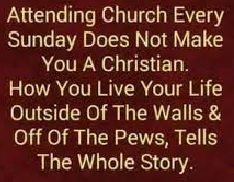
People attend church for various reasons such as out of obligation, guilt, social purposes or because they have always gone to church. Yet, many people attend church because they love being around other believers, they love worship and they enjoy participating. The thing to remember is whether we go or not has nothing to do with being a follower of Jesus.
We forget that the Church is not a building or an institution but a community of people who love God and love one another. Whether in a church building or out of the organization, we are all one body with Christ as the head.
I think an issue today among many of us who have left the organized church is that we feel those who are still involved in church and those who think differently than us are wrong. Often times we even seem to be enemies. This is absolutely wrong and not the correct way of thinking.
Sometimes those of us outside of church start thinking we are further along in our walk with God than those who still attend church. This is a bad attitude to have. We should be loving and accepting of those who are our brothers and sisters in Christ no matter if they attend church or not. Just as those who faithfully attend church should not look down on those who have left the organized system, looking at them as if they are backsliders or have lost their faith. God will lead each of us by the Spirit in the way we are to live.
The important thing is our love for God and for one another. No matter what we do on Sunday mornings, whether we attend a church building or love God from outside the walls, our goal is to decrease to self, our desires and plans, and allow God to increase and love others through us.
Jim Gordon and his wife left the institutional church after spending over fifty years within the system. Jim wanted a way to express his thoughts and concerns about the religious system and why he and his wife decided to leave the institution but not their faith in God. Jim can be contacted by email at: jimgordon731@gmail.com
There are hundreds of various denominations within the Christian faith and thousands of various interpretations and doctrines based on the Bible. We seem to hear a lot about two of these groups, evangelicals and progressives, and they appear to be on the opposite ends of the Christian belief spectrum. Should we really make the differences out to be an us versus them way of life? My biblical reply is, my brothers and sisters, this should not be.
I grew up as an evangelical and spent nearly fifty years living with that belief. After many years of questioning my beliefs and what I was taught over the years, I became less evangelical and more progressive in my thinking. That does not mean I have suddenly become anti-evangelical nor am I an enemy to my brothers and sisters who follow the traditional evangelical way, I just do not go along with that way of thinking any longer.
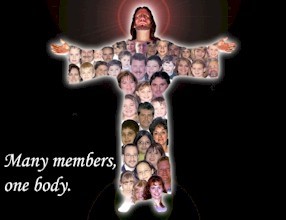
Unfortunately, many times we get an us versus them attitude and fight and argue amongst ourselves over doctrine and interpretation of scriptures. Again I say, brothers and sisters, these things ought not to be. We are not enemies. We are not to be against each other. We are brothers and sisters in Christ with two different views of interpretation. As a verse in the Bible puts it, just as our bodies have many parts and each part has a special function, so it is with Christ’s body. We are many parts of one body and we all belong to each other.
We are to be a people that make up the one true Church which has many members, each with an equally important part to play and with Jesus as the head over all of us. This Church is not a building made with hands, but is each one of us who follows the example of Jesus. Just because we interpret scripture differently, just because we have a different view on what the Bible says does not mean we are enemies.
Rather than fight and argue over who is right or who is wrong, remember we are in this together as a family of God. We are one community of believers who want to serve our God by showing love to a hurting world. There are many ways of following the example of Jesus and living for God.
There are many people out there who are hurting, questioning and lost who do not know that God loves them. All they see are people who claim to know God who are fighting amongst themselves and who are condemning those who are different. Because of this they figure what is the use, there is no reason to become a part of this group of people. They are no different than anyone else.
Yet we who are followers of Christ are to show the world that God loves them. We are to do this by loving one another, encouraging one another and lifting one another up. We are to show the love of God to those who are hurting and who do not know that God loves them. We are to let the love of the Spirit of Christ flow from within us to touch others.
Rather than fight and argue amongst ourselves over doctrine, denominations and interpretations, we are to allow the Holy Spirit to guide us, teach us and love all people with the love of God. Remember that Jesus told us to love God and love one another. He never said to judge, condemn, discriminate nor exclude anyone.
Jim Gordon and his wife left the institutional church after spending over fifty years within the system. Jim wanted a way to express his thoughts and concerns about the religious system and why he and his wife decided to leave the institution but not their faith in God. Jim can be contacted by email at: jimgordon731@gmail.com
Is your experience similar to mine? I enjoy talking about God for spiritual health reasons without any hidden agenda to convert others, but I begin blogging years ago about God because few want to discuss what role God plays in their life. Church can be one place to discuss God, but many of us discovered our contrarian questions weren’t always welcomed in such a setting so we moved on. We discuss family and work relationships. Why not our relationship with God?
Differences of opinions can be uncomfortable
Spiritual topics, like politics, can be touchy. There are diverse opinions in the spiritual arena which might lead to avoiding potential conflict. Groupthink is just human nature. Most humans desire to integrate with a group, get along with its members, and benefit from them. Discussing opposing beliefs can be uncomfortable and can lead to questioning our own beliefs thus creating anxiety.
Christians tend to have an “agenda” reputation
Conversations with God followers often feels like them trying to change your beliefs. We all hate when our partner doesn’t listen and just wants to give advice. I hate to admit I use to have an agenda with those outside the institutional church. I was taught God’s good news was saving people from Hell so they could get into Heaven. I was wrong according to Jesus. See here. The ship may have sailed others trusting us to have open conversations. All I know to do is to focus on a life where actions speak louder than words in case others want to pursue convos about God.
Claims made about God stifle conversations
Many of us are into God but many of us left the institutional church because claims about God’s character was contrary to our deepest moral intuitions. Why believe in a God you can’t respect. It is only intuitive that a Creator loves the ways their creations ought to love one another. Beliefs about God’s love that don’t match how you know you ought to love your neighbor may be amiss. Don’t believe everything you hear about God! See here.
Some don’t want to give up stuff or change
Spiritual folks are too quick to assume people don’t discuss God to avoid self-reflection. I suppose many may believe there is a God but don’t pursue because it may require changing some habits, but I doubt that is a main reason for most people. If you know what you are doing is harming others and you don’t care, that is on you. But if struggling with habits that you know are hurting you and others, God doesn’t have a list for you to conquer before getting to know God. Conversation can be stifled when we make assumptions about others and why they may not believe in God.
Believing what we can’t prove is normal
Faith in God isn’t much different than faith in a lot of life. We still get on an airplane or sit in a chair, not because we know but have reason to believe it is safe. No religion can be proven beyond some doubt, but that doesn’t make faith unreasonable. Maybe we can’t reconcile why God doesn’t intervene more with evil and suffering in the world. Lack of certainty doesn’t mean there aren’t plausible reasons how a loving God can exist in such a world. If you have an inclination there is a Creator, consider initiating such conversations. Many God-folks enjoy such conversations.
Mike Edwards has been writing for Done with Religion for some time and has been a great addition to the site. Mike also has his own site where he writes that can be found at What God May Really Be Like He can be contacted by email at: medwar2@gmail.com
Helping Survivors is on a mission to help heal, educate, and empower people who have been impacted by sexual abuse, assault, or harassment. We are a passionate group of experts and advocates who believe individuals who have experienced sexual assault, abuse, or harassment deserve to know their rights and options.
If you are in crisis and need support
call the Trevor Lifeline
at 1-866-488-7386
Undue Medical Debt
Undue Medical Debt empowers donors to forgive billions in oppressive medical debt. We are dedicated to removing the burden of medical debt for individuals, families and veterans across America. Click HERE to donate now.
Doctors Without Borders help people worldwide where the need is greatest, delivering emergency medical aid to people affected by conflict, epidemics, disasters or exclusion from health care. Help support us by making a donation here:
Wishes are more than just a nice thing, they can be a game-changer for a child with a life-threatening medical condition. We grant the wishes of children with life-threatening medical conditions to enrich the human experience with hope, strength and joy. To make a donation click here:











 Done with Religion