Feeds:
Posts
Comments

Archive for the ‘Jesus follower’ Category

by Jim Gordon

We Christians seem to think that we can make everything better by voting in the right politicians and passing the right laws. We seem to think that we can actually legislate morality. We have our pet doctrines and think with that getting the right people into office or the right laws passed, the world would be a better place.

We think if we can get the Democrats out and the Republicans in, or the other way around, things will improve. If we can just get abortion rules changed, get the ten commandments posted on the courthouse and school walls, put prayer back in school, or keep ‘In God We Trust’ on our money, things will be better.

The trouble with this way of thinking is, it does not work. We cannot legislate “Christian” values based on what we think is morally right. One, here in the USA we have freedom of religion. This means everyone is free to practice the religion they want to follow, and no one can force their particular religion on others. Second, rules and laws do not change the inner person. Only a life changed by God will make a lasting difference.

There is no political party that is going to make everything OK. It is so aggravating at times to listen to people condemn one political party or the other, when neither party is going to have the answers that makes everything better. If one political party was replaced by another political party, the only thing that would change would be the people who are complaining.

We get so caught up on what humans can supposedly do, when no human is going to come up with the answer to solve all our problems. Nothing will change until we come to realize that Christ is within us, and it is by his power that we live and love others.

The Kingdom of God is where we as followers of Christ actually live, and we are living in the Kingdom now. It is not something in the future after we die. The Kingdom of God is within us, and it is for the here and now. I think we miss a lot of the Gospel message when we only focus on the salvation part of it and forget the Kingdom of God aspect. We need to forget the allegiance we seem to think we need to political parties and seek first God’s Kingdom.

We should be praying for our leaders, no matter which party they belong too. Although we pray for them and respect their position, we should not be placing our hope in any political party. Political parties are made up of human beings who are imperfect. Truthfully, most often they are only looking out for their political agenda and financial well-being.

Seek first the Kingdom of God. Realize the Spirit of God lives within us and we are actually living in the Kingdom right now. Listen for the voice and guidance of the Holy Spirit, and love others no matter who they are or what they think. We are not going to change people by voting in politicians and making new laws. Only by loving people, accepting them as they are, and showing them the love of God will we make any real impact on our world.

Jim Gordon and his wife left the institutional church after spending over fifty years within the system. Jim wanted a way to express his thoughts and concerns about the religious system and why he and his wife decided to leave the institution but not their faith in God. Jim can be contacted by email at: jimgordon731@gmail.com

Read Full Post »

by Jim Gordon

When we think about Jesus, we automatically think of Christianity. Although the two are completely different. Christianity mostly means a religion that is based on the Bible and God. Yet it is more of things we do rather than who we are in Christ.

Jesus did not come to start Christianity. Jesus was not a Christian. We are missing the whole point when we focus on religion rather than the real reason Jesus came to live among us. He came to show us what God is really like, and the love God has for each and every one of us.

According to Wikipedia it is stated that there are roughly 4,200 religions in the world. Buddhism, Hinduism, Islam, Jewish, Christianity and every other religion, and in a sense, they are all actually related. They are all human based ways of trying to please the God (or gods) they believe in and serve.

In regard to just Christian denominations, World Christian Encyclopedia says that Christianity as a whole consists of 6 major ecclesiastical-cultural blocs, divided into 300 major ecclesiastical traditions, composed of over 33,000 distinct denominations in 238 countries. It certainly cannot be stated that people are not interested in some type of higher power.

The sad part is that we want to argue over which religion is right or wrong. We constantly argue over whose interpretations are right, and most often we do not even want to associate with those who feel differently.

Needless to say, we all have our interpretations, thoughts and ideas, but those just make us unique individuals. They were not intended to cause separations and divisions among us. We should be able to be ourselves and yet love and accept those who see things differently.

If we could get past the religious part of our beliefs and live in the freedom God provided, things would go much better. Rather than defend our denominational interpretations and our personal ideas, if we would love and accept others with the love of Christ, people would be more open to hear about our God.

Often, rather than love and accept one another, we are normally busy pointing out the mistakes of others and condemning those who we consider sinners. When we do so, the love Jesus told us to show everyone seems to get missed. I personally do not think it is our job to convict people of their sins. The Holy Spirit will convict those who need it, and will draw them to God. We are just told to love God and love others.

When we focus on the gospels and the life of Jesus and realize that he did not condemn people for their sins, we can see a distinct difference from the way we act today. He only had an issue with the religious leaders who thought they were better than everyone because of their works.

When it comes to saying I am a Christian, I am hesitant anymore because of the meaning it often has to many people. If being a Christian means being part of a religious organization, trying to live by following the law and being discriminatory, exclusive and condemning others, I am done with that. In that sense, Christianity is not the answer, nor is any other man-made religion. If being a Christian means a follower of Christ, someone who wants to be like Christ and show the love of God to everyone, then I am all in.

Jesus is not into religion. Jesus came to show the love of God to every human being no matter who they are or what they believe. Jesus crosses the barriers of religion and loves everyone. In the world today, we are the Jesus that people see. We should be ready to show the love and acceptance that God showed us to everyone we meet.

Jim Gordon and his wife left the institutional church after spending over fifty years within the system. Jim wanted a way to express his thoughts and concerns about the religious system and why he and his wife decided to leave the institution but not their faith in God. Jim can be contacted by email at: jimgordon731@gmail.com

Read Full Post »

By Mike Edwards

A recent statement by Dr. Anthony Fauci reminded me of my experience with organized religion. Dr. Fauci said “to criticize him is to criticize science because I represent science.” Science is the study of the natural world. This is no different than a theologian saying to disagree with them is to disagree with theology – the study of God. Both are implying difference of opinions make one either a non-scientist or heretic. It is heretical to claim to be “The Truth.”

Of course there are absolute truths! 

Certain absolutes are universal and obvious to all rational beings. Who doesn’t believe physical or sexual abuse is wrong? No reasonable God or non-God person doesn’t respect the golden rule in relationships. We know we ought to treat others like we want to be treated. Criminals don’t defend their murders or thefts; instead, they deny committing such crimes. Adultery only isn’t wrong in the eyes of the betrayer. We don’t debate many laws, only the decisions what is a just punishment.    

“Truth” is not synonymous with the Bible 

The Bible can’t be the authoritative guide about God because we disagree. Many who have a deep respect for Scriptures don’t agree what the Bible says about many moral issues. I don’t believe God is opposed to women priests or preachers. I don’t believe God condemns gays. Some biblical scholars agree, some don’t. See here. See hereIt may surprise many that scholars who believe in the inspiration of Scriptures don’t agree that a literal Hell is a reality in the Bible. 

Truth and human perfection are synonymous 

Universal moral outrage hints of a Creator’s influence through our moral intuitions. All reasonable beings respect the universal compulsion to treat others like we want to be treated. It is only intuitive that a Creator loves the ways their creations ought to love one another. Even the Bible implies perfect human love and God’s love are one and the same: “Be perfect, therefore as your heavenly Parent is perfect” (Mt. 5:48). “Follow God’s example…” (Eph. 5:1). We aren’t always certain how to best love, but beliefs that don’t seemingly lead to loving your neighbor more may be amiss. Problems begin when we stray from common moral sense and insist on understandings from an inspired Book. 

Bible-believing Christians even suggest trusting your moral intuitions 

Christians speak of the Holy Spirit guiding them. Unless the Spirit talks to us audibly or visibly, we can only discern the Spirit’s voice by examining our intuitions. We can’t avoid judging interpretations of the Bible according to loving intuitions. Even those who claim God is a mystery judge God according to moral human intuitions. God is claimed to be a mystery because their interpretation of Scriptures suggest God appears evil from a human perspective. (I think it’s crazy talk to say God can do bad but then call it good). Our moral intuitions are not the enemy.

How do we get to the Truth with so my uncertainty? 

Stop hiding behind a Book! Stop canceling others’ opinions! Stop demonizing one another. Begin conversations looking for how you agree. Seek to understand before being understood. Stop claiming your views are morally or biblically superior. We can’t declare certain immigration laws in stone. Immigration laws can be discussed as which are the most caring for the greater good. We aren’t always certain how to best love, but can reach solutions by civil and democratic means.

Mike Edwards has been writing for Done with Religion for some time and has been a great addition to the site. Mike also has his own site where he writes that can be found at What God May Really Be Like  He can be contacted by email at: medwar2@gmail.com

Read Full Post »

by Jim Gordon

It is sad that Christianity is divided into so many different groups. We all have a little different interpretation of the bible and a little different understanding of doctrine. Obviously, we are not going to agree on everything, but we certainly should be able to love one another and accept each other even when we differ on these things.

It is hard to understand why this is, when God tells us we are to be one as Jesus and the Father are one. Yet, we understand that we are human and it is easy to lose sight of our first love. If we could only stay focused on Christ, listening for his voice and the guidance of the Spirit, loving God and loving others as God intended. If we did, I think it would be much easier to look past our differences.

The problem seems to be that we are unwilling to see any other viewpoint other than our own. There are those such as my wife and I that do not attend an organized church. There are those who attend a church every time the doors are open. Some attend a house church, some meet with fellow believers at cafe’s, parks, restaurants and others meet in their homes over dinner. We should accept these differences and love one another rather than argue over who is right and who is wrong.

There really is not a right or wrong way to assemble together and we need to stop expecting everyone to do things exactly the same way. We should respect others viewpoints and focus on loving them rather than expecting them to see things our way.

Things will not change until we start focusing on what is common in our lives rather than the differences. The common focus should be on Christ, the head of the body. After that, we should focus on loving others rather than arguing about our differences.

We also need to keep in mind that we are all constantly changing as God brings new truth to us. We are all learning and changing as we are ready to accept new truths. The interpretations I had five years ago are completely different from some of the interpretations I have now. I am sure in another five years they will change again as God leads me into more truth.

Sometimes we are afraid to accept viewpoints of others because we feel if we do not hold to our way of thinking, we are compromising and not standing up for what we believe. We do not have to give up how we interpret the bible, but neither should we think everyone else is wrong. We can all learn from one another.

We should also remember that we are not responsible for convicting people of sin, or leading them into truth, or even saving them. That is the job of the Holy Spirit. We are told to love God and love others.

When we realize we are each equally important functioning parts of the body, and Christ is the head, we can start to change how we feel about those who do not see things exactly the way we do. We can begin to accept our brothers and sisters in Christ as they are, as we realize we are walking as one with God together.

Jim Gordon and his wife left the institutional church after spending over fifty years within the system. Jim wanted a way to express his thoughts and concerns about the religious system and why he and his wife decided to leave the institution but not their faith in God. Jim can be contacted by email at: jimgordon731@gmail.com

Read Full Post »

By Mike Edwards

Many, because of their understanding of the Bible, will respond with some version of “I love you; I hate your sin.” This is not a phrase found in the Bible. One is hard pressed to find anywhere in the Bible where this is a recommended strategy in relationships whether the Bible clearly condemn a behavior or not. It is impossible to not feel personally attacked when one utters “I love you but I hate your sin.” What is heard is I don’t love you.

Please don’t reject a gay child in God’s name!

Some parents condemn their child because the Bible supposedly does. Not all agree. See here.  When there are any doubts what the Bible might be advising, God-followers must take the most compassionate, less judgmental stance toward others. Many parents know in their hearts to not judge their child but they are torn when hearing others claim the Bible condemns homosexuality. It is impossible to not feel unloved and rejected when told “I love you but I hate your sin.” 

Why do we treat gays differently from other supposed sinners whatever you believe?

Many refer to Paul’s list of sins to call out homosexuality but they fail to call out the greedy and slanderers (I Cor. 6: 9-10). Unless you are homeless chances are you have been greedy more than once this week. How is it not greedy to keep more than you need and make sure those struck by natural disasters or other tragedies have the rest? Remind me to not say when I see you “I love you, but I hate your selfish behaviors.”

But some actions are really harmful

It can be argued that hating alcoholic behavior is loving because alcohol abuse is harmful. Hating homosexual sex is only loving if homosexual sex is sinful. But do we tell a drug abuser that we love them but hate their behaviors? You don’t tell anyone coming for help with their addiction that you love them but hate their behavior. You simply say I love you and let’s do this together. They probably already hate their own behaviors. When someone is overweight, which is a lot of us, should we say “I love you but I hate you are fat?”

So, what do we stand for!

When people are involved in uncommitted sexual relationships and I am asked, I don’t say I love you but hate your behaviors. If they want, I have a conversation about whether their actions will end up hurting them or others in the future. I can still believe in the importance of committed, monogamous relationships. That is why adultery is wrong. That is why it is selfish to be involved in more than one sexual relationship especially if the other persons are unaware. I have no problem taking a stand against behaviors that I think are harming others. I do though try to remember I am involved in such behaviors daily. Just love on those seeking your support and avoid cliches.

MikeEdwardsprofilepic125

Mike Edwards has been writing for Done with Religion for some time and has been a great addition to the site. Mike also has his own site where he writes that can be found at What God May Really Be Like  He can be contacted by email at: medwar2@gmail.com

Read Full Post »

by Jim Gordon

Most of us have heard or read the bible verse found in Hebrews 10:25, which reads, not forsaking the assembling of ourselves together, as the manner of some is, but exhorting one another, and so much the more as you see the day approaching. This verse gets quoted a lot when it comes to church attendance.

Once someone hears that my wife and I stopped attending an organized service each week, the first thing we usually hear is this verse quoted.

Truth of the matter is, I do not think this verse is even talking about what we call church.

As I have stated before, church is not a building or a place. Church is the people of God, those of us born into His kingdom by grace. Church is not an organization; it is an organism. Church is not a one-day event, it is a daily lifestyle of people loving God and loving others.

When reading the verses preceding Hebrews 10:25, you find it is talking about grace and how we are now granted permission to enter into the Holy place, not a building, but the very presence of God. This happened when Jesus died and the veil was torn from top to bottom.

To me, not forsaking the assembling of ourselves together is saying that we need our brothers and sisters in Christ for encouragement and to stimulate one another to love and good deeds. It has nothing to do with an organized religious service in a building. It has everything to do with loving, communicating and encouraging other Christians as a daily norm.

Photo courtesy of Priscilla Du Preez
on unspash.com

When you think of countries where Christianity is against the law and churches are closed down, do we think the Christian people are wrong for not attending an organized service every week? They get together in small groups in houses or where-ever they feel they can meet safely. It may not be more than two or three people.

Jesus said where two or three gather together in my name, there I am in their midst. We do not need buildings or large groups of people to fulfill this verse about assembling. We do need each other, no matter if it is meeting at home, meeting for dinner at a restaurant, or getting together in a park. The important thing is to love God and love one another and be available to our brothers and sisters in Christ to encourage and build them up.

Let me make clear, I am not against church or those who attend. My wife and I were part of the weekly service for years, but over the past few years, we have found that for us, it makes more sense to be outside the walls of religion and seek meaningful fellowship each day with our brothers and sisters in Christ rather than to continue sitting in a pew listening to a select few participate. We believe in the priesthood of all believers, and that it is a daily lifestyle, not a weekly event. Every one of us are equally important parts of the body and we are to be ready each day to support, encourage and love our brothers and sisters in Christ.

Jim Gordon and his wife left the institutional church after spending over fifty years within the system. Jim wanted a way to express his thoughts and concerns about the religious system and why he and his wife decided to leave the institution but not their faith in God. Jim can be contacted by email at: jimgordon731@gmail.com

Read Full Post »

By Mike Edwards

Some are into God. Others aren’t. Some may not want to be constrained by a good God’s morals. That isn’t most that I encountered that don’t have the same passions about God that I do. I could be accused of needing a crutch, but I am convinced following God can be a good thing even if on the fence.

Psychological benefits 

A 2018 Harvard study involving 5,000 people examined how being raised in a family with religious beliefs affects the mental health of children. Belief in a loving God can provide meaning and purpose in life. The God I believe in is concerned for my well-being and how I treat others. Self-centeredness may lead to short-term benefits but not long-term benefits. Some studies suggest the belief in nothing is a rich fertilizer for anxiety and depression. A belief in a God who loves us can be a valuable source for support and comfort.

God may be the God you hoped for

We can only be as close to God as our mental images of God allow. Certain claims made about God according to one’s understanding of the Bible can hinder pursuing God. A Creator surely loves in ways God’s creations sense they were created to love one another. It isn’t natural to oppose women priests or preachers. See here. It isn’t natural to condemn gays who can no more choose who they are attracted to than straight people can. See here.   Why would God create a place such as Hell to torture our enemies after their death? Maybe God doesn’t. See here.

Belief in the afterlife can be a good thing

When I share that I don’t believe the Bible reveals there is a literal hell, some come back that I can’t then believe in a heaven. It is a fair argument. I am not so sure the Bible speaks of a heaven of harps and angels but a “kingdom of heaven” to teaches how to be joyful here on earth. I have no reason to not believe a heavenly life after death is possible. Such a belief helps to not fear death and to look forward to be reunited with loved ones.

What to tell children if an atheist

What is the harm in telling our children there is a heaven after death when we can’t know for sure? We promise our kids all the time we will keep them safe. When ask if their house will burn down, you say it won’t happen to us. You don’t know that. Such a belief isn’t a false belief. As children are older parents can share more if they question God and an afterlife.

God as an influencer

I am convinced one has nothing to lose by giving God the benefit of the doubt. Besides, that puts the onus on God to reveal themselves to you that they are real. The God I know seeks to influence to do all the good we can, in all the places we can, at all the times we can, to all the people we can, as long as we can. Such a plan leads to true individual and worldly happiness in the long-run. God through their influence has made me a better man, husband, father, and friend or at least better than if on my own. I have experienced God’s encouragement to continually strive to be better.

MikeEdwardsprofilepic125

Mike Edwards has been writing for Done with Religion for some time and has been a great addition to the site. Mike also has his own site where he writes that can be found at What God May Really Be Like  He can be contacted by email at: medwar2@gmail.com

Read Full Post »

by Jim Gordon

My wife and I question these days whether we should consider ourselves Christians or not. We think it all boils down to what we mean by Christian.

If being a Christian is being part of a religion that meets in a building on a particular day and follows set doctrines based on what denomination we belong to, then no, we are not Christians. If being a Christian is considered being part of a group that is basically just a different interpretation and belief from Jews, or Muslims, or Baptists, Methodists, Charismatics etc., then no, we are not Christians. If being a Christian is being part of a group that is opposed to all other religions and only accepts those who believe like we do, then no, we are not Christians. If being a Christian has anything to do with religion, then no, we are not Christians.

In Acts 11:26, the disciples were first called Christians by people in Antioch. I always heard that they were called Christians because they were acting like Christ. The people there were calling them little Christ’s because of the way they showed the love and power of Christ. Now, if that is what is meant by being a Christian, then we are all in.

There are many ways we can described ourselves…believers, Christ followers, disciples of Jesus, people of faith or Christians. Yet, the name itself does not really matter. What matters is how we live our lives. Is Christ preeminent? Are we living as one with him? Are we allowing the love of Christ to live through us, accepting others, loving others and being little Christ’s to all we meet? If not, the name itself really makes no difference.

We should not worry so much about the label we use, but by the way we live. When people see us, they should see Christ. He lives within us and we should be known for the love we have for him and for our fellow man. We are to let Christ live through us each and every day with everyone we meet.

Jim Gordon and his wife left the institutional church after spending over fifty years within the system. Jim wanted a way to express his thoughts and concerns about the religious system and why he and his wife decided to leave the institution but not their faith in God. Jim can be contacted by email at: jimgordon731@gmail.com

Read Full Post »

By Mike Edwards

This post is longer than usual. I will be as brief as possible. I hope subtitles depicting my thought progressions will make it easier to read. 

I have written on this topic ad nauseum. See here. We can’t prove God inspired the Bible, so I believe it is best to assume God didn’t inspire all of the Bible for reasons below. It is natural to assume God’s inspiration means God’s approval. (Gregory Boyd adds a twist below). I will address below why many may argue the Bible is God’s inspired Word – concerns we then wouldn’t have an authoritative view of God. I think an inspired Bible has led to condemning others falsely, thus discouraging faith in God. An inspired Bible can also provoke violence.

Gregory Boyd wrote a book about the Bible Inspired Imperfection. Boyd seems to suggest God allowed wrong views about God written to lead to seeing ultimate perfection in the person of Christ at the Cross. There are hundreds of passages in the OT where God supposedly orders Israel to commit atrocities (“Now go, attack the Amalekites… put to death men and women, children and infants, cattle and sheep, camels and donkeys” (I Sam. 15:3). Did God really approve/inspire/have anything to do with such accusations about God? Such confusion by God just doesn’t make sense.

An inspired Bible has led to condemning women and gays

It is misleading to claim we can rely on “biblical truths.” Many claim the Bible says that women can’t fulfill the same roles as men in the worship or home setting because of the Apostle Paul’s teaching. Yet it can also be defended that Paul, a main writer of the New Testament, didn’t think roles should be chosen based on gender than gifts. See here. No one can claim their biblical view of God concerning women’s roles is definitive. Similarly, scholars who believe in the inspiration of Scriptures don’t agree that a literal Hell is a reality in the Bible.

Supposed certainty according to the Bible has led to condemning gays, though biblical scholars don’t agree the Bible condemns same-gender loving relationships. See here.  How dangerous can an inspired Book be? Religions defend killing homosexuals because of their assumption that every word in a Book was inspired by their God. Extremists and terrorists hide behind a Book. The biblical truth is we can’t prove our interpretations are correct or even that biblical writers always understood God perfectly.

An inspired Bible has led to condoning violence 

I mentioned that biblical writers claim God ordered certain atrocities in war. Did God really inspire such thoughts? Did God really approve a wife’s hand being cut off when grabbing another man’s genitals (Deut. 25:12)? Not questioning supposed inspired portrayals of God has led to killing infidels in the name of God and justifying wars. Extremists may argue that we should seek to imitate a perfect, loving God. If certain violence is good for God according to one’s interpretation or assumptions about a Book, it must be good now for humans. When you regard the Bible as the revealed Word of God and don’t think critically, this can lead to violence in God’s name.

An authoritative view of God according to the Bible is a myth!

It is suggested if the Bible isn’t inspired, “then you can’t know God.” Were Old Testament folks out of luck since there was no Bible? Are the majority of people born, who didn’t have a Bible, out of luck? We aren’t totally clueless! Universal moral outrage hints of a Creator’s influence through our moral intuitions. Who doesn’t know a good God hates beheading people because they don’t share your beliefs? Only a supposed infallible Book claiming to speak for God would suggest such a moral atrocity. No reasonable human being doesn’t respect the universal compulsion to treat others like we want to be treated. We were born to use our moral sense whether reading a Book or not.

Even Bible-believing Christians can’t avoid the importance of common moral sense 

Christians say God’s spirit (aka Holy Spirit) does or can reside within you. Unless the Spirit talks to you audibly or visibly, we can only discern the Spirit’s voice by examining our intuitions how a perfect, loving God may guide us. Such a statement is nonsensical if we are clueless about perfect love. Even the Bible implies we can understand God’s love because perfect human love and God’s love are the same: “Be perfect, therefore as your heavenly Parent is perfect” (Mt. 5:48). This is why many claim God is a mystery because their interpretation of Scriptures suggest God appears evil from a human perspective.

Can Jesus be the end-all about what God is really like?

The Bible is said to be inspired because the biblical writers made such a claim. Such logic would not lead those same people to accept the Quran being infallible because it claims to be. Boyd suggests Jesus claimed in the NT that OT Scriptures were imperfect but inspired by God. Scholars do not agree on Boyd’s interpretation of those relevant passages. Interpretation realities don’t allow us to claim certainty about Jesus’ views on other matters.

Many disagree what Jesus taught about divorce which impacts millions of marriages. Turning the other check is interpreted to claim Jesus never advocated violence, but the possible literal translation of Mt. 5:39 is “do not resist by evil means.” Does Jesus agree violence is never desired but may be necessary sometimes? The NT is no different than reading the OT since we could be wrong what Jesus would teach. It can’t be avoided using common moral sense when reading the Bible.   

How can we view the Bible? 

The Bible can be viewed as God’s story beginning with Israel and culminating with the life of Jesus that we don’t possess in any other document. God didn’t necessarily inspire or approve of everything written about God. Reading the Bible encourages questioning and contemplating what a loving God is really like. Imagine if extremist had to admit God possibly didn’t inspire every word in a Book, and we had to use common moral sense to understand what a loving God is like.

How can we make Godly decisions during uncertainty?

Please stop claiming certainty in God’s name. Certain absolutes are obvious to all. Who doesn’t believe physical or sexual abuse is wrong? We must stop hiding behind a Book! We can’t declare certain immigration laws in stone. Immigration laws can be discussed as which are the most caring for the greater good. Stop canceling others’ opinions! Begin conversations looking for how you agree. Stop claiming your views are morally or biblically superior. We can’t always be certain how to best love, but we best come to solutions through civil and democratic means.

MikeEdwardsprofilepic125

Mike Edwards has been writing for Done with Religion for some time and has been a great addition to the site. Mike also has his own site where he writes that can be found at What God May Really Be Like  He can be contacted by email at: medwar2@gmail.com

Read Full Post »

by Jim Gordon

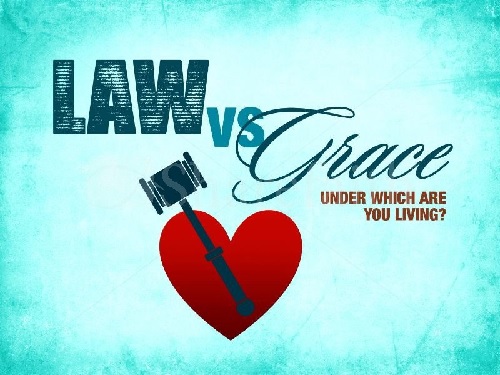
Growing up in the Christian church, my wife and I were taught that we were saved by grace. Yet, once we were saved by grace we needed to continue to live by the law. This seems to be a fairly common teaching for the modern-day believer.

Once we began questioning some things we were reading in the bible, we came to a new conclusion. The bible mentions that those of us who are saved by grace are now free from the old covenant law. If we still try to live by the commands of the old covenant, we are actually living under a curse. ‘For all who rely on the works of the law are under a curse, as it is written: cursed is everyone who does not continue to do everything written in the Book of the Law.’ (Galatians 3:10 NIV).

Why is it we cannot accept the free gift of grace that God provided? Why is it we are still living a performance-based life trying to please God? ‘For if you are trying to make yourselves right with God by keeping the law, you have been cut off from Christ. You have fallen away from God’s grace’. (Galatians 5:4 NLT).

It became clear to us that we now live for God because of love, not out of obligation, not trying to do more and earn our salvation. The works of the law and the ten commandments no longer have a hold on us.

Now, am I saying because we are free of the law that we can just do whatever we want? Eat, drink and be merry? No, not at all. Even though we are free from the law, and even though by keeping our eyes on Christ we have the ability through him not to sin, we are still living in a fallen world. There will be times when we take our eyes off him and commit sins. Although in Christ our sins are already forgiven and there is no longer punishment for them, there are still consequences in this world when we do wrong.

The thing is, by trying to keep the law, we are led into death. ‘The sting of death is sin, and the power of sin is the law’. (I Corinthians 15:56 NASB). The old way of doing things was only a temporary thing. The law showed us that we were completely powerless to live up to God’s standards. It was a tutor for us until Christ came and took our sinful nature to the cross. ‘Therefore, the Law has become our tutor to lead us to Christ, so that we may be justified by faith. But now that faith has come, we are no longer under a tutor. For you are all sons of God through faith in Christ Jesus’. (Galatians 3:24-26 NASB).

We had been taught that we needed to do more and more for God. We were taught to try to keep the commandments and strive to be ‘good Christians’. Fortunately, the Spirit has been guiding us into the reality that we cannot keep the commands. We, in ourselves, are powerless to do so, and so are you. Christ came to fulfill the law and provide freedom to all of us. We are now free to live by love for Him and free from trying to live by the law. When Jesus said ‘it is finished’, he was saying the old covenant, the old way of trying to live by the law, was finished. He accomplished what we could not do. When he was resurrected, a new way of life started, a new covenant based on grace.

It is time we realize God, out of His love for us, has provided all we need. He has done away with our old sinful nature. We are forgiven of all our sins by His grace. We can now enter into his rest and rely on what He has done. We no longer have to strive to keep all the rules and constantly try to do more and more to earn a relationship with Him. ‘We have been released from the law so that we serve in the new way of the Spirit, and not in the old way of the written code’. (Romans 7:6).

Rest in Him, rely on the Spirit to teach you and guide you through love. There are plenty of things to do, but we do them when we are led by the Spirit, and we do them through love. Now that we live by the new covenant, we live in love because He has put His spirit within us to walk with us daily.

When we are in love with God, we do not need rules to tell us what to do. We do what is pleasing to Him because we love Him. The Law is no longer in effect. By grace we now live a life of love for God and for one another. It is by love that we will do what pleases Him.

Jim Gordon and his wife left the institutional church after spending over fifty years within the system. Jim wanted a way to express his thoughts and concerns about the religious system and why he and his wife decided to leave the institution but not their faith in God. Jim can be contacted by email at: jimgordon731@gmail.com

Read Full Post »

« Newer Posts - Older Posts »