Growing up in church, we were always told it was our job to go out and convert others to our faith. We were often threatened with the statement, if we do not convert others their blood will be on our hands.
Looking back on it, is this really what God expects of us? Is it our job as followers of Christ to convert the unsaved? Are we to force our views and beliefs on others so that they might come to God?
Today, my answer would be a definite no. It is our job to follow Christ and love others, and the Holy Spirit’s job to convict and lead people to the Father.
We cannot convert others; we cannot make them come to Christ by forcing our views and beliefs on them. Only the Holy Spirit can convict the world of sin and lead them to repentance.
Jesus said in 1 John 3:23 – ‘And this is his command: to believe in the name of his Son, Jesus Christ, and to love one another as he commanded us’. Apart from that, we have nothing more to do than to be available to Him and allow the Spirit to work and love through us.
Also, we are told in 1 Peter 3:15 – ‘But sanctify the Lord God in your hearts: and be ready always to give an answer to every man that asks you a reason of the hope that is in you with meekness and fear’. To me, this says we are to live a life of love and service to others so that they will notice a difference in our lives. When they ask, we should be ready to tell them that it is the love of God within us.
We are called to make disciples, but disciples would be those who already have a relationship with Christ. The dictionary describes a disciple as a professed follower of Christ. We are to be there to encourage and help one another into maturity in their walk following Jesus. This is done by regular fellowship (read more about fellowship here) and getting to know one another so that we can encourage, build up, and lead by example.
We are also told to go into all the world and preach the gospel. The gospel being the good news that God loves us, has provided freedom from our sinful nature and has restored fellowship with us. Again, this is done by loving God and loving others on a daily basis. It is showing God’s love by example. It is not by being judgmental, pointing fingers, using guilt and other means that are sometimes used to try to force others to accept Christ.
When we show the love of God to others and accept them as they are, people will be drawn to Christ through love rather than by using condemning and threatening ways. This does not mean we have to agree with everyone or say you can live anyway you want with no consequences, but we can show the love of Christ to non-believers and accept them without expecting them to change and start acting like we think they should. God accepted us as we were before we came to Him, we should do the same.
Share the good news of God’s love to those you meet by loving them. Encourage and make disciples out of those who have come to Christ by loving them. Stop trying to force salvation on non-believers out of obligation, guilt and condemnation. Just love them. Love is the answer. God is love.
Jim Gordon and his wife left the institutional church after spending over fifty years within the system. Jim wanted a way to express his thoughts and concerns about the religious system and why he and his wife decided to leave the institution but not their faith in God. Jim can be contacted by email at: jimgordon731@gmail.com
Believing God exists or doesn’t exist requires faith, but it seems intuitive a loving Creator would love the way we were created to love. We can examine what a loving God is like though our moral intuitions, our consciences. Christians may argue we should trust “biblical truths” about God, but differing interpretations exist for many moral issues. See here. Also, we can’t prove if biblical writers always understood God perfectly. We aren’t always certain how to best love, but we know that we or a Creator ought to love others as we want to be loved.
The Bible says nothing about Hell as a consequence for decisions here on earth
God only warned Adam and Eve about death, not Hell, if eating from the tree of knowledge of good and evil. Noah, who was warned of a global destructive flood, was silent on Hell as a consequence for behaviors here on earth. So were the OT prophets. The Hebrew word Sheol in the Old Testament, translated into the English word Hell, was used to describe a place of darkness occupied by the dead regardless of beliefs, not a torture chamber for unbelievers. Job, an extremely righteous man in God’s eyes, desired to go there to escape his tremendous suffering (10:21-22). Recent Bible translations simply translate Sheol as “Sheol.”
The Greek word Gehenna is translated into the English world Hell. Gehenna is the name of a valley outside Jerusalem. In ancient times children were sacrificed in fire at Gehenna and the valley was known as a burial ground. Jesus refers to Gehenna to describe the suffering and devastation that come from doing evil. Many scholars consider Gehenna a metaphor to describe the destruction an evil life leads to, not a fiery place where sinners go for never-ending punishment. Gehenna is best translated Gehenna just as Mount Everest is best translated Mount Everest.
The main writer of NT makes no mention of Hell
The main writer of the NT, other than the Gospels, was the Apostle Paul. Paul never mentioned Hell. Hell is not mentioned in Acts which is the main book in Bible describing the beginning of the Christian movement and evangelism.
But the Book of Revelation speaks of a Lake of Fire!
Fire in the Bible is used more metaphorically than a literal fire where people are tortured forever after death. The Book of Revelation is the only place Lake of Fire is mentioned, but if dragons with seven heads are considered figuratively why wouldn’t the Lake of Fire be a metaphor? Revelation only suggests believers and unbelievers will face some kind of judgment after death.
Hell makes no moral sense to God or humans
A loving God couldn’t possibly torture anyone forever since such pain serves no lasting purpose. Humans wouldn’t even create such a place for their worst enemies. Hitler was condemned for torturing millions of Jews for a brief time; God is said to torture billions not briefly but forever. A moral God can’t be a hellish, sadistic, torturer!
Besides, humans much less God are fully aware beliefs are influenced by opportunities, role models, or misinformation. It is suspect an impartial, moral God determines our destiny based on beliefs while living a brief time on earth. If we humans really believed Hell made moral sense, we would never cease from warning our friends to repent to escape Hell. The only reason to think a loving God would create such as a place as Hell would be if we believed a Book taught such a horrific thing.
What is God saving us from if not Hell?
When Jesus was asked by a religious expert how to have eternal life, He simply said to love God and your neighbor (Lk.10:25-37). Jesus’ focus wasn’t on quantity of life after death but about a life worth living here on earth. Jeremy Myers says it best: “When Scripture teaches about being saved from sin, it is not referring to escaping hell and going to heaven when we die, but to the deliverance from the devastating and destructive consequences of sin in this life.”
The word “heaven” appears the most in the Gospel of Matthew. The Kingdom of Heaven isn’t a place to go after life on earth. Jesus sought to bring heavenly love to earth – “on earth as in heaven.” Jesus said nothing about dropping to your knees to avoid Hell to go to Heaven after death. Paul mentions Heaven twice in Romans, yet says nothing about Jesus dying so we can go to Heaven (Rm. 1:18, 10:6).
What about justice?
Punishment doesn’t bring back a victim’s robbed memories of the future due to the murder of a loved one. Real justice is understanding your victim’s pain and accepting the harmfulness of your actions. After death God may bring to memory every action of betrayal and how it felt to their victims. The cleansing and educative effect may take longer for some than others. Humans like God may forgive their enemies if they truly regret their actions and seek forgiveness. Justice from a fair, merciful God is possible despite people being given a second chance after death.
Don’t people need the fear of God to change?
Fear only leads to trying to avoid getting caught. God’s continual encouragement and mercy, not the fear of Hell or gloomy uncertainty of God’s favor, is our necessary nourishment for lasting changes of the heart. Fear doesn’t produce relationships worth having. One may argue if certain beliefs aren’t required for Heaven, people will do whatever the hell they want on earth. How real is faith if only to avoid Hell? Genuine changes result when knowing you are deeply loved by a parent or God empowering you to reflect such love to others.
Mike Edwards has been writing for Done with Religion for some time and has been a great addition to the site. Mike also has his own site where he writes that can be found at What God May Really Be Like He can be contacted by email at: medwar2@gmail.com
The word ‘fellowship’ is just another one of those Christian buzzwords that you almost never heard outside of the church. We hear the word fellowship often and we all have our ideas about what it actually means to fellowship with others.
For me, growing up in the church world taught me about the need for fellowship with other believers. Of course, this fellowship was reserved for the weekly gathering inside a building on Sunday. I remember thinking that real Christian fellowship was sitting there each week, listening and watching others perform for God, then shaking hands with someone while on the way out the door.
For many years while within the institutional church, I never thought about fellowship in any other way than what I had been taught. Fellowship was with people who believed just like me. I always felt it may be dangerous to associate with people who believed differently or did not believe at all. After all, they may cause me to fall or backslide in my faith.
Now That We’ve Left The Church, Where Do We Go?
After many years of an uneasy feeling and not being satisfied with our church life, my wife and I decided to leave the organization and live outside the walls of religion. After leaving the church, my wife and I wondered where would we go for friends and ‘fellowship’
I found an answer in an article my friend, Rocky Glenn wrote entitled ‘Fellowship and Community’ in which he talked about fellowship within the church and leaving that church fellowship. He says:
“Two of the most common questions asked when others learn you have made the conscious decision to live the Christian life outside the walls and confines of a traditional church building are “Who do you fellowship with?” or “Where do you find community?”
These questions show how conditioned we have become in the institutional church to speaking our own language and seeing the world through the lenses of our stained-glass windows. The two terms — fellowship and community — are rarely heard outside the context of church. For example, have you ever invited a coworker to dinner or for a drink by asking them if they wanted to fellowship? When you are sitting in the stands at the high school football game, do you often lean over to the guy sitting next to you and explain how happy you are the two of you can experience community together? While each of these examples, by definition, constitutes the term used, we do not speak in such a manner on a normal basis and to do so would actually be quite silly. To fellowship with another is to have a friendly association over shared interests.
Rocky’s statement shows that fellowship can and does happen outside the church walls. It can happen in a restaurant, a bar, a football game, or on a street corner.
Photo by Kevin Curtis on Unsplash
Once my wife and I began to realize that fellowship happens anywhere, it did not take long for God to bring people across our paths in places and at times we never expected.
We were sitting in a local café one morning relaxing and drinking our morning coffee when we noticed two men at the next table. One was a young long-haired hippy-looking guy talking with an older gentleman. We could not help but hear their conversation at times and we kept noticing that they were talking about God and life in Christ.
After some time of listening, we decided to politely ask about their conversation and found that the younger guy was in a Christian heavy metal band. He had left the traditional church a few years ago and was living outside the walls of religion like us. This was an encouragement to us because it showed us that God can provide people for fellowship at any time and in any place. We just need to be alert and ready.
What Is Fellowship?
Fellowship, according to Merriam-Webster is a company of equals or friends; the quality or state of being in a comradery. Over the years of sitting in a church service, I never saw fellowship take place that matched up to this definition.
For the usually meaningless talk that goes on at a Sunday morning church service, there is no way that meaningful fellowship will happen.
Fellowship is more than listening, more than having similar beliefs or doctrinal views. It is getting to know people for who they are, even if it means they see things differently. It is being yourself and having people accept you for you. It is caring and responding in meaningful, respectful ways.
1 Thessalonians 5:11 states, ‘Therefore, encourage one another and build one another up, just as you also are doing’. As this verse tells us, fellowship is to encourage each other and build one another up. It is not totally agreeing or seeing things the same way. We are to be a positive help to our fellow human beings.
In our world today, people seem to want to stay separated into like-minded groups. We see it in all the various denominations in church, we see it in all the various interest groups and social groups. Everyone wants to fellowship only with people who are like them.
Finding Fellowship In The Wrong Places
Looking back on it now, I can see that I had more fellowship with my non-Christian friends in the backyard or at school than I did sitting in a religious service each week. I passed up many opportunities in the past to meet with people and in places that had nothing to do with church or any religious activity. Due to my religious upbringing and understanding that fellowship took place in church, I felt a little guilty about enjoying fellowship with others outside of church and with people who were not always so like-minded.
Fortunately, I have found that fellowship can happen anywhere and anytime. It does not have to be within the confines of an organized service in a church. In fact, it normally does not happen there. God brings opportunities each day to talk to people and share love and acceptance. What we need to do is erase the concept that fellowship only happens in a church service. We need to be alert to the leading of the Spirit and ready to greet people with the love of God.
Photo by Priscilla Du Preez on Unsplash
It seems that people just want to be heard and accepted. Even those who are quiet or a little introverted will open up and talk when they find someone who is genuine, caring, and truly listens. Often, one person listening can bring about the most meaningful times of fellowship.
A Religious Man, A Morman and A Truck Driver
(and no, they did not walk into a bar)
Just the other day, my wife and I heard about a young man who was returning to his military base after leave. Unfortunately, he was involved in a serious car accident and died due to his injuries. Our local town was honoring this young soldier by having residents line the streets as his hearse and small motorcade passed by.
While we were standing on the street corner waiting, we met a few people we never thought about running into. First, there was a man who was obviously religious. It was interesting talking to him knowing we had some commonalities in our faith. Yet at times it was obvious he had some beliefs that were very traditional and strictly religious. The good thing was we were outside the walls of a church and were able to talk and express ourselves without getting into a big debate over doctrine or denominational beliefs.
While we were talking with this gentleman, two young men came walking up and stopped to talk a minute. They were both dressed in white shirts with ties and the same style of pants. It was very obvious they were Mormon missionaries. It would have been easy to ignore them or tell them we were not interested and get them to move on.
Fortunately, we did not do that. We were nice and accepting to them and talked about a variety of topics. I think they were a little surprised that someone would actually carry on a conversation with them without debating or arguing over their beliefs. We actually had a very nice talk for about fifteen minutes and learned a little bit about each other apart from our differences in doctrine.
Not long after the missionaries moved on, an older gentleman walked up and asked what was going on with all the people lining the streets. We told him what was happening and he decided to wait and pay his respects also. He started talking a little about himself and told us he used to be a truck driver. Once he noticed that my wife and I were really listening and paying attention, he suddenly opened up about several personal issues and the pain of losing a child when he was younger. We ended up talking another twenty minutes about his family and his history and hopefully made his day a little brighter.
What Does Real Fellowship Look Like?
The purpose of talking about these encounters is to show that God can bring people into our lives for the purpose of fellowship when we least expect it. Who knew when we stood on the street corner to pay respects to a person we did not know, we would have personal encounters with three separate people and enjoy times of real fellowship with each of them?
Fellowship is no more than listening, responding with kindness, caring, and showing the love of God. We all can do it if we take the time to pay attention to the needs of others and show them we are interested in what they have to say.
Photo by Tim Mossholder on Unsplash
Fellowship really is not hard to do. Be yourself and allow other people to do the same. Be respectful, kind, and share the love of God in a way that makes people feel they matter.
The Last Word
Fellowship can happen anytime, anywhere, and more often than not, it does not happen within the confines of a religious service. Fellowship is not just a Christian happening; It is for all people.
There are so many people in our world who are hurting or confused and just need someone to listen to them. Be ready, be alert and follow the leading of the Spirit to show love and accept people for just being themselves. Something so simple can mean so much to someone who needs a little fellowship.
Jim Gordon and his wife left the institutional church after spending over fifty years within the system. Jim wanted a way to express his thoughts and concerns about the religious system and why he and his wife decided to leave the institution but not their faith in God. Jim can be contacted by email at: jimgordon731@gmail.com
We know the conventional God often taught. God is all knowing, but then why doesn’t God warn of future decisions that have negative consequences? God is all powerful, but then why doesn’t God stop more evil? God can’t feel sad because that would show weakness, but then why can God get so pissed to create Hell and tortures unbelievers forever after life on earth?
God is exactly like you imagine!
A Creator surely loves in ways God’s creations sense they were created to love one another. Is it natural to be bias against women priests or preachers? Is it natural to condemn gays who can no more choose who they are attracted to than straight people can? Would we create a place such as Hell to torture our enemies after their death? God wouldn’t either. See here.See here. See here.
The enemy may be our interpretation of an inspired Book and not our common moral sense. Biblical scholars who respect the Bible disagree God is bias toward women, that God condemns gays, or that God created such a place for Hell. Only a hypocritical God wouldn’t love in a way we know that we ought to love others. God is who you imagine a loving God is.
God can’t control evil
Atheists and believers agree. The only God worth believing in and following is a perfect God. Can God manipulate others? We would say no because love doesn’t manipulate. We hate when we see friends try to control others for their own reasons or gain. Obviously, God’s love must be uncontrolling. God can’t control evil because granting freedom requires not denying freedom. Or we could say God can’t control evil because God’s very nature is love and true love is uncontrolling.
God doesn’t arbitrarily answer others’ prayers and not yours
Let’s be honest. More prayers are unanswered than answered. God can’t wave a magic wand without accounting for freedom. We can talk to God for self-examination, for sharing our concerns, and not feeling along in a chaotic world. We tell others seeking influence from the right people leads to making wiser choices. It isn’t that you didn’t beg enough or have the right attitude. It isn’t that God had the power to do something about it, but chose not to; it’s that God can’t. Divine love limits divine power. Simply put, God’s love is uncontrolling.
God suffers with us
Conventional thinkers don’t like to suggest God has feelings of vulnerability, but they don’t mind talking about God’s wrath. If a God can be angry, a God can be sad. God hates when we are suffering. If God truly loves, God like a friend hurts when you hurt. We may wish God would just intervene but there may be legitimate reasons why God’s can’t. But God is with you each step of the way as we reach out to others for help.
God can’t know the future
To say God knows the future suggests a predetermined future which makes freedom nonsensical. God’s plan is not a detailed blueprint but a general one to set us free to love. God wants what you desire for your future, unless you want to be an extremist or terrorist. God isn’t keeping secrets as if God knows your marriage will end in divorce. God deals as much with uncertainty as we do, as not even an all-powerful God can know a free, undetermined future. God seeks to help us in any way possible to achieve our dreams.
Imagine the perfect friend. That is God!
God loves like you want to be loved and how you wished you loved others. God hates when prayers can’t be answered. God feels the same pain you are experiencing. God shares the dreams you have for your future.
See Thomas Oord’s book Open And Relational Theology for life changing ideas
Mike Edwards has been writing for Done with Religion for some time and has been a great addition to the site. Mike also has his own site where he writes that can be found at What God May Really Be Like He can be contacted by email at: medwar2@gmail.com
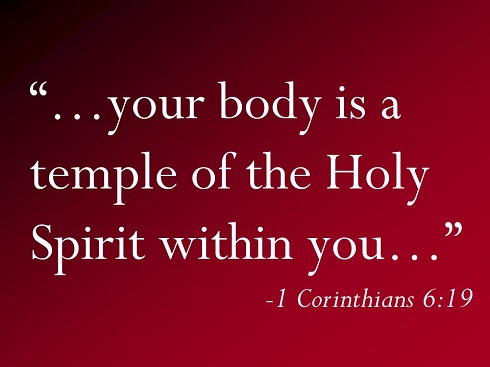
1 Corinthians 3:16,17 – Do you not know that you are the temple of God and that the Spirit of God dwells in you? If any man destroys the temple of God, God will destroy him, for the temple of God is holy, and that is what you are.
The Old Covenant days of the temple are over. According to the New Covenant, we are now God’s house the Spirit of God lives within us. So many people say the organized church is where God lives, but this verse tells us that God is more personal than that. God can no longer be contained within a building. We are His dwelling place.
The church is not God’s temple
Each one of us who are saved by grace are now the temple of God. It is so hard to get away from the thought that God is up there somewhere, or that we have to go to church and wait for God to show up. This kind of thinking is now obsolete.
These verses point out that the temple of God is holy, and that is what we are. We are His temple, and that makes us holy. Not by any works we have done or can do, but by the work that Christ has done. It is hard for us to accept the fact that in Christ, we are holy and righteous. We are kings and priests. We were sinners, but the old sin nature was crucified with Christ on the cross. It is now dead and we are new creatures in Him.
We are Holy and Righteous
We need to stop being so negative and depressed because we feel like we have let God down and unable to live a holy life. Actually, we cannot live a holy life, but God, through the grace of Christ, makes us holy. We are the righteousness of God. It is Him, Jesus our all in all, living in us.
Our spirit is now holy and righteous. Our mind is still being transformed and our body is still a work in progress, but thanks be to God, our spirit has been made perfect.
Let’s start focusing on the fact that God is right here within us through His Spirit. We do not have to go somewhere looking for Him, we do not have to wait for Him to show up. Right now, we are in His presence. He is the vine, we are the branches. Rest in Him and allow the Spirit to love those around you each day.
Jim Gordon and his wife left the institutional church after spending over fifty years within the system. Jim wanted a way to express his thoughts and concerns about the religious system and why he and his wife decided to leave the institution but not their faith in God. Jim can be contacted by email at: jimgordon731@gmail.com
It May Be Better to be Known for What They are For
by Jim Gordon
It seems that many Christian people are more known for what they are against rather than the good things of God they are for.
I am becoming increasingly aware of the fact that I do not want to be known as someone who is always against something. Whatever that may be, against this sin or that sin, this group or that group, against a particular denomination or Bible version, all the different ideas and subjects we can come up with that end up taking away our main focus, our love for Christ.
Be Known for Love
Jesus told us in the New Covenant that His commands were to love God and love others. We do not have to agree with everyone to love them. We obviously all have our convictions of right and wrong, yet we do not have to focus on those convictions or try to prove our reasoning to others. We are told to love others no matter what. We are not responsible for converting people, that is the Spirit’s job. We are told to love them.
When Jesus walked the earth, He did not spend a lot of time with the religious people. He was out with the sick, despised, neglected, and sinners of the day. Those who the religious people would not want to be around.
Obviously, God calls us to follow Him and that is going to be in different ways for each of us. Yet to spend more time arguing, condemning, trying to prove our interpretations of the Bible, pointing out people’s mistakes and shortcomings, does not help promote showing the love of God to others.
The Grace of Christ
When we begin to understand the freedom we have in Christ, and start living through grace that Christ provided, we can be free to love and accept all those we come in contact with each day. We can show them the love of Christ by allowing the Spirit to live through us.
We do not need to worry so much about who is right and who is wrong. Remember, do not always be against something. Be for Jesus. Be for love. Be for following Jesus daily by loving God and loving one another. Let Him be the central focus of your life and allow His love to flow out of you and touch those around you.
Jim Gordon and his wife left the institutional church after spending over fifty years within the system. Jim wanted a way to express his thoughts and concerns about the religious system and why he and his wife decided to leave the institution but not their faith in God. Jim can be contacted by email at: jimgordon731@gmail.com
Both the belief that God exist or doesn’t exist requires faith. Let’s not accuse those who put their faith in God as needing a crutch or accuse those who question the reality of an invisible God as being in denial or immoral. Those of any faith or religion must in politics, business, or friendships respectful convey rights to not believe in God or supposed biblical truths.
One Christian nation can’t exist
A “Christian nation” implies or requires all believe the same. This is a violation of God’s very nature. God created freedom of beliefs for the possibility of authentic relationships. A parent guides their children to freely make future choices hopefully for their benefit as well as for others. God would be a terrible terrorist or extremist since opposed to forcing personal beliefs on others.
But, didn’t God choose one nation under God such as with Israel in the Old Testament? God choose Israel as a mouthpiece to introduce God in the beginning, but God wanted to have a relationship with all nations (i.e. Gen. 12:3). Other nations could look to Israel to compare God against their gods. Jesus didn’t try to turn the Roman Empire into a Christian nation. Jesus taught that serving was more important than gaining power.
A free society isn’t an immoral society
We all have friends not into God that are moral, and we have Christians friends who seem closer to the devil than God. A society that doesn’t respect freedom to believe in God or not, seems destiny for tyranny. Most Christians think such freedom was given to us by our Creator.
So, everything goes! C’mon! Who doesn’t believe murder or physical or sexual abuse is wrong? We aren’t always certain how to best love, but most know that we ought to love others as we want to be loved. Different opinions on immigration, health care or taxes can stand side by side as we discuss the most loving approach.
Using the Bible as foundational truth
Christians give speeches or hold signs up at civil protests to argue we must follow “biblical truths” as a nation. This is a disregard for freedom of beliefs for all and ignores that differing biblical interpretations exist for major moral issues. See here. I can’t imagine Jesus holding up a sign. He simply spoke of and lived out caring for others. That is how you make policy.
Discussing what are biblical truths are more appropriate in a worship setting where all share the same beliefs about God. I am convinced though an open view as opposed to an inspired or inerrant view of Scriptures encourages more contemplating what a loving God is really like. And surely an inaudible Creator influences though our moral intuitions. Common, moral sense is not the enemy.
God and politics
The only way we can be a Christian nation is if all believe in God or at least forced to. We must not speak as if all must believe the same. We are fortunate to be able to freely to speak of influences in our life. When people ask what influences or motivates me, I talk about God’s presence in my life. That can be voiced in the public square as well. But our language must carefully respect the beliefs of others and not assume or insist on a belief in God. I believe as a God-follower that God can inspire unselfish motives but each must make that relational decision for themselves.
Mike Edwards has been writing for Done with Religion for some time and has been a great addition to the site. Mike also has his own site where he writes that can be found at What God May Really Be Like He can be contacted by email at: medwar2@gmail.com
We hear a lot about Christian Nationalism lately. I had never thought much about it before, but with all the talk about it in the news, it is quickly becoming a popular topic.
I have to say, I love my country. The United States is the only country on earth I would prefer to live in, although it certainly is not perfect. Yet the United States falls way short compared to the Kingdom of God.
The problem seems to be that we hear more and more about some Christian people wanting to get officials elected that will make laws and force supposed Christian values as laws of the land.
It seems many Christians are making more out of the kingdom of the United States than they are the Kingdom of God.
I recently read an article about a new bible called The God Bless the USA Bible, in which the constitution, bill of rights, declaration of independence, pledge of allegiance and the words to the song God Bless the USA are written inside. It also has an American flag on the front cover. No different than having a pastor or celebrity autograph a bible, putting a specific country’s national writings in the bible is no good and completely out of place.
For some reason, many of those involved in the Christian church seem to think that America is a Christian nation. They seem to think that America is God’s chosen nation and they need to force biblical values on everyone.
The fact is that America is not God’s chosen people. It is not a Christian nation, but made up of people from all faiths and religions. God does not just love the people of the United States, but God so loves the world. He loves all people, all nations, all faiths.
What happened to seek first the Kingdom of God? What happened to the teachings of Jesus in the Sermon on the Mount on how to live for God and how to treat others?
In Christian Nationalism, America itself seems to be the center of attention and hope for the world rather than Jesus. It seems to me that people are trying to make America into an idol and trying to force Christian precepts as the law of the land. This should not be.
It was extremely hard to watch the events of January 6 where people illegally stormed the Capitol of the United States and caused damage, injuries and even death. Even worse, many of them were carrying Christian flags, Christian slogans and were seen praying and thanking God for such an event. There certainly is no love in any of that, and no caring for others.
It seems many put more emphasis on political power in the United States and making Christian rule the law of the land than they do following the example of Jesus by loving all people and focusing on the Kingdom of God.
Jim Gordon and his wife left the institutional church after spending over fifty years within the system. Jim wanted a way to express his thoughts and concerns about the religious system and why he and his wife decided to leave the institution but not their faith in God. Jim can be contacted by email at: jimgordon731@gmail.com
Honestly, I don’t know all the reasons one may be more inclined to want a relationship with God. A belief or unbelief in God is hardly a personality flaw or makes one more or less moral. I grew up believing there was a Creator. I was also taught many views of God that I now hate. I have no idea why I didn’t rebel against the whole idea of a God as many understandably have.
We can’t prove God exists or doesn’t exist. Either belief requires faith. If a perfect, loving Creator does indeed exist, it seems intuitive that understanding perfect human love is how to understand God’s love. Are misunderstandings about God a hinderance to those inclined and wanting to feel closer to God? Since God doesn’t speak to most people, we can only discern what God is like by examining our moral intuitions, our consciences. We aren’t always certain how to best love, but most of us would agree we ought to love others as we want to be loved.
Understandings of God can shape attitudes
We can only be as close to God as our mental images of God allow. We may not pursue God more because we assume certain claims made about God are true, or God is like the poor role models we have had who claim to represent God. The God often portrayed by others condemns gay people, shows partiality toward men over women despite the history of men abusing power, and God supposedly created Hell to torture people after death if they don’t discover the right beliefs before death. Many claims about God just can’t be true if God is good. See here.
Why doesn’t God intervene more in suffering?
The problem of evil and suffering is a main reason people indicate why they don’t believe in a good God or can’t get close to God. A God who can prevent evil but doesn’t is no different than a parent who stands by and watches their child being physically or sexually abused. Answers like “everything happens for a reason” doesn’t suffice for many of us. Maybe even an all-powerful God can’t prevent evil that leads to so much suffering. If evil is some grand scheme God can control, why does the Bible say God hates evil so much. Does God hate God?
Controlling love is a contradiction in terms. God’s nature requires their love to be unselfish and other-empowering. God cannot fail to give freedom to others, including those who do horrific things to others. Absolute freedom is necessary for authenticity in relationships. We could accuse God of not creating the “most loving” world, if God wasn’t uncontrolling. There may be plausible moral reasons as to why evils exist and God doesn’t intervene.
Pursuing God despite challenges
Do you want to believe more in God? I am not sure there is anything to lose in beginning a journey of faith if the desire is to live life with fewer regrets. Personally, the biggest reason for being a God-follower is the inspiration and encouragement I sense in striving to be a better human being. If God is real, they should be able to make their case with each individual. Do examine if claims you believe about God are true. God must be a perfect lover, or they are a God not worth following. I am convinced the world is dependent on partnerships with God for a better future and world.
Mike Edwards has been writing for Done with Religion for some time and has been a great addition to the site. Mike also has his own site where he writes that can be found at What God May Really Be Like He can be contacted by email at: medwar2@gmail.com
“Give me that old-time religion. It is good enough for me. It was good for my old mother. And it’s good enough for me” – Old Time Religion by the Fisk Jubilee Singers
Religion (say it with me now). Dude, such a compacted noun! It’s been a platform for human interaction since the dawn of time. Oh the things that have been done with this word. You either love or hate religion. In many cases, people define religion as just one particular construct. I don’t think it’s that easy. When we look at the term, there are really three types of definitions: 1.) worship in a higher power, 2.) a belief system and 3.) secularism. All Peoples (Christian, Muslim, Jews, Atheists, Agnostics, American, Democrat, Republican, Black, White, LGBTQ, etc.) fit in these three definitions of religion in one form or another, in my opinion. Let’s look at these three definitions, shall we?
Worship In A Higher Power
Worship is a very interesting word when it comes to its usage of etymology. In a religious traditional sense, the ones who relate to God/gods through (not solely) sacred scripture (Torah, Christian bible, Quran, Vedas, etc.), the term worship boils down to various acts of homage. This can be demonstrated through “rites and rituals”: raising hands and singing through music, praying x amount of times per day, blood sacrifice, offerings, etc.
This is done in order that the God being worshiped will grant blessings, peace, bliss, etc. This is where it gets dicey. What if different religions don’t adhere to the same type of worship? History shows, the reaction to different worship in God leads to vicious boundary lines in which people who don’t tow them eventually get hurt or killed.
If we don’t conform we are doomed. This “controlling power” has been detrimental to our evolution as a species. All religions from every tradition have committed this monstrosity. “Might is right” or “survival of the fittest” (controlling power) is not how to live as a social structure. Jesus showed another way of doing worship: In spirit and in truth. His worship was internal to better understand the truth of reality–thus, bringing about outward action. It was also non-sacrificial. This way let’s go on becoming people who scapegoat our dark side onto the shedding of innocent blood. He said “deny yourself”, as in letting go of our ego (controlling power) which then will lead us to a healthy way of doing worship (which literally means “worth” or “adore”) to God AND creation (I.e. existence).
In other words, love each other and help the helpless for f sake! So does all the human race “adore” the cosmos? I would say the majority do in one way or another, indeed. This is where the term religion still plays an important part of bringing about a peaceful existence in the universe, in my opinion.
A Belief System
Putting trust in a way of seeing the world can be a very productive instrument within a community setting. As the individual seeks out paradigm shifts and inner contemplation, this will enable her/him to progress in a social setting. Education, careers, sports, church, family, etc. all are wrapped in how the individual trusts in what he or she is pursuing. No matter what discipline we take on, faith in “the process” takes shape and becomes our mode of being.
The downfall to this thinking is believing that our faith system trumps another’s faith system. This brings about endless contention that leads to factionalism. This is most destructive when a faith system becomes the ideology of a country. This is where lives are lost in the name of civil religion. We can’t take it if someone else’s beliefs are different from ours so we put up barriers and blockades: KEEP OUT! We will never learn from each other if we cast out one another for not thinking the same way. We need to learn to become a community that is united in its diversity if we ever want to thrive as a species.
Jesus hung out with the outcasts and the prestige of society. He spoke truth into both spectrums. His belief system offended and healed. But, no matter what, he didn’t let his beliefs get in the way of interaction with others who didn’t see eye to eye.Is it good to have a faith system? Yes! It’s whether or not we let our faith systems be measuring sticks to cast out others or let them be beacons to help others when they need it most.
Secularism
Where do we find the most interest/importance in? Sports? Family? Church? Career? Friends? Parting? Drugs? Sex? The list goes on and on in the world of secularism. What we put our interest in, really shapes our day-to-day experience with others. If we get caught up in an interest that leads to positive streams of progression and stability, that’s great! But even that can turn sour if that is only helping us and nobody else. Same is true for interests that don’t help oneself or others. This leads only to death and destruction. It takes great wisdom to find an interest that really provides growth and joy for all parties in one’s life. So, what interest is best?
In his book: Seculosity, author David Zahl put it this way:
“The objects of our seculosity—food, romance, education, children, technology, and so on—aren’t somehow bad. Quite the opposite—they are by and large great. It’s only when we lean on these things for enoughness, when we co-opt them for our self-justification or make them into arbiters of salvation itself, that they turn toxic…
Poking fun at our secular pieties, including my own, is part of disarming them.” Pg. xxiii introduction-Seculosity
That’s it! Seeing our sense of humor as important helps us not to take our interests so seriously. We have to realize that we are all connected in one way or another. This isn’t only true for the human race but for all of Gods creation. To the smallest molecule to the humpback whale, what one does and invests in, has and effect on all. Does our interest bring life or death (dramatic I know)? It really does come down to that simple question. Or this one (better question): “For what shall it profit a man, if he gain the whole world, and suffer the loss of his soul?”
***
So, is religion evil? It can be. Is religion good? It can be. Regardless, we cannot deny that religion is ingrained in us as a species to better understand and create our reality. I think we can’t cast it out or just let it be that same old-time religion it always has been. We need to explore, progress, and hold onto whatever this religion “thing” has to offer. I think something new awaits! This is where healthy religion shines—where laughter springs out of the wallows and we become liberated from our driery selves…
Alan Watts said it best:
“A priest once quoted to me the Roman saying that a religion is dead when the priests laugh at each other across the altar. I always laugh at the altar, be it Christian, Hindu, or Buddhist, because real religion is the transformation of anxiety into laughter”.
Jordan Hathcock began writing as a regular guest blogger and has been a great addition to the site. He also writes at his own site called Hazy Divinity He can be contacted by email at: jrhathcockss@gmail.com
Helping Survivors is on a mission to help heal, educate, and empower people who have been impacted by sexual abuse, assault, or harassment. We are a passionate group of experts and advocates who believe individuals who have experienced sexual assault, abuse, or harassment deserve to know their rights and options.
If you are in crisis and need support
call the Trevor Lifeline
at 1-866-488-7386
Undue Medical Debt
Undue Medical Debt empowers donors to forgive billions in oppressive medical debt. We are dedicated to removing the burden of medical debt for individuals, families and veterans across America. Click HERE to donate now.
Doctors Without Borders help people worldwide where the need is greatest, delivering emergency medical aid to people affected by conflict, epidemics, disasters or exclusion from health care. Help support us by making a donation here:
Wishes are more than just a nice thing, they can be a game-changer for a child with a life-threatening medical condition. We grant the wishes of children with life-threatening medical conditions to enrich the human experience with hope, strength and joy. To make a donation click here:













 Done with Religion