Feeds:
Posts
Comments

Archive for the ‘Love of God’ Category

Nine Church traditions that need to die
by Dan Foster , Guest Blogger
(Regularly writes at medium.com)

Growing up as Pastor’s kid in the eighties gave me a front row pew to the kind of vitriol and anger that can emerge from an otherwise lovely and mild-mannered Christian when you say or do something to offend them.

I remember the first time my Father preached a sermon on the topic of sex — something quite ground-breaking at the time. After the service, he stood at the door and greeted everyone as he always did. I remember one little old lady getting right up in my Dad’s face and, waving one pointed finger perilously close to his nose, screeching at him, “If you ever mention ‘that word’ in church again, I’m never coming back.” She couldn’t even bring herself to say the word “sex,” because I suppose she was far too upright and pious for the likes of anything slightly pleasurable or necessary for the survival of the human race.

Photo by Daniel Tseng on Unsplash

My father was a great pastor, but he was ahead of his time. He like to challenge the status quo, make people shift uncomfortably in their pews and, occasionally, he like to slaughter a sacred cow.

The term, “sacred cow,” has its origins in Hinduism, but it is commonly used in Christian circles to describe those elements of church life that have been elevated to such a high level of importance that they cannot be touched, criticized, changed or removed. Above all, sacred cows are not essential to the fundamentals of Christianity, but people treat them as if they are. In fact — truth be told — if you got rid of them, the church would function just as effectively — probably even more so.

Over three decades in the Evangelical church I have done a fair bit of cow spotting. Here are a few common sacred cows that need to be put out to pasture — maybe even slaughtered completely:

The Offering

One of the most awkward parts of many a church service is the moment that an open offering plate is thrust under your nose by an eager and expectant church usher (usually an older man), with the expectation that you will put a wad of hundred dollar bills in it. Okay… so maybe not that much, but the pressure to give is real.

This uncomfortable tradition of ‘sending around the plate’ is usually prefaced by an ‘offering talk’ (that is sometimes almost as long as the sermon itself), where parishioners are exhorted to let the moths out of their purses and fill the coffers of the church for the good of the Kingdom. In the worst of cases, some churches insinuate or even promise that your financial gifts will somehow unlock the blessing of God over your life — as if God could somehow be bought off in such a way. This amounts to nothing more than manipulation.

Should we give? Yes! Christ calls us to be generous and to give to those in need. However, we are also told to give discreetly and without fanfare. In fact, the Bible says, “Each one of us should give what we have decided in our heart to give. We should not give if it makes you unhappy or if we feel forced to give. God loves those who are happy to give.”

Image for post
Photo by By Suzanne Tucker on Shutterstock — purchased with license

The Communion Table

I know of a worship leader who made the mistake of resting his guitar up against the communion table at the end of his worship set. The backlash was swift and brutal. The pastor’s inbox was full of complaints about the irreverence of the worship leader. How dare he use the table of the Lord to rest a common musical instrument up against!

True to its form, the church publicly humiliated the worship leader by making him get up on stage an apologize to everyone for his gross sacrilege. He left the church soon after. Good for him!

I heard of another pastor who moved the communion table from the center of the stage to a position off to one side, simply to create a little more space. The pastor was accused of attacking the centrality of the Lord’s supper, leading people astray and presenting a ‘watered-down’ version of Christianity. The following week, the communion table was back in the middle of the stage. From then on, the pastor would move the table just a few inches each week and, over a period of several months, successfully moved it back to one side without anyone noticing.

In some churches, the communion table is a scared cow. In reality it’s just a piece of ordinary furniture. Covering it in a nice white table cloth doesn’t make it sacred. Even the fact that the elements of the Lord’s supper sit on top of it doesn’t make it sacred. In fact, to place such high importance on an inanimate object would be akin to making an idol out of it, wouldn’t it?

Image for post
Photo by Joshua Eckstein on Unsplash

Church Music

One of the sacred cows that my father was unable to kill, when he was a pastor, was the pipe organ. The church had an ancient pipe organ that was so seldom used that it was almost purely ornamental. I’m pretty sure that the last human being who actually knew how to play it had passed away a few centuries earlier. Even so, when the church outgrew its ancient building and attempted to shift the congregation into a bigger and more modern facility, they were unable to part ways with the pipe organ. Consequently, at great expense, the entire organ was painstakingly removed from the old sanctuary and transplanted into the new. There it sits as an ancient monument to a bygone era, gathering dust. It sticks out like a sore thumb.

This highlighted to me how we can get attached to certain instruments, styles of worship — even certain songs — to the point of elevating them to god-like status. Music is one of the most-complained-about aspects of church. Every week someone would say the music was too loud, too soft, too fast or too slow. They would complain that the number of old hymns was disproportionate to the amount of modern worship songs. They would say that certain songs lacked lyrical content, theological accuracy or a catchy riff. When it comes to the sacred cow of music, Christians can fire up very quickly.

However, we weren’t even commanded to gather around an organ and sing, were we? Singing is really just one way to worship. It’s not the be-all-and-end-all. These days, my favorite way to worship is actually to sit in silent contemplation. Try that sometime!

Image for post
Photo by Tim Gouw on Unsplash

Male-dominated church leadership

Once upon a time, the idea that power and leadership was ascribed to men by virtue of their gender alone was widely accepted. In some cultures it still is. However, as the modern, Western world continues its relentless and necessary march towards equality, patriarchal structures and systems are quite rightly viewed as unacceptable and outdated. Still, those who stand to lose the most by the deconstruction of patriarchal systems — namely conservative men — won’t go down without a fight. Nowhere is this more evident than in the church, when some men will fight tooth and nail to protect their turf.

A woman can be the leader of my country, but she can’t be a leader in many local churches. That’s because many Christian churches ascribe to a form of “benevolent patriarchy” commonly known as Complementarianism. This belief gives men the role of authority over the wife and children, and only allows men to be church leaders. Women are expected to submit unilaterally to men, fathers, husbands, pastors.

I remember the very last time I attended a board meeting at my conservative, evangelical church. The group — all men of course — had gathered, and a decision needed to be made that required some legal advice.

“What a pity we don’t have any lawyers who come to our church that we can refer to for this matter,” Said one of the board members.

“My wife is a lawyer,” I spoke up.

“True,” replied the board member, “What a shame she is the wrong gender.”

And the rest of the men chuckled knowingly.

We ought to be disturbed when it is suggested that those absent of male genitals must unilaterally submit and defer to those with.

Image for post
Photo by Lisa F. Young on Shutterstock — purchased with license

Church and politics

Many Christians are uncomfortable with the marriage that seems to exist between the church and the conservative side of politics. It is a well established fact that white, evangelical protestant Christians overwhelmingly support Donald Trump and his presidency to the point where “Evangelical Christian” has become a kind of synonym for “Trump Supporter.”

The idea that Jesus is somehow on the side of the Republican Party is laughable. If Jesus is on anyone’s side, it’s the side of the orphan, the widow, the refugee, the poor, the lost, the hurting and the weak.

In my home country, Australia, I believe that the more progressive political parties often have ideas more aligned with the compassion and grace that Christianity is supposed to espouse, particularly in matters pertaining to welfare, foreign aid, equality, asylum seekers and the environment. Yet, it is kind of an unwritten rule that Christians should vote for the conservatives.

Yes, I have had friends walk away from the church because they can’t reconcile why the church supports political parties that turn away the refugee and oppress the minority.

Image for post
Photo by ehrlif on iStockphoto — purchased with license

The Building

Let’s be clear. The Bible never mentions a building called ‘Church.’ Never. In fact, the Bible never speaks of church in those terms. The buildings came later when the state got a hold of the church, under Roman Emperor Constantine in 312 AD.

On the other hand, Jesus said where two or three are gathered He is present. Two or three — not 40 or 150 or 6,000. Not in an auditorium with a speaker, a band and dozens of rows of chairs. When Jesus spoke about the church, he was talking about people. People are the building blocks of church, not bricks and mortar. That is why church began in the humble homes of believers and that is why church can still continue in the humble homes of believers even as we are forced apart on occasions such as global pandemics.

Jesus never instructed believers to buy land, build buildings, establish a weekly worship service, create a liturgy or institute a sacrament. He simply commanded believers not to forget Him; to live together, and to eat, and to remember. A building is not needed. It might be helpful, sure. But real Christianity is a fully portable experience.

Image for post
Photo by Skull Kat on Unsplash

Children’s Sunday School

At various times in the Gospels, Jesus’s disciples are seen to try to keep children away from Jesus, because Jesus was — in their opinion — far too busy and important for kids. Yet, in Matthew 18:10, Jesus commands us not to look down on children, but to welcome them.

Therefore, it strikes me as odd that many churches segregate children to some far-removed corner of the church property so that the adults can worship God in peace and quiet. Here, during an hour of glorified babysitting, we teach children to be good little boys and girls. We teach them to be nice, obedient and compliant.

Now, don’t get me wrong. I’m not saying there isn’t a place for children’s Sunday School lessons, but I think the whole system needs an overhaul. Better yet, here’s an idea. How about we design worship services that are inter-generationally friendly so that we can all participate together? We ought to stop patronizing children, and start to treat them as people who have a things that they can teach us, and meaningful contributions they can make.

No wonder my kids found church so boring, because — let’s be honest — young people are drawn to risk, challenge and adventure, but these things are often discouraged in the local church. Instead, many congregations offer a safe, nurturing community — an oasis of stability and predictability. Studies show that women and seniors gravitate toward these things. So not surprisingly such congregations are over-represented with women and seniors.

Richard Rohr, in his book, “From Wild Man to Wise Man,” says it like this:

“Real spirituality should emphasize movement over stillness, action over theory, service to the world over religious discussions, speaking the truth over social niceties, and doing justice instead of self-serving. Without this, spirituality becomes characterized by too much inwardness, a morass of unclarified feelings, and religion itself as a security blanket. This prevents a journey to anyplace new, and fosters a constant protecting of the old. It is a no-risk religion, just the opposite of Abraham, Moses, Paul and Jesus…”

As long as we present the Christian faith, inaccurately, as something less than the great, challenging, risky, dangerous, treacherous adventure that it was meant to be, we sell out. And children will find their adventure elsewhere.

Image for post
Photo by Samantha Sophia on Unsplash

Pews

In the small village of Okeford Ftizpaine in South West England, locals are up in arms after their parish church made the decision to sell off their 150-year-old, antique Victorian-era wooden pews.

As comfortable as old wooden pews are, I would not personally object being able to sit on something more modern and easy-on-the-backside, especially during the weekly sermon by the local vicar.

Not the people of Okeford Fitzpaine, though. They would rather keep their old pews. However, it turns out the removal of these ancient bench seats is rather a matter of necessity as the sanctuary requires more flexible furnishings to allow space for people who are… how do you say it nicely? More rotund than the average human.

A recent report by the church committee concluded: “We have had occasions at weddings where the couple have been too large to be able to walk side by side down the aisle. With different chairs we would be able to widen the aisle.” They also added that the the pews were not suited to the “human form of today” — presumably that means the larger human form.

Even so, it beats me how a church community could somehow think that uncomfortable, 150-year-old wooden pews were so essential to church life that they are worth fighting for — as if single chairs might somehow the instruments of Satan.

Burn the pews, I say!

And while we are at it, let’s get rid of rows all together. I say that because rows divide and differentiate. Rows promote the consumerist mindset. Rows promote the brainless acceptance of information without critique. Rows perpetuate the hierarchical model that places an expert up the front to mediate between us and God. How about we meet in circles instead — around tables even? Tables invite connection. Tables invite conversation. Tables invite friendship.

Image for post
Photo by Kyler Nixon on Unsplash

Marriage

In 2017, the satirical Christian website Babylon Bee published an article entitled, “Woman In Singles’ Ministry Gets Married, Promoted To Real Christian.” The article gently pokes fun at the idea that getting married is basically a ‘level up’ in Christian circles.

The reality is that the popular view of our day is that singleness is a bad position and marriage will cure it — that being single is not sufficient, not adequate. It’s something you need to change because it’s wrong. And, if this is the popular view in our society, you can bet your bottom dollar that it’s the popular view in the church. At first, we make fun of single people (mainly while they are young), but only for a while. As they get older, we begin to wonder what’s wrong with them. Are their standards too high? Eventually, we end up pitying them, as if they were destined for a miserable life.

Somehow, we arrived at the idea — the myth — that singleness is bad. It’s the reason my Mum started suggesting suitable partners for me as soon as I turned 18. It’s the reason why I signed up to a dating website when I was in my early 20s. It’s the reason why people in the church ask, “So, when are you gonna find yourself a nice girl?” It’s the reason why half of you are trying to match-make for your single friends. Christian are often guilty of treating singleness like it’s a problem that needs to be solved — despite the fact that Jesus and the Apostle Paul were single men.

In fact, the Apostle Paul comes along in 1 Corinthians 7 and lifts up singleness as a legitimate way to live, in a way that would have shocked the world in which they lived at the time. Suddenly Paul is calling singleness a gift. A gift! Imagine that! In so doing, Christianity was the first religion that held up singleness as good. So, the church ought to quit making it out like married Christians are on a higher level, somehow.

Image for post
Photo by Richard Jaimes on Unsplash

It’s time to kill the sacred cows

Call me a heretic if you like, but I don’t think that Jesus is impressed by our attempts to clutch at power, to elevate some and to put others ‘in their place,’ to resist change, preserve the status quo and uphold ancient practices and models that are superfluous to the fundamentals of Christianity.

And I really don’t think that Jesus cares too much about the form of our worship — our buildings, our furniture, our music, and our religious traditions.

So, why do we elevate these things to such a high position that we would be willing to fight over it? I’ve seen churches split, people hurt and relationships destroyed over these trivial matters.

They are sacred cows! Now let’s slaughter them!

Read Full Post »

by Jim Gordon

Many of us go through life with a very low opinion of ourselves. Often it is due to what we hear others say about us. What actually is our identity in this world? Many of us as christians are told that we are just poor sinners saved by grace and that we are no more than a worm deserving of hell.

Yet Jesus has something very different to say. It is time to ignore what people tell us we are based on beliefs, or a label we wear or for whatever reason people come up with and listen to what is written in the bible. Stop listening to others and focus on what Jesus tells us we are. Following are some verses that tell us what we are in Christ:

But to all who did receive him, who believed in his name, he gave the right to become children of God (John 1:12)

Henceforth I call you not servants; for the servant knoweth not what his lord doeth: but I have called you friends; for all things that I have heard of my Father I have made known unto you. (John 15:15)

Therefore, since we have been justified by faith, we have peace with God through our Lord Jesus Christ. (Romans 5:1)

For if, by the trespass of the one man, death reigned through that one man, how much more will those who receive God’s abundant provision of grace and of the gift of righteousness reign in life through the one man, Jesus Christ! (Romans 5:17)

For we know that our old self was crucified with him so that the body ruled by sin might be done away with, that we should no longer be slaves to sin (Romans 6:6)

Even so consider yourselves to be dead to sin, but alive to God in Christ Jesus. (Romans 6:11)

For the law of the Spirit of life in Christ Jesus hath made me free from the law of sin and death. (Romans 8:2)

No, in all these things we are more than conquerors through him who loved us. (Romans 8:37)

For who has known the mind of the Lord, that he will instruct Him? But we have the mind of Christ. (1 Corinthians 2:16)

Do you not know that you are God’s temple and that God’s Spirit dwells in you? (1 Corinthians 3:16)

Or do you not know that your body is a temple of the Holy Spirit who is in you, whom you have from God, and that you are not your own?  (1 Corinthians 6:19)

Now you are the body of Christ and individually members of it. (1 Corinthians 12:27)

Now thanks be to God who always leads us in triumph in Christ, and through us [a]diffuses the fragrance of His knowledge in every place. (2 Corinthians 2:14)

Therefore, if anyone is in Christ, he is a new creation. The old has passed away; behold, the new has come.  (2 Corinthians 5:17)

Therefore, we are ambassadors for Christ, as though God were making an appeal through us; we beg you on behalf of Christ, be reconciled to God (2 Corinthians 5:20)

For he hath made him to be sin for us, who knew no sin; that we might be made the righteousness of God in him (2 Corinthians 5:21)

I have been crucified with Christ. It is no longer I who live, but Christ who lives in me. And the life I now live in the flesh I live by faith in the Son of God, who loved me and gave himself for me (Galatians 2:20)

Christ redeemed us from the curse of the Law, having become a curse for us—for it is written, “Cursed is everyone who hangs on a tree (Galatians 3:13)

There is neither Jew nor Greek, there is neither slave nor free man, there is neither male nor female; for you are all one in Christ Jesus (Galatians 3:28)

So you are no longer a slave, but God’s child; and since you are his child, God has made you also an heir (Galatians 4:7)

Even as he chose us in him before the foundation of the world, that we should be holy and blameless before him.  (Ephesians 1:4)

In whom we have redemption through his blood, the forgiveness of sins, according to the riches of his grace (Ephesians 1:7)

But God, being rich in mercy, because of His great love with which He loved us, even when we were dead in our transgressions, made us alive together with Christ (by grace you have been saved), and raised us up with Him, and seated us with Him in the heavenly places in Christ Jesus (Ephesians 2:4-6)

For we are his workmanship, created in Christ Jesus unto good works, which God hath before ordained that we should walk in them. (Ephesians 2:10)

And to put on the new self, created after the likeness of God in true righteousness and holiness. (Ephesians 4:24)

I can do all things through Christ who strengthens me (Philippians 4:13)

Who hath delivered us from the power of darkness, and hath translated us into the kingdom of his dear Son (Colossians 1:13)

He has now reconciled in his body of flesh by his death, in order to present you holy and blameless and above reproach before him (Colossians 1:22)

And ye are complete in him, which is the head of all principality and power (Colossians 2:10)

We have been set apart as holy because Jesus Christ did what God wanted him to do by sacrificing his body once and for all (Hebrews 10:10)

You yourselves like living stones are being built up as a spiritual house, to be a holy priesthood, to offer spiritual sacrifices acceptable to God through Jesus Christ. (1 Peter 2:5)

But you are a chosen race, a royal priesthood, a holy nation, a people for God’s own possession, so that you may proclaim the excellencies of Him who has called you out of darkness into His marvelous light (1 Peter 2:9)

Read Full Post »

by Jim Gordon

If you have grown up in the organized church system and later change your views, what do you do with all your all friends who are still in the system?

Sometimes the first thought is to separate from them. They no longer understand you so why be a part of them?

To this I say that the bible says to forsake not the assembling of yourselves together. I do not believe that means we need to stay a part of an organized church and attend their meetings. I feel it means we still need our brothers and sisters in Christ. This is not done through a Christian organization on a certain day of the week. How much fellowship can we really have sitting in an organized service listening to one person do all the talking?

We need a daily interaction with believers for encouragement, strength, prayer support, helping others and sharing the love of God to lift one another up. We need communion with other believers, and not necessarily always about spiritual things. Just good old fellowship and communication on a number of topics: spiritual, our various concerns and needs, funny things and basic conversation.

I honestly feel we should not separate ourselves from those who think differently from us, but sometimes it cannot be helped because they will cut us off. They tend to think we have lost our faith or have fallen under the lies of the devil.

When my wife and I left the organized church, we did not leave God. We still believe in Jesus, in loving God and loving others. We love our brothers and sisters who are still in the organization and believe we still need each other.

We do need to get past the us versus them mentality and accept one another whether we attend a religious organization or not.

If they feel we have lost our faith or walked away from God, it does not mean they are our enemy. We are still to love them and do our best to get along and support them. If they choose to stay away from us, there is nothing we can do about that, but we cannot write them off and forget them. We still love them, pray for them, and go on with our lives sharing the love of God with them any everyone we meet.

Read Full Post »

by Jim Gordon

Just a few verses from the bible that put emphasis on what we are called to do, and that is love one another. Does not mean we always agree, does not mean we do not have different views and opinions. Yet we can accept one another, grant the same equal rights, respect and human dignity to everyone through love.

Notice these verses do not say this pertains only to those who think the same, look the same, believe the same or worship the same. It applies to all human beings no matter what label they wear, such as man/woman, black/white, gay/straight, democrat/republican, no matter what nationality, no matter what religion, gender or race. We are only called to love one another.

Matthew 5:44

But I say to you, love your enemies and pray for those who persecute you

Matthew 22:37-40

And he said to him, You shall love the Lord your God with all your heart and with all your soul and with all your mind. This is the great and first commandment. And a second is like it: You shall love your neighbor as yourself. On these two commandments depend all the Law and the Prophets.

Mark 12:30,31

Love the Lord your God with all your heart and with all your soul and with all your mind and with all your strength. The second is this: You shall love your neighbor as yourself. There is no other commandment greater than these.

John 13:34-35

A new command I give you: Love one another. As I have loved you, so you must love one another. By this everyone will know that you are my disciples, if you love one another.

John 15:12

My command is this: Love each other as I have loved you.

John 15:17

These things I command you, so that you will love one another.

Romans 13:8-10

Owe no one anything, except to love each other, for the one who loves another has fulfilled the law. For the commandments, You shall not commit adultery, You shall not murder, You shall not steal, You shall not covet, and any other commandment, are summed up in this word: You shall love your neighbor as yourself. Love does no wrong to a neighbor; therefore love is the fulfilling of the law.

1 Corinthians 10:24

Let no one seek his own good, but the good of his neighbor.

1 Corinthians 13:4-8

Love is patient, love is kind. It does not envy, it does not boast, it is not proud. It does not dishonor others, it is not self-seeking, it is not easily angered, it keeps no record of wrongs. Love does not delight in evil but rejoices with the truth. It always protects, always trusts, always hopes, always perseveres. Love never fails. But where there are prophecies, they will cease; where there are tongues, they will be stilled; where there is knowledge, it will pass away.

1 Corinthians 13:13

So now faith, hope, and love abide, these three; but the greatest of these is love.

1 Corinthians 16:14

Let all that you do be done in love.

Galatians 5:13

For you were called to freedom, brothers. Only do not use your freedom as an opportunity for the flesh, but through love serve one another.

Ephesians 4:2

With all humility and gentleness, with patience, bearing with one another in love

2 Thessalonians 1:3

We ought always to give thanks to God for you, brothers, as is right, because your faith is growing abundantly, and the love of every one of you for one another is increasing.

Hebrews 10:24

And let us consider how to stir up one another to love and good works

1 Peter 1:22

Having purified your souls by your obedience to the truth for a sincere brotherly love, love one another earnestly from a pure heart

1 John 3:11

For this is the message that you have heard from the beginning, that we should love one another.

1 John 3:14

We know that we have passed from death to life, because we love each other. Anyone who does not love remains in death.

1 John 3:23

And this is his commandment, that we believe in the name of his Son Jesus Christ and love one another, just as he has commanded us

1 John 4:7, 8

Beloved, let us love one another, for love is from God, and whoever loves has been born of God and knows God. Anyone who does not love does not know God, because God is love.

1 John 4:11

Beloved, if God so loved us, we also ought to love one another.

1 John 4:12

No one has ever seen God; if we love one another, God abides in us and his love is perfected in us.

1 John 4:16

So we have come to know and to believe the love that God has for us. God is love, and whoever abides in love abides in God, and God abides in him.

1 John 4:19,20,21

We love because he first loved us. Whoever claims to love God yet hates a brother or sister is a liar. For whoever does not love their brother and sister, whom they have seen, cannot love God, whom they have not seen. And this commandment we have from him: whoever loves God must also love his brother.

2 John 1:5

And now I ask you, dear lady—not as though I were writing you a new commandment, but the one we have had from the beginning—that we love one another.

Read Full Post »

by Jim Gordon

Many people wonder if Christianity and politics can actually exist together. It seems that Jesus really had no real interest in the political system of his day, yet he also did not condemn it. He said to render unto Caesar the things that are Caesar’s and unto God the things that are God’s.

In our day and age politics can be a powerful thing and many people find it extremely important. No matter what country you live in it is controlled by a political party in one way or another. Many countries, like the United States participate in free elections and others are under more of a dictatorship. Either way, we humans are all under some type of political influence and control.

I find that coming from a Christian viewpoint it seems many Christian people in the United States feel that if you are a Christian you have to be a republican. Personally, the way I feel about politics I really do not care which political party a person belongs too. Unfortunately, I really do not see much of the ways of Jesus in either of our main political parties. It seems politicians are more concerned on political power and financial gain rather than on serving the people and making things better for all.

When I vote, I try to vote for the person I feel will do that best job for the most people and I do not worry which political party they belong too. I know there are many politicians who are of the Christian faith, yet there are also many who only use Christianity to get more votes.

Truthfully, being a Christian has nothing to do with a political party. Those of us who are followers of Christ live every day by our faith which involves every aspect of living. Our faith in God is not a Sunday only thing or a political thing. Many people seem to think they have a spiritual life on Sunday and a secular and political life the rest of the week. Yet the truth is we are the temple of the Holy Spirit and we walk with the Spirit of God each and every day. Everything we do can be considered spiritual because God is within us all the time.

Many people seem to think we can use political power to force our Christian values on everyone. I for one do not believe we should or can legislate Christian values and morality on anyone. God does not force his love and ways on us, so why should we try to force our values and beliefs on others. Only by the power of the Spirit living within us can righteous living and loving others be accomplished.

Jesus was obviously more interested in speaking of and teaching about the kingdom he was a part of, the Kingdom of Heaven. He was not nearly as worried or concerned about worldly kingdoms or political powers.

I would love to see people stop bringing Christianity down to a political purpose. Focus on Christ and loving others no matter which political party they endorse, if any. Politics is not the answer and is not worth all the fighting and arguing over. Loving God and loving one another is a much more important and meaningful way of life.

Read Full Post »

by Jim Gordon

This article is written to those of us who live in the USA. Here in the United States it is a time in history when things seem to get pretty weird. Currently we are in a presidential election year and that can cause a lot of chaos in itself. Then we have a lot of other important issues going on that just makes things a little crazy.

Things can certainly get strange. It seems politics (and money) can make people do things and say things they normally would not do and say.

For me, politics is not an interest. I feel it is a divider and causes disagreements and many times can cause the loss of friendships. It usually does not bring people together other than those who are in favor of the same politician or party.

One important thing we need to remember is that no one person and no one political party will be the answer to all our problems. We all have our opinions and views and we are all entitled to have them and express them. The problem is when we cannot accept opinions and views that are different from ours.

Thinking back to the tragedy of 9/11, and I would never want something like that to happen again but right after that happened, I can remember the unity that was felt here in the USA. People seemed to forget their differences and they united under a common cause. If we could only unite together as fellow human beings and not put so much importance on our different political views, what a difference there would be in our country.

There are certainly many issues going on and many issues that need to be dealt with and changed. I believe that not much will happen until we can unite in the fact that we are all human beings who want the best for our country, our families and ourselves. Though we will never all agree, we need to strive to work together in a way that will cause change where needed and bring people together to work for the good of all.

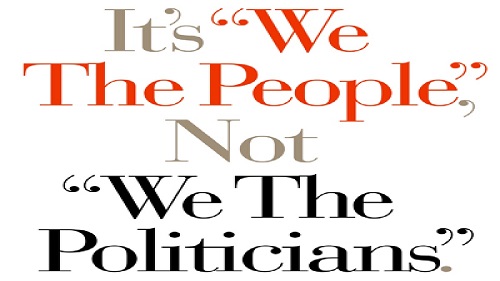
Fighting over which politician or which political party is best and will do the best job is not going to bring the unity we need to make the necessary changes. No politician is going to fight for the people without us, the people holding them accountable. They will fight for what is best for them and what is best for their party, but we need to work together to force them to do what is best for us, the people of the United States of America.

Read Full Post »

by Jordan Hathcock

When we haven’t earned the right with our blood, sweat, tears, and time, truth-telling is most often received as judgment. Jared Byas

What a no holds barred match of viewpoints we find ourselves in, within our current culture climate. With so many voices being echoed through all available chambers—social media being the main sphere—how do we know truth? Beats me (haha). But I do believe there is something to an experiential encounter with a “quality or state of being true”, that holds more tangible weight than other voices. In other words, how does our experiences inform us about whether or not an specific idea or act is the actual essence of truth?

Maybe by “walking in another’s shoes”, we reach a firmer grasp on what is true or false? Look, I get the importance of doing your own research and the importance of peer reviewed articles. We read articles, try to have an open mind, listen to experts (a lot of conspiracy with this at the moment…good lord), and attempt to listen to both sides. This is good advice and has helped me tremendously. But I cannot help to hear the saying of Jesus: “Love your neighbor as yourself” when trying to pursue *the* truth. Yes, we can’t forget the other saying of Jesus: “I am the truth”. Amen! But you know we are part of his body so we can’t dodge the responsibility of being part of that truth ourselves. To embody a reality of authentic truth, we get there by self-giving love. And to love is to put ourselves in other’s perspectives, which in turn, enable us to “see and hear” the truth that sets us ALL free.

Don’t get me wrong. Critical thinking skills are needed to get us to a place of factual analysis (Critical Theory for example). The point of any cognitive critique is to bring in a set of ideas and push them to the forefront of discovery. These are all good and much needed steps to find truth. What I am proposing is when we are pursuing the truth we must do it in love. Yes yes yes; love love love is all we need, blah blah blah. Listen (or read? hehe) here, alright?! The only love I am talking about is the love that “lays down her life for a friend”. Capeesh?

This love is a movement of action where all eyes can see. Or, how Dr. Cornel West puts it: “Justice is what love looks like in public”. Speaking truth to power is the gateway of experiencing healing and liberating truth. This is the gospel that Jesus preached. He was “living” this truth, no matter what the cost. It’s an inner truth that Jesus couldn’t deny. Folk rock band The Avett Brothers songTell the Truth say (sing?) it best:

Tell the truth to yourself and the rest will fall in place

I can make my mother, my father, my sister, my brother, my lover, my neighbor, my friends all happy

Give of myself whatever they ask

But without this single truth it is only emptiness that I cast

A happiness that will not last

But I’m not here for that for what does happiness help without this single truth given to thyself

Tell the truth to yourself and the rest will fall in place

When we come to a point of a moment of truth, we must embrace the love of self and others to really accept it. Inner truth always will pour out onto others. Hear me out on this: This isn’t the same as weaponized truth, where we just have our weapon of choice—locked and loaded—ready to beat the shit out of any who dare not to comply to our truth claims. I believe we have come to a point in our current social dialogue that all we want to hear is our reasoning biases in the voice of the other. If it isn’t there, bombs away!

We all should be passionate and prophetic when we are looking to carry out our truths to implement change. A little anger helps but when it is the most thundering sound and drowns out love, that’s when we get nowhere. Yes, we need to hear the voices of the oppressed, the sick, and the poor at this current time of history (and all of history past). I mean, this is what Jesus did all day long during his ministry. But we cannot forget how he redeems, reconciles, and resurrects it all: By a cross of forgiveness and love. Author and podcaster Jared Byas says it like this:

We live our lives feeling that there is a tension between truth and love. But there’s only a tension if we believe truth and love are equals and opposites. They are not. Love is the bottom line. When we pursue a life of love, we will find truth along the way. When we pursue truth, we do not always find love along the way. When Jesus tells us the greatest commandment, it’s not truth-telling, it’s not fact-based, it’s not doctrinal. It’s love.

So, can we really know truth? Yes and no. But we definitely will never get there if we do not show the love, people! What if truth is not a belief to be held but an experience to be shared? I like that possibility. Let’s step into that realm of trusting love and see where The Truth leads…

As for knowledge, it will come to an end. For we know only in part. For love is the end. — 1 Corinthians 13:8-9,13

Read Full Post »

by Jim Gordon

So many followers of Christ today live like they are under the old covenant. Most traditional churches seem to place more emphasis on the old covenant and rule following.

We have been brought up in the religious system that seems more like a corporation rather than a community where the priesthood of all believers should be the norm. The church has a pastor, elders and deacons just like a corporation has a CEO, board of directors and operating committee.

We still have the mind-set that we are living in the old way of doing things. A lot of us still think the church is a building we gather in and listen to a ‘chosen few’ tell us what God is saying.

We tell each other to ‘have a good Lord’s day’, thinking Sunday is the chosen day to set aside to worship God and to rest.

We look to the bible like it is part of the trinity and we worship it and use it for all kinds of rule keeping, judging and condemning others.

We tithe ten percent to the church, thinking God requires it from us and if we do not give the tithe we are robbing God.

Jesus completed the old covenant and brought it to an end. He made a new covenant with his creation, which we are now living under.

Jesus is building his Church, which is made up of people not brick and mortar. It is a community of believers with Christ as the head and each of us are equal, participating members. Now that may happen anywhere and anytime, in a building, in a house, in a park, a restaurant and so on. The fact is that Church is not an organized meeting in a set place at a set time, but it is a fellowship and relationship among fellow believers, no matter if there are only two or three.

Each and every day is the day the Lord has made. Every day is holy and for resting in the work God has already done. The idea that the seventh day is holy is just not true in the New Covenant.

The bible is the inspired by God. Although God inspired men to write, it is still a book written by men. It is the Spirit that gives life and meaning to those words. If the Spirit is not enlightening us and teaching us the words do not have life.  Jesus is the living, all powerful, inerrant Word of God and he lives within us by his Spirit.

Tithing was a law given to the Jews in the old covenant. It is no longer part of the new covenant. Giving out of love as the Spirit leads is the way we now live. God does not need our money, but giving to those who do, out of love is a way that is pleasing to God and a help to others.

It is disappointing that many continue to teach the old covenant way to believers today, although it is understandable. All of us alive today do not know anything different since this has been taught for hundreds of years. Not until the Spirit opens our eyes and leads us in His truth do we see this new way of living by his grace.

Seek God’s truth, ask the Spirit for guidance. Do not be condemning and argumentative towards fellow believers who see things differently, but be open to what God shows you. Do not be close-minded and continue to do things just because that is the way we have always done them.

The Spirit is within us and he is our guide into all truth. Be open to hear his voice and follow in the way he leads you. Do not be condemning towards your brothers and sisters in Christ who follow a different path. It is the same spirit that leads us, and we are all called to love one another.

Read Full Post »

by Jim Gordon

Did Jesus teach from the Old Covenant? Was not the birth of Christ the beginning of the New Covenant? When does the Old Covenant end and the New Covenant begin? We tend to forget that the Old Covenant does not end with Malachi and the New Covenant does not start with Matthew.

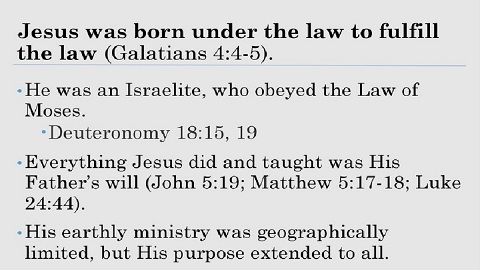
Even though Jesus came to fulfill the old agreement through grace, the first thirty-three years that Jesus walked the earth He lived under the Old Covenant. He was required to follow all its rules and regulations. He even taught from those rules, yet those rules are no longer intended for us. ‘But when the fullness of the time came, God sent forth His Son, born of a woman, born under the Law, so that He might redeem those who were under the Law, that we might receive the adoption as sons’. Galatians 4:4,5

The New Covenant began when Jesus was crucified. When He said ‘It is finished’ He was talking about the Law, the Old Covenant. Upon His resurrection the New Covenant began and we are no longer required to try and live under the Law and the way of the Old Covenant. It is finished!

The old agreement was made with the Jewish people because they desired to have a set of rules to show God they could please him by their obedience. It turned out to be a way God used to show them they were unable to live a perfect life on our own. Jesus came to show us the true love of the Father and to restore our fellowship with him. Jesus came and fulfilled the old agreement and upon his resurrection made a new agreement of grace. ‘Do not think that I came to abolish the Law or the Prophets; I did not come to abolish but to fulfill’. Matthew 5:17

Now that the Law has been fulfilled in Christ, we are no longer required to try to live by the ten commandments and the rules and regulations of the Old Covenant. So often we seem to forget that because of grace we now live by faith in Christ. We are no longer slaves to sin, we are no longer just a poor sinner saved by grace although we were sinners and we are saved by grace. We are now the righteousness of God through Christ. God no longer calls us slaves but He calls us Sons. We are seated in heavenly places in Christ. This is not to say that we should go out and do whatever we want, right or wrong. We do have freedom in Christ to do what we choose, but there are consequences if we choose things that God has warned us to stay away from.

Today we choose to live a life pleasing to God because of love, not due to obligation by a set of rules. Godly love is the fulfillment of the Law. We love God, we love others and we have been made righteous through Christ. He sent the Holy Spirit to dwell within us and we are now the temple of God. It is the Spirit who guides us, teaches us and gives us strength. We do not love or please God out of obligation. We do not love him because we are trying to fulfill a set of rules and Old Testament laws that we could not live up to anyway. We do what is pleasing to God because we choose to do so because of our love for Him.

Read Full Post »

by Jim Gordon

We have talked about discrimination in regards to racism and women’s rights. Today we finish up by talking about another form of discrimination. The violation of LGBTQ rights and the hateful way many are treated.

Growing up in the church, I was always taught that the bible clearly stated that homosexuality was a sin. The thing with this was that I never questioned it or did any further study into it on my own. I just accepted what the pastor said, as I did most of what I was taught.

Over time I began thinking about the love of God. The bible said that God is love. Jesus told us to love God, love one another and love our enemies.

Throughout the gospels I read of the way Jesus lived on earth. He loved people. He never condemned, never judged, never played favorites. He treated people with respect and was inclusive of all. That made me begin to question why so many of his followers today act with such hatred and malice toward those they see as different than themselves.

I began reading books and listening to other views and realized there were other interpretations of the few verses I was always told condemned those who are LGBTQ. Such books as ‘Torn’ by Justin Lee, ‘God and the Gay Christian’ by Matthew Vines, ‘Unashamed’ by Amber Cantorna, ‘Is God a Gay Basher’ by Jan Liebegott and ‘Unclobber’ by Colby Martin. I read blog post by James Finn, Susan Cottrell and others who know what they are talking about and offered other explanations and interpretations of difficult bible verses.

Keith Giles published an article I found interesting entitled The word “Homosexual” does not appear In the Bible [Pre-1946]. Thus insinuating that there was another word and meaning in regard to homosexuality up until 1946 when the term was added.

Interpretations and beliefs aside, just reading about the nature of God as presented by Jesus, I could not understand nor believe that those who were born as LGBTQ were not loved or accepted by God. And if God accepts those who are LGBTQ, the rest of us should also.

After all, we are all human beings. The labels are added by groups of people and not God, labels which cause division, exclusion and people being treated as second-class citizens.

It is hard to believe that still today, LGBTQ people are so often discriminated against just because of who they love or how they feel they were created. Now, I am against lust and open sex just because it feels good whether it be between straight or LGBTQ people. I believe in committed, loving relationships between two people either straight or gay. I believe all the different gender identities covered as LGBTQ+ are people just wanting to be happy and accepted for being who they were created to be.

To be treated with hatred, to be looked down upon as sub-human beings, to not receive the same equal treatment and basic human rights as every other human being is just wrong. To be denied health care, housing, jobs, cakes, adoption privileges and being able to serve in the military just because of their gender is a terrible disservice to people that are loved by God. People who are loving, smart and capable of fulfilling their desires but are unable to do so because of all the unloving discrimination in our world.

What really gets me is that many times, not always, the most discriminatory actions and hate filled treatment comes from those who claim to be christians. Those who claim to represent God, who is love. They seem to show more hate and unacceptance than others. Those of us who follow the example of Jesus and who love God should be the biggest supporters, showing the love of God and being inclusive of all. Yet due to the mistranslation of some bible verses and due to taking what we were told or what we read without further study and follow-up, many choose to judge and condemn those who are LGBTQ without any further question.

As mentioned in my previous articles, those who are black/brown, female, and those with various religious and nationality backgrounds all deserve the same treatment and opportunities as anyone else. God did not make any mistakes or second-class human beings. All deserve the same human rights and equal treatment no matter what they believe, what they look like, who they love or how God created them.

It is time to forget the labels and see people as human beings. It is time we love God and love all people without the judgment, condemnation and hateful treatment we so often see in our world. It is time to follow the words of Jesus by loving God and loving one another.

Read Full Post »

« Newer Posts - Older Posts »