Feeds:
Posts
Comments

Archive for the ‘religion’ Category

What I Wish I Had Known

by Jim Gordon

Having grown up in church all my life, there are many things I used to think and believe that have changed over the years. If I could go back fifty years and tell myself some things about my beliefs and interpretations, it would be broken down into a few different areas.

The first thing I wish I had known sooner is the New Covenant did not start at Matthew Chapter One. I never thought about Jesus living his earthly life under the law. The New Covenant did not start until His death and resurrection. When we start reading in Matthew, we are reading about the life of Christ here on earth while living and teaching under the law. He came to fulfill the law. We are restored and live by grace because of that, not by any good work we do.

I never truly thought about the fact that the Spirit of God lives within us. I always thought God was way up there in heaven, sitting on a huge throne looking down on us. I now realize God is within us. We do not have to wait until we get to heaven to communicate with God. The Spirit of God is within us. Jesus said the Kingdom of God is within you. We are not God, but we are one with God, just as Jesus prayed in John 17. He is with us each and every second.

I always went along with the church being a building. I was told that we go to the Lord’s house to worship. I never thought about us being the Church, the temple of the Holy Spirit. Christ is building a Church made without hands, a Church made up of His followers. We no longer have to wait until Sunday and go to a building to meet with God. The Spirit lives within us each and every day. We have fellowship with one another anytime two or three gather in His name. That can be in a living room, a restaurant, a pub or café, and it can be on any day, because every day is the day the Lord has made.

I used to look to the Bible as the word of God. I felt we got all our information and leading from God through the Bible. Now I know the Bible is the written words that God inspired men to write. The true, perfect, powerful Word of God is Jesus. As John 1:1 says, in the beginning was the Word, and the Word was with God and the Word was God. And John 1:14 says the Word became flesh and dwelt among us. Jesus in the one we worship and follow, not the Bible. We learn from the Bible, it is good to see how God provided a way for us to have access and be restored to God. It is good to read how others acted and reacted and how God dealt with them. Unfortunately, too many of us want to make the Bible part of the trinity and worship it. The Bible is not part of God. Jesus is the word. The Spirit of Christ guides us. Study the Bible, learn from it, but do not worship it and look to it as our guide when the Spirit is our guide.

The Christian life is an ongoing, daily learning process. Sometimes we get to thinking we cannot question what we have been taught over the years. It is not wrong to question. It is not a lack a faith to wonder and seek truth. In all honesty, if we are not changing, growing, questioning and learning, I would have to wonder if there wasn’t something wrong. The Holy Spirit lives within us and He is fresh and current, and is our teacher and guide. Our interpretations and views will definitely change over time as He leads us into truth. I just wonder in the next twenty years what it will be that I wish I knew now.

Jim Gordon and his wife left the institutional church after spending over fifty years within the system. Jim wanted a way to express his thoughts and concerns about the religious system and why he and his wife decided to leave the institution but not their faith in God. Jim can be contacted by email at: jimgordon731@gmail.com

Read Full Post »

By Mike Edwards

Christian leaders of companies or religious institutes often claim they are guided or adhere to biblical principles. This implies biblical understandings are agreed upon by all who follow the Bible, and non-followers have less than ideal morals. Supposed biblical truths have harmed billions of people – women, gays, non-Christians.

The Bible can’t be the sole determinant of truth 

Ancient literature subject to interpretation cannot be the definitive word on truth. The truth is biblical scholars who have a deep respect for Scriptures don’t agree what the Bible says about gays, women, hell, and other moral issues. See here. See here. See here.  Gays are often condemned and women’s leadership roles are limited, despite their gifts, in God’s name. It is suggested a fiery torturous afterlife awaits infidels. Is this how a loving God would love? A Creator surely loves the way creatures intuitively think they ought to love. Please consider that your interpretation isn’t necessarily biblical or more moral.

Truths aren’t hidden in a Book

Self-evident rights aren’t hidden in the Bible or any Book. We all have an inborn sense of good and evil. No reasonable human being doesn’t respect the universal compulsion to treat others like we want to be treated. Who but the guilty don’t agree sexual abuse or murder is evil. We must have open discussions which laws are the most caring for the greater good concerning non-universal matters such as immigration or climate policies. Personal beliefs about God can be shared in the public arena without imposing or assuming we all agree what biblical truths are.

Belief in God or unbelief is not an excuse for chaos

Politicians often claim or imply that our rights are given by God. Any such belief is personal not universal and should be stated so. Self-evident rights may be found in a Book or natural law, as we all have an inborn sense of good and evil. Rational beings know sexual abuse is evil. We can though have healthy debates what policies are for the greater good. Christians can share their personal beliefs in the public arena without imposing or assuming all agree what biblical values are.

What language did Jesus use in personally representing God?

Jesus did not come to overthrow Roman rule to establish a Christian nation. Jesus seemed to understand freedom of personal beliefs is necessary for authenticity, the highest good in personal relationships or a relationship with God. Jesus never told anyone to take a knee and express certain beliefs to be saved. See here.  When Jesus was asked what were the greatest commandments, He said to start loving God and your neighbor as yourself (Mt. 22:34-40). Jesus understood loving God influences and inspires loving others to the fullest. Jesus told the woman who had committed adultery: “go now, and leave your life of sin” (John 8). Sin destroys and doesn’t lead to personal happiness in the long-run! God desires to help avoids regrets in this life. 

How can Christian express their views of God in the public arena 

We can avoid accusations of Christian nationalism by the words we use. Jesus didn’t come to establish a Christian nation. You may personally believe your rights come from God, but not all believe in or have a relationship with God. Respect the beliefs of others through your words. And rights don’t come from man/woman (Government) either. Don’t come off pushing God or your own beliefs on others. Regardless of beliefs, until we all ask ourselves “am I acting toward others like I want to be treated,” we are destined to fail. I would argue that natural law and biblical law, if we could assume perfect understanding of God, are surely one and the same. We can at times express our beliefs about God to others and how personally God encourages us to carry out our mission to treat others well. But we can all discuss what is loving referring to personal beliefs!

Please Stop Claiming You Know Biblical Truth!

MikeEdwardsprofilepic125

Mike Edwards has been writing for Done with Religion for some time and has been a great addition to the site. He couldn’t find enough people to discuss God openly so he started blogging years ago. Mike also has his own site where he writes that can be found at What God May Really Be Like  He can be contacted by email at: medwar2@gmail.com

Read Full Post »

by Jim Gordon

After being in the organized church for well over fifty years and seeing all the different denominations, beliefs and interpretations, one thing makes me sad. That one thing is to see so many followers of Jesus fight and argue over the different paths we take in our walk with God.

Now that is not saying that all roads lead to God, but while trusting in God and following the example of Jesus, we are going to take many different paths during our life here on earth. We are going to be different from other followers of Jesus, but we are following the same example.

Those of us outside the institutional church should not divide and separate ourselves into us versus them groups. In the same manner, those who are part of the modern-day church should not look down on and separate from those outside the institution. We need to accept that we both love God and are following the example of Jesus along the path that is for us.

I think this is what working out our salvation means. Not that we have to work to earn our salvation, but we continually learn as we follow the example of Jesus in our salvation. We, as Christ followers, will take different paths in our walk with God. We should not expect everyone to walk the same path.

I think this also relates to religion. Jesus was not a Christian and Christianity is not the only religion that leads to God. Many people follow different religions and quite often that is based on where they were born. As an example, most people born in the middle east follow Judaism or Islam. People born in the far east follow Confucianism or Taoism. People of the Indian (India) descent follow Hinduism or Buddhism. Can God draw people from each of these religions? Of course! Religion is not the answer. We were all created in the image of God and God loves the world.

We are to be accepting, loving and kind to all we have contact with each day. It seems we are more concerned about acting and believing the exact same things and following what we think is right. If we do not live that way, we want to fight, argue and separate ourselves rather than accept that God works in each of us in different ways. God made each of us differently, and God leads us along different paths as we walk toward a common goal.

Rather than expect everyone to be just like us, let us start loving one another the way Jesus loved people while he walked the earth. We should not let different religions, interpretations and ways of walking with God be a stumbling block to a loving fellowship with one another.

Besides, we are not going to show anyone how to follow the example of Jesus when all they see is arguing, disagreements and separation among those following Jesus. We will not be good examples of the love of God by insisting people conform to our way of thinking and following our rules and interpretations. The only way people will know we have something worth checking out is when they see those following the example of Jesus loving one another, caring for one another, building one another other up and being loving and kind to those who walk a different path.

Jim Gordon and his wife left the institutional church after spending over fifty years within the system. Jim wanted a way to express his thoughts and concerns about the religious system and why he and his wife decided to leave the institution but not their faith in God. Jim can be contacted by email at: jimgordon731@gmail.com

Read Full Post »

By Mike Edwards

The Founders of America referred to God/Creator in the Declaration of Independence. They also referred to the “Laws of Nature.” The Founders fled to have freedom from Government control or tyranny, so they certainly would advocate for freedom of religious beliefs or that atheists shouldn’t be discriminated against. Christians leaders and others are often falsely accused of forcing beliefs on others by declaring their Christian heritage, but Christians aren’t always careful in their language. Declaring we are a Christian nation implies lack of freedom in religious beliefs.

A Christian label doesn’t respect God’s freedom of belief 

The presence of so much evil in the world suggests God has given us freedom to choose from the beginning. God understood forced love is an oxymoron. Without freedom we could accuse God of not creating the very best world where only true, authentic relationships can develop. It may be suggested that God eventually gets you by lighting infidels on fire and not allowing it to burn out in the afterlife. Christians must reject such a view of Hell. Now, when one meets their Creator and rejects living a loving/godly life, I can see them being allowed to pass into final death. I wrote here that Hell (a place of forever punishment) is doubtful biblically and morally from a loving God.

Even Jesus didn’t advocate for a Christian nation 

Most Christians argue that to understand Jesus is to understand God. Jesus didn’t attempt to overthrow the Roman Empire to establish a “Christian” nation. Jesus came to influence others to love as they want to be loved. Jesus spoke how to start living here on earth, not what awaited in the afterlife, when asked how to have eternal life. He simply said to love God and your neighbor (Lk10:25-37). Jesus knew loving God led to loving your neighbor. If one is so inclined, they can ask for God’s help in living a meaningful life here on earth.

Christians often assume truth only comes from a Book 

How can there be a Christian nation if Christians disagree what such a worldview is? Christian leaders of companies or religious institutes often claim they are guided or adhere to biblical principles. This implies biblical understandings are agreed upon by all who follow the Bible, and non-followers have less than ideal morals. Ancient literature subject to human interpretation cannot be the definitive word on truth. Besides, it can’t be proven one’s God inspired all written down about God in their cherished book. I’m not convinced the writers always understood God perfectly. See here.

Good and evil has arisen because of how the Bible or other religious Books have been interpreted or viewed. Biblical scholars who respect Scriptures don’t agree what the Bible teaches about many moral values – women rights, gay condemnation, and the afterlife.  See here.  See here.  See here.  Some Religions’ Books are interpreted that God authorizes killing infidels in this life, not just suffer consequences in the afterlife. Again, it can’t be proven Prophets always understood God correctly. Common moral sense isn’t the enemy! 

Where do our rights come from – who’s on Top? 

If one’s Creator exist and is perfectly loving, natural law and God’s laws should be one and the same. Moral values are not determined by a Book, popular opinion, or by a few in power. There are universal values that most rational people agree on such as murder, stealing, equal rights for all, etc. We may disagree what should be the punishment for breaking certain laws. That must be debated openly. Most religions agree the overriding moral guide is to love others like you want to be treated. Belief or lack of belief in God doesn’t give you an excuse to not treat others like you want to be treated. Perfect rights or laws demonstrate loving others like we want to be love. Even atheists would agree.

We don’t all agree what the most loving actions are. It is a bit naïve for any nation to claim our values must be biblically based, as if all agree what the Bible says about abortion, gays, capital punishment, etc. The equal rights of women with men in many Nations are denied because of a Book. Regardless of your faith, most rational beings agree on many universal moral values (murder, stealing).  And no – climate control, immigration, taxes, health care, are not universal laws. The problem in the U.S. is debate is frowned up and attempts are made to censor contrary opinions.  

Is there a Nation we could all agree on? 

We are neither a God or godless nation. Censoring belief in God or unbelief in God is all the same. If suggested God is not above all, then neither is State/Government on top as a god. An ideal nation is surely free to believe in a Creator or not believe in a Creator. Christian politicians often claim or imply our rights are given by God. We can attempt to avoid accusations of Christian nationalism by clarifying our beliefs are personal not universal. Self-evident rights may be found in a Book or natural law, as we all have an inborn sense of good and evil. No rational being argues sexual abuse isn’t evil. Freedom of beliefs is our foundation to decide democratically the more caring action in policy.

I believe the Declaration of Independence and Constitution makes the U.S. unique from most other countries. We all have “unalienable rights” and not rights according to Government, Dictators or one’s understanding of a perfect, loving God. In our Republic, the Government is limited in taking away certain rights of the people. A true Democracy allows representation through voting, though the Constitution and Bill of Rights safeguard individual rights such as freedom of speech – protection from majority power over the minority. A true debate of differing opinions is out best chance at arriving at the most caring decision for all concerned. Until we all ask ourselves “am I acting toward others like I want to be treated,” we seem destined to fail.

Why Don’t We Want To Call Ourselves A Christian Nation (Christian Nationalism)?

MikeEdwardsprofilepic125

Mike Edwards has been writing for Done with Religion for some time and has been a great addition to the site. He couldn’t find enough people to discuss God openly so he started blogging years ago. Mike also has his own site where he writes that can be found at What God May Really Be Like  He can be contacted by email at: medwar2@gmail.com

Read Full Post »

by Jim Gordon

As I wrote in my last article ( Part 1 ), over time I have become a religious heretic. I have questioned and thought about many of the things I was taught in church as I grew up. A few other topics I have changed my mind on are listed below.

Again, let me say, the following are my thoughts and opinions. I am not saying I am right or wrong, but is where I am at now. I have changed my views over the past several years, and I will most likely change my views over the next several years. We are all entitled to our opinions and we should accept each other with the opinions we have. We certainly will not all agree.

Creationism: I have changed my mind on this topic, not that I do not believe that God created all things, but I no longer believe God created all things in six literal days. God created, but when, how and how long it took I do not know. I do not think it is wrong or against the biblical teaching to say creation could have taken thousands, even billions of years. A thousand years to God are as one day to us, so obviously God’s timing is not like our timing.

I no longer say that Israel, or the United States as far as the goes, is God’s chosen people. I do not believe God has a chosen people, religion, country or race. God loves the world, and that includes everyone no matter where they live, what religion they follow, if any, what race, what gender, who they love or who they vote for.

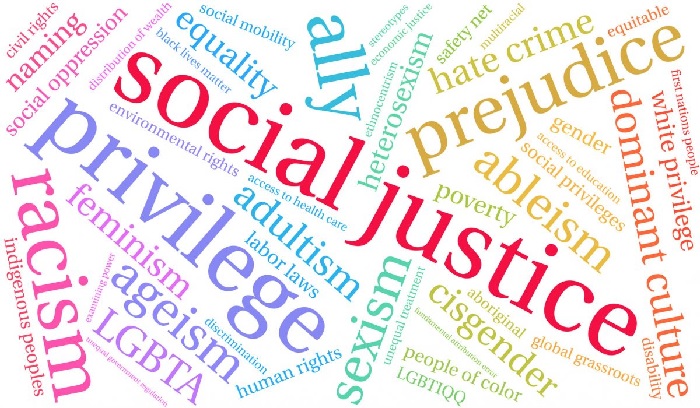
I tend to find I chose social justice over religion these days. Many churches do help others in various areas, but I still found while in the church system, more people were focused on trying to get people to church or to accept their way of religious thinking and less about helping the poor, the unaccepted, the immigrants and others who often time were looked down upon and called lazy.

Knowing that Jesus fulfilled the Old Covenant and we now live in an age of grace, I always find it hard to understand why so many religious institutions focus on the ten commandments and following the Old Covenant law. Why are they pushing what the Bible calls a way of death? For the law of the Spirit of life in Christ Jesus has set you free from the law of sin and death. And, now that faith has come, we are no longer under the supervision of the law.

Another change after leaving organized religion is my acceptance of people who the church normally looked down upon and were not accepted within the religious organization. The LGBTQ family, BIPOC, immigrants and other nationalities and religions. I now have friends and acquaintances from all these groups and totally accept that they were created in the image of God, are totally loved by God just as they are, and we can all learn from one another and treat one another with love and respect. There are no second-class citizens.

So, as you can see, I have changed my views on many things over the past few years. I think that is a good thing. I think we need to stay fresh and open to the leading of the Spirit to lead us in new ways as more truth is revealed to us. I am sure there will be more changes over the years as my wife and I walk with God outside the walls of religion. Obviously, these are all only my opinions and views. I may be right or I may be wrong. I do not force these views on anyone else. Each of us are free to choose for ourselves what we believe. What we are to do is love one another even in our differences, accept each other as we are and live life trying to help and encourage our fellow human beings along the way.

Jim Gordon and his wife left the institutional church after spending over fifty years within the system. Jim wanted a way to express his thoughts and concerns about the religious system and why he and his wife decided to leave the institution but not their faith in God. Jim can be contacted by email at: jimgordon731@gmail.com
Read Full Post »

by Jim Gordon

Yes, I admit it. I have become a religious heretic. So, what is a heretic? According to the dictionary, it is a person holding an opinion at odds with what is generally accepted; the formal denial or doubt of a core doctrine of the Christian faith as defined by one or more of the Christian churches.

First let me say, the following are my thoughts and opinions. I am not saying I am right or wrong, but is where I am at now. I have changed my views over the past several years, and I will most likely change my views over the next several years. We are all entitled to our opinions and we should accept each other with the opinions we have. We certainly will not all agree.

After spending nearly sixty years in the institutional church (including from the time my parents took me as a baby and young child), my wife and I left the organization because we no longer felt we could completely agree with many of the church doctrines and generally accepted ways of the church. What led up to this decision was the many years within the church that taught me some things that I finally had to question.

I remember I went to church whenever the doors were open. I felt that I was going to God’s house and the Spirit may fall during a service and I did not want to miss it. I felt the pastor was well trained in spiritual matters and he was the middleman between God and me. I looked to the pastor for all the answers and to teach me more about God and what I should be doing.

Obviously, I believed that Christianity was the only way to know God and to be a true follower of Jesus. I always thought that Jesus came to start a new religion that would be the only correct way to follow him and only those who followed that religion would be saved.

I always held the Bible in very high regard. I felt it was dictated by God to humans, who carefully wrote everything down so we would have a perfect book about God. It was a love story and a rule book that would guide us each day of our lives. I believed the Bible was the true, inerrant and perfect word of God and it was clear on what it said.

I was one who believed people needed to get right with God or they would end up in Hell after they passed from this earth. Hell was created for the Devil and his angels, but people who rejected God would end up there also. Hell was also a great way to make people afraid enough to make a decision for Christ and boost church attendance.

How many times have we been told that God is our father, a male figure sitting on a throne in Heaven watching down on us, just waiting for us to mess up so he can punish us. If God did not see Jesus in us, then we were all doomed. Even Jesus called him father, so what else could he be?

Now, after becoming totally unsatisfied with what I had always been taught, I started to ask questions and seek answers from someone other than the pastor. I found books and podcasts of others who had other interpretations and views that really made sense. I found many people who had left the institution and were asking questions and finding answers other than the traditional ones the church always taught.

I came to see that church is not God’s house after-all, and the Spirit does not fall at specific places or at certain times. We the people are the church. We are the temple of the Holy Spirit who came to live within us once and for all. The Kingdom of God is within us. The church as we know it is just a building where people meet to fellowship and learn about God, but it is not necessary to attend and there is nothing wrong with not attending if you so choose.

I know there are many religions in the world and that Christianity was not started by Jesus. It is just another man-made organization, but based on the person of Jesus. There are many religions and I believe we can learn from each of them. I believe if Jesus walked the earth today, he would not be a Christian nor attend a church. He would be accepting of all people no matter their personal religious beliefs.

I found that the Bible never claims to be the Word of God, and never claims to be inerrant. The Holy Spirit is our teacher and our guide. John wrote that in the beginning was the word, and the word was with God and the word was God. He also added the word became flesh and dwelt among us. That certainly is not a book. We can learn from the Bible because it is profitable for doctrine, for reproof, for correction, for instruction in righteousness, yet it is not dictated by God and it is not inerrant. I personally feel that the Bible has a lot of allegory and parables that point out spiritual truth, but it is not always actual events.

In regard to hell, I began to wonder how can a God of love create such a place. In the Bible, when it talks about hell (actually Gehenna) it was talking about a dumping ground/sacrificial area outside of Jerusalem. The idea of such a place has its origins in early Christianity, where those who rejected Christ were threatened with eternal torture in a lake of fire, called Tartarus or Gehenna (from Greek mythology and a nearby trash pit, respectively). I think that the theory of hell was started by the early church as a scare tactic to bring people into the church. Hell is a fear-based topic, but we know that perfect love casts out fear. Love draws and there is nothing about love in the theory of hell.

I believe that God is not some super-hero man sitting in heaven watching down on everyone. God is Spirit and the Spirit of God lives within us. God does have male and female traits, but God is not a male nor female. We are the temple; the Spirit of God lives within us. Could it be that the writers of the Bible were following what was common in their day, where women were property and only men were worthy. Did they use their prejudices when writing what would become the Bible by referring to God as male and Father? Personally, I think so. It is all written from a male perspective.

So, as you can see, I am definitely considered a heretic among the traditional Christian church-goers. I have no ill-will toward any of them. At one point, I was where they are now in my beliefs, but I no longer accept or follow the traditional doctrines taught within most churches today. I do follow the example of Jesus of loving God and loving others.

Obviously, these are all only my opinions and views. I may be right or I may be wrong. I do not force these views on anyone else. Each of us are free to chose for ourselves what we believe. What we are to do is love one another even in our differences, accept each other as we are and live life trying to help and encourage our fellow human beings along the way.

Jim Gordon and his wife left the institutional church after spending over fifty years within the system. Jim wanted a way to express his thoughts and concerns about the religious system and why he and his wife decided to leave the institution but not their faith in God. Jim can be contacted by email at: jimgordon731@gmail.com

Read Full Post »

by Jim Gordon

It is sad that Christianity is divided into so many different groups. We all have a little different interpretation of the Bible and a little different understanding of doctrine. Obviously, we are not going to agree on everything, but we certainly should be able to love one another and accept each other even when we differ on these things.

It is hard to understand why there are so many divisions when God tells us we are to be one, as Jesus and God are one. Yet, we understand that we are human and it is easy to lose sight of our first love. If we could only stay focused on Christ, listening for his voice and the guidance of the Spirit, loving God and loving others as God intended, then we could begin to look past our differences.

The problem seems to be that we are unwilling to see any other viewpoint other than our own. There are those such as my wife and I that do not attend an organized church. There are those who attend a church every time the doors are open. Some attend a house church, some meet with fellow believers at cafe’s, parks or restaurants, and others meet in their homes over dinner. We should accept these differences and love one another rather than argue over who is right and who is wrong.

There really is not a right or wrong way to assemble together and we need to stop expecting everyone to do things exactly the same way. We should respect the viewpoints of others and focus on loving them rather than expecting them to see things our way.

Things will not change until we start focusing on what is common in our lives rather than the differences. The common focus should be on Christ, the head of the body. After that, we should focus on loving others rather than arguing about the differences in interpretation.

We should also keep in mind that we are all constantly changing as God brings new truth to us. We are all learning and changing as we are ready to accept new truths. The interpretations I had five years ago are completely different from some of the interpretations I have now. I am sure in another five years they will change again as God leads me into more truth.

Sometimes we are afraid to accept the opinions and interpretations of those who are outside of our belief system because we feel if we do not hold to our way of thinking, we are compromising and not standing up for what we believe. We do not have to give up how we interpret the Bible, but neither should we think everyone else is wrong. Besides, we really are not responsible for leading others into our truth, or convicting them of sin, or even saving them. That is the job of the Holy Spirit. We are told to love God and love others.

When we realize we are each equally important functioning parts of the body, and Christ is the head, we can start to change how we feel about those who do not see things exactly the way we do. We can begin to accept our brothers and sisters in Christ as they are, as we realize we are walking as one with the purpose of sharing the love of God.

Jim Gordon and his wife left the institutional church after spending over fifty years within the system. Jim wanted a way to express his thoughts and concerns about the religious system and why he and his wife decided to leave the institution but not their faith in God. Jim can be contacted by email at: jimgordon731@gmail.com

Read Full Post »

By Mike Edwards

Many want to believe in a God but not the God often claimed by Christians. I wrote here  why some don’t pursue God more or leave the institutional church but not God. I recently read Brian McLaren’s A New Kind Of Christianity who has extensive interactions and travels to opine on what is wrong with Christianity. Though written several years ago, his observations are still relevant and match some concerns I laid out. I believe there are three main concerns that are turning many away from God or the church. How the Bible or “Gospel” is explained leads to condemnation in God’s name against women, gays, other religions, etc.

How Should We View The Bible? 

Many Christians view the Bible as inspired by God, thus assuming everything claim about God by the writers is true. You may notice God isn’t always portrayed as loving. See here. Even if the writers always understood God perfectly, the truth is biblical scholars who have a deep respect for Scriptures don’t interpret/agree what the Bible says about gays, women, hell, and other moral issues. Those differences concern billions of lives and turns many away from God. A Creator surely loves the ways their creations ought to love one another. Biblical understandings should match how you and most know you ought to love your neighbor. A supposed inspired Book must not replace our relationship with God and common moral sense. See here.

What really Is The Gospel According To Jesus?

Christians are quick to quote the Apostle Paul, a main writer of the New Testament, on what the Gospel is: “For the wages of sin is death, but the gift of God is eternal life in Christ Jesus our Lord.” (Rom 6:23). Is the death referred to physical or spiritual? Was eternal life referring to a heaven and hell or a meaningful life beginning on earth. Jesus’ Gospel/words couldn’t be to save you from a fiery afterlife, as such a Hell is a myth according to the Bible. See here.

But what did Jesus say? Jesus didn’t speak of a certain prayer to get “in” with God. Turns out God is only dying to help if you want help. Don’t believe me! See some of Jesus’ interactions here. For example, when Jesus was asked by a religious expert how to have eternal life, He simply said to love God and your neighbor (Lk.10:25-37). Good luck if that was a requirement for salvation rather than loving guidance how to live with fewer regrets. Loving God leads to loving others. Christians are often too busy trying to save others from a non-existing fiery afterlife rather than discussing how God’s presence in our life now helps us become more the person we desire to become deep down. Godly living in this world leads to a meaningful life with less regrets.

What does God really think of other Religions?

Related to our understanding of the Gospel if how we treat those of other Religions. We must have a new attitude of other religions to best represent God. The truth is the majority of people already born in this world died without any knowledge of the Bible or who Jesus was. The majority of people born adhere or reject the religion they were born into. Even the Bible suggests you aren’t judged on lack of knowledge but what you know and whether seeking evil or truth (Rom 2 – see verses 6-8). A God of love can’t be a God of chance!

How can we stop turning others away from God? 

The Bible is not a rules book but a book about God to be questioned. The Gospel is not about escaping from Hell because of a torturous God but whether to seek God’s help in loving others like you want to be loved. I think the only belief God cares about is loving others as you best know how, not different interpretations of the Bible or one’s sexual behaviors. The enemy isn’t other religions but those who are evil and seek to destroy themselves and others. Please consider the loving God I understand!

How Do Christians Give God A Bad Rap?

MikeEdwardsprofilepic125

Mike Edwards has been writing for Done with Religion for some time and has been a great addition to the site. He couldn’t find enough people to discuss God openly so he started blogging years ago. Mike also has his own site where he writes that can be found at What God May Really Be Like  He can be contacted by email at: medwar2@gmail.com

Read Full Post »

By Mike Edwards

Politics/science has joined organized religion in possessing an unfortunate quality. Spiritual and political discussions are important as they help guide our values as individuals or as a nation. Science discussions are important as health decisions are made such as responding to Covid. Freedom of personal beliefs is trampled upon by denying open debate. The truth is certainty doesn’t always exist. Climate debates are critical to decide the greatest human flourishing. Christian leaders claim God and the Bible condemns gays without acknowledging contrary biblical interpretations. We must recognize our fears that lead to denying or avoiding discussions. 

There are universal certainties not subject to debate 

No rational person argues that physical or sexual abuse is up for debate. Moral truths are not determined by a Book, popular opinion, or by a few in power. We all have an inborn sense of good and evil. Concerning non-universal matters such as immigration policies, we must have open discussions which laws are the most caring for the greater good. Most religions agree the overriding moral guide is to love others like you want to be loved. Belief or lack of belief in God doesn’t give you an excuse to not treat others like you want to be treated.

We fear consequences for sharing our beliefs

We may avoid discussions because we don’t have to take action if we don’t bother to consider believing differently. Being treated unjustly though may be a bigger fear. Both Republicans and Democrats in the past have denied the results of elections. You decide if there has been equal justice in this arena recently. Disagreeing with the perceived popular science narrative or disagreeing with church leadership about God’s character can lead to isolation or being blacklisted. Thriving societies must support individuals being allowed to form their own opinions without threats when universal agreement isn’t obvious. Why is one afraid to defend their view, if they know the “truth”?

We fear not fitting in

Groupthink is just human nature. Most humans desire to integrate with a group, get along with its members, and benefit from them. Discussing opposing beliefs can be uncomfortable. The loner must fend for himself. It’s extremely difficult to acquire or achieve anything all by oneself. If you leave your group, your options are limited to joining the opposing group or being alone. For most of us, neither option is appealing. Being your own person is a tough business.

We fear loss of security

Threats of losing your job are undeniable due to the assault on freedom of one’s opinion. One may not oppose censoring activities for fear losing their livelihood because they disagree with the popular, uncertain narrative. In politics differing with the popular opinion might not lead to reelection. Pastors risk being kicked out of the pulpit. It is a human right to disagree if one is not inciting physical violence toward others. I am convinced racism is evil (that blacks are an inferior race), but I must debate those who are free to disagree. I will win the debate!

Fear of liability 

Many pushed for mandates for the Covid Shots because they believe in what authorities were telling them. The claim that the Shots stopped infection and transmission turned out to be false. It is understandable to believe authority figures are telling you the truth initially, but there is no excuse for continuing to deny evidences that has come forth. Worse, if one knew the truth from the beginning and yet still pushed a lie, they rightly should fear liability and be held accountable. We seem to have lost sight that it isn’t real science if there isn’t debate – science is ever evolving.

Fear of loss of power and control

Unfortunately, many fear not only losing their job but losing control and power. It doesn’t matter if you think you are right and doing what is best for the good of the land. Certainty is an illusion unless talking about universal evil such as rape or incest. Try claiming certainty in your personal relationships. If married you are probably headed toward divorce. Individuals must have the freedom to decide what is the best decision for themselves, or the powerful rule the powerless. Individual freedom is a higher principle than lording over others what you “think” is right. You may be wrong! Control and power flourish when others are not allowed to discuss alternative opinions. One way to judge one’s motive is to demand answers for refusing to debate. If one is sure they are right for the good of all, why fear convincing others in the public arena?

Fear of uncertainty

Certainty rather than uncertainty is more comforting psychologically. One may believe what seems to be the popular narrative because unknowing can lead to anxiety. One can avoid anxiety by not discussing their beliefs with others who believe differently. For one to question a main belief they have been taught in church all their life, such as if Hell is real, can create anxiety about what other beliefs may be questionable. Also, uncertainty is often viewed as doubting, which is frowned upon in Christian circles. Similarly, questioning the uncertainty if the Covid shots are safe and effective, if we have gotten the shots, can raised anxiety and fear about our health.

We fear lack of civility

Disagreements are normal in relationships. We must talk to others like we want to be talked to. We must control our emotions. We can’t have discussions with those who are rude or close-minded. We can’t always prove what we believe is true about God. We can’t claim without debate if our climate control measures are best for the most human flourishing. We all must discuss differences calmly, accepting that misinformation isn’t opinions that don’t agree with your own. 

Imagine a world….

  • If we were open to defending our beliefs civilly
  • If we closely guarded one’s freedom to choose when the possibility exist you could be wrong
  • If we stopped calling those who disagreed with us heretics or conspiracists
  • If politicians encouraged open discussions to better discern together the greatest good for all
  • If Christians didn’t always claim their biblical interpretation is correct

When one does not respect your individual freedom to believe as you think best, there can be no discussion. Anyone who threatens to end a relationship because of a difference of opinion is not worthy of your friendship. Confrontation must sometimes take place with friends for one’s silence can be harmful to others; politicians must be voted out; one may have to discover new places for spiritual growth besides their current place of worship.

Why Do We Avoid Discussing Our Different Beliefs With Others?

MikeEdwardsprofilepic125

Mike Edwards has been writing for Done with Religion for some time and has been a great addition to the site. He couldn’t find enough people to discuss God openly so he started blogging years ago. Mike also has his own site where he writes that can be found at What God May Really Be Like  He can be contacted by email at: medwar2@gmail.com

Read Full Post »

By Mike Edwards

Christians are more familiar with the term “deconstructing” from the Christian faith. I am not writing about those who aren’t done with God just religion. I have in mind those who stop believing in God, or God becomes much less a part of one’s life despite belief in God. Such people may have attended church or a religious institute regularly at some time, while others may have rarely or never entered a church door but are inclined to believe in God. Why are many moving away from God though desiring a relationship?

Why are some inclined to pursue God or not? 

Christians especially are guilty of implying those who don’t believe in or stop pursuing God are suppressing what they know to be true. I disagree. I suppose some deny there is a God to justify their evil ways, but those I know not into God as much as me are just as moral if not more than I am.  Let’s not accuse those who believe in a God as needing a crutch or accuse those who question the reality of an invisible God as being wicked and ignorant of their feelings.

Many people do or don’t pursue God, or rebel against God, because of the family they are born in. I am not sure I would be pursuing God if my parents hadn’t encouraged it. Some by personality are more skeptical or accepting. I am sure many don’t pursue God for obvious emotional reasons. A child abused by their father may struggle to accept a God betrayed as our Father in Heaven. Many are turned away from God because of the hypocrisy of God-following friends or leaders.

What may be the main intellectual reasons leaving a belief in God?   

One’s view of God is critical in their journey. See here. I am convinced a major factor in deconverting or moving away from God is because of views claimed about God. It is claimed the Bible supposedly says that God condemns gays, God burns unbelievers in the afterlife, and God doesn’t think women can fulfill the same roles as men though just as gifted. The truth is biblical scholars who have a deep respect for Scriptures don’t agree what the Bible says about gays, women, hell, and other moral issues. See here.  See here.  See here.

Another major intellectual reason is due to certain explanations given for the presence of evil and suffering in our world despite there being a God. It is understandable why many can’t believe in a supposedly, all-powerful God who standbys while one is being raped, tortured, murdered, abused, etc. What kind of parent or God doesn’t intervene when they could prevent such suffering? Maybe a perfect, loving God can’t be controlling just as they can’t be manipulative. Maybe God can’t intervene single-handedly without human help. See Thomas Oord. The alternative is that God can always stop your suffering and doesn’t, or that God arbitrarily stops other’s sufferings sometimes but not yours. I am convinced there are better explanations.

Why we must stop claiming the Bible is inspired!

Inspiration suggests God’s approval. Keep in mind we can’t prove God controlled every thought or word written by the biblical author. God didn’t dictate the Bible to others. Stating as proof that the writers claimed such inspiration is circular reasoning. The truth is that even if our interpretations were infallible, we can’t be sure the biblical writers always knew or portrayed God accurately. It is only intuitive that a Creator loves the ways their creations ought to love one another. Biblical interpretations, or a biblical writer’s understanding about God, that doesn’t match how you and most know you ought to love your neighbor may be amiss. A supposed inspired Book must not replace our relationship with God and common moral sense. See here.

Pursing God is about following God, not adhering to certain beliefs 

We are often told the main message of the Bible is Jesus coming to give you salvation to save you from Hell so you could enter Heaven. Common understandings of Hell aren’t necessarily biblical, thus how could this be Jesus’ central message? See here. When Jesus was asked by a religious expert how to have eternal life, which surely implies salvation, Jesus spoke of how to start living here on earth not what awaited in the afterlife. He simply said to love God and your neighbor (Lk.10:25-37). Jesus spoke of loving God not to get into heaven but to receive help in loving others as you love yourself. You don’t have to drop to your knees and say a prayer to get “in” with God. You only have to want God’s help. Jesus’ salvation was about living a meaningful life here on earth with God’s help. Personally, I am convinced there is a God and my relationship with God has inspired and encouraged me to be the person I desire to be.

Why Do Many Deconstruct Or Deconvert From God?

MikeEdwardsprofilepic125

Mike Edwards has been writing for Done with Religion for some time and has been a great addition to the site. He couldn’t find enough people to discuss God openly so he started blogging years ago. Mike also has his own site where he writes that can be found at What God May Really Be Like  He can be contacted by email at: medwar2@gmail.com

Read Full Post »

« Newer Posts - Older Posts »