Feeds:
Posts
Comments

Archive for the ‘The church’ Category

by Jim Gordon

I have become more inclined to follow my feeling that the church today is way off base of what God intended. By church, I mean the organized, man-made denomination, the religious church. I continue to come across books and websites that confirm my thoughts.

Take for instance the teaching of the church on tithing. We are constantly told we need to give our 10% to the church or we are robbing God. Wait a minute, that was in the Old Testament. Jesus came to fulfill the law and provide grace for us.

Am I saying it is wrong to tithe? Tithing is no longer required, but freely giving is always a godly thing to do. If you attend an organized church and you feel they are doing what God wants for them, yes, support it. But do not feel you have to tithe. Do not let a pastor guilt you into giving because he uses some Old Testament verse to tell you that you are robbing from God. Give because you love God and want to give. Give 1%, 5%, 10%, 50%, whatever you determine in your heart to give. We are free to give the amount we determine and are no longer under law nor required to tithe.

Another issue to me is, why get so caught up on being in a building each week, listening to one man (or woman) telling us what God is saying or what the Bible says. Jesus said he was sending us another comforter, and we now have the Holy Spirit to teach us. We are the temple of the Spirit and the Kingdom of God is within us. We no longer need a building nor a middle-man to lead us.

Am I saying it is wrong to go to church? Of course not. I do believe the modern-day organized church is not in line with what God intended. I also believe we do not have to attend any organized church. Some will say the Bible says do not forsake the assembling of yourselves together. That is true, but it does not say you have to assemble together anywhere in particular or on any particular day. Meet up with other believers in a restaurant, or invite them to your home for a meal, or have a time of fellowship online. That is what I feel the Bible is talking about. We do not need a human-led, organized and pre-planned organization to find fellowship and spiritual guidance.

In our day and age, it is time to get over the man-made religious system and the church building being the center of our Christian life and realize there is more. Most churches today are more of a social meeting place or a big business than anything. We should focus on Jesus and build our relationship with him and realize that WE are the Church and the Holy Spirit lives within us, making us the dwelling place of God. We are the temple of God.

We need to build our fellowship with God and with one another. This does not need to be done in a building with an organized service, but in spending time with our brothers and sisters in Christ, helping one another and serving one another through God’s love for us. Others should be able to know that we are Christians because of the love we have for one another, not where we spend our Sunday morning.

Jim Gordon and his wife left the institutional church after spending over fifty years within the system. Jim wanted a way to express his thoughts and concerns about the religious system and why he and his wife decided to leave the institution but not their faith in God. Jim can be contacted by email at: jimgordon731@gmail.com

Read Full Post »

By Mike Edwards

12 Reasons To Believe Hell Is A Myth!

What Is God’s Plan For Your Life?

Why Do People Leave The Church Building But Not God?

Why Do Many Deconstruct Or Deconvert From God?

Are Biblical Stories Helpful Or Harmful To Children?

God Is Exactly Like Who You Think!

9 Reasos To Not Trust The Bible’s Claims About God!

Why Don’t We Want To Call Ourselves A Christian Nation (Christian Nationalism)?

Can And Does God Control Your Suffering?

Did You Know The Bible Says Nothing About Marriage?

Did A Miracle Save Trump?

How Do You Decide What God Is Really Like?

Who Should We Vote For?

Is The Bible Really The Word Of God?

Who Goes To Heaven?

How Do You Not Turn A Child Away From God?

What Are Harmful Lies About God?

Mike Edwards has been writing for Done with Religion for some time and has been a great addition to the site. He couldn’t find enough people to discuss God openly so he started blogging years ago. Mike also has his own site where he writes that can be found at What God May Really Be Like  He can be contacted by email at: medwar2@gmail.com

Read Full Post »

(the loud voices of religion or the quiet voice of the Holy Spirit)

by Jim Gordon

It seems that in Christianity today, there are a wide variety of voices to be heard. Many are loud and obvious, others are quiet and hard to hear. It seems the most important voice is often quiet and hard to hear.

As followers of Jesus, our goal is to hear the voice of the Holy Spirit that lives within us. It is a quiet, calm, still voice that is often overlooked. Sadly, we do not seem to hear much teaching within most churches about listening for the Holy Spirit.

Within the church, there are many voices demanding our attention. The voice of the pastor, the voice of the religious system and its many doctrines, the voice of big-named evangelists blaring from our TVs, even the Bible without the guidance of the Spirit. Here in the US, there are also many voices of politicians telling us what we should believe and who we should follow. All these voices can act like graffiti which blurs the view of the important voice we should be seeking.

In his book, ‘Beneath the Graffiti: A De-churched Christian’s Search for Christianity’ author CJ Penn points out many cases where we listen to the wrong voices. Unfortunately, these voices are often much louder than the still, quiet voice of the Spirit, and many times blurs the voice we should be hearing. In his book, he shows the difference between man-led Christianity and Jesus-led Christianity, plus emphasizes the importance of the power of the Spirit within us.

I personally feel the institutional church today has failed its members by not teaching how to listen to the leading of the Holy Spirit. I think religion would prefer we listen to the pastor and church doctrine rather than learn how to hear from the Spirit who is within.

I grew up in the church system, and ended up spending fifty-years within it. From the first time my parents took me to church as a child, all the way through until my wife and I decided to leave the walls of religion, I do not remember being taught how to listen for the voice of the Spirit. We were told the Spirit was given to teach us, and we were told the Spirit is within us, but other than that, I was mostly clueless on how to listen and understand what the Spirit was saying. I was told that we are the temple of the Holy Spirit, and the Kingdom of God is within us. Yet, anything in regard to how to listen, hear and understand was not part of the teaching.

Many people say God only speaks through the Bible, yet the Bible on its own is only a book. The Bible tells us about God and can lead us to the Word of God (Jesus), but without the Spirit bringing to life the words we read, we are really left to our personal views and opinions and what others have told us the written word means.

Now, I do believe the Spirit can speak to us through the Bible and through other people, yet, it is the Spirit that makes the difference. Apart from the guidance of the Spirit, words of the Bible and words of other humans are just that, words. I often wonder why so many people are more impressed with written words and words of others rather than trying to hear the voice of the Spirit. People are quick to point out that we cannot trust our inner feelings or inner spiritual intuitions. Yet for me, to ignore the Spirit of God, the God we love and worship, the Spirit that Jesus said he would send to teach us and comfort us, is very frustrating. Truthfully, we are taught more to ignore and distrust the inner leading, and trust more the words of other human beings. This does not make sense to me.

The only way to get past all the different views and opinions is to focus on Jesus. Listen for the quiet voice of the Spirit from within who will teach us and lead us into truth. That is not to say we are all going to think and feel the same way on everything. God deals with us personally and in different ways. The problem is when we are shown something or led in a particular way, we expect everyone to see it our way and believe the same thing.

We can learn and be encouraged by reading the Bible with the guidance of the Spirit. We can learn and be encouraged through fellowship with our brothers and sisters in Christ with the guidance of the Spirit. Yet we seem to forget the most important truth, which is the Spirit is within us. We are the temple of the Holy Spirit. We have the mind of Christ. Jesus said, my sheep hear my voice, and I know them, and they follow me.

So, to say all this I still have to admit that after all the years in institutional religion, I do not have an exact answer. I, like many in the church, were never taught how to listen for the Spirit. As time passes and I think more about the fact that the Spirit lives within me, I have come to really pay attention when I get an unusual feeling of peace, or a feeling of just knowing something and being at peace that it is right or wrong. I even had dreams a few times where I heard an inner voice in regard to some specific issue and when I woke up, I acted on it and found the answer I needed. I do not say every dream is from God or every instinct we have is the Holy Spirit, but these are ways the Spirit can lead us. We seem to think we need to clearly hear an audible voice to know it is the Spirit, but I think we need to learn to focus on the inner intuitions and sense of peace. Unfortunately, we very often ignore that quiet leading from within, and as I mentioned before, there are many louder, more obvious voices demanding our attention.

In Christ, we are all his children, and no one should be looked up to or revered more than anyone else. We should stop putting all our hope in other people, the church, the Bible, doctrines and religious rules. Focus on listening for the Holy Spirit who is within us. The Spirit will teach us truth and guide us in the way we are to go, if only we pay attention and respond to that leading.

Jim Gordon and his wife left the institutional church after spending over fifty years within the system. Jim wanted a way to express his thoughts and concerns about the religious system and why he and his wife decided to leave the institution but not their faith in God. Jim can be contacted by email at: jimgordon731@gmail.com

Read Full Post »

By Mike Edwards

It can be disheartening when our child does not share the same beliefs or passion about God as they get older. I have good news if reading this and kids are young or grown. My kids are in their thirties. I have things I could have done better. I did apologize what I thought I could do differently. If a parent has any kind of relationship, kids will get over mistakes. If kids are younger, you can plan ahead. Decide if my plan below makes sense or develop your own.

Parents. communicate the real reason for a relationship with God 

Many of us who grew up in church were taught the reason Jesus came to this earth was to save us from Hell so we could go to Heaven. Your kid isn’t going to Hell regardless of their beliefs. A literal Hell isn’t biblical. See here.  Jesus spoke of loving God not to get into heaven but to receive help in loving others here on earth. See here.  Personally, the biggest reason for being a God-follower is the forgiveness, inspiration, and encouragement I sense in striving to be a better human being. Influences in our life don’t have to be audible. My parents aren’t alive but I am still influenced. Pursuit of a godly life is never in vain!  The best a parent can do as children age is less talking if not interested and walking the talk. If God exist, God can handle matters.

Parents, it’s their journey not yours 

Many parents assume if their kid question, doubt, or even wants nothing to do with God that they are going to Hell. Not true! When children are young and a parent believes in God and walks the talk for the most part, kids are likely to go along for the ride. But as our children get older, their relationship with God is their own personal journey. They aren’t into God like you. Relax! Stop worrying! Your belief in a personal God suggests God will engage with them in their own journey. 

The Bible doesn’t always determine what God is really like 

The biggest mistake I made as a parent was believing my interpretation of the Bible was always right. My son came to me after his teachers suggested evolution was the creative process God used for the creation of humans. I was emphatic that evolution wasn’t true because of my biblical interpretation of the Bible. Turns out I could be wrong – https://biologos.org/  I could have advised what I believe, but he had to decide what he is going to believe. Besides, it can’t be proven all written down in our Bibles about God was inspired by God, that the writers always understood God perfectly.

What image of God you portray to your children is so important!

The Bible is subject to interpretation and scholars don’t agree on many moral issues addressed in the Bible. We can also determine what God is like according to one’s own moral intuitions. Your child’s view of what a moral God is like is valid. Our mental views of God shape our attitudes toward God. My view of God inspires me to pursue perfection in my relationships without being paralyzed by guilt when failing. I have the “want to” to be perfect. I believe that motivation comes from God! Surely a loving God only seeks to love you like you wish you were always able to love others. We all know how we wish our parents had loved us. This is the God you can believe. Don’t convey God is hard to please and pissed off about sin rather than what sin is doing to us. 

Have a Plan!

Don’t assume that your child’s unbelief or lack of a relationship with God is one being rebellious. There are personal or intellectual reasonable objections to not believe. I was raised in a home that preached belief in God and attended church more than once a week. I didn’t have a great relationship with my parents who pushed that belief. I can’t tell you why I never turn away from God. It isn’t because I am so outstanding morally. Others turn away from God in my situation. A relationship with God is your child’s personal journey. Parents can share their personal beliefs and even encourage when younger, but eventually we must leave a child in the hands of God. Strive to have a open, loving relationship with your children.

How Do You Not Turn A Child Away From God?

Mike Edwards has been writing for Done with Religion for some time and has been a great addition to the site. He couldn’t find enough people to discuss God openly so he started blogging years ago. Mike also has his own site where he writes that can be found at What God May Really Be Like  He can be contacted by email at: medwar2@gmail.com

Photo For Facebook


Read Full Post »

by Jim Gordon

Over the years I spent within the church system, I was told the Spirit of God has been given to us. Yet, the real emphasis on the fact that the Spirit of God actually lives within us seems to be missed. If we could get this deep down within us, that we now live in the Kingdom of God and the Holy Spirit of God actually lives within us, it would certainly help us in sharing the love and power of God with people we meet each day. We do not need to sit back and wait for some future day when we die to enter the Kingdom of God. We can live as one with the Spirit of God in the Kingdom of God each and every day beginning right now.

The more I talk with people who are active in the institutional church, the more I hear that so many (not all) churches emphasize the organization, the building and the pastor, yet neglect the fact that the Holy Spirit of God lives within us.

God does not live in buildings made by hands. God lives in us. The Kingdom of God is within us. We are the temple of the Holy Spirit. The Holy Spirit is our guide and teacher and we do not have need of anyone to teach us. Yet the church pushes dependence on the organization. It pushes the idea of the pastor being the mouthpiece and intermediary for God. This is just not true. The building is not the house of God, we are, and God communicates directly with us through the Spirit within.

Many people are afraid to trust their inner feelings. We wonder how do we hear from the Spirit within us? The sad thing is we are more in tune with hearing from the pastor each week. We are so used to depending on another human being that we do not try to learn how to trust the leading of the Spirit. The churches have failed at focusing on teaching how to hear from the Spirit, mainly because they want us to continue to depend on the pastor. We have to realize the pastor is not the middle-man or mouth-piece of God. The pastor is a fellow brother or sister in Christ who is just like the rest of us, ever learning and always to be helping and encouraging each another.

For me, I have come to really pay attention when I get an unusual feeling of peace, or a feeling of just knowing something and being at peace that it is right or wrong. I even had dreams a few times where I heard a voice in regard to some specific issue and when I woke up, I acted on it and found the answer I needed. I do not say every dream is from God or every instinct we have is the Holy Spirit, but these are ways the Spirit can lead us. We seem to think we need to clearly hear an audible voice to know it is the Spirit, but I think we need to learn to focus on the inner intuitions and sense of peace.

We must remember this great gift of the Spirit of God living within us. We need to focus on learning how to hear and understand the leading of the Spirit rather than focusing on the words and teachings of men/women.

Here are a few verses from the bible that mention being one with the Spirit and living in the Kingdom of God:

Luke 17:21

nor will they say, ‘See here!’ or ‘See there!’ For indeed, the kingdom of God is within you.

John 14:16,17

I will ask the Father, and He will give you another Helper, that He may be with you forever. Even the Spirit of truth, whom the world cannot receive, because it neither sees him nor knows him. You know him, for he dwells with you and will be in you.

John 17:20-23

I do not ask for these only, but also for those who will believe in me through their word, that they may all be one, just as you, Father, are in me, and I in you, that they also may be in us, so that the world may believe that you have sent me. The glory that you have given me I have given to them, that they may be one even as we are one, I in them and you in me, that they may become perfectly one, so that the world may know that you sent me and loved them even as you loved me.

1 Corinthians 3:16

Do you not know that you are a temple of God and that the Spirit of God dwells in you?

1 Corinthians 6:19

Or do you not know that your body is a temple of the Holy Spirit who is in you, whom you have from God, and that you are not your own?

2 Corinthians 6:16

Or what agreement has the temple of God with idols? For we are the temple of the living God; just as God said, I will dwell in them and walk among them; And I will be their God, and they shall be My people.

2 Timothy 1:14

Guard, through the Holy Spirit who dwells in us, the treasure which has been entrusted to you.

1 John 2:27

As for you, the anointing which you received from Him abides in you, and you have no need for anyone to teach you; but as His anointing teaches you about all things, and is true and is not a lie, and just as it has taught you, you abide in Him.

Jim Gordon and his wife left the institutional church after spending over fifty years within the system. Jim wanted a way to express his thoughts and concerns about the religious system and why he and his wife decided to leave the institution but not their faith in God. Jim can be contacted by email at: jimgordon731@gmail.com

Read Full Post »

By Mike Edwards

Hell is certainly a message Christians get wrong. I am convinced a literal Hell is a biblical myth.  See here.  We get wrong that God thinks women can’t serve in the same religious or marriage roles that men can. Another myth. See here. Also, we get wrong that God condemns gays according to the Bible. Another myth. See here. But the biggest myth may be that God’s main message according to the Bible is that salvation is about going to Heaven or Hell rather than how to live life here on earth. People reject God based on claims about hell, women, or gays. But it is so important to know that God cares about you here and now and not about just the afterlife.

The main message isn’t about a literal Hell somewhere other than on earth

Gehenna, the Greek word translated as Hell in the New Testament, was the name of a real valley near Jerusalem with a history of terrible, ending slaughter.  Gehenna is best translated Gehenna just as Mount Everest is best translated Mount Everest. There is no word in Hebrew or Greek for “hell.” Jesus used Gehenna to illustrate that spiritual death is as tragic as physical death. God creating a literal Hell where people are tortured for billions of years for beliefs held a short time here on earth isn’t possible biblically or morally.   See here.  See here. 

The main message isn’t about God saving us to enter Heaven away from Earth 

Jesus taught as if God’s Kingdom was near, not coming in distant future. “Truly I tell you, some who are standing here will not taste death before they see that the kingdom of God has come with power.” (Mk 9:1) The Good News throughout the Gospels refers to a Kingdom here on earth now. The kingdom of God “has come upon you” (Mt 12:28) and “is in your midst.” (Lk 17:21) The word “heaven” appears the most in the Gospel of Matthew. The Kingdom of Heaven isn’t a place to go after life on earth. Jesus sought to bring heavenly love to earth – “on earth as in heaven.”

What about eternal life?

Jesus was asked by a religious leader how to have eternal life. (Lk.10:25-37). Jesus elsewhere defined eternal life as beginning in the here and now (Jn 17:3), not what awaited in the afterlife. I doubt the leader had in mind how to get into Heaven away from this Earth. Jesus simply said to love God and your neighbor. “Eternal” appears to be on the quality not quantity in life. Jesus spoke of a life worth living being a loving life empowered by God. Jesus’ salvation was about living a meaningful life here on earth with God’s help. The Bible/Jesus/God’s message isn’t dropping to your knees to avoid Hell to go to Heaven after death, but start loving now – a path toward great relationships.

What did the earliest Gospel says how Jesus spoke to others? 

I read through the Gospel of Mark to see what Jesus’ main message was to others. Mark’s Gospel is considered the earliest written from which Matthew and Luke cited. In all the Gospels Jesus never advises to preach to the masses to save them from Hell in the afterlife. Jesus sought to help others avoid hell here on earth. Sin is destructive. It has natural consequences.

  • When Jesus met his disciples, he only said “follow me.” (Mark 1: 16:17, 2:14) A set of beliefs wasn’t required. The main message to the disciples was living a life worth living.
  • People were bringing children to Jesus and he said “anyone who will not receive the kingdom of God like a little child will never enter it.” (Mark 10:15) The kingdom of God was not a future home but a current reality. Jesus has just said “some who are standing here will not taste death before they see that the kingdom of God has come with power.” (Mark 9:1)
  • A rich person asked how to have eternal life. Jesus said sell everything and follow me. (Mark 10: 17-31) Surely Jesus’ point was to love people more than possessions. What does following Jesus mean? When asked what was the greatest commandments, Jesus only said to love God and your neighbors (Mark 12:30-31). What! Not drop to your knees and say a prayer!
  • The above interactions are like when Jesus dealt with the women caught in adultery. (Jn. 7:53-8:11) Jesus only encouraged the woman to go and sin no more. Where was his evangelical spiel. He might never see her again! Apparently, Jesus came to encourage living a loving life toward others and yourself.

Didn’t Paul though preach repent to avoid punishment? 

The Apostle Paul did say “believe in your heart that God raised him from the dead, you will be saved.” (Rm 10:9) Paul recognized Jesus’ death and resurrection, but Jesus’ sacrifice was to draw attention to the Good News already proclaimed by Paul – God’s desire to empower unselfish living. Paul preached about the Kingdom of God being here (Acts). Paul did say “the wages of sin is death.” (Rm. 6:23) But Paul is speaking of spiritual death because Paul is still alive though sin has put him to death (Rm. 7:11). Paul mentions Heaven twice in Romans, yet says nothing about Jesus dying so we can go to Heaven (Rm. 1:18, 10:6). The Apostle Paul who wrote most of the NT never refers to Hell. No prophet in the OT warned of Hell as a consequence for behaviors here on earth.

What about life after death?

We don’t know exactly what happens after life here on earth. We are free to speculate what a loving God might do. Go ahead and live like Hell while here on earth! Careful the regrets you, your family, and friends will feel at the end of your life. Careful that our character developed here on earth may make the change process longer and more painful in the life to come. It is reasonable to believe a loving God can choose to take forever in this life and the life to come to save everyone from themselves. It is possible to interpret the Bible as claiming all eventually go to be with God after death.  See here.

God only seeks to inspire you to avoid a life full of regrets

We are told the message of the Bible is Jesus coming to give you salvation to save you from Hell so you could enter Heaven. I believe Jesus spoke of loving God not to get into heaven but to receive help in loving others as you love yourself now. You may be different than me, but I get help from God in pursuing a life not full of regrets. Try it! It’s on God to come through for you if you choose to follow. Jesus when leaving this earth spoke of having God’s spirit within us.  If you refuse to love, you may end up a lonely, regretful soul.

What Is Main Message About Bible/Jesus That Christians Get Wrong?

Mike Edwards has been writing for Done with Religion for some time and has been a great addition to the site. He couldn’t find enough people to discuss God openly so he started blogging years ago. Mike also has his own site where he writes that can be found at What God May Really Be Like  He can be contacted by email at: medwar2@gmail.com

Photo For Facebook

Read Full Post »

by Glenn Hager

As my relationship with the church and my religion came into question, my world unraveled, because church was my world. I was pastor for over twenty years and loved all things church. I constantly read books about how to do church better. My friends were all church members and pastors, and my life was consumed by church services and church meetings and my pastoral calling was my north star in life.

What happened? Through the years, one-by-one cracks began to form in the relationship between me and the church until finally we went our separate ways. Those cracks were quiet questions that I did not allow myself to pursue.

As I pastored a fledgling church in a small town already saturated with churches of the same denomination, I wondered, “why so many churches?” A crack began to form.

I could have had a great career at another church, if I just pandered to folks with some old-fashioned preaching and music, and back-slapping. I couldn’t do it. It seemed they wanted all the ministry directed toward themselves with little concern for those outside the fold. The crack was getting more defined.

I felt I needed a more serious congregation with more involved leadership. That desire took us to a church in a large suburb of Chicago which had become an Anglo Island in a Hispanic community. It was a congregation populated by seminary students, old fundamentalists, and younger evangelicals. With its inner division and transitioned neighborhood, it was a nightmare to lead.

Finally, after several painful years and several existing members leaving, it became an authentic ministry with great community and an updated worship style. Yet, as a Hispanic congregation shared our building and thrived, it was obvious we were in the wrong location.

During our move to temporary quarters in a more suburban and English-speaking setting, a key couple took it on themselves to share their discontent with others. It resulted in our small group becoming even smaller. After some time of meeting in our home, we disbanded. The betrayal pried open the crack even further. For the first time in my adult life, I was not a pastor, and I was undone.

In the years after, we hosted a house church of young adults in our living room, attended another house church, helped-out a couple churches with their welcoming ministry and community-wide outreach. Eventually, it seemed unlikely that I would ever find a church that aligned with my vision. That vision included a heart for the outsider and a willingness to try new avenues of acceptance and community.

The crack had become a gaping canyon.

These cracks or questions were more like a feeling that I wouldn’t allow myself to feel… until I had to. When I did, I was shocked at how wide the crack had become and I was lost, homeless, and frustrated that I had been so unsuccessful as a church leader.

I got to the point where I wanted nothing to do with the church games, but deeply longed for something that is real. When I thought about Jesus, the more I saw there was also a gaping crack between him and what the church had become.

That irony is overwhelming.

Glenn Hager is a former pastor, newspaper columnist, magazine contributor, blogger (glennhager.com), and author of two books. He also designs lighting (http://doo-dads.com/). Glenn and his wife, Patty live in northeastern Illinois.

Read Full Post »

by Glenn Hager

This is one of the easiest and most cathartic posts I have ever written. It’s easy because I can clearly catalog the characteristics of evangelical religion that are distasteful to me.

Since I write this at the peak fervor of our presidential campaign, Evangelical entanglement with politics immediately comes to mind.

There seems to be a confusion about kingdoms. Christ’s kingdom and all the kingdoms of this world are vastly different. One is a kingdom of love and the others are kingdoms of power.

Earthly kingdoms are about control, Christ’s kingdom is about influence, the way we live our lives and love people. Earthly kingdoms are about enforcing laws, Christ’s is about love and changing hearts. Earthly kingdoms are about war, Christ’s is about peace with God and one another. Earthly kingdoms are about mandating rules, Christ’s is about choosing his ways from the heart.

Christian Nationalism is an attempt to use earthly kingdoms to force on people what some determine to be Christian values. It’s like trying to mix oil and water. They are in opposition to one another. You cannot legislate or mandate a changed heart. It opens the door for politicians to adopt a few socially conservative policies, do lip service to religion, and use a couple of evangelical buzz words to get elected.

During the January 6th riots, I was as shocked as any American to witness the violent assault of the very heart of our government after being ginned-up by a man whose ego and was so huge but so fragile that he would assault our very democracy to try to be “a winner” (really a looser).

In the violent chaos flags were waving, the American Flag, the Don’t Tread on Me Flag (Gadsden Flag), the Confederate Flag, the Trump Flag, and the Christian Flag. These flags represent the elements of Christian Nationalism. They are a toxic cocktail that confuses patriotism, individualism, racism, cultism, and religion. It looks nothing like Jesus and everything like an authoritarian political movement that is destroying the witness of the church.

Folks who are not in the club, don’t get it. They wonder, “Why are Christians so hateful, so unloving, so bent on forcing their views on others.” Even they know that is not at all like Christ. This movement exposes a hypocrisy of a superficial faith defined by a few slogans, that hates its enemies, and ignores the obvious faults of its champion (not Christ).

Christianity has become an exclusive club for the already convinced. So, churches hire a charismatic pastor and staff, build an impressive building, and offer a wide array of programs to keep the sheep happy and proud of what they have. They think the bigger all of this gets, the more successful the church must be. They rely on these assets, the buildings and staff.  With all the salaries and the mortgage, it takes a lot of money to keep the sheep happy.

Every church has a little different idea about how to do church, hence the countless varieties, sometimes at the same intersection, like fast food outlets.

Pastors and leaders have unrealistic expectations placed on them. A few are egomaniacs. Most are simply trying to fulfill their calling and keep the flock happy. Almost none can be honest about their feelings and struggles with anyone in the congregation because they are expected to be above mortal temptations (unlike the congregants). They are not, as proven by the numerous scandals involving members of the clergy.

Too many churches and associations of churches have become self-centered, politically affiliated rest homes for the long-since convinced with little concern for those who need to see the Gospel in action.

I join the millions who are done with that.

But it doesn’t mean we are done with Jesus.

Glenn Hager is a former pastor, newspaper columnist, magazine contributor, blogger (glennhager.com), and author of two books. He also designs lighting (http://doo-dads.com/). Glenn and his wife, Patty live in northeastern Illinois.

Read Full Post »

by Michael Donahoe

I grew up in the traditional, organized church. I was always taught that the pastor was head of the church, and he had all the answers and so much more knowledge than anyone else in the church. I mention the pastor as a ‘he’ because when I was young and growing up in the church it was unheard of to have a woman pastor.

I remember scheduling meetings with the pastor so I could ask him questions and find out all the answers to Christian living. It almost floored me one time when I asked the pastor a question and he actually said he did not know the answer.

Looking back, I can see that I certainly looked to the pastor rather than looking to the Spirit. I was putting my hope in a man that I thought could tell me everything about God, yet I was not seeking to know God himself.

Next in line were the board of elders. Each of them were so much more holy than I or anyone else in the church or else they would not be in that position of authority. At least that is what I thought at the time. I have a friend who thinks prayers have more authority when she goes to the board of elders and has them pray.

Questioning Christian Leadership

The longer I was in the church, the more I began to wonder about things. Of course I did not dare ask the questions I had since people would be questioning my faith, or think I was questioning the pastor.

When I read that Christ was the head of His church, I wondered why the pastor seemed to get credit for that position.

I read that we should call no one father (or pastor) other than God, and I again wondered why people in position of leadership and authority in the church wanted to be called pastor or apostle or elder.

We are told that the Holy Spirit is our guide and teacher, and we do not need anyone other than him. Yet, we look to the pastor, or an elder, or some big name evangelist to find all the answers to our questions.

I began getting dissatisfied with having these questions and not letting them surface enough to come out and be asked. I began to realize I had more and more questions, and fewer and fewer answers.

I finally started coming across books and websites of people who seemed to be in the same boat. They were wondering and questioning and being open with their questions. Some of them seemed to actually come up with some answers that made sense to me.

The more I thought, questioned, and read, the more I began to realize that our traditional church system is really not what God intended for the church. I also realized that questioning is not a lack of faith. God can handle our questioning; in fact, most of the time Jesus taught more with questions than answers. He wanted people to question and reason over things.

True Christian Leadership

The true Church that Jesus is building is not a brick and mortar place. The head of the Church that Jesus is building is not a pastor, pope, elder, or apostle. In fact, the head is not a man or woman at all.

Leadership in the Church of Jesus is not what we have always thought of either. When we realize Christ is the head and leader of his Church, we begin to realize that man has no business demanding or expecting people to follow them and put them in the place of Christ.

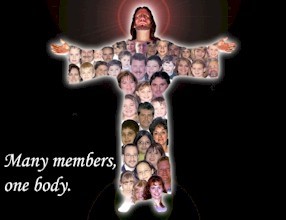
True Christian leadership is not an office of authority. It is not a place for only a few who are specially trained at a man-made Bible school. True Christian leadership is for all of us who are members of the Church of Christ. We are all kings and priests; we are all holy and righteous because of Christ. To be clear, when I say Church of Christ, I’m not talking about any denomination or physical building. The true Church is a community of people who are following Christ, and He is our head. All the rest of us, men and women alike, are equally functioning body parts of his Church.

My Christian leadership story

No person has a place of authority over another. That is the world’s way of doing things. That is the business way of doing things. Needless to say, there are a lot of churches and religious organizations that are acting like big business with their presidents and CEO’s, but that is not how it should be.

Christian Leadership as God intended is the Spirit working through the different body parts, leading by example. They are encouragers and teachers from a place of love and experience, not a place of authority and power. Each of us are leaders at one time or another in this sense of leading by example, experience, and love. We come in contact with those who need encouragement or a little guidance, not from someone who thinks they know it all, but from someone who has been there. A person who, out of love, wants to see the best for everyone.

True Christian leaders will not demand your loyalty. They will not want your allegiance to them. They will not rule over you with authority and expect you to follow them no matter what. True leaders will want to lead you to the head and true leader of the Church, Jesus. It is time we stop looking to men and women as our guides and leaders, and look to Jesus. We need to listen for the leading, guidance, and teaching of the Holy Spirit who is actually God within us, rather than seeking the knowledge and wisdom of mere men.

*******

Michael Donahoe was added as a writer as his views fit perfectly with those of Done with Religion. He also writes on Substack at https://personalmeanderings.substack.com/

Read Full Post »

By Mike Edwards

Many don’t have more of a relationship with God because they can’t justify why an all-loving, all-powerful God doesn’t prevent more evil in this world. Anyone inclined to believe in a God likely believe such a God must be all-loving. No other God is worth believing in! So, why doesn’t a supposed all-loving/powerful God intervene in evil or suffering more than they do. Any human parent that has the power to prevent a rape, murder, sexual assault and doesn’t isn’t truly loving. Why would we judge God any differently if a Creator surely created us to love like them?

If God Is All-Powerful …. 

Most who have grown up in the institutional church have been taught that God is all-powerful. God can cause miracles without any human help or cooperation. It seems only intuitive that an all-powerful God can control suffering if able to create, be in all places at one time, resurrect Jesus from the dead, etc. But it is obvious God doesn’t answer many prayers to relieve suffering.  One may claim God is all-powerful or Omnipotent to show respect, but a God acting arbitrarily toward human suffering isn’t easy to answer – unless blame unanswered prayer due to one’s sins.

Maybe God can’t be all-powerful 

A less popular assumption is that God can’t be all-powerful. Logically, how can God be all-powerful and humans have some freedom/power? Besides, a perfect God’s love can’t be all-powerful. See here. Suffering (prayer unanswered) may be because God cannot intervene single-handedly. God can’t physically interfere in evil or suffering without human help. See here.

Don’t miracles prove God is all-powerful? 

I believe in the possibility of miracles but lots of prayers asking for healing aren’t answered. Is God’s love infrequent or arbitrary? Do miracles not happen because some people are less sinful or beg better at the feet of an arbitrary God? I believe a better explanation for healings is that various biological and environmental factors are involved such as cells and organs.  If God doesn’t deny human freedom, it may not be a stretch to say God has to account for natural freedom as well. Perhaps miracles can happen when God’s love aligns with countless factors known and not known. God cannot intervene singlehandedly, but a loving God always wants to intervene whenever circumstances will allow. 

Who do you imagine God is like?

The Bible can’t be the definitive word on God since subject to interpretation and questioning if God agrees with all written about God. We are free to speculate. Most Bible-quoting folks believe we are made in the image of God. If a Creator exists, perhaps that Creator informs us through our moral intuitions how we ought to love others. Image bearers should act as we think a loving God/human parent should act. I am convinced God is always seeking to intervene when possible.  We don’t have to assume God can answer our prayers but doesn’t for some unknown reason. God suffers with us, but the unfortunate truth in a free world is suffering happens. Lean on God and others for emotional support and encouragement in difficult times.

Why Doesn’t God Prevent Evil And My Suffering?

Mike Edwards has been writing for Done with Religion for some time and has been a great addition to the site. He couldn’t find enough people to discuss God openly so he started blogging years ago. Mike also has his own site where he writes that can be found at What God May Really Be Like  He can be contacted by email at: medwar2@gmail.com

Photo For Facebook


Read Full Post »

« Newer Posts - Older Posts »