Feeds:
Posts
Comments

by Rocky Glenn

When Jim Gordon invited Mike Edwards and I to join him as coauthors at Done With Religion, I don’t think any of us anticipated the bond and brotherhood that lie ahead of us.  The three of us have spent the last six months getting to know each other discussing what we believe and why we believe it as well as what we used to believe and why we believed it at the time.  The conversation below is an excerpt of one of those discussions as we speculate why it took so long to arrive at our current beliefs if we truly believe we have become more Christlike as we grow more open-minded and less dogmatic.  Our hopes in sharing this discussion is to encourage those who may be wondering the same and perhaps feeling the same regrets expressed.

Mike:  We believe the way we do now. But we use to believe another way a while back.

I know there aren’t answers but how do we explain to ourselves and others if asked – why doesn’t God show us the light sooner. I know I am assuming we are more enlightened now than years ago. I am assuming it is more Christlike, unless clearly moral like bullying, to come off open-minded than dogmatic.

I think so many more may be open to God if there was so much less dogmatism. I know God isn’t controlling but so many well-meaning leaders and laypeople seem misguided (or perhaps we are the ones wrong) and all of us are simply trying to be faithful to God. I truly think so many are intending to be faithful to God. I dread to think how I would have responded 30 years ago if social media was around.

I’m not convinced it’s because some of us are more moral than others. If we are more enlightened, why weren’t we more enlightened years ago? I must admit watching all this on Facebook, etc. is discouraging, especially when it is Christians. So many of them seem hopeless.

Rocky:  I think your thoughts capture what is possibly my greatest regret . . . the amount of time and number of years I spent not only misbelieving but also misteaching others.  To me the best analogy would be Jesus’s parable of the tares and wheat.  If you remove the tares before it’s time you will remove the wheat also.  Although as we first come out of it our tendency is to discard anything and everything related to what we are leaving behind. The further I am away from it the more I realize there are some foundational truths planted there that remain.

Jim:  As far as why God doesn’t show us the light sooner, I surely do not have the total answer. I do believe it is the timing thing. I think God teaches us and brings us to new understanding only as we are ready for it. I feel there is a reason for the things we go through and I am thankful for the time in the church system. I guess I would not have known the difference if I had not been a part.

So many people in church today are there because they truly believe that is the right way and they truly love God. I know the many years I was a part of it I felt I was doing what God wanted and was learning about him. Really, that system is all we know. That is what we were brought up in and felt was what God intended.

I am thankful that the Spirit lives within us and does not give up on us. I know I had questions over the years but was afraid to ask or just figured there was a reasonable answer that was more than I could understand.

Fortunately, in time those questions and many more came up again and I started thinking and debating with myself about them. It still took years of this plus feeling so unsatisfied at church that caused us to come to the point of leaving. It is all a timing thing.

One thing the three of us are certain of is we are likely not alone in our questioning.  If this is a conversation you find yourself identifying with, we welcome your feedback and would love to hear from you.  What are your thoughts and experiences as you’ve walked out the journey of your faith?

If you would like to read more of each of our thoughts on the subject, here are related articles from each of us:

by Jim Gordon

No matter what your lifestyle, what you choose to believe, how you accept things none of us will ever completely agree with anyone else. As believers, we would not expect those who do not follow the christian faith to agree with everything we think and say. Yet, we also know that other christian people will not agree with everything either. We have so many denominations in the christian world and none of them can agree completely. But this is all OK, we are all individuals who see things differently. The last thing I want is to make people feel I expect everyone to see things my way.

I think those of us trying to follow Christ should be able to accept one another, believer and non-believer alike, talk with each other about how we see things and still be respectful and kind. We are to be known by our love, but unfortunately, that just is not the case most of the time.

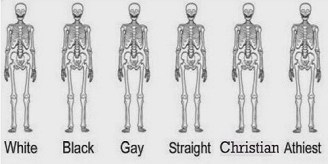
No matter if we are gay, straight, christian, muslim, jew, hindu, atheist, asexual, baptist, methodist, charismatic or whatever label people put on us the underlying fact is we are all human beings. We all deserve to be treated with respect and be accepted. We each should be able to live our life and make our own choices without being condemned by others. We should be able to discuss our differences respectfully, and none of us should try to force our views and choices on another.

Unfortunately, there has been a lot of name calling and disrespect among different groups of people over time. Christian people saying God hates gays, and atheists are of the devil, people being afraid of muslims, one denomination wants nothing to do with another denomination…this is all sad and wrong.

If we could look past the labels and see each other as people who overall want the same thing, to be happy, to be loved, be healthy, get our bills paid and enjoy life I think things would be better even with our differences. This is not to say we have to agree with everyone and associate with everyone and be happy together, that just is not going to happen. There are too many different thoughts, ideas, beliefs, ways of life and personalities for us to agree on everything and be totally comfortable with everyone, yet accepting each other and respecting each other in spite of our differences certainly is a possibility.

Equals2

When you read about the life of Christ in the gospels, you see someone who loved people. He did not disassociate himself from any particular group, nor did he turn away anyone or think he was better than others. Jesus showed the love of the Father by caring for people, talking with people, eating together, healing people and not condemning them. The only crowd he had a problem with was the religious leaders of the day who thought they were so much better than everyone else because, in their view, they kept the rules. Their reasoning was they did not do the ‘wrong’ things and they did the ‘right’ things. They did not associate with the type of people they thought were less religious and unworthy of God’s love. Jesus was always getting on their case for being so religious they were of no earthly good to the Kingdom of God.

Speaking of all the different views and ways of life, I can remember when I was young and growing up in the organized church how I always stayed with people of similar belief. I do not know for sure if I was actually taught this or it was just a common belief I picked up, but I felt I needed to stay away from people of different views and ways of life. I thought it would be great to work in the church system or for a christian bookstore as a job, then spend my off-time in church services and doing church work. That way I would always being around someone who saw things pretty much the same as I did.  This way I would not have to be around ‘those’ people, whoever ‘they’ were. I still see this in the church today, a separatist mindset.

Sound familiar? So much of the traditional church setting is based on separation from those who think differently. This usually brings a feeling of superiority, being separated from those who need to see God’s love in action and living a Pharisee-type lifestyle. (Pharisee: strict observance of religious ceremonies and practices, one who adheres to laws and traditions, self-righteous or hypocritical person).

Compare that to the life of Jesus we read about in the gospels, a person who loved people, was not condemning or unkind, hung out with those who the religious crowd did not want anything to do with, spent time eating and drinking with the non-religious crowd and truly cared for others.

I know we all see things differently. We will not all agree on things and we have no way of proving our point in regard to spiritual matters. Yet I think it is time the christian ‘religion’ comes to an end and Christ-like people begin to daily show the unconditional love and acceptance of God to everyone.

Jesus said to love God and love one another. He did not say love only those who live in a way you think is right or with who you completely agree. Love people the way God loves them and agree to disagree rather than judge and condemn.

Share your thoughts in the comments below

By Mike Edwards

There is so much civil unrest because both sides demonize one another by insisting they are right and the other side is wrong. Can you imagine if couples acted this way when disagreeing? God-followers and religious leaders seem hell-bent in telling people what must be believed about God according to their understanding and interpretation of the Bible. Open-minded uncertainty rather than supposed certainty could go a long way to healing our nation and personal relationships!

Certainty about God because of the Bible

It is circular logic to suggest the Bible is infallible or inspired by God because biblical writers make such a claim.  Writers could have clearly misunderstood God. God’s nature is not to control thoughts and words of writers. Besides, the Catholic Bible has seven additional books in the Old Testament than the Protestant Bible. Which books are supposedly infallible? The Bible isn’t a question and answer book. Jesus didn’t always answer directly because the issue is our heart in solving problems. Can you imagine a world where all looked out for the interests of others and not just themselves when facing difficulties?

Certainty about our interpretation of the Bible

It is not often admitted one’s interpretations may be wrong but instead emphatically stated “the Bible says…” Literature always requires interpretation of a writer’s meaning and application to our personal circumstances. Scholars and laypeople, who even respect the authority of Scriptures, frequently disagree on the meaning of the same passage. Turning the other check is interpreted to claim Jesus never advocated violence, but the possible literal translation of Mt. 5:39 is “do not resist by evil means.” Is violence never desired but necessary sometimes?

Certainty about what is best for individuals about their relationships

Bible folks and non-Bible folks frequently talk as if knowing what is best in one’s circumstances, whether about personal or work relationships. It is easier giving advice than listening and helping one make their own decisions. Bible-folks claim one shouldn’t divorce because the Bible supposedly says so. It’s complicated. A partner may respond with gratitude for a second change or another chance may simply enable bad behaviors to continue.

The Bible is quoted that we must always forgive, but God is often said to not forgive the rebellious (i.e. Josh. 24:19). It’s complicated. Easy forgiveness can allow a husband’s abusive behavior to continue. When a sexual abuser doesn’t acknowledge their actions, secret behaviors continue. Victims can feel more victimized, and feel God must not understand their pain, when told to forgive despite their abuser denying any wrongdoing. Isn’t the whole point to do whatever helps control bitterness to stop the victimizing?

Certainty about what is best for a nation

God-followers must stop implying or claiming moral superiority because of the Bible for reasons stated. Thankfully, we live in a democratic society. We don’t have to vote if murder should be a law because one’s physical rights are clearly violated. Physical violence when disagreeing is obviously wrong and must be condemned, but it isn’t obvious if building a wall is right or wrong. Discussions best start with what parties agree on. Until we stop claiming morality according to a Book or our own intuitions, we will never be able to solve our differences. It is a dictatorship when we impose our will on non-moral issues such as health care or taxes.

Uncertainty, not certainty, can lead to creative solutions not chaos.  

  • We must first stop claiming our views are morally superior to those we disagree with
  • We must handle differences with physical and emotional civility
  • We can begin conversations by looking for areas we agree
  • We can discuss differences by defending our reasoning, respecting the opinions of others, and committing to growing in understanding
  • In a democratic society the vote of the majority must be followed until voted on again


.


God Our Father

by Rocky Glenn

I was raised with a father and mother who loved my sister and me and were not shy about letting us know it.  Does this mean they were perfect and didn’t mess up?  They would each be the first to admit that’s not true, but as I get older and learn more and more about being a parent myself I can look back and see many instances of their love shining through.  As a boy, I struggled immensely with fear to the point of hating nighttime and going to sleep because my mind would simply not turn off and I would lie in bed traumatized by the nightmarish images running rampant through my head.  It was not uncommon for me to lay in bed and scream to the point of echoing through the house.  To overcome these fears, my mother taught me, “God has not given us a spirit of fear, but of power, love, and a sound mind.”  For a brief period of life, I lived alone with my dad.  We spent many days after school throwing frisbee in the front yard, flipping a paper football across the dining room table we had lined with masking tape for yard lines, or leaving the television screen turned on to prove to the other their previous high score playing Donkey Kong had been broken.  I never realized until becoming a parent myself how tired mom must have been dealing with a scared kid night after night each night hoping maybe tonight would be the night he finally rests or how many other things dad could have been doing instead of spending time with me.  I have been blessed by two wonderful people to call mom and dad.

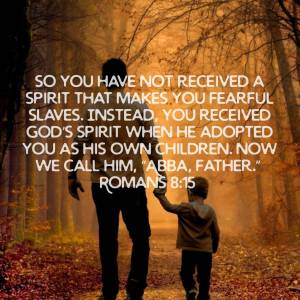
Over the past week, through the writings of Anabel Gillham I have been reminded of the fatherhood of God.  Prior to 2016, I was unaware of Anabel, but during that year I discovered a collection of writings from her and her husband organized into the Lifetime Daily Devotions reading plan in the YouVersion bible app.  It’s a year long plan, so I followed the plan daily in 2017 and have since restarted the plan for 2019.  Several of the writings for the year thus far have discussed the nature of God as a father, and recently I shared Anabel’s words below on social media along with the accompanying image:

49586743_10157247516095139_5680657714309496832_o

Do you know what Abba means? It’s the Greek word for “Father.” It “approximates to a personal name,” kind of like “Papa.” It is “the word framed by the lips of infants” and by older children “expressing [their] love and intelligent confidence” in their father.* Jesus came, talking to God and about God. But He didn’t call Him Jehovah. Or Elohim. Or Adonai. Or El Shaddai. Or any other of the names that the people called God. No, Jesus came and called Him Abba, Papa, Daddy, Father.

In the book of Matthew, Jesus addresses God 43 times as Father. He took an awesome God, a fearful God, an unapproachable God, a God who was known to strike out when He was not obeyed, the God of the Old Testament . . . and He introduced us to a loving Father.

God is a loving Father and that’s what Jesus came to show us.  He reminds us of this on multiple occasions by addressing him as such.  To further emphasize this, he plainly tells us that us in Mark 10:15, “I tell you the truth, anyone who doesn’t receive the Kingdom of God like a child will never enter it.”  To understand what Jesus was saying, we must clarify the phrase “like a child.”  Here’s how Anabel describes it:

With no reservations, no preconceived fears or doubts.

“Looking up” to Him — from a child’s perspective. He is big and I am little. He is strong. I am weak. He will hold me in His arms. He will hold my hand. He will know what to do. . .

Ready to listen and to ask questions, but not to express her views or to argue with Him about His views. Giving Him the responsibility of caring for her. Indeed, expecting Him to care for her. Trusting Him to care for her. Reaching out to touch Him. Holding His hand for security and comfort. Resting in His lap. Putting her arms around His neck.  Being excited to see Him and be with Him. Knowing that He is wiser than she is. Knowing that He is stronger than she is.

Although I was raised by two parents who loved me, I realize the images presented above may be difficult to visualize for those whose father (or mother) was absent in their life or who may have grew up in an abusive situation.  Given the circumstances of such situations, I’ve often wondered why God chose the parent-child relationship to illustrate his love for us and our relationship.  The one thing no one will ever have the power to change is his or her mother or father.  Many children’s lives have been changed through the power of adoption or the way a step parent or foster parent may have stepped up and filled in for another’s absence and actually became a mom or dad, but, despite the manner we experience parental relationships, nothing will ever change the identity of our biological parents.  I will always be the son of my father and my mother no matter who I would have called mom or dad.  There is nothing my son or daughter could ever do to not be mine and cause me to not love them.  I believe this unchangeable nature of the fatherhood relationship is what God is wanting us to grasp onto and it’s why Jesus came.

Jesus illustrated the father’s never ending love in the story of the prodigal son who asked for his inheritance prior to his father’s death, squandered the inheritance given to him, and returned home with his head buried in shame prepared to beg for a job as a servant only to have his father welcome him home with open arms and celebrate by throwing a feast.  Although the returning son was fully prepared to forfeit his place in the family and anticipated having to do so, the loving response and welcome of the father assured him he would always be a son. The tragic part of the story lies in the reaction of the older brother who never left home, worked for his father for years, and out of anger refused to attend the party for his returning sibling claiming his father had never thrown such a shindig for him.  I can only imagine the pain which pierced the father’s heart and sobering look on his face as he explained to his eldest son you have always been with me and all I have has always been yours.

Life as a churchboy is the life of the prodigal’s older brother.  The words of Anabel are applicable to such a life:

How we have structured and formalized (and, in so doing, ostracized) the Father that Jesus wanted us to know! For our conversation with Him to be “pleasing,” we have been told we must “look just right,” assume just the right posture, be in the right place at the right time, say just the right things, use the prerequisite Thee’s and Thou’s — and that only then will He really consider honoring our prayers.

Catching glimpses of God as a loving father who would never stop loving me or deny me as his son and realizing he had already provided all he has through Jesus is what was ultimately the beginning of the end of my life as a churchboy.

Rocky

by Jim Gordon

It is hard accepting the fact that God lives within us. We have been taught that if we live our lives trying to follow the commandments and do good things, one day we will go to heaven and live with God face to face. We have an image of God sitting on a throne way up in heaven and here we are, far, far away down on earth.

We talk about going to a meeting and the Spirit showing up, or being at a specific place because God is there. We pray and talk with God, yet we wonder if our prayers are even getting to Him.

The more I read, I am finding that we really have the whole thing backwards.

The Old Covenant has been fulfilled in Christ and we are now living under a New Covenant. We no longer have to try to be good enough. The law was a tutor that led us to Christ, but now that Christ has come we no longer need a tutor. We are free from the law and the Spirit of God now lives within us.

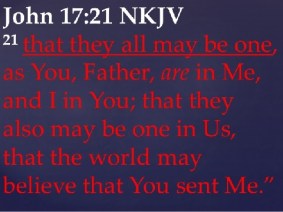
Jesus came to live among us and show us the love of God. When Jesus left, he said he would send us the Spirit. God has now come to live within us. Jesus said the kingdom of God is within you. We are the temple of the Holy Spirit and we have the mind of Christ. Jesus prayed in John 17 that we would be one with God just as he and the Father are one.

oneinchrist

Sounds to me that we are missing the main point. We do not have to wait to die to go to heaven and enjoy kingdom living. We do not have to wait to be united with the Father. We no longer need to look to a human guide, teacher or preacher. We have the living, powerful, perfect Word of God living inside us who is our teacher and guide.

There is nothing wrong with listening to others, getting their thoughts and ideas and being encouraged by other believers, but we do not need to rely on other humans. We have the Spirit within us, teaching us and guiding us in the way he has for us.

We do not have to look up in the sky to some far-away place and wonder if God is listening. We can turn our thoughts inward and realize the Spirit is right there within us, listening, loving us and ready to teach us as we begin to hear his voice from within.

We are all at different stages along the path we walk with him. We need to remember none of us have it all figured out. We so often want to fight and argue from the understanding we currently have without realizing that we have not reached completion. There is more the Spirit wants to teach us as we become ready to accept it.

We should come to accept each other where we are currently, realizing what we know and believe today will more likely be different a little further down the road. We can love each other, learn from one another and accept each other as we are, just like Jesus loves and accepts us just as we are.

We should be looking deep within ourselves, listening for the voice and guidance of the Spirit. We should not put all hope in others and those we think are more spiritual because they have been trained, educated or paid to do so. Remember, we are all kings and priests and have the same Spirit within us. Each of us are equal and important parts of the body with Christ as the head. His Church is not a building, not a denomination but the people.

This is not saying we are God, but the Spirit lives within us and we are one with our Father. It would do us all good to start focusing on this fact rather than what we were taught that it is a future event after we die. Kingdom living is now. Listening to the Spirit, being taught by him and living day by day in communion with the Father is a reality that we all need to realize.

Share your thoughts in the comments below

By Mike Edwards

Thomas Oord’s book GOD CAN’T is for those who have suffered and have trouble understanding why a supposedly good, all-powerful God did nothing. Maybe you have just questioned why such a God allows so much evil in this world or at least doesn’t intervene more. We know God doesn’t cause evil but why doesn’t a loving God, if truly powerful, at least stop certain evils? Oord offers the best solution I have read so far.

A God who can prevent evil but doesn’t is no different than a parent who stands by and watches their child being physically or sexually abused. Are you dissatisfied with conventional answers such as: “It’s all part of God’s plan;” “God wants to make you stronger;” “God’s ways are not our ways;” “You didn’t have enough faith;” “Everything happens for a reason.” (P. 11) If evil is some grand scheme God can control, why then does the Bible says God hates evil so much?

Thankfully, GOD CAN’T doesn’t appeal to “God is a mystery” as an explanation. How we are supposed to know and love like God if God is mysterious? We are told to be perfect like God, but how can we know what this means if we can’t know what perfect love is.  God’s love surely is like perfect human love. Oord offers rational answers to the biggest questions of our lives.

Some say God doesn’t cause evil, but allows it, to bring about a greater good. Oord reminds us greater good doesn’t always come about. A surgeon may have to break open your chest to save your life, but what purpose is served from rape, torture, betrayal, murder, deception, corruption, incest, and genocide as if part of some good plan? From this twisted perspective, evil is good! (P.14)

Thomas Oord offers an alternative to the idea that God either causes or allows evil for some grand purpose. God can’t is actually in the Bible. God can’t lie (Titus 1:2), God can’t be tempted (Jm. 1:13), etc. (P.25) It is also logical that a good God can’t be unloving, God can’t change the past, God can’t deny freedom, God can’t be truly loving if controlling. See also Oord’s Book – THE UNCONTROLLING LOVE OF GOD.

GOD CAN’T suggests that God can’t prevent evil singlehandedly (Chapter 1). The book concludes that God needs our cooperation in intervening in evil (Chapter 5). Believing God can’t prevent evil moves us past thinking God causes or allows pain, tragedy, and abuse. We shouldn’t blame God for the evil God can’t prevent. If you accept this you can move on to believing God feels our pain (Chapter 2), God works to heal (Chapter 3), and God squeezes every bit of good from bad (Chapter 4).

https://www.amazon.com/s/ref=nb_sb_ss_i_2_8?url=search-alias%3Daps&field-keywords=god+cant+oord&sprefix=God+cant%2Caps%2C183&crid=1QGZX4WJB8XWR&rh=i%3Aaps%2Ck%3Agod+cant+oord&ajr=0

by Rocky Glenn

I’ve shared previously growing up a churchboy for me meant nearly my entire musical education and consumption came from bands labeled Christian.  These were bands whose albums were recorded on Christian record labels, marketed to Christians, and sold nearly exclusively in Christian bookstores.  I was not totally ignorant of what was considered hit songs or popular bands, but my knowledge mostly existed only of the radio hits I would hear in public places.  I say mostly because there was also another source of information where I gained knowledge of popular music.  It was common for youth groups I was part of to attend, either in person or through recorded audio or video, seminars on the evils of rock and roll.  During these seminars, bands were scrutinized for their band names, stage acts, lyrical content, and the hidden messages found in their songs if they were played backwards.  I learned during these seminars to not only to stay away from these bands and the evils they portrayed but also honed my judgmental skills for distinguishing good from bad and determining if something was holy or profane based on how it looked or presented itself.  These tendencies stayed with me throughout my life into adulthood and even parenthood.

Part of being a parent is wanting the best for your child and protecting them from harmful and damaging influences.  To accomplish this in our home, our kids were given the same musical education I forced upon myself growing up . . . nearly exclusively Christian music.  The only exceptions to this came through movie soundtracks, singing competitions on television, or music driven video games.  About three years ago, my teenage son began listening to a band I was not too happy about.  It was a band I was certain was evil although I was truly familiar with only one of their songs.  When I first learned what he was listening to, I did what any good father would do.  I expressed my displeasure and asked him to stop.  Of course, this simply caused him to do so in secret and his love for them grew.  As he grew more fond of their music, it was more difficult to keep it hidden and he started talking to me about it and even started playing an occasional track for me to see how I would react.  His love for the band reached the point that for his sixteenth birthday, we received notice the band would be playing live during the next year within a day’s drive from home.  Knowing this could likely be a once in a lifetime opportunity, we secured tickets for the show for him and I to attend.  The only problem with attending the concert is I was still unfamiliar with all but one of their songs and, being that song is their biggest hit and likely to be the encore, it was going to be a long night if I didn’t learn their music.  Making the decision to learn more about the band and their music, and to ensure it would not be a long evening for me at the show, I asked Geoffrey to send me a chronological listing of their discography and in July of last year I went to work.  I have since consumed all ten studio recordings they’ve released as well as several other recordings.  This band is none other than the heavy metal icons Metallica.

The experience of exposing myself to their music has been eye opening but not in a way I expected.  I was certain as I began devouring the music I would be vindicated and justified in my decision to keep not only him but myself from the tunes growing up.  However, while there are certainly tracks filled with rage, hate, and anger and the use of profanity is not uncommon at times, what I began to realize as I listened were many of these tracks were simply four guys being honest about who they are, where they were, and what emotions they were feeling.  My voluntary exposure to their music began to be a spiritual parallel for how I had lived my life as a churchboy judging by appearance without taking the time to listen.

On their fifth album, lead singer James Hetfield channeled his anger over the death of his mother to pen a track titled The God That Failed.  The theme of the song is faith and human reliance on it, and of belief in a God that fails to heal. Hetfield’s mom died of cancer after refusing medical attention, solely relying on her belief in God to heal her due to her Christian Science beliefs.  My first listen to this track upset me.  I took it as blasphemy and mockery of the God I know and serve.  However, after several subsequent listens, I have come to not only to respect the honesty of the emotion expressed in the song but also to identify with it.

In penning these lyrics, James vocalized a sentiment common to man throughout existence and even displayed by many whose lives are depicted in the Bible.  Cain, when his offering was rejected, surely felt God failed him.  As a father, I cannot fathom all the emotions Abraham must have felt after being promised a son and then being asked to sacrifice that very son.  The many cries of David are written in the Psalms, even to the point of him crying out in Psalm 22, “Why have you forsaken me?”  The entire book of Job is all about a man who feels God has failed him.  The rich young ruler sorrowly walked away from Jesus after his boasting of keeping the entire law had been rejected.

When we encounter unexpected hardships in life, we often identify with the anguish shared by the band in these lyrics.  We feel as if God failed.  As my life as a churchboy began unraveling several years ago, I undeniably felt God had failed me.  I identified with these words from James:

Pride you took
Pride you feel
Pride that you felt when you’d kneel

Broken is the promise, betrayal
The healing hand held back by the deepened nail
Follow the god that failed

The life of churchboy is a life of outward pride combined with inner shame.  It’s a life of being proud of all you’re doing externally to make God happy and make yourself appear holy while hiding how miserable, hurt, and angry you are internally feeling as if whatever you do will never be enough.  When you begin to see how meaningless all the efforts to please God and appear holy are, you find yourself feeling betrayed and that the God you followed has failed.  However, the beautifully ironic truth is that God has not failed you, but you have actually lived on a hamster wheel attempting to accomplish something already accomplished for you and gifted to you through Jesus.

I never would have imagined finding God in a Metallica song, but I did.  To me, it’s not about the message James Hetfield conveys in The God That Failed but rather the emotions expressed and how honestly he expresses them.  The greatest fear a churchboy experiences is the fear of rejection from God and from others and, due to this, often feels being honest is the last thing he could ever be.

Am I claiming it a Christian song or Metallica a Christian band?  The answer to that really isn’t important and, for that matter, it’s not mine to decide.  All I can do is simply share what it means to me.  This recovering churchboy’s God didn’t fail me.  He simply opened my eyes to what He has already done.  The music of Metallica has provided a bond with my son I did not anticipate but am ever grateful for.  I could never consider that a failure.

As for Metallica, their musical catalog is now a part of my playlist and in a little over two months, this recovering churchboy will spend an awesome night together with his son.

Rocky

More posts in the Soundtrack of a Churchboy’s Recovery series:

by Jim Gordon

We are at that time again when many of us have the hope of new beginnings. We make resolutions to do things that we want to accomplish during the new year.

When a new year begins, we tend to focus on making positive changes, start new things and forget the mistakes of the past.

It is never a bad time to be ready for positive changes and to make a new start in your life. Fact is we can do this every day. Each new morning brings a brand-new day and a fresh start.

As we start off another new year, focus on what you want to change in your life for the better. What new projects do you want to start or what would you like to accomplish in the new year.

Do not get discouraged and give up. That is the easiest thing to do and many of us do just that within a month or two into the new year. I have talked with people who made a bad choice or a stupid mistake and get all upset and discouraged. I always tell them you are at the threshold of a new beginning. Today is a new day, start again and do not give up.

Remember that we do not have to focus on sticking with whatever it is for the whole year. Focus on each day being a fresh start and a brand-new day to live and accomplish those things you have always wanted to do.

Happy New Year to each of you and may each new day be a fresh start for positive change during the year.

By Mike Edwards

J.D. Myers title WHAT ARE THE SPIRITUAL GIFTS is perfect and delivers in identifying spiritual gifts mentioned in the Bible and how to personally discover your gifts to help others. Those who grew up going to church are very familiar with the topic of spiritual gifts. I would encourage those who didn’t grow up in the church to read as well if wishing God’s help to make a difference in the lives of others through your talents, interests, skills, and abilities.

J.D. Myers greatest insight into this subject may be that God desires to empower us to love and serve not just those in church but those we encounter in all aspects of our life. J.D. explains “the church” in the Bible isn’t referring to a building but individuals seeking to make a difference in the world.

There is a Spiritual Gifts Inventory at the end of the book that many will find very useful. But, don’t overlook Chapter 4 – How Can We Know Our Gifts? The Chapter is easy to read and offers several ideas of how to discern our gifts to help others.

Chapter 5 rightly disputes the notion that some gifts are better than others. That is good for us introverts. Extroverts often get credit, though they don’t need it because others are telling them what a difference they are making. The great news is God loves introverts and extroverts the same. Introverts can make a difference in ways extroverts can’t.

Now, those who grew up going to church want to understand more about gifts such as tongues, prophecy, etc. The book does a great job of discussing whether some gifts no longer exist and how we can understand such gifts.

WHAT ARE YOUR SPIRITUAL GIFTS concludes by encouraging all to embrace their unique gifts. God does! I enjoyed reading J.D.’s personal story about his and his wife’s gifts. Couples can actually enjoy helping others though different and with a fun than critical spirit. Be and accept who you and others are! God would not have it any other way!

https://www.amazon.com/What-Are-Spiritual-Gifts-Christian-ebook/dp/B07L1KBTJM/ref=sr_1_1?ie=UTF8&qid=1544969890&sr=8-1&keywords=jd+myers+spiritual+gifts

Being Accepting

by Jim Gordon

When it comes to accepting others most of us Christian people are quick to say yes, we are accepting. But we find many times we are accepting of only those who believe the same way we do.

If someone comes from a different faith, no faith or different way of life, we would rather argue with them and defend our way of thinking trying to prove they are wrong or unworthy.

When looking at the way Jesus lived, we see a life of loving others and accepting those who the religious crowd did not like. He was kind, loving, forgiving and caring to all he came in contact. It seemed his main conflicts came from the religious self-righteous leaders.

Jesus walked with the prostitutes, the demon possessed, the heathen, tax collectors and people who the religious crowd felt they should stay away from. Today we seem to think we have to stay away from those who are different or doing things we disapprove of to prove how righteous we are.  Yet we never see Jesus doing such things. He enjoyed spending time with people from all walks of life. He got in trouble with the religious people of his day for living this way, and we find this still happens today when we accept people just the way they are.

Acceptingthosewhoaredifferent

Fact is, each and every one of us could have a label or something that someone else would think is wrong. Rather than being judgmental and pointing out to others what we think is wrong, we should seek what God has for us and then show the love of God to everyone we meet. After all, we are not called to point out the sins of others and say what is and what is not sin. We are called to love God and love one another.

Jesus never said to separate from people. He said to go into all the world and preach the gospel. We do this by living a life of love, acceptance and allowing the love of God to touch people right where they are.

It seems to me rather than fight and argue over doctrine, interpretation and belief we would do better to love, accept and show compassion. This certainly does not mean we have to agree with everyone but we do not have to fight and defend our way of thinking.

Many of us think we have it all figured out and our way of faith is the only way. We think we have to persuade others to come to our way of thinking or they are doomed to hell. As we grow in the Spirit over time, we come to realize we were wrong many times in interpretation or belief, so why should we be telling others what is right and wrong and how they should believe? This should be something between the individual and the Spirit within.

I am not sure any of us have it all figured out, in fact I know none of us do. We all have room to question, learn and change. I know my wife and I are doing more questioning than we ever did and we are finding new truths as we walk daily in the Spirit.

When it comes down to it, we should be open to accept others no matter what their way of thinking. People want to be loved and accepted, they want to be happy and get along with others. When we get all religious and defend our point of view it does more harm and drives people apart more than anything.

My wife and I have been asking God for strength to accept and love everyone. No matter what they believe, what their faith or doctrine is, no matter their religion, nationality, sexual preference or color we want to see them as Jesus sees them. This is a type of love we cannot do on our own. It is only possible by the love of God within us. We want to love, accept and care for people. Naturally we will not always agree, but we want to look past those areas and love them in Christ.

LoveisfromGod

We feel this is the way that others will come to see the love of God, not through condemning and bashing them. Not in trying to prove we are right and they are wrong, not trying to change them or trick them into coming to our way of thinking.

Love does not mean seeing eye-to-eye, it does not mean we agree or always like some of the things people do, but it does mean we look past the differences and love them as Christ loves them. We see them as human beings equally deserving of love, respect and acceptance.

Let’s try to look past the labels and see people who have feelings, who want love and friendship, people we can get to know, learn from, share thoughts and ideas and accept as human beings who were created in the image of God.

Acceptance does not mean total agreement. It is showing love to people, respecting them and accepting them for who they are without an ulterior motive of trying to change them.