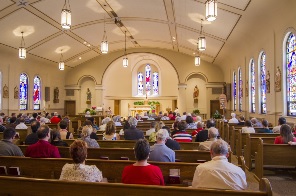
There is so much violence throughout the world. Evil is alive and well even in churches, synagogues, and mosques. Shouldn’t we fight against evil? Must God-followers always lay down their arms according to Jesus’ words and example? Does non-violent reactions really end evil. Pacifism in my opinion is unrealistic. Evil only end when all individuals and nations decide to stop victimizing others.
More and more God-followers are rightly advocating for a loving than wrathful God. Many suggest since Jesus is God Himself, we should follow His words if we think they contradict an Old Testament prophet’s understanding of God. It’s too simplistic to think the Bible was written so we can simply turn to a page to get an answer for our problem. I might give my kids different advice when dealing with similar or different circumstances. Jesus too! Should you confront, should you divorce, etc.? It depends! Seek God and the wisdom of others who are slow to be certain. See: Does God Ever Advocate Violence To Stop Evil?
Mike Edwards was added as a writer and has been a great addition to the site. Mike provides many interesting views and various ways of looking at things. He is not afraid to ask questions and he keeps an open mind as to teachings of the institutional church. Mike also has his own site where he writes at What God May Really Be Like
When it comes to Christianity with all its different denominations, interpretations, different versions of the Bible and such, it seems there are always times when we run into conflict with others.
Each of us as brothers or sisters in Christ seem to want it our way. Our church, our interpretation, our version of the Bible. We each feel that we are right and feel the need to distance ourselves from those who feel differently.
Have you noticed how religion wants to set the rules so each of us know what it takes to be a good Christian? Do this, don’t do that, stay away from this and make sure you participate in that. Be in every service and be active with this group or that group. If you are not reading a particular version of the Bible, you are just wasting your time, if you are not part of a church, you must be backslidden, at least that is the way some fellow Christians make you feel. Rules, rules, rules.
Maybe it is time to stop arguing over denominations, interpretations, versions, and church attendance and start focusing on Christ, who is to be our first love. If we can focus on God’s love and sharing that love with others, we should be able to agree to disagree on other topics.
When we find common ground in our faith in Christ, when we love God with all our heart, soul, strength and mind, we should be able to look past the minor differences we have in our various denominations, interpretations and Bible versions.
Let’s stop fighting against each other and begin to love one another as Christ loves us. Do not let the minor differences come between the love we can have for one another and the things we can share and learn through fellowship with our brothers and sisters in Christ.
*******
Michael Donahoe was added as a writer for Done with Religion as his views fit perfectly with those that are shared on this site. He and his wife have been outside the walls of religion for fifteen years. He enjoys writing about his experiences and thoughts, and he wants to encourage others who are going through the religious deconstruction process. He also writes on Substack at https://deconstructiontrail.substack.com/ and https://personalmeanderings.substack.com/
But let’s be honest, some folks read that like it came with a stack of footnotes and a link to the dress code.
They’ll cross-stitch that verse for the guest bathroom wall, but try applying it to someone who’s queer, questioning, brown, broke, or heaven forbid, a Democrat… and suddenly that love runs drier than year-old communion crackers.
We’ve got church folks playing Bible buffet, loading up on the parts that make them feel blessed and highly favored, and leaving behind the radical love stuff like it’s the weird casserole no one claimed.
Turns out “neighbor” is a pretty flexible term when your theology is shaped more by your comfort zone than the teachings of Jesus.
Culture War Christianity
Let’s stop calling it religion and start calling it what it is: A power play in polyester church clothes.
We’ve got pulpits echoing political platforms instead of prophets. We’ve got churches passing out talking points like communion wafers. And don’t get me started on “Christian influencers” who use the Sermon on the Mount like it’s a motivational poster for pyramid schemes.
This isn’t about Jesus. It’s about keeping the “wrong kind” of people out while pretending it’s holiness. It’s about using scripture like a velvet rope. It’s “love your neighbor” as long as they look like you, vote like you, and keep their weirdness tucked in.
When “Neighbor” Comes with Conditions
Here’s how it plays out: You’re welcome… Unless you make folks uncomfortable. Unless you love someone unexpected. Unless your theology still has questions. Unless you show up not knowing the secret handshake of church culture.
And let’s be real – nothing clears a pew faster than someone daring to be honest about their doubts… or about their pronouns. Folks will hand you a casserole with one hand and yank back their hospitality with the other the second you color outside the lines.
If grace has a checklist, it’s not grace. It’s church bureaucracy with a hymnbook.
Even Progressive Churches Get Messy
Let’s not let the rainbow flag crowd off the hook.
Progressive churches talk inclusion, but sometimes they just mean, “You’re welcome as long as your weirdness matches our aesthetic.”
Question the order of worship? Critique capitalism a little too clearly? Ask why the missions committee only funds projects that come with matching T-shirts and hashtags?
Suddenly you’re a “disruption” instead of a disciple.
We’ve all got our blind spots. The trick is not pretending they’re stained glass windows.
Jesus Was Not HOA-Compliant
Look, Jesus didn’t say, “Love thy neighbor, unless they make the potluck awkward.”
He sought out the people religious folks had written off. He didn’t wait for them to repent in triplicate and pass the doctrinal exam. He broke bread with the outcasts and called it community.
If your “neighbor” stops at the edges of your comfort zone, you’re not following Jesus. You’re following a caricature of him that makes you feel safe and smug.
The Kingdom he preached didn’t have membership tiers. It had open tables, messy grace, and a scandalous welcome. The kind that’ll mess up your preferred seating at the potluck, not to mention your theology.
Get Yourself a Bigger Map
So if you’re still asking, “Who is my neighbor?” Start here: The person you’ve been taught to fear. The one you were told to pity or ignore or convert. The one who makes you squirm a little.
That’s your neighbor.
And the assignment is the same now as it was in tesusy parts: Love them. Not debate them. Not tolerate them. Not pray for them from a distance and gossip in the group chat.
Love. Them.
No disclaimers. No dress code. No doctrinal fine print.
If your church can’t handle that? You might need to stop printing bulletins and start printing membership guidebooks.
A good friend of mine wrote the following paragraph. There is an old hymn that says “On Christ the solid rock I stand, all other ground is sinking sand” As important as the church is in our lives, we have to be careful not to put our hope in it. I have received a lot of help thru the church and a lot of good basic teachings. I was also saved in church but my hope is not in the church. My hope is in “Christ the solid rock”. There are times when we are alone with no Christian fellowship and maybe we can’t make it to church for some reason. We have to be able to stand as mature Christians and rely on our relationship with Christ. The church is no substitute for Christ. It is only where we learn about Him. I guess what I am saying is that we have a relationship with Christ and not the church, and He is our source of strength if we call upon Him in truth. I personally am going thru the desert in life and I have to depend on Him. He has proved His love and care for me and in reality, He is the “Son of the Living God”. Bottom line, let’s be careful to put our dependence on Him. All other ground is sinking sand….
This goes along with some of my posts about modern-day church. The organized church today is a place for believers to get together, but it is not the goal. Going to church does not make us Christians, it does not make us better people or more dedicated believers. It is a place hear about the love of God, a place to enjoy the company of other believers, and a place to reach out and encourage others. Basically, it is a Christian social organization.
We need to stop putting the focus and emphasis on church, stop putting our eyes on pastors and realize that they are not the answer. We need to put all focus and attention on Jesus. It is Jesus we follow and worship. He is the Shepherd, the rest of us are the sheep. There are no co-shepherds, no intermediates between Christ and us. We are to follow Jesus and Him alone. We are to learn from Him, love God and love others.
There is nothing wrong with going to church, but do not put your eyes on an organization or any leaders therein. Keep your focus on Jesus. Whether you go to church or do not go to church, Jesus is the one we look to and serve. Do not worry so much about going to church, but rather be the Church. It is not a building we go to, but the people who love and follow Jesus.
*******
Michael Donahoe was added as a writer for Done with Religion as his views fit perfectly with those that are shared on this site. He and his wife have been outside the walls of religion for fifteen years. He enjoys writing about his experiences and thoughts, and he wants to encourage others who are going through the religious deconstruction process. He also writes on Substack at https://deconstructiontrail.substack.com/ and https://personalmeanderings.substack.com/
We hear the word fundamentalism often in the Christian world. I actually grew up as a fundamentalist, but never realized that was what I was because I never put much thought into all the different terms and labels. I just loved God and went to church because that was the way I thought we lived the Christian life.
When I looked up the word fundamentalism in the dictionary I found the following definitions: 1. a conservative movement in theology among nineteenth and twentieth-century Christians. Fundamentalists believe that the statements in the Bible are literally true. 2. in Christianity the belief that every word of the Bible is divinely inspired and therefore true. 3. a religious movement characterized by a strict belief in the literal interpretation of religious texts, especially within American Protestantism and Islam; the beliefs held by those in this movement; strict adherence to any set of basic ideas or principles.
Now that I know what fundamentalist means, I no longer believe I would be considered one. My views, beliefs and interpretations have changed so much over the years, especially since leaving the organized church. For some reason I never felt comfortable asking questions while in the organization. I just took what the pastor said as gospel truth and never questioned anything. Being outside the walls of religion I am letting all those questions come out and seeking truth from the Spirit of God rather than from a pastor.
Due to strick belief that the Bible is inerrant, divinely inspired and should not be questioned, I believe fundamentalism leads more to separation, condemnation and being judgmental. It seems to me being so set on specific doctrines, beliefs and interpretations can prevent us from asking questions, learning, accepting and loving others.
Are my thoughts a popular way of looking at the Christian life? Of course not! I grew up in the organized church from a very young age and spent over fifty years in it. I also used to think everything depended on my works such as attending church, tithing, doing good works and reading the Bible and believing it was perfect, completely literal and the only way God spoke to us today. There are many people still doing all this and they sincerely love God and think this is the way we are to serve God. Yet being outside of this setting, I have seen what is for me a better way. A way of depending on the Spirit within to teach and guide us. A way that loves and accepts others even when they do not see things the same.
Today the term fundamentalist Christian seems to have more of a meaning of being judgmental and unaccepting of others’ views due to the strick adherence to biblical law. I believe this is completely different from what Jesus taught and what God is like.
Jesus was not a fundamentalist; he was not even a Christian. Jesus was the personification of God who is love. Even those writings from the Old Testament where men wrote from their beliefs, ideas, interpretations and what they thought about God were shown to be wrong when Jesus arrived. He showed us that God is not a god of vengeance and hatred, but a God who loves all of us.
We are to love God and love one another. Loving our neighbor does not mean just loving those who live next door, or loving those who believe like we believe. Our neighbor is everyone else in the world. Based on my experience, it seems many fundamentalists reject those who see things differently and prefer to stay away from those who do not believe the same.
I would rather be known as a follower of Jesus rather than a fundamentalist Christian. The time of following the law and following rules and set doctrines of men have come to an end. We are now living by grace and by loving one another. The Bible should not be used as a weapon against those who Christian people think are wrong. It is a book that tells us about God who is loving and kind toward every human being.
I have actually become quite tired of using labels at all. We are all human beings who are loved by God. We should all be treated with love, respect, acceptance and have the same rights as everyone else. God did not create some people better than others; we are all created in the image of God and are loved by God equally.
There are many views and interpretations I grew up learning in the fundamentalist church that I no longer accept. I certainly have not lost my belief in or love for God, yet many interpretations that were taught by men and women in the institution I now find wrong and and some even unChrist-like.
Rather than adhere to a set of rules and institutional-taught beliefs, we are to submit to the guidance of the Holy Spirit that lives within us. Learn to hear his voice and let your life be a daily communication of his love to others.
*******
Michael Donahoe was added as a writer for Done with Religion as his views fit perfectly with those that are shared on this site. He and his wife have been outside the walls of religion for fifteen years. He enjoys writing about his experiences and thoughts, and he wants to encourage others who are going through the religious deconstruction process. He also writes on Substack at https://deconstructiontrail.substack.com/ and https://personalmeanderings.substack.com/
As Christians, fellowship is an obviously important part of living as a follower of Jesus. Fellowship with other believers should be encouraging and a time to build one another up. As Christians, we need one another for support.
When we hear about fellowship today, we usually think of church. Several churches even have the word fellowship in their name. According to the dictionary fellowship means friendly relationship; companionship; an association of persons having similar tastes, interests; friendliness.
I grew up in the organized church and thought for years I was having good fellowship every time I attended a Sunday morning service. As time went on, I began to question if we were actually enjoying good fellowship or not. If fellowship was a relationship or companionship with others, how was that being obtained by sitting in a pew every Sunday looking at the back of someone’s head? We never really showed much friendliness or companionship just sitting there and we never knew if the person in front or back of us had the same tastes or interests. How were we having fellowship when we just sat and listened to a select few run the program?
After my wife and I decided to leave the organization and live outside the walls of religion we wondered how we would find fellowship with others of similar tastes. Truthfully it did not take long. God started bringing people across our paths in places and at times we never expected.
We were sitting in a local cafe one morning relaxing and drinking our morning coffee when we noticed two men at the next table. One was a young long-haired rock group looking person talking with an older gentleman. We could not help but hear their conversation at times and we kept hearing them talking about God and life in Christ.
After some time of listening, we decided to politely ask about their conversation and found that the younger guy was in a Christian heavy metal band, had left the traditional church a few years ago and was living outside the walls of religion like us. This was an encouragement to us because it showed us that God will bring about people for fellowship any time and in any place.
We have met many people over the past several years as we walk on our path outside the walls who have similar tastes and interests. We have joined with people many times at restaurants, in our home, at parks and online for meaningful fellowship. Many times it has only been 3 to 5 people, but we have had so much more meaningful fellowship with others outside of traditional church than we did sitting in a typical service.
As written in 1 Corinthians 14:26, what then shall we say, brothers and sisters? When you come together, each of you has a hymn, or a word of instruction, a revelation, a tongue or an interpretation. Everything must be done so that the church may be built up. To my wife and me the church mentioned here is not a building of four walls with a select few people running the program on a set day and time. The Church is a community of Christ followers who have a friendly relationship and associate any day, any time, any place when Christ brings them together. It is a time to lift up Christ and his love, to encourage one another and to get to know the tastes and interests of each other.
Obviously, fellowship can also happen with people of different views and interests, different faiths or different lifestyles. We can be loving and accepting of all as we get to know and understand each other and treat each other with kindness, respect and friendliness.
Yet fellowship among believers is needed for us to be encouraged and built up. As mentioned in Hebrews 10:25, not forsaking our own assembling together as is the habit of some, but encouraging one another and all the more as you see the day drawing near. This verse in no way says we must assemble in a building with a set program on a set day or led by a select group of people. This verse just means as followers of Christ we need each other. We need time together getting to know one another, build one another up in Christ and live a life that shows the world the good news of the gospel, which is that God loves each and every one of us.
*******
Michael Donahoe was added as a writer for Done with Religion as his views fit perfectly with those that are shared on this site. He and his wife have been outside the walls of religion for fifteen years. He enjoys writing about his experiences and thoughts, and he wants to encourage others who are going through the religious deconstruction process. He also writes on Substack at https://deconstructiontrail.substack.com/ and https://personalmeanderings.substack.com/
If you are like my wife and me, you can remember from your first day in church being taught that the Bible was God’s holy word. The Bible was perfect and without mistake or any contradictions.
We felt the Bible was personally written by the hand of God through chosen men, and all the answers were contained therein. I truthfully think a lot of us Christian people came to see the Bible as the fourth member of the God-head.
In fact, to even question if the Bible is inerrant was sacrilegious. It was like the familiar quote in the court system when being sworn in, do you promise to tell the truth, the whole truth and nothing but the truth. We have come to believe the Bible is the truth, the whole Bible and nothing but the Bible. Everything is contained within the written word, and God can do nothing outside of the written word.
Of course, that way of thinking really limits the Holy Spirit, who lives within us and is our teacher and guide. If the Spirit teaches us something or shows us something, we immediately want to look it up in the Bible, and if we cannot find it there, then we think the voice of the Spirit certainly must be wrong. Remember, even Jesus said many times, it is written, but I say. To me, this says that Jesus is the living Word and takes precedence over the written word.
Also, I have come to think that many of us have come to a point where we began to wonder if this inerrancy of the written word of God is really the case. I remember reading a section in one of my Bibles between the Old and New Testament that was about how we got our Bible. I remember thinking about how certain books were chosen, by men, as divinely inspired and others were not; which books to put into what we call the Bible and which books to leave out. It sure made me think about how this can be a perfect, inerrant group of writings. Of course, at that time, I quickly dismissed my questions and moved on, lest I made God mad at me for questioning his perfect book. Or maybe I was more worried about making the pastor and other members mad.
Of course, a lot of us were taught that the King James Version of the Bible was the true word of God and any other translation was wrong, and some translations were even an insult to God. My thought on that is how can any translation be considered the true word of God? They are all translations, even the King James. Truthfully, some of the stories I have heard about King James and his instructions on interpreting the manuscripts would make me want to stay away from the King James Version anyway. This is why we depend on the Spirit within us to bring the truth to light and not depend on any particular translation.
The Bible was definitely inspired by God, and that inspiration was through men. We all know if mankind has a hand in anything it is going to be flawed. Being inspired to write does not mean you write word for word through dictation. I can be inspired to write a book about a topic, but it is still going to be me writing, and have my thoughts, feelings, and flare to it. I was inspired by a particular movie to go visit the city it was filmed in. I was inspired to do a particular hobby because I saw the effect on other people that hobby produced. Yet, it was still me that had free will to do these things.
Just because the written word of God is not perfect, that does not negate anything about God. I always heard people say that if the Bible has errors in it or contradicts itself, then the whole idea of God must not be true either. I really do not understand that logic, especially since we know that Jesus is the Word of God. The written word, when viewed through the guidance of the Holy Spirit, is profitable for teaching, for reproof, for correction, for training in righteousness. Yet, nowhere in the Bible does it say the written word is perfect.
In fact, when Christ walked on the earth, and in the early days of Christianity there was not even a written word like what we call the Bible available to the believers. There was the Word of God though, because Jesus has always been around.
My wife and I believe the Bible to be very valuable for learning and a means of hearing from God. We also believe the Holy Spirit lives within us and the still, small voice from within is even more valuable. We believe godly friends and wise people of God can be a help and guidance to us as the Holy Spirit leads through them.
So many of us want to fight and defend the written word we call the Bible. We divide ourselves into groups and denominations, we separate ourselves from the world and from one another. We fight, condemn and alienate ourselves over the written word because we think it is the inerrant words and ways of God, yet the true Word of God, Jesus, is standing right in front of us and we miss Him. Just like when Jesus was talking with the Jews and said ‘You search the Scriptures because you think that in them you have eternal life; it is these that testify about Me; and you are unwilling to come to Me so that you may have life’.
We see that life is in Christ. Jesus is not telling us to come to the Bible or accept the Bible, but to come to Him. Jesus is the true, powerful, inerrant, living Word of God. Read your Bible, let the Holy Spirit bring life to the words, learn and be encouraged from them, but realize the written word is not perfect. Look to the living, perfect Word who is Jesus, and listen for His voice within through the Spirit.
*******
Michael Donahoe was added as a writer for Done with Religion as his views fit perfectly with those that are shared on this site. He and his wife have been outside the walls of religion for fifteen years. He enjoys writing about his experiences and thoughts, and he wants to encourage others who are going through the religious deconstruction process. He also writes on Substack at https://deconstructiontrail.substack.com/ and https://personalmeanderings.substack.com/
The word deconstruction has become popular in recent years, and for me, it has become personal. What exactly do we mean by deconstruction?
First, I can honestly say that twenty years ago I would not have any idea what deconstruction was, other than tearing down a house or building. I can also say, if I had found out back then what it was spiritually, I would have wanted nothing to do with it.
Fifteen years later, everything changed. Deconstruction became very important to me once I realized that I was already starting to go through it. I had been having many questions about the church and the things I was taught growing up. Many things were not making sense and it seemed there had to be more than just sitting in church once a week.
The definition of deconstruction is the analytic examination of something (such as a theory) often in order to reveal its inadequacy; spiritually speaking it is questioning, re-evaluating, and even dismantling aspects of faith or religious practices. It does not actually mean demolition, instead it means breaking down or analyzing something to discover its true significance, which is supposedly almost never exactly what the author intended.
Over the fifty-five years I spent going to church, I had many questions. Unfortunately, I felt I could not ask those questions because people would think I did not have enough faith. Yet, in time I got to a point that I started asking questions anyway and searching for answers, which led to me to start my deconstruction process.
Of course, in time, I came to a point where I started to rebuild my faith with new ideas and new ways of looking at things. I had a kind of faith that was freer and made more sense. Not that I had all the answers, but now I was not afraid to ask questions and admit my doubts. I found out there was a term for this, which is reconstruction. A rebuilding of my faith without the church doctrine and the certainty I felt I had to have while in the religious organization.
Reconstructing our faith is rebuilding some of the interpretations and spiritual ideas without destroying our faith foundation. It is seeing things differently, being open to asking questions and admitting we do not know everything. It is a faith of uncertainty more than being closed-minded and set in our ways.
I was now free to walk with God outside of set doctrines and some of the ways I was taught in church. I could now follow the Spirit without the religious requirements, all the while learning to love and accept all people.
Deconstruction and Reconstruction all lead to Transformation, which is a profound and lasting shift in self-concept, mindset, and overall way of being. I now felt comfortable not knowing all the answers and not feeling guilty because of it. I could accept people from different walks of life and different faiths without the guilt that religion sometimes puts on me. I was free from the doctrines and religious interpretations that kept me in submission. Now I depend on guidance from the Spirit that lives within me rather the views and opinions of other human beings.
Although deconstruction can be an important part of our life, I do not think we should stay there. Yet, I do believe we should be continually going through deconstruction and reconstruction, and continually being transformed. We should not become stagnant, but constantly changing as the Spirit leads us day by day.
God is so much bigger than we can realize. Part of deconstruction for me was realizing after all the years within the church and the years following God outside the walls of religion, there is always more to learn. God cannot be contained in a building nor a book. I realize that we need to focus more on the leading of the Spirit that lives within us and less on the doctrines and views of religious systems.
*******
Michael Donahoe was added as a writer for Done with Religion as his views fit perfectly with those that are shared on this site. He and his wife have been outside the walls of religion for fifteen years. He enjoys writing about his experiences and thoughts, and he wants to encourage others who are going through the religious deconstruction process. He also writes on Substack at https://personalmeanderings.substack.com/ and https://deconstructiontrail.substack.com/
I remember seeing a news article about a group of Christians picketing another church group. Supposedly they were picketing because they felt the church group, who allowed gays and women who had abortions into their assembly, was being soft on sin.
I can only assume that the picketers thought the gays and the abortion people were too big of sinners to be in with the religious folk.
Seems the church assembly who were be accepting was being more Christlike to me, but the whole situation made me feel a little ashamed to be called a Christian. In fact, for me I have decided to give up being called a Christian. Christianity is just another man-made religion, and I am done with religion. Rather than being called a Christian, I think it makes more sense to say I am a follower of Jesus. Jesus did not start Christianity nor did he come to start any religion.
Being a follower of Jesus is a daily, 24/7 lifestyle, not something to be done once a week in a building. It is not following a doctrine or set of rules and regulations.
As a Jesus follower, we accept all people and we love all people, like Jesus did when he walked this earth.
This does not mean we agree with everyone. It does not mean people can live anyway they want and be pleasing to God. But once they come to God, the Spirit comes to live within them and he will guide them in their daily lives and actions. It is not our job to condemn others. Jesus command under the New Covenant is for us to love God and love others.
Like the picketers and church group mentioned above, a lot of Christians today spend more time fighting and arguing amongst themselves while the world watches and laughs.
As followers of Jesus, we need to keep in mind that we, the Church, are the body of Christ in our world. We may be the only “Jesus” many people see. We should keep our focus on Jesus as our all in all, and forsake our personal feelings. In our lives, Jesus should increase and we should decrease.
*******
Michael Donahoe was added as a writer for Done with Religion as his views fit perfectly with those that are shared on this site. He and his wife have been outside the walls of religion for fifteen years. He enjoys writing about his experiences and thoughts, and he wants to encourage others who are going through the religious deconstruction process. He also writes on Substack at https://personalmeanderings.substack.com/ and https://deconstructiontrail.substack.com/
Posted by permission by Kari Browning thebeautifulrevolution.org
What if the version of Christianity many of us inherited isn’t what Jesus intended at all?
What if the liberating message of Jesus—centered on justice, compassion, and harmony with creation—was gradually replaced by a religion shaped more by empire, patriarchy, and control?
Somewhere along the way, Christianity became less about following a revolutionary rabbi who stood with the vulnerable and the oppressed… and more about preserving power structures, obeying hierarchies, and escaping the world instead of healing it.
Instead of the teachings of Jesus—a way of living in harmony with each other and the earth—we got the religion of empire.
And honestly? It explains a lot.
It explains why so much of the church today aligns more with nationalism than with Jesus.
It helps explain how the earth came to be violated and Indigenous peoples oppressed—justified by distorted doctrines like “dominion” and “manifest destiny.”
It explains why so many of us are walking away—not from Jesus, but from what’s been done in His name.
Maybe the answer isn’t to give up on faith, but to reclaim the beautiful Gospel that empire has tried to erase.
Helping Survivors is on a mission to help heal, educate, and empower people who have been impacted by sexual abuse, assault, or harassment. We are a passionate group of experts and advocates who believe individuals who have experienced sexual assault, abuse, or harassment deserve to know their rights and options.
If you are in crisis and need support
call the Trevor Lifeline
at 1-866-488-7386
Undue Medical Debt
Undue Medical Debt empowers donors to forgive billions in oppressive medical debt. We are dedicated to removing the burden of medical debt for individuals, families and veterans across America. Click HERE to donate now.
Doctors Without Borders help people worldwide where the need is greatest, delivering emergency medical aid to people affected by conflict, epidemics, disasters or exclusion from health care. Help support us by making a donation here:
Wishes are more than just a nice thing, they can be a game-changer for a child with a life-threatening medical condition. We grant the wishes of children with life-threatening medical conditions to enrich the human experience with hope, strength and joy. To make a donation click here:









 Done with Religion