When we talk about those in authority in the Christian world, we most often are talking about church leadership: pastor, bishop, deacons, worship leader, youth pastor. Many people seem to look up to those who are given authority and leadership positions in the church.
We tend to think that those who are in authority and leadership positions are more knowledgeable about spiritual matters, and able to lead others to God better than the normal everyday Christian.
The truth is we are all brothers and sisters in Christ and we are all capable to be leaders in the sense we can encourage and help build up those with whom we have contact along the way. Each of us are kings and priests in God’s kingdom and no one is more important or on a higher level than anyone else.
Christian leadership is actually brothers and sisters in Christ who have lived and experienced more in spiritual matters. They lend a helping hand to those who are still maturing in their walk with God. There is no position of authority in this type of leadership. It is done out of love and compassion for one another and the desire to be used by God to encourage others in their walk with God.
What I see so often with people who take authority over one another is that it places an intermediary between God and man. Fortunately, not all people in leadership positions think this way and they are truly serving out of love for God and for helping their fellow believer. Yet, so often we hear of people in authority that demand our allegiance. They insist we listen to them and follow what they teach or else. This is a great misuse of authority in the Christian world today.
I do not believe there are offices of authority and leadership in the sense we hear about it today. Those who have been given positions of leadership in the body of Christ are not on a higher standing than anyone else. They are to lead by example out of love for those who are still learning. They are to be encouragers, helping build up their fellow believers into maturity.
Ephesians 4:11,12 So Christ himself gave the apostles, the prophets, the evangelists, the pastors and teachers to equip his people for works of service so that the body of Christ may be built up.
The true meaning of leadership by God’s standards is servanthood. Thinking more of others than you do yourself. So often it seems like just the opposite with men and women thinking they are the ones with authority and knowledge.
Matthew 20:25,26 but Jesus called them to Himself and said, you know that the rulers of the Gentiles lord it over them, and their great men exercise authority over them. Not so with you. Instead, whoever wants to become great among you must be your servant.
What I believe is the final authority among Christians is the Holy Spirit who lives within us. The Bible can be used by the Spirit as a guide and help, but the Bible is only a tool. It is profitable for teaching, for reproof, for correction, for training in righteousness. Apart from the Spirit there is no final authority in any person, book or organization.
Although we can learn from the Bible and we can learn from one another and their experiences, it is the Spirit of Jesus from within us who is the final authority and the head of the body known as the Church. The Church is not a building, not a denomination or an organization, it is each of us who are equally functioning and necessary parts of the body of Christ.
*******
Michael Donahoe was added as a writer for Done with Religion as his views fit perfectly with those that are shared on this site. He and his wife have been outside the walls of religion for fifteen years. He enjoys writing about his experiences and thoughts, and he wants to encourage others who are going through the religious deconstruction process. He also writes on Substack at https://personalmeanderings.substack.com/ and https://deconstructiontrail.substack.com/
I grew up in the traditional, organized church. I was always taught that the pastor was head of the church, and he had all the answers and so much more knowledge than anyone else in the church. I mention the pastor as a ‘he’ because when I was young and growing up in the church it was unheard of to have a woman pastor.
I remember scheduling meetings with the pastor so I could ask him questions and find out all the answers to Christian living. It almost floored me one time when I asked the pastor a question and he actually said he did not know the answer.
Looking back, I can see that I certainly looked to the pastor rather than looking to the Spirit. I was putting my hope in a man that I thought could tell me everything about God, yet I was not seeking to know God himself.
Next in line were the board of elders. Each of them were so much more holy than I or anyone else in the church or else they would not be in that position of authority. At least that is what I thought at the time. I have a friend who thinks prayers have more authority when she goes to the board of elders and has them pray.
Questioning Christian Leadership
The longer I was in the church, the more I began to wonder about things. Of course I did not dare ask the questions I had since people would be questioning my faith, or think I was questioning the pastor.
When I read that Christ was the head of His church, I wondered why the pastor seemed to get credit for that position.
I read that we should call no one father (or pastor) other than God, and I again wondered why people in position of leadership and authority in the church wanted to be called pastor or apostle or elder.
We are told that the Holy Spirit is our guide and teacher, and we do not need anyone other than him. Yet, we look to the pastor, or an elder, or some big name evangelist to find all the answers to our questions.
I began getting dissatisfied with having these questions and not letting them surface enough to come out and be asked. I began to realize I had more and more questions, and fewer and fewer answers.
I finally started coming across books and websites of people who seemed to be in the same boat. They were wondering and questioning and being open with their questions. Some of them seemed to actually come up with some answers that made sense to me.
The more I thought, questioned, and read, the more I began to realize that our traditional church system is really not what God intended for the church. I also realized that questioning is not a lack of faith. God can handle our questioning; in fact, most of the time Jesus taught more with questions than answers. He wanted people to question and reason over things.
True Christian Leadership
The true Church that Jesus is building is not a brick and mortar place. The head of the Church that Jesus is building is not a pastor, pope, elder, or apostle. In fact, the head is not a man or woman at all.
Leadership in the Church of Jesus is not what we have always thought of either. When we realize Christ is the head and leader of his Church, we begin to realize that man has no business demanding or expecting people to follow them and put them in the place of Christ.
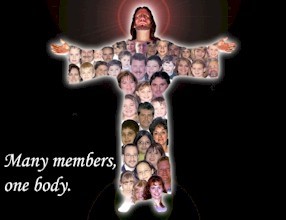
True Christian leadership is not an office of authority. It is not a place for only a few who are specially trained at a man-made Bible school. True Christian leadership is for all of us who are members of the Church of Christ. We are all kings and priests; we are all holy and righteous because of Christ. To be clear, when I say Church of Christ, I’m not talking about any denomination or physical building. The true Church is a community of people who are following Christ, and He is our head. All the rest of us, men and women alike, are equally functioning body parts of his Church.
No person has a place of authority over another. That is the world’s way of doing things. That is the business way of doing things. Needless to say, there are a lot of churches and religious organizations that are acting like big business with their presidents and CEO’s, but that is not how it should be.
Christian Leadership as God intended is the Spirit working through the different body parts, leading by example. They are encouragers and teachers from a place of love and experience, not a place of authority and power. Each of us are leaders at one time or another in this sense of leading by example, experience, and love. We come in contact with those who need encouragement or a little guidance, not from someone who thinks they know it all, but from someone who has been there. A person who, out of love, wants to see the best for everyone.
True Christian leaders will not demand your loyalty. They will not want your allegiance to them. They will not rule over you with authority and expect you to follow them no matter what. True leaders will want to lead you to the head and true leader of the Church, Jesus. It is time we stop looking to men and women as our guides and leaders, and look to Jesus. We need to listen for the leading, guidance, and teaching of the Holy Spirit who is actually God within us, rather than seeking the knowledge and wisdom of mere men.
*******
Michael Donahoe was added as a writer as his views fit perfectly with those of Done with Religion. He also writes on Substack at https://personalmeanderings.substack.com/
I’m convinced belief in a benevolent God makes you kinder. We often treat others the way we think God treats us. How has God’s threats of punishment helped you break away from bad habits or behaviors you long to change? Grace or authoritativeness doesn’t guarantee change, but I believe we best change because of God’s or friends’ love and acceptance. Below is John Sander’s article on the topic in a book recently published Open and Relational Leadership: Leading with Love. I also included a link below *** of my article in the book.
The Leadership of a Nurturant God
By John Sanders
Christian leaders should imitate the leadership style of the God who nurtures.
The pastor plopped his Bible down on the table, pointed to it, and said, “I want to know why you put a question mark where God put a period?”
He was upset about my book that surveyed a range of views that Christians hold on the topic of the destiny of those who never heard of Christ. He believed that biblical teaching on the topic was clear, simple, and singular. He did not like it that I rejected his position and, instead, endorsed a range of different views that in one way or another gave hope for the salvation of those who have never heard of Jesus.
The values underlying the different approaches taken by the pastor and me arise from what social scientists call Nurturant and Authoritative values. Nurturants believe it is best to empower people by affirming and loving them. Nurturants prize values such as listening to others, perspective taking, and humility. Authoritatives believe that followers must first obey the leaders before the leaders show acceptance to them. Authoritative leaders need not listen to others because they are the ones in charge and questioning the leader means challenging their authority. They think that perspective taking and humility are signs of weakness. Leaders should simply say, “Because I said so.”
Open theism is a variety of Nurturant morality while much of evangelicalism and conservative Catholicism are versions of Authoritative morality. The Apostle Paul implored Christians to “be imitators of God” (Eph. 5:1). Richard Kearney says, “Tyrannical Gods breed tyrannical humans.” We imitate the deity we believe in and there are those who believe in an Authoritative God and those who affirm a Nurturant God. Both Gods seek to create humans in their image. I claim that the overall biblical portrait is that of a nurturing God and that Christian leaders should emulate these characteristics. Some examples will show how this works.
Many biblical texts show that God is both responsive to our input and open to our prayers. For example, when God announced his intended judgment on Sodom, Abraham questioned and negotiated with God (Gen. 18). An Authoritative God would have told Abraham: “I am God so shut your mouth.” Instead, God patiently listened and considered Abraham’s concerns. In another story God and Jacob have an encounter and God wants to leave but Jacob (whose name means “grabber”) grabs onto God and wrestles all night long with God. In response, God blesses Jacob and gives him a new name—Israel, which means, “wrestles with God.” God approved of what Jacob did. In Exodus, God asked Moses to return to Egypt and liberate the Jewish people. However, Moses does not do what God says. Instead, he raises five problems with God’s plan. An Authoritative God would have said, “Go now, because I said so. Do not question my plan or authority!” But the Nurturant God was open to Moses’s questions and to each of them God reiterates that “I will be with you.” Even when Moses tells God to go “find somebody else,” God adjusted the divine plan by allowing Aaron to do the public speaking. Thus, God was flexible and adaptive in working with people.
The way God relates in these stories fits with Paul’s description of love in 1 Corinthians 13. Love is patient, kind, and not arrogant. It does not insist on its own way. Rather, love puts up with us, has faith in us, and places hope in us. God does not say, “It’s my way or the highway” nor does God display a “take it or leave it” attitude. Rather, God engages us with a give-and-take in which both parties contribute and God practices innovation and employs flexible plans. God works with us like a jazz band which requires improvisation from all the players. At various times, each player takes the lead and the other players have to respond to what the other is doing. Love, says Paul, is not boastful so God does not say, “My music is the only music that matters.” Rather, God delights in sharing the stage and seeing what music others produce. Of course, this involves some risk on God’s part because we may do things that harm others. Love trusts others but we can, at times, disappoint the beloved.
The Nurturant God listens to our input and is flexible in adjusting plans. God empowers us to participate in the vocation of redemption and delegates responsibility to us for many things. Sometimes we bring God success but we can also let God down. This is how a strong leader operates. Inflexible people who demand their own way are weak leaders. If God is a nurturing leader, then leaders who imitate God will treat others the way God treats us. They will love others by empowering them. They will put faith in others to accomplish a mission. They will hope for a better future.
Philosophers like to speak about God’s “great-making” properties by which they mean power and knowledge. God certainly has these but if Jesus is our best example of what God is like, then God’s great-making properties include love, empathy, humility, and perspective taking. As God incarnate, Jesus “walked a mile in our shoes.” God experienced what it is like to be human.
Genuine leaders are those who learn what other people in the organization are experiencing. In church and in business, leaders should find ways to understand the perspective of others and practice humility by being willing to learn from others. God does not micromanage the church. Rather, God puts divine trust in us. How is that for confidence? It is what church leaders should do as well. One thing that often prevents leaders from doing this is the fear that lack of control may result in others doing things that bring embarrassment on the congregation or organization. But God takes risks with us and we should do the same.
Another implication of the way God works with us is that churches should reject autocratic rulers. If God listens to us and considers our concerns, then leaders should foster democratic structures in order to hear the voices of others. In much of church history, leaders have been authoritarian, and pastors have been little potentates ruling over their piece of the kingdom. They are in charge and seek to control what others believe and do. Making sure that everyone has a voice and providing for some diversity should be a high priority for Nurturant leaders. In the Bible, the metaphor of God as a king is common. But God is quite an unusual king. A king who values what others have to say, exercises flexible strategies, and comes to us humbly in Jesus. This is true kingship and leadership.
One last area of leadership that I want to mention returns us to the story of the pastor criticizing my work for presenting different Christian views on a topic. If God trusts in us and is open to going in directions we want to pursue (as with Moses), then leaders should expect some diversity of viewpoints and practices. We should make room for a “constrained pluralism” of views and practices. We should be able to agree on some general Christian beliefs and practices. Yet, because we do not know everything and do not possess a foolproof understanding of what God wants, we should have humility in our claims to truth.
Throughout history, many church leaders affirmed the Authoritative God and sought to impose monopoly religion on everyone. They established all the correct beliefs and practices, such as those surrounding the Lord’s Supper, and anyone who thought differently was exiled, tortured, or burned at the stake. The Nurturant approach affirms a few general Christian truths and allows for a range of views. This is not an “anything goes” approach. Rather, it acknowledges that Christians, from the first century on, have always had some diversity. One can favor a particular understanding of say, baptism, while recognizing that other Christians think differently. In short, one can affirm a specific doctrine or practice as the best and tolerate other Christian views. A Nurturant approach expects some diversity while Authoritative religion fosters monopolies, uniformity, and punishes those who do not conform.
Christian leaders should imitate the Nurturant God. God is love and love is patient, kind, and does not insist on its own way. God values our input and invites us to join the divine band and create some music. God does not micromanage and control us. Instead, God empowers us and takes the risk that we may mess up along the way. In addition, God allows for a range of beliefs and practices—a constrained pluralism. Leaders should emulate these important values.
John Sanders is Professor of Religious Studies at Hendrix College. He is the co-author of The Openness of God, and author of The God Who Risks and Embracing Prodigals. He enjoys basketball and kayaking.
When James Hunter mirrored the skills of leadership listed in The World’s Greatest Leadership Principle: How To Become A Servant Leader to Paul’s attributes of love from 1 Corinthians 13, he provided more than simply how to be a great leader. He spelled out practical ways of showing love and provided insight on being a great human. When I first set out to detail each of the skills here, I naturally thought the eight traits would divide into four posts of two skills each. However, as I begin studying them more, the breakdown I’ve used seem to fall off the pages right before me.
As I’ve stated in each post, Hunter’s ultimate definition of love is the act of extending yourself for others by identifying and meeting their legitimate needs and seeking their great good. Patience and kindness are the first traits listed and are the first steps on the road to extending oneself. For most of us, patience and kindness come rather easily, at least externally, as we always strive to show our best face to strangers and others we seek to hide our true selves from. The act of extending was further displayed as we then discussed humility, respect, and selflessness. These three skills provide the motivation to allow us to be patient and kind as the more aware we become of treating others with respect and seeing we are human and all the same the more patience and kindness flow naturally from us. I truly believe the last three skills discussed cause the greatest extension of ourselves when practicing love.
To once again borrow the words of C. S. Lewis:
“To love at all is to be vulnerable. Love anything and your heart will be wrung and possibly broken. If you want to make sure of keeping it intact you must give it to no one, not even an animal. Wrap it carefully round with hobbies and little luxuries; avoid all entanglements. Lock it up safe in the casket or coffin of your selfishness. But in that casket, safe, dark, motionless, airless, it will change. It will not be broken; it will become unbreakable, impenetrable, irredeemable. To love is to be vulnerable.”
Extending yourself makes you vulnerable. In other words, to love is to be open to hurt. These last three skills guide us in dealing with hurt.
Forgiveness
Forgiveness is defined as letting go of resentment. It’s one of the most important character skills for a person to possess: because people are human and will make mistakes, a lot of them. Your spouse, your kids, your parents, your boss, your coworkers, your teammates are going to screw up and let you down. We must be willing to accept limitations in others and develop the capacity to tolerate imperfection. The skill of letting go of resentment that lingers when people have hurt us, falsely accused us, threw us under the bus, and generally let us down is not about being passive or letting people get away with bad behavior or pretending the bad behavior is acceptable. Forgiveness involves going to people and communicating how what have done has affected you, dealing with it, letting go of any lingering resentment. Resentment destroys the human personality. Harboring resentment, seeking revenge, and obsessing about what others have done to us often causes us to become spiteful and hateful. When our pride and feelings are hurt, we justify not letting people off the hook.
Hunter explains forgiveness occurs when we separate people from behavior. We all do bad things but aren’t necessarily bad people. Are we as willing to let others off the hook as easily as we do ourselves? I was once told by a man I loved dearly, “Rock, we only accuse others of what we are capable of doing ourselves.” I hated hearing those words. I refused to admit the judgments I made mentally against others were only because I had the ability to do the exact the same things. Then the words of Paul is his letter to the Romans wafted through my thick head, “You, therefore, have no excuse, you who pass judgment on someone else, for at whatever point you judge another, you are condemning yourself, because you who pass judgment do the same things.”
Honesty
Honesty is simply being free from deception. Trust is the glue that holds relationships together. Trust is built by behaving with honesty, it requires effort, and comes through communication of listening and speaking. One major aspect of honesty which is rather difficult is accountability. Failure to hold people accountable for their actions is deceptive and is not living up the responsibility of helping others be the best they can be and provides the false illusion that everything is okay. Dishonesty and deception take root in our heart as unforgiveness is allowed to dwell. Gandhi stated, “One man cannot do right in one department of life whilst he is occupied in doing wrong in any other department. Life is one indivisible whole.”
Commitment
Commitment is defined as sticking to your choice. Practicing the skill of love requires commitment and passion for personal continuous improvement as well as a passion for doing what you say you are going to do, following through on promises, and finishing what you started. Commitment is about being loyal to people on the team and being there for others when they fail or when they need your help. It’s not about blind loyalty – doing the right thing always trumps loyalty. Commitment is having the moral courage to do the right thing regardless of friendships or alliances, even if its unpopular or comes with personal risk. Moral courage is the resolve to subordinate anything that gets in the way of doing the right thing. When all is said done, that right thing is always love.
Forgiveness, honesty, and commitment require vulnerability. To be vulnerable is to be capable of being physically or emotionally wounded and possibly open to attack or damage. It’s not a popular idea today to love to the extent of being vulnerable and possibly exposing yourself to hurt; however, as Paul reminds us in the closing of his famous words on the subject, “Love never fails.”
In The World’s Greatest Leadership Principle: How To Become A Servant Leader James Hunter defines love as the act of extending yourself for others by identifying and meeting their legitimate needs and seeking their great good. We’ve looked at Hunter’s classification of love as a skill as it requires repeated practice, but what does it mean to extend yourself? Extend means stretch longer or wider to cover a larger space. In the previous post, we looked at how this extension begins with patience and kindness. The next three traits require we stretch ourselves further in developing the true skill of love.
Humility
Humility is defined as displaying an absence of pride, arrogance, and pretense. It is often mistaken as weakness and having a “poor pitiful me” complex. However, true humility keeps things in perspective knowing its strengths and weaknesses and recognizing all are capable of mistakes. It produces authenticity as humble people know who they really are, they keep their egos in check, and allow space for uncertainty and the opinions of others, even if contrary to their own. Because they know they don’t have all the answers, and they’re okay with it, they don’t take themselves too seriously and are even able to laugh at themselves. In Mere Christianity, C. S. Lewis describes humility as follows:
To even get near [humility], even for a moment, is like a drink of cold water to a man in a desert.
Do not imagine that if you meet a really humble man he will be what most people call “humble” nowadays: he will not be a sort of greasy, smarmy person, who is always telling you that, of course, he is nobody.
Probably all you will think about him is that he seemed a cheerful, intelligent chap who took a real interest in what you said to him.
If you do dislike him it will be because you feel a little envious of anyone who seems to enjoy life so easily. He will not be thinking about humility: he will not be thinking about himself at all.
This past weekend, the family and I took the opportunity to view A Beautiful Day in the Neighborhood which is based on a journalist’s interactions with Fred Rogers for his article assignment. In the first phone conversation between the two, Fred makes the following statement, “Do you know what the most important thing in the world is to me right now? Talking on the phone with you.” This interaction embodies the words of C. S. Lewis above. To use the definition of love from James Hunter, humility extends itself by taking an interest in others in the moment as it happens.
Respect
Respect is simply treating people like they are important or like they matter. Genuine respect is felt when originating from a truly humble person. Being respectful of others includes treating even those we consider insignificant or find challenging with the same consideration of those we consider important or of great stature. A common misconception about respect is that it must be earned. Hunter points out respect is not earned, it is given. I am a systems guy who loves spreadsheets, calculations, and data analysis. When faced with a decision, I’ve often created pro and con lists both mentally and physically. Hunter reminds us respect is not earned based upon a spreadsheet tallying someone’s positives and negatives but should be given based simply on the fact of being human and because everyone is important even when we judge someone as behaving poorly or undeserving.
In the aftermath of September 11, 2001, all major U. S. airline companies reported a loss in the third quarter except one. The employees of Southwest Airlines organized a giveback effort to contribute a portion of their paycheck back to the company to keep it afloat. What would cause employees to make such a decision for their employer? Although he had stepped down six months before the dreadful event of that day, twenty-year CEO Herb Kelleher of Southwest Airlines had created a culture within his company: “A company is stronger if it is bound by love rather than by fear.” This attitude of love and respect was not something Kelleher developed overnight but was instilled in him at an early age by his mother who taught him “that positions and titles mean absolutely nothing. They’re just adornments; they don’t represent the substance of anybody . . . She taught me that every person and every job is worth as much as any other person and any other job.”
Boxing great Muhammad Ali described respect this way, “I don’t trust anyone who’s nice to me but rude to the waiter. Because they would treat me the same way if I were in that position.”
Selflessness
Selflessness is defined as meeting the needs of others and requires giving of yourself. It finds its home in the willingness to set aside one’s wants and needs in seeking the greatest good for others and putting others before yourself. Selflessness is an impossibility without humility and respect. C. S. Lewis also captured the heart of selflessness in his further words on humility: “Humility is not thinking less of yourself, it’s thinking of yourself less.” The nature of selflessness is what allows us to extend ourselves to cover wide spaces others may be unwilling or even unable to cover and cross.
In conclusion, referring once again to Paul’s letter to the Philippians, he reminds them of these three traits of love with the following:
Don’t be selfish; don’t try to impress others. Be humble, thinking of others as better than yourselves. Don’t look out only for your own interests, but take an interest in others, too. You must have the same attitude that Christ Jesus had.
Paul explains this mindset is displayed in the attitude and life of Jesus. Hunter lists no greater example than Jesus of love and servant leadership.
So, how does this play out in our daily lives? Do you consider yourself humble, respectful, and selfless? How do you handle interruptions in your daily tasks or routines? I’ve written previously of my struggles in this area and room for practicing each of these skills. Remember, love is not a feeling and not based on our feelings but is a choice we make and exhibit through our behaviors.
On a humorous note, and just to end with a chuckle, I’ve always considered traffic quite a transparent scenario to examine oneself in displaying these qualities. How selfless are you when in a hurry and others simply won’t get out of the way? How much humility and respect do you show to drivers who insist on waiting to the last minute to merge or simply refuse to yield?
I’ll be the first to admit I need more practice on each of these skills.
To be completely honest, the title of this series does not agree with me. It makes no sense to think of love as a skill. To think of love in such a manner takes the mystery out of it and seems to reduce it to nothing more than a learned trait or ability. We romanticize love as something spontaneous which just happens and is uncontrollable, but maybe our idealization of love is why we experience a lack thereof. By definition, a skill is the ability to do something well, based upon one’s knowledge and practice. According to the Oxford dictionary, to practice is to perform (an activity) or exercise (a skill) repeatedly or regularly in order to acquire, improve or maintain proficiency in it. Could it be because we haven’t been taught to practice the eight characteristics of love listed by Paul that we see so little of it in action in our everyday lives?
As I shared previously, the study of leadership and love based upon James C. Hunter’s The World’s Greatest Leadership Principle: How To Become A Servant Leader has provided a more practical application of Paul’s components of love than I have previously encountered. Hunter’s description of each of the eight characteristics have provided more of a mirror than I imagined into my own personal thoughts, motivations, and behaviors. Remember, Hunter defines love as the act of extending yourself for others by identifying and meeting their legitimate needs and seeking their great good. Defining love as an act indicates love is a verb and takes action. In short, love does. Love is not a feeling and not based on our feelings but is a choice we make and exhibit through our behaviors. In this post, I begin sharing each of those traits in more detail as explained by Hunter.
Patience
Patience is typically defined as displaying self-control and most commonly thought of as being seen in times of waiting. Hunter puts a different spin on patience by defining it more clearly as impulse control. An impulse is a strong desire or urge to act suddenly and reactively. Impulses are knee-jerk reactions displayed with little to no consideration of consequence to such reactions. Those given to impulses will generally offer excuses such as “This is just the way I am,” or “You know how I am” to excuse their out of control behavior when losing their temper or flying off the handle. To rely on such an excuse is a refusal to extend oneself for others. Practicing impulse control teaches us to respond not according to what we feel but according to what is the right thing to do. Patience makes us consistent and predictable in both mood and actions and causes us to be easy to be with and approachable. Paul describes this as forbearance and moderation in his letter to the Philippians and states this quality of our lives should be evident to all.
To gaze into the mirror of patience is to consider the memories of blowing it, losing your cool, and erupting in angry, volcanic outbursts. Even if the emotions behind the outbursts are truthful, justified, and legitimate, would you have responded in like fashion had you taken pause to understand and consider the damage such a reaction could cause to those on the receiving end? What if the recipient of your lack of patience were a VIP, dignitary, or someone whom you wished to impress? Would your response have been the same or would you have magically been able to control yourself and your impulses?
Kindness
The common definition of kindness is the quality of being friendly, generous, and considerate. Kindness requires us to reach out and extend ourselves by being courteous and listening well even to people we may not be particularly fond of. Hunter defines kindness as displaying common courtesy to others. By dubbing kindness the WD40 of relationships, he explains common courtesies are the little things that help relationships flow smoothly. Little things most of us would simply refer to as manners like saying “Please”, “Thank you”, “I’m sorry”, “I was wrong”, or even “Good morning!”
Kindness is also about showing appreciation and encouragement to others. Hunter reminds us of the famous words of Mother Teresa, “People crave appreciation more than they crave bread.” Everyone wants to know they matter and are valued. Kind people are listening people. We’ve all been cut short in conversation and interrupted by others who simply can’t wait for us to stop speaking so they can say what’s on their mind. It’s obvious they aren’t listening as they nearly trip over the words they can’t wait to say. Taking a moment to pause and consider how devalued and under appreciated you feel in such circumstances will help lead you on the path to kindness towards others.
If love is truly the act of extending yourself and seeking someone’s greater good, patience and kindness must be the first steps of extension as they allow others to feel safe around us. It’s written perfect love drives out all fear. As we become known for our generosity and approachability, the fear of rejection will disappear. It will not always be easy or convenient to practice patience and kindness, but, just as athletes train for competition and musicians rehearse for a performance, the more we practice each of these skills, the more proficient we become.
I recently shared a trio of posts from 2017 detailing Paul’s definition of love in 1 Corinthians 13. Unbeknownst to me in late September as I was meditating upon Paul’s words and what I had previously written, I was about to embark on a nine to twelve-week training with my company which would cause further reflection on the famous passage. As part of my employers’ ongoing and relentless commitment to the personal betterment of their staff both professionally and personally, we have been on a journey through James C. Hunter’s The World’s Greatest Leadership Principle: How To Become A Servant Leader. Hunter concludes leadership skills and character development are one and the same. He builds his writing upon a foundation of the most sought-after leadership skills mirroring the same attributes of love described by Paul and therefore devoted the largest chapter of the book to detailing and defining each of these characteristics.
I was honored to be selected to present this chapter to the staff and discovered Hunter’s words to be some of the most practical applications of love I’ve yet to find. If truly applied and practiced, I believe the qualities and skills he details can impact not just one’s workplace, but every relationship, interaction, and encounter we experience in life.
Depending on one’s personal preference of scripture version, the exact terms listed by Paul may vary although the meanings remain. Due to this, for simplicity’s sake we will define the eight attributes of love as the leadership skills Hunter lists:
Patience – Kindness – Humility – Respect
Selflessness – Forgiveness – Honesty – Commitment
Before examining each of these, it’s important to understand a key distinction of love Hunter declares in his writing and why it is considered a skill. Love is not about feelings, it is about how we behave. While feelings have the power to influence decisions and behaviors, they have nothing to do with the choices we make to practice the qualities listed above. According to C. S. Lewis, “Love in the Christian sense, does not mean an emotion. It is a state not of feelings but of the will; that state of the will which we have naturally about ourselves, and must learn to have about other people.” Notice how Lewis embodies the words of Jesus to love our neighbor as ourselves. He points out love is a matter of will we have naturally about ourselves and should choose to have towards others. These words of Jesus, recorded as the second greatest commandment, have been etched in my brain from an early age, but Hunter’s determination of love being a skill shines a light on the command I’ve yet to see until this point in my life. Feelings have no effect on our skills and therefore should have nothing to do with the choice to remain kind, respectful, forgiving, and committed. By definition, skill is the ability to do something well, based upon one’s knowledge and practice. As followers of Jesus, we should be known as those who love well and therefore love should be a skill in which we are most proficient as we practice patience, kindness, humility, respect, selflessness, forgiveness, honesty, and commitment.
In his book, Hunter embodies the words of both Jesus and Lewis in defining love as the act of extending yourself for others by identifying and meeting their legitimate needs and seeking their great good. In simple terms, love is as love does. It’s of little use for me to make a claim of loving someone if I do not embody the skills of love.
Love looks like Patience.
Love looks like Kindness.
Love looks like Humility.
Love looks like Respect.
Love looks like Selflessness.
Love looks like Forgiveness.
Love looks like Honesty.
Love looks like Commitment.
The journey through Hunter’s book has been an unexpected experience. Previous leadership books I’ve read have done little more than provide how to lists of being a better leader while causing reflection upon those I may have once reported to and making determinations of I will or will not be like them. Servant leadership, as described by Hunter, becomes more of a mirror into one’s own life reflecting what is truly present or may be lacking in efforts to become not just a better leader, but a better person.
Over the next few weeks, I will take a closer look at each of these skills and discuss them in greater detail sharing more of Hunter’s thoughts. I will note, however, this discussion is not in efforts of making a to do list or checklist for the sake of proving whether one is loving. It’s simply to share a new glimpse of love which has given me pause and made me consider my own behaviors towards others regardless of what I may be feeling. Love is not about feelings, it’s about how we behave.
In the organized church system we are taught that the pastor is head of the church. He has all the answers and so much more knowledge than anyone else in the church. I mention the pastor as a ‘he’ because when I was young and growing up it was unheard of to have a woman pastor. It is sad that this is still the case in so many churches today. Women are still looked down upon and not given the full acceptance they should have.
I remember scheduling meetings with the pastor so I could
ask him questions and find out all the answers to Christian living. It almost
floored me one time when I asked the pastor a question and he actually said he
did not know the answer.
Looking back, I can see that I certainly looked to the
pastor rather than looking to the Spirit. I was putting my hope in a man who I
thought could tell me everything about God, yet I was not seeking to know God
himself.
Next in line were the board of elders. I thought each of
them were so much more holy than I or anyone else in the church. If they were
not they certainly would not be in that position of authority. Boy was I wrong.
I have a friend who thinks prayers have more authority when she goes to the
board of elders and has them pray.
Questioning Christian Leadership
The longer I was in the church the more I began to wonder about things. Of course, I did not dare ask the questions I had since people would start questioning my faith or think I was questioning the pastor.
When I read that Christ was the head of His church, I
wondered why the pastor seemed to get credit for that position.
I read that we should call no one father (or pastor) other
than God, and I again wondered why people in position of leadership and
authority in the church wanted to be called pastor or apostle or elder.
We are told that the Holy Spirit is our guide and teacher
and we do not need anyone other than him. Yet, we look to the pastor or an
elder or some big name evangelist to find all the answers to our questions.
I began getting dissatisfied with having these questions and
not letting them surface enough to come out and be asked. I began to realize I
had more and more questions and less and less answers.
I finally started coming across books and websites of people
who seemed to be in the same boat. They were wondering and questioning and
being open with their questions. Some of them seemed to actually come up with
some answers that made sense to me.
The more I thought, questioned and read the more I began to
realize that our traditional church system is really not what God intended for
the church. I also realized that questioning is not a lack of faith. God can
handle our questioning, in fact, most of the time Jesus taught more with
questions than answers. He wanted people to question and reason over things.
True Christian Leadership
The true Church that Jesus is building is not a brick and
mortar place. The head of the Church that Jesus is building is not a pastor,
pope, elder or apostle. In fact, the head is not a man or woman at all.
Leadership in the Church of Jesus is not what we have always thought of either. When we realize Christ is the head and leader of his Church, we begin to realize that man has no business demanding or expecting people to follow them and put them in the place of Christ.
True Christian leadership is not an office of authority. It
is not a place for only a few who are specially trained at a man-made Bible
school. True Christian leadership is for all of us who are members of the
Church God is building. We are all kings and priests, we are all holy and
righteous because of Christ. To be clear, when I say Church I am not talking about
any denomination or physical building. The true Church is a community of people
who are following Christ and He is our head. All the rest of us, men and women
alike, are equally functioning body parts of his Church.
No person has a place of authority over another. That is the
world’s way of doing things. That is the business way of doing things. Needless
to say, there are a lot of churches and religious organizations that are acting
like big business with their presidents and CEO’s, but that is not how it
should be.
Christian Leadership as God intended is the Spirit working
through the different body parts, leading by example. Leaders are those who
encourage and teach from a place of love and experience, not a place of
authority and power. Each of us are leaders at one time or another in the sense
of leading by example, experience and love. We come in contact with those who
need encouragement or a little guidance, not from someone who thinks they know
it all but from someone who has been there. A person who, out of love, wants to
see the best for everyone.
True Christian leaders will not demand your loyalty. They
will not want your allegiance to them. They will not rule over you with
authority and expect you to follow them no matter what. True leaders will want
to lead you to the head and true leader of the Church, Jesus. It is time we
stop looking to men and women as our main guides and leaders and look to Jesus.
We need to listen for the leading, guidance and teaching of the Holy Spirit who
is actually God within us, rather than seeking the knowledge and wisdom of mere
men.
I Timothy 2:12-14 may be the most frequent passage used in Scriptures to deny women and men are equal in God’s eyes when comes to spiritual authority: “A woman should learn in quietness and full submission. I do not permit a woman to teach or to assume authority over a man; she must be quiet. For Adam was formed first, then Eve. And Adam was not the one deceived; it was the woman who was deceived and became a sinner.” There are several hints that this passage and the Bible do not make such a declaration and God believe roles depends on gifts not gender.
Is our interpretation of the Bible the only way to understand God?
Who should be the CEO or preach? The most qualified or gifted in my mind. It seems doubtful an all-knowing God would suggest women to be under the authority of men when history has proven men are prone to dominate women anyway. The Bible cannot be our only source for discerning God’s true nature, because there are different interpretations of the same passage. It is best to question an interpretation that doesn’t make rational or moral sense to us.
Why would a biblical writer contradict themselves about God?
Many think the Apostle Paul wrote or served as editor for I Timothy as well as letters to the Corinthians and Romans. Paul affirmed and didn’t condemn women praying and prophesying (I Cor. 11:4-5). Paul mentions in practically the same breath that roles are according to one’s gifts and doesn’t mention gender (I Cor. 12:4-11). Romans 16 is only one of many chapters in the Bible that speaks of women in leadership roles, similar to both Priscilla and Aquila teaching Apollos (Acts 18:26). Doesn’t this presuppose that women can teach men, that it depends on the situation if a man or woman should lead?
Does I Timothy suggest advice given due to circumstances existing?
Paul could have in a different culture encouraged men to be silent for the sake of peace. Paul in this same passage advises women to avoid certain hairstyles or jewelry (I Tim: 2:9), but seldom do churches make the same prohibitions as they do women teaching. Paul gave a list of rules for widows but they are ignored as assumed to be cultural (I Tim. 5). Paul likely used the first couple as an example of what to avoid – Eve prevailing upon Adam to go against God’s ways. But, if such a sin keeps women from preaching for eternity, maybe men shouldn’t preach either. Paul says Adam was responsible for what happened in the garden (Rom. 5: 12).
What if suggested the Bible teaches roles according to the color of a person’s skin?
I hope you would take a stand if someone suggested God advocated racism or favoritism. Concerning women I am going to stand on the side that is potentially less abusive to half of God’s creations. Interpretations are not infallible! Do we really want to suggest that God doesn’t trust women to handle the Truth? Many men prove they can’t handle the Truth! Our beliefs are important because they shape actions. When a husband assume spiritual leadership over their wives, many men assume leadership means making final decisions in an impasse. I have never had an impasse in marriage that cannot be solve creatively without one partner making all such decisions.
Helping Survivors is on a mission to help heal, educate, and empower people who have been impacted by sexual abuse, assault, or harassment. We are a passionate group of experts and advocates who believe individuals who have experienced sexual assault, abuse, or harassment deserve to know their rights and options.
If you are in crisis and need support
call the Trevor Lifeline
at 1-866-488-7386
Undue Medical Debt
Undue Medical Debt empowers donors to forgive billions in oppressive medical debt. We are dedicated to removing the burden of medical debt for individuals, families and veterans across America. Click HERE to donate now.
Doctors Without Borders help people worldwide where the need is greatest, delivering emergency medical aid to people affected by conflict, epidemics, disasters or exclusion from health care. Help support us by making a donation here:
Wishes are more than just a nice thing, they can be a game-changer for a child with a life-threatening medical condition. We grant the wishes of children with life-threatening medical conditions to enrich the human experience with hope, strength and joy. To make a donation click here:











 Done with Religion