Feeds:
Posts
Comments

Posts Tagged ‘Love of God’

by Mike Edwards

If God can really do miracles, why doesn’t a loving God do many more miracles rather than letting so many suffer? If God is truly all powerful, lack of more miracles is selective love. Let’s don’t imply one doesn’t have a miracle in their life from lack of faith or some sin in their life. Jesus according to the Bible would say no (Luke 13:1-5).

Maybe though God is a non-controlling, non-coercive God, thus power is limited. Maybe God can’t do miracles. This would explain the lack of miracles that would decrease so much suffering in the world. This leads to asking if recorded miracles in the Bible are literally true or to be understood metaphorically. A metaphor is not meant to be taken literally but to create vivid imagery or convey deeper meaning.  See below biblical examples.

I must confess I am influenced by my views of God

I am not one to question if miracles are possible, as many atheists do, since I believe in a Supreme God. But I can’t claim God is all-powerful because a God of freedom is a contradiction of an all-powerful God. Not even God can override free choices. If God can do miracles, why doesn’t God choose to stop so much suffering in the world, unless God can’t do miracles? Maybe God can’t do miracles without other factors involved?

One cannot deny Craig Keener’s scholarship on miracles as reliable reports exists all over the world of physical/literal miracles. I am not going to try to convince you to believe in miracles or not. But it is important to consider if miracles are possible because it can shape our views of God and God’s love. Most of us have asked God for a miracle in our life, even unbelievers.  Most would admit the answer usually has been “no.” I am defining a miracle as something supernatural such as a malignant tumor disappearing in one’s body without any possible medical explanation, or walking on water. Most miracles prayed for seem to defy natural laws. Let’s consider the Bible’s input. 

Why it may be important to believe miracles by God in the Bible aren’t literal?

One can believe in miracles, but the truth is lots or prayers for miracles aren’t answered. But, why does God seemingly display their power or not in a rather arbitrary fashion? Let’s reject thoughts such as unanswered prayer is due to one’s sins or one didn’t have enough faith. Even in the Bible the saint of all saints didn’t have his prayer answered for healing (2 Cor 12:1-10). It is written Paul was denied a miracle to avoid being conceited, but most of us would admit God hasn’t reveal to us God’s reason for denial. I would suggest avoiding thinking that God is trying to teach you a lesson, while hiding their reason. No loving parent or God act like that, if seeking a relationship.

God being all-loving and all-powerful are contradictions – Maybe God can’t do miracles. 

It is possible that many miracles in the Bible weren’t meant to be taken literally but to illustrate God’s love for righteousness than actual events. Thus, the writer isn’t lying.  Genesis talks about a magical tree of good and evil and talking snakes. A Global Flood could be a literary device to illustrate the destructiveness of human versus God’s ways. The same for the parting of the Red Sea. Maybe Jonah wasn’t really shallowed by a whale. The gullet of a whale is too small to swallow an adult. The gastric juices and lack of oxygen would not sustain human life for days such as Jonah writing a poem while inside the whale (Eric Seibert ). Was the writer trying to show God has a right to show compassion and Jonah’s misguided enthusiasm for the destruction of his enemies?

A possible explanation of biblical miracles feeding the 5000

“When Jesus feeds the multitudes with five loaves and two fish, the point isn’t the physics of multiplication. It’s a story about the nature of spiritual abundance. When shared freely, truth multiplies. When love is given, it expands. The fruits of the Spirit are not finite resources that run dry. They are gifts that are endlessly multiplied as we give them away. Once everyone has eaten their fill, twelve baskets remain; one for each tribe, one for each apostle, one for all who hunger. In other words, there’s always plenty to go around, and more left over for tomorrow. The message is that abundance is the law of love, not that an actual physical miracle took place.”

Giles gives many more examples how miracles can be interpreted metaphorical: The metaphorical miracles of Jesus

Every healing of blindness in the Gospels is a metaphor for spiritual sight. When Jesus walks on the sea, he walks upon the symbol of chaos itself. To the ancient mind, the sea represented the deep; the uncontrollable forces of nature, fear, and the unknown. Miracles maybe aren’t literal, but have a spiritual lesson involved.

God and miracles?

I prefer to assume God always desires to intervene miraculously if God can. I believe a better explanation for miracles is that various biological factors are involved such as cells and organs. If God doesn’t deny human freedom, it may not be a stretch to say God has to account for biological and natural freedom when it comes to miracles in nature. Perhaps miracles can happen when God’s uncontrolling love aligns with countless factors known and not known. God cannot intervene singlehandedly, but a loving God is dying to intervene miraculously whenever circumstances will allow. If God can do miracles, God is always wanting to do miracles, but is limited to do so based on God’s nature. Maybe miracles in the Bible weren’t meant to be understood literally.

Mike Edwards was added as a writer and has been a great addition to the site. Mike provides many interesting views and various ways of looking at things. He is not afraid to ask questions and he keeps an open mind as to teachings of the institutional church. Mike also has his own site where he writes at What God May Really Be Like

Read Full Post »

by Michael Donahoe

For most of us here in the United States and around the world, Christmas is being celebrated on December 25. It is a time of excitement and goodwill toward others. Everyone is excited about buying gifts for others and giving gifts to their loved ones. We are all excited of the thought of receiving gifts also. For some, it is a time of religious celebrations, and for others, it is a time of family celebration and the enjoyment of being together.

Yet, just because Christmas seems so popular, we need to remember that there are several other holiday celebrations going on here in the states and around the world. Following are a few of the more known holiday celebrations going on during this time of year:

Christmas

For Christians, it is the time we celebrate the birth of Jesus into our world. Many go to church and enjoy the story of Jesus being born to Mary and Joseph. We love to sing the familiar Christmas songs, enjoy the spirit of love during this season and tell everyone Merry Christmas.

Hanukkah

Hanukkah is a Jewish holiday that is celebrated for eight days and nights which begins on the 25th day of the Jewish month of Kislev. The Jewish calendar is based on the lunar cycle, so Hanukkah can fall anywhere from November 28th to December 26th. “This holiday commemorates the rededication of the holy Temple in Jerusalem following the Jewish victory over the Syrian-Greeks in 165 B.C.E.” People celebrate Hanukkah by lighting their menorahs, spinning dreidels and eating delicious foods!

Kwanzaa

In the United States, roughly five million people celebrate Kwanzaa each year! Kwanzaa is a seven-day holiday that celebrates African culture. It begins on December 26th and ends on January 1st. On the sixth day of Kwanzaa, there is a Kwanzaa Karamu, which is a big feast. Gifts of Kuumba (creativity) are given to loved ones. Kwanzaa is also celebrated through lighting the Kinara, performing and listening to traditional music and discussing African principles and history.

Winter Solstice

For Pagans, December means the holiday of Yule is coming! It falls on December 21st, which marks the winter solstice. This is the shortest day and longest night of the year. The winter solstice celebrates the rebirth of the sun, because days get longer from this point.

Las Posadas

From December 16th through December 24th, Las Posadas is celebrated by some Hispanic families in the United States. It is a nine-day celebration before Christmas, beginning with a procession with candles, songs and sometimes even people playing the parts of Mary and Joseph who lead the parade. Every night of Las Posadas is celebrated with gifts, piñatas, song, parties, tamales and prayer.

Diwali

While this holiday falls a little bit before the rest, Diwali, or the Festival of Lights, is a five-day long Hindu holiday celebrating life and the victory of good over evil. Taking place in October or November, each day of Diwali has a different legend it celebrates, but the holiday is filled with fireworks, feasts and family. The date of Diwali is determined based on the Hindu lunisolar calendar.

Chinese New Year

The Chinese New Year is celebrated for 15 days, beginning on the first day of the lunar new year. The 15th day of the new year is the Lantern Festival, which is celebrated at night with a parade. The Chinese New Year marks the end of winter and the beginning of Spring and is a time to be spent with family and loved ones, eating and enjoying time together.

So, this holiday season think outside of the Christmas box and appreciate a diversity of great holidays celebrated by others during this most wonderful time of the year. We here at Done with Religion hope that all of you enjoys this joyous season following the beliefs and traditions that you follow and enjoy. Happy Holidays to all.

*******

Michael Donahoe was added as a writer for Done with Religion as his views fit perfectly with those that are shared on this site. He and his wife have been outside the walls of religion for fifteen years. He enjoys writing about his experiences and thoughts, and he wants to encourage others who are going through the religious deconstruction process. He also writes on Substack at https://deconstructiontrail.substack.com/ and https://personalmeanderings.substack.com/

Read Full Post »

by Mike Edwards

There has been much discussion about prayer with the latest tragedies – Charlie Kirk’s assassination, children wounded and killed during a school Mass at Annunciation Catholic School, etc. Why pray when God obviously doesn’t intervene with so much evil in the world.  Let’s be honest – are the majority of your prayers answered in the way you pray? It is important to understand two views on the purpose of prayer. Our mental view (unanswered prayers) of God determines the depth of our relationship with God and how you pray.

God can’t be all powerful and loving, thus controlling your suffering 

Some deal with unanswered prayer with the thought that God may say “yes,” “no,” or “wait,” depending on what aligns with His will and what’s ultimately best. I believe most would suggest God says no or wait A LOT. But maybe God can’t say yes though desires to do so. It is possible that God can’t be all-powerful, thus answer many prayers. Logically, how can God be all-powerful and humans have some freedom/power?  It’s not that we didn’t pray enough with the right words and behaviors so God will answer. God can’t make one’s partner willing to stop drinking without violating their freedom. God can’t interfere in a job matter without impacting all who are interviewing. What if two make the same request to God? Suffering (prayer unanswered) may be because God can’t physically interfere in evil or suffering without human help. See here.  God can’t just wave a magic wand. See:

Can And Does God Control Your Suffering?

Good News – God Can’t Be In Control!

Another view is that prayer is more relational 

God can’t physically interfere in evil or suffering without human help.  Maybe God’s answering prayer is not as arbitrary as it feels sometimes.  Prayer may be less about changing God’s mind and more transforming the person praying — deepening awareness, gratitude, and alignment with divine values. Some religions suggest prayer may be seen more as a means of cultivating spiritual connection rather than a request that an external deity fulfills specific wishes. The “answer” may come as insight, peace, strength, or changed circumstances, not necessarily the exact outcome you asked for. Prayer and meditation can reduce stress, improve focus, and foster resilience. Prayer can be a way to stay connected to God — like keeping a friendship alive, less about giving God new information and more about sharing your heart. In this view, prayer isn’t trying to change God; it’s letting God change you — shaping your desires, calming your fears, and aligning you with love and wisdom. Prayer is talking to gain support not manipulating for gain. 

Relational prayer been a life-saver in my battle with brain cancer

I was diagnosed with a brain tumor April 2025. I don’t have to believe God caused my cancer for some hidden reason, or even that God allows my cancer – this suggests God can do something but doesn’t. We must come up with a better explanation that God simply allows – thus controls – evils but isn’t responsible for such evils. A God who can prevent evil but doesn’t is counter-intuitive to love. No loving parent or God sits idly by when they could prevent tragedies such as rape or murder. Are we to believe God doesn’t care, God is punishing us, or God has abandoned us and left us clueless about the grand plan? God doesn’t just allow your suffering!  See why-did-god-allow-this-cancerous-tumor-in-my-brain/

Final thoughts on prayer

  • Even when circumstances don’t change, prayer often changes how a person experiences them. People who pray regularly sense peace or clarity, greater compassion, a deeper trust that they are not alone in what they face.
  • God is always listening. God hates suffering and is always doing all they can to intervene. We don’t have to pray so God can take action. God is always loving on us.
  • In our suffering we don’t have to feel God doesn’t care or that God could do something and doesn’t. God knows and empathizes with us in our suffering. God obviously grieves due to all the evil in the world. God suffered when Jesus was crucified. God suggested through Jesus’ example and words what kind of life lived by all here on earth can make for a much grander world. God doesn’t derive pleasure by seeing us in pain but the unfortunate truth in a free world is suffering enables me to better help and influence others that our prosperous times don’t. Jesus’ miracles turn heads, but Jesus’ suffering changed the hearts of billions of followers.
  • We don’t have to assume God can answer our prayers but doesn’t for some unknown reason.
  • Prayer isn’t as complicated when we understand the challenges of running a universe where freedom exists. God can’t change one unwilling to change. God has the interest of all in mind. God can’t make one be a better parent if they have no desire to change. God can’t answer the prayer for both people asking for the same job.
  • We can also talk to God for self-examination, for sharing our concerns so to not feel along in a chaotic world. Seeking God’s influence in our lives can lead to making wiser choices. God is already doing all they can in a free world. Pretending God can simply heal without accounting for freedom and other factors makes one’s suffering worse. God is tireless in working through individual lives to change the world.
  • Praying can remind us to offer help. God is an omnipresent Spirit. God already knows needs before spoken. It is easier sometimes to pray for someone rather than take cooperative actions with God. This may be the most common way that God answers prayers. Rather than praying your friend’s partner stop drinking, which is harming their family, see if your friend would rather you say something to their partner. When you know two friends are in conflict, speak to the one wrongly denying any wrongdoing. God always seeks our permission to use our lives to help others.
  • Prayer is more than asking for things. We can also talk to God for self-examination, for sharing our concerns so to not feel alone in a chaotic world. Seeking God’s influence in our lives can lead to making wiser choices. God is already doing all they can in a free world. Pretending God can simply heal without accounting for freedom makes one’s suffering worse. God is tireless in working through individual lives to change the world.

Mike Edwards was added as a writer and has been a great addition to the site. Mike provides many interesting views and various ways of looking at things. He is not afraid to ask questions and he keeps an open mind as to teachings of the institutional church. Mike also has his own site where he writes at What God May Really Be Like

Read Full Post »

by Mike Edwards

It should be obvious, but wasn’t to me early in my journey with God, that even if the Bible is inspired by God, our interpretations of the Bible are not inspired. It is rarely admitted that our interpretative views of God according to the Bible could be right or wrong. Some say God condemns gays according to the Bible, others interpret the same passages differently. Even if we could prove God inspired every word in the Bible (God controlling what writers thought and recorded), we should always question interpretations since biblical scholars interpret differently the same passages. Supposed inspired interpretations lead others away from God.

But when we don’t assume God inspired the Bible, interpretations are more likely to become discussions rather than definitive declarations about God.

Supposed inspired interpretations lead to violence

The challenge is many interpret their inspired Book as God being violent or advocating violence. This has led to imitating or justifying violence in the name of a perfect loving God. We can’t prove God controlled the writers’ thoughts to always understand God perfectly. We should always question if God really inspired the writers’ thoughts if contradictory of a loving God.

Many interpret the Quran or the Bible advocating killing Jews or condemning gays, because Allah or God supposedly approves such actions. Many don’t acknowledge their interpretation could be wrong. God supposedly orders Israel to commit hundreds of atrocities in the OT – “… put to death men and women, children and infants, cattle and sheep, camels and donkeys” (I Sam. 15:3). God’s possible justification of violence can lead to advocating capital punishment, blowing up abortion clinics, or unnecessary wars in the name of God.

Did God really “say” death for cursing, gathering sticks, etc.

When it comes to many of the laws, the OT claims God spoke these words (Exodus 20:1). Biblical writers rarely claim audible God-speak. “God said” recorded hundreds of times in the Bible is most likely a figure of speech expressing inner impressions or understandings about God – right or wrong. We can’t be sure the writers heard inner God’s voice correctly?

  • Did God really mandate whoever curses their parents be put to death (Ex. 21:17)?
  • Did God really mandate to death a man gathering sticks on the Sabbath (Num 15:32-36)?
  • Did God really require death for adultery (Lev 20:10)? That’s a lot of bodies today
  • Did God really command whoever does work on the Sabbath be put to death (Ex 31:15)?
  • Did God really command death for those who blaspheme the name of the Lord (Lev 24:16)?

See 9 Reasons To Not Trust The Bible’s Claims About God!

Inspired interpretations lead to wrong views of God 

Supposed inspired interpretations give the wrong image of God, thus turning others away from God. Ancient literature subject to interpretation cannot be the definitive word on truth. The truth is biblical scholars who have a deep respect for Scriptures don’t agree what the Bible says about hell, women, gays and other moral issues. See here.  See here. See here. Gays are often condemned, women’s leadership roles are limited despite their gifts, and infidels face a torturous afterlife – all declared to be true in God’s name. People often reject God because of such claims made about God.

We quit using our moral intuitions, therefore possible trusting wrong interpretations 

Many who claim that God inspired all written in the Bible to be true about God suggests we are made in God’s image. (Gen 1:27) If God is good, this suggests God created us with an inborn sense of good and evil. Self-evident rights aren’t hidden in the Bible or any Book. Even the Bible suggests we aren’t morally clueless. We are encouraged to be perfect like God (Mt. 5:48) or follow God’s example. (Eph 5:1). When we don’t assume God inspired the Bible, we are more likely to use common moral sense when interpreting the Bible. I admit my views could be wrong. 

What is the path forward? 

The Bible still can inspire useful thinking about God. The Bible is God’s story beginning with Israel and culminating with the life of Jesus that we don’t possess in other documents. God may have inspired/encouraged the writers to write but didn’t necessarily approve of everything written about God. When reading the Bible, contemplate what a loving God is really like. Enjoy what God is trying to reveal to you about your Creator and how to treat others. 

A Book must not replace our relationship with God and common moral sense. Questioning the Bible may lead to knowing God better! Interpretations about God’s love, that don’t match how you and most know you ought to love your neighbor, may be amiss. Consider how to go the extra mile.  Consider what actions might possibly lead to reconciliation or change in hearts if others open. The Bible is valuable because it suggests handling challenges from a spiritual than human perspective. How can we live a life of love and treating others like we want to be treated?

See previous posts on the Bible:  All Rants Against The Bible

Mike Edwards was added as a writer and has been a great addition to the site. Mike provides many interesting views and various ways of looking at things. He is not afraid to ask questions and he keeps an open mind as to teachings of the institutional church. Mike also has his own site where he writes at What God May Really Be Like
Read Full Post »

by Mike Edwards

It is said often the main message of the Bible or the gospel is Jesus dying on the cross as a payment for our sin. Jesus took on our punishment so we could be forgiven by God  (Romans 5:81 Peter 2:24). Unbelievers are often advised to pray to God “ I have sinned and fallen short of Your glory, but I believe that Jesus Christ died for my sins. Lord, forgive me and cleanse me from all unrighteousness. Thank You for saving me, for loving me, and for giving me a new beginning.” This couldn’t be the Gospel if Jesus didn’t have to die, but crucifiers choose to kill a supposed liar who felt threatened by Jesus’ influence.

Jesus never said anything about coming to receive punishment for our sins 

There are many theories/interpretations by scholars what Jesus’ death on the cross signifies. So, we can’t know for sure and be dogmatic, but it has always bothered me that the traditional story about the Cross has depicted God as a blood thirsty Deity who can only be satisfied by the death of a child. I am convinced God loved people before Jesus died, and would love people now even if Jesus hadn’t died. The Cross can change our mind about God, not God’s mind about us. Jesus showed love by suffering because of what sin does to you. Jesus won people over by not jumping off the cross. Due to the injustice of the Cross, people live differently. The Cross reveals our ugly, violent nature not God’s violent nature. Death was not Jesus’ mission, but being put to death reveals what God was trying to change – ways of people/evil. 

Biblical prophecy about Jesus isn’t God knowing or predicting the future 

It is natural to think an all-powerful God knows everything including the future. The Bible suggests in many passages that God doesn’t know the future, including Jesus’ crucifixion. For example, in the beginning the writers suggested that an all-powerful Being doesn’t know much less control the future. Genesis 6:5-6 speaks of God regretting decisions: “God saw how great the wickedness of the human race had become on earth…God regretted that he had made human beings on the earth and his heart was deeply troubled.” Does God really make regrettable decisions? Other biblical passages refer to God changing their mind depending on what choices humans freely make. It isn’t that God keeps themselves from knowing the future. It’s that an undetermined future is unknowable.

God must love freedom

The only God worth believing in is a loving God. God must be a lover of freedom. Freedom is necessary for the highest good in relationships – authenticity. If God didn’t create freedom, we could accuse God of not creating the “most loving” world. God always respects the freedom to change. God didn’t force anyone to kill Jesus. They could have accepted Jesus’ message. The most talked about prophecies in the Old Testament is the forthcoming of the Messiah Jesus and their subsequent death. But Jesus prayed to God that He might be spared of dying on the Cross (Mt. 26:39). Such prophesies seem wrongly interpreted, because Jesus’ prayer seems meaningless unless Jesus’ life could have been spared. Jesus’ death on the cross was not inevitable because Jesus didn’t have to die.

To insist God required Jesus be murdered on the Cross in place of you isn’t Godly or parental love. Google “theological views of Jesus’ death” for many interpretations about Jesus’ death. Did Jesus and the Romans have no choice but to murder Jesus for an unjust cause? Soldiers die for one another because of a cause they believe in. Jesus thought his message was worth dying for. Jesus accepting death than powering over others may be the reason billions have been influenced to live unselfishly. Jesus wanted to change our attitude about God, not to change God’s attitude toward us. What kind of God sees how the world has turned out and doesn’t just say the Hell with it, but instead enters such a world to experience underserved suffering via the Cross to inspire and relate?

Hell, NO! 

Has the real Gospel been hijacked? Church folks have been told forever that Jesus’ life and death on the Cross was to spare us from going to Hell to appease God’s anger about our sins. Can human, much less spiritual relationships, be built on fear and anger rather than love and grace? No wonder many don’t want to talk to us God-folks. We are too busy trying to save them from a fiery afterlife rather than discussing how God’s presence in our life now helps us become more the person we desire to become deep down. Godly living in this world leads to a meaningful life with less regrets.  The Good News couldn’t be about escaping a fiery, torturous God if such a hell isn’t biblical. See 12 Reasons To Believe Hell Is A Myth!

 What was Jesus main message? 

God doesn’t think we are scum. God doesn’t require violence for justice. Jesus said: “I am the way, the truth, and the life, no one comes to the Father except through me” (Jn 14:6). Did Jesus really mean God only saves those who accept Jesus? This verse could easily be interpreted to mean Jesus’ way of life is the best path toward God. The path to God is through love. (See God After Deconstruction, Oord/Fuller Chapter 9). We Christians need to be less condemning and more open to God’s love and message to people of all religions. If Jesus didn’t have to die on the Cross, then Prophecies predicting his death are most likely conditional on how people respond to God. God always respects the freedom to change. God didn’t force anyone to kill Jesus. They could have accepted Jesus’ message.

Mike Edwards was added as a writer and has been a great addition to the site. Mike provides many interesting views and various ways of looking at things. He is not afraid to ask questions and he keeps an open mind as to teachings of the institutional church. Mike also has his own site where he writes at What God May Really Be Like

Read Full Post »

by Michael Donahoe

When it comes to Christianity with all its different denominations, interpretations, different versions of the Bible and such, it seems there are always times when we run into conflict with others.

Each of us as brothers or sisters in Christ seem to want it our way. Our church, our interpretation, our version of the Bible. We each feel that we are right and feel the need to distance ourselves from those who feel differently.

Have you noticed how religion wants to set the rules so each of us know what it takes to be a good Christian? Do this, don’t do that, stay away from this and make sure you participate in that. Be in every service and be active with this group or that group. If you are not reading a particular version of the Bible, you are just wasting your time, if you are not part of a church, you must be backslidden, at least that is the way some fellow Christians make you feel. Rules, rules, rules.

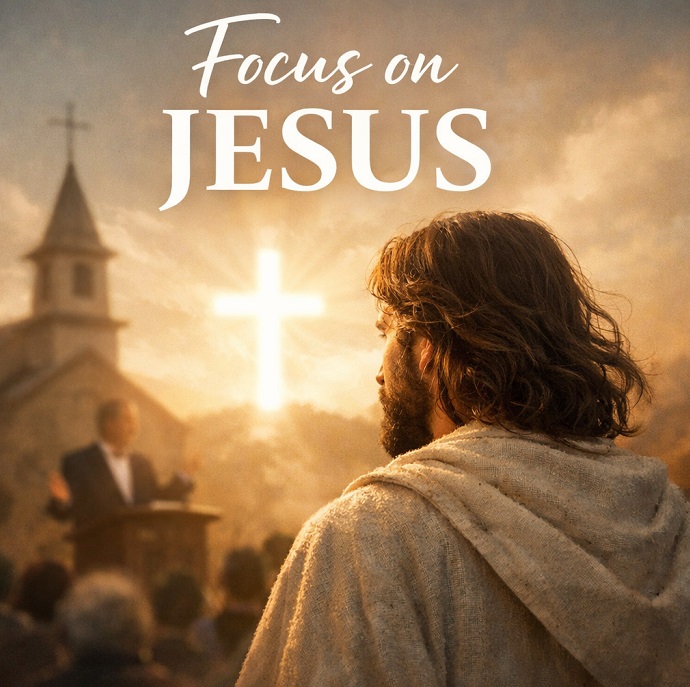
Maybe it is time to stop arguing over denominations, interpretations, versions, and church attendance and start focusing on Christ, who is to be our first love. If we can focus on God’s love and sharing that love with others, we should be able to agree to disagree on other topics.

When we find common ground in our faith in Christ, when we love God with all our heart, soul, strength and mind, we should be able to look past the minor differences we have in our various denominations, interpretations and Bible versions.

Let’s stop fighting against each other and begin to love one another as Christ loves us. Do not let the minor differences come between the love we can have for one another and the things we can share and learn through fellowship with our brothers and sisters in Christ.

*******

Michael Donahoe was added as a writer for Done with Religion as his views fit perfectly with those that are shared on this site. He and his wife have been outside the walls of religion for fifteen years. He enjoys writing about his experiences and thoughts, and he wants to encourage others who are going through the religious deconstruction process. He also writes on Substack at https://deconstructiontrail.substack.com/ and https://personalmeanderings.substack.com/

Read Full Post »

Sanctified Gatekeeping and the Church of Conditional Welcome

Rev. Mark Sandlin

Jesus said, “Love thy neighbor.”

But let’s be honest, some folks read that like it came with a stack of footnotes and a link to the dress code.

They’ll cross-stitch that verse for the guest bathroom wall, but try applying it to someone who’s queer, questioning, brown, broke, or heaven forbid, a Democrat… and suddenly that love runs drier than year-old communion crackers.

We’ve got church folks playing Bible buffet, loading up on the parts that make them feel blessed and highly favored, and leaving behind the radical love stuff like it’s the weird casserole no one claimed.

Turns out “neighbor” is a pretty flexible term when your theology is shaped more by your comfort zone than the teachings of Jesus.

Culture War Christianity

Let’s stop calling it religion and start calling it what it is:
A power play in polyester church clothes.

We’ve got pulpits echoing political platforms instead of prophets.
We’ve got churches passing out talking points like communion wafers.
And don’t get me started on “Christian influencers” who use the Sermon on the Mount like it’s a motivational poster for pyramid schemes.

This isn’t about Jesus.
It’s about keeping the “wrong kind” of people out while pretending it’s holiness.
It’s about using scripture like a velvet rope.
It’s “love your neighbor” as long as they look like you, vote like you, and keep their weirdness tucked in.

When “Neighbor” Comes with Conditions

Here’s how it plays out:
You’re welcome…
Unless you make folks uncomfortable.
Unless you love someone unexpected.
Unless your theology still has questions.
Unless you show up not knowing the secret handshake of church culture.

And let’s be real – nothing clears a pew faster than someone daring to be honest about their doubts… or about their pronouns. Folks will hand you a casserole with one hand and yank back their hospitality with the other the second you color outside the lines.

If grace has a checklist, it’s not grace.
It’s church bureaucracy with a hymnbook.

Even Progressive Churches Get Messy

Let’s not let the rainbow flag crowd off the hook.

Progressive churches talk inclusion, but sometimes they just mean, “You’re welcome as long as your weirdness matches our aesthetic.”

Question the order of worship?
Critique capitalism a little too clearly?
Ask why the missions committee only funds projects that come with matching T-shirts and hashtags?

Suddenly you’re a “disruption” instead of a disciple.

We’ve all got our blind spots. The trick is not pretending they’re stained glass windows.

Jesus Was Not HOA-Compliant

Look, Jesus didn’t say, “Love thy neighbor, unless they make the potluck awkward.”

He sought out the people religious folks had written off.
He didn’t wait for them to repent in triplicate and pass the doctrinal exam.
He broke bread with the outcasts and called it community.

If your “neighbor” stops at the edges of your comfort zone, you’re not following Jesus.
You’re following a caricature of him that makes you feel safe and smug.

The Kingdom he preached didn’t have membership tiers. It had open tables, messy grace, and a scandalous welcome. The kind that’ll mess up your preferred seating at the potluck, not to mention your theology.

Get Yourself a Bigger Map

So if you’re still asking, “Who is my neighbor?”
Start here:
The person you’ve been taught to fear.
The one you were told to pity or ignore or convert.
The one who makes you squirm a little.

That’s your neighbor.

And the assignment is the same now as it was in tesusy parts:
Love them.
Not debate them.
Not tolerate them.
Not pray for them from a distance and gossip in the group chat.

Love. Them.

No disclaimers. No dress code. No doctrinal fine print.

If your church can’t handle that?
You might need to stop printing bulletins and start printing membership guidebooks.

Read Full Post »

by Michael Donahoe

A good friend of mine wrote the following paragraph. There is an old hymn that says “On Christ the solid rock I stand, all other ground is sinking sand” As important as the church is in our lives, we have to be careful not to put our hope in it. I have received a lot of help thru the church and a lot of good basic teachings. I was also saved in church but my hope is not in the church. My hope is in “Christ the solid rock”. There are times when we are alone with no Christian fellowship and maybe we can’t make it to church for some reason. We have to be able to stand as mature Christians and rely on our relationship with Christ. The church is no substitute for Christ. It is only where we learn about Him. I guess what I am saying is that we have a relationship with Christ and not the church, and He is our source of strength if we call upon Him in truth. I personally am going thru the desert in life and I have to depend on Him. He has proved His love and care for me and in reality, He is the “Son of the Living God”. Bottom line, let’s be careful to put our dependence on Him. All other ground is sinking sand….

This goes along with some of my posts about modern-day church. The organized church today is a place for believers to get together, but it is not the goal. Going to church does not make us Christians, it does not make us better people or more dedicated believers. It is a place hear about the love of God, a place to enjoy the company of other believers, and a place to reach out and encourage others. Basically, it is a Christian social organization.

We need to stop putting the focus and emphasis on church, stop putting our eyes on pastors and realize that they are not the answer. We need to put all focus and attention on Jesus. It is Jesus we follow and worship. He is the Shepherd, the rest of us are the sheep. There are no co-shepherds, no intermediates between Christ and us. We are to follow Jesus and Him alone. We are to learn from Him, love God and love others.

There is nothing wrong with going to church, but do not put your eyes on an organization or any leaders therein. Keep your focus on Jesus. Whether you go to church or do not go to church, Jesus is the one we look to and serve. Do not worry so much about going to church, but rather be the Church. It is not a building we go to, but the people who love and follow Jesus.

*******

Michael Donahoe was added as a writer for Done with Religion as his views fit perfectly with those that are shared on this site. He and his wife have been outside the walls of religion for fifteen years. He enjoys writing about his experiences and thoughts, and he wants to encourage others who are going through the religious deconstruction process. He also writes on Substack at https://deconstructiontrail.substack.com/ and https://personalmeanderings.substack.com/

Read Full Post »

by Mike Edwards

Early in my relationship/journey with God, I struggled knowing what God’s plan was for me in marriage, career, etc. Athletes often stated events, even tragic injuries, happened in their life according to God’s will. This implies God has a specific plan in the future for those devoted to God. I so desperately wanted to please God but was clueless. I was set free when I read a book that argued that the Bible doesn’t defend that God has a specific plan for individuals. How can we know what God desires in our life?

One Has Every Right To Ask Why God Is So Hidden?

There are understandable reasons often cited as to why people doubt there is a God/Divine Being. Atheists and believers agree – the only God worth believing in must be perfectly loving. If such a God exists, why doesn’t God intervene more when so much evil exists in the world? Another reason many may doubt God exists is that a loving God surely is personable, why then doesn’t God reveal themselves more rather than be hidden? What loving parent doesn’t reveal themselves if desiring to be known?

Just because earthly parents sometimes know and advise what is best for their older child, such advice doesn’t always work out. In fact, overzealousness can lead to one feeling controlled, thus rejecting what is best for one’s own good. God’s awing or overwhelming presence may only lead to fearful obligations to obey than having to trust. The road traveled of learning, reflecting, and not being pressured may best lead to lasting convictions and more meaningful relationships. God supposedly came in person but Jesus’ miracles didn’t obtain the results some may suggest if God would stop hiding. God may not speak to us demonstratively out of love.

God Can’t Have A Specific Plan because Of Freedom 

Freedom is necessary for authentic relationships. God’s constant interference and presence could prevent a superior world from emerging. A set future suggests one isn’t truly free to choose careers or in relationships. God may know all possibilities, but the future must be open if we are truly free. God can’t tell us if our marriage will end in divorce or our job eliminated. See here.  We surely have God’s blessing choosing the wisest path known at the time based on past experiences, current circumstances, and future aspirations. When the Bible says God grieves with us in our suffering, we can know God agonizes with us each step of the way while celebrating our joys. God’s plan is not a detailed blueprint but a general one to set us free to love.

God can’t be controlling of the future 

I have suggested an all-loving God and all-controlling God is an oxymoron. See here.  Besides, controlling love is an oxymoron. Ask adult children with such parents. Even the Bible claims love does not insist on its own way (I Cor 13:5). God can’t be unloving, thus controlling sometimes. The Bible can be used to defend or oppose believing God is all-powerful or controlling. For instance, the Bible says God changes their mind based on human decisions made. That hardly appears to be a controlling attribute. So much evil in the world surely proves a perfect, loving God can’t be in total control. God can’t advise how the future will turn out. God can’t know the future.

If we claim that God simply limits their Power, this suggests God can do something but doesn’t. We must come up with a better explanation that God simply allows – thus controls – evils but doesn’t cause evils. A God who can prevent evil but doesn’t is counter-intuitive to love. No loving parent or God sits idly by when they could prevent tragedies such as rape or murder. No, all evil doesn’t eventually lead to good as if some grand plan by God! Ask sexual abuse victims or family members of murdered victims. Are we to believe God doesn’t care, God is punishing us, or God has abandoned us and left us clueless what the grand plan? God doesn’t sit by and allow your suffering! 

God doesn’t have to tell you what to do morally?  

A Creator surely doesn’t create their creations to be clueless about love. Rational beings know they should love others like they want to be loved. God joins us in considering risks to change the world for better. Moral knowledge isn’t hidden. Universal moral outrage over murder, lying, stealing, etc. and an inborn desire to treat others like we want to be treated hints of a Creator’s influence through our moral intuitions. Non-moral decisions are open.

No, God doesn’t know or plan tragedies in your life!

In God’s defense, it is not possible for God to create freedom unless there is the possibility of love or hate. Without freedom we could accuse God of not creating the very best world where only true, authentic relationships can develop. Freedom also allows humans to develop qualities of moral character that cannot be created initially. Freedom though cannot guarantee a pain free universe.

No, God doesn’t plan for you to be unable to have children if you desire to be a mom or dad

No, God doesn’t plan for your body to be wrecked by cancer

No, God didn’t want you sexually or physically abused as a child

No, God didn’t want your partner to leave you by wanting a divorce

No, God didn’t want your loved one murdered or severely injured in a car accident

God is dying to help you love others as you want to be love!

Freedom requires an unspecific plan for your life by God. A known or set future suggests one isn’t truly free to choose otherwise. God may know all possibilities, but the future must be open if we are truly free. God can’t tell you if the person you want to marry won’t end up betraying you or the job you take won’t end up being phased out. We surely have God’s blessing choosing the wisest path known at the time based on past experiences, current circumstances, and future aspirations. When the Bible says God grieves with us in our suffering, we can know God agonizes with us each step of the way while celebrating our joys. God’s plan is not a detailed blueprint but a general one to set us free to love.

God’s will isn’t some hidden plan to discover. Rational beings know they should love others like they want to be loved. Many decisions aren’t black and white, even for God. Do we speak up about one’s behavior or risk driving them further away? God joins us in considering risks to change the world for better. God’s moral ways are not mysterious or hidden. God seeks only to influence us to do all the good, rather than evil, that we can in all the places we can, at all the times we can, to all the people we can, as long as we can. Jesus prayed God’s will be done on earth as in heaven (Mt. 6:10).

Mike Edwards was added as a writer and has been a great addition to the site. Mike provides many interesting views and various ways of looking at things. He is not afraid to ask questions and he keeps an open mind as to teachings of the institutional church. Mike also has his own site where he writes at What God May Really Be Like

Read Full Post »

by Michael Donahoe

What do you think of when you hear the word Atheist, gay, transgender, Muslim, Jew, Christian, black, white or a host of other labels we put on people? Usually, we think of something specific and usually something we have been taught or heard over the years. It depends on where you heard it or who taught you, but a lot of times what we think is something negative in one way or another.

With all the prejudices, fear, hate and misunderstanding among people it is sad that we forget behind each one of these labels there is a human being.

I know that not all people believe there is a God or they believe in different gods. Although none of us can actually prove one way or another as to what we believe about God, we are free to choose for ourselves what to believe. It is basically a matter of belief or faith or scientific understanding. Yet, I personally believe there is a God and we are all created in the image of God. A God who loves each and every one of us no matter what label humanity has put upon us. Each of us deserves love, respect, acceptance and the basic human rights everyone should enjoy.

Just because we accept one another and respect each other does not mean we always agree or always condone the actions of another, but we should be able to treat each other with kindness and respect even in our disagreements.

Rather than profile people into a particular group based on the label they are given, we should remember the individual person behind the label.

As human beings we all want to live a happy, satisfying life. Each of us have worries, bills and every day obligations, just as each of us wants to find love, be loved, be accepted and happy.

We will not all see things the same way. Each of us have our own personality, belief system, lifestyle, desires and things we enjoy that makes us happy. We cannot expect everyone to be the same, believe the same or interpret things the same. We are each uniquely made and we each have our own path to walk throughout this life.

I know many in the Christian world will not agree with this outlook on life. Many feel it is our job to point out the mistakes and sins of others as a way to witness to them. I do not see it that way. In the Bible we are told the Spirit will convict the world of sin, so I do not believe it is our job to convict others of sin. Besides, what is sin to one person may not be to another. It is not our job to be judging others. We are called to love one another even in our differences.

Jesus came to show us what God is really like and Jesus was not a condemning person. He loved and associated with many people who the religious crowd would not even think about associating. Jesus was perfect and never sinned so he had the right to condemn people and judge them about their mistakes, yet he never did.

The Bible says Jesus came to proclaim the good news, yet when we only condemn and point out the mistakes of others, that does not seem like very good news.

I believe God loves each of us and wants us to follow the Spirit. Even when we do not always make the best choices God still loves us and wants to have fellowship with us. As followers of God, I feel we are to do the same, love God and love others each day. Look past the labels society has placed on people and love the human being that God created and loves.

*******

Michael Donahoe was added as a writer for Done with Religion as his views fit perfectly with those that are shared on this site. He and his wife have been outside the walls of religion for fifteen years. He enjoys writing about his experiences and thoughts, and he wants to encourage others who are going through the religious deconstruction process. He also writes on Substack at https://deconstructiontrail.substack.com/ and https://personalmeanderings.substack.com/

Read Full Post »

« Newer Posts - Older Posts »