Feeds:
Posts
Comments

Posts Tagged ‘old testament’

by Jim Gordon

In the bible we read that God is love. That sounds so nice, especially when the meaning according to the dictionary is strong affection for another; affection and tenderness; affection based on admiration; profoundly tender.

Yet we read in the old testament about a God that sounds so different from this description. We read of a God of destruction, vengeance, punishment and hatred. One that kills people whether it be men, women or children. A God that kills animals and destroys property. What kind of love is that?

The new testament tells us more about a God of love. Jesus came to this earth to show us what God may really be like.  The examples Jesus showed were love, forgiveness, acceptance, affection, tenderness and compassion.

My personal opinion is that God is like the God Jesus portrayed. I think the old testament was more about the views of human beings, what they thought, how they perceived God and how they used God to promote their desires and hatred of their enemies. Again, this is just my view but it makes more sense to me knowing that the bible states that God is love.

People will argue that God’s ways are higher than ours and we cannot always know and understand what the purpose of God is in different situations. They will also argue that the bible is perfect and inerrant and we cannot question what is written therein. Yet I do not believe the perfect godly trinity is Father, Son and Holy Bible. I believe the bible was inspired yet written by men. Men also translated and interpreted it. I feel that over the years of man having a hand in doing these things that many things got changed, misinterpreted and mistranslated. I think God got a bad rap due to the involvement of man in the process.

Even the bible itself does not say it is inerrant. The bible makes clear who the perfect, living Word of God actually is, and it is not a book. We read in John 1:1, John 1:14 and John 5:39 that the Word of God is Jesus.

I say all this not to try and disprove the bible. I say this to show that God is love. God is not out to punish and destroy his creation just because of things they do. He sometimes will correct us, just as a parent does their children. This is also done in a loving manner. As a loving parent, we want the best for our kids and sometimes it involves a disciplinary action for their own good. But disciplining in love is completely different from beating, injuring, being hateful and killing to make a point.

It frustrates me when I read articles about various christian leaders making comments about how God is punishing someone or some area with earthquakes, fires, sickness and death because of something they consider to be sinful. To me, that is the god of the old testament. One that men use to validate their own thoughts and desires.

The best way to find out what God is like is to read the gospels written about the life of Jesus. He represented what God is really like. He loved people. He did not force his views on others. He accepted people, healed people, fed people and offered them a better way of living. A way of love. It did not depend on who the person was, what they looked like, what their color or nationality was, who they loved or what political party they followed. Jesus loved them all and treated them with respect and kindness. How much better our world would be if we, who claim to be children of God (1), treated all people with the same love, kindness and respect. Rather than demanding judgment, exclusion and killing; or demanding our views and opinions be forced on others or our political views be enforced on all. I say look out for the best interests of others, and do so in a loving and kind way. Live your life as you feel the Spirit is leading you, but do not force others to see things the same way. Remember Jesus told us to love God with all your heart, and with all your soul and with all your mind. This is the great and foremost commandment. The second is like it, you shall love your neighbor as yourself. There should be no mistake here, God is love and we are to show that love to everyone.

(1) Link to article by Damon Brewster

Read Full Post »

By Mike Edwards

If you read the Bible closely enough, who blames those who challenge God morally. Did God really kill all but eight in the world by a global flood because God couldn’t handle rejection? We condemn people drowning a litter of puppies in the river. Other ancient literature spoke of local floods. Perhaps the writers use hyperbole to make a point, but that doesn’t explain all of the OT.

I Sam. 15:3 is only one of many passages that reports God commanded the destruction of innocent women and children in war: “Now go, attack the Amalekites and totally destroy all that belongs to them…put to death men and women, children and infants, cattle and sheep, camels and donkeys.” God orders killing non-virgin women but not virgins: “save for yourselves every girl who has never slept with a man” (Num. 31:18). Really God! Exodus 12 claims God intends to kill firstborns without lamb’s blood on their doorframes (Passover).

How one views the Bible leads to different explanations.

Did God control or guide the writers’ thoughts to perfectly represent God which then requires explaining certain actions by God, or did God not interfere with writers misrepresenting God at times? OT writers could have been influenced by surrounding cultures as to what an all-powerful God should look like. When the OT records “God said,” this isn’t audible speech but could be a figure of speech conveying figuratively an inner impression felt from God – right or wrong.

We can’t prove God did or didn’t inspire the Bible. The Bible can be viewed as recorded experiences of beginnings with God and Israel culminating with the life of Jesus that we don’t possess in other documents. God didn’t necessarily have in mind recordings wouldn’t be questioned. Writers may have contributed actions to God that weren’t true. This explanation can help Scriptures not being used blindly to justify violence God supposedly approved.

Is violence explained because God can do whatever the Hell God wants?  

It is normal to feel compelled to justify passages above because God’s actions in the OT don’t always seem moral from a human perspective. So, it is suggested God’s ways don’t have to be fair because God is God. Yet, the Bible encourages us to be perfect like God or imitate God (Mt. 5:48, Eph. 5:1). If God’s actions don’t seem fair at times, should we imitate such actions? If human and God’s perfection are different, how can we know how to be perfect like God? We don’t always know what perfect love is, but I doubt God is the parent that says “do as I say not what I do.” 

Is violence by God simply warfare exaggeration?  

Warfare rhetoric was common in ancient literature to induce fear and victory. A US leader may say we will completely destroy ISIS. But, even if God didn’t mean to be taken literally, why would God inspire such violent metaphors in I Sam 15 to include women, children, infants, and animals? Humans leaders don’t even use such language against terrorists. I question if the writers heard God correctly.

Did God approve certain violence to bring the Israelites freely along to the truth?

It is argued that Israelites laws were a step up from other ancient near eastern laws. At times maybe they were, but it is rational to question many of the laws set forth. Did God really approve a woman being required to marry her rapist (Deut. 22: 28-29) as if this was a step up to protecting victims from a life of shun? Did God walk on eggshells because the Israelites couldn’t handle the truth that requiring a woman to marry their rapist is just further victimization? I am convinced only humans, not God, thought this was a good law at that time.

I know, I know. If you can’t trust the Bible what can you trust!

Who doesn’t know God hates murder, sexual abuse, stealing, adultery, even not treating others like you want to be treated? Terrorists rationalize forcing beliefs about God on others, or be killed, because God supposedly inspired such thoughts recorded in a Book. Total certainty about God according to the Bible is an illusion. Biblical scholars, who respect Scriptures, don’t agree what the Bible says about hell, women, gays, etc. Different opinions standing side by side, as we continually evaluate the most loving approach, is better than claiming certainty and being wrong. 

It matters if the Bible is viewed as inspired by God or not.  

The idea of an infallible Book has led to assuming God’s view on morality only come from a Book such as the Bible or Quran. It is seldom admitted interpretations of a supposed infallible book could be wrong which has led to justifying slavery, killing infidels, and other atrocities in the name of God. Fallible books can’t hide behind assumed infallible interpretations, which lead to misunderstanding or rejecting God for the wrong reasons. We can’t prove when the Bible records “God says” that God really inspired such words. Questioning leads to less justification of violence.

Read Full Post »

By Mike Edwards

Did OT writers always understood God perfectly, or were they influenced by surrounding cultures as to what an all-powerful God should look like? The OT frequently records “God said” but God wasn’t speaking audibly. The writers could have simply been conveying figuratively an inner conviction that God was revealing themselves. Jeremiah 1:8 says: “But the Lord said to me, ‘Do not say, ‘I am too young.’ You must go to everyone I send you to and say whatever I commend you.” I doubt that Jeremiah always waited for some magical inner voice before speaking for God.

Did God really always do things the biblical writers claimed?

God supposedly denies Moses entrance into the Promised Land because Moses strikes than speaks to a rock (Num. 20). God supposedly kills Uzzah for touching the ark of the covenant as it was falling to the ground (2 Sam. 6). Even in the New Testament God supposedly struck dead Ananias and Sapphira for lying how much money they donated to the church (Acts 5). God is said to kill some for celebrating Communion without examining their heart (I Cor.11:30).

Did the writers always understand God perfectly?

We often attempt to rationalize how a loving God could be responsibilities for deeds that seem evil from a human perspective. Some explanation is needed when evil according to the brain God created us with is good sometimes. Rather than justifying it is also possible actions were wrongly contributed to God. Even today people claim God causes certain disasters in judgment. We have every right to question when God’s love doesn’t match how God created us humans to love.

What use is the Bible if the writers didn’t fully understand God?  

The Bible will always be valuable whether the writers always understood God perfectly or not. The Bible records experiences of beginnings with God and Israel culminating with the life of Jesus that we don’t possess in any other documents. Writings about God keep us talking and reflecting what God is like. God didn’t necessarily have in mind that recordings would not be questioned.

Then, we can’t know God if the Bible can’t be trusted?

C’mon! Who doesn’t know God hates murder, sexual abuse, beheading people because they don’t share your beliefs, etc.? The Bible doesn’t even claim to be the specific guide to Truth. Jesus when leaving this earth said His Spirit, not some Book, would guide us in truth (Jn. 14:16-17; 16:13). Jesus didn’t worry Truth requires discernment. Different opinions standing side by side, as we continually evaluate the most loving approach, is better than claiming certainty and being wrong. 

We can know God is relational.

Why would God even bother to create if not to share life together? He had enough angels for worship. God is often described as our heavenly Father/Parent. Our only analogy is human parents. I rather be challenged or questioned, than feared, if it will lead to more of a relationship. Love out of fear only leads to brief obligations. God’s uncontrolling nature, because of the freedom to oppose God, suggests God’s desire for authentic relationships. My prayers don’t begin: “Dear God, the Holy One, the Feared Creator of the Universe…” I talk to God as if a close Friend, and I haven’t been struck dead yet! God didn’t create us to give God the glory and shut up.

Read Full Post »

By Mike Edwards

Some rightly may discount the Bible because there are some pretty crazy laws in there. Did God really think rebellious teenagers should be stoned (Deut. 21:18-21)? Maybe we don’t have to figure out if God really commanded such a law or the Israelites were influenced by other cultures in laws written. Justin Lee gives a framework for knowing which laws to follow if a God-follower (Torn: Rescuing The Gospel From The Gays-Vs.-Christians Debate, Chapter 13).

What are laws good for?

It is argued Old Testament laws only served as a guide to establish a moral society until Jesus came along and thus laws aren’t needed anymore. Laws or rules aren’t all bad. Laws help hold the lawless and lawgivers accountable. The wife and I knew we couldn’t smack each other when frustrated, but I felt it necessary to spell it out for the young-ins. I told my kids in no uncertain terms they couldn’t hit, kick, or push each other. Rules have limits though. If their younger sib wandered into the street and a car was coming, I could care less if they kicked their ass to the curb. 

Do we follow the moral laws but not the cultural laws in the Bible?

It is suggested the Bible is divided up into cultural and moral laws with moral laws being relevant for today. The Bible though doesn’t make such a distinction. Most wouldn’t argue God still forbids tattoos (Lev. 19: 28), but in the very next verse the Bible says don’t make your daughter a prostitute which is morally universal forever. Ask any parent including terrorists. The Bible never says some laws are moral and others are only relevant to that culture.

Paul and Jesus in the New Testament hint which laws to follow.

Honoring the Sabbath by not working must have been a big deal because it made the top 10 list. Religious folks freaked out when Jesus said it is good to feed the hungry or help the hurting on the Sabbath (Lk. 6:1-11). Jesus didn’t dismiss the Sabbath, but sometimes laws are meant to be broken. Which ones though?

The Apostle Paul who wrote much of the NT spoke of an instance where the Jews were disturbed when certain dietary laws weren’t followed (Rm. 14). Paul suggested the Jews shouldn’t impose on the Gentiles who weren’t raised like them; Gentiles shouldn’t try to tell the Jews what violates their conscience. Some go to a church building on Sunday; others don’t go to avoid being divisive.

The sniff test – do actions smell of love.  

Jesus said all the laws hang on loving God and your neighbor (Mt. 22:37:40). Loving God is loving your neighbor. The Apostle Paul said the same thing – all laws are summed up by loving your neighbor (Rom. 13:8-10). When Jesus said He didn’t come to abolish the law but fulfill (Mt. 5:17), He didn’t mean throw out all the laws. Don’t kill but sometimes we may need to defend our family. Honor your parents but sometimes we may need to disagree or even break ties. Laws are not written just as rules to follow blindly but to guide us in loving others.

Love rules. Love is more important to follow than the actual law. How do we know when love is better than the law? God’s spirit can guide us. Sometimes we need the help of others to discern God’s voice clearly. Lie if you might save a life from a ruthless dictator. Regardless of whether you think the Bible and God condemns gays (See Here), love rules. If you aren’t loving straight or gay people, regardless of what you personally believe, you are breaking God’s law!

Read Full Post »

By Mike Edwards

I am convinced there are beliefs claimed about God that lead to many tuning out God. Our relationship with God cannot exceed our understanding of God. I have written HERE how we can decide what God is really like. One’s interpretation of a Book may be the only reason to think human and godly perfection are different.  Why would a Creator not love us and others how we were seemingly created to love others?

The Bible often does portray God as an angry hothead.

Many Old Testament passages just can’t be rationalized away. The story starts off by God destroying the world minus eight with a Flood. Even if it was a local as opposed to global flood, the metaphor still stinks! There were surely a few people innocent of evil so horrific to escape such actions by God. Who doesn’t think it is wrong to drown just one child in a bathtub? It gets worse by killing babies in Egypt and God supposedly ordering the Israel army to “not spare them: put to death men and women, children and infants, cattle and sheep, camels and donkeys”(I Sam. 15:3). Hundreds of passages seem to advocate evil behaviors in God’s name.

Hundreds of passages also speak of God’s love and mercy. Did the biblical writers think it sacrilegious to not portray God in controlling terms like the others gods at that time? We have every right to question if the writers’ views of God evolved over time. God can handle it. I wish the writers had clearly indicated God was angry at evil as opposed to people. God violent one minute and merciful and loving the next minute sounds like an abusive spouse or parent.

Doesn’t the Bible say “fear God” or else?  

We are often encouraged to fear God as if God thinks such fear and obligatory loves leads to a genuine relationship. God supposedly demands fear for ego reasons or as a sign of reverence. Fearing someone seldom leads to an inspiring relationship with that person. Some scholars suggest “fear God” is better phrased “respect God.” God’s request for respect (glory) is no different than a loving parent’s hope for respect because their love should have their child’s best interest in mind.  

Are humans really holier or more moral than God?

A human parent warns or gets upset with a child’s actions not in their best interest or the welfare of others, but that doesn’t lead to them wanted to annihilate their child. What God or parent doesn’t know sin has its own consequences; God doesn’t seek to pile on the anger. God doesn’t worry that their unimaginable love gives us further license to keep sinning. Acting selfish is natural and doesn’t wait for permission. God seeks to continually assure us of their love so we don’t every give up no matter how demoralized we may feel.

God couldn’t be egotistical!

If God was so worried about their reputation, God certainly would not have given us freedom to contradict their wishes. All the evil in the world suggests God isn’t controlling. God is not more concerned with restoring their honor than expressing a desire for a relationship freely chosen. Many religions today imply their god expects certain beliefs or face immediate extinction. Not the God of the Bible! And what kind of all-powerful God wants to be friends? Abraham (Jm. 2:23) and Moses (Ex. 33:11) are called God’s friend, and Jesus called the disciples His friends (Jn. 15:15). God is our Creator and Friend.

God isn’t possessive of their glory.

What kind of parent wants to be alone in their glory? Jesus says in John 17:22 after speaking on fulfilling his mission with his disciples and then turning his attentions to all who believe: “I have given them the glory that you gave me, that they may be one as we are one.”  We cannot be God, but we can strive to be like God. God’s request for glory is not self-infatuation. Imagine a world that glorified God in all they did! There would be no evil or suffering caused by others in the world. There would be no physical or sexual abuse in the world. There would be no parents living out their dreams through their children. There would be no bigotry based on the color of your skin or the gender you were born.  There would be no locking of cars and houses. God gets a bad rap when portrayed as selfish or obsessed with themselves.

Why I Doubt God Is An Excluder Of Religions

Why I Doubt Heaven Is Closed To Anyone After Death

Why I Doubt Hell Is Real

Why I Doubt God Is A Homophobe

Why I Doubt God Is A Sexist

Why I Doubt God Is A Mysterious, Moral Hypocrite

Why I Doubt God Is A Blood-Thirsty Child (Jesus) Killer

Why I Doubt God Expects Every Word Of The Bible To Be Viewed As Inspired

Why I Doubt God Is An End-Of-The-World Doomsayer


Read Full Post »

by Jim Gordon

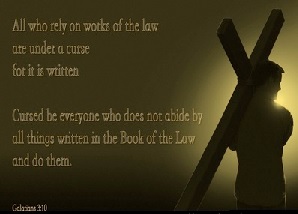
Galatians 3:10-13: For as many as are of the works of the Law are under a curse for it is written, cursed is everyone who does not abide by all things written in the book of the law to perform them. Now that no one is justified by the Law before God is evident for, the righteous man shall live by faith. However, the Law is not of faith, on the contrary, he who practices them shall live by them. Christ redeemed us from the curse of the Law having become a curse for us, for it is written cursed is everyone who hangs on a tree.

One of the major issues we Christians have is living in two worlds. Not only the spiritual world and the earthly world, but the Old Covenant and New Covenant world. Michael Kapler points out this difference clearly in his book ‘Clash of the Covenants“. The problem with the Old Covenant is that if we do not live by and obey all things written in the Law we are living under a curse.ClashoftheCovenants

The Law was given as a tutor and guide to show us that we were unable to restore our fellowship with the Father. We cannot live a life acceptable to God by doing good works or putting forth effort on our part. Righteousness does not come through the Law, and if it did then Christ died needlessly. Jesus came into this world born under the Law. He lived and taught it for the first 33 years of His life. When He died Jesus  fulfilled the Old Covenant the Old Covenant came to an end. When He rose from the grave the New Covenant began.

By accepting the grace He provided we can live in fellowship with God. Christ lives in us and we are holy and righteous in His sight. The Law is no longer needed for those saved by grace. We are free, Christ redeemed us from the curse of the Law. We now live under the New Covenant which is a free gift provided to us by Christ.

We are now living in the Kingdom of God. We now live loving God with all our heart, soul, strength and mind and loving others as ourselves. No more work or effort on our part, no obligation to do certain things. We are free from the Law and restored to fellowship with God.

Read Full Post »

by Jim Gordon

Did Jesus teach from the Old Covenant? Was not the birth of Christ the beginning of the New Covenant? When does the Old Covenant end and the New Covenant begin? We tend to forget that the Old Covenant does not end with Malachi and the New Covenant does not start with Matthew.

Even though Jesus came to fulfill the old agreement through grace, the first thirty-three years that Jesus walked the earth He lived under the Old Covenant. He was required to follow all its rules and regulations. He even taught from those rules, yet those rules are no longer intended for us. ‘But when the fullness of the time came, God sent forth His Son, born of a woman, born under the Law, so that He might redeem those who were under the Law, that we might receive the adoption as sons’. Galatians 4:4,5

OldandNewCovenant

The New Covenant began when Jesus was crucified. When He said ‘It is finished’ He was talking about the Law, the Old Covenant. Upon His resurrection the New Covenant began and we are no longer required to try and live under the Law and the way of the Old Covenant. It is finished!

The old agreement was basically a tutor. A way God used to show humans that we were unable to live a perfect life on our own. It was a way to show us that we needed someone to redeem us and restore our fellowship with the Father. Jesus came and fulfilled the old agreement and upon his resurrection made a new agreement of grace. ‘Do not think that I came to abolish the Law or the Prophets; I did not come to abolish but to fulfill’. Matthew 5:17

Now that the Law has been fulfilled in Christ, we are no longer required to try to live by the ten commandments and the rules and regulations of the Old Covenant. So often we seem to forget that because of grace we now live by faith in Christ. We are no longer slaves to sin, we are no longer just a poor sinner saved by grace although we were sinners and we are saved by grace. We are now the righteousness of God through Christ. God no longer calls us slaves but He calls us Sons. We are seated in heavenly places in Christ. This is not to say that we should go out and do whatever we want, right or wrong. We do have freedom in Christ to do what we choose, but there are consequences if we choose things that God has warned us to stay away from.

Today we choose to live a life pleasing to God because of love. Godly love is the fulfillment of the Law. We love God and we love others, we have been made righteous through Christ and we are the temple of the Holy Spirit. It is the Spirit who guides us, teaches us and gives us strength. We do not love or please God out of obligation. We do not love him because we are trying to fulfill a set of rules and Old Testament laws that we could not live up to anyway. We do what is pleasing to God because we choose to do so because of our love for Him.

Read Full Post »

by Jim Gordon

We often think about events in the old testament and wonder why God seems so mean and destructive. How can a God who created us be willing to destroy so many human beings?

Many times it is written that God told the Israelites to completely wipe out and destroy a certain group of people due to the way they acted or believed.

In our world today, we still see so much hatred and treating certain groups of people as unworthy. Many religious people think so highly of themselves and the way they live yet they want nothing to do with those they feel are unworthy, unlovable and unacceptable.

Groups of people are killed, tortured, treated with contempt and meanness, all in the name of various religions who are representing the God of the universe. Love and acceptance are only saved for those who are like-minded and with similar beliefs. If you see things differently you are not accepted into the group.

LoveGodLoveOthers

Yet we see Jesus come into the world for the purpose of showing us what God is really like. It seems like such a contradiction. Jesus showed us that God is love. Jesus loved and accepted people who many in the religious world condemned, would not associate with and found completely unworthy to be loved.

I personally think God is highly misrepresented in the bible, especially the old testament. I think many times when men wrote that God said this or that, it was more of what they thought was the thing to do rather than God actually telling them to do such horrible acts.

So often the religious world says to hate those who are different. Do not associate or accept those who they think do not measure up. Stay away from those they feel are unworthy. Yet God says to love your neighbor and to love your enemy.

In a world where hatred and unacceptance seems the norm, it is time we who are representatives of God start putting differences and personal prejudices aside and let his love flow to all we meet along the way.

Read Full Post »

by Mike Edwards

If God would only prove themselves visibly or audibly, would it be easier to believe and follow God? Are there compassionate reasons that God isn’t more visible or audible, or is God just indifferent, selfish, purposely mysterious, etc.? I will leave it to the reader if the below are just rationalizations. If not, don’t let negative assumptions about God’s hiddenness hinder you from exploring more of a relationship with God.

God being visible and audible may not always be in our best interest.  

God’s awing or overpowering presence may only lead to fearful obligations to obey. When parents push their agendas, even if in their children best interests, they may resent or rebel against coercion and never turn back. If God communicates in less demonstrative ways, this may allow for heartfelt choices. The road traveled of learning, reflecting, and non-coerced choices may best lead to lasting convictions.

For the life of me I can’t figure out why my grown kids don’t seek out my advice more often to avoid problems in life. We have a close relationship. I am a counselor by profession so geez – I have a few relational skills. Heck, I announced when teenagers my role was changing to being more of a mentor than authority figure. What teenager doesn’t dig that? Well, my grown kids – old enough to get over any resentments – aren’t runny to catch honey from my lips. Then again, I am not knocking down doors for advice from others. We may all need to travel the journey toward wisdom at our own pace without any pressure.   

If God was communicative in the Old Testament why the change?   

It is recorded in the OT thousands of time: “God said…” Was God always speaking audibly as if dictating to the writer, or was the writer simply conveying figuratively an inner conviction or impression they felt God was revealing to them? One can read many passages and understand “God said” as a figure of speech: “But the Lord said to me, ‘Do not say, ‘I am too young.’ You must go to everyone I send you to and say whatever I commend you.” (Jeremiah 1:8) I doubt that Jeremiah always waited for God’s audible voice before speaking for God.

Exodus 20: 1-17 starts by saying “all these words” when the 10 commandments were given to Moses through God. The 10 commandments are repeated again in Deuteronomy 5:6-18 but with some slight word variation. If God’s spoke audibly, why aren’t the words in both passages verbatim? I cannot prove all instances of “God said” were figures of speech. I only wish to convey that God may not have spoken audibly as much as thought in the beginning.

God’s supposed direct communication or actions didn’t always lead to clarity or belief.  

When God spoke audibly supposedly to Moses (Ex. 20) to keep the Sabbath, some kept the Sabbath by not helping an injured soul and others understood helping wasn’t violating the spirit of the law. God dropped manna from the sky to help a nation survive in the wilderness and separated the Red Sea to escape one’s enemy, but the Israelites still did not believe or put their total trust in God. God came in person but Jesus’ miracles did not obtain the results if only God would stop hiding.

What happens if God communicates more through an invisible Spirit?  

Even the Bible tells us the Word of God has never been the Bible but flesh in the body of Jesus (Jn. 1:1-14). Jesus’ Spirit now lives in us to guide us in truth (Jn. 14:16-17; 16:13). It may be good that that the Spirit doesn’t communicates audible. The Bible was more direct communication, but it has been used to force beliefs others despite subject to interpretation. Uncertainty, not certainly about God, protects against imposing beliefs on others which is not God’s nature.

The Spirit doesn’t have to speak audibly to influence.  Doesn’t the Spirit speak to us somehow when we have thoughts to be the perfect partner, parent, or friend we desire to be deep down despite our constant failures? The Spirit surely influences when we have wronged someone, we quickly confess and make amends. That just isn’t always natural. God’s Spirit doesn’t have to speak to us as much as influence us to freely love others as best we know.

God’s respect for freedom requires less direct communication than we think.

Many often seek God’s voice when they have an important decision to make. We may hope an all-knowing, power God has special insights into future outcomes so to let us in on the secret how to avoid problems. To say God knows the future suggests a predetermined future making freedom nonsensical. God can’t tell you if the person you want to marry won’t end up betraying you or the job you take won’t end up being phased out. God is in life with us. God sets us free to make our own decisions, hopefully in the interests of all, according to the gifts and passions we have.

We can know God despite God’s invisibility and lack of audibleness.  

Moral knowledge isn’t hidden. Amoral decisions are open. How is human physical presence working for you in keeping you on the straight and narrow? Don’t we hide our feelings or actions from partners or friends when not doing what we are supposed to. A Creator may not reveal themselves for reasons we haven’t thought of but would accept in time. There may be many humane reasons God doesn’t speak audibly or appear visibly, yet seeks to influence positively.

Read Full Post »

Galatians 3:10-13: For as many as are of the works of the Law are under a curse; for it is written, “Cursed is everyone who does not abide by all things written in the book of the law, to perform them.” Now that no one is justified by the Law before God is evident; for, “The righteous man shall live by faith.” However, the Law is not of faith; on the contrary, “He who practices them shall live by them.” Christ redeemed us from the curse of the Law, having become a curse for us, for it is written, “Cursed is everyone who hangs on a tree”.

LawisaCurse

Today many Christian people seem to live in two worlds. Not only the spiritual world and the earthly world, but the Old Covenant and New Covenant world. The problem with the Old and New Covenant combination is that we already know we cannot live a perfect life and keep every law God gave. We are told that trying to following the Law is living under a curse.

The Law was given to the Jews, yet we can see that is was used as a tutor and guide to show us that on our own we cannot measure up. We cannot live a life acceptable to God and the perfection He desires in our own strength. Righteousness does not come through the Law, and if it did then Christ died needlessly. Jesus came into this world born under the Law, and He lived and taught it for the first 33 years of His life. When He died the Old Covenant came to an end because Jesus lived a perfect life and fulfilled the Old Covenant. When He rose from the grave the New Covenant began, which is a covenant of grace.

By accepting the grace He provided we can live a life pleasing to God by the power of the Holy Spirit within us. We now have fellowship with God through Christ and we are now counted as holy and righteous in His sight because of His work. The Law is no longer needed for those saved by grace. We are free because Christ redeemed us from the curse of the Law. We now live under the New Covenant, one that is a free gift provided to us by Christ. We now live by Christ’s commands to love God with all our heart, soul, strength and mind, and love others as ourselves.

Read Full Post »

« Newer Posts - Older Posts »