My wife and I often discuss using the word Christian these days. We wonder whether we should describe ourselves by the word Christian or not. We think it all boils down to what we mean by the word Christian.
So often the word means many things we are not. Say the word Christian and many people automatically stereotype you to basic beliefs and doctrines of the religion of Christianity and not necessarily to what we truly believe.
If being a Christian is being part of a religious organization that meets in a building on a particular day and follows set doctrines based on a particular denomination then no, we are not Christians. If being a Christian is being part of a group that is opposed to all other people and religions and only accepts those who believe like we do then no, we are not Christians. If being a Christian has anything to do with man-made religion, exclusion, hatred, following old covenant law then no, we are not Christians.
In Acts 11:26 the disciples were first called Christians by people in Antioch. I always heard that they were called Christians because they were acting like Christ. The people there were calling them little Christ’s because of the way they showed the love and power of Christ. Now, if that is what is meant by being a Christian then we are all in.
There are many ways we can described ourselves…believers, Christ followers, disciples of Christ, followers of the way, and even Christians. Yet the term itself really does not matter. What matters is how we live our lives. Is Christ preeminent? Are we living as one with him? Are we allowing the love of Christ to live through us, accepting others, loving others and being little Christ’s to all we meet? If not, whatever word we use to describe our religious belief does not make any difference.
When people see us, they should see Christ. When people see Christ, they should see God who is love. He lives within us and we should be known for the love we have for him and for the love we have for our fellow human beings. Do not worry so much about the label we use. Follow the leading of the Spirit of Christ who lives within us. Share the love of God with each and every person we meet. Be known for sharing the love of God rather than for what religious word we choose to use.
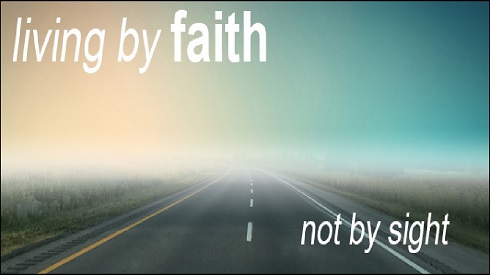
I remember when I was a little boy waking up in the middle of the night and calling out in the dark to my mom. I could not see her but I knew she was there. If I went by sight, I would never have called out to her and I would not have received the help I wanted.
The same with God, we cannot see Him but we know He is there through faith. We must realize that we live by faith or we will never call out to Him.
In certain ways, I see all people as people of faith. That is not saying that all people have faith in God but all have faith. Some people have faith in science, some in various religions, some in humanity and others have faith in God.
God loves each one of us no matter what we put our faith in. He calls us to himself, he accepts us and loves us.
None of us can prove there is a God or that there is not a God. None of us can prove heaven or hell. Many things in which we believe in this life are all by faith.
Just as it is by faith that we flip a light switch and expect the lights to come on, or sit on a chair and expect it to hold us. It is by faith we accept God and know He is there to listen and watch over us.
Do not worry about trying to prove God to everyone. Live your life daily by faith in God. Allow Him to live through you to touch others with love and, in his way and time, prove himself to you.
War, terrorism, politics, COVID-19 pandemic, how could we possibly be at peace in our world today with all this turmoil?
How can we be at peace with people with all the different thoughts and ideas, the different denominations, interpretations, beliefs, different religions and ways of life?
The dictionary says of peace: harmony in personal relations; freedom from disquieting or oppressive thoughts or emotions. We certain have a lot of strain in personal relations and much unrest and worry in thoughts and emotions about events going on in our world today.
Romans 12:18 reads, if possible, so far as it depends on you be at peace with all men. To me this means we are to live in harmony with others, not allowing any oppressive thoughts or emotions to take control of us. In other words, we live in love. That does not mean total agreement, but love and acceptance of who the other person was created to be.
Jesus told us we were given the peace of God by saying “peace I leave with you; my peace I give you. I do not give to you as the world gives. Do not let your hearts be troubled and do not be afraid”. It is a peace that we, in our finite human minds cannot make sense of or understand.
Jesus also said “in me you will have peace. In this world you will have trouble. But take heart! I have overcome the world.” This world will provide plenty of worrisome events, plenty of turmoil and plenty of things to worry about each day. Yet Jesus said by putting our trust and hope in God we can overcome the worry and fear we have in the world.
The Kingdom of God is not like the kingdoms of this world. Our world is a temporary home, yet the Kingdom of God is now. It is within us. The Spirit of Christ is within us. Our spiritual home right now is in the Kingdom of God. We do not recognize all the effects because we are to accustomed to the ways of the world. Jesus said the ways of the world have been overcome by the Kingdom of God.
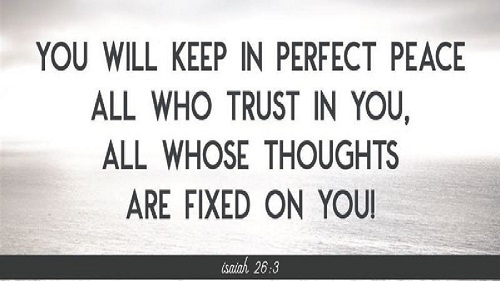
The more we can focus on the Spirit and the Kingdom within, the more we can enjoy the peace Jesus provides. The peace of Christ works within our spirit, much different than the peace we think about in our world system.
Remember that we are responsible for ourselves in the way we live and trust God. We are not responsible to live as others do or think we should. We are not responsible to tell others how they should live. We are to allow the Spirit to work in our lives and follow the Spirit on the path we are following. Our responsibility is to love God and love everyone we come in contact with, accept them for who they are and pray that the Holy Spirit will work in all our lives. Living in this manner would accomplish much more in showing the love of Christ and allow us to live in peace amidst all the turmoil in our lives.
Moses challenged God about destroying the Israelites when they went back to worshipping idols when Moses was up the mountain receiving the Ten Commandments (Ex. 32:1-14). Moses won the argument (32:14). Abraham challenged God about destroying Sodom and Gomorrah and won (Gen. 18). Job challenged that God supposedly always blesses obedience and disobedience is always cursed (Deut. 28). God ended up agreeing with Job against his friends about the real world of justice. The God of the Bible doesn’t mind being doubted or challenged.
In Genesis 22 Abraham faces the challenge if to sacrifice his son Isaac on the altar. Was God testing if Abraham would question and ultimately tell God NO? (See Matthew Korpman, Saying No To God). Let’s look at some textual clues:
If this is a story of God really wanting Abraham to kill Isaac in obedience to God, we must believe God actually would ever approve child sacrifice. God condemned child sacrifice (i.e. Lev. 18:21). Abraham should doubt if God would participate in a practice God abhorred!
Abraham tell his servants “we” (Abraham and Isaac) will be back (Gen. 22:5). The concept of a resurrection, after Abraham followed orders, simply didn’t exist during these times. Abraham must have thought God was providing a lamb (v.8), or Abraham was going to say No to God!
Abraham takes out a knife as if preparing to sacrifice Isaac (v. 10). Since Abraham doubted God approved, Abraham could have been challenging God to stop all the charades.
It seems God intended to stop Abraham if he didn’t take a stand against God (vs. 11-12).
Was God wrong to test Abraham, by challenging him to consider doing something immoral, to see if he truly understood God? In God’s defense, sometimes you can tell people till blue in the face what is right and it goes in one ear and out the other. Different communications may get through better such as a parable or a test. God gave Abraham a moral brain and expected him to us it!
Women, Gays, and Hell
Do you doubt a loving God would favor men over women in leadership roles which has encouraged centuries of domestic abuse and other atrocities women face? Do you doubt God condemn gays when gays can no more choose who they are attracted to than straights can? Do you doubt a loving God tortures anyone forever, when humans wouldn’t even create a place such as Hell for their worst enemies? Different biblical interpretations are plausible. I am challenging any interpretation that makes no moral sense according to the brain God gave me!
Which view of God should we lean toward?
It seems a universal, inborn desire to treat others like we want to be treated is one way a Creator would communicate what is good versus evil? Choose the claim or interpretation about God that doesn’t contradict your intuitive sense of a loving God. Discuss with others. You are free to choose the most loving way. We don’t always know what perfect love is, but it is better to challenge God than not question God and be wrong. Imagine what God may be like. You may be right!
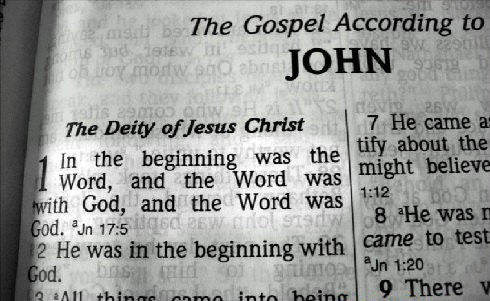
— John 1:1 In the beginning was the Word, and the Word was with God and the Word was God. — John 1:14 And the Word became flesh and dwelt among us and we saw His glory, glory as of the only begotten from the Father, full of grace and truth. — John 5:39-40 You study the scriptures diligently because you think that in them you have eternal life. These are the very scriptures that testify about me, yet you refuse to come to me to have life.
The Word is not just written words in a book. The Word mentioned here is Jesus, the Living Word.
So many of us focus on which version of the bible is the true word of God. These verses state that the true Word is alive and living within us. The true Word is not a book at all.
If we were never again able to read from the bible or hear it read to us, we still have the Living Word of God within us to teach us and guide us.
It is good to read our bibles no matter what translation we prefer because the written word is given by inspiration of God and is profitable for doctrine, for reproof, for correction, for instruction in righteousness. Yet the bible is not God and is not part of the trinity of God. It is not Father, Son and Holy Bible.
We need to remember that the bible was written by humans who were inspired to tell how they related to God, how they understood God, how they interacted with God and what they thought God was saying to them. The true Word of God is Jesus who lives within each of us through the Holy Spirit.
We can read the words on the pages of the bible and learn about grace and the love of God, but it is the Living Word within us by the Holy Spirit that brings to life and power the words we read. Jesus, who is the living, inerrant Word of God has final authority over any written words which we call the bible.
Ritual is simply a set of practices in a period of chaos so we can experience the chaos safely. –Jason Coker
In a time of unrest and chaos, the tool that seems to work most effectively is the practice of rites and rituals. Now, this can be (and most likely is) triggering for most of us who have experienced unhealthy spiritual practices. Religious Trauma Syndrome (RTS) is something more and more people are dealing with and I know its something that is not to be taken lightly. When it comes to the Christian tradition, the “church” has not always been a place that produces healthy rites and rituals to assist us in getting through the ambiguous times in our lives. Instead, church practices often get the process ass backwards: We develop rites and rituals to control and manipulate people to believe and act a certain way instead of creating spaces available for us to grow in these times of pandemonium. Cognitive dissonance is viewed as an issue of faith instead of a step needed to be taken within the spiritual journey.
Deconstruction has been the “new” practice within the religious sphere in the last twenty years or so due to many factors. With the new internet age and the huge amount of access to resources, its been more and more difficult for the “powers that be” to keep a more discrete way of posturing when it comes to past, present and future church practices. Postmodernism has brought a lot of problems to be answered when it comes to religious institutions. When people have these crises of faith, the church is not equipped with the space (rites and rituals) to help heal and liberate those who need it. Deconstruction is a step that should be perceived as a healthy process that helps us mature in our faith. It shouldn’t be perceived as a problem to be solved but as a ritual to be practiced. We must learn to let go of corrosive practices of rules due to fear and embrace a more playful experimental practice of understanding.
How does that look like? Well, there are many ways we can experience spiritual practices that help us through the journey of life. It doesn’t have to be practices in a “brick and mortar” church setting. It can be a nature walk, surfing (my favorite), exercising, playing music, painting a picture, or crafting some good beer (my other favorite). There are various of ways to experience divine guidance. The Christian traditions rites and rituals that have been with us for 2,000 plus years can be practiced in a new light as well. We can always find new ways to interpret and repurpose a practice within a church setting to help us better connect and move to more liberating heights. Traditions are good if used in a healthy and freeing way. We can let go of the damaging aspects of a rite and ritual and still actually practice the act itself. I understand some are unable to ever practice certain rites and rituals within Christianity due to RTS and that is OK! Along as you find some time of ritual to practice to better center you as a human being, I think the world can benefit from it. With that being said, there are still some beautiful practices with this Christian religion that I still find beneficial. An example that I have come to experience when it comes to repurposing a certain spiritual practice is Communion/Eucharist/Lords Table (whatever name floats your boat).
The tradition that I grew up in (L.D.S.) named this practice The Sacrament. It has elements of truth (like all spiritual practices do in a sense) but also some pretty damaging aspects as well. In my opinion and experience (along with many others) the concept of purity codes comes to mind. In order to partake of the sacrament, you had to be “worthy” and “believe” in the church’s teachings. The point of this ritual is to renew the covenant you made at baptism. Unfortunately, this interpretation of the purpose of the Lords Table misses some really important factors to help oneself to become part of the gospel message. Instead of bringing us together with Christ and participating in the way of love, it becomes a rule one must follow in order to remain a “member of a church”. We are not part of some corporation that keeps track of its members “loyalty”. This also brings out zealot faith and judgment on others who do not partake of Communion. This should not be the point of why we partake of the bread and wine of Christ.
Fortunately, I found a Church (Oceanside Sanctuary ) that has taken the practice of Communion to a level of healing and liberation one needs when it comes to healthy rites and rituals (yes, a bold claim I know). We think it is important to take Communion weekly, so we can come to the table of love and mercy despite our differences. Let’s face it, we all have our own views on anything from sex, politics, sports, education and of course on our theological views regarding the Christian tradition itself. But, guess what? Unity is possible within diversity. That is what Jesus came to bring. The commonwealth of God is the reality where love can guide us to true freedom even through our messy differences. If we cannot practice healthy rite & rituals in a church setting, how the hell will we ever expect to see needed results outside the sanctuary walls?…
For Christians, to share in the Eucharist, the Holy Communion, means to live as people who know that they are always *guests*—that they have been welcomed and that they are wanted. It is perhaps the most simple thing that we can say about Holy Communion, yet it is still supremely worth saying. In Holy Communion, Jesus Christ tells us that he wants our company. -Rowan Williams
Total certainty is an illusion because even if God is Truth, we still have to discern what is Truth. For example, there is genuine disagreement if God of the Bible desires preachers or priests be women or gay. I am convinced so many people are leaving the institutional church, but not God, because of lack of open dialogue. It’s hard to be relational when you are so damn certain!
Certainty is not found in a Book even if infallible.
It is implied that we can only know God through the Bible. Newsflash – literature always requires interpretation. You are interpreting my meaning as you read this blog. Am I saying God disapproves all certainty or that uncertainty isn’t all bad? A fallible, not infallible Book, more encourages questioning than demonizing views to the contrary. God-followers seem unaware, as I was, how they come off morally superior based on their assumptions about the Bible.
How can we know God if certainly not through the Bible?
Only a perfect or good God is worth believing in! Who doesn’t know a good God hates beheading people for unbelief unless a supposed infallible Book speaks for God? God doesn’t get enough credit for communicating through our moral intuitions. Criminals often don’t defend their actions; instead, they deny committing such crimes. A Book couldn’t be a Creator’s only type of communication, because the majority of people born into this world didn’t possess a Bible or know of Jesus. Problems often begin when we stray from common moral sense and insist on our understanding from an inspired Book. How can we decide what God is really like? See HERE
Where has certainty in God’s name gotten us?
It is logical to suggest we can’t be certain what an invisible, inaudibly God thinks, but supposed certainty has led to justifying slavery and revered theologians such as St. Augustine and John Calvin not firmly opposing the execution of those not agreeing with their theology. Certainty has led to condemning gays, though scholars who accept Scriptures as authoritative, don’t agree the Bible disapproves of same-gender loving, monogamous, consensual relationships. Women, though gifted, are denied entrance into the priesthood or pastorate in God’s name.
Uncertainty doesn’t have to lead to chaos or lawlessness.
As mentioned, the Bible can’t be the definitive guide what God would do because scholars even biblical scholars disagree what God says about divorce, gender roles, homosexuality, hell, the afterlife, etc. Uncertainty unless talking about beheading infidels, not certainly about God, protects against imposing beliefs on others which is not God’s nature. Different opinions, expressed without physical or verbal aggression, can stand side by side as we continually evaluate the most loving approach.
Uncertainty must exist in a free world.
Freedom is absolutely necessary for authentic relationships. God’s constant interference and presence could prevent true intimacy from emerging. Freedom leads to a great deal of unpredictability. The only way for a God to protect us completely against emotional or physical harm is to create robots. God can’t promise you a certain outcome in relationships or jobs and still be a respecter of freedom. God deals as much with uncertainty as we do, as not even an all-powerful God can know a free, undetermined future.
Uncertainty about God may be out of love.
God’s awing or overpowering presence may only lead to fearful obligations to obey. When parents push their agendas, even if in their child’s best interest, they may resent or rebel against coercion and never turn back. If God communicates in less demonstrative ways, this may allow for heartfelt choices. The road traveled of learning, reflecting, and non-coerced choices may best lead to lasting convictions. Moral knowledge isn’t hidden. Amoral decisions are open. Maybe God speaks to us in non-dramatic ways out of love!
Uncertainty can lead to acting more loving.
Being unable to declare the certainty or morality of our opinions forces us to listen and express ideas openly. Forcing beliefs doesn’t lead to long-lasting change. Starting a conversation with “I may be wrong” more likely leads to new understandings and creative solutions. Try it in relationships! Uncertainty doesn’t result in lawlessness. Who doesn’t know God hates murder, sexual abuse, stealing, adultery, even not treating others like you want to be treated? Continually evaluate the most loving approach is better than claiming certainty and being wrong. A loving God only wishes to influence us to make choices with the interest of others in mind.
As christian people, we have always heard that we are to love our enemies. Do good to those who use you. Turn the other cheek.
The dictionary describes an enemy as a person who feels hatred for, fosters harmful designs against, or engages in antagonistic activities against; or an adversary or opponent.
So, an enemy can go from someone who rubs you the wrong way all the way to someone who wants to literally kill you. How is it possible that we can love our enemies when we think about the more extreme sense of the word?
In all honesty, we cannot. In our own human ways, we are incapable of loving people like this. We have a hard-enough time loving people who are different from us and not really an enemy as described above.
In some cases, we can make up our mind to look past someone who treats us bad. We can make sure to treat them in a kind way, help them when they have a problem, support them any way we can. We can walk away rather than argue. We can smile and be pleasant rather than give them a dirty look or flip them off. Sometimes it is within our human power to make a choice to treat others as we would like to be treated. There are other times when, in our own strength, it is just impossible to be loving.
Obviously, we look to our role model, Jesus, and see how he lived. He truly loved people. It did matter if they agreed with him, if they were despised by the general population, if they hated him, or if they put him to death. He loved mankind. He came with the purpose to show the love of God to a fallen world.
Without the love of God living within us, and with us staying out-of-the-way and allowing that love to come through, we will not be able to truly love our enemies. But, the power of the Spirit living within us is more than able to do what we cannot do on our own.
We have to come to an end of ourselves, just as in the case of grace. We are totally unable to keep the commandments and live a perfect life that God commands. The ten commandments are a tutor that leads us to the fact that we are incapable of fulfilling this requirement.
Thankfully the New Covenant took effect when Jesus died and rose again. The free gift of God’s grace cleansed us and renewed our fellowship with God. Now, because of Him, we can not only love those who treat us good, but also our enemies. We are now one with God and it is his Spirit that loves through us, just as Jesus did when he was in his earthly body.
Obviously, loving our enemies is something we are unable to do apart from the love and strength of the Spirit that lives within us. Yet with God, all things are possible.
In the bible we read that God is love. That sounds so nice, especially when the meaning according to the dictionary is strong affection for another; affection and tenderness; affection based on admiration; profoundly tender.
Yet we read in the old testament about a God that sounds so different from this description. We read of a God of destruction, vengeance, punishment and hatred. One that kills people whether it be men, women or children. A God that kills animals and destroys property. What kind of love is that?
The new testament tells us more about a God of love. Jesus came to this earth to show us what God may really be like. The examples Jesus showed were love, forgiveness, acceptance, affection, tenderness and compassion.
My personal opinion is that God is like the God Jesus portrayed. I think the old testament was more about the views of human beings, what they thought, how they perceived God and how they used God to promote their desires and hatred of their enemies. Again, this is just my view but it makes more sense to me knowing that the bible states that God is love.
People will argue that God’s ways are higher than ours and we cannot always know and understand what the purpose of God is in different situations. They will also argue that the bible is perfect and inerrant and we cannot question what is written therein. Yet I do not believe the perfect godly trinity is Father, Son and Holy Bible. I believe the bible was inspired yet written by men. Men also translated and interpreted it. I feel that over the years of man having a hand in doing these things that many things got changed, misinterpreted and mistranslated. I think God got a bad rap due to the involvement of man in the process.
Even the bible itself does not say it is inerrant. The bible makes clear who the perfect, living Word of God actually is, and it is not a book. We read in John 1:1, John 1:14 and John 5:39 that the Word of God is Jesus.
I say all this not to try and disprove the bible. I say this to show that God is love. God is not out to punish and destroy his creation just because of things they do. He sometimes will correct us, just as a parent does their children. This is also done in a loving manner. As a loving parent, we want the best for our kids and sometimes it involves a disciplinary action for their own good. But disciplining in love is completely different from beating, injuring, being hateful and killing to make a point.
It frustrates me when I read articles about various christian leaders making comments about how God is punishing someone or some area with earthquakes, fires, sickness and death because of something they consider to be sinful. To me, that is the god of the old testament. One that men use to validate their own thoughts and desires.
The best way to find out what God is like is to read the gospels written about the life of Jesus. He represented what God is really like. He loved people. He did not force his views on others. He accepted people, healed people, fed people and offered them a better way of living. A way of love. It did not depend on who the person was, what they looked like, what their color or nationality was, who they loved or what political party they followed. Jesus loved them all and treated them with respect and kindness. How much better our world would be if we, who claim to be children of God (1), treated all people with the same love, kindness and respect. Rather than demanding judgment, exclusion and killing; or demanding our views and opinions be forced on others or our political views be enforced on all. I say look out for the best interests of others, and do so in a loving and kind way. Live your life as you feel the Spirit is leading you, but do not force others to see things the same way. Remember Jesus told us to love God with all your heart, and with all your soul and with all your mind. This is the great and foremost commandment. The second is like it, you shall love your neighbor as yourself. There should be no mistake here, God is love and we are to show that love to everyone.
I cannot imagine any fair-minded person thinking women can’t fulfill the same leadership roles as men in the work or spiritual realm unless out of devotion to God because of their understanding of a Book. Most would agree not allowing equal roles because of the color of your skin is immoral. I would suggest denying women equal roles is emotional abuse if they are gifted to lead. Does God really believe roles are best determined according to gender than gifts?
Would God encourage role differences at work but not at home or worship?
Few justify openly only allowing men in leadership roles in business. We call them misogynists or bigots! Is God really prejudice who the preacher or priest is? If two plausible interpretation exist in a supposed inspired Book by God regarding a woman’s role, shouldn’t we stand on the side that is potentially less abusive to half of God’s creations. The most qualified or gifted should surely lead the company or preach!
A Book may be the biggest reason Christians don’t think women should lead.
Bigotry or a Book, where every word is thought to be inspired by God, may be main reasons different treatment of women from men are justified. Bigots are put in their place. Secondly, even if it could be proved God inspired every word in the Bible, thus perfectly representing God’s view, we still must interpret what the writer meant according to God. Scholars, who respect the authority of Scriptures, often disagree about the meaning of the same passage.
Bible believers cannot argue there aren’t plausible interpretations that God endorses equalitarian roles between the sexes. See here. The challenge is no one can claim certainty due to the Bible because literature requires interpretation. We all have bias when interpreting the Bible, thus it is mistaken to argue one’s gender interpretations are right and those that differ are wrong. We can’t just declare “the Bible says.”
What are the consequences of men over women as leaders?
Best friends, in marriage or other dyad relationships, don’t require a leader. Men often assume loving leadership means making final decisions in impasses. I have never had a marriage issue in 37 years that cannot be solve creatively without one partner making all such decisions. Men in authority over women can encourage dominance on the man’s part and dependence on the woman’s part, which can be conducive for domestic abuse and the other atrocities women face at the hands of men. Most would agree equalitarian rather than hierarchical relationships are less likely to lead to the mistreatment of women when it comes to home or religious life.
God, women, and men.
God surely believes in roles determined according to gifts not gender whether it be at home, the office, or in worship. Let’s stand on the side that is potentially less abusive to half of God’s creations. It could be argued many men don’t abuse their leadership at home. The temptation to abuse emotionally or physically is best removed. I removed spanking as an option as a father because of the impulse to react and not consider creative alternatives. No, my kids didn’t all end up in jail! We can handle differences openly and lovingly without declaring dogmatically because the Bible says so. Common moral sense isn’t the enemy!
Helping Survivors is on a mission to help heal, educate, and empower people who have been impacted by sexual abuse, assault, or harassment. We are a passionate group of experts and advocates who believe individuals who have experienced sexual assault, abuse, or harassment deserve to know their rights and options.
If you are in crisis and need support
call the Trevor Lifeline
at 1-866-488-7386
Undue Medical Debt
Undue Medical Debt empowers donors to forgive billions in oppressive medical debt. We are dedicated to removing the burden of medical debt for individuals, families and veterans across America. Click HERE to donate now.
Doctors Without Borders help people worldwide where the need is greatest, delivering emergency medical aid to people affected by conflict, epidemics, disasters or exclusion from health care. Help support us by making a donation here:
Wishes are more than just a nice thing, they can be a game-changer for a child with a life-threatening medical condition. We grant the wishes of children with life-threatening medical conditions to enrich the human experience with hope, strength and joy. To make a donation click here:









 Done with Religion