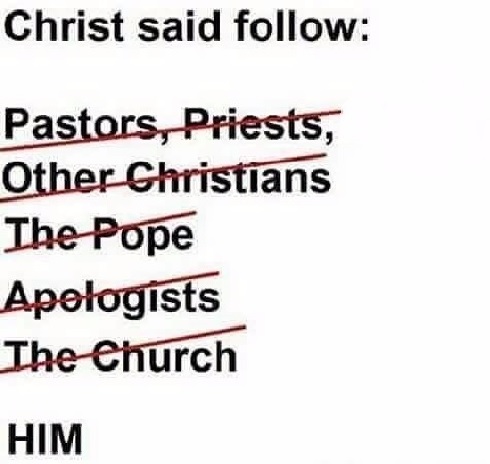
As Christian people, it seems our most emphasized event is attending church each week. I know my mom and dad took me to church the first time it was safe to take me out after being born.
I continued with regular church attendance for the next 55 years or so, all the time feeling I was doing what was the most important part of being a Christian. I looked to the pastor as my main teacher and guide, and attended all the events at the church that I could.
Even when I talked with others about God, it was more in tune with asking them to come to church. My whole Christian life seemed to be more about church life rather than living the follower of Jesus life.
It started bothering me over the last 15 – 20 years about going to church each week, year after year, sitting there listening to a chosen few participate and the rest of us just sitting, looking at the back of one another’s heads. Where was the fellowship in that?
Today when we talk about church, what we are really talking about is a religious organization that meets in a building, follows particular interpretations and doctrines and is guided by a select few people. It seems to me the biggest part of this system is getting enough people involved to make enough money to pay the bills.
In the organized church today it seems we strive to pay the mortgage, pay the utilities, pay for insurance, salaries and all the items we feel we need to put on a good performance each Sunday. If there is enough left over after all that is paid, we may put in a little to help the homeless or some good cause the leadership feels is worth it.
In more recent time, many churches have become known for participating in political activism. Some churches I have been in had a reserved section for local politicians where they could sit together and be seen. Some even provide time for politicians to speak and many endorse and back certain political parties and candidates.
I personally feel this is wrong, but although they cannot make their members vote in any particular way, many who belong to a specific church take what they hear from their pastor as gospel truth. Due to this, I believe the churches today should be taxed and pay their fair share like any other business.
I remember reading in the bible that when you assemble, each one has a psalm, has a teaching, has a revelation, has a tongue, has an interpretation. I read that Jesus sent us the Holy Spirit to live within us and that we are now the temple of God. I also read that the Most High does not dwell in houses made by human hands, and that we have the Spirit within us and we no longer need anyone to teach us because the Spirit is now our leader and guide. It certainly raised questions about church attendance as I knew it.
Yet when I read forsake not the assembling of yourselves together, I often wondered if we were being told to participate in an organized religious service. What I determined was that the assembling together does not necessarily mean in an organized service on a set day under the guidance of other human beings. It means that we need one another. We need fellowship, encouragement and being able to express our thoughts and feelings with others. That does not need to be in a building, or in an organized service, or under the control of a specific leader. I have found it actually works better outside the walls of church. It comes about as the Spirit leads us to one another throughout our normal day to day lives.
Is it wrong to gather? No, there are plenty of good Christian clubs and organizations where people can get together. The organized church is just another one of those organizations meant to provide support and encouragement for one another.
The church as a religious organization, based on its particular beliefs and doctrines, is not what Jesus was talking about when he said he would build his Church. I believe he was talking about building his followers into a living organism that would spread his love and good works to other people they met along the journey of life. And doing so would mean living life out in the open, day by day where we are in contact with others. I do not believe we are meant to be shut up within four walls of a building expecting people to come to us.
So for my wife and I, we left doing the day to day business of the church…attending the organized meetings, paying to keep the building and system running along with following the pastor, the doctrines and the rules of the church. Yet we did not leave our love for God and for people. We left the organization, we left man led religion, but we still follow Jesus. We, like many others, are doing the day to day business of the ‘Church’ that Jesus is building. Those who are his followers are the Church whether they meet in a building or never walk through the doors of what we know as church today.
Nine Church traditions that need to die by Dan Foster , Guest Blogger (Regularly writes at medium.com)
Growing up as Pastor’s kid in the eighties gave me a front row pew to the kind of vitriol and anger that can emerge from an otherwise lovely and mild-mannered Christian when you say or do something to offend them.
I remember the first time my Father preached a sermon on the topic of sex — something quite ground-breaking at the time. After the service, he stood at the door and greeted everyone as he always did. I remember one little old lady getting right up in my Dad’s face and, waving one pointed finger perilously close to his nose, screeching at him, “If you ever mention ‘that word’ in church again, I’m never coming back.” She couldn’t even bring herself to say the word “sex,” because I suppose she was far too upright and pious for the likes of anything slightly pleasurable or necessary for the survival of the human race.
My father was a great pastor, but he was ahead of his time. He like to challenge the status quo, make people shift uncomfortably in their pews and, occasionally, he like to slaughter a sacred cow.
The term, “sacred cow,” has its origins in Hinduism, but it is commonly used in Christian circles to describe those elements of church life that have been elevated to such a high level of importance that they cannot be touched, criticized, changed or removed. Above all, sacred cows are not essential to the fundamentals of Christianity, but people treat them as if they are. In fact — truth be told — if you got rid of them, the church would function just as effectively — probably even more so.
Over three decades in the Evangelical church I have done a fair bit of cow spotting. Here are a few common sacred cows that need to be put out to pasture — maybe even slaughtered completely:
The Offering
One of the most awkward parts of many a church service is the moment that an open offering plate is thrust under your nose by an eager and expectant church usher (usually an older man), with the expectation that you will put a wad of hundred dollar bills in it. Okay… so maybe not that much, but the pressure to give is real.
This uncomfortable tradition of ‘sending around the plate’ is usually prefaced by an ‘offering talk’ (that is sometimes almost as long as the sermon itself), where parishioners are exhorted to let the moths out of their purses and fill the coffers of the church for the good of the Kingdom. In the worst of cases, some churches insinuate or even promise that your financial gifts will somehow unlock the blessing of God over your life — as if God could somehow be bought off in such a way. This amounts to nothing more than manipulation.
Should we give? Yes! Christ calls us to be generous and to give to those in need. However, we are also told to give discreetly and without fanfare. In fact, the Bible says, “Each one of us should give what we have decided in our heart to give. We should not give if it makes you unhappy or if we feel forced to give. God loves those who are happy to give.”
I know of a worship leader who made the mistake of resting his guitar up against the communion table at the end of his worship set. The backlash was swift and brutal. The pastor’s inbox was full of complaints about the irreverence of the worship leader. How dare he use the table of the Lord to rest a common musical instrument up against!
True to its form, the church publicly humiliated the worship leader by making him get up on stage an apologize to everyone for his gross sacrilege. He left the church soon after. Good for him!
I heard of another pastor who moved the communion table from the center of the stage to a position off to one side, simply to create a little more space. The pastor was accused of attacking the centrality of the Lord’s supper, leading people astray and presenting a ‘watered-down’ version of Christianity. The following week, the communion table was back in the middle of the stage. From then on, the pastor would move the table just a few inches each week and, over a period of several months, successfully moved it back to one side without anyone noticing.
In some churches, the communion table is a scared cow. In reality it’s just a piece of ordinary furniture. Covering it in a nice white table cloth doesn’t make it sacred. Even the fact that the elements of the Lord’s supper sit on top of it doesn’t make it sacred. In fact, to place such high importance on an inanimate object would be akin to making an idol out of it, wouldn’t it?
One of the sacred cows that my father was unable to kill, when he was a pastor, was the pipe organ. The church had an ancient pipe organ that was so seldom used that it was almost purely ornamental. I’m pretty sure that the last human being who actually knew how to play it had passed away a few centuries earlier. Even so, when the church outgrew its ancient building and attempted to shift the congregation into a bigger and more modern facility, they were unable to part ways with the pipe organ. Consequently, at great expense, the entire organ was painstakingly removed from the old sanctuary and transplanted into the new. There it sits as an ancient monument to a bygone era, gathering dust. It sticks out like a sore thumb.
This highlighted to me how we can get attached to certain instruments, styles of worship — even certain songs — to the point of elevating them to god-like status. Music is one of the most-complained-about aspects of church. Every week someone would say the music was too loud, too soft, too fast or too slow. They would complain that the number of old hymns was disproportionate to the amount of modern worship songs. They would say that certain songs lacked lyrical content, theological accuracy or a catchy riff. When it comes to the sacred cow of music, Christians can fire up very quickly.
However, we weren’t even commanded to gather around an organ and sing, were we? Singing is really just one way to worship. It’s not the be-all-and-end-all. These days, my favorite way to worship is actually to sit in silent contemplation. Try that sometime!
Once upon a time, the idea that power and leadership was ascribed to men by virtue of their gender alone was widely accepted. In some cultures it still is. However, as the modern, Western world continues its relentless and necessary march towards equality, patriarchal structures and systems are quite rightly viewed as unacceptable and outdated. Still, those who stand to lose the most by the deconstruction of patriarchal systems — namely conservative men — won’t go down without a fight. Nowhere is this more evident than in the church, when some men will fight tooth and nail to protect their turf.
A woman can be the leader of my country, but she can’t be a leader in many local churches. That’s because many Christian churches ascribe to a form of “benevolent patriarchy” commonly known as Complementarianism. This belief gives men the role of authority over the wife and children, and only allows men to be church leaders. Women are expected to submit unilaterally to men, fathers, husbands, pastors.
I remember the very last time I attended a board meeting at my conservative, evangelical church. The group — all men of course — had gathered, and a decision needed to be made that required some legal advice.
“What a pity we don’t have any lawyers who come to our church that we can refer to for this matter,” Said one of the board members.
“My wife is a lawyer,” I spoke up.
“True,” replied the board member, “What a shame she is the wrong gender.”
And the rest of the men chuckled knowingly.
We ought to be disturbed when it is suggested that those absent of male genitals must unilaterally submit and defer to those with.
Many Christians are uncomfortable with the marriage that seems to exist between the church and the conservative side of politics. It is a well established fact that white, evangelical protestant Christians overwhelmingly support Donald Trump and his presidency to the point where “Evangelical Christian” has become a kind of synonym for “Trump Supporter.”
The idea that Jesus is somehow on the side of the Republican Party is laughable. If Jesus is on anyone’s side, it’s the side of the orphan, the widow, the refugee, the poor, the lost, the hurting and the weak.
In my home country, Australia, I believe that the more progressive political parties often have ideas more aligned with the compassion and grace that Christianity is supposed to espouse, particularly in matters pertaining to welfare, foreign aid, equality, asylum seekers and the environment. Yet, it is kind of an unwritten rule that Christians should vote for the conservatives.
Yes, I have had friends walk away from the church because they can’t reconcile why the church supports political parties that turn away the refugee and oppress the minority.
Let’s be clear. The Bible never mentions a building called ‘Church.’ Never. In fact, the Bible never speaks of church in those terms. The buildings came later when the state got a hold of the church, under Roman Emperor Constantine in 312 AD.
On the other hand, Jesus said where two or three are gathered He is present. Two or three — not 40 or 150 or 6,000. Not in an auditorium with a speaker, a band and dozens of rows of chairs. When Jesus spoke about the church, he was talking about people. People are the building blocks of church, not bricks and mortar. That is why church began in the humble homes of believers and that is why church can still continue in the humble homes of believers even as we are forced apart on occasions such as global pandemics.
Jesus never instructed believers to buy land, build buildings, establish a weekly worship service, create a liturgy or institute a sacrament. He simply commanded believers not to forget Him; to live together, and to eat, and to remember. A building is not needed. It might be helpful, sure. But real Christianity is a fully portable experience.
At various times in the Gospels, Jesus’s disciples are seen to try to keep children away from Jesus, because Jesus was — in their opinion — far too busy and important for kids. Yet, in Matthew 18:10, Jesus commands us not to look down on children, but to welcome them.
Therefore, it strikes me as odd that many churches segregate children to some far-removed corner of the church property so that the adults can worship God in peace and quiet. Here, during an hour of glorified babysitting, we teach children to be good little boys and girls. We teach them to be nice, obedient and compliant.
Now, don’t get me wrong. I’m not saying there isn’t a place for children’s Sunday School lessons, but I think the whole system needs an overhaul. Better yet, here’s an idea. How about we design worship services that are inter-generationally friendly so that we can all participate together? We ought to stop patronizing children, and start to treat them as people who have a things that they can teach us, and meaningful contributions they can make.
No wonder my kids found church so boring, because — let’s be honest — young people are drawn to risk, challenge and adventure, but these things are often discouraged in the local church. Instead, many congregations offer a safe, nurturing community — an oasis of stability and predictability. Studies show that women and seniors gravitate toward these things. So not surprisingly such congregations are over-represented with women and seniors.
“Real spirituality should emphasize movement over stillness, action over theory, service to the world over religious discussions, speaking the truth over social niceties, and doing justice instead of self-serving. Without this, spirituality becomes characterized by too much inwardness, a morass of unclarified feelings, and religion itself as a security blanket. This prevents a journey to anyplace new, and fosters a constant protecting of the old. It is a no-risk religion, just the opposite of Abraham, Moses, Paul and Jesus…”
As long as we present the Christian faith, inaccurately, as something less than the great, challenging, risky, dangerous, treacherous adventure that it was meant to be, we sell out. And children will find their adventure elsewhere.
In the small village of Okeford Ftizpaine in South West England, locals are up in arms after their parish church made the decision to sell off their 150-year-old, antique Victorian-era wooden pews.
As comfortable as old wooden pews are, I would not personally object being able to sit on something more modern and easy-on-the-backside, especially during the weekly sermon by the local vicar.
Not the people of Okeford Fitzpaine, though. They would rather keep their old pews. However, it turns out the removal of these ancient bench seats is rather a matter of necessity as the sanctuary requires more flexible furnishings to allow space for people who are… how do you say it nicely? More rotund than the average human.
A recent report by the church committee concluded: “We have had occasions at weddings where the couple have been too large to be able to walk side by side down the aisle. With different chairs we would be able to widen the aisle.” They also added that the the pews were not suited to the “human form of today” — presumably that means the larger human form.
Even so, it beats me how a church community could somehow think that uncomfortable, 150-year-old wooden pews were so essential to church life that they are worth fighting for — as if single chairs might somehow the instruments of Satan.
Burn the pews, I say!
And while we are at it, let’s get rid of rows all together. I say that because rows divide and differentiate. Rows promote the consumerist mindset. Rows promote the brainless acceptance of information without critique. Rows perpetuate the hierarchical model that places an expert up the front to mediate between us and God. How about we meet in circles instead — around tables even? Tables invite connection. Tables invite conversation. Tables invite friendship.
In 2017, the satirical Christian website Babylon Bee published an article entitled, “Woman In Singles’ Ministry Gets Married, Promoted To Real Christian.” The article gently pokes fun at the idea that getting married is basically a ‘level up’ in Christian circles.
The reality is that the popular view of our day is that singleness is a bad position and marriage will cure it — that being single is not sufficient, not adequate. It’s something you need to change because it’s wrong. And, if this is the popular view in our society, you can bet your bottom dollar that it’s the popular view in the church. At first, we make fun of single people (mainly while they are young), but only for a while. As they get older, we begin to wonder what’s wrong with them. Are their standards too high? Eventually, we end up pitying them, as if they were destined for a miserable life.
Somehow, we arrived at the idea — the myth — that singleness is bad. It’s the reason my Mum started suggesting suitable partners for me as soon as I turned 18. It’s the reason why I signed up to a dating website when I was in my early 20s. It’s the reason why people in the church ask, “So, when are you gonna find yourself a nice girl?” It’s the reason why half of you are trying to match-make for your single friends. Christian are often guilty of treating singleness like it’s a problem that needs to be solved — despite the fact that Jesus and the Apostle Paul were single men.
In fact, the Apostle Paul comes along in 1 Corinthians 7 and lifts up singleness as a legitimate way to live, in a way that would have shocked the world in which they lived at the time. Suddenly Paul is calling singleness a gift. A gift! Imagine that! In so doing, Christianity was the first religion that held up singleness as good. So, the church ought to quit making it out like married Christians are on a higher level, somehow.
Call me a heretic if you like, but I don’t think that Jesus is impressed by our attempts to clutch at power, to elevate some and to put others ‘in their place,’ to resist change, preserve the status quo and uphold ancient practices and models that are superfluous to the fundamentals of Christianity.
And I really don’t think that Jesus cares too much about the form of our worship — our buildings, our furniture, our music, and our religious traditions.
So, why do we elevate these things to such a high position that we would be willing to fight over it? I’ve seen churches split, people hurt and relationships destroyed over these trivial matters.
If you have grown up in the organized church system and later change your views, what do you do with all your all friends who are still in the system?
Sometimes the first thought is to separate from them. They no longer understand you so why be a part of them?
To this I say that the bible says to forsake not the assembling of yourselves together. I do not believe that means we need to stay a part of an organized church and attend their meetings. I feel it means we still need our brothers and sisters in Christ. This is not done through a Christian organization on a certain day of the week. How much fellowship can we really have sitting in an organized service listening to one person do all the talking?
We need a daily interaction with believers for encouragement, strength, prayer support, helping others and sharing the love of God to lift one another up. We need communion with other believers, and not necessarily always about spiritual things. Just good old fellowship and communication on a number of topics: spiritual, our various concerns and needs, funny things and basic conversation.
I honestly feel we should not separate ourselves from those who think differently from us, but sometimes it cannot be helped because they will cut us off. They tend to think we have lost our faith or have fallen under the lies of the devil.
When my wife and I left the organized church, we did not leave God. We still believe in Jesus, in loving God and loving others. We love our brothers and sisters who are still in the organization and believe we still need each other.
We do need to get past the us versus them mentality and accept one another whether we attend a religious organization or not.
If they feel we have lost our faith or walked away from God, it does not mean they are our enemy. We are still to love them and do our best to get along and support them. If they choose to stay away from us, there is nothing we can do about that, but we cannot write them off and forget them. We still love them, pray for them, and go on with our lives sharing the love of God with them any everyone we meet.
To be a Christian is to live dangerously, honestly, freely – to step in the name of love as if you may land on nothing, yet to keep on stepping because the something that sustains you no empire can give you and no empire can take away.—Dr. Cornel West
How are we (I.e., American “Christians”) supposed to *act* in our current climate where the pandemic reigns, systemic racism runs rapid and the economic state is at its worse sense the Great Depression. 2020 has been a mix of 1918, 1930s, and 1960s all wrapped up in one “apocalyptic” year and it seems to be no end in sight. The unveiling of the principalities and powers (corrupt institutions) are now in the forefront for all citizens to witness. The term “viewer discretion advise” has never been more relevant.
We are hearing from both world views (conservative and liberal) advice and warnings in what the “right” strategy is when it comes to the current world crises. The polarization has come to a boiling point and you better take cover! Masks vs. no masks, black lives matter vs. all lives matter, all coming to a dualistic head, about to explode. The American political landscape has been experiencing a tug of war (no pun attended) regarding ideals which in-turn is hindering an actual plan of action. Thus, we have the never-ending cycle of us vs. them that only brings violent unrest.
This is not a denial of the actual current damaged systemic realities (white supremacy, racism, pandemic health crisis, police brutality, etc.) that this country is experiencing. I understand that some are living in denial of these issues (and it is not getting us anywhere). Alas, what I am trying to manifest is Christ-participants response to all of this? It cannot only be a conservative view of just letting the old ways be preserved no matter how many lives are harmed and oppressed along the way. It also cannot be a regulated liberal view, espousing a non-stop shame culture in where people are ostracized and scapegoated, no matter what the price. Is this American binary platform, in which we have two sides to choose from, all there is? The issues with our two-party system, plurality voting rules, winner take all voting, gerrymandering, (to name a few) is not helping when it comes to a more just (love in action) social system.
When leave social restorative justice (it cannot be an eye for eye kind of justice here, peeps) in the hands of the elite, what we get is an Empire. If we are living in the 21st century United States, we are living in an Empire (bold statement I know but stay with me). There are a few interpretations of Empire (hey, is post modernity baby haha), but I find this one fitting when it comes to defining Empire with our current state in Murica:
Conglomerates of power that are aimed at controlling all aspects of our lives, from macropolitics to our innermost desires.― Joerg Rieger, Christ and Empire
What does Empire involve? All types of “power over” institutions from education, to government and religion. When our systems become an economy of exchange where the mighty dollar reigns, the result is imprisonment. From a Christ-participant perspective, what we have seen since the fourth century is Civil Religion: the Christendom of Empire, reigning down with an oligarchy thumb. Since that time, the supposedly Jesus Community has been entangled with the State. This might be the deadliest mixture when it comes to corrupt power. Christians have become the Roman occupiers―plundering and destroying all that gets in their way―instead of Jesus followers being eaten by lions and burned at the stake. When we became more about geo-political dominance and less about serving “the least of these”, the distinction between the Jesus-Way and Empire are unrecognizable. Palestinian Christian, author, and Lutheran pastor Mitri Raheb puts it this way:
Empires create their own theologies to justify their occupation. [Just as the early American empires chose to overlook its mistreatment of the Native tribes who already lived here and then justified a slave holder form of Christianity in much of the Americas. —RR] Such oppression generates a number of important questions among the occupied: “Where are you, God?” and “Why doesn’t God interfere to rescue [God’s] people?” When, under various regimes, diverse identities emerge in different parts of Palestine, the question arises, “Who is my neighbor?” And finally, “How can liberation be achieved?” is a constant question.
I think this is what we have in our current state of affairs. Are we (I.e., White American Christians) as claimed participants in the Jesus way, going to see ourselves as the Roman occupiers? Are we finally go to repent (change our way of thinking) and really set out to be a people who wash feet, serve the poor, and set the captives free? That is it, really. Breaking free to liberate others. This is what privilege is all about. We cannot let the ways of Empire cloud our minds with this “America first” attitude. Its movements that change things, not rusted-out institutions. It is power under not power over that brings about resurrection (Jesus on the cross, anyone?). So, regardless if you see masks as not needed, or black lives as a neo-Marxist communist organization, what do you do for the least of these? For your enemies?
I think it’s time that we truly see that “our citizenship is in heaven- Philippians 3:20 “ which includes “every nation, tribe, people and language-Revelation 7:9”. It’s time to let go of our egos and be humbled. We need to listen and educate ourselves through and by the voices of the marginalized in order to bring about the liberation and healing that sets all of God’s creation free…
Only the oppressed can receive liberating visions in wretched places. Only those thinking emerges in the context of the struggle against injustice can see God’s freedom breaking into unfree conditions and thus granting power to the powerless to fight here and now for the freedom they know to be theirs in Jesus’ cross and resurrection.― James H. Cone, God of the Oppressed
Growing up in the world of Christianity and the church, I have memories of a time when all seemed well within the system. I thought we all loved one another and we could share the love of God with everyone we met. I felt if I stayed in the system and listened to the pastor, I would learn all I needed to know to be a Christian who could handle anything.
After many years within Christianity and the organized church, I began having feelings of not being satisfied. I saw people who wanted to have things their way or else. I saw people looked down upon or ignored enough to leave. I saw people outside the church service who acted just like everyone else and treated people who they disagreed with in a very unloving way.
I began to question if Christianity was truly what God intended and if the church was what Jesus talked about when he said he would build his Church. Jesus said he would build his church, which is his people. It is also said that God does not live in houses made by human hands. The bible makes it plain that we, his people are now the temple and the Holy Spirit lives within us. We no longer need anyone to teach us. We have the Word of God living in us teaching and guiding us throughout our lives.
It finally began to hit me that Christianity was just another religion like all the others. It was organized and controlled by human beings. It was an organization of power, control, disagreement and exclusion. I wondered what happened to the Christianity I knew growing up. I truthfully do not think it changed, I think I changed. I think the change was due to learning and following the guidance of the Spirit who is within me.
Have you ever felt frustrated with the Christian world today? Obviously, the church today is not what God intended and in America the church has become a big corporation more than anything.
It finally got to a point where my wife and I were frustrated enough with Christianity that we decided to leave the church. The more we read, prayed, meditated and thought about things we also got frustrated enough to leave Christianity.
Now before you have that common reaction to call us heretics, back-slidden Christians, or fallen from grace let me say we have not left God. I know many people believe if you leave the church or the Christian organization you have left God, but that is not the case.
Believe it or not, Jesus was not a Christian. He did not start the organized, religious church. He did not favor one group of people over another. He loved people, all people. He asks us to do the same and that was not something I was seeing within the organization.
I will say that if you are satisfied with the church system and enjoy meeting together with other like-minded people, that is OK. My only thought is that you remember church is not a place nor an organization. The pastor is not the middleman between you and God. One denomination or church doctrine is not the true church or only way of interpreting the ways of God.
The fact is that God loves us. There is nothing we have to do or stop doing to receive God’s love. We are saved and restored to fellowship with God through faith in Jesus. We have the Holy Spirit living within us and we do not have to listen to this group or that group, this speaker or that preacher. We follow God in the way He wants us to go and we no longer have to worry about our reputations or what others think. We no longer have to look to religion or man-led organizations to live for God.
I really believe if we accept God’s love, follow Him and listen to the guiding of the Holy Spirit within us we will be pleasing to God no matter what others say. We no longer have to be tossed to and fro by listening to all the different voices in Christianity today. We listen and trust God and enjoy the fellowship we have with Him through Christ.
Looking at things in this way, it has become a life of following the example of Jesus and doing what is pleasing to God. We no longer worry about following the religion of Christianity, but we go by the guidance of the Holy Spirit who lives within us. The religious organization we so commonly call Christianity has become something we no longer need. We now live life by following the Spirit, loving God and loving all people. For us, this daily way of living has replaced the man-made organization with a more meaningful way of life.
My wife and I often discuss using the word Christian these days. We wonder whether we should describe ourselves by the word Christian or not. We think it all boils down to what we mean by the word Christian.
So often the word means many things we are not. Say the word Christian and many people automatically stereotype you to basic beliefs and doctrines of the religion of Christianity and not necessarily to what we truly believe.
If being a Christian is being part of a religious organization that meets in a building on a particular day and follows set doctrines based on a particular denomination then no, we are not Christians. If being a Christian is being part of a group that is opposed to all other people and religions and only accepts those who believe like we do then no, we are not Christians. If being a Christian has anything to do with man-made religion, exclusion, hatred, following old covenant law then no, we are not Christians.
In Acts 11:26 the disciples were first called Christians by people in Antioch. I always heard that they were called Christians because they were acting like Christ. The people there were calling them little Christ’s because of the way they showed the love and power of Christ. Now, if that is what is meant by being a Christian then we are all in.
There are many ways we can described ourselves…believers, Christ followers, disciples of Christ, followers of the way, and even Christians. Yet the term itself really does not matter. What matters is how we live our lives. Is Christ preeminent? Are we living as one with him? Are we allowing the love of Christ to live through us, accepting others, loving others and being little Christ’s to all we meet? If not, whatever word we use to describe our religious belief does not make any difference.
When people see us, they should see Christ. When people see Christ, they should see God who is love. He lives within us and we should be known for the love we have for him and for the love we have for our fellow human beings. Do not worry so much about the label we use. Follow the leading of the Spirit of Christ who lives within us. Share the love of God with each and every person we meet. Be known for sharing the love of God rather than for what religious word we choose to use.
When we think about Jesus, many of us automatically think of Christianity. Yet in actuality, the two are completely different. Jesus did not come to start a religion. Jesus was not a Christian.
We are missing the whole point when we focus on religion rather than the real reason Jesus came to live among us. He came to show us what God is really like. A god who is kind and who loves each and every one of us. No matter what we call ourselves or what group we claim to belong to, God loves each one of us.
According to Wikipedia it is stated that according to some estimates there are roughly 4,200 religions in the world including Buddhism, Hinduism, Islam, Jewish, Christianity. In a sense, each of these and every other religion are actually related. They are all human based ways of trying to find and please the God (or gods) they believe in and serve.
In regard to just Christian denominations, World Christian Encyclopedia says that world Christianity consists of six major ecclesiastical-cultural blocs. These are divided into 300 major ecclesiastical traditions and are composed of over 33,000 distinct denominations in 238 countries. We even break it down more within Christianity with all the different denominations such as Catholic, Methodist, Lutheran, Presbyterian or part of the hundreds of other groups. It certainly cannot be stated that people are not interested in some type of higher power.
We want to argue over religion and who is right and who is wrong. All the different religions of the world cannot agree in who we believe or what is right. We argue over whose interpretation or doctrine is right, then condemn and disassociate with those who feel differently.
Needless to say, we all have our interpretations, thoughts and ideas but those just make us unique individuals. They were not intended to cause separations and divisions among us. We should be able to be ourselves and yet love and accept those who are different from us.
If we could get past the religious part of our beliefs and live in the freedom God provided, accept one another and love one another even in our differences, we could certainly get along much better together. Rather than defend our denominational interpretations and our religious doctrines, if we would love and accept others with the love of Christ, people would be more open to hear about our views on God.
Sadly, we are normally busy pointing out what we think are sins and mistakes of others. We are quick to judge and condemn those who we consider sinners. Yet when we do so, the love Jesus told us to show everyone seems to get missed. I personally do not think it is our job to judge and condemn people and determine what are sins or not. We are told to love God and love one another.
Jesus told us to love God, love one another, love your neighbor and love your enemy. When we focus on the gospels and the life of Jesus, we see that he did not condemn people nor point out specific sins. He had compassion and love and forgave them before they even asked. We can certainly see a distinct difference from the way we act today. Jesus mainly seemed to have an issue with the religious leaders who thought they were better than everyone else because of their religious works.
When it comes to saying I am a Christian, I am hesitant anymore because of the stereotypical ideas most people form when hearing the term. If being a Christian means a follower of Christ, someone who wants to be like Christ, someone who shows the love of God to everyone then I am for it. But if being a Christian means someone who follows the old covenant law, who is judgmental, condemning and hateful then I am done with that and prefer not to use the term. In that sense, Christianity is not the answer nor is any other man-made religion.
Jesus is not into religion. Jesus came to show the love of God to every human being no matter who they are or what they believe. Jesus crosses the barriers of religion and loves everyone. Jesus shows us what God is really like, an all-inclusive, loving and accepting Spirit who wants the best for all of us. In the world today we are the only Jesus people see. We should be ready to share that love and acceptance with everyone we meet.
Ritual is simply a set of practices in a period of chaos so we can experience the chaos safely. –Jason Coker
In a time of unrest and chaos, the tool that seems to work most effectively is the practice of rites and rituals. Now, this can be (and most likely is) triggering for most of us who have experienced unhealthy spiritual practices. Religious Trauma Syndrome (RTS) is something more and more people are dealing with and I know its something that is not to be taken lightly. When it comes to the Christian tradition, the “church” has not always been a place that produces healthy rites and rituals to assist us in getting through the ambiguous times in our lives. Instead, church practices often get the process ass backwards: We develop rites and rituals to control and manipulate people to believe and act a certain way instead of creating spaces available for us to grow in these times of pandemonium. Cognitive dissonance is viewed as an issue of faith instead of a step needed to be taken within the spiritual journey.
Deconstruction has been the “new” practice within the religious sphere in the last twenty years or so due to many factors. With the new internet age and the huge amount of access to resources, its been more and more difficult for the “powers that be” to keep a more discrete way of posturing when it comes to past, present and future church practices. Postmodernism has brought a lot of problems to be answered when it comes to religious institutions. When people have these crises of faith, the church is not equipped with the space (rites and rituals) to help heal and liberate those who need it. Deconstruction is a step that should be perceived as a healthy process that helps us mature in our faith. It shouldn’t be perceived as a problem to be solved but as a ritual to be practiced. We must learn to let go of corrosive practices of rules due to fear and embrace a more playful experimental practice of understanding.
How does that look like? Well, there are many ways we can experience spiritual practices that help us through the journey of life. It doesn’t have to be practices in a “brick and mortar” church setting. It can be a nature walk, surfing (my favorite), exercising, playing music, painting a picture, or crafting some good beer (my other favorite). There are various of ways to experience divine guidance. The Christian traditions rites and rituals that have been with us for 2,000 plus years can be practiced in a new light as well. We can always find new ways to interpret and repurpose a practice within a church setting to help us better connect and move to more liberating heights. Traditions are good if used in a healthy and freeing way. We can let go of the damaging aspects of a rite and ritual and still actually practice the act itself. I understand some are unable to ever practice certain rites and rituals within Christianity due to RTS and that is OK! Along as you find some time of ritual to practice to better center you as a human being, I think the world can benefit from it. With that being said, there are still some beautiful practices with this Christian religion that I still find beneficial. An example that I have come to experience when it comes to repurposing a certain spiritual practice is Communion/Eucharist/Lords Table (whatever name floats your boat).
The tradition that I grew up in (L.D.S.) named this practice The Sacrament. It has elements of truth (like all spiritual practices do in a sense) but also some pretty damaging aspects as well. In my opinion and experience (along with many others) the concept of purity codes comes to mind. In order to partake of the sacrament, you had to be “worthy” and “believe” in the church’s teachings. The point of this ritual is to renew the covenant you made at baptism. Unfortunately, this interpretation of the purpose of the Lords Table misses some really important factors to help oneself to become part of the gospel message. Instead of bringing us together with Christ and participating in the way of love, it becomes a rule one must follow in order to remain a “member of a church”. We are not part of some corporation that keeps track of its members “loyalty”. This also brings out zealot faith and judgment on others who do not partake of Communion. This should not be the point of why we partake of the bread and wine of Christ.
Fortunately, I found a Church (Oceanside Sanctuary ) that has taken the practice of Communion to a level of healing and liberation one needs when it comes to healthy rites and rituals (yes, a bold claim I know). We think it is important to take Communion weekly, so we can come to the table of love and mercy despite our differences. Let’s face it, we all have our own views on anything from sex, politics, sports, education and of course on our theological views regarding the Christian tradition itself. But, guess what? Unity is possible within diversity. That is what Jesus came to bring. The commonwealth of God is the reality where love can guide us to true freedom even through our messy differences. If we cannot practice healthy rite & rituals in a church setting, how the hell will we ever expect to see needed results outside the sanctuary walls?…
For Christians, to share in the Eucharist, the Holy Communion, means to live as people who know that they are always *guests*—that they have been welcomed and that they are wanted. It is perhaps the most simple thing that we can say about Holy Communion, yet it is still supremely worth saying. In Holy Communion, Jesus Christ tells us that he wants our company. -Rowan Williams
When you first hear this, you think of someone who has lost their faith and turned their back on God. That is certainly not the case with me. Let me explain.
When I say christianity I am talking about the religious organization. The true sense of the word Christian means little Christ, or someone who follows the example of Jesus by loving God and loving others. This is not what I am talking about.
The religion of Christianity is the many denominations, the various doctrines and the requirement to follow the rules that men and women tell us we need to follow to be “good christians”.
Church attendance, tithing, adhering to the belief that the bible is inerrant, basically following the rules of the traditional institutional church organization. Being told that grace is not enough because we have to add following the rules and do things that people think are right to be considered a christian.
So often you see two or three church buildings within a mile of each other. There are so many usually because those that attend cannot agree on doctrine and bible interpretation and they have to separate from one another. They still try to follow the ten commandments and try to be good people by what they do when God said it is finished. Because of the grace of Christ we can rest in the love of God.
Jesus said to love God and love one another, but we tend to fight and argue amongst ourselves while those outside of christianity watch and wonder why they would need to be a part of it.
It seems more often than not, when christianity is mentioned the thought is of people who go to church on Sunday then act like everyone else the rest of the week. The thought of people who try their best to follow the rules but spend most of their time feeling guilty because they cannot do so. So much of christianity seems to be so exclusive to people who they feel are different. It says love your neighbor and love your enemy but christianity so often loves only those who have the same views and opinions about the bible.
That is why my wife and I have left the religion of christianity. We have been walking outside the walls of institutional church and religion yet have not left our faith in God. We want to follow the example of Jesus who showed us what God is really like. A God of love and acceptance. A God who loves people and treats everyone with kindness, respect and as equals. We want to follow the guidance of the Holy Spirit who lives within us. We have given up on following the pastor or evangelist or any human who thinks they are the mouthpiece of God. We no longer need a human teacher or guide since Jesus sent the Spirit to be with us constantly.
All that is asked of us is to share the good news of the gospel which is that God loves us. We share that by loving God and loving all people, not by shoving our opinion down the throats of others. Making disciples is sharing the love of God, encouraging one another and helping each other to daily live a life that is loving and helpful.
So yes, I am done with christianity. I am not done with faith in God. I am not done with following the example of Jesus. I am not done with loving people and sharing the love of God with everyone. Forget the religion and follow the way of God by loving one another.
Have you noticed how often people get offended and feel they
need to prove their point on so many topics and posts online? It usually does
not go well once that starts. Especially when it comes to spiritual and
biblical topics.
We fail to realize that not everyone has the same
interpretation as another. We also fail to realize the fact that we cannot
prove most of what we believe.
We can fight and argue between christian and atheist, one christian denomination and another, among Jewish, Christian, Islam and a host of other religions. We can argue about whether there is or there is not a God, is there a hell or not, what this verse means or what that verse means. We get mad and defensive when someone goes against what we believe and do our best to prove our view is right.
Thing is, we cannot prove our point. We cannot prove God exists, we cannot prove there is a heaven or a hell, we cannot prove any other aspect of the spiritual existence. This life is a life of faith and belief. As christians, we have faith that God is there and he loves us. We have faith in the guidance of the Spirit within us.
On the other hand, no one can prove there is not a God,
there is not a heaven, or there is not a hell. Yet we will fight and argue
until we almost hate each other trying to prove our way of thinking.
I think God can take care of himself. We do not have to fight and argue to defend Him. Rather than making ourselves look like mean, hateful people who have to be right we should be showing the love of God to everyone. Show his love to those who agree with us and also to those who are a hundred percent sure in their minds that we are wrong.
To be sure, we cannot have this kind of love and acceptance
in our own strength. God says we are the temple of the Holy Spirit, and it his
love that flows out of us. Through His power, we can love those who live
differently, who think differently, we can love our enemies and those who want
nothing to do with God.
We can have our own way of thinking, our own beliefs and
interpretations, knowing that God created each of us differently. Yet we need
to remember we are not totally right on everything, and for sure we are not always
going to agree with one another. We can all learn something by listening and
communicating with others.
We all have a right to believe what and how we want to
believe. People can put their faith in God or not. We can have completely
different lifestyles. We can have a completely different interpretation on
bible verses or we can completely reject the bible and not believe anything
about it, and it is OK. Jesus did not tell us to judge and condemn others for
what they believe. He did not say to force our views and beliefs on others. He
did say to love one another.
We are not called to make people believe like us, or believe in God at all. We are called to go into the world and live the gospel message that God loves and accepts us. Jesus came to restore fellowship between humanity and the Father. Through the power of the Holy Spirit, we are to love and accept others just as they are.
We can have our individual beliefs and interpretations, and
we do not have to agree with everyone. Love and acceptance do not mean
agreement. We can love and accept others just because they are loved by God. We
were all created in His image. We can have our differences and still accept and
care for those God brings into our lives each day.
Helping Survivors is on a mission to help heal, educate, and empower people who have been impacted by sexual abuse, assault, or harassment. We are a passionate group of experts and advocates who believe individuals who have experienced sexual assault, abuse, or harassment deserve to know their rights and options.
Undue Medical Debt empowers donors to forgive billions in oppressive medical debt. We are dedicated to removing the burden of medical debt for individuals, families and veterans across America. Click HERE to donate now.
Doctors Without Borders help people worldwide where the need is greatest, delivering emergency medical aid to people affected by conflict, epidemics, disasters or exclusion from health care. Help support us by making a donation here:
Wishes are more than just a nice thing, they can be a game-changer for a child with a life-threatening medical condition. We grant the wishes of children with life-threatening medical conditions to enrich the human experience with hope, strength and joy. To make a donation click here: