Feeds:
Posts
Comments

By Mike Edwards

You may believe God inspired and approved every word written down in the Bible. We still must discern the writer’s meaning and application to our circumstances. Personal interpretations are not infallible. Opposing sides often demonize one another by declaring their view of God according to the Bible is right. It is said since Jesus was God in flesh, Jesus is the final authority in understanding God. We still though have to interpret Jesus’ words. Scholars hardly agree what Jesus advised on divorce. Which interpretation is best when two reasonable interpretations exist?

Did you know scholars disagree about women and gays according to the Bible?

Bigotry or a Book, where every word is thought to be inspired by God, are main reasons different treatment of women from men are justified. Two plausible interpretations exist on most major issues when speaking of God’s character. Many defend that the Bible teaches God proclaims women cannot be in authority over men in roles such as a priest or pastor. Scholars also proclaim the Bible teaches roles are based on gifts not gender. See here. Scholars disagree if the Bible condemns monogamous same-sex relationships. See here. These views have impacted billions of lives!

How would a Creator convey what like since any Book is subject to interpretation?

Is it possible a universal, inborn desire to treat others like we want to be treated is one way a Creator would communicate what is good versus evil? After all, half the people born in this world didn’t possess a Bible. I don’t know any God or non-God person that doesn’t advocate the golden rule being a valuable guide in relationships. How would we want to be treated if in that person’s shoes? Which view is most loving from a human perspective?

Even those who claim God is a mystery imply God speaks through our moral intuitions.  

Many claim God is a mystery because their interpretation of Scriptures suggest God appears evil from a human perspective. Such interpreters, who would agree humans were created in God’s image, are using their moral intuitions to imply God and human love are the same. It is certain that we don’t always know what perfect love is, but this doesn’t mean anything goes. Only terrorists, because they don’t question a Book, believe a good God encourages beheading for unbelief.

Choose understandings of God with fewer negative human consequences.

Many recognize as bigotry if we chose business leaders based on gender than gifts. Putting men in leadership positions over women can encourage dominance on the man’s part, which can be conducive for abuse and other atrocities women face at the hands of men. It is hard for men to twist mutual submission to suggest husbands make the final decisions in a stalemate. It doesn’t make moral sense why God would condemn gays when they can no more chose who they love than straight can. Ask them! Why would anyone choose to be gay based on the condemnation and bigotry faced? Which interpretation? Err on the side that doesn’t contradict your intuitive sense of a loving God. Discuss with others. You are free to choose the most loving way.

by Jim Gordon

To take this title literally would be something that would make me mad and upset. In the midst of a pandemic some think it is spiritual to show they are not afraid and can ignore all that is being said because God will take care of them.  They tend to think it shows a lack of faith on their part to take the precautions many are calling for. Many say trust God and throw caution to the wind.

I do believe we will make it through this time and I do believe we can trust God to provide for us. Yet I do believe we have minds and common sense to do what we can, without panic to protect ourselves and to protect others.

The one statement that so many pastors and church organizations use to promote church attendance is the one mentioned above, forsake not the assembling of ourselves together. I have always been told that means we need to come together every Sunday at a designated place to sit through an organized meeting led by the pastor. If we fail to do so we are certainly not being the ‘good’ Christian we are supposed to be.

Yet to me, and especially in this time we are going through, this phrase speaks more to assembling together by helping one another, encouraging one another, checking on one another.  The dictionary describes assembling as bringing together or gather into one place. That does not necessarily mean a physical place but a place of agreement, a place of commonality for a similar purpose.

Now is the time to physically keep your distance, but it is also time to assemble together in the sense of fulfilling a common goal of caring for your fellow human being. It is time to put aside differences and join together for the purpose of caring for one another and supporting each other through these difficult times.

By Mike Edwards

Those who didn’t grow up with the Bible maybe aren’t familiar with the Holy Spirit. Some Bible translations refer to the Holy Ghost which may bring Casper the friendly ghost to mind. We can think of the Holy Spirit as God’s Spirit or Presence. Even the Bible suggests to look for God’s guidance through a Spirit than a Book (Jn. 14:16-17; 16:13). The context of these passages though suggests guidance in spiritual or moral truth as opposed to future, specific, individual decisions.

A word of caution when advocating God’s Spirit or the Holy Spirit speaks to us today.

Christians often encourage being still and listening so you can hear the Spirit’s voice. Such statements without explanation leave others feeling spiritually inferior or confused. You aren’t less spiritual if you can’t distinguish a supposed voice from inner impressions. At least I can’t. We can’t really know when personal desires impact our understanding of God’s voice. This doesn’t mean God can’t guide us through intuitions and the influence of others.

How might God speak to us morally?

A Book such as the Bible can’t be our only moral guide. Biblical scholars who respect the authority of Scriptures interpret differently what God guides morally regarding divorce, gender roles, homosexuality, etc. One possibility for a universal compulsion to treat others like we want to be treated is an external force communicating through our moral intuitions. Common moral sense isn’t the enemy when making moral decisions. Be careful though because rational folks often don’t agree what is our moral obligation when it comes to important matters.

How might God speak when we disagree what is moral?

Rational people don’t always agree morally concerning immigration, climate change, abortion, health care, taxes, or responding to evil dictators that murder their own people. Truth often exists on both sides of the fence. Certainty has led to justifying verbal or physical violence in the name of God or morality. Calm, open dialogue allows evaluating the most loving approach to complicated challenges we face. Certainty isn’t always less chaotic than uncertainty. See here.

God isn’t hiding an unknown future in non-moral decision-making.  

A predetermined future makes freedom nonsensical. God can’t know an undetermined future. God isn’t keeping secrets. God can’t tell you if your partner will end up betraying you or the job you take won’t be phased out. Many who speak of an “inner voice” assume God knows the future. God took risks creating us free; we must take risk making decisions. Stay connected with God choosing the wisest path at the time based on past experiences, current circumstances, and future aspirations. Do all the good, in all the places, to all the people you can.

What about biblical examples of clear guidance?

There are biblical examples where God communicated clearly. It was infrequent but if God speaks to you through a burning bush like Moses (Ex. 3), through a donkey (Numbers 22:28), or a voice from heaven that others heard like Paul (Acts 9), you might want to take notice. This just isn’t my personal experience or most I come in contact with. Inner impressions, often thought of as God’s voice, are not the same as clear communications.

Maybe the Spirit speaks or guides us through an indescribable, quiet influence.

Don’t we recognize the Spirit’s influence when we have wronged someone, we quickly confess and make amends? Maybe all we have to do is be open to the Spirit’s influence. Humans inspire by their example without speaking. When I am trying to discern the Spirit’s influence, and often it is about relationships, I aim to make a wise decision if to take the risk. If it works out, I don’t know if coincidental or not. In an unknown future God doesn’t know if it’s going to work out either.

I admit I have minimized God speaking clearly to us but if God was more demonstrative, we might use it as a club to beat the Truth out of people like we have with the Bible. If God communicates in less demonstrative ways, this may allow the road traveled of learning and reflecting leading to lasting convictions. Much of moral knowledge isn’t hidden. Honest open dialogue, not claiming certainty, best leads to loving decisions when there is disagreement. Future decisions are open. One is surely guided by the Spirit of Truth when following Jesus’ example and not demonizing others when there is genuine disagreement.

For another view consider Woodland Hills sermon series beginning January 26, 2020. See here.

by Jim Gordon

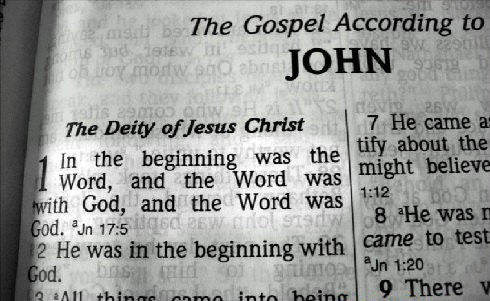
— John 1:1 In the beginning was the Word, and the Word was with God and the Word was God.
— John 1:14  And the Word became flesh and dwelt among us and we saw His glory, glory as of the only begotten from the Father, full of grace and truth.
— John 5:39-40  You study the scriptures diligently because you think that in them you have eternal life. These are the very scriptures that testify about me, yet you refuse to come to me to have life.

The Word is not just written words in a book. The Word mentioned here is Jesus, the Living Word.

So many of us focus on which version of the bible is the true word of God. These verses state that the true Word is alive and living within us. The true Word is not a book at all.

If we were never again able to read from the bible or hear it read to us, we still have the Living Word of God within us to teach us and guide us.

It is good to read our bibles no matter what translation we prefer because the written word is given by inspiration of God and is profitable for doctrine, for reproof, for correction, for instruction in righteousness. Yet the bible is not God and is not part of the trinity of God. It is not Father, Son and Holy Bible.

We need to remember that the bible was written by humans who were inspired to tell how they related to God, how they understood God, how they interacted with God and what they thought God was saying to them.  The true Word of God is Jesus who lives within each of us through the Holy Spirit.

We can read the words on the pages of the bible and learn about grace and the love of God, but it is the Living Word within us by the Holy Spirit that brings to life and power the words we read. Jesus, who is the living, inerrant Word of God has final authority over any written words which we call the bible.

by Jordan Hathcock

Ritual is simply a set of practices in a period of chaos so we can experience the chaos safely.  –Jason Coker

In a time of unrest and chaos, the tool that seems to work most effectively is the practice of rites and rituals. Now, this can be (and most likely is) triggering for most of us who have experienced unhealthy spiritual practices. Religious Trauma Syndrome (RTS) is something more and more people are dealing with and I know its something that is not to be taken lightly. When it comes to the Christian tradition, the “church” has not always been a place that produces healthy rites and rituals to assist us in getting through the ambiguous times in our lives. Instead, church practices often get the process ass backwards: We develop rites and rituals to control and manipulate people to believe and act a certain way instead of creating spaces available for us to grow in these times of pandemonium. Cognitive dissonance is viewed as an issue of faith instead of a step needed to be taken within the spiritual journey.

Deconstruction has been the “new” practice within the religious sphere in the last twenty years or so due to many factors. With the new internet age and the huge amount of access to resources, its been more and more difficult for the “powers that be” to keep a more discrete way of posturing when it comes to past, present and future church practices. Postmodernism has brought a lot of problems to be answered when it comes to religious institutions. When people have these crises of faith, the church is not equipped with the space (rites and rituals) to help heal and liberate those who need it. Deconstruction is a step that should be perceived as a healthy process that helps us mature in our faith. It shouldn’t be perceived as a problem to be solved but as a ritual to be practiced. We must learn to let go of corrosive practices of rules due to fear and embrace a more playful experimental practice of understanding.

How does that look like? Well, there are many ways we can experience spiritual practices that help us through the journey of life. It doesn’t have to be practices in a “brick and mortar” church setting. It can be a nature walk, surfing (my favorite), exercising, playing music, painting a picture, or crafting some good beer (my other favorite). There are various of ways to experience divine guidance. The Christian traditions rites and rituals that have been with us for 2,000 plus years can be practiced in a new light as well. We can always find new ways to interpret and repurpose a practice within a church setting to help us better connect and move to more liberating heights. Traditions are good if used in a healthy and freeing way. We can let go of the damaging aspects of a rite and ritual and still actually practice the act itself. I understand some are unable to ever practice certain rites and rituals within Christianity due to RTS and that is OK! Along as you find some time of ritual to practice to better center you as a human being, I think the world can benefit from it. With that being said, there are still some beautiful practices with this Christian religion that I still find beneficial. An example that I have come to experience when it comes to repurposing a certain spiritual practice is Communion/Eucharist/Lords Table (whatever name floats your boat).

The tradition that I grew up in (L.D.S.) named this practice The Sacrament. It has elements of truth (like all spiritual practices do in a sense) but also some pretty damaging aspects as well. In my opinion and experience (along with many others) the concept of purity codes comes to mind. In order to partake of the sacrament, you had to be “worthy” and “believe” in the church’s teachings. The point of this ritual is to renew the covenant you made at baptism. Unfortunately, this interpretation of the purpose of the Lords Table misses some really important factors to help oneself to become part of the gospel message. Instead of bringing us together with Christ and participating in the way of love, it becomes a rule one must follow in order to remain a “member of a church”. We are not part of some corporation that keeps track of its members “loyalty”. This also brings out zealot faith and judgment on others who do not partake of Communion. This should not be the point of why we partake of the bread and wine of Christ.

Fortunately, I found a Church (Oceanside Sanctuary ) that has taken the practice of Communion to a level of healing and liberation one needs when it comes to healthy rites and rituals (yes, a bold claim I know). We think it is important to take Communion weekly, so we can come to the table of love and mercy despite our differences. Let’s face it, we all have our own views on anything from sex, politics, sports, education and of course on our theological views regarding the Christian tradition itself. But, guess what? Unity is possible within diversity. That is what Jesus came to bring. The commonwealth of God is the reality where love can guide us to true freedom even through our messy differences. If we cannot practice healthy rite & rituals in a church setting, how the hell will we ever expect to see needed results outside the sanctuary walls?…

For Christians, to share in the Eucharist, the Holy Communion, means to live as people who know that they are always *guests*—that they have been welcomed and that they are wanted. It is perhaps the most simple thing that we can say about Holy Communion, yet it is still supremely worth saying. In Holy Communion, Jesus Christ tells us that he wants our company. -Rowan Williams

By Mike Edwards

There are many things we can’t prove. We can’t prove God exist; we can’t prove God doesn’t exist. We certainly can’t prove that God inspired every word of the Bible, controlling the writers’ thoughts to understand God perfectly. The writers may have been on the same spiritual journey we all are on – discovering what God is really like. Not questioning or reading a Book with an open mind has led to sick and weak minds carrying out immoral acts contrary to common moral sense.

Did God really always inspire what the writers claimed about God?

  • God supposedly would send wild animals to kill the children of the disobedient (Lev. 26:22)
  • God supposedly orders the murder of women, children, infants, and animals in war (I Sam. 15:3)
  • God supposedly ordered killing boys and non-virgin women but sparing virgins for the warriors (Num. 31:18)
  • God supposedly approved rebellious children put to death (Lev. .20:9)
  • God supposedly approves a wife’s hand being cut off when grabbing another man’s genitals (Deut. 25:12)
  • God supposedly insisted on animal sacrifices but later OT writers say God prefers contrite hearts over animal sacrifices (Ps. 51:16-17, i.e. Jer. 7:22, Micah 6:6)

Writers/editors of the Bible didn’t intentionally lie about God but were honest about their understandings of God. We simply don’t possess in other documents the Israelites’ beginnings with a God different from the other gods at that time. The Bible is the main document of Jesus’ life, death, and resurrection. God didn’t necessarily intend for recordings to not be questioned. These stories are written down for our reading, reflecting, and discovering what God is truly like.

Why it matters how you read the Bible. 

There are contrary biblical interpretations for most major issues. Scholars rightly debate if the Bible condemns monogamous same-sex relationships. Families are destroyed because parents out of devotion to God condemn their child for feelings they can no more control toward those of the same sex than straights can control toward the opposite sex. You have every right to doubt a loving God tortures anyone forever, which serves no lasting purpose, when humans wouldn’t even create a place such as Hell for their worst enemies.

Read the Bible with a questioning and open spirit.  

Those not growing up in church don’t understand all the fuss. Who thinks literature subject to interpretation should be read so dogmatically? We must question interpretations about a loving God that make no moral sense. It only makes intuitive sense that a Creator surely love us and others how we were seemingly created to love others. Even extremists want to be treated with loving kindness. We may not always know what perfect love is, but surely God’s love and perfect human love are the same.

By Jim Gordon

When you first hear this, you think of someone who has lost their faith and turned their back on God. That is certainly not the case with me. Let me explain.

When I say christianity I am talking about the religious organization. The true sense of the word Christian means little Christ, or someone who follows the example of Jesus by loving God and loving others. This is not what I am talking about.

The religion of Christianity is the many denominations, the various doctrines and the requirement to follow the rules that men and women tell us we need to follow to be “good christians”.

Church attendance, tithing, adhering to the belief that the bible is inerrant, basically following the rules of the traditional institutional church organization. Being told that grace is not enough because we have to add following the rules and do things that people think are right to be considered a christian.

So often you see two or three church buildings within a mile of each other. There are so many usually because those that attend cannot agree on doctrine and bible interpretation and they have to separate from one another. They still try to follow the ten commandments and try to be good people by what they do when God said it is finished. Because of the grace of Christ we can rest in the love of God.

Jesus said to love God and love one another, but we tend to fight and argue amongst ourselves while those outside of christianity watch and wonder why they would need to be a part of it.

It seems more often than not, when christianity is mentioned the thought is of people who go to church on Sunday then act like everyone else the rest of the week. The thought of people who try their best to follow the rules but spend most of their time feeling guilty because they cannot do so. So much of christianity seems to be so exclusive to people who they feel are different. It says love your neighbor and love your enemy but christianity so often loves only those who have the same views and opinions about the bible.

That is why my wife and I have left the religion of christianity. We have been walking outside the walls of institutional church and religion yet have not left our faith in God. We want to follow the example of Jesus who showed us what God is really like. A God of love and acceptance. A God who loves people and treats everyone with kindness, respect and as equals. We want to follow the guidance of the Holy Spirit who lives within us. We have given up on following the pastor or evangelist or any human who thinks they are the mouthpiece of God. We no longer need a human teacher or guide since Jesus sent the Spirit to be with us constantly.

All that is asked of us is to share the good news of the gospel which is that God loves us. We share that by loving God and loving all people, not by shoving our opinion down the throats of others. Making disciples is sharing the love of God, encouraging one another and helping each other to daily live a life that is loving and helpful.

So yes, I am done with christianity. I am not done with faith in God. I am not done with following the example of Jesus. I am not done with loving people and sharing the love of God with everyone. Forget the religion and follow the way of God by loving one another.

By Mike Edwards

Total certainty is an illusion because even if God is Truth, we still have to discern what is Truth. For example, there is genuine disagreement if God of the Bible desires preachers or priests be women or gay. I am convinced so many people are leaving the institutional church, but not God, because of lack of open dialogue. It’s hard to be relational when you are so damn certain!

Certainty is not found in a Book even if infallible.

It is implied that we can only know God through the Bible. Newsflash – literature always requires interpretation. You are interpreting my meaning as you read this blog. Am I saying God disapproves all certainty or that uncertainty isn’t all bad? A fallible, not infallible Book, more encourages questioning than demonizing views to the contrary. God-followers seem unaware, as I was, how they come off morally superior based on their assumptions about the Bible.

How can we know God if certainly not through the Bible? 

Only a perfect or good God is worth believing in! Who doesn’t know a good God hates beheading people for unbelief unless a supposed infallible Book speaks for God? God doesn’t get enough credit for communicating through our moral intuitions. Criminals often don’t defend their actions; instead, they deny committing such crimes. A Book couldn’t be a Creator’s only type of communication, because the majority of people born into this world didn’t possess a Bible or know of Jesus. Problems often begin when we stray from common moral sense and insist on our understanding from an inspired Book. How can we decide what God is really like? See HERE

Where has certainty in God’s name gotten us?

It is logical to suggest we can’t be certain what an invisible, inaudibly God thinks, but supposed certainty has led to justifying slavery and revered theologians such as St. Augustine and John Calvin not firmly opposing the execution of those not agreeing with their theology. Certainty has led to condemning gays, though scholars who accept Scriptures as authoritative, don’t agree the Bible disapproves of same-gender loving, monogamous, consensual relationships. Women, though gifted, are denied entrance into the priesthood or pastorate in God’s name. 

Uncertainty doesn’t have to lead to chaos or lawlessness.

As mentioned, the Bible can’t be the definitive guide what God would do because scholars even biblical scholars disagree what God says about divorce, gender roles, homosexuality, hell, the afterlife, etc. Uncertainty unless talking about beheading infidels, not certainly about God, protects against imposing beliefs on others which is not God’s nature. Different opinions, expressed without physical or verbal aggression, can stand side by side as we continually evaluate the most loving approach. 

Uncertainty must exist in a free world.  

Freedom is absolutely necessary for authentic relationships. God’s constant interference and presence could prevent true intimacy from emerging. Freedom leads to a great deal of unpredictability. The only way for a God to protect us completely against emotional or physical harm is to create robots. God can’t promise you a certain outcome in relationships or jobs and still be a respecter of freedom. God deals as much with uncertainty as we do, as not even an all-powerful God can know a free, undetermined future.

Uncertainty about God may be out of love.

God’s awing or overpowering presence may only lead to fearful obligations to obey. When parents push their agendas, even if in their child’s best interest, they may resent or rebel against coercion and never turn back. If God communicates in less demonstrative ways, this may allow for heartfelt choices. The road traveled of learning, reflecting, and non-coerced choices may best lead to lasting convictions. Moral knowledge isn’t hidden. Amoral decisions are open. Maybe God speaks to us in non-dramatic ways out of love!

Uncertainty can lead to acting more loving.

Being unable to declare the certainty or morality of our opinions forces us to listen and express ideas openly. Forcing beliefs doesn’t lead to long-lasting change. Starting a conversation with “I may be wrong” more likely leads to new understandings and creative solutions. Try it in relationships! Uncertainty doesn’t result in lawlessness. Who doesn’t know God hates murder, sexual abuse, stealing, adultery, even not treating others like you want to be treated? Continually evaluate the most loving approach is better than claiming certainty and being wrong. A loving God only wishes to influence us to make choices with the interest of others in mind.

by Jim Gordon

As christian people, we have always heard that we are to love our enemies. Do good to those who use you. Turn the other cheek.

The dictionary describes an enemy as a person who feels hatred for, fosters harmful designs against, or engages in antagonistic activities against; or an adversary or opponent.

So, an enemy can go from someone who rubs you the wrong way all the way to someone who wants to literally kill you. How is it possible that we can love our enemies when we think about the more extreme sense of the word?

In all honesty, we cannot. In our own human ways, we are incapable of loving people like this. We have a hard-enough time loving people who are different from us and not really an enemy as described above.

In some cases, we can make up our mind to look past someone who treats us bad. We can make sure to treat them in a kind way, help them when they have a problem, support them any way we can. We can walk away rather than argue. We can smile and be pleasant rather than give them a dirty look or flip them off. Sometimes it is within our human power to make a choice to treat others as we would like to be treated. There are other times when, in our own strength, it is just impossible to be loving.

Obviously, we look to our role model, Jesus, and see how he lived. He truly loved people. It did matter if they agreed with him, if they were despised by the general population, if they hated him, or if they put him to death. He loved mankind. He came with the purpose to show the love of God to a fallen world.

Without the love of God living within us, and with us staying out-of-the-way and allowing that love to come through, we will not be able to truly love our enemies. But, the power of the Spirit living within us is more than able to do what we cannot do on our own.

We have to come to an end of ourselves, just as in the case of grace. We are totally unable to keep the commandments and live a perfect life that God commands. The ten commandments are a tutor that leads us to the fact that we are incapable of fulfilling this requirement.

Thankfully the New Covenant took effect when Jesus died and rose again. The free gift of God’s grace cleansed us and renewed our fellowship with God. Now, because of Him, we can not only love those who treat us good, but also our enemies. We are now one with God and it is his Spirit that loves through us, just as Jesus did when he was in his earthly body.

Obviously, loving our enemies is something we are unable to do apart from the love and strength of the Spirit that lives within us. Yet with God, all things are possible.

By Mike Edwards

Why isn’t the Bible clearer about divorce, gays, women’s roles, heaven and hell, etc.? If God hates evil so much, why doesn’t God intervene more in our world? Why isn’t God clearer about origins since so many people lose their faith because of their scientific understandings and what the Bible supposedly says? Decide if the below are just rationalizations.

Can we stop claiming the Bible says whoever doubts God is in denial!

The Book of Romans is most commonly used to claim the Bible teaches all who don’t believe in a Creator are simply suppressing what they know to be true deep down. Romans actually says: “many knew God…they did not think it worthwhile to retain the knowledge of God” (Rm. 1:21, 29). The writer’s audience simply sought to justify evil ways. Those who believe aren’t needing a crutch and those that don’t believe aren’t wicked and don’t know their feelings. I would struggle to believe in God if I thought Hell was real. There are valid reasons for believing or not believing.

God may not be as hidden as it seems.

A universal desire to treat others like we want to be treated may be a personal external force communicating through our moral intuitions. We seem to know we ought to abide by the golden rule. We all have an innate knowledge of right and wrong. What rational person doesn’t believe murder, lying, stealing, or adultery is wrong? Most criminals don’t defend but deny their actions.

Maybe God doesn’t have to speak to influence. 

A parent’s example, not commands, often speaks louder to a child. Doesn’t God mostly speak through influencing? The Bible refers to the Holy Spirit guiding us in truth (Jn. 14:16-17; 16:13). We know the Spirit’s influence when we have thoughts to be the perfect partner, parent, or friend we desire to be deep down. Is the Spirit influencing when we quickly confess and make amends if wronged someone? That’s just not always natural. Maybe we just have to be open to God’s Spirit.

At least God isn’t hiding an unknown future. 

It is natural to think an all-knowing, power God has special insights into future outcomes to help us avoid problems. To say God knows the future suggests a predetermined future making freedom nonsensical. God can’t tell you if the person you want to marry won’t end up betraying you or the job you take won’t end up being phased out. Freedom must be important to God as controlling love is an oxymoron. God joins us in an open future. We surely have God’s blessing choosing the wisest path at the time based on past experiences, current circumstances, and future aspirations. 

How was it when God spoke more or showed up in person?  

Direct communication isn’t always magical. God supposedly spoke audibly when giving Moses the Ten Commandments. Some misunderstood God by not helping an injured soul on the Sabbath. Jesus was said to be God in person, but His miracles didn’t obtain results suggested if God would just stop hiding. Jesus had a 24-7 relationship with twelve men, and they struggled to believe everything that came out of Jesus’ mouth. Jesus’ example than words seems to change the world.

Maybe God speaks to us in non-dramatic ways out of love! 

God’s awing or overpowering presence may only lead to fearful obligations to obey. When parents push their agendas, even if in their children best interests, they may resent or rebel against coercion and never turn back. If God communicates in less demonstrative ways, this may allow for heartfelt choices. The road traveled of learning and reflecting may best lead to lasting convictions. Loving parents want their children to freely reciprocate their love, not feel manipulated.

My grown kids don’t always seek my advice to avoid problems. We are close. I am a counselor by profession so geez – I have a few relational skills. Heck, I announced when teenagers my role was changing to being more of a mentor than authority figure. What teenager doesn’t dig that? Well, my grown kids – old enough to get over any resentments – aren’t runny to catch honey from my lips. Then again, I am not knocking down doors for advice from others. We may all need to travel the journey toward wisdom at our own pace without any pressure.

God can still love us despite being hidden.  

Freedom is absolutely necessary for authentic relationships. God’s constant interference and presence could prevent a superior world from emerging. Moral knowledge isn’t hidden. Non-moral decisions are open. A Creator may not reveal themselves for humane reasons we haven’t thought of. The Bible was more direct communication, but it has been used to force beliefs on others despite subject to interpretation. Uncertainty, not certainly about God, protects against imposing beliefs on others which is not God’s nature. Different opinions communicated respectively can stand together as we continually evaluate the most loving approach.