Feeds:
Posts
Comments

By Mike Edwards

One would think God-followers wouldn’t be judgmental. After all, we are guided by the principle of loving others as we want to be loved. Jesus certainly didn’t seem judgmental. He hung out with all kinds of people who probably didn’t share His beliefs. Jesus did get His ire up with religious folks because they were misrepresenting God. We must stand up or judge when children are abused, women are violated, etc., but not unload on others when their beliefs aren’t ours.

Some Christians may be judgmental as a defense mechanism.

It isn’t easy for those of us who have forsaken religion but not God to have discussions about our new beliefs with those still a part of the institutional church. Remember, you may be causing one to question or defend beliefs they have held on for a long time. Don’t be too judgmental. Can you remember at one time arguing about what you use to believe passionately? We mustn’t force conversations but have civil discussion with those who desire them.

Some Christians may be judgmental because of Leadership.

Church leaders seem to believe uncertainty is a sign of weakness. Catholics, Methodists, Etc. establish the certainty of creeds that one must believe in. Try challenging the doctrines and see where that gets you! If God was so concerned about beliefs such as the Trinity, Angels, the Bible, the Virgin Mary, wouldn’t there be more agreement. Maybe Christians would be more united and less judgmental if religions only had the Creed of Love. Jesus didn’t follow the business/institutional church manual. Jesus encouraged “Whoever is least among you is the greatest” (Lk. 9:48).

The biggest reason Christians may be judgmental is because convinced following the Bible.

Many Christians condemn same-sex relationships, women are denied equal or authoritative roles as men, and it is said only Christians can go to heaven so all other religions can go to Hell. Good people, though it doesn’t feel natural, often only condemn same-sex relationships out of supposed allegiance to God because of the Bible. But literature, including the Bible, requires interpretation.

Even if the entire Bible is inspired by God, interpretations aren’t inspired. Admitting you could be wrong would encourage different views standing side by side as we continually evaluate the most loving approach. Many spiritual minded people assume they need to convert their friends to supposed certain beliefs (theirs) to be accepted by God. Stop! You may be wrong! Now, if you believe in beheading and killing people because they don’t share your personal beliefs about God, you are wrong! God gave you a brain not a Book to discern evil actions.

Christians may fear uncertainty.  

There is almost universal agreement on most moral matters. Criminals don’t defend their murderous actions; they deny they committed such actions. To violate one’s physical or emotional rights is clearly wrong, but total certainty is an illusion. Christians who proclaim “because the Bible says so,” force supposed truth onto others. As mentioned, the Bible requires interpretation.

Uncertainty, rather than certainty, leads to more loving actions. Starting a conversation with “I may be wrong” can lead to new understandings and creative solutions. Try it in marriage! Conversations change when humbleness is part of the tone. Certainty when it comes to politics has led to justifying verbal or physical violence in the name of God or morality. Different opinions expressed without physical or verbal aggression can be resolved by respecting the freedom of others, as God does, while remaining open-minded to new understandings.

Would you naturally assume if not for your understanding of a Book that:

  • God condemns gays though gays no more choose to be gay than straights choose to be straight
  • God prohibits women serving as pastors or priests though my wife and daughters are a lot smarter and better leaders than a whole lot of men
  • God encourages wives being more submissive to husbands which is conducive to abuse
  • God judges based on religion when the religion the majority adhere to depends where born

Every view above is debated among biblical scholars who respect the authority of Scriptures. Let’s have open discussions without hiding behind an infallible Book like terrorists. Even if an infallible Book does exist, infallible interpretations are a myth. I am convinced questioning the Bible would lead to Christians being less judgmental and more loving.

by Rocky Glenn

Having come through eight weeks of writing about Enjoying the Moment initiated by my love for music, I began reflecting back to this writing from April 2017.  The essence of David’s words in this most loved Psalm captures the heart of finding joy, pleasure, and satisfaction in the moment because of his trust in his shepherd.

It can be argued that Psalm 23 is perhaps the most well-known, and possibly most cherished, portion of scripture.  I’ve spent the last four weeks reading and rereading those six verses.  I believe what makes this scripture so meaningful to those who read it is the way David captures and paints his relationship with God in terms familiar with a task he knew and lived personally.  David’s picture of God as a shepherd displays the intimate involvement he feels God has in his life just as a musician recognizes his dependence on his conductor.  With that thought in mind, I ventured to craft my own version of this well-loved passage.  So, in humility, I present the following verses:

1. God is my conductor. I will never be without direction.
2. He guides when to rest and leads the dynamics and tempo of my life.
3. He keeps me in tune as He arranges my hymn into a reflection of Him.
4. Though I walk through the valley of sharps and flats, I will fear no key change. Your conductor’s baton will guide me.
5. You’ve written my life’s opus with a majestic symphony. I’m overwhelmed by the composition of Your hands.
6. Melodious harmonies surround me and I will play in Your presence the rest of my life.

Take a moment to pause and think about your life.  What would your 23rd psalm be a reflection of?

Rocky

(This post originally written April 9, 2017.)

Camaraderie

by Jordan Hathcock

“That’s the thing about friendship, it’s a lot rarer than love because there’s nothing in it for anybody.”

It’s hard to imagine not experiencing the amazing journey of friendship. We all can become a little oblivious when it comes to the incredible gift of what relationship truly is. Let’s not forget, many individuals don’t even get to experience genuine friendship throughout their lives. As study shows, more and more people are not developing meaningful friendships and thus, not able to create healthy communities that are able to thrive.

From the American Christian context, we can see this type of loneliness is also causing an abandonment of healthy church experiences. People become isolated due to the abundant number of rules and regulations pressed upon congregates. When it becomes more of an exclusive club instead of an inclusive party, things can get desolate pretty fast.

Here are some examples of how church communities create loneliness and isolation:

  • People don’t feel safe enough to connect (LGBTQ people for example)
  • Churches make groups with walls and the walls need to come down
  • People with unseen illnesses cannot always attend church services, which makes it hard to connect with others
  • People who have less feel like they are the only ones
  • Some people are not extroverts. But they still need connection.

These are just few on the many issues that the church at large is producing when it comes to isolation and loneliness. What gives? What can we do to counter this onslaught? Well, many have left these churches and have found freedom and friendship outside the religious walls. Out of these groups, you still have Christ participants and others not so much. I get it. When people have been burned by the religious institution, what we call church, it’s hard to come back to some type of faith.

The nones and dones are finding healthy friendships and that’s awesome. But, some are not. On top of that, some are still wanting that communal community to embrace. I think for those disenfranchised, the Body of Christ (i.e., a loving community) can still play a role in bringing about healthy friendships that in turn create healthy communities. It really boils down to effort and time. Let’s look at this verse from the Christian scriptures:

“This is my commandment, that you love one another as I have loved you. No one has greater love than this, to lay down one’s life for one’s friends. You are my friends if you do what I command you. I do not call you servants any longer, because the servant does not know what the master is doing; but I have called you friends, because I have made known to you everything that I have heard from my Father. You did not choose me but I chose you. And I appointed you to go and bear fruit, fruit that will last, so that the Father will give you whatever you ask him in my name. I am giving you these commands so that you may love one another.”

A lot of directions we can go with this. Like did Jesus really consider his disciples slaves (more accurate translation of servant)? Or, did he truly make known everything about God to them? But the direction I want to go with this is the whole context of this verse is showing that the thing that lasts is LOVE (no greater than by laying down one’s life for a friend). Yes, love is always the default message throughout Jesus’ teachings: “This is my command, love one another as I have loved you”.

To become a people of true friendships, we must come to the realization that love is the only action to bring us into this reality. Duh, right? Yes, love is getting the final word nowadays and that’s good! But, agape love is different then a love that is a two-way street transaction. It is unconditional. People have a hard time grasping that, I know I do. It’s no easy task! It’s fucken hard! The question is: do we want to take it there to a systemic level? Hard to say. But isolated loneliness is a very difficult place to find oneself in and to claw out of.

There are many avenues and connections that need to be accomplished to combat this issue. From Jesus’ perspective, friendship is the place he seems to trust in to find the reality of the call: Earth as it is in Heaven. We cannot see the New Creation come into full reality unless we heed to this call of authentic camaraderie…

“Friendship is unnecessary like Philosophy, like Art it has no survival value rather it is one of those things that give value to survival”- C.S. Lewis

By Mike Edwards

Loving, human parents don’t require certain beliefs from their children before loving them. Are we better lovers than God? God, like any parent, only wishes we consider the possibility of a loving God who desires to help in our journey of becoming the person deep down we want to become. Who wants to live a self-centered life that only hurts those you love and yourself as well! A loving Creator surely cares more about how we treat others than our beliefs. 

You don’t have to be a Christian to be loved by God.

A loving God wouldn’t ignore the realities of our world by insisting one can only come to God by believing in Jesus. The majority of people born into this world died without any knowledge of the Bible or who Jesus was. A reason one may think God judges people who have never heard about God or misunderstand God is because a Book supposedly says so.

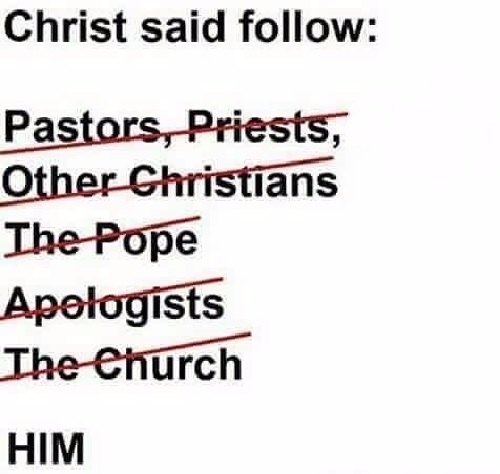
Jesus simply asked people to follow Him, not confess, say a prayer, and be called Christians. Only terrorists believe you must be of a certain religion or be killed. No human or spiritual parent brings children into the world requiring that one’s eternal destination is based on circumstances out of one’s control. Bad and good religion must be distinguished, but the Bible mustn’t be used to claim all must convert to Christianity to be accepted by God.

Don’t you at least have to believe in God?

The first chapter of Romans in the Bible is used to suggest all who don’t believe in God are suppressing what they know to be true. Actually, the writer doesn’t claim his audience doubts but ignores God and morality to justify their wicked ways. Let’s not accuse those who believe in a God as needing a crutch and accuse those who question of being wicked and not knowing their feelings. If it is a sin to doubt God exists, then Christians sin if they doubt God in troubled times.

A child sexually abused by their father maybe can’t accept a God most often betrayed as our Father in Heaven. Does God really judge them? Some may want to believe in God but can’t get their head around why a loving God doesn’t intervene more in so much evil in the world. Does God really judge them? Why would a gay person believe in a God when condemned by God-followers for choices they can no more control than straights can.

Surely you must believe Jesus was the Son of God or resurrected from the grave!

One must admit it is hard to understand how one chromosomally can be God and human. Isn’t it logically impossible to be God and not God? Some may be willing to accept that Jesus was an extraordinary man who epitomized who God was. Why can’t we begin there as a discussion as to what teachings and actions of Jesus seem to represent what a loving God is like?

Jesus’ disciples wavered if Jesus resurrected, and they supposedly witnessed miracles beforehand. It is understandable why we may waver since we rely on historical as opposed to visible evidence. Each must consider the historical evidence for themselves. Jesus seem to confront the most those whose actions were unloving to others, not those struggling to accept certain beliefs.

Even the Bible doesn’t require certain beliefs for eternal life!

Jesus didn’t think of eternal life as something after death but a quality of life that begins here on earth to avoid future regrets. Jesus was asked by a religious expert how to have eternal life. Jesus simply said to love God and your neighbor (Lk.10:25-37). No one is going to Heaven if such actions are required according to God’s standards. If entering Heaven depends on certain beliefs or saying the sinner’s prayer, wouldn’t Jesus have responded differently?

Where have written Creeds or Doctrines gotten us?

Catholics, Protestants, and most other religions establish Creeds or Doctrines to differentiate themselves from others. It isn’t always said you are required to accept them to participate but try challenging them and see where that gets you! If beliefs about the Trinity, Angels, the Bible, the Virgin Mary, etc. were clear, why the Hell can’t we agree. I doubt God cares about these matters. Christians would be more united and less judgmental if religions established only the Creed of Love and live it out. This may lead to feeding more the poor than erecting more buildings.

What God cares about!

God only wants us to consider loving others like we want to be loved. Doesn’t this lead to true freedom for ourselves and other. Also, in a broken world we may want to consider matters such as justice and forgiveness, because one day we may be on that side of the fence. God has no sacred beliefs. You don’t have to believe that hell is real or that God condemns gays. Identify any beliefs of God proclaimed by others that make pursing a relationship with God difficult for you. God only hopes we may come to believe in God’s love for us so we might reflect such love back to others.

MORE POSTS IN SERIES: I DOUBT GOD REALLY ……

Why I Doubt God Is An Excluder Of Religions

Why I Doubt Heaven Is Closed To Anyone After Death

Why I Doubt Hell Is Real

Why I Doubt God Is A Homophobe

Why I Doubt God Is A Sexist

Why I Doubt God Is A Mysterious, Moral Hypocrite

Why I Doubt God Is A Blood-Thirsty Child (Jesus) Killer

Why I Doubt God Expects Every Word Of The Bible To Be Viewed As Inspired

Why I Doubt God Is An End-Of-The-World Doomsayer

Why I Doubt God Is An Angry Egomaniac

Why I Doubt God Is A “Hidden Agenda” Proselytizer

Why I Doubt the god of Extremists Or Terrorists

Why I Doubt God Is A Prayer Genie

Why I Doubt God Controls Evil And Suffering

Why I Doubt God Knows The Future And Why It Matters

by Rocky Glenn

I am in the process of teaching my son to drive.  The first time we were out of a parking lot and out on the road I believe I held the steering wheel as much as from the passenger seat as he did from the driver’s seat for a short fifteen-minute trip.  Next time we sat down for the same trip, I only reached for the wheel to assist on three occasions.  We’ve now traveled the same path multiple times and I’ve not reached for the wheel since the second trip.  This past weekend I took him on roads he had never driven and no corrections were made other than simple verbal guidance.  He is learning and will likely be a much better driver than I was starting out.

I share this story not so much because of my teenage boy, but more as a reflection of me.  Any parent who has ever taught a teenager to drive knows what a nerve-wracking and frightening experience it can be.  As I thought about what it means to enjoy the moment, I realized it only comes as we learn to let go of the distractions of regret, what’s to come, and expectations just as I have had to learn let go of the steering wheel and let my son drive.  With each trip behind the wheel, I grow more confident of his growing ability to maneuver the vehicle.

Teaching a young driver is a tense experience because you realize very quickly from the passenger seat you are not in control.  We fear things we have no control over.  We fear the shame of the past because we can’t change it so we live in regret lest our darkest secrets be revealed.  We fear the future not knowing what tomorrow holds and having no guarantee of the health and safety of our loved one so we worry and dread what may come.  We judge others and others judge us based on preconceived expectations fearing how scenarios may play out.  None of these things are within our control.

Reinhold Niebuhr captured the heart of releasing control, living in the present and enjoying the moment.  Niebuhr may or may not be a name familiar to you.  Admittedly, despite knowing his words most of my life, I never knew his name until researching his famous prayer first shared in the early 1930s.  Commonly known as The Serenity Prayer, it has been shared in multiple addiction and recovery programs, and has become a source of strength for many.

God, grant me the serenity to accept the things I cannot change,

Courage to change the things I can,

And wisdom to know the difference.

To live in a state of serenity is to live in the state of being calm, peaceful, and untroubled.  Living a life of serenity sounds a lot like enjoying the moment.  Unfortunately, unlike Niebuhr’s request, it is rarely something which is simply granted.  Much like learning to trust a new driver, learning to enjoy the moment and live a life of serenity is a gradual process and is generally learned through experiences of life both pleasant and unpleasant.

In the last two posts, we’ve looked in depth at the story of the prodigal son.  The story ends with the prodigal being ushered into a celebration in his honor clothed in the finest robes and shoes.  If it were possible to interview the prodigal after the celebration concluded, I wonder what he would tell us.  I believe Henri Nouwen gives us a glimpse in his book The Return of the Prodigal Son as he places each of us in the role of the prodigal:

“For most of my life I have struggled to find God, to know God, to love God. I have tried hard to follow the guidelines of the spiritual life – pray always, work for others, read the Scriptures – and to avoid the many temptations to dissipate myself. I have failed many times but always tried again, even when I was close to despair.

Now I wonder whether I have sufficiently realized that during all this time God has been trying to find me, to know me, and to love me. The question is not ‘How do I find God?’ but ‘How am I to let myself be found by him?’ The question is not ‘How am I to know God?’ but ‘How am I to let myself be known by God?’ And finally, the question is not ‘How am I to love God?’ but ‘How am I to let myself be loved by God?'”  God is looking into the distance for me, trying to find me, and longing to bring me home.

To humanize the story of the prodigal son, you would have to imagine the young prodigal and his older brother still struggled with the mindset of being truly accepted into the father’s love with absolutely no effort on their own.  Flashbacks of his frivolous living no doubt would haunt the younger brother just as his older brother must have certainly struggled with bitterness over the years of service he dedicated to earning favor which was already given.  Both of these are struggles we all face and must learn to let go of to enjoy the moment.

To conclude this series, I will remind myself and all of us of the words of Jesus in Matthew 6:27 – 34 as interpreted by Eugene Peterson in The Message which teach us to how to enjoy the moment:

“Has anyone by fussing in front of the mirror ever gotten taller by so much as an inch? All this time and money wasted on fashion—do you think it makes that much difference? Instead of looking at the fashions, walk out into the fields and look at the wildflowers. They never primp or shop, but have you ever seen color and design quite like it? The ten best-dressed men and women in the country look shabby alongside them.

“If God gives such attention to the appearance of wildflowers—most of which are never even seen—don’t you think he’ll attend to you, take pride in you, do his best for you? What I’m trying to do here is to get you to relax, to not be so preoccupied with getting, so you can respond to God’s giving. People who don’t know God and the way he works fuss over these things, but you know both God and how he works. Steep your life in God-reality, God-initiative, God-provisions. Don’t worry about missing out. You’ll find all your everyday human concerns will be met.

“Give your entire attention to what God is doing right now, and don’t get worked up about what may or may not happen tomorrow. God will help you deal with whatever hard things come up when the time comes.”

Rocky

More posts in the Enjoying the Moment series:

By Mike Edwards

I understand many may not think about or find all that relevant whether God knows the future or not. It may sound sacrilegious or odd to suggest an all-powerful God doesn’t know the future. But, even an all-powerful God may not being able to do the impossible such as change the past, force true love, or know an undetermined future until it happens.

It matters if God can know possible future suffering.  

A woman asks God for wisdom in marrying their partner. All think it is a match made in heaven, but the husband becomes abusive and the children suffer. It is hard to imagine God wouldn’t warn if God knew this was going to happen. Much of suffering is the result of current and future human free decisions. God and parents risk creating knowing this can lead to great joy or great pain. Not even an all-powerful God can create free will necessary for genuine relationships and guarantee life without death, violence, suffering, and struggle.

Decisions and our relationship with God are less complicated if the future is open.  

The greatest freedom perhaps in believing God doesn’t know the future is realizing God isn’t failing to communicate or we may disappoint God with decisions. God isn’t hiding a “known” future for important decisions. We already know the mind of God when it comes to moral decisions; otherwise, God supports us in making decisions that make our lives and the lives of others better. There isn’t one correct decision to make in a free world. Joy and good can be achieved by taking any number of paths and avoiding immoral paths. God wants us to feel free without strings attached, unlike what we may feel from human parents when making decisions.

It matters relationally if freedom is real.

Most agree love must be freely chosen, or we are simply robots than humans. How am I truly free to make decisions if the future has already supposedly happened? A determined future contradicts that God created us with the freedom to make our own choices. We don’t have to rationalize God created freedom but somehow future decisions are predetermined.

A God who doesn’t knows the future is more relatable. When the Bible says God grieves with us in our suffering, we can know God agonizes with us each step of the way and deters any suffering possible without violating freedoms. God is not aloof as if simply gazing into a future crystal ball. God’s uncontrolling nature doesn’t mean God isn’t active in making for a better world. God constantly seeks to inspire us to shun evil and strive for a better world.

What about the Bible or prophecy? 

Hundreds of biblical passages could be cited to defend either God does or doesn’t know the future. The Bible speaks about God sometimes regretting certain decisions (i.e. Gen. 6:6). If God knew the outcome of certain decisions by knowing the future, why would God make such regrettable decisions? Does God really know what decisions are made ahead of time but pretending otherwise? The Bible often speaks as if God thought the future was open, thus undetermined and unknown.

Prophecies aren’t peering into the future but can serve as warnings. Jesus predicted Peter would deny Him three times but Jesus also prayed Peter’s faith would not fail (Lk. 22: 32-34). Predictions by God can be conditional. A professor may observe a student and warn they will fail their class but hoping the student avoids such failure. Keep in mind the future is not totally unpredictable for humans much less God. A skilled physician can predict the death of a seemingly healthy individual because of symptoms that escaped the untrained eye. Remember, God’s Spirit is present everywhere, thus God’s knowledge is unimaginably extensive.

God is loving not controlling.

God can’t control the future if God is to act uncontrolling and respect freedom. God can’t make someone truly love others and not harm others. If God can create, God can fulfill a promise to provide eternal life after life here on earth for those who desire to be with their Creator. Meanwhile, God seeks to partner with us to make for a better world.

MORE POSTS IN SERIES: I DOUBT GOD REALLY ……

Why I Doubt God Is An Excluder Of Religions

Why I Doubt Heaven Is Closed To Anyone After Death

Why I Doubt Hell Is Real

Why I Doubt God Is A Homophobe

Why I Doubt God Is A Sexist

Why I Doubt God Is A Mysterious, Moral Hypocrite

Why I Doubt God Is A Blood-Thirsty Child (Jesus) Killer

Why I Doubt God Expects Every Word Of The Bible To Be Viewed As Inspired

Why I Doubt God Is An End-Of-The-World Doomsayer

Why I Doubt God Is An Angry Egomaniac

Why I Doubt God Is A “Hidden Agenda” Proselytizer

Why I Doubt the god of Extremists Or Terrorists

Why I Doubt God Is A Prayer Genie

Why I Doubt God Controls Evil And Suffering

by Jordan Hathcock

 “We are part of something more than we are observing something. How does that feel to you? From the perspective of participation, we can recognize that most of religious and church history has been largely preoccupied with religious ideas about which we could be wrong or right. When it is all about ideas, we do not have to be part of “it”; we just need to talk correctly about “it.” We can avoid actually living out our beliefs and walking our talk.”– Richard Rohr

When it comes to the history of Christendom, it was mostly about obedience then participation. We see this through the various traditions. This concept of obedience ends up being more of “having the correct” beliefs rather than living out a loving way of life. When we get to caught up in the ideas of faith, we wind up being consumers rather than doers.

When we come to experiential trust, we can recognize that it’s really about connecting with others through relationships. It’s making oneself encounter the whole of being rather than worrying about if you have the doctrine of the atonement right (which it all boils down to a theory rather than an experience). See, when we get to caught up in “who has it right” we create an us vs. them paradigm which only causes division.

We have to come to the table of reconciliation and be always for coming together unified despite our differences. Yes, there is a way to participate that involves some type of decision to “obey”-which a better term would be taking action. Unfortunately, from many people’s stories and experiences with obedience, it was more of a blind allegiance rather than a divine connection. It is a dangerous thing when one loses himself to the higher powers of authority. This will lead to unhealthy abuse as one study showed regarding blind authoritative control:

“Decent people participate in horrific acts not because they become passive, mindless functionaries who do not know what they are doing, but rather because they come to believe — typically under the influence of those in authority — that what they are doing is right.”-Science Daily

When we come to a place of authoritative obedience, we become oblivious to the harmful effects to ourselves and others. This is not what having faith is all about! Faith is having the courage to step into the unknown and experience the process of bringing about love that heals and liberates. God is not interested in obedience as much as entering in a relational space that endows growth and connection. Yes, we make the decision to trust and follow God, but if we do not believe that the center of all being is already connected to us, we will never fully allow this relationship to God and Her creation blossom and take hold of our reality. If its just obedience to an idea and not to a reality, we will not see the transformation bloom in ourselves and our surroundings.

Coming to a place of desiring the divine connection is a difficult journey. Its not all skittles and rainbows, that is for damn sure! It does take a great amount of patience and letting go of egotistical habits. Jesus wasn’t lying when he said, “to find life you must lose your life”. It is action that really drives a reaction. If we just sit on the sidelines of statements of beliefs, we will never truly experience the divine transformation that breaks us free. If we don’t take seriously the Orthopraxy of this whole Jesus movement, we are not going to survive. Its time we become participants of the God who is love and let go of the idea of blind obedience if we ever want to see dynamic change…

“New and stirring things are belittled because if they are not belittled the humiliating question arises ‘Why then are you not taking part in them?” ― H.G. Wells

By Mike Edwards

The problem of evil is a main reason people indicate they don’t believe in God. How we think God and suffering co-exist in the midst of personal suffering can cause us to wonder if God truly exist. I suggest HERE how we can decide what God is really like. Why would a Creator not love us and others how we were seemingly created to love others? 

Why is freedom so important?  

The majority of evil results from the freedom to be kind or cruel toward others. It seems God creating freedom necessitates one being able to do as much harm as they can do good. There is not some divine or “greater purpose” in the suffering of innocent people. But authenticity, the highest good in relationships, is impossible without freedom. Not even an almighty God can force true love. God, like parents, had a choice – to not create or to create knowing suffering was a possibility in the pursuit of intimacy. Divine love limits divine power.

God can’t!!!

Saying God can’t may seem sacrilegious, but a God who can prevent evil but doesn’t is no different than a parent who stands by and watches their child being physically or sexually abused. Are you dissatisfied with conventional answers such as: “It’s all part of God’s plan;” “God wants to make you stronger;” “God’s ways are not our ways;” “You didn’t have enough faith;” “Everything happens for a reason” (Thomas Oord, God Can’t: How to Believe in God and Love after Tragedy, Abuse, and Other Evils, p.11). If evil is some grand scheme God can control, why does the Bible say God hates evil so much? 

God doesn’t cause or allow evil!  

Most agree God doesn’t cause evil but some say God allows evil to bring about a greater good. Oord reminds us greater good doesn’t always come about. A surgeon may have to break open your chest to save your life, but what purpose is served from rape, torture, betrayal, murder, deception, corruption, incest, and genocide as if part of some good plan? From this twisted perspective, evil is good! When we say God allows, it gives the impression God stands by when God could stop evil. No one respects those who stand by in the name of freedom while individual rights are being violated. God can’t control or violate freedom and love perfectly. God can only stop evil with the help of others so to not violate freedom. Or not create freedom! 

What about miracles if God can’t supposedly control?  

It may be easier to explain God’s uncontrolling nature if miracles could be refuted. Miracles happen as many attest, but miracles don’t happen because people grovel at the feet of an arbitrary God who has to be begged to love more. A good God surely is always working to heal, but so many biological and environmental factors are involved. Maybe it is not a stretch to say God can’t control human freedom as well as non-human factors. I am convinced God will intervene by all means when circumstances allow. Miracles can happen when God’s uncontrolling love aligns with countless factors known and not known.

It matters if God supposedly knows the future.

A young woman may ask God for wisdom in marrying their partner. All think it is a match made in heaven, but the husband becomes abusive and the children suffer. What kind of God doesn’t warn if God knew this was going to happen? Evil is the result of current and unknown future human free decisions. Not even an all-powerful God can create and guarantee life without death, violence, suffering, and struggle and yet there be free will necessary for genuine relationships. 

God is not a magic prayer genie! 

A good God surely doesn’t cause or want us to suffer. Praying doesn’t make God more caring. God is already doing all they can in a free world. Jesus’ prayer to avoid the Cross may be the best model in times of suffering. Jesus asked God to intervene but God if you are unable please stay close to me. Pretending God can simply heal without accounting for freedom can makes one’s suffering worse. Did I not pray enough? Did I not beg enough? Did I not behave enough or have the right attitude? It isn’t that we didn’t pray enough with the right words so God will answer. 

Is God a mystery and we can’t understand evil and suffering?

Some appeal to mystery by declaring God ways are not our ways to rationalize their interpretation of the Bible, but how can we have a relationship with a God we can’t understand with the brain God gave us? How we are supposed to know and love like God if God is mysterious? The Bible says to be perfect like God, but we can’t know what this means if we can’t know what perfect love is. God’s love surely is like perfect human love. If God calls favoritism evil but plays favorites, this plainly makes a supposedly loving God evil.

Why did God even create?

God knew the risks of freedom as do human parents. Are we wrong to bring children into a world hoping they will want to reciprocate our love but knowing our children could cause suffering or suffer at the hands of others? Suffering is avoidable only if God had not created or allowed freedom. Few argue that no freedom is better than freedom. God and parents risk creating which can lead to great joy or great pain. One is not possible without the other.

What is God doing?

God is tireless in working through individual lives to change the world. Hitler may have been stopped if others had gotten involved in his life as a child or when plotting his evils early on. Perhaps the only way to defeat evil in us, other than destroying at the first hint, is for us to persevere and overcome evil. Also, suffering can enable us to be of use to others in a world where suffering is inevitable if any freedom is present. Martin Luther King’s suffering moved the scales from the eyes of many how they tolerated bigotry.

MORE POSTS IN SERIES: I DOUBT GOD IS ……

Why I Doubt God Is An Excluder Of Religions

Why I Doubt Heaven Is Closed To Anyone After Death

Why I Doubt Hell Is Real

Why I Doubt God Is A Homophobe

Why I Doubt God Is A Sexist

Why I Doubt God Is A Mysterious, Moral Hypocrite

Why I Doubt God Is A Blood-Thirsty Child (Jesus) Killer

Why I Doubt God Expects Every Word Of The Bible To Be Viewed As Inspired

Why I Doubt God Is An End-Of-The-World Doomsayer

Why I Doubt God Is An Angry Egomaniac

Why I Doubt God Is A “Hidden Agenda” Proselytizer

Why I Doubt the god of Extremists Or Terrorists

Why I Doubt God Is A Prayer Genie

by Rocky Glenn

Distractions keep us from being present and enjoying the moments we live. For the churchboy, the greatest distraction is attempting to live up to a set of expectations. An expectation is a belief or anticipation of how someone should or will respond. Churchboys have many expectations they chase after: their own expectations, expectations of God, expectations of the church, and expectations of others. Quite often these get intertwined and create a web of confusion which is difficult to break free of and leaves one unable to ever enjoy the moment. Disapproval from friends, family, and fellow church members is felt when expectations are not met and long held beliefs and practices are questioned. This disapproval gives way to separation and alienation from those once held close as peace is found more and more in uncertainty rather than simply accepting clear-cut, placating answers to the tough issues of life and conforming to perceived expectations. It is in this journey toward uncertainty the recovering churchboy wakes up to Truth as the scales of expectations begin to fall slowly from his eyes. In my previous post, I discussed how both the prodigal son and his older brother fell victim to the distraction of regret. If you are perhaps unfamiliar with the story, allow me to share below:

The tale opens with the younger of the father’s two sons going to his father asking for his share of his father’s estate. Immediately after the request we are told the father divided his estate between the two brothers. Within a short time, the younger son packed all his belongings and left home and, before long, wasted his entire fortune. To further compound the situation, a famine hit the land and the only employment he could find was feeding pigs. As hunger drove him to the point of desiring the slop he was feeding the animals, he woke up to the idea of his father’s servants being better cared for and receiving three meals a day while he was starving to death. At this point, he decides to return home and beg to be accepted as a servant.

Imagine the confusion of the younger son as he is returning home and, just as he can barely distinguish the silhouette of his father’s home in the distance, he notices a cloud of dust gaining momentum moving towards him on the dirt road only to realize the catalyst for the dust storm is his Father running to him with open arms. Pushing his father away, he begins his rehearsed speech of what a failure and let down he truly is and has become. The father interrupts as he wraps him in his arms all the tighter and shouts to all around, “Bring him some fresh clothes, shoes, and jewelry! Get him cleaned up! It’s time to celebrate and party! My boy has come home! Once thought lost and dead, he is now found and alive!”

During the younger son’s celebrated return home, his older brother was working in the fields and unaware of his brother’s return and the party being thrown in his honor. As he approached home after the day’s work and learned of the celebration and its cause, the story records him as refusing to enter the party and storming off sulking in anger. Being approached by his father for an explanation, he states his case rather emphatically, “I’ve worked for all these years. I’ve never brought you any shame and always done everything you ask. You’ve never held a party in my honor, yet this fool returns home after wasting away all his money and you throw a feast for him as a reward!”

Just as the father’s heart was overflowing with joy upon the return of his younger son, I can imagine sorrow pricked his heart to hear the words of the older brother. How heart-breaking it must have been to look at his oldest son and say, “Don’t you get it. You’ve worked for me all these years and never once realized all I have is already yours.”

The story of the prodigal son is one of the most well-loved and well-known stories Jesus ever used to illustrate the Father’s love. Taking a closer look at the story of the prodigal we can also see examples of how distractions of expectations rob each of them of enjoying the moment just as it does the churchboy.

Expectations of the Younger Son: The Internal Churchboy

As the story opens, the younger son’s request reveals his unhappiness and dissatisfaction with his current life as he is distracted by it not meeting his expectations of what life truly should be. He sets about spending all his time, energy, and resources in attempts of achieving and acquiring all he ever wanted. However, as his bankroll runs thin and his energy is spent, he is forced to face the reality we all must come to realize. Life has no “supposed to be.” Once distracted by his own personal expectations, the distraction of regret has become his close personal companion as he finds himself weary, lost, and alone with no other choice but to return home ashamed and groveling expecting rejection.

Though they would never admit it or exhibit it externally, churchboys often view themselves as the eternal prodigal. Convinced and conditioned to believe the problems of their lives are simply a result of their own selfishness and pride leading them astray, they live their life feeling unworthy to be called a son and seek solace in simply being known as a servant. They anticipate being turned away in displeasure as they return to the Father week after week, Sunday after Sunday confessing their failures of living up to the Father’s perceived expectations: “I didn’t pray enough this week. I didn’t spend any time reading my Bible. I spent more time watching TV and on social media than I did with you. I lost my temper, said things I should have never said, and hurt those I love. I’m sorry. Although I don’t deserve it, please forgive me. I’m so unworthy.” Churchboys beg and plead for the Father’s forgiveness to simply feel accepted once again. Their expectations of the Father are tainted with the fear of rejection and anticipation of being turned away as a result of their image of themselves and how they perceive the Father views them.

The prodigal’s return home is a beautiful illustration of waking up to the true unconditional acceptance of grace for the first time. The cocoon of shame and unworthiness from missing the father’s perceived expectations slowly begins to crack as unconditional love breaks through and the son slowly begins to realize there is nothing he could ever do to not be considered a son. When I was first presented the gospel of grace and acceptance after many years of living the weekly cycle of the prodigal, I was just as perplexed as I’m sure the younger son was being wrapped in his father’s arms and celebrated for returning home. To realize the Father has no expectations in being considered a son is the path to recovery for the internal churchboy.

Expectations of the Older Brother: The External Churchboy

The older brother’s response is reflective of the churchboy’s outward life. Much like the older brother, churchboys make public displays of all they do to please God. They expect to be rewarded for their service and are serving for the reward of acceptance. Their security and trust lie in their years of service rather than in who they are. Because of their track record and accomplishments, they view themselves in higher regard than others. Blinded from the true definition of sonship, their expectations are to be accepted based on the good they’ve done, as well as the evil they’ve not done.

Such is the way of the churchboy, constantly working to obtain what he already has access to. He believes the only way he will ever hear, “Well done, thou good and faithful servant,” is by working more, doing more, saying Jesus more, and outshining those around him. As long as he feels someone is closer to the Father than himself or there is something greater he must do, the churchboy will continue working to reside in a place he doesn’t realize he already exists in and can never escape, the Father’s love.

The perceived expectations the older brother has of the father are really no different than his younger sibling’s, but they go about meeting those expectations in different manners: the former through working to achieve and avoid, the latter begging and pleading. Until they release their expectations neither brother, nor the churchboy, can enjoy the moment they are in. For the brothers, that moment is a moment of love, acceptance, and celebration of being with their father. For the churchboy, it’s the same.

Expectations distract from us enjoying the moment and being present where we are. Our minds become so entangled with what’s supposed to be, what’s required, and anticipated outcomes we become blinded to the expectations we’ve placed on ourselves, on others, and on our God. Let us rejoice in the unconditional love and acceptance of the Father and pay the Father’s love forward in unconditional love and acceptance of others.

Rocky

More posts in the Enjoying the Moment series:

by Jim Gordon

Does it not seem strange that in the christian church world we are told we are to love others, yet when we come to a difference of opinion or a change in views in our beliefs, christians can be the first to throw a stone?

We hear about fairly well-known individuals within the church system say they have changed their views and no longer accept some of the teachings they grew up with in the church. They are not necessarily saying they are walking away from God but they are walking away from many things they have been told about God they no longer accept.

When this happens, usually other christians are the first to judge and condemn these individuals rather than try to accept them and find out exactly what is going on. Their first thought is they are leaving their complete belief and faith in God.

Many times, this is not what the person is saying anyway. Leaving religious teachings of the church is not leaving God. In fact, many times leaving some of these teachings behind is just the beginning of a deeper walk with God.

I grew up in the traditional church setting and I had many good times there. I met a lot of nice people and learned many things about God. The thing is the church as we know it was never what God intended. Church is not a place or an organization, it is the people who love God and love, support and encourage one another.

The church today seems more like a corporation with the CEO and board of directors. I know there are a lot of good people within the church system. They love God and want to live their life for him. Yet for my wife and I, we became disenchanted with the religious system and felt there was a better way for us to live for God, which was outside the walls of religion and the human-led system of church each week.

We felt that since the Spirit lives within us there is no need for a middle-man (pastor) to lead and teach us. If the Spirit of God actually lives within us, why do we so often depend on a human being to lead and teach us?

I certainly do not want to make anyone feel bad if they are still a part of the institutional church. They are like I used to be and feel that was the best way to show love for God and learn about God. I would not tell anyone they should leave the system, although for my wife and I we certainly do believe it was the best thing for us.

Whether you are in the church system, questioning the church system or have left it, the main focus should be to love God and love one another. Doing so fulfills all the law and the prophets (as Matthew 22:35-40 explains). Of course, we know that the law no longer needs to be fulfilled but at the time Jesus taught this he was living under the law. Now that grace has been applied, we no longer live by the law but by love.

Leaving the institutional church or changing and deconstructing your religious views and interpretations do not mean you are leaving God. Rather than jump on board with those who judge and condemn, take a little bit and find out more about what is going on. Then remember we are all at a different place on the path as we follow Jesus. Pray for one another, encourage and support one another but do not beat one another up as we each try to follow Jesus as we feel led.