Feeds:
Posts
Comments

Posts Tagged ‘acceptance’

by Michael Donahoe

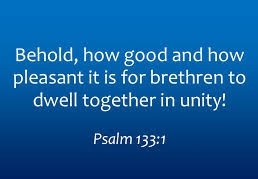
Have you noticed how many people seem to only include their preferred group? They only include people who think like them, have similar interests and likes. If you think differently or have different views and opinions, people feel you should stay in your own group with like-minded people, but leave the other group alone.

We seem to find this attitude in every walk of life, but within organized religion or institutional church it seems even worse. We all should be accepting of people in general in our daily lives. Yet, we see this so often within Christianity with the wide variety of denominations and interpretations of the Bible.

When it comes to including people who we see as completely different from us, African-American, Native-American, White, LGBTQ, Atheist, Muslim, Jew and so on, we tend to want to keep each group separate. We think as believers in God we need to separate ourselves and not associate with those who see things differently. Why is it the word inclusion seems to make so many Christian people cringe?

Really, behind all the labels we put on people we are all basically the same, so why not associate and get to know people who we feel are different from us? We can learn from one another, get to know one another and find that we really are not all that different.

We see Jesus do this all the time when reading the gospels in the Bible. He did not differentiate people based on their religion, belief, lifestyle, sexuality or nationality. He did not separate himself from those who thought, believed and lived differently. He loved and accepted all people and showed them the love of God.

Obviously loving and accepting people does not mean total agreement, nor are we going to always get along in life and live happily ever after. Yet I believe it does mean treating others the same, with respect, kindness, acceptance and with the love of God through the power of the Spirit within.

Inclusion is not a bad word. It is not a bad or unholy way to live. Inclusion is about ALL of us. Inclusion is about living full lives – about learning to live together. It makes the world our classroom for a full life. Inclusion treasures diversity and builds community. It is about our abilities – our gifts and how to share them. Inclusion is the way of God and the way of showing the love of God to all we meet.

*******

Michael Donahoe was added as a writer for Done with Religion as his views fit perfectly with those that are shared on this site. He and his wife have been outside the walls of religion for fifteen years. He enjoys writing about his experiences and thoughts, and he wants to encourage others who are going through the religious deconstruction process. He also writes on Substack at https://deconstructiontrail.substack.com/ and https://personalmeanderings.substack.com/

Read Full Post »

by Mike Edwards

Try claiming God doesn’t condemn gays. You are called a heretic in religious places, despite disagreement among scholars what the Bible claims. Dare to argue Covid vaccines have risks and you are called a mis-informer or conspiracist. It isn’t science without debate. The problem is condemnation of expression of opinions. The solution is encouraging civil discussions. Certainty is a myth except in the eye of the beholder!

See: What Is Misinformation? Should We Censor Misinformation?

Read Full Post »

by Mike Edwards

Universalism is a theological belief that God eventually saves all to go to heaven after death. Some may even experience open-mindedness in the afterlife after meeting their Creator. God never gives up. God’s love is relentless. This doesn’t mean some won’t reject God though it is hard to conceive some rejecting a perfect place such as heaven as opposed to death (Hell is a Myth, See here. ) It is hard to believe but possible that some people, even if they were given infinite chances in eternity, would still reject God forever. But universalism as least means all have final chances after meeting their Creator in the afterlife, to believe and accept God’s ways.

Why universalism makes godly sense 

Does God’s loving nature allow stopping to forgive? There are consequences in this life and there may be painful reckonings in the life to come, but a loving God can’t stop showing grace. Why would God undergo a complete character lobotomy after we take our last breath here on earth? Is a thief going to enter Paradise but not others with lesser sins because they weren’t next to Jesus hanging on a Cross right before their last breath? God’s grace doesn’t depend on whether one has more opportunities to respond to God than others. Even imperfect human parents wouldn’t cut off a child who eventually accepts responsibilities for their actions. Universalism is possible or even probably true because there can’t be a deadline or time limit on God’s love. There isn’t on my love for my children. Am I a better lover than God?  We are told to forgive our enemies as many times as necessary but God doesn’t? 

Universalism seems true even according to the Bible 

Many may reject universalism because they believe the Bible teaches against it. Many who reject universalism often resort to name calling rather than defending their views – referring to those who reject their claims as heretics. What many may not know is there are many biblical scholars who believe the Bible can be interpreted to teach God saves all eventually. See: All Will End Up Heaven According To The Bible!

Universalism seems true because Hell is a myth: 

Many who believe God exists agree God has given us moral intuitions to discern evil from good. We don’t need a Book to know sexual abuse or murder is wrong. God creating a literal Hell where people are tortured for billions of years for beliefs held a short time here on earth isn’t possible morally or biblically. See here. See here. Humans wouldn’t even create such a place for our enemies. God or humans can’t possibly be happy in heaven if loved ones are tormented after death forever. If God supposedly has such control over happiness, why not use the same power over rebelliousness?

Without Hell is there is a reason to consider faith in God here on earth? 

It is implied Hell/fear is necessary to want to follow God. The Bible seems to suggest God seeks to empower us to be the unselfish people we deep down desire to be, not to be fearful of a destiny to be tortured forever in the afterlife. Jesus sought to inspire others to seek God’s help in loving others for the good of the world. Jesus simply commended Zacchaeus for recognizing a journey necessary to avoid personal destruction because of sin. Salvation is not a future destination but a currently reality (Lk 19).  Jesus told the woman who had committed adultery not how to avoid hell but: “go now, and leave your life of sin” (John 8).  Why pursue God without fear? Surely a loving God seeks to encourage us to pursue heavenly than worldly ways here on earth for our own happiness.

What about Justice? 

The Bible talks about everyone, whether having faith here on earth or not, will be judged (2 Cor 5:10; Rom 14:12). Punishment doesn’t bring back a victim’s robbed memories of the future due to the murder of a loved one. Justice can be understanding your victim’s pain and accepting the harmfulness of your actions. After death God may seek for all to face every action of betrayal and how it felt to their victims. The cleansing and educative effect may take longer for some than others. Humans like God may forgive their enemies if they truly regret their actions and seek forgiveness. Justice from a fair, merciful God is possible despite people being given a second chance after death.

Mike Edwards was added as a writer and has been a great addition to the site. Mike provides many interesting views and various ways of looking at things. He is not afraid to ask questions and he keeps an open mind as to teachings of the institutional church. Mike also has his own site where he writes at What God May Really Be Like

Read Full Post »

by Mike Edwards

Those of who have a relationship with God desire for others to consider how such a relationship can benefit them in being more the person they desire to be deep down. Thus, we need to be concerned the influence on others the claims we make about God. It matters how God is portrayed thus perceived by others. I cringe when well-meaning people passionate about God say things like “it’s all part of God’s plan” or “this was God’s will.” Certain things we say can give wrong impressions about God. It is impossible to feel God cares when undeserved suffering visits our doorstep, and someone implies that such suffering is God’s desire or will. A fair question is “why you and not someone who deserves certain consequences for their immoral behavior.”

Many end their podcast, speech, etc. by saying “God willing” implying it is up to God if they show up again to do another podcast or event. Athletes suffer an injury on the field and imply it was God’s will. I don’t think suffering is ever God’s will. There may be consequences of actions that lead to positive change, but aren’t necessarily initiated by God. “God willing” implies God is in total control of life, death, events in future suggesting God is responsible for joys and our suffering.

God doesn’t determine life, death, or injury 

Biblical support is often given to claim God is in control of all events in our lives. It is sometimes suggested God caused Hezekiah’s death. In 2 Kings 20:1 and Isaiah 38:1, the prophet Isaiah told Hezekiah: “Set your house in order, for you shall die; you shall not recover.” Actually, the Bible claims later God extended his life. And I will add fifteen years to your life.”(2 Kings 20:5–6). In the Old Testament prophetic announcements of death don’t necessarily mean that God actively causes death.

God isn’t responsible for your suffering

God doesn’t plan or control tragedies in your life. We don’t have to believe God is punishing us, that God has abandon us, or that God doesn’t care. God can’t be all powerful, thus controlling, and be loving. See What Is God’s Plan For Your Life?

God isn’t in complete control 

Perfect love is uncontrolling. It is intuitive to assume an all-powerful, almighty God has complete control. We sometimes assume God has total control when we say “why God” during suffering. It is often said that God has a plan for your life or everything happens for a reason. This implies God is responsible for tragedies in your life. I doubt that! See Good News – God Can’t Be In Control!

What, no guarantees in life? 

Freedom cannot guarantee a pain free universe The best news is God isn’t controlling sufferings we experience in our lives. God wants us to truly feel free to pursue our own dreams without strings attached, unlike some earthly parents. God only desires to influence us to do all the good we can, in all the places we can, at all the times we can, to all the people we can, as long as we can. The future is open to God as well. God joins us in a true friendship by sharing our joys and sorrows in our journey to be the person we deep down desire to be. 

What can we say instead of “God willing”? 

We can always say God’s will is we never suffer. God suffers with us when we suffer. God is already doing all they can to love on us. I have been dealing with brain cancer. I am often asked how someone can pray for me. I am convinced God is in the healing business/love without being asked.  See Why Pray If Most Prayers Are Unanswered? I don’t get on my high horse and lecture others, but what I want to say for prayers: “God is already doing all they can for me in terms of my illness. Please pray I continue to reach out to God for influence, encouragement – whatever my circumstances – to keep my friendship with God alive.” So far so good, but I am early in my journey!

Can We Stop Saying “Love The Sinner, Hate The Sin”!

Can We Stop Saying Everything Happens For A Reason!

Can We Stop Saying We Know What Biblical Truths Are?

Can We Stop Saying Our Rights As A Nation Come From God?

Can We Stop Saying “Biblical Worldview”?

Mike Edwards was added as a writer and has been a great addition to the site. Mike provides many interesting views and various ways of looking at things. He is not afraid to ask questions and he keeps an open mind as to teachings of the institutional church. Mike also has his own site where he writes at What God May Really Be Like 

Read Full Post »

by Michael Donahoe

When it comes to Christianity with all its different denominations, interpretations, different versions of the Bible and such, it seems there are always times when we run into conflict with others.

Each of us as brothers or sisters in Christ seem to want it our way. Our church, our interpretation, our version of the Bible. We each feel that we are right and feel the need to distance ourselves from those who feel differently.

Have you noticed how religion wants to set the rules so each of us know what it takes to be a good Christian? Do this, don’t do that, stay away from this and make sure you participate in that. Be in every service and be active with this group or that group. If you are not reading a particular version of the Bible, you are just wasting your time, if you are not part of a church, you must be backslidden, at least that is the way some fellow Christians make you feel. Rules, rules, rules.

Maybe it is time to stop arguing over denominations, interpretations, versions, and church attendance and start focusing on Christ, who is to be our first love. If we can focus on God’s love and sharing that love with others, we should be able to agree to disagree on other topics.

When we find common ground in our faith in Christ, when we love God with all our heart, soul, strength and mind, we should be able to look past the minor differences we have in our various denominations, interpretations and Bible versions.

Let’s stop fighting against each other and begin to love one another as Christ loves us. Do not let the minor differences come between the love we can have for one another and the things we can share and learn through fellowship with our brothers and sisters in Christ.

*******

Michael Donahoe was added as a writer for Done with Religion as his views fit perfectly with those that are shared on this site. He and his wife have been outside the walls of religion for fifteen years. He enjoys writing about his experiences and thoughts, and he wants to encourage others who are going through the religious deconstruction process. He also writes on Substack at https://deconstructiontrail.substack.com/ and https://personalmeanderings.substack.com/

Read Full Post »

Sanctified Gatekeeping and the Church of Conditional Welcome

Rev. Mark Sandlin

Jesus said, “Love thy neighbor.”

But let’s be honest, some folks read that like it came with a stack of footnotes and a link to the dress code.

They’ll cross-stitch that verse for the guest bathroom wall, but try applying it to someone who’s queer, questioning, brown, broke, or heaven forbid, a Democrat… and suddenly that love runs drier than year-old communion crackers.

We’ve got church folks playing Bible buffet, loading up on the parts that make them feel blessed and highly favored, and leaving behind the radical love stuff like it’s the weird casserole no one claimed.

Turns out “neighbor” is a pretty flexible term when your theology is shaped more by your comfort zone than the teachings of Jesus.

Culture War Christianity

Let’s stop calling it religion and start calling it what it is:
A power play in polyester church clothes.

We’ve got pulpits echoing political platforms instead of prophets.
We’ve got churches passing out talking points like communion wafers.
And don’t get me started on “Christian influencers” who use the Sermon on the Mount like it’s a motivational poster for pyramid schemes.

This isn’t about Jesus.
It’s about keeping the “wrong kind” of people out while pretending it’s holiness.
It’s about using scripture like a velvet rope.
It’s “love your neighbor” as long as they look like you, vote like you, and keep their weirdness tucked in.

When “Neighbor” Comes with Conditions

Here’s how it plays out:
You’re welcome…
Unless you make folks uncomfortable.
Unless you love someone unexpected.
Unless your theology still has questions.
Unless you show up not knowing the secret handshake of church culture.

And let’s be real – nothing clears a pew faster than someone daring to be honest about their doubts… or about their pronouns. Folks will hand you a casserole with one hand and yank back their hospitality with the other the second you color outside the lines.

If grace has a checklist, it’s not grace.
It’s church bureaucracy with a hymnbook.

Even Progressive Churches Get Messy

Let’s not let the rainbow flag crowd off the hook.

Progressive churches talk inclusion, but sometimes they just mean, “You’re welcome as long as your weirdness matches our aesthetic.”

Question the order of worship?
Critique capitalism a little too clearly?
Ask why the missions committee only funds projects that come with matching T-shirts and hashtags?

Suddenly you’re a “disruption” instead of a disciple.

We’ve all got our blind spots. The trick is not pretending they’re stained glass windows.

Jesus Was Not HOA-Compliant

Look, Jesus didn’t say, “Love thy neighbor, unless they make the potluck awkward.”

He sought out the people religious folks had written off.
He didn’t wait for them to repent in triplicate and pass the doctrinal exam.
He broke bread with the outcasts and called it community.

If your “neighbor” stops at the edges of your comfort zone, you’re not following Jesus.
You’re following a caricature of him that makes you feel safe and smug.

The Kingdom he preached didn’t have membership tiers. It had open tables, messy grace, and a scandalous welcome. The kind that’ll mess up your preferred seating at the potluck, not to mention your theology.

Get Yourself a Bigger Map

So if you’re still asking, “Who is my neighbor?”
Start here:
The person you’ve been taught to fear.
The one you were told to pity or ignore or convert.
The one who makes you squirm a little.

That’s your neighbor.

And the assignment is the same now as it was in tesusy parts:
Love them.
Not debate them.
Not tolerate them.
Not pray for them from a distance and gossip in the group chat.

Love. Them.

No disclaimers. No dress code. No doctrinal fine print.

If your church can’t handle that?
You might need to stop printing bulletins and start printing membership guidebooks.

Read Full Post »

by Mike Edwards

Many rightly wonder if what Christian leaders claim about God is true. Who can blame them when God supposedly created a place such as Hell, to torture forever those who don’t believe in God a short time here on earth. In these Posts I will propose a question, which can paint one’s view of God, and then will provide a link what I have written before about the topic. I try to keep a page length with bold subtitles. It concerns a question about God that I wish people would be willing to discuss about God, so they could draw their own conclusions than what many Christians claim to be true about God.

Many would argue the main action required in Christianity is to forgive others because God has forgiven us. I have written that isn’t necessarily biblical or best emotionally. See link below. Advising a child of parental sexual abuse, in which the parent denies guilt and not seek forgiveness, isn’t always the best advice or the best path toward less bitterness. When an abuser doesn’t openly acknowledge such actions can enable the abuse to continue toward others. Amends aren’t always possible. When a loved one is murdered, positive memories of a loved one robbed by the guilty can’t be restored. We must stop guilting victims, according to the Bible. Those hurt must seek the mind of God what actions in relationship difficulties lead to your best interest in the long run in a world full of disappointments. You may discover God is empathetic!

To those who demand forgiving others despite no admission of guilt or regret, to be consistent you would have to assume when all meet their Creator after death and deny God and reject God’s  universal accepted morals – that God will simple open the gate and welcome them despite denial.

Should We Forgive Others Without Expectations?

Confession:

I had a sibling betray me over a decade ago. I am not the only family member that felt this way, so it ain’t me! I never felt obligated or inclined to forgive because he denied any wrong doing; he never felt necessary to ask for forgiveness. For whatever reason a few days ago, maybe after listening to a sermon online, I silently forgave him I think for the first time. To my knowledge, I have never been shallowed up in bitterness or angry, as if forgiveness best for my health. I also didn’t think my forgiveness is best for his health, so he might not victimized others by thinking his actions were acceptable. And his kids will follow in his footsteps if he doesn’t break the cycle. One can forgive silently in other words. To each his own with God. God loves you!

Mike Edwards was added as a writer and has been a great addition to the site. Mike provides many interesting views and various ways of looking at things. He is not afraid to ask questions and he keeps an open mind as to teachings of the institutional church. Mike also has his own site where he writes at What God May Really Be Like 

Read Full Post »

by Mike Edwards

Many rightly wonder if what Christian leaders claim about God is true. Who can blame them when God supposedly created a place such as Hell, to torture forever those who don’t believe in God a short time here on earth. I have written  here main beliefs that are drawing people away from God, though inclined to have a relationship.

Those who read my blogs often are probably sick of me ranting against those who condemn gays in God’s name according to the Bible. See God Loves Gays Many are open to more of a relationship with God, but not if Christian leaders keep implying being gay is a sin. That makes no sense to many of us who believe God can be known through one’s moral intuitions. Please stop with “God loves the sinner, but hates the sin.” God doesn’t hate the sin (gay) if being gay isn’t a sin!

Many believe God condemns gays because of a supposed inspired Book 

Many believe that God inspired biblical writers/editors to always be right about God, but inspiration can’t be proven. See here. So, if writers wrote God condemns gays according to the Bible, then Christians feel obligated to do the same. But, even if you believe God inspired biblical writers/editors to always be right about God, many may not know that biblical scholars who respect the Bible don’t interpret Scriptures to condemn gay monogamous relationships. See hereOne’s interpretation may be wrong. Stay open-minded!

Why would anyone choose a lifestyle subject to rejection and abuse? I didn’t decide one day to be attracted to the opposite sex. Neither do gays decide to be attracted to the same sex. We can at least say science isn’t conclusive why we have desires for the same or opposite sex (Karen Keen, Scripture, Ethics And The Possibility Of Same-Sex Relationships, Chapter 7). It is a myth that sexual choices are always the result of some trauma or rebellion in our lives. If we don’t know why one has feelings for the same sex, why speculate or judge rather than love instead.

How can we know God then? 

What would you believe about God and gays if you didn’t have a Bible? It is a fair question. The majority of people born into this world didn’t possess a copy of the Bible or even heard of Jesus. I doubt a Creator would only communicate through such means. There are universal morals that most agree on such as don’t murder, don’t abuse, follow the golden rule, etc. Why wouldn’t a Creator create us to think like They do.

My moral intuitions tell me that God is not bias against females, people of color, or gays. Shouldn’t we choose the least harmful view? If you think there is a .0001% possibility that science proves sexual orientation isn’t a choice, why would we judge? Anyway, I am convinced the Bible is silent on monogamous same sex relationships, while supporting relationships that show love and concern for one another.

Why Christian leaders don’t change their views but must for the sake of God’s reputation 

There are several reasons many won’t change their views publicly. One reason as stated is because of one’s view of the Bible and their interpretation. Leaders and others who believe in an inspired Bible fail to recognize or admit their interpretation may be wrong. If they have to admit uncertainty, they may fear others will question their abilities to lead. Certainty is more comforting to many. If leaders and Christians admit they may be wrong about one belief for decades, they may think others will doubt their many other supposed inspired beliefs. I am not judging. I thought for a while my interpretations were always the correct one. See the sin of certainty

What now! 

Who chooses to be gay when one has to hide their sexuality because of bigotry and hostility? Science isn’t conclusive why we have desires for the same or opposite sex. I am begging you to not condemn gays because the Bible supposedly does. Christian leaders and laypeople – show some courage and change your stance. You may not agree with my interpretations, but let’s both admit our interpretations could be wrong.  Listen to each gay’s story and love them like you would want to be loved if you had the same journey. If we stopped condemning gays in God’s name, we would reveal more the loving God we believe in. I believe changing one’s false belief that God condemns one for being gay would move hundreds of thousands toward God.

*******

Mike Edwards was added as a writer and has been a great addition to the site. Mike provides many interesting views and various ways of looking at things. He is not afraid to ask questions and he keeps an open mind as to teachings of the institutional church. Mike also has his own site where he writes at What God May Really Be Like

Read Full Post »

by Michael Donahoe

In John 21:22 Jesus said to Peter, “If I want him to remain until I come, what is that to you? You follow Me.” When Jesus said this, he was talking about a specific person, yet I think this verse can also be talking about people today.

Many of us Christian people get caught up on what other people are doing, how other people live, what others think of us and how they interpret the Bible. We will try our best to change the views of others to match our own opinions, yet never dreaming that we could be wrong or that there may be more than one way of seeing things.

We get mad, argue and name-call with the best of them when someone disagrees with our views or how we think we are to live. It does not take long on social media to read posts and replies and see all the different views and opinions. It also does not take long to see the anger building up as people argue their point and condemn those who see things differently.

My thought is why do we spend so much time arguing, condemning, excluding and not accepting others?

Jesus came to earth to show us what the God was truly like, a God of love and acceptance. A God who can speak to people in different ways, a God who created us as unique individuals who act, think and live differently from others.

When we say we should love and accept people as they are, many get upset thinking we are saying we should go along with anything and say everything is acceptable. I am not saying that, but I am saying rather than judge, condemn and point out where we think others are wrong, we should love them with the love the Spirit gives us from within. Being kind, respectful and loving to others does not mean we agree on everything or condone everything someone does.

For some reason, many Christians feel it is their duty to point out where they feel others are wrong as a way to get people to change. People are not going to change because of condemnation and judgment. Love is what draws people and showing love to everyone is how we should be known as followers of Jesus. None of us should force our views and opinions on others.

Rather than be so caught up on what everyone else is doing and how others live, we should hear Jesus say ‘what is that to you? You follow me’.

We are to follow Jesus and do what we know is right for us. Let the other person have that same freedom to follow Jesus as they feel is right. The Spirit will convict where change is needed. It is the Spirit who draws people to God, it is not our job to judge, condemn or convict others.

When we keep our eyes on Jesus and follow in the path he has for us, we do not have to worry about what the other person is doing. That is between God and the other person. We are to follow Jesus by loving God and loving the other person even with the differences.

*******

Michael Donahoe was added as a writer for Done with Religion as his views fit perfectly with those that are shared on this site. He and his wife have been outside the walls of religion for fifteen years. He enjoys writing about his experiences and thoughts, and he wants to encourage others who are going through the religious deconstruction process. He also writes on Substack at https://deconstructiontrail.substack.com/ and https://personalmeanderings.substack.com/

Read Full Post »

by Mike Edwards

Condemnation of gays in God’s name is one of the greatest stumbling blocks Christians put in front of those wanting a relationship with God. Stop with “God hates sin, not the sinner.” Being gay isn’t a sin. It never made moral sense to me why God would condemn gays when they can no more chose who they love than straights can. Why would anyone choose to be gay based on the condemnation and bigotry they face? Parents often only condemn their gay children because of their supposed correct interpretation of a Book. We know the psychological harm done when one must hide their sexuality because of bigotry and hostility. One’s interpretation of the Bible is often used to drive others away from God. Many may not be aware that biblical scholars who respect the Bible don’t believe Scriptures condemn gay monogamous relationships. See hereWhen there is uncertainty in interpretation, shouldn’t we choose the least harmful view? If Christians made this decision, we would see many more drawn to God’s love. Condemnation of gays is one of the greatest stumbling block Christians put in front of those wanting a relationship with God.

Please see most posts on God Loves Gays!

*******

Mike Edwards was added as a writer and has been a great addition to the site. Mike provides many interesting views and various ways of looking at things. He is not afraid to ask questions and he keeps an open mind as to teachings of the institutional church. Mike also has his own site where he writes at What God May Really Be Like 

Read Full Post »

Older Posts »