Feeds:
Posts
Comments

Posts Tagged ‘Bible’

By Mike Edwards

Many, because of their understanding of the Bible, will respond with some version of “I love you; I hate your sin.” This is not a phrase found in the Bible. One is hard pressed to find anywhere in the Bible where this is a recommended strategy in relationships whether the Bible clearly condemn a behavior or not. It is impossible to not feel personally attacked when one utters “I love you but I hate your sin.” What is heard is I don’t love you.

Please don’t reject a gay child in God’s name!

Some parents condemn their child because the Bible supposedly does. Not all agree. See here.  When there are any doubts what the Bible might be advising, God-followers must take the most compassionate, less judgmental stance toward others. Many parents know in their hearts to not judge their child but they are torn when hearing others claim the Bible condemns homosexuality. It is impossible to not feel unloved and rejected when told “I love you but I hate your sin.” 

Why do we treat gays differently from other supposed sinners whatever you believe?

Many refer to Paul’s list of sins to call out homosexuality but they fail to call out the greedy and slanderers (I Cor. 6: 9-10). Unless you are homeless chances are you have been greedy more than once this week. How is it not greedy to keep more than you need and make sure those struck by natural disasters or other tragedies have the rest? Remind me to not say when I see you “I love you, but I hate your selfish behaviors.”

But some actions are really harmful

It can be argued that hating alcoholic behavior is loving because alcohol abuse is harmful. Hating homosexual sex is only loving if homosexual sex is sinful. But do we tell a drug abuser that we love them but hate their behaviors? You don’t tell anyone coming for help with their addiction that you love them but hate their behavior. You simply say I love you and let’s do this together. They probably already hate their own behaviors. When someone is overweight, which is a lot of us, should we say “I love you but I hate you are fat?”

So, what do we stand for!

When people are involved in uncommitted sexual relationships and I am asked, I don’t say I love you but hate your behaviors. If they want, I have a conversation about whether their actions will end up hurting them or others in the future. I can still believe in the importance of committed, monogamous relationships. That is why adultery is wrong. That is why it is selfish to be involved in more than one sexual relationship especially if the other persons are unaware. I have no problem taking a stand against behaviors that I think are harming others. I do though try to remember I am involved in such behaviors daily. Just love on those seeking your support and avoid cliches.

MikeEdwardsprofilepic125

Mike Edwards has been writing for Done with Religion for some time and has been a great addition to the site. Mike also has his own site where he writes that can be found at What God May Really Be Like  He can be contacted by email at: medwar2@gmail.com

Read Full Post »

By Mike Edwards

Some are into God. Others aren’t. Some may not want to be constrained by a good God’s morals. That isn’t most that I encountered that don’t have the same passions about God that I do. I could be accused of needing a crutch, but I am convinced following God can be a good thing even if on the fence.

Psychological benefits 

A 2018 Harvard study involving 5,000 people examined how being raised in a family with religious beliefs affects the mental health of children. Belief in a loving God can provide meaning and purpose in life. The God I believe in is concerned for my well-being and how I treat others. Self-centeredness may lead to short-term benefits but not long-term benefits. Some studies suggest the belief in nothing is a rich fertilizer for anxiety and depression. A belief in a God who loves us can be a valuable source for support and comfort.

God may be the God you hoped for

We can only be as close to God as our mental images of God allow. Certain claims made about God according to one’s understanding of the Bible can hinder pursuing God. A Creator surely loves in ways God’s creations sense they were created to love one another. It isn’t natural to oppose women priests or preachers. See here. It isn’t natural to condemn gays who can no more choose who they are attracted to than straight people can. See here.   Why would God create a place such as Hell to torture our enemies after their death? Maybe God doesn’t. See here.

Belief in the afterlife can be a good thing

When I share that I don’t believe the Bible reveals there is a literal hell, some come back that I can’t then believe in a heaven. It is a fair argument. I am not so sure the Bible speaks of a heaven of harps and angels but a “kingdom of heaven” to teaches how to be joyful here on earth. I have no reason to not believe a heavenly life after death is possible. Such a belief helps to not fear death and to look forward to be reunited with loved ones.

What to tell children if an atheist

What is the harm in telling our children there is a heaven after death when we can’t know for sure? We promise our kids all the time we will keep them safe. When ask if their house will burn down, you say it won’t happen to us. You don’t know that. Such a belief isn’t a false belief. As children are older parents can share more if they question God and an afterlife.

God as an influencer

I am convinced one has nothing to lose by giving God the benefit of the doubt. Besides, that puts the onus on God to reveal themselves to you that they are real. The God I know seeks to influence to do all the good we can, in all the places we can, at all the times we can, to all the people we can, as long as we can. Such a plan leads to true individual and worldly happiness in the long-run. God through their influence has made me a better man, husband, father, and friend or at least better than if on my own. I have experienced God’s encouragement to continually strive to be better.

MikeEdwardsprofilepic125

Mike Edwards has been writing for Done with Religion for some time and has been a great addition to the site. Mike also has his own site where he writes that can be found at What God May Really Be Like  He can be contacted by email at: medwar2@gmail.com

Read Full Post »

By Mike Edwards

This post is longer than usual. I will be as brief as possible. I hope subtitles depicting my thought progressions will make it easier to read. 

I have written on this topic ad nauseum. See here. We can’t prove God inspired the Bible, so I believe it is best to assume God didn’t inspire all of the Bible for reasons below. It is natural to assume God’s inspiration means God’s approval. (Gregory Boyd adds a twist below). I will address below why many may argue the Bible is God’s inspired Word – concerns we then wouldn’t have an authoritative view of God. I think an inspired Bible has led to condemning others falsely, thus discouraging faith in God. An inspired Bible can also provoke violence.

Gregory Boyd wrote a book about the Bible Inspired Imperfection. Boyd seems to suggest God allowed wrong views about God written to lead to seeing ultimate perfection in the person of Christ at the Cross. There are hundreds of passages in the OT where God supposedly orders Israel to commit atrocities (“Now go, attack the Amalekites… put to death men and women, children and infants, cattle and sheep, camels and donkeys” (I Sam. 15:3). Did God really approve/inspire/have anything to do with such accusations about God? Such confusion by God just doesn’t make sense.

An inspired Bible has led to condemning women and gays

It is misleading to claim we can rely on “biblical truths.” Many claim the Bible says that women can’t fulfill the same roles as men in the worship or home setting because of the Apostle Paul’s teaching. Yet it can also be defended that Paul, a main writer of the New Testament, didn’t think roles should be chosen based on gender than gifts. See here. No one can claim their biblical view of God concerning women’s roles is definitive. Similarly, scholars who believe in the inspiration of Scriptures don’t agree that a literal Hell is a reality in the Bible.

Supposed certainty according to the Bible has led to condemning gays, though biblical scholars don’t agree the Bible condemns same-gender loving relationships. See here.  How dangerous can an inspired Book be? Religions defend killing homosexuals because of their assumption that every word in a Book was inspired by their God. Extremists and terrorists hide behind a Book. The biblical truth is we can’t prove our interpretations are correct or even that biblical writers always understood God perfectly.

An inspired Bible has led to condoning violence 

I mentioned that biblical writers claim God ordered certain atrocities in war. Did God really inspire such thoughts? Did God really approve a wife’s hand being cut off when grabbing another man’s genitals (Deut. 25:12)? Not questioning supposed inspired portrayals of God has led to killing infidels in the name of God and justifying wars. Extremists may argue that we should seek to imitate a perfect, loving God. If certain violence is good for God according to one’s interpretation or assumptions about a Book, it must be good now for humans. When you regard the Bible as the revealed Word of God and don’t think critically, this can lead to violence in God’s name.

An authoritative view of God according to the Bible is a myth!

It is suggested if the Bible isn’t inspired, “then you can’t know God.” Were Old Testament folks out of luck since there was no Bible? Are the majority of people born, who didn’t have a Bible, out of luck? We aren’t totally clueless! Universal moral outrage hints of a Creator’s influence through our moral intuitions. Who doesn’t know a good God hates beheading people because they don’t share your beliefs? Only a supposed infallible Book claiming to speak for God would suggest such a moral atrocity. No reasonable human being doesn’t respect the universal compulsion to treat others like we want to be treated. We were born to use our moral sense whether reading a Book or not.

Even Bible-believing Christians can’t avoid the importance of common moral sense 

Christians say God’s spirit (aka Holy Spirit) does or can reside within you. Unless the Spirit talks to you audibly or visibly, we can only discern the Spirit’s voice by examining our intuitions how a perfect, loving God may guide us. Such a statement is nonsensical if we are clueless about perfect love. Even the Bible implies we can understand God’s love because perfect human love and God’s love are the same: “Be perfect, therefore as your heavenly Parent is perfect” (Mt. 5:48). This is why many claim God is a mystery because their interpretation of Scriptures suggest God appears evil from a human perspective.

Can Jesus be the end-all about what God is really like?

The Bible is said to be inspired because the biblical writers made such a claim. Such logic would not lead those same people to accept the Quran being infallible because it claims to be. Boyd suggests Jesus claimed in the NT that OT Scriptures were imperfect but inspired by God. Scholars do not agree on Boyd’s interpretation of those relevant passages. Interpretation realities don’t allow us to claim certainty about Jesus’ views on other matters.

Many disagree what Jesus taught about divorce which impacts millions of marriages. Turning the other check is interpreted to claim Jesus never advocated violence, but the possible literal translation of Mt. 5:39 is “do not resist by evil means.” Does Jesus agree violence is never desired but may be necessary sometimes? The NT is no different than reading the OT since we could be wrong what Jesus would teach. It can’t be avoided using common moral sense when reading the Bible.   

How can we view the Bible? 

The Bible can be viewed as God’s story beginning with Israel and culminating with the life of Jesus that we don’t possess in any other document. God didn’t necessarily inspire or approve of everything written about God. Reading the Bible encourages questioning and contemplating what a loving God is really like. Imagine if extremist had to admit God possibly didn’t inspire every word in a Book, and we had to use common moral sense to understand what a loving God is like.

How can we make Godly decisions during uncertainty?

Please stop claiming certainty in God’s name. Certain absolutes are obvious to all. Who doesn’t believe physical or sexual abuse is wrong? We must stop hiding behind a Book! We can’t declare certain immigration laws in stone. Immigration laws can be discussed as which are the most caring for the greater good. Stop canceling others’ opinions! Begin conversations looking for how you agree. Stop claiming your views are morally or biblically superior. We can’t always be certain how to best love, but we best come to solutions through civil and democratic means.

MikeEdwardsprofilepic125

Mike Edwards has been writing for Done with Religion for some time and has been a great addition to the site. Mike also has his own site where he writes that can be found at What God May Really Be Like  He can be contacted by email at: medwar2@gmail.com

Read Full Post »
by Jim Gordon

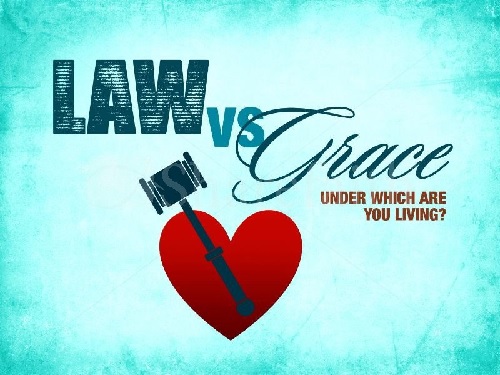
Growing up in the Christian church, my wife and I were taught that we were saved by grace. Yet, once we were saved by grace we needed to continue to live by the law. This seems to be a fairly common teaching for the modern-day believer.

Once we began questioning some things we were reading in the bible, we came to a new conclusion. The bible mentions that those of us who are saved by grace are now free from the old covenant law. If we still try to live by the commands of the old covenant, we are actually living under a curse. ‘For all who rely on the works of the law are under a curse, as it is written: cursed is everyone who does not continue to do everything written in the Book of the Law.’ (Galatians 3:10 NIV).

Why is it we cannot accept the free gift of grace that God provided? Why is it we are still living a performance-based life trying to please God? ‘For if you are trying to make yourselves right with God by keeping the law, you have been cut off from Christ. You have fallen away from God’s grace’. (Galatians 5:4 NLT).

It became clear to us that we now live for God because of love, not out of obligation, not trying to do more and earn our salvation. The works of the law and the ten commandments no longer have a hold on us.

Now, am I saying because we are free of the law that we can just do whatever we want? Eat, drink and be merry? No, not at all. Even though we are free from the law, and even though by keeping our eyes on Christ we have the ability through him not to sin, we are still living in a fallen world. There will be times when we take our eyes off him and commit sins. Although in Christ our sins are already forgiven and there is no longer punishment for them, there are still consequences in this world when we do wrong.

The thing is, by trying to keep the law, we are led into death. ‘The sting of death is sin, and the power of sin is the law’. (I Corinthians 15:56 NASB). The old way of doing things was only a temporary thing. The law showed us that we were completely powerless to live up to God’s standards. It was a tutor for us until Christ came and took our sinful nature to the cross. ‘Therefore, the Law has become our tutor to lead us to Christ, so that we may be justified by faith. But now that faith has come, we are no longer under a tutor. For you are all sons of God through faith in Christ Jesus’. (Galatians 3:24-26 NASB).

We had been taught that we needed to do more and more for God. We were taught to try to keep the commandments and strive to be ‘good Christians’. Fortunately, the Spirit has been guiding us into the reality that we cannot keep the commands. We, in ourselves, are powerless to do so, and so are you. Christ came to fulfill the law and provide freedom to all of us. We are now free to live by love for Him and free from trying to live by the law. When Jesus said ‘it is finished’, he was saying the old covenant, the old way of trying to live by the law, was finished. He accomplished what we could not do. When he was resurrected, a new way of life started, a new covenant based on grace.

It is time we realize God, out of His love for us, has provided all we need. He has done away with our old sinful nature. We are forgiven of all our sins by His grace. We can now enter into his rest and rely on what He has done. We no longer have to strive to keep all the rules and constantly try to do more and more to earn a relationship with Him. ‘We have been released from the law so that we serve in the new way of the Spirit, and not in the old way of the written code’. (Romans 7:6).

Rest in Him, rely on the Spirit to teach you and guide you through love. There are plenty of things to do, but we do them when we are led by the Spirit, and we do them through love. Now that we live by the new covenant, we live in love because He has put His spirit within us to walk with us daily.

When we are in love with God, we do not need rules to tell us what to do. We do what is pleasing to Him because we love Him. The Law is no longer in effect. By grace we now live a life of love for God and for one another. It is by love that we will do what pleases Him.

Jim Gordon and his wife left the institutional church after spending over fifty years within the system. Jim wanted a way to express his thoughts and concerns about the religious system and why he and his wife decided to leave the institution but not their faith in God. Jim can be contacted by email at: jimgordon731@gmail.com

Read Full Post »

By Mike Edwards

Let’s be honest. More prayers are unanswered than answered. The amount of suffering in the world suggests God doesn’t intervene a lot of the time. If miracles are simply having enough faith and praying to God, why don’t supposed miracle workers go into all the hospitals? I bet hospital folks have as much faith as those healed at their rallies. Many are rightly disheartened about God when claims about prayers don’t match up with reality.

God can’t answer many prayers

We can’t pretend God can wave a magic want and always heal in a free world. It isn’t that we didn’t pray enough with the right words and behaviors so God will answer. There are many different situations. God can’t make one’s partner willing to stop drinking. It isn’t that God had the power to do something about it, but chose not to; it’s that God can’t. Divine love limits divine power. True love is uncontrolling. Ask adults about their parents. God’s love must be supportive.

Healing Prayers 

A lot of prayers asking for healing are obviously not answered. I doubt God is just being stingy. Are miracles really arbitrary? Conditions in our body may not always be right. Various biological and environmental factors are involved such as cells, organs, etc. If God wouldn’t take away your human freedom, it may not be a stretch to say God has to account for natural freedom as well. Miracles can happen when God’s uncontrolling love aligns with countless factors known and not known. God surely intervenes by all means when circumstances will allow.

A truly loving God is doing all they can before asked

Do we really think God is waiting to help others until we ask? Prayer must be more than manipulating God to act. God may wait for our invitation for personal help to be more the person we deep down desire to be, but God is tireless in doing all they can for others and desperately seeks our help to change the world. One can always assume God’s blessing if not violating the rights of others.

How God answers a lot of prayers 

Praying can remind us to offer help. God is an omnipresent Spirit. God already knows needs before spoken. It is easier sometimes to pray for someone rather than take cooperative actions with God. This may be the most common way that God answers prayers. Rather than praying your friend’s partner stop drinking, which is harming their family, see if your friend would rather you say something to their partner. When you know two friends are in conflict, speak to the one wrongly denying any wrongdoing. God always seeks our permission to use our lives to help others.

But the Bible says….

The truth is for almost every passage on prayer, there are opposing interpretations and other passages that suggest additional perspectives. Mathew 7:7 is used to support the false prosperity gospel: “Ask and it will be given to you; seek and you will find; knock and the door will be opened to you.” Isn’t this passage in context simply saying that if we parents give good gifts despite our imperfections, will not God as our perfect Parent always want to give good gifts? First-century readers didn’t assume this was a blank check for requests. We must balance that the Apostle Paul believed in the power of prayer, but he also expected persecution for beliefs (2 Tim. 3:12).

So, why pray?

Prayer is more than asking for things. We can also talk to God for self-examination, for sharing our concerns so to not feel along in a chaotic world. Seeking God’s influence in our lives can lead to making wiser choices. God is already doing all they can in a free world. Pretending God can simply heal without accounting for freedom makes one’s suffering worse. God is tireless in working through individual lives to change the world.

God is always listening. God has endless mercy and forgiveness so we don’t give up no matter how demoralized we may feel. God is always available in times of loneliness. Friends can’t always be available in the middle of the night, or we may feel that we are overburdening our friends by always going to them. God speaks to us mostly through self-reflection as God only wants us to feel free to make decisions based on our gifts and aspirations. We know God is speaking when we hear: I love you; I forgive you; I won’t abandon you.

MikeEdwardsprofilepic125

Mike Edwards has been writing for Done with Religion for some time and has been a great addition to the site. Mike also has his own site where he writes that can be found at What God May Really Be Like  He can be contacted by email at: medwar2@gmail.com

Read Full Post »

By Mike Edwards

It is often said God blesses the United States or individual situations, suggesting God’s blessings are withheld from others by God. It is important how we portray what God is really like. I am not going to do a Bible study on how God blesses others. Several viewpoints could be defended, depending on one’s interpretation of certain passages. It isn’t presumptuous though to imagine what a loving God is like though our moral intuitions. It seems intuitive a loving Creator loves the way we are created to love. How we lovingly bless others may be how a loving God would bless.

The way God blesses must be loving 

Atheists and believers agree. The only God worth believing in is a perfect, loving God. Can God manipulate others? We would say no because love doesn’t manipulate. We can talk about perfect Godly love by comparing to perfect, human love. The Bible even suggests perfect human love and God’s love are the same: “Be perfect, therefore as your heavenly Parent is perfect” (Mt. 5:48).

God’s blessings can’t be arbitrary

True love can’t be arbitrary or bias. Some Christian circles teach that before one is born that God elects or blesses some with eternal life after death while excluding others. Such arbitrary love is immoral. God doesn’t arbitrarily bless some with food in their bellies and not others but pulling strings behind the scenes. There are many human reasons why one might not have enough food to eat. God and humans must somehow partner together to combat starvation.

God’s blessings can’t be controlling 

We know true love can’t be controlling. Ask any adult about their parents! We hate when we see friends try to control others for their own reasons or gain. Employees can smell a controlling employer a mile away. The truth is God can’t wave a magic wand – aka as blessing some and not others – without accounting for freedom. It isn’t that you didn’t beg enough or have the right attitude. A loving God is surely always doing all they can in a free world before, during, and after our prayers. 

Doesn’t God seek to bless through influence?

God seeks to influence us to do all the good we can, in all the places we can, at all the times we can, to all the people we can, as long as we can. Such a plan leads to true individual and worldly happiness in the long-run. Imagine all the regrets we save in life by being slow to anger. Imagine all the pain we spare spouses and children if we control where our eyes wander. Imagine all the friendships not destroyed by talking behind one’s back. God’s blessings can flow when we allow God’s influence in our lives to help ourselves and others. I doubt God minds sharing the credit.

MikeEdwardsprofilepic125

Mike Edwards has been writing for Done with Religion for some time and has been a great addition to the site. Mike also has his own site where he writes that can be found at What God May Really Be Like  He can be contacted by email at: medwar2@gmail.com

Read Full Post »

What Do They Really Mean?

by Jim Gordon

So often in Christianity we use words to describe spiritual things, yet what we say and what we mean are sometimes two different things.

Take for instance the word church. Most of us think of a building where Christians meet every Sunday for an organized, pre-planned service of music, prayer and a sermon by a pastor. In reality, true Church is better described by the word ekklesia. It is people who are following Christ and allowing Him to live and love through them. Church is not a place or a building, nor is it the house of God. It is not done on a specific day or at a set time. Church is the body of Christ, each of us equally functioning as parts of the body under Christ. We live each day by the power of the Spirit living within us, loving and accepting others.

How about the word Christian itself? We usually think of people who love God, go to a building each week and follow specific doctrines. Actually, Christian is a man-made word that originally was used to describe those who followed the teaching of Jesus and were doing the works of Jesus. Today, Christians are considered people who believe in God, go to church, follow specific rules, pray, read the bible and try to get more people to come to their church. Unfortunately, many times Christians seem to be known more by what they are against rather than sharing the love of Jesus. * 

Christianity today is more widely known as a religion, an organization led by a man or woman. Even more so, currently it is becoming known as a political action organization. Most people outside of Christianity see this as just another religious organization that really makes no difference in helping and sharing the love of God to those outside their particularly group.

When we talk about prayer, we generally think of a pastor or godly person saying spiritual sounding words to God. Many times, prayers are written out and followed word for word to make it sound more spiritual. Actually, prayer is just talking. Like you would talk to a friend or relative, prayer is talking to God. Not only talking, but being quiet and listening for God to speak to you. It is talking to God like we talk to anyone else.

What about the bible. Of course, our first thought is a book that God inspired men to write. If we look closer at John 1:1, we find that the bible is not a book at all. “In the beginning was the word, and the word was with God and the word was God”. We see that the Bible or Word of God, is Jesus. He is the inerrant, all powerful, living Word of God who became flesh and dwelt among us. The book we call the bible is God inspired and profitable for doctrine, for reproof, for correction, and for instruction in righteousness. It tells us about human beings who were trying to find God and figure out how to relate to God. It tells of how God dealt with his creation and shows how much he loves us. The bible is a book about God and man’s quest to find God, and we can learn a lot about God and ourselves by reading it. What we do not want to do is make the bible equal to God. The bible is not part of the trinity, it is a book. Again, God inspired, but humans still had their views and opinions in writing it.

The word worship is generally thought of as a time during the religious service when people are led into song and outward praise to God. This is usually done by a leader or group who are chosen or paid to lead in this way. The style of worship also varies greatly from group to group. Many people think worship are songs, or lifting of hands or dancing. Worship is actually a deep sense of reverence and adoring praise of our Father. It is personal and does not need a professional leader to bring us to this point. It is a sincere and earnest thankfulness we have for God and can be done whether with others or privately.

I am sure there are many other words we could come up with that would fit here, but the main point is it is not so much the word we use, but the true meaning behind it. Jesus is the all in all. It does not boil down to our doctrines, beliefs and man-made efforts. It is following Christ, allowing Him to live through us and giving Him the throne of our lives. Jesus is the head of the body, the rest of us are equal parts with equal functions in his body.

Jim Gordon and his wife left the institutional church after spending over fifty years within the system. Jim wanted a way to express his thoughts and concerns about the religious system and why he and his wife decided to leave the institution but not their faith in God. Jim can be contacted by email at: jimgordon731@gmail.com

Read Full Post »

By Mike Edwards

Believing God exists or doesn’t exist requires faith, but surely a loving Creator would love the way we were created to love. Is love controlling or manipulative? Then, God can’t be controlling or manipulate. What we think God is really like impacts everything we believe about God. Do we believe what a loving God is like though our moral intuitions, our consciences, or truths according to a Book?

Saying we must rely on “biblical truths” is misleading 

Supposed certainty has led to condemning gays, though biblical scholars don’t agree the Bible condemns same-gender loving relationships. See here. Some religions defend killing homosexuals because of their unprovable assumption that every word in a Book was inspired by God. They of course don’t question if their interpretation is inspired. Many claim the Bible says that women can’t fulfill the same roles as men in the worship or home setting. Yet it can be defended despite contrary opinions that Paul, a main writer of the New Testament, didn’t think roles should be chosen based on gender than gifts.  See here.

So, there are no absolute truths?

No reasonable God or non-God person doesn’t respect the golden rule in relationships. We aren’t always certain how to best love, but it seems our understandings must lead to loving others as we want to be loved. Certain laws are just common, moral sense. Who doesn’t believe physical or sexual abuse is wrong? What does your loving sense tell you if women can serve in the same roles as men if similarly gifted? Straights or gays don’t wake up one day and choose a lifestyle of acceptance or hostility. Treat others like you want to be treated if in their shoes.

How can we know God?

Only a perfectly good or loving God is worth believing in. Such a statement is nonsensical if we are clueless about perfect love. Even the Bible implies we can understand God’s love because perfect human love and God’s love are the same: “Be perfect, therefore as your heavenly Parent is perfect” (Mt. 5:48). Do you wish to be judged for consensual sexual choices you don’t feel you can control? Do you wish to be considered based on your gender or gifts? Good news – God is a better lover than we are.

Even Bible-believing Christians suggest trusting your moral intuitions

Christians often say God’s spirit (aka Holy Spirit) does or can reside within you. Unless the Spirit talks to you audibly or visibly, we can only discern the Spirit’s voice by examining our intuitions. We can’t avoid judging interpretations of the Bible according to loving intuitions. We can’t always be certain how to best love, but we can strive to love others like we want to be loved. Unless you are a totally self-centered human being, believe about God what makes loving sense to you!

What you believe about God matters!

Mental images of God shape our relationship with God and how followers treat others. If God really created Hell, we may think we should emulate God in our attempts to judge and punish. If God condemns gays, we will condemn gays out of devotion to God. If we believe God thinks men have authority over women in some positions, that will filter down to your wives, daughters, and friends and stifle their gifts. Choose understandings of God that don’t contradict your intuitive sense of a loving God. You may be right!

MikeEdwardsprofilepic125

Mike Edwards has been writing for Done with Religion for some time and has been a great addition to the site. Mike also has his own site where he writes that can be found at What God May Really Be Like  He can be contacted by email at: medwar2@gmail.com

Read Full Post »

By Mike Edwards

Believing God exists or doesn’t exist requires faith, but surely a loving Creator would love the way we were created to love. It isn’t too presumptuous to imagine what a loving God is like though our moral intuitions, our consciences. Christians may argue we should trust “biblical truths” about God, but differing interpretations exist for many moral issues. See here.  Also, we can’t prove if biblical writers always understood God perfectly or God controlled their thoughts.

Why would a Creator or parent create unless wanting a relationship?

The idea of a relational God wanting to be mysterious may only come from a Book. The mystery card is often played when one’s interpretation of God’s character is incompatible with most people’s idea of a loving God. Some rationalization is needed for their interpretation, since they believe God gives us our mind and conscience. The mystery card short circuits discussions about God’s true character. A mysterious God suggests God doesn’t prioritize a relationship.

Even the Bible doesn’t necessarily claim God is a mystery

God isn’t a mystery just because we can’t comprehend all plausible moral reasons how suffering and a good God can coexist. Isaiah 55:8-9 is frequently used to claim God sometimes is a mystery: “For my thoughts are not your thoughts, neither are your ways my ways…” This passage isn’t suggesting we cannot understand God. God exhorts us to forsake our wicked ways and thoughts (v.7) and turn to God’s higher, righteous ways and thoughts (vs. 8-9). Mystery in the NT often concerns the unknown about Jesus in the OT until NT times. Jesus only spoke in parables, when directness went in one ear and out the other, so one might consider the message in time. 

God surely can’t be hypocritical 

Only a perfect, loving God is worth believing in. Is love ever hypocritical? God can’t possibly be hypocritical. We don’t always know what perfect loves is, but hypocritical love is contrary to our moral intuitions of perfection. The mystery card – aka as God can act however hypocritical God wants – is played because of one’s interpretation. It is nonsensical to claim God is good but good is sometimes evil. If a trait claimed about God seem hypocritical – reconsider!

God can’t possibly be a mysterious, moral hypocrite!

Many condemn gays because of their understanding of a Book. It makes no sense why God would condemn gays when they can no more choose who they love than straights can. Just ask heterosexuals or homosexuals what sexual lusts they struggle with. Please don’t judge when you can’t be certain. I can’t imagine one would think – except because one deems their interpretation of a Book inspired – that a woman shouldn’t be the CEO, priest, pastor, etc. if more qualified than the man. Loving others like you want to be loved is true, human, godly love! True relational love cannot be mysterious or hypocritical. Neither can God!

MikeEdwardsprofilepic125

Mike Edwards has been writing for Done with Religion for some time and has been a great addition to the site. Mike also has his own site where he writes that can be found at What God May Really Be Like  He can be contacted by email at: medwar2@gmail.com

Read Full Post »

by Jim Gordon

Growing up in church was a fun time learning about God and meeting people who usually had pretty similar beliefs. Yet, it seems the more we learn about the grace of God and the freedom it brings, Christian life can be a little frustrating.

Is it just me, or do you find it frustrating to realize that some of the teachings we have grown up with in church may be wrong? Do you get confused with all the different doctrines and Bible interpretations, and hearing all the different opinions of others? Do you get tired of all the fighting and disagreements over different beliefs?

It can get pretty discouraging seeing all the postings on social media and all the arguments and disagreements, sometimes heatedly, about personal views and interpretations. Many are basic views we have grown up with, yet now we question whether they are from God or are they man’s wrong interpretation.

No matter how you interpret the scriptures, no matter how much you believe your way of thinking on spiritual matters, someone else will have a completely different view. No matter what church you attend, what doctrine you follow or if you have stopped attending a church at all, we know that Christians are not going to agree on everything. We all have a different view of biblical interpretations. Depending on which church or denomination you belong or grew up in, or which pastor you listen to, our views are usually slanted in that particular way.

I often wonder why we cannot accept each other, no matter what our interpretation. Truthfully, none of us can prove most of what we believe, be it faith in God, heaven, hell and a vast array of other topics. Our beliefs are all by faith. We cannot prove, or disprove, anything.

I think we should ask the Spirit daily for guidance into truth. Hold to what you believe, but be open enough to change when God gives a clearer view of the truth. When someone has a different way of looking at things, accept them as a fellow Christian. You do not have to agree with them, but who knows, they might be right.

I do not think any of us can say without a doubt who is completely right or wrong in our interpretations. We should seek for truth through the Spirit, and let everyone have their right to do the same. Quit fighting and arguing over who is right and who is wrong. God never said ‘by this everyone will know that you are my disciples if you agree with one another’. No, it is by love. We are to love God and love one another even in our disagreements.

One thought comes to mind in all this, ‘Jesus loves me this I know, for the Bible tells me so’. The most basic and simple thing we learned long ago, yet seems to be one of the most consistent things of which we can all agree.

Jim Gordon and his wife left the institutional church after spending over fifty years within the system. Jim wanted a way to express his thoughts and concerns about the religious system and why he and his wife decided to leave the institution but not their faith in God. Jim can be contacted by email at: jimgordon731@gmail.com

Read Full Post »

« Newer Posts - Older Posts »