Feeds:
Posts
Comments

Posts Tagged ‘spirituality’

By Mike Edwards

Most are familiar with Bible stories including David and Goliath and Jonah shallowed by a whale. What motivated me to write this post was becoming even more aware of disturbing divine behaviors in the older testament.  See here.  You may not want to advise your children to read the entire Older Testament. Stay with me until we get to below stories of Noah/Flood and Jonah.

Don’t read these Bible passages to children!

We have every right to question if biblical writers/editors always understood God perfectly. There are many disturbing portrayals of God in the Bible. Exodus 20:1 says God spoke: “anyone who curses their father or mother is to be put to death” (Ex 21:17).  I would be dead! God didn’t dictate words to the writers. “God said” is recording hundreds of times in the Bible. This is likely a figure of speech expressing inner impressions or understandings about God written down – right or wrong.

God supposedly even commanded the genocide of all Amalekites, including women, children, infants, and animals (I Sam 15:2-3). God kills Uzzah for putting his hand out to balance the Ark from falling (2 Sam 6:7), yet God is silent when Mighty King David committed adultery and had Bathsheba’s husband killed (2 Sam 11:14). You better hope God is having a good day!

Did God control the thoughts of biblical writers?

You can’t prove and it’s doubtful a loving God controlled the mental impressions of writers’ words recorded. Controlling love is an oxymoron. God doesn’t control our world views. The Israelites thought God controlled the natural world causing famines to punish or giving victory or defeat in battle. Today most don’t think God causes tsunamis and other natural disasters. Jesus didn’t blame tragedies by God as rewarding the righteous and punishing the unfaithful (Lk 13:1-5). So, we are okay to question if certain stories accurately portray God. It is not heresy to challenge if the writers’ understandings of God are contradictory of a loving God according to our moral intuitions. We were surely created to love the way the Creator loves.

Noah, the Flood, and God drowning practically the entire human race 

I admit I love David kicking bully Goliath’s ass. But you may wonder why God drowned the entire human race except Noah and family, including children and infants (Gen. 7:23). Keep in mind Genesis talks about a magical tree of good and evil and talking snakes. A Global Flood could be a literary device to illustrate the destructiveness of human versus God’s ways. Maybe the writers used an analogy of a Flood and drowning because their world view including God controlling the natural world. I might not read the Flood story to young children but wait to explain the above that maybe God didn’t really drown practically the entire human race. Personally, I wouldn’t use a drowning analogy to portray God’s character. 

Did a whale really swallow Jonah? 

I suppose most kids won’t avoid water or the ocean when reading this story. Nevertheless, how might you explain such a story to younger children if they ask. Certain evidence suggests Jonah wasn’t really shallowed by a whale. The gullet of a whale is too small to swallow an adult. The gastric juices and lack of oxygen would not sustain human life for days such as Jonah writing a poem while inside the whale (Eric Seibert ). Ninevah was a real city but this story maybe wasn’t meant to be taken literally. Read the full story. It may be trying to illustrate God had a right to show compassion. Jonah’s enthusiasm for the destruction of his enemies was misguided.

So, how do I read the Older Testament to my children?

It’s understandable choosing to not share many of the Bible stories with children. Young children aren’t always equipped to understand when stories aren’t meant to be taken literally. The Bible is God’s story beginning with Israel and culminating with the life of Jesus that we don’t possess in any other document. God may have inspired the writers to write but didn’t necessarily approve of everything written about God. When reading the Bible, question and contemplate what a loving God is really like. Enjoy what God is trying to reveal to you about your Creator and how to treat others. Interpretations about God’s love toward others, that don’t match how you know you ought to love your neighbor, may be amiss. A Book must not replace our relationship with God and common moral sense.

Are Biblical Stories Helpful Or Harmful To Children?

MikeEdwardsprofilepic125

Mike Edwards has been writing for Done with Religion for some time and has been a great addition to the site. He couldn’t find enough people to discuss God openly so he started blogging years ago. Mike also has his own site where he writes that can be found at What God May Really Be Like  He can be contacted by email at: medwar2@gmail.com

Read Full Post »

By Mike Edwards

Biblical passages portray God as sanctioning genocide or drowning practically an entire human race including children and infant. Many form their view of God according to the Bible. Our views of God impact the way we imitate or relate to God. I will site much of Eric Seibert scholarship, who has written a mind-blowing book on disturbing divine behaviors in the OT. God seems so unlike the God that Jesus portrayed. When we read “God said” in the Bible, did the writers record what God actually said aloud or what they believed God would say? We must question if there are differences between biblical portrayals of God and God’s true character.

We can’t prove God approved of the biblical writers’ thoughts about God

Few believe God dictated the writers’ recordings. You certainly can’t prove God controlled the writers’ thoughts that were written down. We can’t prove the writers understood God perfectly other than taking their word by claiming they are inspired by God (2 Tim 3:16-17). That is circular reasoning. The truth is we don’t know God’s role. We were surely created to love the way the Creator loves. We must challenge if the writers’ thoughts or our interpretations are contradictory of a loving God according to our moral intuitions.

Controlling love is an oxymoron. A loving God can no more control than they can manipulate. God obviously doesn’t control one’s actions or thoughts with so much evil in the world contrary to God’s desires. And if God can raise the dead, God can obviously control transmissions of words supposedly given to the biblical writers – but God didn’t! We don’t have the original manuscripts but copies of copies of the original. The NT is gathered from over 5000 manuscripts. Over time the variations became more substantial. The Catholic Bible has more books than the Protestant Bible. Which books did God supposedly inspire (pp. 267-268)? Maybe God wasn’t in control of what was written or transmitted.

The first reasons to doubt OT portrayals is a moral God can’t command horrific evils 

Many may not realize there are hundreds of passages in the OT that speak of God taking revenge or threatening destruction or punishment by death including genocide of an entire nation. Please see Eric Seibert. I will cite only a few instances that require explanation. God commanded the genocide of all Amalekites, including women, children, infants, and animals (I Sam 15:2-3). God ends up killing over 70,000 people for David taking a census that was authorized by God (2 Sam 24:15). God drowned the entire human race except Noah and family, including children and infants (Gen. 7:23). God causes or at least permits dozens of people to die to simply win a divine wager with Satan (Job). Such actions are highly questionable of a loving God.

A moral God couldn’t possibly have authorized many of the Israelite laws

When it comes to many of the laws, the OT claims God spoke these words (Exodus 20:1). Biblical writers rarely claimed audible God-speak. “God said” recorded hundreds of times in the Bible is most likely a figure of speech expressing inner impressions or understandings about God – right or wrong. Anyway, did God really authorize the following laws (pp. 17-18):

  • Did God really mandate whoever curses their parents be put to death (Ex. 21:17)?
  • Did God really mandate to death a man gathering sticks on the Sabbath (Num 15:32-36)?
  • Did God really require death for adultery (Lev 20:10)? They would be lot of bodies today
  • Did God really command whoever does work on the Sabbath be put to death (Ex 31:15)?
  • Did God really command death for those who blaspheme the name of the Lord (Lev 24:16)?

A moral God can’t control one’s worldview 

God can’t control the worldviews of the writers either. The Israelites though God controlled the natural world such as causing famines to punish. It was thought God gave victory or defeat in battle. Today we don’t think that way, that God was the direct cause of planes flying into building on 9/11. Most don’t blame tsunamis and other natural disasters on God. Jesus didn’t blame tragedies by God as rewarding the righteous and punishing the unfaithful (Lk 13:1-5). Biblical writers were likely trying to explain the unexplainable. Even today, many claim “everything happens for a reason” as if God is in control.

Archaeological findings don’t always support OT historical events reported 

Seibert points out that assuming OT historical narratives were written to record what actually happened is a modern but not past historiographic assumption (p.105). Archaeological evidence doesn’t suggest the wall of Jericho miraculously crumbling down, and Jericho was completely destroyed by the Israelites despite the Bible claiming so (Joshua 6:20, 24). So, it is possible the violence contributed to God in these passages (Joshua 6-11) might not have happened as well. OT narratives were often written decades if not centuries later when the supposed events happened.

Was Jonah really shallowed by a whale? Certain evidence suggests otherwise. The gullet of a whale is too small to swallow an adult. The gastric juices and lack of oxygen would not sustain human life for days such as Jonah writing a poem while inside the whale (p.95). Jonah walked through Ninevah requiring 3 days (Jonah 3:3). Archaeology has discovered Ninevah to be 7.5 miles in diameter. Walking end to end could have been done in less than half a day. Ninevah was a real city but this story wasn’t meant to be taken literally. The story illustrates God had a right to show compassion. Our enthusiasm for the destruction of enemies is misguided. 

A moral God can’t apply justice unfairly 

God kills Uzzah for putting his hand out to balance the Ark from falling (S Sam 6:7), yet God is silent when David committed adultery and had Bathsheba’s husband killed (2 Sam 11:14).

God is so unlike the God Jesus portrays in the NT 

Jesus said: “Anyone who has seen me has seen the Father” (Jn 14:9). Jesus referring to stories in the OT doesn’t mean he approved of all views expressed about God. Jesus never referred to passages that speak of God commanding genocide or a warrior who fights physical battles for his chosen. (pp.191-207). Jesus referred to the global flood but didn’t identify God as the cause of the Flood as the OT does. Jesus instead often refers to a God who is kind to the wicked. Jesus was so unlike the God of the OT that perhaps God was not like how often portrayed by OT writers.

Why should I bother to read the OT? 

The Bible is God’s story beginning with Israel and culminating with the life of Jesus that we don’t possess in any other document. God may have inspired the writers to write but didn’t necessarily approve of everything written about God. When reading the Bible, question and contemplate what a loving God is really like. Enjoy what God is trying to reveal to you about your Creator and how to treat others. Imagine if extremists had to consider that God didn’t inspire every word in their Book, and we had to openly discuss what a loving God is like. Interpretations about God’s love toward others, that don’t match how you and most know you ought to love your neighbor, may be amiss. A Book must not replace our relationship with God and common moral sense.

https://6 Reasons Old Testament Portrayals Of God As Genocidal And Violent Are False!

MikeEdwardsprofilepic125

Mike Edwards has been writing for Done with Religion for some time and has been a great addition to the site. He couldn’t find enough people to discuss God openly so he started blogging years ago. Mike also has his own site where he writes that can be found at What God May Really Be Like  He can be contacted by email at: medwar2@gmail.com

Read Full Post »

By Mike Edwards

Church folks have been told forever, who then tell others, that Jesus’ life and death on the Cross was to spare us from going to Hell to appease God’s anger about our sins. This isn’t how Jesus interacted with others. Relationships with humans or God can’t be built on fear and anger rather than love and grace. Christians often try to save others from a fiery afterlife rather than discussing how God’s presence in our life can help become more the person we desire to become deep down. Godly living in this world leads to a meaningful life with less regrets.

Has God’s message (Gospel) been hijacked?

Jesus’ message couldn’t be about avoiding Hell. Common understandings of Hell aren’t necessarily biblical. See here. Jesus was asked by a religious expert how to have eternal life. Jesus spoke of how to start living here on earth not what awaited in the afterlife. He simply said to love God and your neighbor (Lk.10:25-37). I am convinced Jesus spoke of loving God not to get into heaven but to receive help in loving others as you love yourself. You don’t have to drop to your knees and say a prayer to get “in” with God. You only have to want God’s help. Jesus’ salvation was about living a meaningful life here on earth with God’s help.

How did Jesus interact with others in the Gospels? 

Most Christians believe to understand Jesus is to understand God. I read through the Gospel of Mark to see what Jesus’ message was to others. Mark’s Gospel is considered the earliest written from which Matthew and Luke cited. In all the Gospels Jesus never advises to preach to the masses to save them from Hell in the afterlife. Jesus sought to help others avoid hell here on earth. Sin is destructive. It has natural consequences.  

  • When Jesus met his disciples, he only said “follow me.” (Mark 1: 16:17, 2:14) A set of beliefs wasn’t required. I don’t see any message to the disciples other than living a life worth living.
  • Jesus said “Whoever does God’s will is my brother and sister and mother.” (Mark 3:35) Being close to God or Jesus isn’t claiming certain beliefs or traditions; Jesus simply encouraged actions that lead to loving others as yourself. “Anyone who wants to be first must be the very last, and the servant of all.” (Mark 9:35)
  • People were bringing children to Jesus and he said “anyone who will not receive the kingdom of God like a little child will never enter it.” (Mark 10:15) The kingdom of God was not a future home but a current reality. Jesus has just said “some who are standing here will not taste death before they see that the kingdom of God has come with power.” (Mark 9:1)
  • A rich person asked how to have eternal life. Jesus said sell everything and follow me. (Mark 10: 17-31) Surely Jesus’ point was to love people more than possessions. What does following Jesus mean? When asked what was the greatest commandments, Jesus only said to love God and your neighbors (Mark 12:30-31). What! Not drop to your knees and say a prayer!
  • The above interactions are similar to when Jesus dealt with the women caught in adultery. (Jn. 7:53-8:11) Jesus only encouraged the woman to go and sin no more. Where was his evangelical spiel. He might never see her again! Apparently, Jesus came to encourage living a loving life toward others and yourself. That’s the way a loving God does.

God seeks to help avoid a life full of regrets

We are often told the main message of the Bible is Jesus coming to give you salvation to save you from Hell so you could enter Heaven. I am convinced Jesus spoke of loving God not to get into heaven but to receive help in loving others as you love yourself. There are no beliefs necessary. You only have to want God’s help in pursuing a life not full of regrets. Try it! It’s on God to come through for you if you choose to follow. Jesus when leaving this earth spoke of having God’s spirit within us. The Cross is about our violence, not God requiring violence to forgive us. Killing a man simply for claiming to be God reveals our ugly violent nature not God’s. Personally, following God has inspired and encouraged me to be the person I desire to be. I haven’t arrived but I’m on that journey.

What Really Is God’s Message To Us According To The Bible?

MikeEdwardsprofilepic125

Mike Edwards has been writing for Done with Religion for some time and has been a great addition to the site. He couldn’t find enough people to discuss God openly so he started blogging years ago. Mike also has his own site where he writes that can be found at What God May Really Be Like  He can be contacted by email at: medwar2@gmail.com


Read Full Post »

By Mike Edwards

A loving God can’t be egotistical or want it to be all about them. Perfect love doesn’t possess such qualities. It matters how you perceive God. If you are inclined to believe a Supreme Being may exist, what you think of God can determine the closeness of the relationship. The theme of many Christian praise songs seem to be that God expects your praise and demands your obedience rather than wishes for your love. God only wants for us the thing we really want for ourselves – that is to be a loving person toward others. God created to have a relationship, not be worshipped.

How can we know what God wants? 

Many suggest we must turn toward the Bible to know what God is like. Many born today don’t have a Bible and the entire Bible didn’t exist as we know it until around the third century. We can know what God is like because it seems we have an idea of what a loving God should be like. The parent/child relationship comes to mind what perfect love must be like. Loving parents are other-directed not self-consumed. God may desire respect because they know they always have our best interest in mind. But parents and God are less concerned with their honor than desiring a relationship to encourage and empower. 

What about the Bible though?

Hundreds of passages could be used to defend God’s desire for respect. Passages also suggest that God is more concerned with a desire for relationship than concerned with restoring their honor. Many religions today imply their god expects certain beliefs or face immediate extinction. Not the God of the Bible! And what kind of all-powerful God wants to be friends? Abraham (Jm. 2:23) and Moses (Ex. 33:11) are called God’s friend, and Jesus called the disciples His friends (Jn. 15:15). God is our Creator and Friend. We can use our moral intuitions of what a loving parental God wants. I believe a loving God desires more a chosen relationship than blind allegiance. 

Why would an egotistical God give us freedom?

If God was so worried about their ego, God certainly would not have given us freedom. God staked their reputation in individuals and the nation of Israel in the beginning. God created us in their image so we might represent God to others. Why does the God of the Bible not interfere with evil in the world unless God isn’t controlling. Controlling love is an oxymoron. The ancient gods demanded sacrifice to satisfy the god’s thirst. Are we going to suggest the God of Creation is the same as the other gods? The Old Testament writers sought to convey differences than commonalities with the other gods.

What is parental or godly love? 

Perfect parent and godly love are surely one in the same. What kind of parent wants to be alone in their glory? Jesus says in John 17:22 after speaking on fulfilling his mission with his disciples and then turning his attentions to all who believe: “I have given them the glory that you gave me, that they may be one as we are one.”  We cannot be God, but we can strive to be like God. God surely doesn’t want to be feared as if that leads to inspiring relationships. God’s unforced desire for glory is no different than a loving parent’s desire for respect. Such respect can lead to what we deep down desire – loving others like we want to be loved. 

Is God An Egotistical Glory Demanding Fanatic?

MikeEdwardsprofilepic125

Mike Edwards has been writing for Done with Religion for some time and has been a great addition to the site. He couldn’t find enough people to discuss God openly so he started blogging years ago. Mike also has his own site where he writes that can be found at What God May Really Be Like  He can be contacted by email at: medwar2@gmail.com

Read Full Post »

By Mike Edwards

We have been told forever it seems that Jesus’ death on the Cross was to spare us from going to Hell to appease God’s anger about our sins. All we have to do is drop to our knees and say a prayer. Biblical scholars with interpretation expertise suggest many explanations about Jesus’ death. See here. Salvation isn’t about a future event but present living. Genuine spiritual or human relationships can’t be built on fear and anger rather than love and grace.

What did Jesus say was the most important?

When Jesus was asked what were the greatest commandments or how to have eternal life, He didn’t talk about a future destiny. He said to start loving God and your neighbor as yourself (Lk.10:25-37; Mt. 22:37-40). God isn’t full of themselves. Loving God inspires loving others to the fullest. Jesus simply commended Zacchaeus for recognizing a journey necessary to avoid personal destruction because of sin. Jesus cared about life here on earth (Lk 19).  Jesus told the woman who had committed adultery: “go now, and leave your life of sin” (John 8). Sin destroys and doesn’t lead to personal happiness in the long-run!

But doesn’t the Bible say fear God?

A survey of the times “fear of God” is encouraged in the Bible suggests fearing God was intended for those who don’t fear evil. God’s anger was against wickedness. God’s anger is simply a side of God’s love to steer one away from personal and worldly destruction. God hates what evil does to us. Human parents warn their children and show disgust for actions leading to destruction of others. God’s love, not their wrath, was center stage in Scriptures (I John 4:8).

God cares the most about doing good not evil 

Dennis Prager  argues in the Bible God cares the most how you treat others. Are you going to do good or evil in your relationships? He illustrates how this was God’s greatest desire from the beginning. Only in the Bible’s story did God destroy mankind because people were evil. According to the contemporaneous ancient Near East Babylonian story, the Epic of Gilgamesh, the gods destroyed humanity (except for a man named Utnapishtim) because humans made so much noise they kept the gods awake. Many other passages illustrate God cares the most about doing good.

How can we do the most good?  

Most understand the importance of treating others like you want to be treated. When others mess up, you want them to at least admit their wrongs and make amends. Easier said than done. Surely a loving God seeks to influence and encourage us to pursue heavenly than worldly ways here on earth. God seeks to empower us to be the unselfish people we deep down desire to be. Jesus sought to inspire us to seek God’s help in loving others for the good of the world. Godly living is what leads to true happiness. God is dying to help you and others have fewer relational regrets by living a meaningful life.

What Does God Care About The Most?

MikeEdwardsprofilepic125

Mike Edwards has been writing for Done with Religion for some time and has been a great addition to the site. Mike also has his own site where he writes that can be found at What God May Really Be Like  He can be contacted by email at: medwar2@gmail.com

Read Full Post »

by Jim Gordon

Have you noticed how often people get offended and feel they need to prove their point on so many topics and online posts: It usually does not go well once that starts, especially when it comes to spiritual and biblical topics.

We fail to realize that not everyone has the same interpretation as another. We also fail to realize the fact that we cannot prove most of what we believe.

We can fight and argue between christian and atheist, one christian denomination and another, among Jewish, Christian, Islam and a host of other religions. We can argue about whether there is or there is not a God, is there a hell or not, what this verse means or what that verse means. We get mad and defensive when someone goes against what we believe and do our best to prove our view is right.

Thing is, we cannot prove our point. We cannot prove God exists, we cannot prove there is a heaven or a hell, we cannot prove any other aspect of the spiritual existence. This life is a life of faith and belief. As christians, we have faith that God is there and he loves us. We have faith in the guidance of the Spirit within us.

On the other hand, no one can prove there is not a God, there is not a heaven, or there is not a hell. Yet we will fight and argue until we almost hate each other trying to prove our way of thinking.

We do not have to fight and argue to defend God. Rather than making ourselves look like mean, hateful people who have to be right, we should be showing the love of God to everyone. Show that love to those who agree with us and also to those who are a hundred percent sure in their minds that we are wrong.

To be sure, we cannot have this kind of love and acceptance in our own strength. God says we are the temple of the Holy Spirit, and it is God’s love that flows out of us. Only through the strength of the Spirit can love those who live differently, who think differently, those who want nothing to do with God and those who may be our enemies.

We can have our own way of thinking, our own beliefs and interpretations, knowing that God created each of us differently. Yet we need to remember we are not right on everything, and for sure we are not always going to agree with one another. We can all learn something by listening and communicating with others.

We all have a right to believe what and how we want to believe. People can put their faith in God or not. We can have completely different lifestyles. We can have a completely different interpretation on bible verses or we can completely reject the bible and not believe anything about it, and it is OK. Jesus did not tell us to judge and condemn others for what they believe. He did not say to force our views and beliefs on others, but He did say to love one another.

We are not called to make people believe like us, or believe in God at all. We are called to go into the world and live the gospel message that God loves and accepts us. Jesus came to restore fellowship between humanity and God. Through the power of the Holy Spirit, we are to love and accept others just as they are.

We can have our individual beliefs and interpretations, and we do not have to agree with everyone. Love and acceptance do not mean agreement. We can love and accept others just because they are loved by God. We were all created in His image. We can have our differences and still accept and care for those God brings into our lives each day.

Jim Gordon and his wife left the institutional church after spending over fifty years within the system. Jim wanted a way to express his thoughts and concerns about the religious system and why he and his wife decided to leave the institution but not their faith in God. Jim can be contacted by email at: jimgordon731@gmail.com

Read Full Post »

By Mike Edwards

Many claim dogmatically that the Bible predicts future events such as what is happening in Israel currently and the end-times when Jesus returns down to earth. I am no biblical scholar, but many who makes such claims fail to recognize that biblical experts don’t agree on the meaning of many passages that may or may not relate to future events. We all must admit there is no consensus of beliefs about prophecies in the Bible. I trust more those who admit their interpretation of ancient literature (Bible) could be wrong.

Why our views on prophecy matter!

It is hard for people to take God seriously if future events supposedly made according to the Bible keep not coming true. Secondly, prophecies that aren’t conditional on how people respond to God assumes God doesn’t respect the freedom to change. God didn’t force anyone to kill Jesus. They could have accepted Jesus’ message. Finally, believing the world is coming to an end and somehow God is going to rescue you in the sky can lead to passivity. We mustn’t wait on God to “fix” things by coming again. We must do all we can for the next generation!

Prophecies may only be warning about future possibilities 

I have written here why God can’t know the future, thus prophecies aren’t likely claiming what definitely will happen in the future. One can assume most prophecies are conditional because God changes if people will repent of their evil ways. God’s nature requires most prophecies predicated on human actions being conditional. For example, in the Old Testament Jonah advised Ninevah they would be destroyed in 40 days, but then God relented because the Ninevites turn from their evil ways. Admittedly, some prophecies many suggest what God intends to do that doesn’t impact human freedom – God can promise an afterlife after death.

In the New Testament Jesus predicted Peter would deny Him three times but Jesus also prayed Peter’s faith would not fail (Lk. 22: 32-34). Predictions stated to be from God can be conditional. A professor may observe a student and warn they will fail their class but hoping the student avoids such failure. Keep in mind the future is not totally unpredictable for humans much less God. A skilled physician can predict the death of a seemingly healthy individual because of symptoms that escape the untrained eye. Remember, God’s Spirit is present everywhere, thus God’s knowledge is unimaginably extensive.  

What about OT predictions about Jesus the Messiah?

The most talked about prophecies in the Old Testament (OT) is the forthcoming of the Messiah Jesus and their subsequent death. But Jesus prayed to God that He might be spared of dying on the Cross (Mt. 26:39). Such a prayer seems meaningless unless Jesus’ life could have been spared. God changes their mind if people change. Psalm 22 is said to predict Jesus’ life and crucifixion. These passages could also be referring to sufferings known by the writer in OT times such as King David. NT writers can use past historical passages to illustrate Jesus’ current life and crucifixion.

What about “end times” mentioned in the Bible? 

There is much talk of biblical prophecies coming to pass because of what is going on between Israel and Hamas. Is God coming again (rapture/tribulation/Armageddon) to destroy this world as we know it and set up God’s reign? There is some biblical evidence that the end times mentioned refer to what happened in the first century, thus having been fulfilled:

  • If the Bible teaches God is coming again to destroy the world in the future, why did Jesus tell his audience that supposed predictions about the world ending (maybe not a physical ending) would happen in their lifetime: “Truly I tell you, this generation will certainly not pass way until all these things have happened” (Mt. 24:34)?” Jesus said to his audience when asked about the last days: “watch out that no one deceives you….you will hear of wars and rumors of war (Mt. 24:4-6). Why would Jesus use such language if the world was going to end 2000 years and counting?
  • The Apostle Paul assured his audience they have not missed the “day of the Lord” (2 Thess. 2:1-12). Why was Paul’s audience fearful they could miss the coming of Jesus if such a coming is supposedly a rapture-removing, visible, world-ending coming? Only a non-visible, spiritual coming of Jesus could possibly be missed. The disciples did not think of Jesus’ coming as being visible as they ask: “what will be the sign of your coming and of the end of the age” (Mt. 24:3). Besides, Peter writes to his readers in the first century that “the end of all things is at hand” (1 Pe. 4:7). 

Does Prophecy In The Bible Really Predict The Future?

MikeEdwardsprofilepic125

Mike Edwards has been writing for Done with Religion for some time and has been a great addition to the site. Mike also has his own site where he writes that can be found at What God May Really Be Like  He can be contacted by email at: medwar2@gmail.com
 

Read Full Post »

by Jim Gordon

A good friend of mine wrote the following paragraph: ‘There is an old hymn that says On Christ the solid rock I stand, all other ground is sinking sand. As important as the church is in our lives, we have to be careful not to put our hope in it. I have received a lot of help thru the church and a lot of good basic teachings. I was also saved in church but my hope is not in the church. My hope is in “Christ the solid rock”. There are times when we are alone with no Christian fellowship and maybe we cannot make it to church for some reason. We have to be able to stand as mature Christians and rely on our relationship with Christ. The church is no substitute for Christ. It is only where we learn about Him. I guess what I am saying is that we have a relationship with Christ and not the church, and He is our source of strength if we call upon Him in truth. I personally am going thru the desert in life and I have to depend on Him. He has proved His love and care for me and in reality, He is the “Son of the Living God”. Bottom line, let’s be careful to put our dependence on Him. All other ground is sinking sand’.

This goes along with some of my previous posts about modern-day church. The organized church today is a place for believers to get together, but it is not the goal. Going to church does not make us Christians, it is not God’s house, it does not make us better people or more dedicated believers. It is a place to get encouragement from other believers, a place to learn from other’s interpretations, a place to reach out and help others. Basically, it is a Christian social organization.

We need to stop putting the focus and emphasis on church, stop putting our eyes on pastors and realize that they are not God’s mouthpiece. We need to put all focus and attention on Christ. He is who we follow and worship. He is the Shepherd, the rest of us are the sheep. There are no co-shepherds, no intermediates between Christ and us. We are to follow Christ and Him alone. We are to learn from Him and love others equally.

There is nothing wrong with going to church, but do not put your eyes on a building, an organization or the leaders therein. Keep your focus on Christ. Whether you go to church or do not go to church, Christ is the one we look to and serve. Do not worry so much about going to church, but rather being the Church. It is not a building, but the people who love and follow Christ.

Jim Gordon and his wife left the institutional church after spending over fifty years within the system. Jim wanted a way to express his thoughts and concerns about the religious system and why he and his wife decided to leave the institution but not their faith in God. Jim can be contacted by email at: jimgordon731@gmail.com

Read Full Post »

by Jim Gordon

So often, when we think of Jesus we think of Christianity. Many seem to think that Jesus actually started Christianity. The fact is, Jesus did not start Christianity and he does not belong to any particular religion. He loves and accepts people no matter what they believe. He came to show the love of God to the human race, not start a new religion for people to fall in line with and follow.

The word Christian originated to describe those who were spreading the good news of Jesus. People in the city of Antioch started calling those who followed Jesus Christians because they were doing the works of Jesus and sharing the love of Jesus so much, they thought of them as little Christs.

When we use the term Christian as described above, there is certainly nothing wrong with it. Being Christ-like, loving God and loving others. Doing the works of Jesus is the true meaning of the word. Yet, if we use Christian in a sense of belonging to a particular church, following a particular doctrine or specific pastor, if it relates to a specific country or political party, then it becomes just a religion and for me, I would rather not define myself by this term.

Jesus came to show us what God was really like, a God that loves all people. God does not see Muslims, Jews, Christians or any religion. God loves all people of the world. The only way people are going to come to true fellowship with God is through Christ…not Christianity.

It is time we stop looking to the organized world of religion as our way of becoming acceptable and pleasing to God. We need to look to Christ and allow the Spirit to live through us and love those we meet each day. Stop demanding that people follow your doctrine, your rules, your beliefs. Accept people as they are, the way Jesus accepted them. Show the love of Christ to them and let God work in them through the Holy Spirit.

We are never going to completely agree with each other on doctrine and religion. Only through Christ and the love of God will we be able to share that love with others. Let us be known by the true sense of the meaning of Christian, someone who is doing the works of Jesus and who loves God and one another.

Jim Gordon and his wife left the institutional church after spending over fifty years within the system. Jim wanted a way to express his thoughts and concerns about the religious system and why he and his wife decided to leave the institution but not their faith in God. Jim can be contacted by email at: jimgordon731@gmail.com

Read Full Post »

by Michael Donahoe

In a day when tempers seem to flare more often and people seem to be less kind to others, it does not take much to make a difference in the life of someone you meet.

We hear on the news and social media the acts of rage, discrimination, meanness, lack of respect and overall disregard for other human beings.

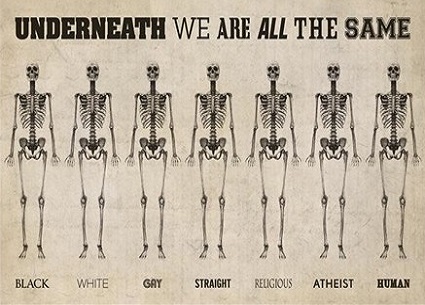
We have racial discrimination, exclusion of the LGBTQ family, gender discrimination, and on and on it goes. Yet underneath all the labels are human beings who are loved by God and are to be loved by us.

My feeling is, no matter what you think is right or wrong, whichever way you choose to live your life, there is no reason to treat others with judgment and condemnation and there is no reason to force your way of living on others. Being respectful, kind and accepting of others does not mean we always agree. We can treat others with kindness and as equals and still stick with our individual beliefs.

Being nice to people can change their attitude and outlook for the day. Giving others a smile, respect, doing a simple act of kindness can touch someone who is frustrated, depressed or just losing hope in the whole human race.

Rather than always being against someone or trying to force your views and way of life on others, put aside your personal beliefs when it comes to others and treat them with kindness and respect. To me that is following the example of Jesus and a way of encouraging a fellow human being who can then pass it along to others.

——-

Michael Donahoe was added as a writer as his views fit perfectly with those of Done with Religion. He also writes on Substack at https://personalmeanderings.substack.com/

Read Full Post »

« Newer Posts - Older Posts »