Feeds:
Posts
Comments

Posts Tagged ‘spirituality’

By Mike Edwards

Non-church goers may have never heard of Jesus’ most popular sermon (Matthew 5-7). I was listening to a sermon on this familiar passage by a very reasonable, respected pastor. I thought as I listened how some individuals may come away disheartened that God isn’t empathetic toward their circumstances. Sometimes passages need to be nuanced to explain how certain advice may not be applicable to their situation. We have to discern when Jesus was using hyperbole for emphasis without stating exceptions.

 22 But I tell you that anyone who is angry with a brother or sister will be subject to judgment. 

  • Jesus wasn’t condemning all kinds of anger, or why then would Jesus call out religious hypocrites – “you blind fools” (Mt 23:17)? Sounds angry to me! Not all anger is the same. There is righteous anger. I would preach anger in general can get us in trouble, but there are always individual circumstances where God is mad as Hell as you are. Discern if your angry is what Jesus is addressing.

23 “Therefore, if you are offering your gift at the altar and there remember that your brother or sister has something against you, 24 leave your gift there in front of the altar. First go and be reconciled to them; then come and offer your gift.

  • It is hard to be right with God if not right with others if reconciliation is possible and you know you are clearly in the wrong. But Jesus certainly didn’t always seek out the Pharisees to smooth things over. This passage may be encouraging us to reconcile with those that we know we have sinned against. We should try to make it right. If someone has sinned against you, that is on them. Be open to reconciliation if they approach you and seem sincere.

27 “You have heard that it was said, ‘You shall not commit adultery.’[e] 28 But I tell you that anyone who looks at a woman lustfully has already committed adultery with her in his heart.

  • No contextual or interpretation problems here. Adultery and other sins have a beginning – often beginning in the heart or mind. Find a way to shut it down. It is never worth it!

39 But I tell you, do not resist an evil person. If anyone slaps you on the right cheek, turn to them the other cheek also. 40 And if anyone wants to sue you and take your shirt, hand over your coat as well. 41 If anyone forces you to go one mile, go with them two miles. 42 Give to the one who asks you, and do not turn away from the one who wants to borrow from you.

  • I think speakers should always clarify they aren’t advocating women stay silent at the abusive hands of men or other abusive situations. Jesus surely is advising not responding evil with evil, not that one can’t protect themselves. The context is “not an eye for an eye.” In war if the enemy rapes and beheads, don’t respond in the same way. But, evil is real and may require protection and killing. I think Jesus was trying to get people to look for ways to change hearts in certain situations. Seek justice when appropriate not revenge.

43 “You have heard that it was said, ‘Love your neighbor[i] and hate your enemy.’ 44 But I tell you, love your enemies and pray for those who persecute you,

  • Preachers often bring up what Jesus said on the Cross – “God forgive them for they don’t know what they are doing.” Maybe Jesus’ persecutors didn’t know that Jesus was really who He claimed to be. Still, I admit if I was Jesus I would have hopped off the Cross and kicked their ass with miraculous powers. Does a father who sexually abuses his child not know what they are doing? We mustn’t speak as if every situation is the same!

What is Jesus’ message to you?

Honestly, I don’t know what God would advise in your situation. Try to be open to God’s influence. One may not seek reconciliation with a friend who refuses to admit any wrongdoing. Cutting them off could lead to better reflection. The Apostle Paul in one situation said “Expel the wicked person from your perspective” (I Cor 5:1-13). Isolation can bring one to their moral senses. Every situation is different. Read the Bible to discern for yourselves, perhaps with the help of friends, what the application is in your difficult circumstances. Consider how to go the extra mile. Consider what actions might possibly lead to reconciliation or change in hearts if others open.

What Is Jesus Really Advising On The Sermon On The Mount?

MikeEdwardsprofilepic125

Mike Edwards has been writing for Done with Religion for some time and has been a great addition to the site. Mike also has his own site where he writes that can be found at What God May Really Be Like  He can be contacted by email at: medwar2@gmail.com

Read Full Post »

By Mike Edwards

Our world seems so divided. Christians often label others heretics if they don’t believe there is a literal Hell or that God doesn’t condemns gays. Hardly a conversation starter. Science seems to have followed in Religion’s footsteps. Those who question if Covid shots are as safe and effective as claimed are labeled anti-vaxers, though they may have gotten the flu vaccine for years. In politics opponents are labeled a racist or conspiracist without proof. If you avoid discussions when others aren’t acting irrational, I would love to hear your thoughts as to why. My email is at the end.

Why Christians may suck at discussing differences

I will use myself as an example unfortunately. It’s not meant to be an excuse. I believed decades ago that God condemned gays though they could no more control their attractions than straights. I was wrong. See hereI used to believe God sent those who didn’t have the right kind of faith while here on earth to a fiery, torturous afterlife. I was wrong. See here.  I am convinced the only reason I believed as I did was because of my understanding of the Bible. How could I be devoted to God if I didn’t follow the Bible’s teachings? Christians may not listen to different beliefs because they assume their interpretation or a biblical writer’s understanding of God is right. Stay openminded!

How we discuss our opinions is important 

We often are busy thinking we are right and preparing our response than listening. There are obvious reasons to avoid discussions with certain people. It is difficult to talk to others if they don’t control their emotions or convey they are right and you are wrong. We can’t have discussions with those who are rude or close-minded. But disagreements are normal in relationships. We can’t always prove what we believe is true about God. We can’t claim without debate if Covid shots or all the childhood vaccines are as safe as claimed. We can’t claim without debate if our climate control measures are best for the most human flourishing. But there may be deeper reasons why we avoid discussions with those who have different beliefs.

Societal influences can discourage discussion

News or information outlets one listen’s to may only report one viewpoint for whatever reason and imply other views are conspiracy. It is best to be aware of both sides of a different belief to decide for yourself. Church leadership often imply contra views to their own are heresy. Threats of being excommunicated, censored by authorities, or losing your job are real. The solution is for all to be free to discussion opinions openly without threats. If you know the “truth,” why be afraid to defend your view!

Most humans desire to integrate with a group, get along with its members, and benefit from them. The loner must fend for themselves. Both disagreeing with the perceived popular science narrative or disagreeing with church leadership about God’s character can lead to isolation or being ostracized.  Being your own person is a tough business. Thriving societies must support individuals being allowed to form their own opinions when universal agreement isn’t obvious. Misinformation isn’t opinions that don’t agree with your own. You may end up being wrong!

The fear of uncertainty can discourage discussion

Certainty rather than uncertainty is more comforting psychologically. One may believe what seems to be the popular narrative because unknowing can create confusion or anxiety. One can avoid anxiety by not discussing their beliefs with others who believe differently. I imagine most Leaders prefer being seen as knowing (certain) than not knowing (uncertain). For one to question a main belief they have been taught in church all their life, such as if Hell is real, can create anxiety about what other beliefs may be in question. Questioning if the Covid shots are as safe and effective if we have gotten the shots, can raised anxiety about our health. What if we pushed others to get the shots and we end up wrong? There may be an easy out. We sometimes trust those in authority, but we may come to realize such trust was misplaced.

What are the consequences of avoiding uncertainty?

The science often changes with further investigation. Many religious beliefs are subject to interpretation of a Book. That is why there are thousands of denominations with their own creeds. Certainty, not uncertainty, can lead others astray if one is wrong. Also, when only one side is presented, control and power grow intentionally or unintentionally. It should be intuitive denying diverse opinions is unloving and controlling. Most don’t except such behaviors in their personal relationships. A refusal to openly discuss or defend one’s views is a denial of personal choice and suggests an unhealthy dependency on “certainty.” Relax! Universal truths exist. What religion denies the main thing – to love and treat others like you want to be treated.

There can be nefarious reasons for preventing discussions 

The most benign explanation for censoring the opinions of others is not necessarily the fear of losing power as much as the fear of losing security (one’s livelihood). In my counseling career, I often questioned the narrative concerning psychotropic medications. A client is owed a discussion of both the risks and benefits of such an intervention for mental healthiness. I didn’t always share my opinion with psychiatrists in charge. I don’t fear conflict. But I am sure I feared potential loss of a job because I was in the minority and low on the totem pole. In politics differing with the perceived popular opinion might not lead to reelection. Pastors risk being kicked out of the pulpit.

The more evil explanation for censoring the opinions of others is one’s desire for control and power over others. Control and power also have financial benefits. Control and power flourish when others are not allowed to discuss alternative opinions in the public arena. Many may fear liability if they admit they are wrong and participated in thwarting discussion. One way to judge one’s motive is by demanding answers as to why one is refusing debate. If you are so sure you are right, why do you fear convincing others? Religion and science are playing God (Superior) in the lives of others by claiming they know the truth and we are too stupid to decide for ourselves!

What is truth?

Openminded people accept they may be wrong. We are more likely to be right when there seems to be almost universal agreement on the topic of concern. Most don’t defend rape, or physical or sexual abuse. Adultery isn’t wrong only in the eyes of the betrayer. But rational people do not agree on matters such as immigration policies, climate policies, marijuana legalization, if God condemns gays, if God inspired all of the Bible, etc. We must be willing to defend our views among one another rather than shut down those we disagree with. Those fortunate enough to live in a democratic society must accept the vote of the majority when comes to law setting. You can still defend your position in hopes of a future vote. May the best, most common-sense position win.

Love surely is the path forward to healthy discussions and debates 

My co-blogger rightly suggest love is the path forward. See here. We can strive to be the better person in conversation. But we have every right to oppose those who refuse to accept uncertainty and fight fairly. This can be done civilly but lack of freedom of speech is important for future generations. Leaders must be held accountable to be open-minded than certain. In our personal lives, we can try to engage with those who insist on certainty when it doesn’t exist but in time one may need to move on. We can stop labeling those who disagree with our biblical interpretations as heretics. We can stop calling those who disagree with our views of science or politics as conspiracists. Imagine how different as a people we would be if religious, science, and political folks talked openly for the common goal of pursing the greater good!

Why Can’t We Discuss Our Political, Science, Or Religious Differences?

MikeEdwardsprofilepic125

Mike Edwards has been writing for Done with Religion for some time and has been a great addition to the site. Mike also has his own site where he writes that can be found at What God May Really Be Like  He can be contacted by email at: medwar2@gmail.com

Read Full Post »

by Jim Gordon

Have you noticed how people like to look up toward the sky when they think of God? I recently watched several football players giving God praise by looking up and pointing toward the sky. Many of us who are Christians seem to think of God as being up in the sky somewhere looking down on us. We are taught in our churches that God is up there and someday we will go to be with God.

We tend to forget that the Kingdom of God is within us. We are told that we are the temple of the Holy Spirit and God resides within us. The sad fact is that we really do not act like we believe this truth.

If we could only get it in our head and down in our spirit that God is not somewhere up there, far away in heaven. God lives within us by the Spirit. We have the Spirit within us to teach and guide us. The bible says we have the mind of Christ.

We are living in the Kingdom of God right now. Yes, we are constrained by our human body, but our spirit is one with God’s Spirit and we are spiritually living with God in the Kingdom now.

It would be nice to begin hearing more about the presence of God within us right now. More often we hear about a God who is far away and who may show up from time to time to bless us if we attend the right meeting at the right place.

God is here now, living within us. God is with us each and every day walking with us in whatever we go through in our daily life. God loves us and is concerned about us and is there for our good. It can be a hard thing to get the old teachings of the church out of our heads and accept the fact that God lives within us now. It reminds me of the old saying ‘you can take the boy out of the country but you can’t take the country out of the boy’. In this case, you can take the boy out of religion but you can’t take religion out of the boy.

Religion is man’s way of making his way to God. Yet we find out that man cannot come to God by our efforts and good works. Grace is the only way man comes to God, and it is all by the grace of God through Jesus.

Once Jesus left this earth he sent us a comforter, the Spirit who now dwells within the people of God. The Church is not a religious organization and is not a building. The Church are the followers of Jesus whether they attend a physical church or not.

God lives within us. God’s home is within us and God is with us spiritually just as much now as when our earthly body passes away and we live in our glorified, spiritual bodies.

Start making the effort to see things as God says they are, not as we have been taught within religion. God is not up in the sky, God lives within us. We are the temple and each of us collectively form the kingdom body now.

Jim Gordon and his wife left the institutional church after spending over fifty years within the system. Jim wanted a way to express his thoughts and concerns about the religious system and why he and his wife decided to leave the institution but not their faith in God. Jim can be contacted by email at: jimgordon731@gmail.com

Read Full Post »

By Mike Edwards

In theological circles, arguments are made that a belief in Universalism (all are going to be saved any way and go to heaven after death) makes evangelism (encouraging others to have a relationship with God) pointless. I wrote about Universalism here.  There are biblical and moral reasons to argue for the possibility that all will be eventually saved in this life or in the life after death. I am not convinced such a belief makes influencing others toward God a wasted endeavor.

First of all Hell as a reason for faith is doubtful

I wrote that Hell (a place of forever punishment) is doubtful biblically and even morally from a loving God. See here.   See here.  The institutional church often teaches that God’s main mission is to save us from hell, so we could go to heaven after death here on earth. All we have to do is say a prayer: “Thank you Jesus for dying on the cross for my sins. Please forgive me. I receive You as my Lord and Savior. Help me to live for you.” I can find no place in the Bible where Jesus advised such a prayer or demanded certain confessions to follow Him. The threat of Hell can’t possibly lead to a genuine relationship with God. Who wouldn’t just say the prayer to avoid torture?

Why then encourage others to consider faith in God here on earth? 

The Bible seems to suggest God seeks to empower us to be the unselfish people we deep down desire to be. Jesus sought to inspire others to seek God’s help in loving others for the good of the world. Jesus simply commended Zacchaeus for recognizing a journey necessary to avoid personal destruction because of sin. Salvation is not a future destination but a current reality (Lk 19).  Jesus told the woman who had committed adultery: “go now, and leave your life of sin” (John 8).  A relationship with God isn’t a future but current reality. Surely a loving God seeks to encourage us to pursue heavenly than worldly ways here on earth for our own happiness.

Why not live like hell here on earth?

I have been under God’s influence most of my life. I’m not necessarily more moral than many who don’t have a relationship with God. I am positive though I am a better husband, father, and friend because of God’s influence. God only wants to help you become the person you deep down desire to come. We will fail but God is quick to forgive and help us to get back up. Go ahead and live like Hell while here on earth! Careful the regrets you, your family, and friends will feel at the end of your life. Decide on short or long-term happiness. Careful that our character developed here on earth may make the change process longer and more painful in the life to come.

What’s next?

The Bible talks about everyone, whether having faith here on earth or not, will be judged. After death God may bring to memory actions of betrayal and how it felt to their victims. The cleansing and educative effect may take longer for some than others. Justice from a fair, merciful God is possible despite people being given a second chance after death. We don’t know exactly what happens after life here on earth. We are free to speculate what a loving God might do. It is just as reasonable, if not more reasonable, to believe a loving God can choose to take forever in this life and the life to come to save everyone from themselves.

MikeEdwardsprofilepic125

Mike Edwards has been writing for Done with Religion for some time and has been a great addition to the site. Mike also has his own site where he writes that can be found at What God May Really Be Like  He can be contacted by email at: medwar2@gmail.com

Read Full Post »

by Jim Gordon

With political activity starting to ramp up in the United States, and with all the various issues and events in politics today, you may wonder if Christianity and politics can actually exist together. It seems that Jesus really had no real interest in the political system of his day, yet he also did not condemn it. He said to render unto Caesar the things that are Caesar’s and unto God the things that are God’s.

In our day and age politics can be a powerful thing and many people find it extremely important. No matter what country you live in, it is controlled by a political party in one way or another. Many countries, like the United States participate in free elections and others are under more of an authoritarian rule. Either way, we humans are all under some type of political influence and control.

I have found that from a Christian viewpoint it seems many Christian people in the United States feel that if you are a Christian you have to be a republican. Actually, there are many Christian people who are democrats as well as republicans, independents and a few other political views. Personally, the way I feel about politics, I really do not care which political party a person belongs too. Unfortunately, I really do not see much of the ways of Jesus in either of our main political parties. It seems politicians are more concerned with political power and financial gain rather than on serving the people and making things better for all.

When I vote, I try to vote for the person I feel will do that best job for the most people and I do not worry which political party they belong too. I know there are many politicians who are of the Christian faith, yet there are also many who only use Christianity to get more votes. The main point is, whether Christian or not, we need people who are willing to work together and serve the people of the country in the best way possible.

Truthfully, being a Christian has nothing to do with a political party. Those of us who are followers of Christ live every day by our faith which involves every aspect of living. Our faith in God is not a Sunday only thing or a political thing. Many people seem to think they have a spiritual life on Sunday and a secular and political life the rest of the week. Yet the truth is, as Christians we are the temple of the Holy Spirit and we walk with the Spirit of God each and every day. Everything we do can be considered spiritual because God is within us all the time.

Many people seem to think we can use political power to force our Christian values on everyone. Christian Nationalism *(https://en.wikipedia.org/wiki/Christian_nationalism)* and Dominionism *(https://en.wikipedia.org/wiki/Dominion_theology)* are trying to take more control. Some want to declare the United States a Christian nation and rule it by Christian people according to their interpretation of biblical rule. Although these two movements are not necessarily republican or democrat, if politicians accept and back them, they can make it more likely these movements will take over. I for one do not believe we should or can legislate Christian values and morality on anyone. God does not force his love and ways on us, so why should we try to force our values and beliefs on others.

True religious freedom is for all people to be able to choose which religion they want to accept and follow, and also have the freedom to choose no religion at all. Obviously, in the United States there are a wide variety of religions and beliefs, and everyone should have the freedom to chose what they want to believe and follow.

Jesus was obviously more interested in speaking and teaching about the kingdom he was a part of, the Kingdom of Heaven. He was not nearly as worried or concerned about worldly kingdoms or political powers. His is a kingdom of loving one another.

I would love to see people stop bringing Christianity down to political purposes. Focus on Christ and loving others no matter which political party they endorse, if any. Politics is not the answer and is not worth all the fighting and arguing. Loving God and loving one another is a much more important and meaningful way of life no matter what political views are involved.

Jim Gordon and his wife left the institutional church after spending over fifty years within the system. Jim wanted a way to express his thoughts and concerns about the religious system and why he and his wife decided to leave the institution but not their faith in God. Jim can be contacted by email at: jimgordon731@gmail.com

Read Full Post »

by Jim Gordon

If it is possible, as far as it depends on you, live at peace with everyone — Romans 12:18

To be at peace with all people, including believers and non-believers, it seems almost impossible in our world today. We have so many different thoughts and ideas, different denominations, interpretations and beliefs and all the different religions. It makes you wonder how it is possible to be at peace with everyone?

The dictionary describes peace as freedom from disquieting or oppressive thoughts or emotions; harmony in personal relations.

I have been thinking recently about how some Christian people act towards those who see things differently. I do not know why we can be so mean at times. We feel we have to prove our point to others and stand our ground when it comes to doctrine and interpretation of the bible. I am not sure why we feel it is our job to be the morality police. Why do we feel the need to force our views, beliefs and interpretations on others?

Rather than base our lives on following doctrine and interpretation, we are to follow the example of Jesus. He said to love God and love one another. There is no way to be at peace with others without loving them. We cannot love others without the Spirit of love living within us.

Often times when we meet new people, or even when we get together with current friends, if we could just see the person as a human being without any labels, knowing that God loves them, it is easier to be at peace with them. The problem often seems to be when conversations get onto the subject of politics or religion, things can get divisive. We quickly forget the good things and only focus on our differences. It is very sad to let politics, religion or a number of other labels cloud the good things we see in people.

I think what God is saying about being at peace with all is that we are to live in harmony with others, not allowing any oppressive thoughts or emotions to take control of our feelings toward them. In other words, we live in love. Just because someone does not interpret the bible the same way we do or go to the same church we do or does not go to church at all, we should realize that in regard to other believers, we are all wanting to love God and do what is pleasing to God. We are to accept one another in love and respect the fact that God is working in different ways in people. Just because it is not what we are used to does not mean it is not of God.

In regard to non-believers, we do not need to condemn them or force our beliefs on them. We are to let them see the love of God by the way we treat others. They do not need someone beating them down or twisting their arms to get them to believe like us. We are to love them as they are and let the Spirit do any work that needs to be done in their lives just as the Spirit does in our lives.

If we believers could understand that we are responsible for ourselves in the way we live for God. We are not responsible to live the way others do or the way others think we should. We are to allow the Spirit to work in our lives and follow the Spirit on the path we are on.

Our responsibility is to do what Jesus said, love God and love others. We are to accept them for who they are and pray that the Holy Spirit will teach us and guide us in the way we are to go. We are not responsible to force others to see things the way we see things. We are to love one another and accept one another as they are. Only by living in love can we live at peace with all.

Jim Gordon and his wife left the institutional church after spending over fifty years within the system. Jim wanted a way to express his thoughts and concerns about the religious system and why he and his wife decided to leave the institution but not their faith in God. Jim can be contacted by email at: jimgordon731@gmail.com

Read Full Post »

By Mike Edwards

I write Posts often with two groups in mind. One group is those who have attended a church for years and either continue to go or have stop attended due to disagreements what God is really like.  The second group is those who are inclined to believe there is a God but have not been church-goers. The former group is more familiar with the pressure to know God’s will in your life. The latter group may wonder how do you know when God is directing you, when they hear others say “I had to do it because that’s what God told me to do.” 

Does God really control all that is going on? 

It is natural to think an all-knowing, powerful God has special insights into future outcomes. But to say God knows the future suggests a predetermined future which makes freedom nonsensical. God can’t know if your marriage will end up in divorce or your new job position will be discontinued in the future. God joins us relationally in a free, unknown future. God’s plan can’t be a detailed blueprint but a general one to set us free to love. God hopes as we do that our actions make a positive difference in the world. One can rightly question if God supposedly knows the future, why does God hide it from me? What parent does that if suffering could be avoided?

God may not speak to us demonstratively out of love

Just because earthly parents sometime know and advise what is best for their older child, such advice doesn’t always work out. In fact, overzealousness on the parent’s part can lead to a child feeling controlled, thus rejecting what is best for one’s own good. God’s awing or overwhelming presence may only lead to fearful obligations to obey. The road traveled of learning, reflecting, and not being pressured may best lead to lasting convictions and more meaningful relationships.  

What is God telling us to do? 

I know for a fact a loving God is telling me to love others like I want to be loved. That isn’t always clear what action to take, but neither can it be for God unless God has predetermined the future. Many decisions are obvious wrong – murder, abuse, adultery, etc. God doesn’t have to speak. Many decisions though aren’t black and white, even for God. Do we speak up about one’s behavior or risk driving them further away? God joins us in considering risks to change the world for better. God feels the disappointment we do when things don’t work out for the best. 

Influences in our life don’t have to be audible or certain. My parents aren’t alive, but I still sense their influence. God can’t tell us either that our decisions will work out. God deals with a free world also. God is hoping with us that our decisions will make for a better world. Don’t we sense God’s influence when we have thoughts to be the perfect partner, parent, or friend we desire to be deep down. God isn’t as hidden as we might think. God gives us the freedom to make decisions, and I understand the consequences of immoral decisions. God is in our uncertain life with us.

How Do You Know What God Is Telling You To Do?

MikeEdwardsprofilepic125

Mike Edwards has been writing for Done with Religion for some time and has been a great addition to the site. Mike also has his own site where he writes that can be found at What God May Really Be Like  He can be contacted by email at: medwar2@gmail.com


Read Full Post »

By Mike Edwards

I think the Bible can become an idol depending on one’s view of the Bible. See here.  We are encouraged to have a biblical business, family, life, church, or marriage. But we can’t prove God dictated or controlled the biblical writers’ pens or reeds (I can google) to record God’s thoughts perfectly. The Bible is God’s story beginning with Israel and culminating with the life of Jesus that we don’t possess in any other document, but it is important to read the Bible with a questioning and open spirit. Do we really want biblical marriages?

In the Bible marriage was between two men

In the Bible marriage was typically a contract between two men – the father of the man and the father of the woman. A payment was often made by the father of the woman (you guessed it) to the father of the man. Also, there was no Hebrew word for “husband,” or “wife.” These words were added in translations of the Bible later. See here.  In a patriarchal culture a woman was basically viewed as property – first to her father and then to the man given to by the father. Was this really God’s ideal?  I’m not a woman, but I doubt women want to go back to biblical marriages must less before they could vote!

Then, in the Bible marriage often was not between just one man and one woman

It was a very common marital arrangement in the Old Testament for men to have multiple wives. Most are familiar with the stories of two supposed spiritual giants in the Old Testament – Kings David and Solomon. Who hasn’t heard David was a man after God’s own heart. Not always the God I know! Solomon had hundreds of women at his disposal. Polygamy was never condemned in the Bible. Do we really want to go back to biblical marriages? My wife would argue one husband is enough of a cross/burden to carry!

In the Bible marriage was more about procreating than romantic love

There is not a Hebrew word for husband, wife, or even marriage.  You don’t read of marriage ceremonies or honeymoons. In Hebrew it’s more about the man “taking” the woman. You never of course read a woman taking a man.  An example of this is Genesis 29:23 – “he (Laban) took his daughter Leah and brought her to Jacob, and Jacob made love to her.” It may sound like it but this wasn’t the father giving the daughter for prostitution. One could argue in the Bible the woman was more like property given to the man to have children and build his legacy. If this is your cup of tea, you are reading the wrong blog.

What if a woman’s man dies?

We have laws and stories in the Bible where men were required to impregnate his sister-in-law if her man died. (Deut. 25:5). I don’t read where the woman has any say so in the matter, in case she didn’t want to have a child with her brother-in-law. My wife’s sisters probably feel the same way. 

Even in the New Testament women had few rights

It doesn’t seem much changed from OT times to when Jesus lived. When Jesus advised that a man could only divorce a woman for adulterous reasons, the disciples said “If this is the situation between a husband and wife, it is better not to marry.” (Mt. 19:9-10). They seemed to think marriage is about men’s rights. Also, though Jesus didn’t exactly say so, you mean to tell me Jesus didn’t think women could divorce for the same reason? This passage has multiple interpretations, so we are free to speculate what an ideal marriage is in God’s eyes.

What kind of marriage does God want? 

Personally, I don’t want anything to do with biblical marriages. And biblical marriages didn’t happen in churches administered by a preacher-type. The wife and I need a redo. Should we stop this practice?  I admit I can’t read God’s mind. But somehow, I know how I ought to treat others especially women. I don’t want any father telling a woman who she must marry for money. I certainly don’t want my parents telling me who to marry. They struck out. I have been married 41 years with three great kids. Turns out she is the saint, not their beloved son. Read the Bible for possible wisdom, but seek to have a godly marriage instead of a biblical marriage.

Who The Heck Would Want A Biblical Marriage?

MikeEdwardsprofilepic125

Mike Edwards has been writing for Done with Religion for some time and has been a great addition to the site. Mike also has his own site where he writes that can be found at What God May Really Be Like  He can be contacted by email at: medwar2@gmail.com

Read Full Post »

By Mike Edwards

I admit I am writing this Post as a confession/comfort. Do you ever feel guilty because you don’t have regular prayer times with God, or you often only formally pray when times are tough. Maybe God isn’t offended. Maybe God cares more about the relationship than obligatory “sit downs.” The best kind of human relationships are spontaneous than because of rigid formalities.

God can’t just wave a magic wand

It is important to remember God must account for freedom to be loving. It’s not that we didn’t pray enough with the right words and behaviors so God will answer. God can’t make one’s partner willing to stop drinking without violating their freedom. God can’t interfere in a job matter without impacting all who are interviewing.

What about healing prayers? 

A lot of prayers asking for healing are obviously not answered. I doubt God is just being stingy or some beg God better. I doubt miracles are arbitrary. Conditions in our body may not always be right. Various biological and environmental factors are involved such as cells, organs, etc. If God wouldn’t take away your human freedom, it may not be a stretch to say God has to account for nature’s freedom as well. Miracles can happen when God’s uncontrolling love aligns with countless factors known and not known. God surely intervenes by all means when circumstances will allow. I am not sure we even have to ask. God is always loving.

Prayer isn’t God waiting to be asked to love

God may wait for our invitation for personal help to be more the person we deep down desire to be, but God is tireless in doing all they can for others – what parents isn’t – but God desperately seeks our help to change the world. God can’t singlehandedly change a free world without our help. But the truth is it can rain on the righteous and the sun can shine on evil in an uncontrolled world (Mt 5:45).

Prayer isn’t more talking but acting 

Relax! God is an omnipresent Spirit. God already knows needs before spoken. We don’t have to pray to inform God. Be careful. Don’t let prayer be a substitute for acting. It is easier sometimes to pray for someone than take cooperative actions with God. This is the most common way that God answers prayers – with the help of others. Rather than praying your friend’s partner stop drinking, which is harming their family, see if your friend would rather you say something to their partner. When you know two friends are in conflict, consider speaking to the one wrongly denying any wrongdoing. God longs to help us help others. You don’t have to pray to God to act.

So, what is prayer?

Prayer is more of a relationship than just talk. I’m not more moral than others; maybe I am a more needy-son-of-a gun. I tend to interact with God when writing for my blog, when listening to a spiritual podcast, etc. Now, when I am faced with suffering or a challenge, you better believe I have more formal prayers. Prayer is a relationship with God in whatever way seems more relational to you. God is always listening. God speaks to us mostly through self-reflection as God seeks to empower us to make decisions based on our gifts and aspirations. God speaks when we hear: I love you; I forgive you; I won’t abandon you. Seek a natural relationship with God in your own way. Conversations don’t have to be formal prayers.

Do You Feel Guilty Only Praying To God In A Crisis?

MikeEdwardsprofilepic125

Mike Edwards has been writing for Done with Religion for some time and has been a great addition to the site. Mike also has his own site where he writes that can be found at What God May Really Be Like  He can be contacted by email at: medwar2@gmail.com
Read Full Post »

by Jim Gordon

Unfortunately, we know many people have been treated wrong within the church system. Some more severe that others, but none of it is good.

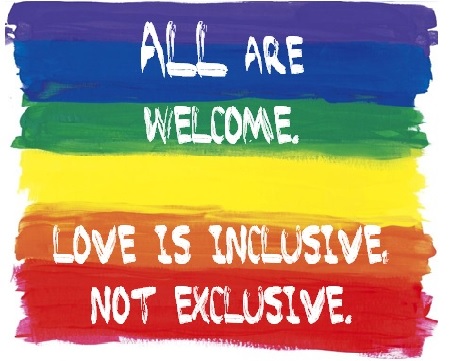
I think one of the groups that seem to be affected most by this are those who are LGBTQ. I have seen this group of people treated rudely and like second class citizens in many churches where they should find love and acceptance more than anywhere else. God said to love our neighbors, he did not say to love only those with whom we agree.

Even in the churches that are actually welcoming, LGBTQ people are often not accepted and allowed to participate fully within the organization or hold certain positions. They are welcome to come in and sit and listen so hopefully the church can change them, but they are not welcome to come in and participate in any way within the church program.

Christian people will deny rights and services to LGBTQ people based on their Christian beliefs, unfortunately even including fellow Christians who are LGBTQ. Even government office holders can refuse certain services and basically get away with it because they say it goes against their Christian morals. As a Christian, I say these things should not be. This is nothing like the example of Jesus.

Labels are placed on many people, gay/straight, black/white, male/female, christian/atheist, American/foreign/immigrant. Yet behind those labels are human beings who were created in the image of God. They are loved and accepted by God and we are told as followers of Christ to be known for our love for one another.

I feel for those who are LGBTQ. It hurts to see people who were created and loved by God be rejected and abused by those who claim Christianity. I think it is time to look past the labels, look past personal feelings and accept people just the way they are, because they are created and loved by God.

Jim Gordon and his wife left the institutional church after spending over fifty years within the system. Jim wanted a way to express his thoughts and concerns about the religious system and why he and his wife decided to leave the institution but not their faith in God. Jim can be contacted by email at: jimgordon731@gmail.com

Read Full Post »

« Newer Posts - Older Posts »