Feeds:
Posts
Comments

Archive for the ‘Acceptance’ Category

By Mike Edwards

I can’t prove God exist but millions including me aren’t irrational to think a Creator created the world around us. Atheists and believers agree. The only God worth believing in is a perfect God. We can only understand perfect love through the lens of human love. We don’t always agree what such loves looks like but human love is a reasonable starting point. The main reason many oppose views below is out of devotion to God because what they believe the Bible says about God.

God couldn’t be a Bible worshipper

First, we can’t prove the biblical writers always understood God perfectly unless you take their word for it. Secondly, literature requires interpretation so no one can claim their view is the right one. We can’t ask the writers what they meant. Thirdly, the Bible isn’t likely a Creator’s main communication, because the majority born into this world never had a copy or knew of Jesus.

God couldn’t have created Hell

God is not a sadist. A God who teaches forgiveness seventy times seven couldn’t possibly create Hell to torture anyone forever. Such pain serves no lasting purpose anyway. Humans wouldn’t even create such a place for their worst enemies. The traditional understanding of Hell doesn’t exist in the Bible. The word hell, a substitution not translation for certain Hebrew and Greek words in the Bible, appears to have been invented over the centuries to scare people into obedience.

God couldn’t only let Christians into heaven

A loving God wouldn’t only let Christians into heaven when the majority of people born into this world died without knowledge of Jesus the Christ. Secondly, one’s religion, or rebellion against a certain religion, is often based on the family born into whether it is Christian, Muslim, Buddhist, etc. Is God a God of chance?

God couldn’t condemn gays

A loving God couldn’t possibly condemn gays when they can no more choose who they are attracted to than straights can? If you are a straight man, don’t you naturally have to fight not looking at naked women than men. Ask gays their battle! Who chooses to be gay when one has to hide their sexuality because of bigotry and hostility?

God couldn’t be a sexist

God surely wouldn’t put men in leadership position over women which has encouraged dominance on the man’s part leading to atrocities women face at the hands of men. Like many views about God, the Bible can also be interpreted to endorse roles according to gifts not gender. God can lead women and men in trying to out serve one another. Shouldn’t the most qualified or gifted, whether male or female, be appointed CEO, preacher, or priest?

God couldn’t be an extremist or terrorist kind of God

Terrorists seldom are Jesus-type individuals who seek to love others like they want to be loved. Doesn’t true religion seek to serve not be served? Loving spiritual or human parents bring children into the world hoping their children freely reciprocate their love for authentic relationships. Forced love is an oxymoron. God couldn’t possibly want to control beliefs through fear.

God couldn’t be a moral hypocrite humanly-speaking

Even atheists believe One claiming to be God must be perfect. We must question biblical writers’ understanding of God if interpretations are contrary to people’s ideas of a perfect, loving God. When the Bible challenges us to be perfect like God (Mt. 5:48), the assumption is we can know what perfection is. Godly and human perfect love must be one and the same.

God can’t control evil and suffering without help

The magnitude of evil in the world is a main reason people indicate they don’t believe in God. It seems God creating freedom necessitates one being able to do as much harm as they can do good. Authenticity, the highest good in relationships, is impossible without freedom. Not even God can force true love. It can be misleading when we say God “allows” evil, as if God stands by when God could stop evil. God can’t control or violate freedom and love perfectly. God can only stop evil with the help of others or not create freedom.

God couldn’t be a prayer genie

Praying doesn’t make God more caring. God is already doing all they can in a free world. Pretending God can simply heal without accounting for freedom can makes one’s suffering worse. Did I not pray or beg enough? Prayer isn’t about manipulating for gain but pursuing a relationship with our Creator for self-examination, sharing concerns, and not feeling alone in a chaotic world. God is not a Genie in a bottle who can singlehandedly all by themselves make things instantly happen without our help to change the world for good.

God couldn’t be a future fortune teller

Most probably don’t think much about whether God knows the future or not. The truth is not even an all-powerful God can do the impossible such as change the past or know an undetermined future until it happens. God isn’t failing to communicate a “known future” so we can avoid bad relationships or decisions. God suffers with us rather than simply gaze into a future crystal ball. God created freedom and seeks to partner with us to make for a better world.

Notice I didn’t suggest what I think God believes when it comes to issues such as immigration, taxes, climate change, etc. Total certainty, unless beheading people for not sharing your beliefs, is an illusion. What we need is honest, open dialogue. Opinions must stand side by side as we continually evaluate the most loving approach. Problems often begin when we claim moral superiority either from our own moral intuitions or our understanding of a Book.

See here for further defense: http://what-god-may-really-be-like.com/why-and-what-i-believe-series/

Read Full Post »

by Jim Gordon

After having a discussion with some friends on the topic of the Spirit within and hearing his voice, I thought it appropriate to repost an article from a couple years ago on the subject.

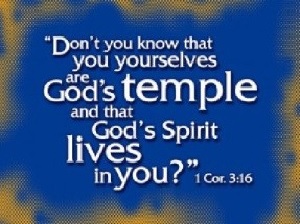
Growing up in the organized church, we were told that the Holy Spirit came to reside within us once we accepted Christ. We were also told that we are the temple of the Holy Spirit and we have no need that any man should teach us. Yet when it came to really emphasizing what that meant and how to hear the Spirit, the church seemed to have dropped the ball in that area.

We do not seem to hear a lot of teaching on what it means for the Spirit to live within us. We are not told how to listen for the Spirit and what are we actually supposed to be listening for. Jesus said that his sheep hear his voice, yet most of us were taught that his voice is really the words written in the bible or spoken by the pastor.

We have heard it said that if it is not in the bible it is not of God. We are told God only speaks through the written word, yet there are so many interpretations, various doctrines and so many verses that were written to a specific person or group of persons. These writings were often for a specific time period that no longer relates directly to us except as an example to learn about the nature of God.

I feel so much has been lost over the years from when the original writings were done. So many of the translations have changed the original meanings because of changes in times, word meanings, traditions and such. Without the Spirit bringing to life the words we read, and through confirmation through his voice within we are really left to our personal views and opinions and what others have told us the written word means.

The bible is not God and it is not a god. The bible was inspired by an infallible God yet written by very fallible men, men who were inspired yet wrote with their personal views and ways of writing. The bible is about people trying to find, follow and fellowship with God and teaches us ways to do that. The written word leads us to the Living Word, who is Jesus.

The bible tells us that the Spirit now lives within us. Yet so often, even though we say it we do not act like we really believe it. Time and time again the bible mentions we are the temple of the Holy Spirit, we have the mind of Christ, the Spirit and the Kingdom are within you. And time and time again we seem to go right on thinking God is far away from us and all we can do is read from his word or have some pastor tell us what God is saying.

There are many people who say they speak for God but are nowhere close to being a godly example. It is easy to say God told me this or that, or say God told me to tell you something yet the person saying such things is only going on their personal feelings and interpretations. Anyone can say God told them this or that and expect us to do what they say, but we need to listen to the Spirit for ourselves and listen for the confirmation from within as to what is of God and what is not.

I believe if God says the Spirit lives within us and we can hear his voice, then it is something not to be taken lightly. As followers of Christ we can rely on the Spirit within us to teach us and guide us into his truth. We have to be listening and open to God to know his voice, but we can hear it and know it is from God. To say that we can only hear from God through the written word is to miss a more intimate fellowship with God.

Is the bible to be ignored? Are we to stop reading the written word and only follow what we feel is the voice of the Spirit? No, both the written word and the Living Word that lives within us are important. The written word is inspired by God and profitable for teaching, for reproof, for correction, for training in righteousness. Yet without the Living Word bringing those words to life, it is just a book about humans trying to find God. We need to be listening for the quiet voice of the Spirit of Christ who actually lives within us for truth and guidance. Sometimes he will speak directly in our spirits, sometimes he will speak through his written word and sometimes through others.

Also remember that God is alive and his Spirit is within us. Do not think that He can only speak through one particular means. Yet do not jump at every voice you hear, make sure it is the voice of His Spirit. Although the bible says we have the mind of Christ we also have the mind of Jim, or Mike or Betty. We are still human and need to be sure we are hearing from the Spirit of Christ and not our natural spirit. Still, Jesus said His sheep hear his voice, which to me says we can hear and know it is from God.

We also know that the Spirit can speak to one person one way and another person in a different way. Just because the Spirit is speaking to me does not mean he is telling you the same thing. Just because I hear the Spirit say something to me does not mean it is something that has to be announced to everyone. It may be that he is speaking to me for something I need to do or learn and it is not meant for others to hear.

My friend Michael Clark wrote about this topic and said in his article: “Jesus is the Word of God! He speaks to those who are His sheep. They know His voice and will not follow the voices of strangers (read John Ch. 10). Yet, so many Christians have said to me, “How can I know when Jesus is speaking to me?” To many of them the answer is, “Unplug! You are listening to and reading too many teachers. Break this habit of heaping to yourself teachers who tickle your ears. Get alone with God for a few months until you start hearing His whispered voice. Talk with Him and let Him be your friend above all friends.”

Just as we think of the church as a building with an organized program, it is so much more than that. The Church is a community of people daily following the Spirit and living in the kingdom of God during our life now. We also think of the word of God as a book, yet the true and living Word of God is so much more than that. Jesus is the Living Word of God and we can hear the voice of the Spirit which is within us. We can hear his voice through the written word, but keep in mind that God speaks in more ways than one.

Read Full Post »

By Mike Edwards

God supposedly was the cause of Uzzah’s death for simply touching the Ark of the Covenant as it was falling to the ground (2 Sam. 6). The Ark was sacred in God’s eyes according to the Israelites. God supposedly orders the murder of men, women, children, and animals in war (I Sam. 15:3). One author’s respond to these OT stories was to suggest “we are quick to say things like ‘That isn’t fair because we deserve certain rights as humans.’ Yet we give little thought to the rights God deserves as God.”  

Who can we compare God to understand better?  

If there is only one God, who do we compare God to as a way to understand? The Bible uses the analogy of God as our Heavenly Father/Parent to help us understand God as best we can. God obviously isn’t exactly like human parents for I cannot be in all places at one time, but an analogy helps to discern what might be commonalities. What do God as a parent and human parents have in common when it comes to rights?

Isn’t God like the perfect human parent?  

All agree that if God exists than God must be perfect. The Bible agrees by encouraging us to strive to imitate or be perfect like God (Eph. 5:1; Mt. 5:48). If God can do whatever the hell God wants, should we imitate such an attitude? It is only natural to think a Creator would love us and others how we were seemingly created to love others. Human and God’s perfection are surely one and the same. We may only think otherwise because of what we think a Book says. We don’t always know what perfect love is, but I doubt God is the parent that says “do as I say not what I do.”

What are God’s rights?

God would only claim perfect, human rights. God loves us how we know we ought to love others. We aren’t clueless what perfect love is. Terrorists are evil because they would not accept being treated like they treat others. We can’t know if the biblical writers always understood God perfectly or whether our interpretation of what they write is correct. Interpretations that don’t seemingly lead to loving your neighbor more may be amiss because they are contrary to our moral intuitions of perfection. That is why we know Hell doesn’t truly exist. Such pain serves no lasting purpose. Humans wouldn’t even create such a place for their worst enemies.

Read Full Post »

by Jim Gordon

We often talk about being like Jesus, or living a Christ-like life. What does that really entail?

My first thought is being like Jesus does not necessarily mean imitating Jesus. I think that is something that is close but a little different. Imitating, according to the dictionary means to mimic; impersonate; to make a copy of; to have or assume the appearance of. Some of this can be understood to be good, but I feel it takes away from our own identity and the way we were made as individuals.

I do not think being Christ-like means we are going to do everything we read in the gospels just like Jesus. It may mean we do things that are not popular or accepted by everyone, but we do them as the Spirit leads us, not because we are imitating exactly what Jesus did.

Most of us probably will not go to a Jewish synagogue and overturn tables. We may not walk all over the country healing people and raising the dead. We may never face being stoned and we may not have to deal directly with the spiritual or political leaders of our day.

What it might mean is, some of us may leave the church system because it is man-controlled with its doctrines and various interpretations of the bible. This will cause us to walk in the wilderness outside the walls of religion. It may mean being shunned by those still within the system. Yet we still have the Spirit living within us and who will never leave us.

Some of us may disassociate ourselves from politics. In the U.S.A. many people think being christian means being republican. Jesus did not seem to associate himself with any political party of his time. He respected them by saying give to Caesar the things that are Caesar’s and to God the things that are God’s. Yet, Jesus goals and purposes were far beyond anything political.

Some may join an LGBTQ organization to show support, or work with race, gender or nationality relations. It may mean participating with and helping people that others would rather ignore. We want to help provide understanding and acceptance among people no matter what label they wear. Doing so may be misunderstood by others and may cause us to be cut off from friends or family who see things differently.

No matter how the Spirit leads us, I believe being like Jesus will be going about the Father’s business. That is to show love and not judgment and condemnation. It is encouraging, loving, building up and accepting people just as they are. Jesus came to our world to show us that God is not a God of hate, condemnation, murder and exclusiveness. God is love and a god of acceptance, inclusiveness and a god that walks side by side with us through everything we go through in this world.

We are all different. We each have our own personality, interests and special ways of living life. I think being like Jesus will be different as God works in the uniqueness of us. Being like Jesus will be different things to different people, but it will all be done by following the Spirit of Christ from within us. It will be a life of love for God and love for people each and every day.

Read Full Post »

By Mike Edwards

If you read the Bible closely enough, who blames those who challenge God morally. Did God really kill all but eight in the world by a global flood because God couldn’t handle rejection? We condemn people drowning a litter of puppies in the river. Other ancient literature spoke of local floods. Perhaps the writers use hyperbole to make a point, but that doesn’t explain all of the OT.

I Sam. 15:3 is only one of many passages that reports God commanded the destruction of innocent women and children in war: “Now go, attack the Amalekites and totally destroy all that belongs to them…put to death men and women, children and infants, cattle and sheep, camels and donkeys.” God orders killing non-virgin women but not virgins: “save for yourselves every girl who has never slept with a man” (Num. 31:18). Really God! Exodus 12 claims God intends to kill firstborns without lamb’s blood on their doorframes (Passover).

How one views the Bible leads to different explanations.

Did God control or guide the writers’ thoughts to perfectly represent God which then requires explaining certain actions by God, or did God not interfere with writers misrepresenting God at times? OT writers could have been influenced by surrounding cultures as to what an all-powerful God should look like. When the OT records “God said,” this isn’t audible speech but could be a figure of speech conveying figuratively an inner impression felt from God – right or wrong.

We can’t prove God did or didn’t inspire the Bible. The Bible can be viewed as recorded experiences of beginnings with God and Israel culminating with the life of Jesus that we don’t possess in other documents. God didn’t necessarily have in mind recordings wouldn’t be questioned. Writers may have contributed actions to God that weren’t true. This explanation can help Scriptures not being used blindly to justify violence God supposedly approved.

Is violence explained because God can do whatever the Hell God wants?  

It is normal to feel compelled to justify passages above because God’s actions in the OT don’t always seem moral from a human perspective. So, it is suggested God’s ways don’t have to be fair because God is God. Yet, the Bible encourages us to be perfect like God or imitate God (Mt. 5:48, Eph. 5:1). If God’s actions don’t seem fair at times, should we imitate such actions? If human and God’s perfection are different, how can we know how to be perfect like God? We don’t always know what perfect love is, but I doubt God is the parent that says “do as I say not what I do.” 

Is violence by God simply warfare exaggeration?  

Warfare rhetoric was common in ancient literature to induce fear and victory. A US leader may say we will completely destroy ISIS. But, even if God didn’t mean to be taken literally, why would God inspire such violent metaphors in I Sam 15 to include women, children, infants, and animals? Humans leaders don’t even use such language against terrorists. I question if the writers heard God correctly.

Did God approve certain violence to bring the Israelites freely along to the truth?

It is argued that Israelites laws were a step up from other ancient near eastern laws. At times maybe they were, but it is rational to question many of the laws set forth. Did God really approve a woman being required to marry her rapist (Deut. 22: 28-29) as if this was a step up to protecting victims from a life of shun? Did God walk on eggshells because the Israelites couldn’t handle the truth that requiring a woman to marry their rapist is just further victimization? I am convinced only humans, not God, thought this was a good law at that time.

I know, I know. If you can’t trust the Bible what can you trust!

Who doesn’t know God hates murder, sexual abuse, stealing, adultery, even not treating others like you want to be treated? Terrorists rationalize forcing beliefs about God on others, or be killed, because God supposedly inspired such thoughts recorded in a Book. Total certainty about God according to the Bible is an illusion. Biblical scholars, who respect Scriptures, don’t agree what the Bible says about hell, women, gays, etc. Different opinions standing side by side, as we continually evaluate the most loving approach, is better than claiming certainty and being wrong. 

It matters if the Bible is viewed as inspired by God or not.  

The idea of an infallible Book has led to assuming God’s view on morality only come from a Book such as the Bible or Quran. It is seldom admitted interpretations of a supposed infallible book could be wrong which has led to justifying slavery, killing infidels, and other atrocities in the name of God. Fallible books can’t hide behind assumed infallible interpretations, which lead to misunderstanding or rejecting God for the wrong reasons. We can’t prove when the Bible records “God says” that God really inspired such words. Questioning leads to less justification of violence.

Read Full Post »

By Mike Edwards

Did OT writers always understood God perfectly, or were they influenced by surrounding cultures as to what an all-powerful God should look like? The OT frequently records “God said” but God wasn’t speaking audibly. The writers could have simply been conveying figuratively an inner conviction that God was revealing themselves. Jeremiah 1:8 says: “But the Lord said to me, ‘Do not say, ‘I am too young.’ You must go to everyone I send you to and say whatever I commend you.” I doubt that Jeremiah always waited for some magical inner voice before speaking for God.

Did God really always do things the biblical writers claimed?

God supposedly denies Moses entrance into the Promised Land because Moses strikes than speaks to a rock (Num. 20). God supposedly kills Uzzah for touching the ark of the covenant as it was falling to the ground (2 Sam. 6). Even in the New Testament God supposedly struck dead Ananias and Sapphira for lying how much money they donated to the church (Acts 5). God is said to kill some for celebrating Communion without examining their heart (I Cor.11:30).

Did the writers always understand God perfectly?

We often attempt to rationalize how a loving God could be responsibilities for deeds that seem evil from a human perspective. Some explanation is needed when evil according to the brain God created us with is good sometimes. Rather than justifying it is also possible actions were wrongly contributed to God. Even today people claim God causes certain disasters in judgment. We have every right to question when God’s love doesn’t match how God created us humans to love.

What use is the Bible if the writers didn’t fully understand God?  

The Bible will always be valuable whether the writers always understood God perfectly or not. The Bible records experiences of beginnings with God and Israel culminating with the life of Jesus that we don’t possess in any other documents. Writings about God keep us talking and reflecting what God is like. God didn’t necessarily have in mind that recordings would not be questioned.

Then, we can’t know God if the Bible can’t be trusted?

C’mon! Who doesn’t know God hates murder, sexual abuse, beheading people because they don’t share your beliefs, etc.? The Bible doesn’t even claim to be the specific guide to Truth. Jesus when leaving this earth said His Spirit, not some Book, would guide us in truth (Jn. 14:16-17; 16:13). Jesus didn’t worry Truth requires discernment. Different opinions standing side by side, as we continually evaluate the most loving approach, is better than claiming certainty and being wrong. 

We can know God is relational.

Why would God even bother to create if not to share life together? He had enough angels for worship. God is often described as our heavenly Father/Parent. Our only analogy is human parents. I rather be challenged or questioned, than feared, if it will lead to more of a relationship. Love out of fear only leads to brief obligations. God’s uncontrolling nature, because of the freedom to oppose God, suggests God’s desire for authentic relationships. My prayers don’t begin: “Dear God, the Holy One, the Feared Creator of the Universe…” I talk to God as if a close Friend, and I haven’t been struck dead yet! God didn’t create us to give God the glory and shut up.

Read Full Post »

by Jordan Hathcock

“A priest once quoted to me the Roman saying that a religion is dead when the priests laugh at each other across the altar. I always laugh at the altar, be it Christian, Hindu, or Buddhist, because real religion is the transformation of anxiety into laughter.”– Alan Watts

When exploring the comedic landscape, be it stand-up or just laughing with buddies, what we discover is total-unsaturated freedom. I mean, come on! You know you cannot deny when a good joke hits your soul, you become overpowered with joy and bliss. The endorphins hit an all-time high, and you bask in the comfort of hilariousness. When swimming in the Christian tradition, I think “busting-up” is a vital prophetic practice to have if we ever want to see restorative justice and mercy flow through our current social landscape.

How do we experience this through the Christian tradition? Well, unfortunately we don’t see to many preachers at the pulpit preaching “go out and watch some comedy”, but this does not mean that from the broad scope of things, the Christ-trajectory hasn’t journeyed out to this particular new endeavor. Yes, I get it. When we see how uncomfortable someone’s sense of humors can make us feel, its hard not to react in disdained. I find it interesting that a sermon kind of has the same kind of effect on us. Comedian Pete Homes says it best:

“The skill set of pastor and comedian are incredibly similar. You want to affect people. You’re good at reading rooms. You’re persuasive, and you’re likable.”

Now, I am not saying that we are just to be entertained in our seats while watching the “pastor” make us laugh. That is not the point. The point, I think, is we might have to find ourselves in uncomfortable spaces to be able to stretch us to encounter different perspectives. We are seeing some truth spoken to power being projected out of the stand-up scene, which if we listen closely and take some pointers, it might just help us over here in the Christian world.

The prophetic is used not to just expose the injustices, but also to bring about liberation. We must see that when we laugh, it is a way for us to heal towards a better way of living for ourselves and the community we relate to. Likewise, as the medical research shows:

“There is growing evidence that laughter as a physical activity can additionally produce small but quantifiable positive physiological benefits.”

The physiological also plays a huge part in the spiritual. When we step into the realm of expressed humor, we find ourselves in a place of peace. It is peacemaking that brings us into the “reign of God”. There is hope for this Jesus tradition and it is finding our sense of humor! Yes, the current divide and injustices that is currently happening within our current American culture is ramped.

It’s easy to get to serious with ourselves with all the bullshit running amok! Believe me, I am guilty of it! Please understand, we are not to ignore the racism that is happening within the police force across the county, school shootings, the Trump impeachment scandal, etc. The list can go on and on.

But we must admit, when things to get a little out of hand, the only medicine is to laugh that shit off! Like good old Sarah reminds us in her time of utter disbelief in the insanity: “So, Sarah laughed to herself, saying, “After I have grown old, and my husband is old, shall I have pleasure?” (Gen 18:12) Pleasure? In all this mess? Is it possible? Don’t know (like always) but I do trust in the gift of laughter. From this ancient tradition, its time to let go of the long faces and step into the vibrant space of comedy…

“When I opened my eyes and saw the real world, I began to laugh and I haven’t stopped since.” – Soren Kierkegaard

Read Full Post »

by Jim Gordon

I grew up in the institutional church and was always of the persuasion that being gay was a sin. I felt that since I was pretty open by saying I hated the sin but loved the sinner, I was doing better than most. Yet, either way I was saying being gay was a sin.

I never treated those who were gay in a bad way. I never treated any of my friends or relatives who were gay any different than I treated anyone else. I saw them as normal everyday people, except for a great sin in their life.

Things changed on this subject, and amazingly it was after leaving the institutional church. I started to see that God loves people, all people. There was no ‘I love you but’ when it came to God. I started to read some on the subject (something I never dreamed of doing before). I read Justin Lee and Matthew Vines. I really thought about a God of love and how could that God condemn people for the way he made them.

I finally began to see the LGBTQ community for who they really are….people. Take away the labels and you have human beings like everyone else. Just because they were born with different sexual views does not make them second class citizens and does not make them deserving of the awful ways they are treated, especially by the christian world. They are doing nothing more than being themselves the way God made them.

Today I seem to have a special sense of wanting to show those who are LGBTQ that all straight people who call themselves christian are not the same. I want to help promote information and acceptance between straight christian people and those who are LGBTQ, whether christian or not. I can no longer say I believe being gay is a sin. I think there is a lot of misunderstanding and misinterpretation by the church and evangelical christians.

I do admit I do not understand the attraction of two men or two women. Of course, that is because I am straight. I bet those who are gay or lesbian do not understand me and my attraction to the opposite sex (well, just one person of the opposite sex, my wife).

I recently read a book by Amber Cantorna called Refocusing My Family. It is such an interesting read, telling of her questions, struggles and hardships in her walk with God and her family. Her traditional christian upbringing and her dad being an employee of Focus on the Family made it extremely hard on her when she came out as gay. What terrible struggles and treatment she received. It is so hard for me to understand how parents can disown their children, yet I know it happens all the time.

I also believe that the christians who still believe being gay is wrong, they are handling it all wrong. Whether you agree or disagree, our instructions from Jesus are to love God, love our neighbor and love our enemies. We are to love, not judge and condemn. I have read so many articles about the abuse the gay community takes: beatings, exclusion, disowned by their family, suicides, it is terrible. No matter what stand we take on the issue we are not to judge and condemn. As followers of Christ we are to be known for our love and for treating everyone equally.

I personally am tired of the way the christian church has treated those who are LGBTQ. Whether they agree or disagree they should be treating everyone with love. For me, I have concluded that being gay is not a sin and I fully love and accept all people just as they are. I hope I can show that love and acceptance to others in some way.

I do not completely understand it but for some reason this topic has taken on a new meaning for me. I am tired of seeing the abuse, the exclusion and the discrimination against those who are LGBTQ. Not sure where this will lead but hopefully, I can be a help by showing love and acceptance to those I meet who are LGBTQ.

Following are a few good books I have read on the subject with links to Amazon:

** UnClobber: Rethinking Our Misuse of the Bible on Homosexuality by Colby Martin

** Is God a Gay Basher by Jan Liebegott

** God and the Gay Christian by Matthew Vines

** Torn: Rescuing the Gospel from the Gays-vs.-Christians Debate by Justin Lee

** Unashamed: A Coming Out Guide for LGBTQ Christians by Amber Cantorna

Read Full Post »

By Mike Edwards

Loving, human parents don’t require certain beliefs from their children before loving them. Are we better lovers than God? God, like any parent, only wishes we consider the possibility of a loving God who desires to help in our journey of becoming the person deep down we want to become. Who wants to live a self-centered life that only hurts those you love and yourself as well! A loving Creator surely cares more about how we treat others than our beliefs. 

You don’t have to be a Christian to be loved by God.

A loving God wouldn’t ignore the realities of our world by insisting one can only come to God by believing in Jesus. The majority of people born into this world died without any knowledge of the Bible or who Jesus was. A reason one may think God judges people who have never heard about God or misunderstand God is because a Book supposedly says so.

Jesus simply asked people to follow Him, not confess, say a prayer, and be called Christians. Only terrorists believe you must be of a certain religion or be killed. No human or spiritual parent brings children into the world requiring that one’s eternal destination is based on circumstances out of one’s control. Bad and good religion must be distinguished, but the Bible mustn’t be used to claim all must convert to Christianity to be accepted by God.

Don’t you at least have to believe in God?

The first chapter of Romans in the Bible is used to suggest all who don’t believe in God are suppressing what they know to be true. Actually, the writer doesn’t claim his audience doubts but ignores God and morality to justify their wicked ways. Let’s not accuse those who believe in a God as needing a crutch and accuse those who question of being wicked and not knowing their feelings. If it is a sin to doubt God exists, then Christians sin if they doubt God in troubled times.

A child sexually abused by their father maybe can’t accept a God most often betrayed as our Father in Heaven. Does God really judge them? Some may want to believe in God but can’t get their head around why a loving God doesn’t intervene more in so much evil in the world. Does God really judge them? Why would a gay person believe in a God when condemned by God-followers for choices they can no more control than straights can.

Surely you must believe Jesus was the Son of God or resurrected from the grave!

One must admit it is hard to understand how one chromosomally can be God and human. Isn’t it logically impossible to be God and not God? Some may be willing to accept that Jesus was an extraordinary man who epitomized who God was. Why can’t we begin there as a discussion as to what teachings and actions of Jesus seem to represent what a loving God is like?

Jesus’ disciples wavered if Jesus resurrected, and they supposedly witnessed miracles beforehand. It is understandable why we may waver since we rely on historical as opposed to visible evidence. Each must consider the historical evidence for themselves. Jesus seem to confront the most those whose actions were unloving to others, not those struggling to accept certain beliefs.

Even the Bible doesn’t require certain beliefs for eternal life!

Jesus didn’t think of eternal life as something after death but a quality of life that begins here on earth to avoid future regrets. Jesus was asked by a religious expert how to have eternal life. Jesus simply said to love God and your neighbor (Lk.10:25-37). No one is going to Heaven if such actions are required according to God’s standards. If entering Heaven depends on certain beliefs or saying the sinner’s prayer, wouldn’t Jesus have responded differently?

Where have written Creeds or Doctrines gotten us?

Catholics, Protestants, and most other religions establish Creeds or Doctrines to differentiate themselves from others. It isn’t always said you are required to accept them to participate but try challenging them and see where that gets you! If beliefs about the Trinity, Angels, the Bible, the Virgin Mary, etc. were clear, why the Hell can’t we agree. I doubt God cares about these matters. Christians would be more united and less judgmental if religions established only the Creed of Love and live it out. This may lead to feeding more the poor than erecting more buildings.

What God cares about!

God only wants us to consider loving others like we want to be loved. Doesn’t this lead to true freedom for ourselves and other. Also, in a broken world we may want to consider matters such as justice and forgiveness, because one day we may be on that side of the fence. God has no sacred beliefs. You don’t have to believe that hell is real or that God condemns gays. Identify any beliefs of God proclaimed by others that make pursing a relationship with God difficult for you. God only hopes we may come to believe in God’s love for us so we might reflect such love back to others.

MORE POSTS IN SERIES: I DOUBT GOD REALLY ……

Why I Doubt God Is An Excluder Of Religions

Why I Doubt Heaven Is Closed To Anyone After Death

Why I Doubt Hell Is Real

Why I Doubt God Is A Homophobe

Why I Doubt God Is A Sexist

Why I Doubt God Is A Mysterious, Moral Hypocrite

Why I Doubt God Is A Blood-Thirsty Child (Jesus) Killer

Why I Doubt God Expects Every Word Of The Bible To Be Viewed As Inspired

Why I Doubt God Is An End-Of-The-World Doomsayer

Why I Doubt God Is An Angry Egomaniac

Why I Doubt God Is A “Hidden Agenda” Proselytizer

Why I Doubt the god of Extremists Or Terrorists

Why I Doubt God Is A Prayer Genie

Why I Doubt God Controls Evil And Suffering

Why I Doubt God Knows The Future And Why It Matters

Read Full Post »

by Rocky Glenn

Enjoying the moment is a personal choice a person makes to be present in what they are currently experiencing and to give that specific point in time their full self. It’s a decision to open oneself up to be vulnerable and a realization the moment may or may not go as we desire. How I treat the one standing in front of me at any given time is also how I decide to enjoy the moment. To not live in the moment is live a life distracted. Distractions keep us from being present and enjoying the moments we live. A distraction is anything which keeps a person from giving their full attention to something else.

The Distraction of Regret

All of us experience things in our lives we wish had not happened or we would have handled differently if given another opportunity. These things range from decisions we’ve made which caused unforeseeable, maybe harmful, outcomes to decisions others have made which had adverse, negative, and possibly even devastating, effects on our lives. Regret imprisons us when we live focused on the “what ifs” and “what could have beens” of those decisions. Replaying scenarios repeatedly in the theater of our mind, we fixate on every aspect of those situations reliving the pain, hurt, anger, and sorrow as if it had just happened. If the consequences are of our own making, we feel we deserve whatever negative results have occurred and wallow in the misery of our shame much like the prodigal son in the hog pen. However, when forced to accept another’s decision we believe is simply outrageous or unfair, we respond much like the prodigal’s older brother. I believe his response of anger to the celebration of his brother’s quickly turned to sorrow and regret with the realization he already had access to everything he was working to attain. Resisting the distraction of regret is not refusing to admit sorrow and remorse for what may have happened, it’s a refusal to remain in that moment and let it define who you are. We must let the past make us wiser, stronger, and grateful for what we have lived through and experience. Regret gives way to self-loathing and bitterness and steals you from the life happening right before your eyes.

The Distraction of What’s to Come

The last four to six weeks prior to reflecting on and sharing about enjoying the moment were a trying and frustrating time as I wondered what lie ahead. Since I no longer have the desire to one day be a worship pastor, what does the future hold? I didn’t begin the blog with aspirations I would one day write full-time, but is it now something to consider? Are there opportunities yet to be discovered which would allow more time for ministry and still support the family? Do I even want to be involved in a ministry at all? What exactly does ministry look like now anyway? Is there an opportunity ahead which would allow Shannon and me to spend more time together helping others while providing an income as well? If those opportunities presented themselves would I be willing to take the risks to make them succeed?

All these questions swirling in my head created a cloudy fog I had trouble navigating. Fatigue and restlessness plagued me as I just could not let go of figuring out what the future holds. Questions swirled in my head like a tornado waking up to start the day, sitting at my desk at work, spending time with the family, working out at the gym, and drifting to sleep at night. The distraction of what’s to come kept me from enjoying my everyday life and, no doubt, caused me to miss small moments of awe and wonder which occurred in daily interactions with coworkers, family, and friends.  I was so caught up in determining a destination, I was forgetting to enjoy the journey. While on vacation, in finishing a book I have been struggling to complete since January, I stumbled upon the prayer below from Thomas Merton in the closing pages:

“My Lord God, I have no idea where I am going. I do not see the road ahead of me. I cannot know for certain where it will end. Nor do I really know myself, and the fact that I think that I am following your will does not mean that I am actually doing so. But I believe that the desire to please you does in fact please you. And I hope I have that desire in all that I am doing. I hope that I will never do anything apart from that desire. And I know that if I do this you will lead me by the right road, though I may know nothing about it. Therefore will I trust you always, though I may seem to be lost and in the shadow of death. I will not fear, for you are ever with me, and you will never leave me to face my perils alone.”

This prayer changed my thinking and reminded me I don’t need to know what lies or even have an idea of where I’m going. I simply needed to rest in the moment and satisfaction of my desire to please my Father and His full knowledge of my desire and willingness to lead me. It brought me to a point of consciously reminding myself to live and experience whatever moment I find myself in. I can remember very vividly afternoons spent in the ocean with my family thinking, “Nothing matters right now except the fact I am here with them and we are together. What’s for dinner is not important. The drive home in a few days does not matter. What may be happening at work right now is not important. I am here with my family getting battered by waves in the ocean, having water gun fights in the pool, and we are having the time of our lives.” After reading that prayer, making it my own, and making a mental decision to enjoy the moment, I can say this was quite honestly the best vacation we may have possibly ever had.

There’s one final distraction I want to discuss, but, due to the nature of the distraction and how it relates to the churchboy, I will hold it for my next post.

Until then, I leave you with the following reminders:

Regarding Regret: In the Broadway musical Rent, composer Jonathan Larson urges us, “Forget regret, or life is yours to miss,”

Regarding What’s to Come: In Switchfoot’s opening track of their Native Tongue album, we are implored to Let It Happen:

Let it happen, let it happen

Tomorrow knows what tomorrow knows

You can’t make it get here sooner

Let it happen, let it happen

I don’t hold what the future holds

But I know you’re my future

Rocky

More posts in the Enjoying the Moment series:

Read Full Post »

« Newer Posts - Older Posts »