Feeds:
Posts
Comments

Archive for the ‘Bible’ Category

By Mike Edwards

I don’t fully understand why I enjoy reading, discussing, and writing about God. I witnessed hypocrisy growing up but stayed with God. It isn’t because I’m more moral. Many seek to live a honorable life but God’s help isn’t sought in their journey. Depending on God or not depending on God doesn’t prove one has a character flaw. Why might some inclined toward more of a connection with God not bother? I am bias such a relationship can help us be more the kind of person we deep down desire to be.

The Bible may be a major reason many aren’t into God.

Many don’t accept the God of the Bible for good reason. In fact, many God-followers wouldn’t claim certain views toward gays or women if they didn’t believe the Bible requires such beliefs. Does it? See here. The Bible should be read literately rather than literally. Genesis is often claimed to be a scientific understanding of beginnings though not the writers’ intentions. People don’t need to lose their faith because they believe in evolution or that Adam was a representative rather than literally the first human. 

Evil and God just don’t mix despite the freedom argument.

God’s inactiveness with so much evil in the world may be the main reason many are atheists. Why doesn’t a supposedly all-powerful God intervene more? How is God allowing evil any different than a parent who stands by and watches this child being sexually abused? Maybe God can’t control or violate freedom and love perfectly. Divine love limits divine power. Maybe God can only stop evil with the help of others freely helping. See God Can’t by Thomas Oord.

Gays and Women! 

Many only hold their views toward gays or women because a Book inspired by God supposedly condemns gays or restricts roles based on gender than gifts. Why would a gay person believe in a God who supposedly condemn them for sexual choices they no more choose than straights? How could a loving God favor men over women in leadership roles which has encouraged centuries of domestic abuse and other atrocities women face? Why believe in a God who restricts women though obviously gifted?

Hell is another good reason to reject God!

No one would believe God created a place such as Hell unless a Book on God supposedly claims so. Why would God possibly create Hell to torture anyone forever since such pain serves no lasting purpose? Humans wouldn’t even create such a place for their worst enemies. Turns out the Bible doesn’t teach such a place exist. See Here.

Friends with a hidden agenda is a turn-off.    

It is wrong to engage in friendships for the purpose of converting them to your beliefs without advising upfront this is your agenda. We should engage in relationships both to love and be loved. Discussions about God best come up naturally. The sinner’s prayer to avoid Hell isn’t in the Bible. When Jesus interacted with a woman caught in adultery, He first stopped the crowd’s stoning attempts. Then, Jesus simply told the woman “go now, and leave your life of sin” (John 8). Pretty good advice. Didn’t Jesus have a better evangelical spiel in case He never saw the woman again? 

Hypocrisy can be a stumbling block.

The truth is that we all are hypocrites. What human being lives up to the standards they know in their heart are honorable? But it is reasonable to expect those who talk about God to act godly. Baptists, Methodists, Protestants, Catholics, etc. fight over their different creeds, yet all supposedly believe in the same message of loving your neighbor as yourself. Some believe Paul called out gays (I Cor. 6:9-10), but they ignore Paul confronting greed in the same breath. Try living a day without greed before judging. Why would one consider God if god-folks don’t walk the talk?

Do you wish to be more focused on being spiritual?  

Focusing on being a better person physically or spiritually does take initiative rather than being passive. But we all are human. I will be more judgmental when I am where I want to be with my physical health goals. Focusing on being more spiritual with God’s help may though be a lot easier if God-followers didn’t put unnecessary barriers in the path of those seeking.

Read Full Post »

By Mike Edwards

The truth is we can’t prove that God exist or doesn’t exist. Either belief takes faith. If a Creator does exist, most agree only a perfectly good or loving God is worth believing in. Such a statement is nonsensical if we don’t have some notions of what perfect love is. The only way to understand God’s love is to compare to human love. God surely loves us the way we know how we ought to love others.

God and perfect human love must be the same.

The Bible even suggests perfect human love and God’s love are the same: “Be perfect, therefore as your heavenly Parent is perfect” (Mt. 5:48). We may not always know what perfect love entails but at least we always know the question we ought to ask ourselves – am I loving others perfectly or am I loving others like our Creator loves. God is often claimed a mystery because one’s interpretation of Scriptures suggest God appears evil from a human perspective. Such interpreters sense intuitively God and human love are the same.

Moral intuitions are a guide in what true love is.

It is plausible a universal compulsion to treat others like we want to be treated is how a Creator communicates how to treat others if in that person’s shoes. I don’t know any God or non-God person that doesn’t value the golden rule in relationships. Rational people don’t always agree what is our moral obligation concerning immigration, climate change, abortion, health care, taxes, or responding to evil dictators that murder their own people, but calm dialogue allows evaluating the challenges we encounter and finding what different views have in common.

What does God really think about women, gays, and non-Christians? 

Most intuitively question if a loving God really favors men over women in leadership roles which has encouraged centuries of domestic abuse and other atrocities women face. Most intuitively question if a loving God really condemn gays, who have to hide their sexuality because of bigotry and hostility, when gays can no more choose who attracted to than straights can. Most intuitively question if God would torture infidels forever for beliefs while on earth only for a short time. Humans wouldn’t even create a place such as Hell for their worst enemies.

We can’t know what God’s perfect love is only according to the Bible.

Many don’t question the above views because of the Bible. Did the biblical writers always understand God perfectly as opposed to being on the same spiritual journey we all are on – discovering what God is really like? How would God control every cognition and word written down? Besides, the Bible requires interpretation and biblical scholars, who respect Scriptures, don’t all agree the Bible teaches different roles for women and men or that the Bible condemns monogamous same-sex relationships. Not questioning a Book has led to sick and weak minds carrying out immoral acts contrary to common moral sense.

Uncertainty, rather than certainty, can be a good thing.

Certainty has led to forcing “supposed” truths onto others. It is hard to be relational when so damn certain! It is universally accepted that it is evil to kill or behead someone because of their beliefs unless you are a terrorist. Problems begin when insisting on our interpretation of a supposed inspired Book. God may not communicate more clearly, because God’s awing or overpowering presence may only lead to fearful obligations to obey. The road traveled of learning and reflecting may best lead to lasting convictions. The Bible was more direct communication, but it has been used to force beliefs on others despite subject to interpretation. Different opinions communicated respectively can stand together as we continually evaluate the most loving approach.

Can we judge what is truly evil?  

Terrorists believe that murdering or beheading others for their beliefs isn’t evil. One main clue about extreme behaviors is if our actions demonstrate loving others how we wish to be loved. Would terrorists accept their wives and children being murdered or beheaded for different beliefs from another group claiming God-speak? Even extremists want to be treated with loving kindness. I would ask extremists how we can be certain their Book is really God’s words or that they have interpreted correctly. I assume the conversation would go downhill until one accepts Books can’t be proven inspired or uninspired.

It matters what we think God is like!

Our mental images of God shape our relationship with God and how followers might treat others. The more you respect your earthly parents or God, the closer you are to them. We can’t claim with certainty, which may not be a bad thing, what God would do in every situation but human perfection is our best starting point for discussion. We can’t know what God is exactly like, but continually evaluating the most loving approach openly with others is better than claiming certainty and being wrong. Imagine what God is like. You may be right!

Read Full Post »

By Mike Edwards

The amount of violence recorded as commanded by God is undeniable such as ordering the death of women, children, infants and animals in war (I Sam. 15:3). Many assume a Book supposedly inspired by God means God approved what was written about God. Who is to say the writers weren’t on the same spiritual journey we all are on – discovering what God is really like! Violent views of God can often lead to justifying wars and killing infidels in God’s name.

It is best to admit we can’t prove God inspired (aka approved) all recorded in the Bible.

Let’s be honest. We can’t prove God took over the biblical writers’ minds to control what’s written. Writers rarely claimed audible God-speak. “God said” written hundreds of times could be a figure of speech expressing an inner impression about God – right or wrong. Writers/editors of the Bible didn’t intentionally lie but were honest about their understandings of God at the time. This may explain violence wrongly contributed to God. I think best to not use the word “inspired” as most associate that with God agreeing with every thought or belief the writers had about God.

Did God approve certain violence to bring the Israelites freely along to the truth?

It is argued Israel’s laws were a step up from other ancient near eastern laws. At times maybe they were, but it is rational to question many laws set forth. God surely didn’t approve a woman being required to marry her rapist (Deut. 22: 28-29) or killing boys and non-virgins but sparing virgins for the warriors (Num. 31:18). Did God accommodate because the Israelites couldn’t handle the truth that requiring a woman to marry their rapist or family murderer is further victimization? I doubt it!

Is violence by God simply warfare exaggeration or hyperbole?  

Warfare rhetoric was common in ancient literature to induce fear and victory. But, even if God didn’t mean to be taken literally, why would God inspire violent metaphors like I Sam. 15 to include women, children, infants, and animals? Imperfect, human leaders don’t even use such language. I question if the writers heard God correctly to command such language even metaphorically.

Maybe the violence commanded by God didn’t take place?

Archaeology can suggest biblical events never happened and were recorded centuries later to convey spiritual truths. The creation account in Genesis may not be an actual historical event. It is also pointed out many of the genocide-like commands supposedly from God were not carried out as survivors are listed later in the story. Maybe extermination passages are meant to be understood within the context of initially driving out the enemy. The problem though is that God supposedly said these violent commands – not if commands were obeyed, didn’t take place, or were hyperbole.

Is violence explained because God can do whatever the Hell God wants?  

It is normal to feel compelled to justify passages above because God’s actions in the OT aren’t always moral from a human perspective. So, it is suggested God’s ways don’t have to be fair because God is God. Yet, the Bible encourages us to be perfect like God or imitate God (Mt. 5:48, Eph. 5:1). If human and God’s morals are different, how can we know how to be perfect like God? We don’t always know what perfect love is, but I doubt God is the parent that says “do as I say not what I do.” God’s morals are not some mystery. God’s good isn’t sometimes evil.

Objections when claiming the Bible doesn’t always depict God perfectly.  

  • We can’t know God if we can’t trust the Bible. See here.
  • God wouldn’t allow so much uncertainty. See here.

 God’s uncontrolling rather than controlling love can explain much of the OT.

Many practices in the OT such as animal sacrifices and other behaviors supposedly desired and commanded by God were humans’ understanding of God during those times. God’s love never controls one’s beliefs but seeks to influence for good. Freedom is necessary for authentic, lasting relationships. I have no doubt that the Bible has God’s blessing. So much wisdom has been gained by reading and reflecting. But, God never intended a Book to not be questioned or to take the place of a relationship with God and others. God seeks to influence so we might make choices in the interest of ourselves and others in the long-run.

Read Full Post »

By Mike Edwards

The traditional understanding of Hell isn’t in the Bible. God isn’t a sadistic torturer who has to be appeased by killing their child? Humans wouldn’t even create such a place to torture their enemies after death. Hell was invented over the centuries to scare people into obedience. Such fear only causes confusion, pisses you off, or leads to hiding stuff. What really is God’s good news?

The Bible says nothing about the traditional understanding of the word Hell. See here.

Gehenna, the Greek word translated as Hell in the New Testament, was the name of a real valley near Jerusalem with a history of terrible slaughter. Gehenna is best translated Gehenna just as Mount Everest is best translated Mount Everest. There is no word in Hebrew or Greek for “hell.” Jesus used Gehenna to illustrate that spiritual death is as tragic as physical death. The Apostle Paul who wrote most of the NT never refers to Hell. Noah, or any prophet in the OT, never warned of Hell as a consequence for behaviors here on earth.

Is God saving us from earth to get into Heaven?

The word “heaven” appears the most in the Gospel of Matthew. The Kingdom of Heaven isn’t a place to go after life on earth. Jesus sought to bring heavenly love to earth – “on earth as in heaven.” Jesus said nothing about dropping to your knees to avoid Hell to go to Heaven after death. But, didn’t the Apostle Paul say “the wages of sin is death” (Rm. 6:23)? Paul is speaking of spiritual death because Paul is still alive though sin has put him to death (Rm. 7:11). Paul mentions Heaven twice in Romans, yet says nothing about Jesus dying so we can go to Heaven (Rm. 1:18, 10:6).

What does the Bible say God is saving us from?

When Jesus was asked by a religious expert how to have eternal life, He simply said to love God and your neighbor (Lk.10:25-37). Jesus’ focus wasn’t on quantity of life after death but about a life worth living here on earth. Jeremy Myers says it best: “When Scripture teaches about being saved from sin, it is not referring to escaping hell and going to heaven when we die, but to the deliverance from the devastating and destructive consequences of sin in this life.” https://redeeminggod.com/confess-jesus-romans-10-9-10/

God wants to save us not from God but from ourselves.

God hurts because we are hurting ourselves and those around us. God seeks to encourage us to pursue heavenly than worldly ways. God seeks to empower us to be the unselfish people we deep down desire to be. This was the message Jesus was willing to die, rather than save Himself, to inspire us seeking God’s help in radically loving others. As God loves us, Jesus encouraged mercy, forgiveness, and going the extra mile in our relationships. Jesus sought changes of the heart for the good of the world. Loving God can empower loving others to the fullest.

Read Full Post »

by Mike Edwards

Moses challenged God about destroying the Israelites when they went back to worshipping idols when Moses was up the mountain receiving the Ten Commandments (Ex. 32:1-14). Moses won the argument (32:14). Abraham challenged God about destroying Sodom and Gomorrah and won (Gen. 18). Job challenged that God supposedly always blesses obedience and disobedience is always cursed (Deut. 28). God ended up agreeing with Job against his friends about the real world of justice. The God of the Bible doesn’t mind being doubted or challenged.

In Genesis 22 Abraham faces the challenge if to sacrifice his son Isaac on the altar. Was God testing if Abraham would question and ultimately tell God NO? (See Matthew Korpman, Saying No To God). Let’s look at some textual clues:

  • If this is a story of God really wanting Abraham to kill Isaac in obedience to God, we must believe God actually would ever approve child sacrifice. God condemned child sacrifice (i.e. Lev. 18:21). Abraham should doubt if God would participate in a practice God abhorred!
  • Abraham tell his servants “we” (Abraham and Isaac) will be back (Gen. 22:5). The concept of a resurrection, after Abraham followed orders, simply didn’t exist during these times. Abraham must have thought God was providing a lamb (v.8), or Abraham was going to say No to God!
  • Abraham takes out a knife as if preparing to sacrifice Isaac (v. 10). Since Abraham doubted God approved, Abraham could have been challenging God to stop all the charades.
  • It seems God intended to stop Abraham if he didn’t take a stand against God (vs. 11-12).

Was God wrong to test Abraham, by challenging him to consider doing something immoral, to see if he truly understood God? In God’s defense, sometimes you can tell people till blue in the face what is right and it goes in one ear and out the other. Different communications may get through better such as a parable or a test. God gave Abraham a moral brain and expected him to us it!

Women, Gays, and Hell

Do you doubt a loving God would favor men over women in leadership roles which has encouraged centuries of domestic abuse and other atrocities women face? Do you doubt God condemn gays when gays can no more choose who they are attracted to than straights can? Do you doubt a loving God tortures anyone forever, when humans wouldn’t even create a place such as Hell for their worst enemies? Different biblical interpretations are plausible. I am challenging any interpretation that makes no moral sense according to the brain God gave me!

Which view of God should we lean toward?  

It seems a universal, inborn desire to treat others like we want to be treated is one way a Creator would communicate what is good versus evil? Choose the claim or interpretation about God that doesn’t contradict your intuitive sense of a loving God. Discuss with others. You are free to choose the most loving way. We don’t always know what perfect love is, but it is better to challenge God than not question God and be wrong. Imagine what God may be like. You may be right!

Read Full Post »

Mike Edwards

We must use our moral sense and brains when reading a Book. At least non-Bible folks understand no Book can be proven to be supernaturally controlled, much less be perfectly interpreted. The Bible has been used to support either hierarchal or equalitarian relationships between the sexes. It’s a big deal! History has proven appointing men as authority over women exclusively is conducive for atrocities women face at the hands of men. We cannot avoid and we must ask which interpretation is morally likely of a loving God.

Mistranslations require moral brain power.

Ed Oxford reminds us certain Greek words were not translated as homosexual until 1946 in some bible versions. Before it was translated as boy molesters. A big deal uh? See here. Certain words are translated as Hell over 50 times in the King James version. The NIV uses the word hell 14 times. Some translations don’t use the word hell once. It’s huge if God did or didn’t create a torture chamber for infidels. See here. We can’t avoid using human moral judgment in understanding God’s character since translation isn’t perfect. 

A Book couldn’t be a Creator’s only type of communication.

We don’t all agree on the correct interpretation or translation. We can’t even prove biblical writers weren’t on the same spiritual journey we all are on – discovering what God is really like. Meanwhile, the majority of people born into this world never had a Bible. Most rational people advocate the golden moral rule being a valuable guide in relationships in determining good from evil. A Creator may inspire such intuitions. Problems often begin when we insist on our understanding of an inspired Book and abandon common moral decency.

What if terrorists at least valued their intuitions than just their beliefs about a Book?

Terrorists claim murdering or beheading others for their beliefs isn’t evil. Would terrorists accept their wives and children being beheaded for different beliefs from another group claiming a Book is direct God-speak? Even terrorists deep down want to be treated with loving kindness. Terrorists can only defend their belief according to a supposed infallible Book. It cannot be proven any Book is word for word inspired by God. What if terrorists or extremists were open to questioning if a Book was entirely inspired by God or why there isn’t universal agreement on interpretations? 

We must trust our moral intuitions because of mistranslating, misinterpreting, etc.

We may not always know what perfect love entails but at least we always know the question we ought to ask ourselves – am I loving others perfectly. How we ought to love one another is surely the same as how a loving Creator loves us. Good thing there is no magic book to definitively tell us what God is like. We would just use it as a club to beat people into believing. Moral intuitions are fallible but at least they should join the party of fallible interpretations. We will disagree but civil discussions are more likely than claiming a Book is infallible.

Read Full Post »

By Mike Edwards

You may believe God inspired and approved every word written down in the Bible. We still must discern the writer’s meaning and application to our circumstances. Personal interpretations are not infallible. Opposing sides often demonize one another by declaring their view of God according to the Bible is right. It is said since Jesus was God in flesh, Jesus is the final authority in understanding God. We still though have to interpret Jesus’ words. Scholars hardly agree what Jesus advised on divorce. Which interpretation is best when two reasonable interpretations exist?

Did you know scholars disagree about women and gays according to the Bible?

Bigotry or a Book, where every word is thought to be inspired by God, are main reasons different treatment of women from men are justified. Two plausible interpretations exist on most major issues when speaking of God’s character. Many defend that the Bible teaches God proclaims women cannot be in authority over men in roles such as a priest or pastor. Scholars also proclaim the Bible teaches roles are based on gifts not gender. See here. Scholars disagree if the Bible condemns monogamous same-sex relationships. See here. These views have impacted billions of lives!

How would a Creator convey what like since any Book is subject to interpretation?

Is it possible a universal, inborn desire to treat others like we want to be treated is one way a Creator would communicate what is good versus evil? After all, half the people born in this world didn’t possess a Bible. I don’t know any God or non-God person that doesn’t advocate the golden rule being a valuable guide in relationships. How would we want to be treated if in that person’s shoes? Which view is most loving from a human perspective?

Even those who claim God is a mystery imply God speaks through our moral intuitions.  

Many claim God is a mystery because their interpretation of Scriptures suggest God appears evil from a human perspective. Such interpreters, who would agree humans were created in God’s image, are using their moral intuitions to imply God and human love are the same. It is certain that we don’t always know what perfect love is, but this doesn’t mean anything goes. Only terrorists, because they don’t question a Book, believe a good God encourages beheading for unbelief.

Choose understandings of God with fewer negative human consequences.

Many recognize as bigotry if we chose business leaders based on gender than gifts. Putting men in leadership positions over women can encourage dominance on the man’s part, which can be conducive for abuse and other atrocities women face at the hands of men. It is hard for men to twist mutual submission to suggest husbands make the final decisions in a stalemate. It doesn’t make moral sense why God would condemn gays when they can no more chose who they love than straight can. Ask them! Why would anyone choose to be gay based on the condemnation and bigotry faced? Which interpretation? Err on the side that doesn’t contradict your intuitive sense of a loving God. Discuss with others. You are free to choose the most loving way.

Read Full Post »

By Mike Edwards

Those who didn’t grow up with the Bible maybe aren’t familiar with the Holy Spirit. Some Bible translations refer to the Holy Ghost which may bring Casper the friendly ghost to mind. We can think of the Holy Spirit as God’s Spirit or Presence. Even the Bible suggests to look for God’s guidance through a Spirit than a Book (Jn. 14:16-17; 16:13). The context of these passages though suggests guidance in spiritual or moral truth as opposed to future, specific, individual decisions.

A word of caution when advocating God’s Spirit or the Holy Spirit speaks to us today.

Christians often encourage being still and listening so you can hear the Spirit’s voice. Such statements without explanation leave others feeling spiritually inferior or confused. You aren’t less spiritual if you can’t distinguish a supposed voice from inner impressions. At least I can’t. We can’t really know when personal desires impact our understanding of God’s voice. This doesn’t mean God can’t guide us through intuitions and the influence of others.

How might God speak to us morally?

A Book such as the Bible can’t be our only moral guide. Biblical scholars who respect the authority of Scriptures interpret differently what God guides morally regarding divorce, gender roles, homosexuality, etc. One possibility for a universal compulsion to treat others like we want to be treated is an external force communicating through our moral intuitions. Common moral sense isn’t the enemy when making moral decisions. Be careful though because rational folks often don’t agree what is our moral obligation when it comes to important matters.

How might God speak when we disagree what is moral?

Rational people don’t always agree morally concerning immigration, climate change, abortion, health care, taxes, or responding to evil dictators that murder their own people. Truth often exists on both sides of the fence. Certainty has led to justifying verbal or physical violence in the name of God or morality. Calm, open dialogue allows evaluating the most loving approach to complicated challenges we face. Certainty isn’t always less chaotic than uncertainty. See here.

God isn’t hiding an unknown future in non-moral decision-making.  

A predetermined future makes freedom nonsensical. God can’t know an undetermined future. God isn’t keeping secrets. God can’t tell you if your partner will end up betraying you or the job you take won’t be phased out. Many who speak of an “inner voice” assume God knows the future. God took risks creating us free; we must take risk making decisions. Stay connected with God choosing the wisest path at the time based on past experiences, current circumstances, and future aspirations. Do all the good, in all the places, to all the people you can.

What about biblical examples of clear guidance?

There are biblical examples where God communicated clearly. It was infrequent but if God speaks to you through a burning bush like Moses (Ex. 3), through a donkey (Numbers 22:28), or a voice from heaven that others heard like Paul (Acts 9), you might want to take notice. This just isn’t my personal experience or most I come in contact with. Inner impressions, often thought of as God’s voice, are not the same as clear communications.

Maybe the Spirit speaks or guides us through an indescribable, quiet influence.

Don’t we recognize the Spirit’s influence when we have wronged someone, we quickly confess and make amends? Maybe all we have to do is be open to the Spirit’s influence. Humans inspire by their example without speaking. When I am trying to discern the Spirit’s influence, and often it is about relationships, I aim to make a wise decision if to take the risk. If it works out, I don’t know if coincidental or not. In an unknown future God doesn’t know if it’s going to work out either.

I admit I have minimized God speaking clearly to us but if God was more demonstrative, we might use it as a club to beat the Truth out of people like we have with the Bible. If God communicates in less demonstrative ways, this may allow the road traveled of learning and reflecting leading to lasting convictions. Much of moral knowledge isn’t hidden. Honest open dialogue, not claiming certainty, best leads to loving decisions when there is disagreement. Future decisions are open. One is surely guided by the Spirit of Truth when following Jesus’ example and not demonizing others when there is genuine disagreement.

For another view consider Woodland Hills sermon series beginning January 26, 2020. See here.

Read Full Post »

by Jim Gordon

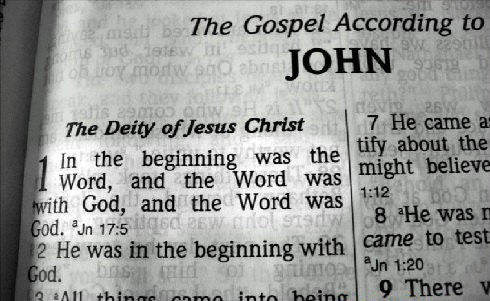
— John 1:1 In the beginning was the Word, and the Word was with God and the Word was God.
— John 1:14  And the Word became flesh and dwelt among us and we saw His glory, glory as of the only begotten from the Father, full of grace and truth.
— John 5:39-40  You study the scriptures diligently because you think that in them you have eternal life. These are the very scriptures that testify about me, yet you refuse to come to me to have life.

The Word is not just written words in a book. The Word mentioned here is Jesus, the Living Word.

So many of us focus on which version of the bible is the true word of God. These verses state that the true Word is alive and living within us. The true Word is not a book at all.

If we were never again able to read from the bible or hear it read to us, we still have the Living Word of God within us to teach us and guide us.

It is good to read our bibles no matter what translation we prefer because the written word is given by inspiration of God and is profitable for doctrine, for reproof, for correction, for instruction in righteousness. Yet the bible is not God and is not part of the trinity of God. It is not Father, Son and Holy Bible.

We need to remember that the bible was written by humans who were inspired to tell how they related to God, how they understood God, how they interacted with God and what they thought God was saying to them.  The true Word of God is Jesus who lives within each of us through the Holy Spirit.

We can read the words on the pages of the bible and learn about grace and the love of God, but it is the Living Word within us by the Holy Spirit that brings to life and power the words we read. Jesus, who is the living, inerrant Word of God has final authority over any written words which we call the bible.

Read Full Post »

By Mike Edwards

There are many things we can’t prove. We can’t prove God exist; we can’t prove God doesn’t exist. We certainly can’t prove that God inspired every word of the Bible, controlling the writers’ thoughts to understand God perfectly. The writers may have been on the same spiritual journey we all are on – discovering what God is really like. Not questioning or reading a Book with an open mind has led to sick and weak minds carrying out immoral acts contrary to common moral sense.

Did God really always inspire what the writers claimed about God?

  • God supposedly would send wild animals to kill the children of the disobedient (Lev. 26:22)
  • God supposedly orders the murder of women, children, infants, and animals in war (I Sam. 15:3)
  • God supposedly ordered killing boys and non-virgin women but sparing virgins for the warriors (Num. 31:18)
  • God supposedly approved rebellious children put to death (Lev. .20:9)
  • God supposedly approves a wife’s hand being cut off when grabbing another man’s genitals (Deut. 25:12)
  • God supposedly insisted on animal sacrifices but later OT writers say God prefers contrite hearts over animal sacrifices (Ps. 51:16-17, i.e. Jer. 7:22, Micah 6:6)

Writers/editors of the Bible didn’t intentionally lie about God but were honest about their understandings of God. We simply don’t possess in other documents the Israelites’ beginnings with a God different from the other gods at that time. The Bible is the main document of Jesus’ life, death, and resurrection. God didn’t necessarily intend for recordings to not be questioned. These stories are written down for our reading, reflecting, and discovering what God is truly like.

Why it matters how you read the Bible. 

There are contrary biblical interpretations for most major issues. Scholars rightly debate if the Bible condemns monogamous same-sex relationships. Families are destroyed because parents out of devotion to God condemn their child for feelings they can no more control toward those of the same sex than straights can control toward the opposite sex. You have every right to doubt a loving God tortures anyone forever, which serves no lasting purpose, when humans wouldn’t even create a place such as Hell for their worst enemies.

Read the Bible with a questioning and open spirit.  

Those not growing up in church don’t understand all the fuss. Who thinks literature subject to interpretation should be read so dogmatically? We must question interpretations about a loving God that make no moral sense. It only makes intuitive sense that a Creator surely love us and others how we were seemingly created to love others. Even extremists want to be treated with loving kindness. We may not always know what perfect love is, but surely God’s love and perfect human love are the same.

Read Full Post »

« Newer Posts - Older Posts »