Feeds:
Posts
Comments

Posts Tagged ‘Bible’

By Mike Edwards

One would think Christians wouldn’t be judgmental. After all, we are guided by the principle of loving others as we want to be loved. Jesus certainly didn’t seem judgmental. He hung out with all kinds of people who didn’t necessarily have His same beliefs. Jesus did get His dander up with religious folks because they were misrepresenting God. We may be doing God a favor if Christians questioned their own leadership and stop trying to force their beliefs on the rest of the world. I am not suggesting we shouldn’t stand up when children are abused, women are violated. That requires judging. It should though not be in our nature to unload on others because their beliefs aren’t ours.

Spoiler Alert – One’s view of the Bible may be one main reason Christians are so judgmental.

Some Christians may be judgmental as a defense mechanism.

Christians are only human. I can’t quite explain it but it does seem those most judgmental may be a way to prevent looking in the mirror and judging themselves for unloving behaviors. I suppose some play offense to avoid playing defense and looking inwardly. The is something one can only answer for themselves if they noticed being so judgmental despite being a God-follower.

Are Christians judgmental because of examples of Leadership?  

Catholics, Methodists, Etc. establish creeds that are implied one should believe in. Try challenging the doctrines and see where that gets you! One creed may be Jesus came to forgive our sins. Theologians don’t agree if the Cross was to influence a lifestyle toward love or pay a price for God’s sake. So, God never did or couldn’t forgive sins until Jesus died? If God was so concerned about beliefs such as the Trinity, Angels, the Bible, Judgment, the Virgin Mary, wouldn’t there be more agreement what all these creeds. If Religions only had the Creed of Love, maybe Christians would be more united and less judgmental.

It gets worse how Christians judge!

Doctrine differences are one thing because only those who grew up in church care about those matters. Christians though condemn same-sex relationships, women are denied equal or authoritative roles as men, and it is said only Christians can go to heaven so all other religions can go to Hell. Good people often only condemn same-sex relationships because they are convinced a Book inspired by God condemns them. Biblical scholars who respect Scriptures don’t all agree the Bible condemns same-sex relationships. Shouldn’t we take the less judgmental stance toward others since we could be wrong?

Would you naturally assume if not for a Book:

God condemns gays

God prohibits women from serving as pastors or priests

God encourages wives being submissive to husbands differently than husbands to their wives

God judges based on religion when the religion the majority adhere to depends where born

Every view above is debated among biblical scholars. We can listen to what God’s Spirit is telling us also or at least have an open-discussion rather than hide behind a Book like terrorists do! I am convinced this would lead to Christians being less judging.

Read Full Post »

By Mike Edwards

It doesn’t matter if you believe the biblical writers/editors didn’t always understood God perfectly, or whether you believe God inspired every word of the Bible. Literature requires interpretation of a writer’s meaning and application to personal circumstances. The greatest sin among Bible people may be the sin of biblical certainty.  Scholars who respect the authority of Scriptures don’t agree on major concerns. Some believe the Bible teaches God elects certain people to go to heaven while damning others; others believe the Bible teaches God eventually saves all to enter Heaven and the traditional understanding of Hell isn’t biblical.

Does the Bible really declare some are in danger of going to a fiery pit such as Hell after death?

If such a place exists why did Paul, who wrote the majority of the New Testament, never once warn this dire fate? Why didn’t Noah who had to warn of tragic consequences for evil inform people at least once of the danger of Hell? It is questioned by scholars whether there is any Hebrew or Greek word translated as Hell that pictures what our word Hell suggests.

Does the Bible really teach that God proclaims leadership roles are based on gender than gifts?

When the Bible says: “Women should remain silent in the churches” (I Cor. 14:34), maybe the writer would encourage men to be silent in certain situations for the sake of peace. Why did the Apostle Paul say practically in the same breath that women could prophesy just like men during worship (I Cor. 11:5)? Is prophecy not speaking?

Does the Bible really teach God condemns monogamous gay relationships?

It is not natural to think a loving God condemns gays who can no more choose who they have feelings for then straights can. Scholars who respect the authority of Scriptures don’t agree God condemns same-sex relationships which don’t violate anyone’s rights. It doesn’t matter if it doesn’t feel natural to you. You aren’t gay! How we think we ought to treat gays is how God thinks about gays. Take the more loving road? Don’t push people away from God when you could be wrong.

Does the Bible really say that God is coming again to destroy the word in the future?

Why did Jesus tell his audience that supposed predictions about the world ending would happen in their lifetime: “Truly I tell you, this generation will certainly not pass way until all these things have happened” (Mt. 24:34)?” If Jesus is coming again down from the sky why did the disciples ask Jesus: “what will be the sign of your coming and of the end of the age” (Mt. 24:3)? Only non-visible, spiritual comings are missed.

Does the Bible really teach God only lets certain people get into Heaven?

Why does the Bible say: “For as in Adam all died, so in Christ all will be made alive” (I Cor. 15:22)? That would only exclude those who have never died, but last chance I checked all have or will die. The Bible clearly teaches forgiveness is unlimited (i.e. Mt. 18:21-22), but is that not true of God? Might there be second chances after death where one wishes to spend eternity?

I can’t claim because the Bible says so but personally, I am convinced Hell doesn’t exist; God wants women to pursue any role their gifts allow; God doesn’t condemn gays; God isn’t going to destroy the world; and we don’t know if there may be second chances after death when one meets their Creator and all misconceptions are done away with.

When our views of God are stumbling blocks for others, let’s admit we could be wrong. Let God work in the hearts of individuals to reveal what God is really like!

Read Full Post »

By Mike Edwards

Biblical interpreters will often play the mystery card when their interpretations suggest God’s morals are not the same as human morals. They understand some explanation is required when their views of God are incompatible with most people’s idea of a loving God. Since they believe God gives us our mind and conscience, some rationalization is needed. It is possible our interpretation is wrong, or we can’t know if biblical authors always understood God perfectly.

Even the Bible doesn’t declare God a mystery.

The only place we might get the notion that a relational Creator is mysterious is from a Book. We can’t have the intelligence and knowledge of a God who can be in all places at all time. We may not be able to comprehend all plausible moral reasons why suffering and a good God can co-exist. That doesn’t make God a mystery. Isaiah 55:8-9 is the most common passage to justify that God sometimes is a mystery: “For my thoughts are not your thoughts, neither are your ways my ways…” This passage isn’t suggesting we cannot understand God. God exhorts us to forsake our wicked ways and thoughts (v.7) and turn to God’s higher, righteous ways and thoughts (vs. 8-9).

If God is mysterious, why does the Bible ask us to be like God?  

Jesus, who represented God here on earth, assumed we could easily understand God: “Be perfect, therefore as your heavenly Parent is perfect” (Mt. 5:48). We may not always know what perfect love entails, but knowing the difference from evil and good isn’t rocket science. Even if you don’t read the Bible, one would assume a good God would exhort us to hate evil. If God is evil sometimes humanly speaking, are we supposed to hate God?

Why would a relational God claim to be mysterious?  

By declaring God ways are mysterious at times, how can we have a relationship with a God we can’t understand with the brain God supposedly gave us? When a human or spiritual parent declares “don’t try to understand me fully,” this implies we can’t have a genuine relationship. Claiming God is a mystery doesn’t invite investigation by those who may be seeking God for the first time. We aren’t really doing God a favor by declaring God a mystery because we can’t explain our theology.

God’s will for our life isn’t even a mystery.

God respects freedom too much to predetermine our future. We are free to dream and pursue the desires of our heart. Choose the wisest path based on past experiences, current circumstances, and future aspirations. A loving parent doesn’t control their child’s future profession. Loving parents want their children to pursue their passions with the gifts they possess. God’s moral ways are clearly not mysterious or hidden. What is God’s moral will? Do all the good we can, in all the places we can, to all the people we can, as long as we can.


Read Full Post »

by Jim Gordon

When we talk about the Word of God we usually think of the Bible. If someone says the Bible is just a book we get all offended and ready to fight. We have been taught that the Bible is the inerrant word of God and he speaks to us from his word.

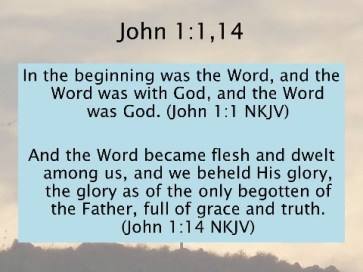
Actually, I disagree with that thought. Based on John 1:1 the Word of God is Jesus. He is the true, living Word of God. Jesus became flesh and dwelt among us. He is the perfect, inerrant and living Word. It is he who speaks to us by the Holy Spirit. It can be through the Bible, but it can be a number of other ways as well.

So often we Christians focus so much on the Bible that we forget we have the living Word of God inside us. The Holy Spirit, who is God in spirit form just as Jesus was God in human form, lives within us. This is a fact that is very seldom emphasized in churches today. We acknowledge that the Spirit is within us, but we would rather focus on a tangible bible and what the pastor tells us it says rather than put total dependency on the Spirit.

John1-1

There is certainly nothing wrong with reading the Bible. It is God inspired yet not written by God or dictated by God. Through it we can learn from the past, we see the story of redemption throughout, we come to know about the unconditional love of God. In it we find what God is really like through the life of Christ. We learn what pleases God and we come to know that it is by grace that we have fellowship with him.

The Bible teaches us the Law and how we humans are completely unable to live a life pleasing to God through the law. The law was our tutor to show us that we need God’s grace through Christ.

The Bible teaches us of the freedom we now have in Christ. It teaches of the unconditional love God has for each of us. I personally do not believe God gave men the exact words to write, but he did inspire them. Just as someone may inspire me to write a book, it would still be my words and my experiences.

The books that make up the Bible are writings by men and women who wrote about their idea of God, their experiences with God and their love and fear of God. It can be used for instruction, inspiration, guidance, teaching and correction. Yet without the guidance and leading of the Holy Spirit from within us the Bible is just a book of thoughts and ideas of humans about God.

Another issue with the written word is how we like to fight and argue over which version of the Bible is the true word of God. We need to remember that all versions of the Bible are only man-made interpretations of the words people wrote about God many years ago.

I feel sometimes we have made the Bible out to be part of the Godhead. It is not Father, Son and Holy Bible. We need to focus on Jesus. He said you search the scriptures because you think that in them you have eternal life, it is these that testify about Me.

Only Jesus is the true and living Word of God. When we look to Jesus and listen for the voice and leading of the Holy Spirit within us, we will then come to understand truth from the living Word of God.

Read Full Post »

By Mike Edwards

I admit choosing a provocative title. I could have said God is like the perfect human being. What is my point? I am not suggesting any human being is God or that an invisible, inaudible God is human. I am simply trying to find a way to write and encourage discussion of what God is like. We can’t claim to know exactly what God is like, but what ideas may be closer to the truth? 

It matters what we think God is like.

Our understandings about God shape our attitudes toward God. Our relationship with God cannot exceed our views of God. The more you respect your earthly parents, the closer you are to them. Some are atheists, not because they believe God can’t exist, but because what they imagine a loving God should be like isn’t what God-followers claim.

We can’t be positive what God is really like of course.  

I can’t even prove God really exist. I just think that millions if not billions are not insane for knowing or at least hoping there is a Creator who can provide worth, perspective, meaning, and hope of life after death.  We need a way to talk about what God is really like. It is often claimed we know what God is like – just read the Bible!

The Bible cannot be the definitive way of knowing what God is like.

The Bible is ancient literature that requires interpretation. Laypeople, much less biblical scholars who respect Scriptures as authoritative, don’t agree what the same passages mean. Some claim the Bible condemns homosexuality; other deny such claims. How do we decide which interpretation may be the best interpretation of God’s true nature? The majority born never had a Bible so a Creator may have thought of others ways to communicate what they are really like. 

Doesn’t God communicate through our moral intuitions?

A universal, inborn desire to treat others like we want to be treated could suggest how a Creator communicates what is good. When we read ancient literature such as the Bible and two plausible interpretations exist, we can’t avoid using our moral brains.  We are trying to determine what a perfect, loving God is like. An immoral God isn’t worth believing in. Even the Bible assumes we can know what perfect love is, because the Bible tells us to be perfect like God (Mt. 5:48). God’s love surely is what we imagine perfect human love is like.

Even those who play the mystery card assume perfect godly and human morality are the same.

Many claim God is a mystery sometimes because their interpretation of Scriptures suggest God appears evil from a human perspective. Such interpreters are using their moral intuitions and assuming God and human love are the same. It is certain that we don’t always know what perfect love is, but the mystery card short circuits discussions about God’s true character.

Doesn’t the Newer Testament through the eyes of Jesus give us the correct view of God?

Many theologians rightly question if Old Testament writers always had a complete understanding of God. In OT times it was sacrilegious to not speak of God as being all-powerful and controlling even through violence. This may explain violent warfare actions in God’s name. It is suggested Jesus, who claimed to be God in the flesh, had a more complete understanding of what God is like. We still though have the challenge of literature requiring interpretation. Turning the other check is interpreted to claim Jesus never advocated violence, but a possible literal translation of Mt. 5:39 is “do not resist by evil means.” Would Jesus agree violence is never desired but may be necessary sometimes? We can never claim certainty “because the Bible or Jesus says so.”

Lack of certainty about God does not mean anything goes?  

We don’t have to make laws against murder. Criminals don’t deny their actions are wrong; they deny they committed such a crime. It is almost universally accepted that it is morally wrong to kill someone out of revenge or for selfish reasons. It is universally accepted that it is morally wrong to behead people for their beliefs unless you are a terrorist. Claiming the Bible can’t be use to definitively tell us what God is like protects from those claiming their interpretation is definitive while demonizing views to the contrary.

God is like the perfect human being!

We can’t know what God is exactly like but we can imagine what God is like by discussing what human perfection is. Those who argue humans are created in the image of God usually accept that God created us to know and hate evil. If God sometimes is evil according to one’s interpretation of the Bible, should we hate God sometimes? We must question not rationalize such interpretations. A God who seeks a relationship is surely more understandable than mysterious. Don’t we get closer to understanding what Godly love is by accepting that loving others like we want to be loved is the same as how God loves us and others.

Read Full Post »

Mike Edwards

I have written ad nauseum lately on Rethinking the Bible. I recently wrote on objections if the Bible is fallible, but writers are always after a perfect document on a subject considered critical. Statements about God according to the Bible may be one main reason spiritually-open people don’t pursue God further. If the traditional understanding of Hell isn’t true according to the Bible, that is a big deal! When argued the writers in the Bible didn’t always understand thus portray God perfectly, questions are raised such as how can we know God if not through the Bible.

We have every right to question if God inspired all of the Bible.

I Samuel 15:3 says God told Israel: “Now go, attack the Amalekites… put to death men and women, children and infants, cattle and sheep, camels and donkeys.” There are hundreds of passages in the Old Testament advocating violence in God’s name. Would a good God really approve of a wife having her hand cut off when grabbing another’s man genitals protecting her husband (Deut. 25:11-12)? It is only rational to ask if a good God would inspire such thoughts.

It is circular logic to suggest the Bible is infallible or inspired because biblical writers make such a claim. Many do not accept the Quran being infallible because it claims to be. Biblical writers weren’t saying they always heard an audible voice when penning “God said.” God’s freedom-giving nature doesn’t suggest God performed a lobotomy on biblical writers’ impressions of God. Keep in mind literature always requires interpretation and scholars and laypeople disagree on meaning of the same passages. The reality of disagreement makes certainty an impossibility whether you consider all of the Bible inspired or not.

It is said we can’t know God if not through the Bible.

Did billions born into this world who never had a Bible or heard of Jesus know nothing about their Creator? Even the Bible claims we best know God through God’s spirit than the written word. Universal moral outrage hints of a Creator’s influence through our moral intuitions. Most oppose murder, abuse, thievery, etc. whether believing in God or not. We just know we ought to treat others like we want to be treated. We can know God if truly loving!

It is said God would not allow so much uncertainty because of the Bible?  

Jesus when leaving this earth said His Spirit, not some Book, would guide us in truth (Jn. 14:16-17; 16:13). Jesus didn’t seem worried that Truth always requires discernment. Supposed certainty in God’s name, though different interpretations exist, has been the main reason some condemn gays or oppose women entering the priesthood. Certainty has led to slavery, killing infidels, and other atrocities in God’s name. Open-minded uncertainty doesn’t have to lead to chaos but new understandings and loving solutions.

God supposedly spoke directly to Moses (Ex. 20) to keep the Sabbath as one of the Ten Commandments, but such communication was taken to mean not helping an injured soul on the Sabbath. God’s overpowering presence in our lives may only lead to consuming guilt or fearful obligations to obey. There may be humane justifications for God not revealing themselves more openly. Learning, reflecting, and freely choosing convictions over time, as opposed to being told what to do, may more lead to life-changing choices.

It is said we are worse off with a fallible than infallible Book.

Those not growing up in church don’t understand all the fuse. Who thinks literature subject to interpretation should be read so dogmatically? When one fails to acknowledge their interpretation could be wrong, this can lead to forcing personal convictions on others in God’s name. A fallible Book can lead to listening to different opinions as we continually evaluate the most loving approach. God doesn’t get enough credit for communicating through our moral senses how we ought to treat others.

It is said we have no right to question an almighty God.

Many reject God because of what a supposed infallible Bible says about God. An infallible or inspired view of Scriptures has led down the slippery slope of assuming interpretations are inspired. The “mystery card” is often played because common moral sense can’t understand how a good God would be a part of atrocities in the Bible. God didn’t reprimand Job for questioning God. Why seek to understand God if God is declared to be unintelligible or a mystery? God  in the Book of Job seems to simply defend that God is not unjust or uncaring just because God doesn’t constantly control undeserved evil or suffering in a free world. It’s complicated!

It is said why read the Bible if the writers misunderstood God.

The Bible records beginnings with God culminating with the life of Jesus that we don’t possess in any other documents. Don’t read the Bible if it discourages you from loving others like you want to loved. We may be better off without the Bible if a Book replaces our relationship with God and common moral sense. Read the Bible reflectively with an open-mind motivated by love. God has drawn billions to do good and shun evil when talking about God.

Keep in mind most biblical scholars accept that the Gospels – stories about Jesus – were written within 30-50 years of Jesus’ life. Legends do not develop within such a short time, as eyewitnesses can dispute claims made. Historical research can only suggest probabilities not certainties, but the Bible’s historical reliability far surpasses any other ancient literatures. When making up stuff you don’t report your leader was crucified, that your hero was rejected by their family, and followers doubted Jesus’ claims including being God in flesh – unless you are reporting the facts. Jesus simply was not the stuff legends were made up.  See here

Read the Bible with an open-mind inspired by love. 

Don’t check your moral conscience at the door as you consider what a loving God is really like. Unquestioning obedience has led to justifying slavery, killing infidels, condemning gays, and other atrocities in the name of God. God didn’t necessarily intend the Bible to be read with blind obedience. Jesus didn’t always answer questions directly but spoke about our hearts. Can you imagine a world where all looked out for the interests of others and not just themselves when dealing with difficulties?

For further elaboration seehttp://what-god-may-really-be-like.com/rethinking-the-bible/


Read Full Post »

By Mike Edwards

“The unquestioned assumption that the Bible is, and has to be inerrant, or else it cannot be the word of God, is the number one assumption/expectation that appears in deconversion narratives.”

John Marriott – A Recipe for Disaster: Four Ways Churches and Parents Prepare Individuals to Lose Their Faith and How They Can Instill a Faith That Endures

Most people I know don’t tune out God or leave from faith in God as an excuse to lead a hell-bent life. I am not sure why some are more or less inclined to believe and seek a relationship with a Creator. Either belief requires faith. Many may desire God be more a part of their life but are turned away because what they imagine God should be like isn’t what others claim.

Most get their understanding about God from the Bible.  

Church-goers gain most of their understanding of God from the Bible. Many non-going church people are impacted by what others claim about God according to the Bible. I wrote here that the main passages used to condemn gays in God’s name are highly debatable. Try telling people with a straight face a perfect moral God tortures forever after death for beliefs held while a short time here on earth. What many assume of a good God doesn’t match what the Bible says!

The problem is how the Bible is viewed.

The Bible has been used to misled many about God, but we must admit the Bible has inspired many. Jesus, who represented God, set a powerful example by how He treated others. Yet, a close reading of the Bible notices hundreds of passages advocating violence in God’s name. It is normal to question an interpretation that makes God appear immoral from a human perspective. It is normal to question if the writers always fully understood God. It is not God’s nature to controlled anyone’s thoughts. Writers could be influenced by culture norms where sacrilegious to not speak of God as all-controlling than relational.

When insisting all of the Bible is inspired or approved by God, it forces one to reject the Bible if wrong on any issue. Many insist the Bible can’t support evolution. These same people also insist the Bible is without error. If one believes evolution is a possibility, this forces them to reject the Bible and often God goes with that. Maybe Genesis isn’t meant to be a historical or scientific rendering of creation but written to convey there was a Creator.

It is suggested we should look to Jesus as the final authority when confused.

There are still interpretation issues even if we insist Jesus be the final voice in what God is truly like. Those who respect Scriptures don’t always agree what Jesus thought. Turning the other check is interpreted to claim Jesus never advocated violence, but the possible literal translation of Mt. 5:39 is “do not resist by evil means.” Would Jesus agree violence is never desired but may be necessary sometimes? The NT is no different than reading the OT since we could be wrong what Jesus would do.

How can we read and represent the Bible?

The Bible can be viewed as a recording of experiences with God for reflection by the readers. God didn’t necessarily perform a lobotomy to control the thoughts and words of the writers. The Bible or any literature written thousands of years ago isn’t meant to be used as a rules or answers book. Jesus didn’t always answer questions directly because circumstances vary and the issue is our heart in solving problems. Imagine a world where all looked out for the interests of others and not just themselves during difficult times. Read the Bible with an open-mind motivated by love rather than with blind obedience.  Use common moral sense as you consider what a loving God is really like.

A part of the solution is to stop the sin of certainty!

There is so much civil unrest because both sides demonize one another by insisting they are right and the other side is wrong. Can you imagine if couples acted this way when disagreeing? Religious leaders seem hell-bent in telling people what must be believed about God, often according to their understanding and interpretation of the Bible. I am convinced the Bible or any literature wasn’t meant to be used as a question and answer book. The Bible read reflectively allows God’s spirit to speak to individuals in making unselfish decisions for a better world. Don’t push people away from God because of the Bible.

Read Full Post »


By Mike Edwards

I hope this brief review encourages you to read Karen Keen’s valuable insights for how we must treat same-sex relationships regardless if you a Bible person or not. I am convinced you will not find a more distinct, readable, non-judgmental, insightful book on same-sex relationships and the Bible. Keen doesn’t simply offer her interpretation of debatable biblical passages; her insights take the discussion to another level. Scholars who respect Scriptures don’t agree so interpretations only of difficult passages don’t move us forward.

Science isn’t conclusive why we have desires for the same or opposite sex. Sexual choices aren’t always the result of some trauma or rebellion in our lives. Keen points us to resources for such considerations in Chapter 7. Why would a loving God condemn gays if they can no more choose who they love than straights can? Please read this book and consider if the biblical writers had in mind loving monogamous same-sex relationships. If you believe same-sex relationships are condemned in the Bible, such relationships seem clearly motivated by lust not love. If this is even a remote interpretative possibility, we mustn’t dogmatically say the Bible and thus God condemns loving, same-sex relationships.

No one can accuse Keen of not having a high view of the Bible. Many God-folks only condemn same-sex relationships because of the Bible. Intuitively, that may not be their moral inclination but they do so out of supposed devotion to God and the Bible. If Keen’s below insights are a possibility after reading her book, we must seriously consider that the Bible doesn’t condemn faithful, same-sex relationships:

Chapter 3 challenges us to seriously consider if biblical passages typically used to clobber same-sex relationships condemn same-sex relationships because of unrestrained lust rather than faithful love. We must consider if biblical writers had in mind certain procreation expectations and gender norms that no longer exist today. Many passages are assumed to condemn same-sex relationship because of the creation account and the differentiation of the sexes, but it is also possible the context of many passages emphasize the importance of faithfulness not gender.

Chapter 4 and 5 offer convincing arguments that “God’s law is made for humankind, not humankind for God’s law (Mk. 2:27)” [p.65]. Laws are not written just as rules to keep blindly but to guide us in loving others. Keen provides examples where even Old Testament writers updated previous laws given by God to make relevant to their circumstances.  In Chapter 5 we see where Jesus puts love in action over law. Jesus didn’t necessarily dismiss the Sabbath (Lk. 4:16), but Jesus did teach more important than keeping the Sabbath is helping someone in need. If our actions don’t convey loving gays, we aren’t keeping God’s law.

Chapter 6 challenges readers it is not enough to consider if the Bible doesn’t condemn same-sex faithful relationships, but whether it doesn’t condemn same-sex marriages as well. Who are we to deny the hope and joys of marriage if God doesn’t? The Apostle Paul who wrote most of the New Testament doesn’t encourage celibate life as some holy grail. It is hard to deny most of us wish to enjoy the pleasure of marital sex and have a hard time being faithful otherwise. If celibacy and singlehood isn’t a command for opposite-sex relationships, why do we think God condemns same-sex marriages if the Bible doesn’t condemn or consider same-sex, faithful relationships?

I will end with Karen Keen’s hope and mine: “I firmly believe it is possible to imagine a new response to the gay community – and do so with faithfulness to God’s Word.” (114)


Read Full Post »

by Rocky Glenn

Recorded by Crowder on the deluxe edition of his 2016 album American Prodigal, there is perhaps no greater song to describe a recovering churchboy than that penned by Sean McConnell in 2010, Praise The Lord. Although McConnell himself released the tune himself in 2014 as part of his five tune EP The B Side Sessions, I personally did not discover it until Crowder’s recording. Intrigued by the album title, I streamed American Prodigal upon its release and was immediately given pause as Praise The Lord hit the playlist and streamed through my earbuds . . . someone has put into words what I have been feeling and learning:

You’re not who I thought You were – Praise the Lord

I could not reach the repeat button quick enough after the song ended and since the first listen have replayed both Crowder’s cover and McConnell’s original recording more times than could be counted. I’ve shared the song with anyone curious enough to listen and sat behind the living room piano on numerous occasions making McConnell’s confession my own. Churchboy life is summed up perfectly with each of line of the first verse:

I used to shake You like an 8-ball

The magic 8 ball is a fortune telling toy made popular in the 1950’s. Users would ask a question and then shake the toy waiting for one of twenty possible answers to appear on the blue triangle-faced, twenty-sided die contained in the hazy liquid inside the sphere hoping the response would be favorable but expecting the response to be unfavorable. The game sums up my prayer life as a churchboy. I would approach God with my requests hoping things would work out in the way I saw best or how I wished all the while believing the nagging thoughts in the back of my mind telling me I wouldn’t truly receive what I was asking and to live a truly holy life meant ultimately accepting a life filled with unhappiness.

I used to shoot You like a gun

Like a gunslinger carrying a six-shooter on his hip, I was taught to always be ready to provide chapter and verse for any answer provided in order to win an argument, after all Paul told Timothy to be “instant in season and out of season”. The silver bullet kept in reserve to emerge victorious from any moral, ethical, or theological shootout was always, “Because the Bible says so!” No cowboy goes into a duel more worried about his opponent’s outcome than his own and churchboys don’t either. The important thing is to win the argument regardless of what wounds may be inflicted.

I used to hold You like a hammer try to nail down everyone

“Do you believe in once saved always saved? . . . Do you use the King James Version? . . . Is your worship service contemporary, traditional, or liturgical . . . Is baptism by submersion or sprinkling? . . . Do you believe in speaking in tongues? . . . Is communion performed with grape juice or wine? . . . Are you pre-tribulation, mid-tribulation, or post-tribulation?” . . . These questions represent just a small fraction of the issues those who call ourselves Christians have allowed to divide us over the years. To a churchboy it’s important to know exactly where others stand on these matters to determine if they are “rightly dividing the word of truth” and if we can truly walk together in unity with the parties in question. Of course, regardless of the response to any of those questions or the position on any of these issues, the gun-slinging churchboy always has chapter and verse ready to support his stance. This carpenter characteristic of the churchboy, much like the gunslinger, is more concerned with knowing where others stand rather than taking time to understand others.

I used to keep You in a steeple

Psalm 122 begins with David proclaiming, “I was glad when they said to me Let us go into the house of the Lord.” Thanks to the death and resurrection of Jesus, the house of the Lord is anywhere a believer of Jesus physically resides at any given moment. Paul tells us in 1 Corinthians 3:16 we are the temple of God and God resides in us. How many times have we referred to a building as the house of Lord? How about the number of times we have been greeted from a stage or podium with the words, “Welcome into the presence of the Lord,” or “Let’s invite his presence here”? We sing numerous songs asking for God to come without pausing to take a moment to reflect and realize we are asking God to do what He has already done. He exists in us, not in a building. His presence is not dependent upon the intensity of our singing, pleading, praying, or even on our invitation. He is where we are.

Used to bind You in a Book

Whether dueling as a gunslinger or wielding a hammer as carpenter, a churchboy is powerless without the Bible. We are taught the importance and value of the book at a young age, commonly in the form of song:

The B-I-B-L-E — Yes, that’s the book for me
I stand alone on the Word of God — The B-I-B-L-E

The Bible has been a part of my life since I was able to read. Although the language and translation of what I read has changed over the years, and I now read it more electronically than in a physical book, the Bible continues to be a part of my life. However, my view of what the Bible actually is has changed. Despite singing the children’s song above before I was able to read or even write the words to it, I believe it plants a false theology in our heads. The Bible is not the Word of God . . . Jesus is. John tells us “In the beginning was the Word, and the Word was with God, and the Word was God. The same was in the beginning with God . . .And the Word was made flesh, and dwelt among us full of grace and truth.” There’s much more to expound on regarding this topic than can be tied up in just a few short sentences here, but based on these words of John, I will simply say the Bible was not with God in the beginning, the Bible was not (and is not) God, and the Bible certainly didn’t sprout legs and walk among us. The Bible is not God’s rule book and it’s not Basic Instruction Before Leaving Earth. It is a collection of books depicting the loving heart of a father for his children and the longing of a creator to be with his creation. Much like the grace and truth in which John stated Jesus dwelt among us, the love of God which Jesus came to reveal cannot be contained in a book.

I used to take You like prescription without knowing what I took

Churchboys follow two sets of rules: those written as the doctrines, creeds, and by-laws of whatever denomination or label with which we identify and those unwritten, yet implied and expected with knowing glances and nods of approval and disapproval. Like a strict regimen of taking two pills three times a day, we follow the requirements of daily Bible reading, quiet prayer time, weekly church attendance, compulsory giving, and loyal devotion to church leaders without ever grasping the realness and true heart of who we are really reading about, who we are actually praying to, the purpose or intention of traveling to building on a weekly basis, if ten percent is really required, or why we’re depending upon a man or men to lead us to God. Churchboys do what they’re told without questioning because it’s simply the way things have always been done.

After these lines, the refrain of the song makes its debut in the form of a rebuttal disputing the former ideas with conclusions drawn from a journey of recovering from life as a churchboy.

Now I just don’t buy it anymore

No, I’ve tried and I’ve tried to know everything for sure

But I find I know less as I come to know You more

You’re not who I thought You were – Praise the Lord

In one of his first public performances of the song, McConnell introduced the song with the following words, “The longer I live, the more I walk down the road I’m on, the more my concept of love and mercy and forgiveness gets bigger as well as my concept of God and how he interacts with us. This is a song about finally deciding what I believe and trying to walk through life acting like I believe it.” In the second verse of the song, he paints a portrait of new life discovered when churchboy ideas are left behind.

Your love’s an ocean, not a river – A symphony, not just a song

Imagine spending your life living next to a river. Its ebbs and flows are as much part of your life as inhaling and exhaling. You’ve studied how it rises and falls and know every intricacy of its behavior. The river is your life and it’s all you’ve ever known. Then one day a friend takes you on a journey to the ocean. How puny your river is now compared to the vast expanse of water before you of which you can no longer see the other shore as you could with your river. Such is the love of God. Paul’s prayer for the church at Ephesus was they would “have the power to understand, as all God’s people should, how wide, how long, how high, and how deep his love is.” His wish for them continued with, “May you experience the love of Christ,” although he admitted immediately “it is too great to understand fully” much like a symphony is filled with numerous melodies, counter melodies, and harmonies throughout its movements which are experienced and discovered new with repeated listening as opposed to a single song. The love of God grows richer and deeper as you experience it and live in it. Like the ocean resting within its shores and the symphony longing to be heard, God’s love is simply there patiently waiting to be received.

I don’t think everybody’s right, I just think most of us were wrong.

The journey of recovering from churchboy life begins with the often-painful realization you don’t know as much as you think you know. Emotions of hurt, anger, betrayal, and sorrow may set in as the realization dawns, but, like most highly emotional experiences, as you move further away from the onset of the awakening you are able to not only accept, but make peace with the idea as you stand on the edge of the aforementioned ocean and listen to the symphony of his love. In the words of author Anne Lamott, “The opposite of faith is not doubt, but certainty. Certainty is missing the point entirely. Faith includes noticing the mess, the emptiness and discomfort, and letting it be there until some light returns.”

I think that when we get to Heaven we’re gonna laugh when we can see how hard we try to make it and how easy it should be

Regardless which version of Praise The Lord I may be listening to, I cannot hear these lines without a slight smile appearing on my face. We’ve made the path to God and his love so difficult. We’ve added hoops to jump through, disciplines to follow, and requirements which must be met. Jesus simply said, “Come to me, all of you who are weary and carry heavy burdens, and I will give you rest. Take my yoke upon you. Let me teach you, because I am humble and gentle at heart, and you will find rest for your souls. For my yoke is easy to bear, and the burden I give you is light.” The way to God is simply believing in Jesus and accepting his love. Nothing else is required, not now, not ever!

McConnell concludes the lyrics of the song with three lines to form the bridge before echoing the refrain as the song ends. He uses the first two lines to remind us of the eternal truths: providence is endless, and mercy is a mystery. God’s love and care for us is eternal and will never expire and his mercy will always be a mystery to our finite human minds as simply can’t understand why or how his love is offered so freely. Churchboys live the way they do without realizing how freely God’s love and mercy are offered. It’s a life lived in fear of losing what’s already been given because they can’t see it’s already there.

I pray you take time today to experience the power of this song. The song plays between five and six minutes and I encourage you to find yourself a quiet place where you can be alone and simply close your eyes to listen and let the confessions and cries of a fellow journeyer resound within your heart. As a final encouragement and invitation for you to step out and experience the love of the father and to truly see God is not who you really think He is, I leave you with the lyrics of the third line McConnell penned for the bridge:

Fear is no good reason to believe in anything

Rocky

More posts in the Soundtrack of a Churchboy’s Recovery series:

Read Full Post »
By Mike Edwards

A God whose focus is saving people from the threat of burning forever after death is about fear not a relationship. Fear often leads to hiding stuff; a loving relationship leads to life changes. Adult children don’t respect and devout themselves to their parents’ guidance because they fear them. It may surprise many that the traditional understanding of Hell isn’t in the Bible. The Bible also doesn’t talk a lot either about Heaven as an escape from earth. What is God’s good news?

The Bible says nothing about the traditional understanding of the word Hell.

Humans wouldn’t even create a place to torture their enemies after death. The only place we would get such an irrational idea of a supposedly loving God is from a Book. Gehenna, the Greek word translated as Hell in the New Testament, was the name of a real valley nearby Jerusalem with a history of terrible slaughter.  Gehenna is best translated Gehenna. There is no word in Hebrew or Greek for “hell.” Jesus used Gehenna to illustrate that spiritual death is as tragic as physical death. The Apostle Paul who wrote most of the NT never refers to Hell. Noah, or any prophet in the OT, never warned of Hell as a consequence for behaviors here on earth.

If there is no Hell, was Jesus main message to get the hell away from earth to enter Heaven?

The word “heaven” appears the most in the Gospel of Matthew. The Kingdom of Heaven isn’t talking about going to a place after death. Jesus speaks of bringing heavenly love to earth – “on earth as in heaven.” Jesus said nothing about dropping to your knees to avoid Hell to go to Heaven after death. But, didn’t the Apostle Paul say “the wages of sin is death” (Rm. 6:23)? Paul is speaking of spiritual death because Paul is still alive though sin has put him to death (Rm. 7:11). Romans is Paul’s longest and most theological letter and when Paul mentions Heaven twice, he says nothing about Jesus dying so we can go to Heaven (Rm. 1:18, 10:6).

What does the Bible say God is saving us from?

When Jesus was asked by a religious expert how to have eternal life, He simply said to love God and your neighbor (Lk.10:25-37). Jesus’ focus wasn’t on quantity of life after death but about a life worth living here on earth. Jeremy Myers says it best that the Bible isn’t about escaping Hell but being delivered from consequences of sin: “When Scripture teaches about being saved from sin, it is not referring to escaping hell and going to heaven when we die, but to the deliverance from the devastating and destructive consequences of sin in this life.”

https://redeeminggod.com/confess-jesus-romans-10-9-10/

God has a dream! 

God hurts because we are hurting ourselves and those around us. On this day as we celebrate Martin Luther King’s life and message, God too seeks to convince us of the evil of bigotry. Jesus came to earth to convey God seeks to empower us to constantly shun evil and do good. Seek and experience God’s help in being more the person you know deep down is in your and others’ interest. Consider misbeliefs about God that hinder that pursuit. Share with others such a God when they inquire.

Read Full Post »

« Newer Posts - Older Posts »