Feeds:
Posts
Comments

Archive for the ‘Acceptance of Others’ Category

By Mike Edwards

I swear this is the last time I will write on this subject until next time. There is repetition in my writing because I am always trying to answer the question better.  I named my blog What God May Really Be Like  in search of answers to this question. I am convinced many don’t pursue a relationship with God because of mistaken beliefs claimed about God.   

The truth is we can’t prove that God exist or doesn’t exist. Either belief takes faith. If a Creator does exist, most agree only a perfectly good or loving God is worth believing in. Such a statement is nonsensical if we are clueless about perfect love. A Creator surely loves in ways God’s creations sense they ought to love others.

God and perfect human love must be the same.

The Bible even suggests perfect human love and God’s love are the same: “Be perfect, therefore as your heavenly Parent is perfect” (Mt. 5:48). “Follow God’s example…” (Eph. 5:1). We may not always know what perfect love entails but at least we always know the question we ought to ask ourselves – am I loving others perfectly or am I loving others like our Creator loves. God is often claimed a mystery because one’s interpretation of Scriptures makes God seem evil. Such interpreters sense intuitively God and human love are the same.

Moral intuitions are a guide in what true love is.

It is plausible a universal compulsion to treat others like we want to be treated is how a Creator communicates how to treat others if in that person’s shoes. I don’t know any reasonable God or non-God believer that doesn’t respect the golden rule in relationships. Rational people don’t always agree what is our moral obligation concerning immigration, climate change, abortion, health care, taxes, or responding to evil dictators that murder their own people, but civil dialogue allows evaluating the challenges we encounter and finding what different views have in common.

But, what about the Bible?

We can’t prove if biblical writers were made to understand God perfectly as opposed to being on the same spiritual journey all are on – discovering what God is really like? Even if God inspired every word of the Bible, we can’t always know what the writers meant. Scholars disagree on the meaning of the same biblical passages concerning significant matters such as hell, women, gays, etc. Sick and weak minds carry out immoral acts contrary to common moral sense according to their interpretation. We must use our moral brains when reading ancient literature.

What About Jesus? 

It is argued, because of the challenges understanding God and violence in the Old Testament, that Jesus is the final word in understanding God. Jesus claimed to be God and His moral legacy seems undeniable. But God-followers don’t always agree what Jesus taught because of transmission, translation, and interpretation. People who love Jesus with all their heart don’t agree if Jesus’ teachings allow or rule out war when evil is rampant and victims can be saved. It is an illusion to claim we can know for certain what God would do because the Bible or Jesus says so.

What does God really think about women, gays, and non-Christians? 

Most intuitively question if a loving God really favors men over women in leadership roles which has encouraged centuries of domestic abuse and other atrocities women face. Most intuitively question if a loving God really condemn gays, who have to hide their sexuality because of bigotry and hostility, when gays can no more choose who attracted to than straights can.  Most intuitively question if God would torture infidels forever for beliefs while on earth only for a short time. Humans wouldn’t even create a place such as Hell for their worst enemies. Such beliefs may only be held because of one’s interpretation of a supposed inspired Book.

Uncertainty may be better than certainty.

Certainty has led to forcing “supposed” truths onto others. It is universally accepted that it is evil to kill or behead someone because of their beliefs, unless you are a terrorist, but it is not a universal belief that God condemns gays. God may not communicate more directly, because God’s awing or overpowering presence may only lead to fearful obligations to obey. The Bible was more direct communication, but it has been used to force beliefs on others despite subject to interpretation. The road traveled of learning and reflecting may best lead to lasting convictions. Different opinions communicated respectively can stand together as we continually evaluate the most loving.

It matters what we think God is like!

Our mental images of God shape our relationship with God and how followers might treat others. The more you respect your earthly parents or God, the closer you are to them. We can’t claim with certainty, which may not be a bad thing, what God would do in every situation but human perfection is our best starting point for discussion. We can’t know what God is exactly like, but continually evaluating the most loving approach openly with others is better than claiming certainty and being wrong. Imagine what God is like. You may be right!

Read Full Post »

by Jim Gordon

Did Jesus teach from the Old Covenant? Was not the birth of Christ the beginning of the New Covenant? When does the Old Covenant end and the New Covenant begin? We tend to forget that the Old Covenant does not end with Malachi and the New Covenant does not start with Matthew.

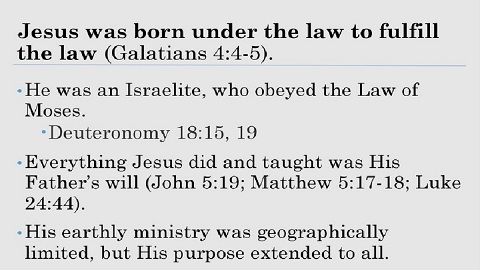
Even though Jesus came to fulfill the old agreement through grace, the first thirty-three years that Jesus walked the earth He lived under the Old Covenant. He was required to follow all its rules and regulations. He even taught from those rules, yet those rules are no longer intended for us. ‘But when the fullness of the time came, God sent forth His Son, born of a woman, born under the Law, so that He might redeem those who were under the Law, that we might receive the adoption as sons’. Galatians 4:4,5

The New Covenant began when Jesus was crucified. When He said ‘It is finished’ He was talking about the Law, the Old Covenant. Upon His resurrection the New Covenant began and we are no longer required to try and live under the Law and the way of the Old Covenant. It is finished!

The old agreement was made with the Jewish people because they desired to have a set of rules to show God they could please him by their obedience. It turned out to be a way God used to show them they were unable to live a perfect life on our own. Jesus came to show us the true love of the Father and to restore our fellowship with him. Jesus came and fulfilled the old agreement and upon his resurrection made a new agreement of grace. ‘Do not think that I came to abolish the Law or the Prophets; I did not come to abolish but to fulfill’. Matthew 5:17

Now that the Law has been fulfilled in Christ, we are no longer required to try to live by the ten commandments and the rules and regulations of the Old Covenant. So often we seem to forget that because of grace we now live by faith in Christ. We are no longer slaves to sin, we are no longer just a poor sinner saved by grace although we were sinners and we are saved by grace. We are now the righteousness of God through Christ. God no longer calls us slaves but He calls us Sons. We are seated in heavenly places in Christ. This is not to say that we should go out and do whatever we want, right or wrong. We do have freedom in Christ to do what we choose, but there are consequences if we choose things that God has warned us to stay away from.

Today we choose to live a life pleasing to God because of love, not due to obligation by a set of rules. Godly love is the fulfillment of the Law. We love God, we love others and we have been made righteous through Christ. He sent the Holy Spirit to dwell within us and we are now the temple of God. It is the Spirit who guides us, teaches us and gives us strength. We do not love or please God out of obligation. We do not love him because we are trying to fulfill a set of rules and Old Testament laws that we could not live up to anyway. We do what is pleasing to God because we choose to do so because of our love for Him.

Read Full Post »

By Mike Edwards

This is a longer Post. Feel free to read sections below that interest more. I will make each section as brief as possible. You can go Here for more Posts on the Bible. I sat down to write a book on the Bible and decided instead to summarize my main thoughts in hopes it may lead to civil, fruitful discussions with others and ultimately to less judgmental actions.   

Some believe God inspired all of the Bible thus is God’s final word on guidance; others believe the Spirit may guide us toward even a higher view of God than the biblical writers always had. One can still be a devoted God-follower though they don’t believe God inspired every word in the Bible. God may have intended the Bible simply to be viewed as recorded experiences of a nation’s beginnings with God culminating with the life of Jesus. God didn’t necessarily intend for the Bible to not be questioned. Not reading the Bible with an open mind has led to sick minds carrying out immoral acts in God’s name contrary to common moral sense.

Does God ever control human cognitions that would guarantee an inspired Book?

The presence of so much evil in this world, contrary to God’s wishes, suggests that God seeks to influence than dictate beliefs. An uncontrolling God cannot guarantee a perfect Book, but God can enter our world with the communications means available to help reflect on what God is really like. God’s freedom-giving nature doesn’t support God performing a lobotomy on biblical writers or editors and controlling the canon process. The Catholic Bible has seven additional books in the Old Testament than the Protestant Bible. We can’t be certain our books of the Bible are the ones God intended to convey truth. There may be other books excluded that convey truth about God.

It is circular logic to suggest the Bible is infallible or inspired by God because biblical writers make such a claim. No one can prove that the biblical writers always understood God perfectly. They may have grown in their understanding over time. It is perfectly normal to think that when the Bible records “God said,” it was the writer’s impressions of God. Writers didn’t claim they were always hearing an audible voice. When the words infallible or inspired are used about a Book, many assume the words penned by the writers either came from God or have God’s approval. I doubt many things said about God in the Bible are true. See here.

Even if the Bible was inspired by God, we can never say “The Bible says…”

One may believe the biblical writers/editors always understood God perfectly, but the Bible as literature requires interpretation of a writer’s meaning and the writer isn’t around to ask what they meant. No Book can be proven to be supernaturally controlled, much less be perfectly interpreted. Biblical scholars who respect the authority of Scriptures interpret differently what God thinks about critical matters such as divorce, gender roles, homosexuality, and the afterlife.

Do you doubt a loving God would favor men over women in leadership roles which has encouraged centuries of domestic abuse and other atrocities women face? See here. Isn’t it shocking one country only recently loosen restrictions on women’s ability to travel without male guardian permission? Do you doubt God condemn gays when gays can no more choose who they are attracted to than straights can, and they have to hide their sexuality because of bigotry and hostility? See  here.  Do you doubt a loving God tortures anyone forever, when humans wouldn’t even create a place such as Hell for their worst enemies? See here.  Many biblical scholars that have a deep respect for Scriptures have the same doubts.

Assuming the Bible is inspired leads down dangerous, slippery slopes. 

People often abandon common moral decency because of a supposed inspired Book. Inspired Books, as opposed to possibly fallible Books, has led down the slippery slope of justifying one’s interpretation as the Word of God. Many fail to acknowledge literature requires interpretation, and their interpretation may be wrong. Was God really the kind of Warrior described in the Old Testament? Since we are to emulate God, war is often justified in the name of God and justice. War may be necessary at times, but don’t hide behind the Bible as your only justification.

Only terrorists, because they don’t question a Book, believe a good God encourages beheading for unbelief. Common moral sense is demonized! Terrorists or extremists seldom admit all believers don’t interpret the Koran or the Bible the same. Terrorists aren’t the only ones who don’t question if God inspired the writer’s thought or if their interpretations are correct. It is seldom admitted that biblical scholars, who believe in the authority of Scriptures, do not agree on God’s views toward non-Christians which impacts billions of lives. How could a loving God approve only Christians go to heaven, when the majority of people born into this world rebel or adhere to the religion where born. Is God a God of chance? We must be guided by love, not just a Book!

So, how can we know what God is like?

If God exists and wants us to know Her, God may have provided other ways. After all, the majority of people born into this world from the beginning of time never had a Bible or had heard of Jesus. Even the Bible claims we best know God through the influence of God’s Spirit than the written word. Universal moral outrage toward murder, stealing, lying, etc. hints of a Creator’s influence through our moral intuitions. It is universally known how to love others – like we want to be loved! Moral intuitions are fallible but at least they should join the party of fallible interpretations for civil discussions. 

The main way to understand God’s love is to compare to human love. This is why many claim God is a mystery because their interpretation of Scriptures suggest God appears evil from a human perspective. It is often said the central message taught by the Bible is clear and the rest is nit-picking. Not true! We don’t agree what God thinks according to the Bible about women, gays, divorce, hell, etc. We may not always know what perfect love is, but surely God’s love and perfect human love are one and the same.

Does uncertainty make God a hidden, unloving God?

Let’s dispel the myth that anything goes when we can’t claim certainty. Who doesn’t know physical or sexual abuse is evil? Direct communication isn’t always magical. God supposedly spoke audibly when giving Moses the Ten Commandments. Some misunderstood God by not helping an injured soul on the Sabbath. Good thing there is no magic book to definitively tell us what God is like. We would just use it as a club to beat people into believing.

Certainty about God has led to justifying slavery, killing infidels, denying women, condemning gays, and other atrocities in the name of God. Open-minded uncertainty rather than “supposed” certainty could go a long way to healing national and personal relationships! Imagine if all marriages adopted this attitude. God’s awing or overpowering presence may only lead to fearful obligations to obey. If God communicates in less demonstrative ways, this may allow for heartfelt choices. The road traveled of learning, reflecting, and non-coerced choices may best lead to lasting convictions. Moral knowledge isn’t hidden. Amoral decisions are open. Maybe God speaks to us in non-dramatic ways out of love!

Read the Bible in a creative and fun away! 

Have fun discerning the moral of the story regarding the Tree of knowledge of good and evil in the Garden since so many interpretations exist. Was God warning us to keep out of God’s business since we can’t understand God? Was God trying to protect us by encouraging trusting God’s way than our own ways sometimes? Those not growing up in church don’t understand all the fuss. Who thinks literature subject to interpretation should be read so dogmatically? Read the Bible with an open-mind motivated by love rather than with blind obedience.  Discern a takeaway how to be more the person you deep down desire to be. That may be God’s Spirit talking to you.

It matters what you think God is like!

God is accused of being many things because of the Bible: sexist, homophobe, controlling lover, hellish sadist, hothead, egomaniac, etc. Most are convinced an unselfish than selfish life lived is a better legacy. What I believe is morally true about God intuitively is a far better version of God than what many claim according to the Bible. Most of us are decent people to begin with. Personally though, I am a better partner, father, and friend than I would be because of the insights, encouragement, and forgiveness that I sense from my Creator when reading the Bible. A right view of God may be the help our world needs in loving others like we want to be loved.

Read Full Post »

by Jim Gordon

We have talked about discrimination in regards to racism and women’s rights. Today we finish up by talking about another form of discrimination. The violation of LGBTQ rights and the hateful way many are treated.

Growing up in the church, I was always taught that the bible clearly stated that homosexuality was a sin. The thing with this was that I never questioned it or did any further study into it on my own. I just accepted what the pastor said, as I did most of what I was taught.

Over time I began thinking about the love of God. The bible said that God is love. Jesus told us to love God, love one another and love our enemies.

Throughout the gospels I read of the way Jesus lived on earth. He loved people. He never condemned, never judged, never played favorites. He treated people with respect and was inclusive of all. That made me begin to question why so many of his followers today act with such hatred and malice toward those they see as different than themselves.

I began reading books and listening to other views and realized there were other interpretations of the few verses I was always told condemned those who are LGBTQ. Such books as ‘Torn’ by Justin Lee, ‘God and the Gay Christian’ by Matthew Vines, ‘Unashamed’ by Amber Cantorna, ‘Is God a Gay Basher’ by Jan Liebegott and ‘Unclobber’ by Colby Martin. I read blog post by James Finn, Susan Cottrell and others who know what they are talking about and offered other explanations and interpretations of difficult bible verses.

Keith Giles published an article I found interesting entitled The word “Homosexual” does not appear In the Bible [Pre-1946]. Thus insinuating that there was another word and meaning in regard to homosexuality up until 1946 when the term was added.

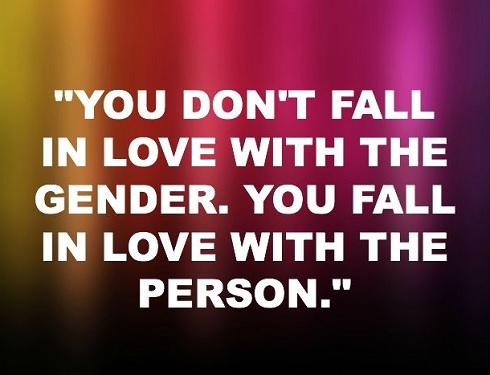
Interpretations and beliefs aside, just reading about the nature of God as presented by Jesus, I could not understand nor believe that those who were born as LGBTQ were not loved or accepted by God. And if God accepts those who are LGBTQ, the rest of us should also.

After all, we are all human beings. The labels are added by groups of people and not God, labels which cause division, exclusion and people being treated as second-class citizens.

It is hard to believe that still today, LGBTQ people are so often discriminated against just because of who they love or how they feel they were created. Now, I am against lust and open sex just because it feels good whether it be between straight or LGBTQ people. I believe in committed, loving relationships between two people either straight or gay. I believe all the different gender identities covered as LGBTQ+ are people just wanting to be happy and accepted for being who they were created to be.

To be treated with hatred, to be looked down upon as sub-human beings, to not receive the same equal treatment and basic human rights as every other human being is just wrong. To be denied health care, housing, jobs, cakes, adoption privileges and being able to serve in the military just because of their gender is a terrible disservice to people that are loved by God. People who are loving, smart and capable of fulfilling their desires but are unable to do so because of all the unloving discrimination in our world.

What really gets me is that many times, not always, the most discriminatory actions and hate filled treatment comes from those who claim to be christians. Those who claim to represent God, who is love. They seem to show more hate and unacceptance than others. Those of us who follow the example of Jesus and who love God should be the biggest supporters, showing the love of God and being inclusive of all. Yet due to the mistranslation of some bible verses and due to taking what we were told or what we read without further study and follow-up, many choose to judge and condemn those who are LGBTQ without any further question.

As mentioned in my previous articles, those who are black/brown, female, and those with various religious and nationality backgrounds all deserve the same treatment and opportunities as anyone else. God did not make any mistakes or second-class human beings. All deserve the same human rights and equal treatment no matter what they believe, what they look like, who they love or how God created them.

It is time to forget the labels and see people as human beings. It is time we love God and love all people without the judgment, condemnation and hateful treatment we so often see in our world. It is time to follow the words of Jesus by loving God and loving one another.

Read Full Post »

By Mike Edwards

Is God all in for me? Does God feel the same about me that I do about God? All I know is when my parents, partner, or friends believe in me, respect me, hope or trust in me – I am more inspired. It has been said that God created us to remind God how great they are, or we can go to Hell! Sorry, doesn’t sound like a God I can get close to. Why would an all-powerful God give us uncontrolled freedom unless seeking a mutual relationship?

How dare you compare God’s love to human love!

Even the Bible suggests God’s love is the same as perfect human love: “Be perfect, therefore as your heavenly Parent is perfect” (Mt. 5:48); be imitators of God (Eph. 5:1); be merciful like God (Lk. 6:36). How can we be merciful if clueless what mercy is or God is mysterious? The best way to understand God’s love is to compare to perfect human love. God must love like perfect humans. Bible folks say we are made in the image of God. God is made in our perfect image!

It is only intuitive that God’s love means what we mean when saying we love others on a deep level. Even those who accuse God of being mysterious agree. When one’s interpretation of Scriptures suggest God appears evil from a human perspective, they are assuming God and human love are the same by accusing God of being mysterious.

God is love but what does that mean?

God’s love surely is the same as supreme parents – other-directed not self-consumed. Love gets excited when we do well and make a difference in the lives of others. Love anticipates, hopes for my success, believes in me. God is pulling for me, even when failing, because I do the same for my children. We doubt God but God still loves. God may worry but still hopes.  We are dependent on our children for intimate relationships. God is dependent on us. God puts trust in us by giving us freedom. A parent who claims to love but doesn’t believe or pull for us doesn’t love us at all. A God who claims to love but doesn’t believe in, hope for us, doesn’t love us at all.

God can’t know the future and love!

Freedom in relationships is necessary for true love. If the future is predetermined or knowable, I can’t act otherwise. God can’t love and know the future. God must have faith too just as our parents did when having us. Even the Bible agrees God doesn’t know the future because the future is open. God regrets (I Sam. 15:10-11); God relents (Jonah 3:10); God is surprised (Is. 5); God changes their mind (Jer. 18:8-10). God either puts their hopes and trust in us as do loving uncontrolling parents, or God is uncaring.

We matter to God!

It pumps me to no end when my parents or partner feels genuine respect for me! They committed to me not knowing how the relationship would turn out. God too! If you claim to love someone, you trust them, you hope they succeed, you have faith in them. Even some who don’t believe Jesus was really divine and human, they believe Jesus may have been the most perfect person in the world like God. Jesus had trust, hope, and faith in others. So does God! God is the kind of spiritual Parent I have longed for in my journey to love others like I want to be loved.  How do you want to be loved by your parents? That is how God loves you!

Resource and must read: Wm. Curtis Holtzen, The God Who Trust: A Relational Theology Of Divine Faith, Hope, and Love

Read Full Post »

By Mike Edwards

It’s a fair question. The majority of people born into this world didn’t possess a copy of the Bible or even heard of Jesus. I doubt a Creator would only communicate through such means. Besides, it can’t be proven God controlled the words and thoughts of the writers to always portray God accurately. It is plausible a universal instinct to treat others like we want to be treated is a personal external force communicating through our moral intuitions. Such intuitions aren’t of the devil! 

Many people of faith only condemn gays because they think the Bible does.   

Many growing up in church only condemn gays out of devotion to the God of the Bible. Many are unaware biblical scholars who respect the Bible believe Scriptures don’t condemn gay monogamous relationships. See here. The truth is literature, even if could be proven ever word written, edited, or translated is inspired by God, requires interpretation. We mustn’t claim our interpretations are infallible when being wrong has tremendous consequences.

How can we know what God thinks?

Ancient Books are subject to mistranslating and misinterpreting.  We cannot avoid using moral sense, possibly endowed by a Creator, when it comes to ethical matters. We seem to always know the question we ought to ask ourselves – am I loving others perfectly. It is only intuitive to think perfect human and godly love are the same. Good thing there is no magic book to tell us what God is like! We would just use it as a club to beat people into submission. We can civilly discuss how to best love others using common moral sense than insisting on a supposed correct interpretation.

It just isn’t natural!

Why would anyone choose a lifestyle subject to bigotry and hostility? Do straights wake up one day and decide to be attracted to the opposite sex? Gays neither of the same sex. Science isn’t conclusive why we have desires for the same or opposite sex, but if you think there is a .0001% possibility that science proves sexual orientation isn’t a choice, would why we judge rather than love? It’s a myth that sexual choices are always the result of some trauma or rebellion in our lives.

A loving God can’t be a psychological abuser. 

We know the psychological harm done when one must hide their sexuality because of bigotry and hostility. So, shouldn’t we be guided by love – how should I treat others if I had the same non-choices? The harm isn’t in being gay; the harm is in condemning others for being gay. Mental health problems aren’t because one is gay but because one is force to hide their true identify or face rejection and condemnation. Hating homosexual sex is only loving if homosexual sex is sinful. Hating alcoholic behavior is loving because alcohol abuse really is harmful.

God can’t be a family destroyer.

It is impossible to feel loved and accepted when someone says “I love you but I hate your sin.” Most parents’ hearts break when they think their devotion to God requires them to give their child some version of “love the sinner, hate the sin” speech. Our moral intuitions tell most that God is not bias against females, people of color, or gays. A parent need not reject a gay child according to the Bible. The Bible is silent on monogamous same sex relationships, while supporting relationships that show love and concern for one another. See Please Don’t Reject A Gay Child In God’s Name

Yes, marriage too! 

Procreation isn’t a criterion for marriage. We don’t deny infertile couples the right to marry. It is argued the world could not have populated in the beginning! We are no longer in that situation and the world will continue to populate because not all couples are gay. We have unwanted children who need loving couples. Is adoption by a same sex or different sex couple not a better situation than groups homes or orphanages? Many gay couples are far better parents than many opposite sex parents. Don’t worry! Loving couples don’t try to scare a child straight or gay.

Read Full Post »

by Jordan Hathcock

To be a Christian is to live dangerously, honestly, freely – to step in the name of love as if you may land on nothing, yet to keep on stepping because the something that sustains you no empire can give you and no empire can take away.—Dr. Cornel West

How are we (I.e., American “Christians”) supposed to *act* in our current climate where the pandemic reigns, systemic racism runs rapid and the economic state is at its worse sense the Great Depression. 2020 has been a mix of 1918, 1930s, and 1960s all wrapped up in one “apocalyptic” year and it seems to be no end in sight. The unveiling of the principalities and powers (corrupt institutions) are now in the forefront for all citizens to witness. The term “viewer discretion advise” has never been more relevant.

We are hearing from both world views (conservative and liberal) advice and warnings in what the “right” strategy is when it comes to the current world crises. The polarization has come to a boiling point and you better take cover! Masks vs. no masks, black lives matter vs. all lives matter, all coming to a dualistic head, about to explode. The American political landscape has been experiencing a tug of war (no pun attended) regarding ideals which in-turn is hindering an actual plan of action. Thus, we have the never-ending cycle of us vs. them that only brings violent unrest.

This is not a denial of the actual current damaged systemic realities (white supremacy, racism, pandemic health crisis, police brutality, etc.) that this country is experiencing. I understand that some are living in denial of these issues (and it is not getting us anywhere). Alas, what I am trying to manifest is Christ-participants response to all of this? It cannot only be a conservative view of just letting the old ways be preserved no matter how many lives are harmed and oppressed along the way. It also cannot be a regulated liberal view, espousing a non-stop shame culture in where people are ostracized and scapegoated, no matter what the price. Is this American binary platform, in which we have two sides to choose from, all there is? The issues with our two-party system, plurality voting rules, winner take all voting, gerrymandering, (to name a few) is not helping when it comes to a more just (love in action) social system.

When leave social restorative justice (it cannot be an eye for eye kind of justice here, peeps) in the hands of the elite, what we get is an Empire. If we are living in the 21st century United States, we are living in an Empire (bold statement I know but stay with me). There are a few interpretations of Empire (hey, is post modernity baby haha), but I find this one fitting when it comes to defining Empire with our current state in Murica:

Conglomerates of power that are aimed at controlling all aspects of our lives, from macropolitics to our innermost desires.― Joerg Rieger, Christ and Empire

What does Empire involve? All types of “power over” institutions from education, to government and religion. When our systems become an economy of exchange where the mighty dollar reigns, the result is imprisonment. From a Christ-participant perspective, what we have seen since the fourth century is Civil Religion: the Christendom of Empire, reigning down with an oligarchy thumb. Since that time, the supposedly Jesus Community has been entangled with the State. This might be the deadliest mixture when it comes to corrupt power. Christians have become the Roman occupiers―plundering and destroying all that gets in their way―instead of Jesus followers being eaten by lions and burned at the stake. When we became more about geo-political dominance and less about serving “the least of these”, the distinction between the Jesus-Way and Empire are unrecognizable. Palestinian Christian, author, and Lutheran pastor Mitri Raheb puts it this way:

Empires create their own theologies to justify their occupation. [Just as the early American empires chose to overlook its mistreatment of the Native tribes who already lived here and then justified a slave holder form of Christianity in much of the Americas. —RR] Such oppression generates a number of important questions among the occupied: “Where are you, God?” and “Why doesn’t God interfere to rescue [God’s] people?” When, under various regimes, diverse identities emerge in different parts of Palestine, the question arises, “Who is my neighbor?” And finally, “How can liberation be achieved?” is a constant question.

I think this is what we have in our current state of affairs. Are we (I.e., White American Christians) as claimed participants in the Jesus way, going to see ourselves as the Roman occupiers? Are we finally go to repent (change our way of thinking) and really set out to be a people who wash feet, serve the poor, and set the captives free? That is it, really. Breaking free to liberate others. This is what privilege is all about. We cannot let the ways of Empire cloud our minds with this “America first” attitude. Its movements that change things, not rusted-out institutions. It is power under not power over that brings about resurrection (Jesus on the cross, anyone?).  So, regardless if you see masks as not needed, or black lives as a neo-Marxist communist organization, what do you do for the least of these? For your enemies?

I think it’s time that we truly see that “our citizenship is in heaven- Philippians 3:20 “ which includes “every nation, tribe, people and language-Revelation 7:9”. It’s time to let go of our egos and be humbled. We need to listen and educate ourselves through and by the voices of the marginalized in order to bring about the liberation and healing that sets all of God’s creation free…

Only the oppressed can receive liberating visions in wretched places. Only those thinking emerges in the context of the struggle against injustice can see God’s freedom breaking into unfree conditions and thus granting power to the powerless to fight here and now for the freedom they know to be theirs in Jesus’ cross and resurrection.― James H. Cone, God of the Oppressed

Read Full Post »

by Jim Gordon

In our world today there seems to be a lot of talk in the Christian world of standing up for our beliefs and doctrines. It seems we feel this is the best way to show our devotion to God and be a witness for Him. I am not so sure this is the best way. As Christians we are getting to be known more for what we are against and being unloving rather than showing the love of God to others.

Many of us go to a church building on Sunday and sing and smile and listen to a sermon and think we have fulfilled our duties for the week. All day we are feeling good and close to God and think everything is good.

Then Monday hits and we go grudgingly off to work with a frown on our face and feeling down. We should be ready to show the love of God to those we are around but often due to being in a bad mood we snap at fellow employees and try to make them feel as bad as we do.

It seems we often forget that Christianity is not a religion or a one day a week event. As followers of Christ we are to let Christ live through us in the strength of the Holy Spirit. We are to let his love flow out of us to touch those we come in contact with throughout the day.

Rather than trying to prove our faith by pointing out what we think are the mistakes and shortcomings of others, rather than condemning them and making them feel like outsiders we should be allowing the love of Christ to touch them. We should be accepting and treat all people like we want to be treated without any ulterior motives.

While Jesus lived on earth he constantly spent time with those the religious crowd would not even think of being around. He spent time doing things that the religious leaders thought were wrong and against their religious laws. They could not even accept him as the messiah because he was so different from them and what they thought was a godly way to live.

Jesus accepted people for who they were, just the way they were and did not show condemnation toward them. As followers of Christ we are to do the same. It is not our job to be the judge of others. We are not to be pointing out what we do not like or disagree with and treating people like second class citizens. The Holy Spirit will convict the world of sin where conviction is needed. We do not need to do the job of the Holy Spirit, we are here to be Jesus to all people, loving, accepting and treating everyone with respect no matter who they are or what they believe.

Rather than fighting, arguing and trying to prove our way of thinking, we should follow the leading of the Spirit for ourselves. Let each person make the decision that is right for them based on their walk with God. Live your life in love and under the guidance of the Spirit, letting your life be a witness to the love of God.

We are called to love God, live for Him and let Him work in us. We are also called to love one another, which means we pass on the unconditional love of God to all we meet along the way.

In our world today with all the discrimination and unloving ways of the world and even of religion and the church, we are to allow the Holy Spirit to love others through us. Let them know they are accepted and cared for and that they are loved beyond measure by God. Love is the way of God because God is love. Stop the unloving and condemning attitudes and let those you come in contact with each day know they are loved and accepted just for being themselves.

Read Full Post »

by Jim Gordon

Growing up in the world of Christianity and the church, I have memories of a time when all seemed well within the system. I thought we all loved one another and we could share the love of God with everyone we met. I felt if I stayed in the system and listened to the pastor, I would learn all I needed to know to be a Christian who could handle anything.

After many years within Christianity and the organized church, I began having feelings of not being satisfied. I saw people who wanted to have things their way or else. I saw people looked down upon or ignored enough to leave. I saw people outside the church service who acted just like everyone else and treated people who they disagreed with in a very unloving way.

I began to question if Christianity was truly what God intended and if the church was what Jesus talked about when he said he would build his Church. Jesus said he would build his church, which is his people. It is also said that God does not live in houses made by human hands. The bible makes it plain that we, his people are now the temple and the Holy Spirit lives within us. We no longer need anyone to teach us. We have the Word of God living in us teaching and guiding us throughout our lives.

It finally began to hit me that Christianity was just another religion like all the others. It was organized and controlled by human beings. It was an organization of power, control, disagreement and exclusion. I wondered what happened to the Christianity I knew growing up. I truthfully do not think it changed, I think I changed. I think the change was due to learning and following the guidance of the Spirit who is within me.

Have you ever felt frustrated with the Christian world today? Obviously, the church today is not what God intended and in America the church has become a big corporation more than anything.

It finally got to a point where my wife and I were frustrated enough with Christianity that we decided to leave the church. The more we read, prayed, meditated and thought about things we also got frustrated enough to leave Christianity.

Now before you have that common reaction to call us heretics, back-slidden Christians, or fallen from grace let me say we have not left God. I know many people believe if you leave the church or the Christian organization you have left God, but that is not the case.

Believe it or not, Jesus was not a Christian. He did not start the organized, religious church. He did not favor one group of people over another. He loved people, all people. He asks us to do the same and that was not something I was seeing within the organization.

I will say that if you are satisfied with the church system and enjoy meeting together with other like-minded people, that is OK. My only thought is that you remember church is not a place nor an organization. The pastor is not the middleman between you and God. One denomination or church doctrine is not the true church or only way of interpreting the ways of God.

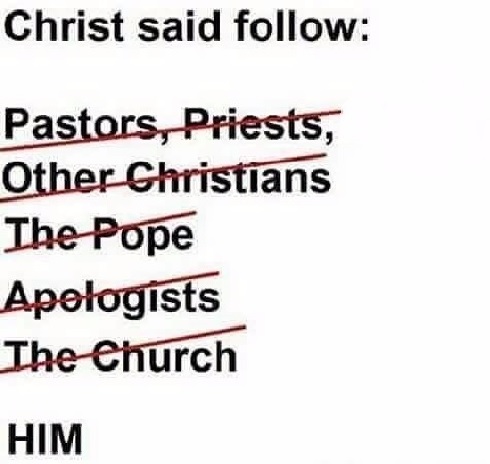
The fact is that God loves us. There is nothing we have to do or stop doing to receive God’s love. We are saved and restored to fellowship with God through faith in Jesus. We have the Holy Spirit living within us and we do not have to listen to this group or that group, this speaker or that preacher. We follow God in the way He wants us to go and we no longer have to worry about our reputations or what others think. We no longer have to look to religion or man-led organizations to live for God.

I really believe if we accept God’s love, follow Him and listen to the guiding of the Holy Spirit within us we will be pleasing to God no matter what others say. We no longer have to be tossed to and fro by listening to all the different voices in Christianity today. We listen and trust God and enjoy the fellowship we have with Him through Christ.

Looking at things in this way, it has become a life of following the example of Jesus and doing what is pleasing to God. We no longer worry about following the religion of Christianity, but we go by the guidance of the Holy Spirit who lives within us. The religious organization we so commonly call Christianity has become something we no longer need. We now live life by following the Spirit, loving God and loving all people. For us, this daily way of living has replaced the man-made organization with a more meaningful way of life.

Read Full Post »

By Mike Edwards

This Post is longer than usual. It is an essay I wrote that was recently published in a book Open And Relational Leadership. Such a view of God, as opposed to a closed, standoffish God can be a game changer. Leaders proclaiming certainty have not allowed God’s open and relational ways to guide individuals in their own time.

I am grateful for pastors of churches I attended in the past who encouraged getting to know God. In retrospect, it seems pastors felt compelled to proclaim certainty of what God thought, according to their understanding of Scriptures. Perhaps they felt an internal pressure due to leadership expectations from parishioners. Didn’t pastors, though, read books where biblical scholars, who respect the authority of Scriptures, do not always agree? Total certainty is an illusion because even if God is Truth, we still have to discern what is Truth. For example, can preachers or priests be women or gay? Many are leaving the institutional church because of the lack of honest, open dialogue. God’s example seems more open and relational because of the freedom given to understand God in our own time.

It’s hard to be relational when you are so damn certain.  

One would think Christians would be the least judgmental people in the world. After all, they believe in loving others like they want to be loved. Catholics and Protestants, or whatever other representation of the church may apply, seem compelled to establish creeds, as if uncertainties about God are a sign of weakness. It isn’t always voiced that you are required to accept their doctrines to participate, but try challenging them and see where that gets you! If God was so concerned about beliefs such as the Trinity, angels, the Bible, the Virgin Mary, or hell, it seems there would be more agreement. Maybe Christians would be more united and less judgmental if religions only encouraged the Creed of Love as the Spirit guided individuals. 

No, uncertainty doesn’t have to lead to lawlessness!  

I am not suggesting anything goes in the declaration that we can’t be certain. No one questions laws against murder. Criminals don’t deny their actions are wrong; they deny they committed such a crime. Unless you are a terrorist, it is almost universally accepted that it is morally wrong to kill or behead someone because of his or her beliefs. We don’t have to fear uncertainty. Different opinions, expressed without physical or verbal aggression, can stand side by side, as we continually evaluate the most loving approach or understanding of God. 

The idea of an infallible or inspired Bible may be a reason Christians claim certainty. 

The Bible certainly is a resource to discover what God is like, though the majority of people born into this world didn’t have a Bible or knowledge of Jesus. There must be other ways to know God! Infallibility is a non-starter because we don’t have the original manuscripts. The many translations or versions of the Bible we have today suggest copying is not an exact process. Even if we had the original autographs, interpretation is still required. Scholars who believe in the authority of Scriptures disagree regarding what the Bible says about critical issues such as homosexuality, gender roles, divorce, and hell, among many other things.

Interpretations are fallible, but most people do not begin a discussion with “I may be wrong…” Keep in mind that we can’t prove that God inspired every word of the Bible, unless you argue a biblical writer making such a claim is definitive evidence. The possibility of a fallible book encourages questioning rather than demonizing views to the contrary. We have every right to question interpretations that suggest a Creator does not love in the way we were created to love. God-followers seem unaware of how often they appear to be unopen and morally superior based on their assumptions about the Bible. 

How can we know God?

Some declare God is mysterious when their interpretation of the Bible makes God appear immoral, but how can we have a relationship with a God we can’t understand with the brain God gave us? Is evil sometimes mysteriously good? The Bible assumes we can understand God by challenging us to be perfect like God (Mt. 5:48). We can only understand God’s perfect love by the way we humans were created to love perfectly. It is intuitive to think that the perfect love of God and human are the same. That is why the mystery card is used when God seems unloving from a human perspective. A Creator surely loves others and us in the same way that we were seemingly created to love others. 

Where has certainty in God’s name gotten us? 

It is logical to suggest we can’t be certain of what an invisible, inaudible God thinks. But supposed certainty has led to justifying slavery. It has led to revered theologians such as St. Augustine and John Calvin not firmly opposing the execution of those who didn’t agree with their theology. The Bible can’t be the definitive guide to what God would do because scholars who respect Scriptures disagree on so many issues. And it clearly is wrong to behead people because they don’t share your personal beliefs about God. 

Jesus didn’t judge uncertainty.  

Jesus performed many miracles, but his disciples/followers still didn’t believe. Jesus didn’t cast away Peter when warning him he would deny Jesus three times; I believe Peter now is called the “Rock.” Jesus hung out with all kinds of people that didn’t share his certainty. Jesus didn’t unload on others when their beliefs weren’t his, unless you were a religious authority who was misrepresenting God. My hunch is that God, like parents, would rather be doubted than ignored. 

Is God unloving by not being more visible, thus more certain?

We may wonder why God isn’t more obvious in our lives. God’s awe-filled or overpowering presence may only lead to fearful obligations to obey. When parents push their agendas, even if in their children’s best interests, a child may resent or rebel against coercion and never turn back from that rebellion. If God communicates in less demonstrative ways, this may allow for heartfelt choices. God may know what a controlling parent never learns: the road of learning, reflecting, and non-coerced choices may best lead to lasting convictions.

God’s love is not controlling. Controlling love is an oxymoron. Authenticity, the highest good in relationships, is impossible without freedom. Not even an almighty God can force true love. It isn’t that God has the power to do something and doesn’t. God can’t control or violate freedom and love perfectly. God, like parents, had a choice—not to create or to create knowing suffering was a possibility in the pursuit of intimacy. Divine love limits divine power. God is open to changing the world at relational speed. 

Uncertainty can lead to acting more lovingly.  

Being unable to declare the certainty or morality of our opinions forces us to listen and express ideas openly. God understands, as much as humans do, that forcing beliefs does not lead to long-lasting changes. Starting a conversation with “I may be wrong…” will more likely lead to new understandings and creative solutions. Conversations change when humility is part of the tone. Certainty, when it comes to political matters such as taxes or health plans, has led to justifying verbal or physical violence in the name of God or morality. Differences don’t have to lead to chaos but can be resolved by remaining open-minded to the most loving ways.

The Bible tells us the Word of God is not the Bible; it is flesh in the body of Jesus (Jn. 1:1-14). Jesus, when leaving this earth, didn’t promise to leave us with a Bible, but with God’s Spirit to aid in discerning good from evil (Jn. 14:16). Doesn’t the Spirit speak to us somehow when we have thoughts to be the perfect partner, parent, or friend we desire to be deep down, despite our constant failures? It may be good that that the Spirit doesn’t communicate audibly. The Bible may be more direct communication, but it has been used to force beliefs on others despite being subject to interpretation. Leaders who admit uncertainty, rather than certainty, about God, keep from imposing beliefs on others, which is just not in God’s open or relational nature.

Read Full Post »

« Newer Posts - Older Posts »